How to Conjugate Paresser in French
/pa.ʁɛ.se/
Paresser means to idle, to loll — to do nothing beautifully, stretched out in the sun with nowhere to be and no wish to be anywhere.
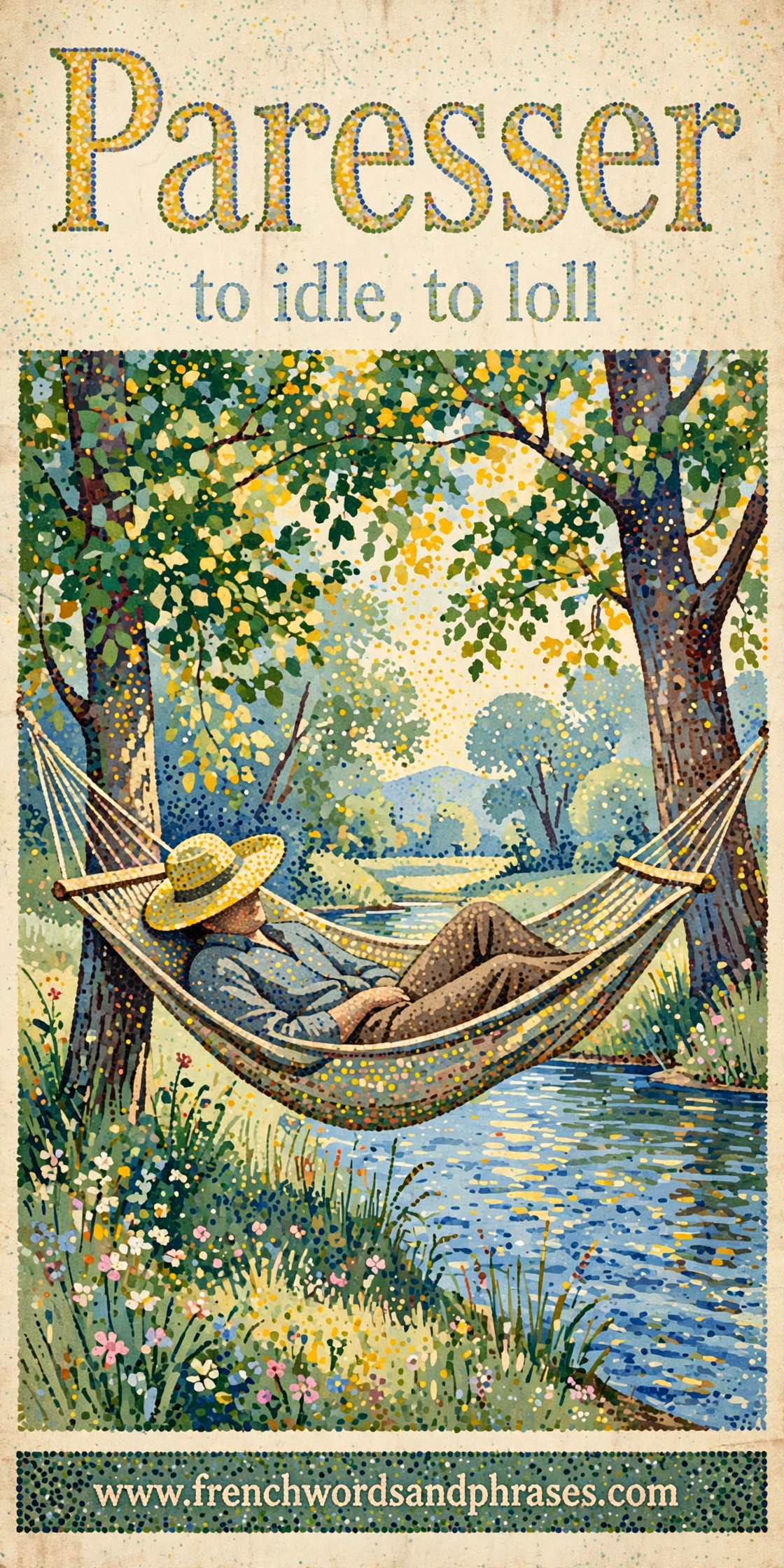
A cat on a warm wall, a lizard on a hot stone, a holidaymaker in a hammock watching the afternoon dissolve — paresser is the literary verb of doing nothing: not resting with a purpose, not sleeping, just lolling, idling, letting the hours slide past like warm water.
In this guide, you’ll learn how to conjugate paresser in all the major French tenses and moods. Explore complete conjugation tables, French examples, English translations, and practice quizzes.
Understanding the French Verb Paresser
Paresser is a regular French verb belonging to the first group of verbs, those ending in -er.
It means to idle, to loll. Paresser belongs to the family of la paresse, laziness — one of the seven deadly sins — yet the verb itself is almost affectionate: cats, lizards and holidaymakers paressent without guilt. It suggests duration and posture: a body stretched out somewhere warm while time passes. For idling about town or dragging one’s feet, French would rather use traîner or lambiner.
Verb classification: First group (-er)
Auxiliary verb: Avoir
Past participle: paressé
Present participle: paressant
English equivalents: To idle, to loll, to laze about; paresser au soleil — to laze in the sun; paresser dans un hamac — to lounge in a hammock; paresser toute la journée — to idle the whole day away; un chat qui paresse sur le mur — a cat lounging on the wall.
One important detail: paresser is intransitive — it never takes an object. One does not paresser something; one simply paresse, somewhere, for some delicious length of time: paresser au soleil, paresser dans un hamac. It is a regular -er verb — je paresse, nous paressons, past participle paressé — and its register is literary and slightly old-fashioned: everyday speech prefers traîner, glander (very familiar) or ne rien faire, but paresser is the word writers choose for golden idleness.
Experience the Word
Paresser is idleness with a view — the art of being gloriously, deliberately unoccupied.
Imagine the first afternoon of the holidays in a Provençal village. The shutters are half-closed against the heat, the square is empty, and on the warm stone of the fountain a green lizard paresse, motionless, master of all he surveys — which is nothing, and that is the point.
He is not resting for anything. He is simply lolling — paressant — and the afternoon is his.
How to Conjugate Paresser: Complete French Conjugation Guide
Let’s explore every major conjugation of paresser, beginning with the indicative mood.
How to Conjugate Paresser in the Indicative Mood
The indicative mood is used to express facts, observations, actions, and events.
How to Conjugate Paresser in the Present Tense (Présent)
Used for actions happening now, habitual actions, and general truths.
| Subject | Conjugation |
|---|---|
| je | paresse |
| tu | paresses |
| il / elle | paresse |
| nous | paressons |
| vous | paressez |
| ils / elles | paressent |
Le chat paresse au soleil tout l’après-midi.
The cat lounges in the sun all afternoon.
Complete the sentence:
Nous ______ au soleil tout l’après-midi.
Reveal the answer
paressons
Nous paressons au soleil tout l’après-midi.
We lounge in the sun all afternoon.
How to Conjugate Paresser in the Passé Composé
Used for completed actions in the past. Paresser takes the auxiliary verb avoir.
| Subject | Conjugation |
|---|---|
| j’ | ai paressé |
| tu | as paressé |
| il / elle | a paressé |
| nous | avons paressé |
| vous | avez paressé |
| ils / elles | ont paressé |
Dimanche, nous avons paressé jusqu’à midi.
On Sunday, we lazed about until noon.
How to Conjugate Paresser in the Imparfait (Imperfect Tense)
Used for habitual past actions, descriptions, and ongoing situations in the past.
| Subject | Conjugation |
|---|---|
| je | paressais |
| tu | paressais |
| il / elle | paressait |
| nous | paressions |
| vous | paressiez |
| ils / elles | paressaient |
Pendant les vacances, il paressait au bord de la piscine.
During the holidays, he used to idle by the pool.
Choose the correct form:
He used to idle by the pool.
Il ______ au bord de la piscine. (paressait / a paresse)
Reveal the answer
paressait
Il paressait au bord de la piscine.
A repeated habit in the past takes the imperfect: paressait.
How to Conjugate Paresser in the Plus-que-parfait
Used to describe an action that had already been completed before another past event.
| Subject | Conjugation |
|---|---|
| j’ | avais paressé |
| tu | avais paressé |
| il / elle | avait paressé |
| nous | avions paressé |
| vous | aviez paressé |
| ils / elles | avaient paressé |
Ils avaient paressé toute la matinée quand le patron est arrivé.
They had been lazing all morning when the boss arrived.
How to Conjugate Paresser in the Passé Simple
Primarily used in formal writing, literature, and historical narratives. It is rarely used in everyday conversation.
| Subject | Conjugation |
|---|---|
| je | paressai |
| tu | paressas |
| il / elle | paressa |
| nous | paressâmes |
| vous | paressâtes |
| ils / elles | paressèrent |
Le lézard paressa sur la pierre chaude jusqu’au soir.
The lizard lolled on the warm stone until evening.
How to Conjugate Paresser in the Passé Antérieur
A literary tense used to express an action completed immediately before another past action, generally in the passé simple.
| Subject | Conjugation |
|---|---|
| j’ | eus paressé |
| tu | eus paressé |
| il / elle | eut paressé |
| nous | eûmes paressé |
| vous | eûtes paressé |
| ils / elles | eurent paressé |
Quand il eut paressé une heure, il se leva enfin.
When he had lolled about for an hour, he finally got up.
How to Conjugate Paresser in the Future Tense (Futur Simple)
Used to describe actions that will take place in the future.
| Subject | Conjugation |
|---|---|
| je | paresserai |
| tu | paresseras |
| il / elle | paressera |
| nous | paresserons |
| vous | paresserez |
| ils / elles | paresseront |
Demain, je paresserai dans le hamac sans remords.
Tomorrow, I will lounge in the hammock without remorse.
How to Conjugate Paresser in the Futur Antérieur (Future Perfect)
Used for an action that will have been completed before a particular point in the future.
| Subject | Conjugation |
|---|---|
| j’ | aurai paressé |
| tu | auras paressé |
| il / elle | aura paressé |
| nous | aurons paressé |
| vous | aurez paressé |
| ils / elles | auront paressé |
À midi, ils auront paressé trois heures de suite.
By noon, they will have lazed about for three hours straight.
How to Conjugate Paresser in the Near Future (Futur Proche)
Used to describe something that is going to happen soon. Formed with aller + infinitive.
| Subject | Conjugation |
|---|---|
| je | vais paresser |
| tu | vas paresser |
| il / elle | va paresser |
| nous | allons paresser |
| vous | allez paresser |
| ils / elles | vont paresser |
Ne le dérange pas, il va paresser un peu.
Do not disturb him, he is going to laze about a bit.
How to Conjugate Paresser in the Conditional Mood
The conditional mood expresses what would happen under certain circumstances. It is also frequently used to make polite requests or express wishes.
How to Conjugate Paresser in the Present Conditional
| Subject | Conjugation |
|---|---|
| je | paresserais |
| tu | paresserais |
| il / elle | paresserait |
| nous | paresserions |
| vous | paresseriez |
| ils / elles | paresseraient |
Avec ce soleil, tout le monde paresserait volontiers.
With this sun, everyone would gladly laze about.
How to Conjugate Paresser in the Past Conditional
| Subject | Conjugation |
|---|---|
| j’ | aurais paressé |
| tu | aurais paressé |
| il / elle | aurait paressé |
| nous | aurions paressé |
| vous | auriez paressé |
| ils / elles | auraient paressé |
Sans l’examen, elle aurait paressé toute la journée.
Without the exam, she would have idled all day.
Paresser in the Literary Past Conditional Form
This less common literary form uses the imperfect subjunctive of avoir.
| Subject | Conjugation |
|---|---|
| j’ | eusse paressé |
| tu | eusses paressé |
| il / elle | eût paressé |
| nous | eussions paressé |
| vous | eussiez paressé |
| ils / elles | eussent paressé |
Il eût paressé jusqu’au soir, si on l’eût laissé.
He would have lolled until evening, if he had been left alone.
How to Conjugate Paresser in the Subjunctive Mood
The subjunctive is used to express wishes, emotions, doubts, necessity, and uncertainty. It frequently follows expressions such as il faut que (it is necessary that) or bien que (although).
How to Conjugate Paresser in the Present Subjunctive
| Subject | Conjugation |
|---|---|
| que je | paresse |
| que tu | paresses |
| qu’il / qu’elle | paresse |
| que nous | paressions |
| que vous | paressiez |
| qu’ils / qu’elles | paressent |
Il est rare que tu paresses ainsi.
It is rare for you to laze about like this.
Complete the sentence using the subjunctive:
Elle ne veut pas que vous ______ devant les enfants.
Reveal the answer
paressiez
Elle ne veut pas que vous paressiez devant les enfants.
She does not want you idling in front of the children.
How to Conjugate Paresser in the Imperfect Subjunctive
A literary tense, rarely encountered in modern spoken French.
| Subject | Conjugation |
|---|---|
| que je | paressasse |
| que tu | paressasses |
| qu’il / qu’elle | paressât |
| que nous | paressassions |
| que vous | paressassiez |
| qu’ils / qu’elles | paressassent |
Elle ne voulait pas qu’il paressât devant les enfants.
She did not want him idling in front of the children.
How to Conjugate Paresser in the Pluperfect Subjunctive
A literary construction used to express an action completed before another past action.
| Subject | Conjugation |
|---|---|
| que j’ | eusse paressé |
| que tu | eusses paressé |
| qu’il / qu’elle | eût paressé |
| que nous | eussions paressé |
| que vous | eussiez paressé |
| qu’ils / qu’elles | eussent paressé |
On murmurait qu’il eût paressé des semaines entières.
People whispered he had idled away whole weeks.
How to Conjugate Paresser in the Past Subjunctive
| Subject | Conjugation |
|---|---|
| que j’ | aie paressé |
| que tu | aies paressé |
| qu’il / qu’elle | ait paressé |
| que nous | ayons paressé |
| que vous | ayez paressé |
| qu’ils / qu’elles | aient paressé |
Je suis surpris qu’ils aient paressé si longtemps.
I am surprised they lazed about for so long.
How to Conjugate Paresser in the Imperative
The imperative is used to give commands, instructions, invitations, or suggestions. Subject pronouns are omitted.
How to Conjugate Paresser in the Present Imperative
| Person | Conjugation |
|---|---|
| (tu) | paresse |
| (nous) | paressons |
| (vous) | paressez |
Paresse un peu, tu l’as bien mérité !
Take it easy for a while, you have earned it!
How would you say Laze about a little (tu form)?
Reveal the answer
Paresse un peu !
French Participles of Paresser
Participles are verb forms that can be used in compound tenses and other grammatical constructions.
Present Participle of Paresser
paressant
En paressant au soleil, il a pris un coup de soleil.
While lazing in the sun, he got sunburnt.
Past Participle of Paresser
paressé
Après avoir paressé toute la matinée, il se sentait coupable.
After lazing about all morning, he felt guilty.
Paresser in Everyday French: Real-Life Examples
Now that you know the conjugations, let’s see how paresser appears in everyday French.
Le chat paresse au soleil.
The cat lounges in the sun.
Nous avons paressé jusqu’à midi.
We lazed about until noon.
Il paressait au bord de la piscine.
He used to idle by the pool.
Je paresserai dans le hamac.
I will lounge in the hammock.
Tout le monde paresserait avec ce soleil.
Everyone would laze about in this sun.
Paresse un peu, tu l’as bien mérité !
Take it easy for a while, you have earned it!
Beyond Translation: The Meaning of Paresser
Paresser grows out of paresse, laziness — in Latin pigritia, slowness, reluctance — and it keeps the family’s literary perfume.
It is the respectable face of a deadly sin.
Where glander is slang and traîner drags, paresser glows: writers give it to cats, lizards, rivers and whole August afternoons, because in French, beautiful idleness deserves a beautiful verb.
How to Remember the French Verb Paresser
Remember it this way: Paresser is about a lizard on a hot stone, master of the whole afternoon.
- Intransitive: no object, ever — one paresse au soleil, dans un hamac, toute la journée.
- Literary and golden in tone: cats and holidaymakers paressent; everyday speech says ne rien faire.
- Regular -er: je paresse, nous paressons, past participle paressé.
The key idea is a lizard on a hot stone, master of the whole afternoon.
Test Your Knowledge of Paresser
Let’s see how much you’ve learned. Try answering these questions before revealing the answers.
Can paresser take a direct object?
Reveal the answer
No — it is intransitive: le chat paresse au soleil; one idles somewhere, never something.
How do you say On Sunday, we lazed about until noon in French?
Reveal the answer
Dimanche, nous avons paressé jusqu’à midi.
Translate: Tomorrow, I will lounge in the hammock without remorse.
Reveal the answer
Demain, je paresserai dans le hamac sans remords.
What is the past participle of paresser?
Reveal the answer
Paressé — regular: paressé, paressée, paressés, paressées.
Complete the sentence:
Il est rare que tu ______ ainsi.
Reveal the answer
paresses
Il est rare que tu paresses ainsi.
It is rare for you to laze about like this.
Can You Use It?
How would you say this in French?
The cat lounges in the sun on the garden wall, and the world can very well wait.
Reveal the answer
Le chat paresse au soleil sur le mur du jardin, et le monde peut bien attendre.
The cat lounges in the sun on the garden wall, and the world can very well wait.
LEARN FRENCH ONE WORD AT A TIME