A French Word to Live By
How to Conjugate Insoler in French
/ɛ̃.sɔ.le/
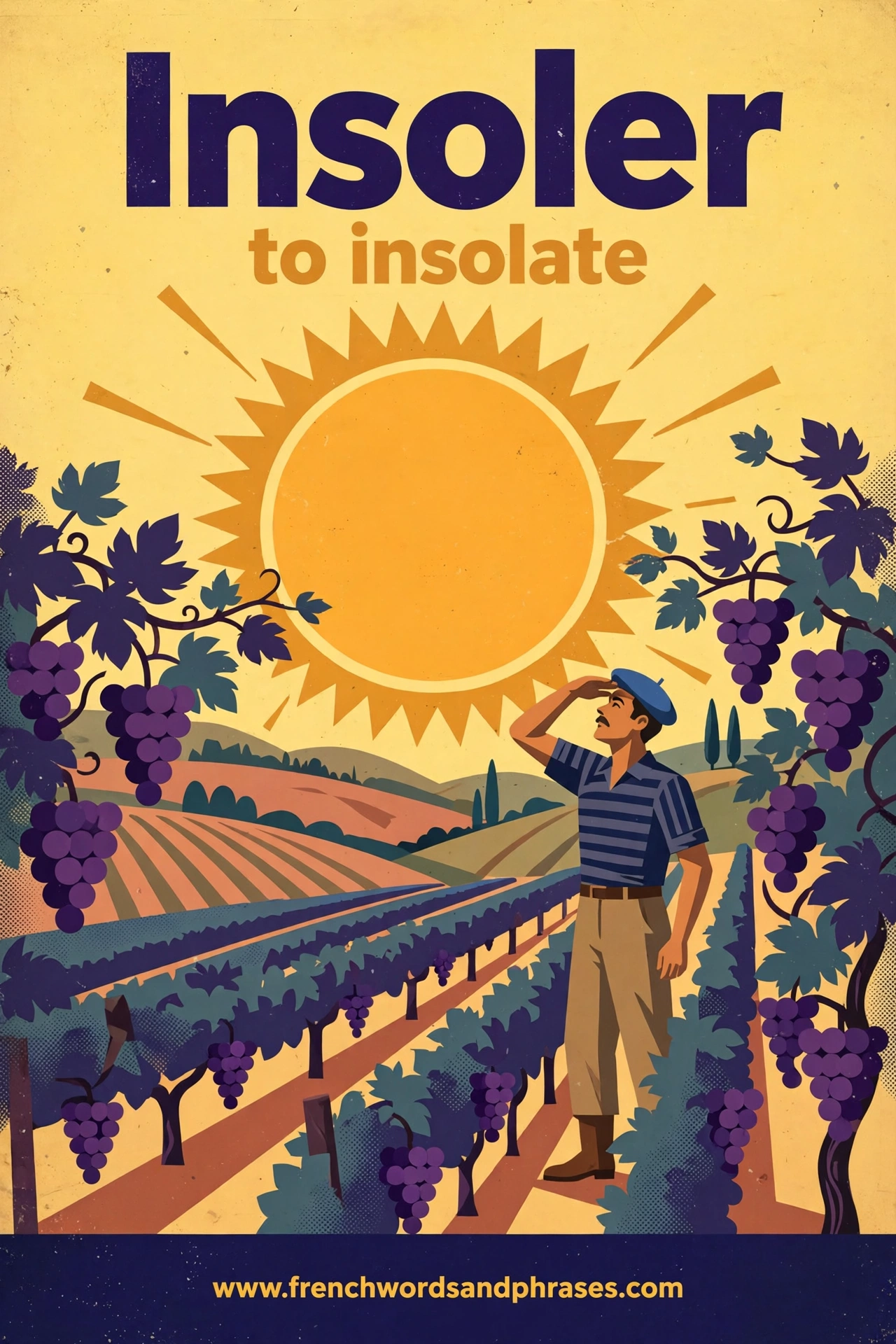
Insoler means to insolate, to expose to the sun — to leave something in full sunlight so the sun does its slow work on it.
Grapes ripening on a tray, photographic plates drinking the light, linen bleaching on a Provençal terrace — insoler is a technical verb for the sun used as a tool: exposure to sunlight, measured and deliberate.
In this guide, you’ll learn how to conjugate insoler in all the major French tenses and moods. Explore complete conjugation tables, French examples, English translations, and practice quizzes.
Understanding the French Verb Insoler
Insoler is a regular French verb belonging to the first group of verbs, those ending in-er.
It means to insolate, to expose to the sun. It is used of things deliberately left in the sun — fruit to dry, plates and screens to expose, materials to bleach or cure — and in weather and climate writing for ground or buildings receiving the sun’s rays. Of people, it appears almost only in the passive or in medical contexts; the reflexive s’insoler exists but is rare.
Verb classification: First group (-er)
Auxiliary verb: Avoir
Past participle: insolé
Present participle: insolant
English equivalents: To insolate, to expose to sunlight; insoler des raisins — to sun-dry grapes; insoler une plaque — to expose a plate (photography, printing); être insolé — to be sun-exposed; une insolation — sunstroke, or sun exposure.
One important detail: insoler is a regular -er verb — j’insole, nous insolons, ils insolent, past participle insolé — built on the Latin sol, the sun. It lives mostly in technical vocabularies: wine-making, photography, printing and medicine. The word of the family you will meet every summer is the noun une insolation — sunstroke: il a attrapé une insolation, he got sunstroke. Everyday French does not insoler people; it says exposer au soleil.
Experience the Word
Insoler is the sun put to work — exposure as a recipe, with the sunlight as the ingredient.
Imagine a farmhouse terrace in Provence in September. On wide wooden trays, the harvested grapes are spread in a single layer, and every morning the farmer turns them, patiently, pendant qu’on insole les raisins — while the grapes are left to drink the sun and sweeten into raisins.
No machine, no hurry. The fruit is simply exposed — insolé, day after day, until the sun has finished it.
How to Conjugate Insoler: Complete French Conjugation Guide
Let’s explore every major conjugation of insoler, beginning with the indicative mood.
How to Conjugate Insoler in the Indicative Mood
The indicative mood is used to express facts, observations, actions, and events.
How to Conjugate Insoler in the Present Tense (Présent)
Used for actions happening now, habitual actions, and general truths.
| Subject | Conjugation |
|---|---|
| je | insole |
| tu | insoles |
| il / elle | insole |
| nous | insolons |
| vous | insolez |
| ils / elles | insolent |
Example
On insole les raisins sur des claies en bois.
The grapes are exposed to the sun on wooden trays.
Quick Quiz 1
Complete the sentence:
Nous ______ les fruits sur la terrasse.
Reveal the answer
insolons
Nous insolons les fruits sur la terrasse.
We are putting the fruit out in the sun on the terrace.
How to Conjugate Insoler in the Passé Composé
Used for completed actions in the past. Insoler takes the auxiliary verb avoir.
| Subject | Conjugation |
|---|---|
| j’ | ai insolé |
| tu | as insolé |
| il / elle | a insolé |
| nous | avons insolé |
| vous | avez insolé |
| ils / elles | ont insolé |
Example
Le photographe a insolé la plaque pendant dix minutes.
The photographer exposed the plate for ten minutes.
How to Conjugate Insoler in the Imparfait (Imperfect Tense)
Used for habitual past actions, descriptions, and ongoing situations in the past.
| Subject | Conjugation |
|---|---|
| je | insolais |
| tu | insolais |
| il / elle | insolait |
| nous | insolions |
| vous | insoliez |
| ils / elles | insolaient |
Example
Autrefois, on insolait le linge pour le blanchir.
In the old days, linen was exposed to the sun to bleach it.
Quick Quiz 2
Choose the correct form:
The photographer exposed the plate.
Le photographe ______ la plaque. (a insolé / est insolé)
Reveal the answer
a insolé
Le photographe a insolé la plaque.
Insoler takes avoir.
How to Conjugate Insoler in the Plus-que-parfait
Used to describe an action that had already been completed before another past event.
| Subject | Conjugation |
|---|---|
| j’ | avais insolé |
| tu | avais insolé |
| il / elle | avait insolé |
| nous | avions insolé |
| vous | aviez insolé |
| ils / elles | avaient insolé |
Example
Elle avait insolé les tomates avant de les mettre en bocaux.
She had sun-dried the tomatoes before putting them into jars.
How to Conjugate Insoler in the Passé Simple
Primarily used in formal writing, literature, and historical narratives. It is rarely used in everyday conversation.
| Subject | Conjugation |
|---|---|
| je | insolai |
| tu | insolas |
| il / elle | insola |
| nous | insolâmes |
| vous | insolâtes |
| ils / elles | insolèrent |
Example
Le soleil de juillet insola les vignes pendant des semaines.
The July sun beat down on the vines for weeks.
How to Conjugate Insoler in the Passé Antérieur
A literary tense used to express an action completed immediately before another past action, generally in the passé simple.
| Subject | Conjugation |
|---|---|
| j’ | eus insolé |
| tu | eus insolé |
| il / elle | eut insolé |
| nous | eûmes insolé |
| vous | eûtes insolé |
| ils / elles | eurent insolé |
Example
Quand on eut insolé les plaques, on put imprimer les affiches.
When the plates had been exposed, the posters could be printed.
How to Conjugate Insoler in the Future Tense (Futur Simple)
Used to describe actions that will take place in the future.
| Subject | Conjugation |
|---|---|
| je | insolerai |
| tu | insoleras |
| il / elle | insolera |
| nous | insolerons |
| vous | insolerez |
| ils / elles | insoleront |
Example
Demain, nous insolerons les fruits sur la terrasse.
Tomorrow, we will expose the fruit to the sun on the terrace.
How to Conjugate Insoler in the Futur Antérieur (Future Perfect)
Used for an action that will have been completed before a particular point in the future.
| Subject | Conjugation |
|---|---|
| j’ | aurai insolé |
| tu | auras insolé |
| il / elle | aura insolé |
| nous | aurons insolé |
| vous | aurez insolé |
| ils / elles | auront insolé |
Example
À la fin de l’été, le soleil aura insolé toute la façade.
By the end of summer, the sun will have beaten on the whole façade.
How to Conjugate Insoler in the Near Future (Futur Proche)
Used to describe something that is going to happen soon. Formed with aller + infinitive.
| Subject | Conjugation |
|---|---|
| je | vais insoler |
| tu | vas insoler |
| il / elle | va insoler |
| nous | allons insoler |
| vous | allez insoler |
| ils / elles | vont insoler |
Example
Le laboratoire va insoler les écrans cet après-midi.
The laboratory is going to expose the screens this afternoon.
How to Conjugate Insoler in the Conditional Mood
The conditional mood expresses what would happen under certain circumstances. It is also frequently used to make polite requests or express wishes.
How to Conjugate Insoler in the Present Conditional
| Subject | Conjugation |
|---|---|
| je | insolerais |
| tu | insolerais |
| il / elle | insolerait |
| nous | insolerions |
| vous | insoleriez |
| ils / elles | insoleraient |
Example
Avec ce beau temps, j’insolerais les draps sur le balcon.
In this fine weather, I would put the sheets out in the sun on the balcony.
How to Conjugate Insoler in the Past Conditional
| Subject | Conjugation |
|---|---|
| j’ | aurais insolé |
| tu | aurais insolé |
| il / elle | aurait insolé |
| nous | aurions insolé |
| vous | auriez insolé |
| ils / elles | auraient insolé |
Example
Il aurait insolé les raisins plus longtemps sans la pluie.
He would have left the grapes in the sun longer without the rain.
Insoler in the Literary Past Conditional Form
This less common literary form uses the imperfect subjunctive of avoir.
| Subject | Conjugation |
|---|---|
| j’ | eusse insolé |
| tu | eusses insolé |
| il / elle | eût insolé |
| nous | eussions insolé |
| vous | eussiez insolé |
| ils / elles | eussent insolé |
Example
On insolât les plaques dès le lever du soleil.
The plates would be exposed from sunrise.
How to Conjugate Insoler in the Subjunctive Mood
The subjunctive is used to express wishes, emotions, doubts, necessity, and uncertainty. It frequently follows expressions such as il faut que (it is necessary that) or bien que (although).
How to Conjugate Insoler in the Present Subjunctive
| Subject | Conjugation |
|---|---|
| que je | insole |
| que tu | insoles |
| qu’il / qu’elle | insole |
| que nous | insolions |
| que vous | insoliez |
| qu’ils / qu’elles | insolent |
Example
Il faut que le soleil insole bien les fruits pour les sécher.
The sun must shine well on the fruit to dry it.
Quick Quiz 3
Complete the sentence using the subjunctive:
Il faut que vous ______ les écrans avant l’impression.
Reveal the answer
insoliez
Il faut que vous insoliez les écrans avant l’impression.
You must expose the screens before printing.
How to Conjugate Insoler in the Imperfect Subjunctive
A literary tense, rarely encountered in modern spoken French.
| Subject | Conjugation |
|---|---|
| que je | insolasse |
| que tu | insolasses |
| qu’il / qu’elle | insolât |
| que nous | insolassions |
| que vous | insolassiez |
| qu’ils / qu’elles | insolassent |
Example
On attendait que le soleil insolât la terrasse avant le déjeuner.
They waited for the sun to reach the terrace before lunch.
How to Conjugate Insoler in the Pluperfect Subjunctive
A literary construction used to express an action completed before another past action.
| Subject | Conjugation |
|---|---|
| que j’ | eusse insolé |
| que tu | eusses insolé |
| qu’il / qu’elle | eût insolé |
| que nous | eussions insolé |
| que vous | eussiez insolé |
| qu’ils / qu’elles | eussent insolé |
Example
On disait que le climat eût insolé les pierres pendant des siècles.
People said the climate had beaten down on the stones for centuries.
How to Conjugate Insoler in the Past Subjunctive
| Subject | Conjugation |
|---|---|
| que j’ | aie insolé |
| que tu | aies insolé |
| qu’il / qu’elle | ait insolé |
| que nous | ayons insolé |
| que vous | ayez insolé |
| qu’ils / qu’elles | aient insolé |
Example
Je suis content que le soleil ait insolé les tomates cette semaine.
I am glad the sun shone on the tomatoes this week.
How to Conjugate Insoler in the Imperative
The imperative is used to give commands, instructions, invitations, or suggestions. Subject pronouns are omitted.
How to Conjugate Insoler in the Present Imperative
| Person | Conjugation |
|---|---|
| (tu) | insole |
| (nous) | insolons |
| (vous) | insolez |
Example
Insole les fruits dès le matin, le soleil est plus doux !
Put the fruit out in the sun first thing, the morning sun is gentler!
Quick Quiz 4
How would you say Put the fruit out in the sun (tu form)?
Reveal the answer
Insole les fruits !
French Participles of Insoler
Participles are verb forms that can be used in compound tenses and other grammatical constructions.
Present Participle of Insoler
insolant
En insolant les raisins, on obtient des fruits plus sucrés.
By exposing the grapes to the sun, you get sweeter fruit.
Past Participle of Insoler
insolé
Insolés pendant des semaines, les raisins sont prêts pour le vin doux.
Exposed to the sun for weeks, the grapes are ready for the sweet wine.
Insoler in Everyday French: Real-Life Examples
Now that you know the conjugations, let’s see how insoler appears in everyday French.
Example 1 — Present
On insole les raisins sur des claies.
The grapes are exposed to the sun on trays.
Example 2 — Passé composé
Le photographe a insolé la plaque.
The photographer exposed the plate.
Example 3 — Imparfait
On insolait le linge pour le blanchir.
Linen was put out in the sun to bleach it.
Example 4 — Future
Nous insolerons les fruits demain.
We will put the fruit out in the sun tomorrow.
Example 5 — Conditional
J’insolerais les draps avec ce beau temps.
I would put the sheets out in this fine weather.
Example 6 — Imperative
Insole les fruits dès le matin !
Put the fruit out in the sun first thing!
Beyond Translation: The Meaning of Insoler
English insolate exists but is just as technical; the living French word of this family is une insolation, which means both the sun’s exposure in the laboratory and sunstroke at the beach.
The same sun cures the grapes and fells the tourist.
Learn insoler for the workshop and the vineyard — and keep attraper une insolation for the holiday warning every French pharmacist gives in August.
How to Remember the French Verb Insoler
Remember it this way: Insoler is about grapes on a tray in Provence — the sun as a slow tool.
- Insoler is technical: to expose something to sunlight — grapes, plates, linen.
- The everyday family word is the noun une insolation: sunstroke.
- Regular -er: j’insole, nous insolons, past participle insolé.
The key idea is grapes on a tray in Provence — the sun as a slow tool.
Test Your Knowledge of Insoler
Let’s see how much you’ve learned. Try answering these questions before revealing the answers.
Question 1
In what kind of contexts is insoler used?
Reveal the answer
Technical ones — wine-making, photography, printing, medicine: exposing something to sunlight on purpose.
Question 2
How do you say The grapes are exposed to the sun in French?
Reveal the answer
On insole les raisins.
Question 3
Translate: The photographer exposed the plate for ten minutes.
Reveal the answer
Le photographe a insolé la plaque pendant dix minutes.
Question 4
What is the past participle of insoler?
Reveal the answer
Insolé.
Question 5
Complete the sentence:
Il faut que le soleil ______ bien les fruits pour les sécher.
Reveal the answer
insole
Il faut que le soleil insole bien les fruits pour les sécher.
The sun must shine well on the fruit to dry it.
Your Final Challenge
Can You Use It?
How would you say this in French?
The grapes are left in the sun all autumn, and the Provençal sun does the rest.
Reveal the answer
On insole les raisins tout l’automne, et le soleil de Provence fait le reste.
The grapes are left in the sun all autumn, and the Provençal sun does the rest.
A little French. A little curiosity. A richer everyday life.
LEARN FRENCH ONE WORD AT A TIME