
A French Word to Live By
How to Conjugate Inféoder in French
/ɛ̃.fe.ɔ.de/
Inféoder means to enfeoff — in feudal law, to grant land to a vassal in return for loyalty and service; its reflexive heir, s’inféoder, survives today for anyone who binds himself in subservience to a power.
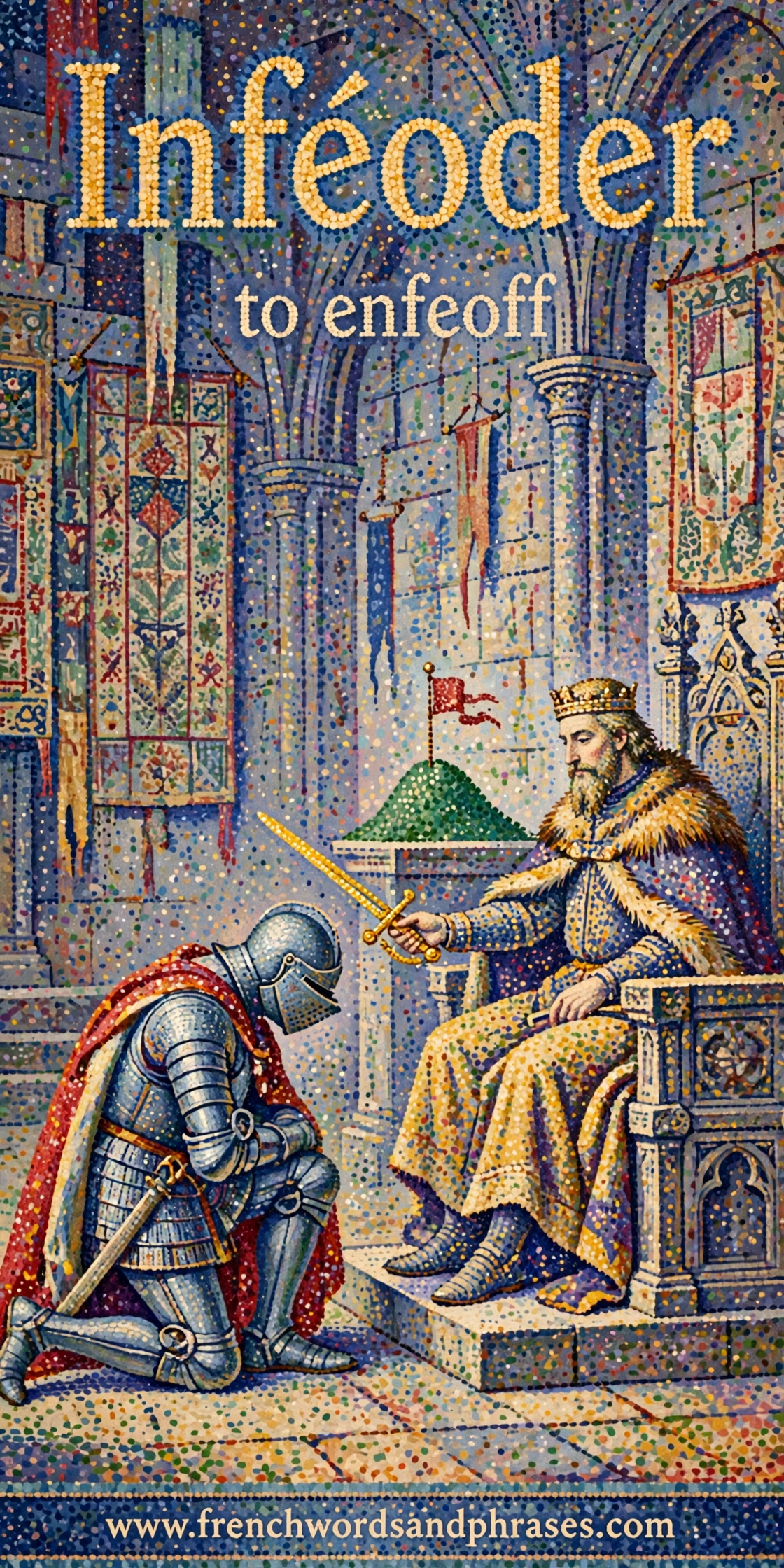
A lord, a kneeling vassal, a clod of earth handed over as the sign of a fief — inféoder belongs to the feudal ceremony, but its reflexive form has escaped the Middle Ages and now describes newspapers, parties and officials tied hand and foot to a master.
In this guide, you’ll learn how to conjugate inféoder in all the major French tenses and moods. Explore complete conjugation tables, French examples, English translations, and practice quizzes.
Understanding the French Verb Inféoder
Inféoder is a regular French verb belonging to the first group of verbs, those ending in-er.
It means to enfeoff. In its literal sense the verb is pure history: a suzerain inféodait a domain to a vassal, who owed him homage and military service. In modern French the feudal image survives as a reproach — whoever s’inféode à a party, a leader or an interest has surrendered independent judgement, exactly as a vassal surrendered his sword arm.
Verb classification: First group (-er)
Auxiliary verb: Avoir
Past participle: inféodé
Present participle: inféodant
English equivalents: To enfeoff, to grant as a fief; inféoder une terre — to grant a land as a fief; s’inféoder à un parti — to bind oneself to a party; un journal inféodé au pouvoir — a newspaper subservient to those in power; être inféodé à — to be tied hand and foot to.
One important detail: inféoder keeps its é everywhere — j’inféode, nous inféodons, ils inféodent — because the é is followed by a full vowel syllable, not by a mute ending; it does not follow the espérer pattern. The living form today is the reflexive with à: s’inféoder à un parti, à un homme, à une idéologie — to tie oneself in subservience — and its past participle is a common political adjective: une presse inféodée au pouvoir.
Experience the Word
Inféoder is the verb of the kneeling bargain — land and protection one way, loyalty and obedience the other.
Imagine a stone hall in 1150. The young knight kneels, places his joined hands between the lord’s, and receives a clod of earth and a banner: le seigneur l’inféode d’un domaine. From that day his sword belongs to another man’s quarrels — by his own sworn choice.
Eight centuries later the ceremony is gone. But a newspaper can still be inféodé — kneeling, in print, before power.
How to Conjugate Inféoder: Complete French Conjugation Guide
Let’s explore every major conjugation of inféoder, beginning with the indicative mood.
How to Conjugate Inféoder in the Indicative Mood
The indicative mood is used to express facts, observations, actions, and events.
How to Conjugate Inféoder in the Present Tense (Présent)
Used for actions happening now, habitual actions, and general truths.
| Subject | Conjugation |
|---|---|
| je | inféode |
| tu | inféodes |
| il / elle | inféode |
| nous | inféodons |
| vous | inféodez |
| ils / elles | inféodent |
Example
Dans ce roman, le roi inféode les terres conquises à ses fidèles.
In this novel, the king grants the conquered lands as fiefs to his loyal men.
Quick Quiz 1
Complete the sentence:
Nous lisons que les rois ______ les marches à leurs vassaux.
Reveal the answer
inféodaient
Nous lisons que les rois inféodaient les marches à leurs vassaux.
We read that kings granted the marches as fiefs to their vassals.
How to Conjugate Inféoder in the Passé Composé
Used for completed actions in the past. Inféoder takes the auxiliary verb avoir.
| Subject | Conjugation |
|---|---|
| j’ | ai inféodé |
| tu | as inféodé |
| il / elle | a inféodé |
| nous | avons inféodé |
| vous | avez inféodé |
| ils / elles | ont inféodé |
Example
Le seigneur a inféodé ce domaine à un jeune chevalier.
The lord granted this domain as a fief to a young knight.
How to Conjugate Inféoder in the Imparfait (Imperfect Tense)
Used for habitual past actions, descriptions, and ongoing situations in the past.
| Subject | Conjugation |
|---|---|
| je | inféodais |
| tu | inféodais |
| il / elle | inféodait |
| nous | inféodions |
| vous | inféodiez |
| ils / elles | inféodaient |
Example
Autrefois, les rois inféodaient les marches frontières à leurs vassaux.
In former times, kings granted the border marches as fiefs to their vassals.
Quick Quiz 2
Choose the correct form:
The lord granted this domain as a fief.
Le seigneur ______ ce domaine. (a inféodé / est inféodé)
Reveal the answer
a inféodé
Le seigneur a inféodé ce domaine.
Inféoder takes avoir.
How to Conjugate Inféoder in the Plus-que-parfait
Used to describe an action that had already been completed before another past event.
| Subject | Conjugation |
|---|---|
| j’ | avais inféodé |
| tu | avais inféodé |
| il / elle | avait inféodé |
| nous | avions inféodé |
| vous | aviez inféodé |
| ils / elles | avaient inféodé |
Example
Le duc avait inféodé la vallée avant de partir en croisade.
The duke had granted the valley as a fief before leaving on crusade.
How to Conjugate Inféoder in the Passé Simple
Primarily used in formal writing, literature, and historical narratives. It is rarely used in everyday conversation.
| Subject | Conjugation |
|---|---|
| je | inféodai |
| tu | inféodas |
| il / elle | inféoda |
| nous | inféodâmes |
| vous | inféodâtes |
| ils / elles | inféodèrent |
Example
Le roi inféoda le comté à son plus fidèle baron.
The king granted the county as a fief to his most loyal baron.
How to Conjugate Inféoder in the Passé Antérieur
A literary tense used to express an action completed immediately before another past action, generally in the passé simple.
| Subject | Conjugation |
|---|---|
| j’ | eus inféodé |
| tu | eus inféodé |
| il / elle | eut inféodé |
| nous | eûmes inféodé |
| vous | eûtes inféodé |
| ils / elles | eurent inféodé |
Example
Quand le seigneur eut inféodé la terre, le chevalier lui prêta serment.
When the lord had granted the land as a fief, the knight swore him an oath.
How to Conjugate Inféoder in the Future Tense (Futur Simple)
Used to describe actions that will take place in the future.
| Subject | Conjugation |
|---|---|
| je | inféoderai |
| tu | inféoderas |
| il / elle | inféodera |
| nous | inféoderons |
| vous | inféoderez |
| ils / elles | inféoderont |
Example
Selon la chronique, le prince inféodera ces terres à ses compagnons.
According to the chronicle, the prince will grant these lands as fiefs to his companions.
How to Conjugate Inféoder in the Futur Antérieur (Future Perfect)
Used for an action that will have been completed before a particular point in the future.
| Subject | Conjugation |
|---|---|
| j’ | aurai inféodé |
| tu | auras inféodé |
| il / elle | aura inféodé |
| nous | aurons inféodé |
| vous | aurez inféodé |
| ils / elles | auront inféodé |
Example
À la fin de la guerre, le roi aura inféodé toutes les terres conquises.
By the end of the war, the king will have granted all the conquered lands as fiefs.
How to Conjugate Inféoder in the Near Future (Futur Proche)
Used to describe something that is going to happen soon. Formed with aller + infinitive.
| Subject | Conjugation |
|---|---|
| je | vais inféoder |
| tu | vas inféoder |
| il / elle | va inféoder |
| nous | allons inféoder |
| vous | allez inféoder |
| ils / elles | vont inféoder |
Example
Le seigneur va inféoder ce village à son neveu.
The lord is going to grant this village as a fief to his nephew.
How to Conjugate Inféoder in the Conditional Mood
The conditional mood expresses what would happen under certain circumstances. It is also frequently used to make polite requests or express wishes.
How to Conjugate Inféoder in the Present Conditional
| Subject | Conjugation |
|---|---|
| je | inféoderais |
| tu | inféoderais |
| il / elle | inféoderait |
| nous | inféoderions |
| vous | inféoderiez |
| ils / elles | inféoderaient |
Example
Un roi sage n’inféoderait pas tant de terres à un seul homme.
A wise king would not grant so many lands as fiefs to a single man.
How to Conjugate Inféoder in the Past Conditional
| Subject | Conjugation |
|---|---|
| j’ | aurais inféodé |
| tu | aurais inféodé |
| il / elle | aurait inféodé |
| nous | aurions inféodé |
| vous | auriez inféodé |
| ils / elles | auraient inféodé |
Example
Le duc aurait inféodé la vallée à son fils cadet.
The duke would have granted the valley as a fief to his younger son.
Inféoder in the Literary Past Conditional Form
This less common literary form uses the imperfect subjunctive of avoir.
| Subject | Conjugation |
|---|---|
| j’ | eusse inféodé |
| tu | eusses inféodé |
| il / elle | eût inféodé |
| nous | eussions inféodé |
| vous | eussiez inféodé |
| ils / elles | eussent inféodé |
Example
Le roi eût inféodé le comté sans la révolte des barons.
The king would have granted the county as a fief, without the barons’ revolt.
How to Conjugate Inféoder in the Subjunctive Mood
The subjunctive is used to express wishes, emotions, doubts, necessity, and uncertainty. It frequently follows expressions such as il faut que (it is necessary that) or bien que (although).
How to Conjugate Inféoder in the Present Subjunctive
| Subject | Conjugation |
|---|---|
| que je | inféode |
| que tu | inféodes |
| qu’il / qu’elle | inféode |
| que nous | inféodions |
| que vous | inféodiez |
| qu’ils / qu’elles | inféodent |
Example
Il fallait que le roi inféode les terres aux vainqueurs.
The king had to grant the lands as fiefs to the victors.
Quick Quiz 3
Complete the sentence using the subjunctive:
Il fallait que vous ______ ces terres avant l’hiver.
Reveal the answer
inféodiez
Il fallait que vous inféodiez ces terres avant l’hiver.
You had to grant these lands as fiefs before winter.
How to Conjugate Inféoder in the Imperfect Subjunctive
A literary tense, rarely encountered in modern spoken French.
| Subject | Conjugation |
|---|---|
| que je | inféodasse |
| que tu | inféodasses |
| qu’il / qu’elle | inféodât |
| que nous | inféodassions |
| que vous | inféodassiez |
| qu’ils / qu’elles | inféodassent |
Example
On exigeait que le seigneur inféodât le domaine avant l’hiver.
They required the lord to grant the domain as a fief before winter.
How to Conjugate Inféoder in the Pluperfect Subjunctive
A literary construction used to express an action completed before another past action.
| Subject | Conjugation |
|---|---|
| que j’ | eusse inféodé |
| que tu | eusses inféodé |
| qu’il / qu’elle | eût inféodé |
| que nous | eussions inféodé |
| que vous | eussiez inféodé |
| qu’ils / qu’elles | eussent inféodé |
Example
Les chroniques disent que le roi eût inféodé la province entière.
The chronicles say the king had granted the whole province as a fief.
How to Conjugate Inféoder in the Past Subjunctive
| Subject | Conjugation |
|---|---|
| que j’ | aie inféodé |
| que tu | aies inféodé |
| qu’il / qu’elle | ait inféodé |
| que nous | ayons inféodé |
| que vous | ayez inféodé |
| qu’ils / qu’elles | aient inféodé |
Example
Il est rare qu’un texte dise qu’on ait inféodé des terres à un étranger.
It is rare for a text to say that lands were granted as a fief to a foreigner.
How to Conjugate Inféoder in the Imperative
The imperative is used to give commands, instructions, invitations, or suggestions. Subject pronouns are omitted.
How to Conjugate Inféoder in the Present Imperative
| Person | Conjugation |
|---|---|
| (tu) | inféode |
| (nous) | inféodons |
| (vous) | inféodez |
Example
Inféode cette terre à ton fidèle écuyer !
Grant this land as a fief to your loyal squire!
Quick Quiz 4
How would you say Grant this land as a fief to your squire (tu form)?
Reveal the answer
Inféode cette terre à ton écuyer !
French Participles of Inféoder
Participles are verb forms that can be used in compound tenses and other grammatical constructions.
Present Participle of Inféoder
inféodant
En inféodant ses terres, le roi s’assurait des armées fidèles.
By granting his lands as fiefs, the king secured loyal armies for himself.
Past Participle of Inféoder
inféodé
Inféodé au pouvoir, ce journal n’ose plus critiquer le ministre.
Subservient to those in power, this newspaper no longer dares criticize the minister.
Inféoder in Everyday French: Real-Life Examples
Now that you know the conjugations, let’s see how inféoder appears in everyday French.
Example 1 — Present
Le roi inféode les terres conquises à ses fidèles.
The king grants the conquered lands as fiefs to his loyal men.
Example 2 — Passé composé
Le seigneur a inféodé ce domaine à un chevalier.
The lord granted this domain as a fief to a knight.
Example 3 — Imparfait
Les rois inféodaient les marches à leurs vassaux.
Kings granted the marches as fiefs to their vassals.
Example 4 — Future
Le prince inféodera ces terres à ses compagnons.
The prince will grant these lands as fiefs to his companions.
Example 5 — Conditional
Un roi sage n’inféoderait pas tant de terres.
A wise king would not grant so many lands as fiefs.
Example 6 — Imperative
Inféode cette terre à ton écuyer !
Grant this land as a fief to your squire!
Beyond Translation: The Meaning of Inféoder
English enfeoff is the same feudal word, as rare and as dusty in both languages.
The ceremony died; the kneeling survived.
Modern French kept the reflexive and the adjective for politics: s’inféoder à un parti, une presse inféodée — no lands change hands now, only judgements, and the old word still knows a vassal when it sees one.
How to Remember the French Verb Inféoder
Remember it this way: Inféoder is about the kneeling knight — and the newspaper that still kneels.
- Feudal literal sense: to grant land as a fief in return for loyalty — inféoder une terre à un vassal.
- The living form is reflexive: s’inféoder à — to bind oneself in subservience; un journal inféodé au pouvoir.
- É never changes: j’inféode, nous inféodons, past participle inféodé.
The key idea is the kneeling knight — and the newspaper that still kneels.
Test Your Knowledge of Inféoder
Let’s see how much you’ve learned. Try answering these questions before revealing the answers.
Question 1
What did a lord receive in return when he inféodait a domain?
Reveal the answer
Loyalty and service — the vassal owed homage and his sword arm for the land.
Question 2
How do you say The lord granted this domain as a fief to a young knight in French?
Reveal the answer
Le seigneur a inféodé ce domaine à un jeune chevalier.
Question 3
Translate: This newspaper is subservient to those in power.
Reveal the answer
Ce journal est inféodé au pouvoir.
Question 4
What is the past participle of inféoder?
Reveal the answer
Inféodé — a common political adjective: une presse inféodée.
Question 5
Complete the sentence:
Il fallait que le roi ______ les terres aux vainqueurs.
Reveal the answer
inféode
Il fallait que le roi inféode les terres aux vainqueurs.
The king had to grant the lands as fiefs to the victors.
Your Final Challenge
Can You Use It?
How would you say this in French?
The old king granted his last lands as fiefs, not knowing the word would survive mainly for newspapers that bow down.
Reveal the answer
Le vieux roi inféoda ses dernières terres, sans savoir que le mot survivrait surtout pour les journaux qui se prosternent.
The old king granted his last lands as fiefs, not knowing the word would survive mainly for newspapers that bow down.
A little French. A little curiosity. A richer everyday life.
LEARN FRENCH ONE WORD AT A TIME




