
A French Word to Live By
How to Conjugate Inculper in French
/ɛ̃.kyl.pe/
Inculper means to charge — to formally accuse a person of an offence in a legal investigation, before any trial has decided anything.
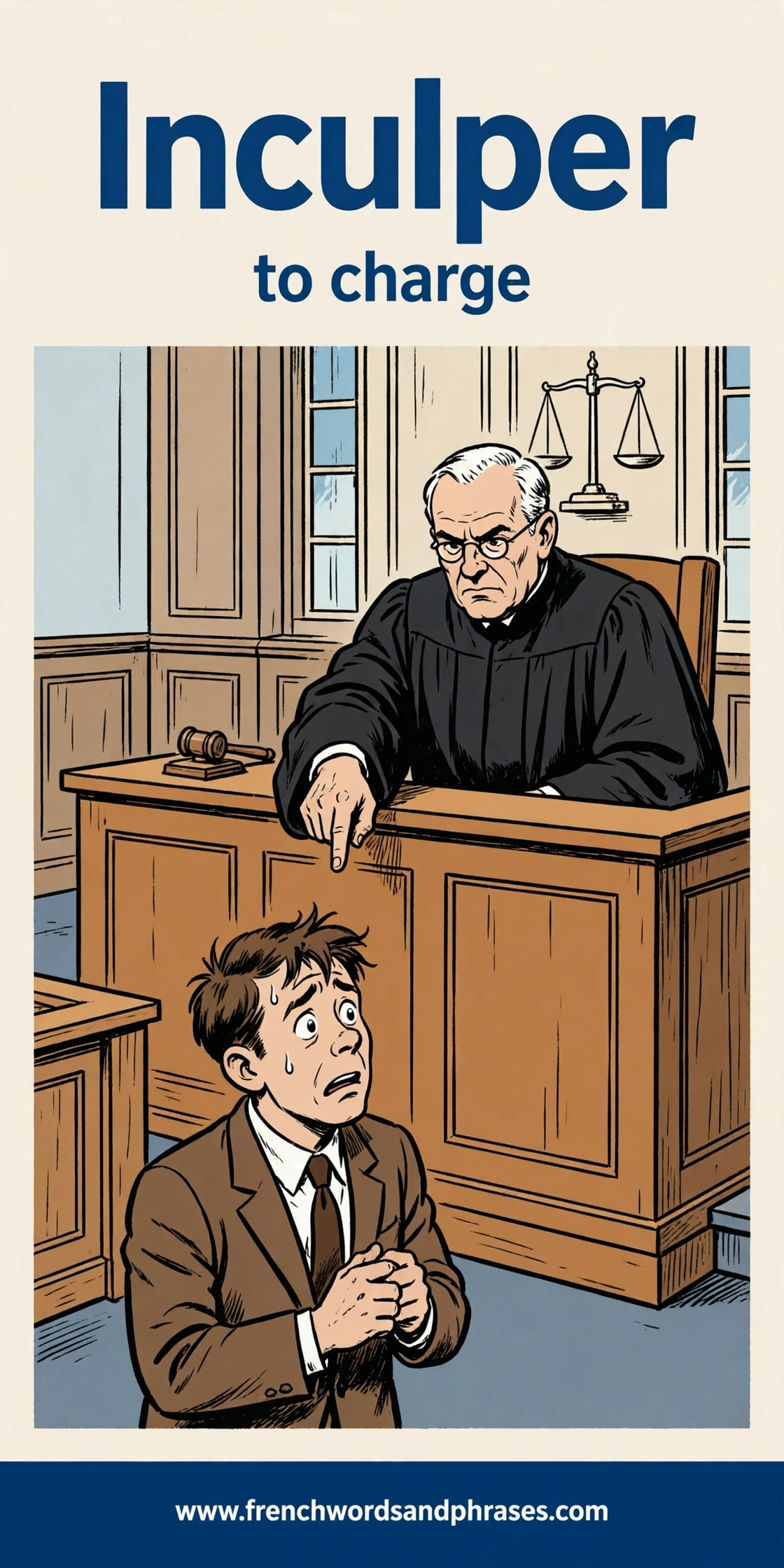
A judge reading the charges, a name printed in the newspaper next to the word inculpé — inculper is the verb of the formal accusation: the moment a suspect becomes, in the eyes of the law, a person charged.
In this guide, you’ll learn how to conjugate inculper in all the major French tenses and moods. Explore complete conjugation tables, French examples, English translations, and practice quizzes.
Understanding the French Verb Inculper
Inculper is a regular French verb belonging to the first group of verbs, those ending in-er.
It means to charge (with an offence). It belongs to the language of courts, police and newspapers: a juge d’instruction inculpe a suspect during the investigation, long before a verdict. Modern French procedure also uses mettre en examen, which has largely replaced inculper in official texts since 1993 — but inculper and inculpé remain everywhere in the press and in everyday legal reporting.
Verb classification: First group (-er)
Auxiliary verb: Avoir
Past participle: inculpé
Present participle: inculpant
English equivalents: To charge, to indict; inculper quelqu’un de vol — to charge someone with theft; être inculpé de fraude — to be charged with fraud; l’inculpé — the accused, the person charged; inculper un suspect — to charge a suspect.
One important detail: inculper always carries its reason with the preposition de — inculper quelqu’un de quelque chose: on l’a inculpé de vol, de fraude, de corruption. The person charged is un inculpé, a noun you will meet in every French news report. Do not confuse inculper with inculquer, to instil — near-twins in spelling, strangers in meaning. The verb itself is perfectly regular: j’inculpe, nous inculpons, past participle inculpé.
Experience the Word
Inculper is the verb of the official finger pointed by the law — an accusation with a file number, a date and a judge’s signature.
Imagine a quiet courtroom corridor. A man in a grey suit is led past the cameras, head down, while a clerk reads from a folder: inculpé de fraude — charged with fraud. Nothing has been judged yet, but from this morning his life has a new name: l’inculpé.
He has not been condemned. He has been charged — inculpé — and the machinery of justice has begun to turn.
How to Conjugate Inculper: Complete French Conjugation Guide
Let’s explore every major conjugation of inculper, beginning with the indicative mood.
How to Conjugate Inculper in the Indicative Mood
The indicative mood is used to express facts, observations, actions, and events.
How to Conjugate Inculper in the Present Tense (Présent)
Used for actions happening now, habitual actions, and general truths.
| Subject | Conjugation |
|---|---|
| je | inculpe |
| tu | inculpes |
| il / elle | inculpe |
| nous | inculpons |
| vous | inculpez |
| ils / elles | inculpent |
Example
Le juge inculpe le suspect de vol aggravé.
The judge is charging the suspect with aggravated theft.
Quick Quiz 1
Complete the sentence:
Nous ______ le suspect de fraude.
Reveal the answer
inculpons
Nous inculpons le suspect de fraude.
We are charging the suspect with fraud.
How to Conjugate Inculper in the Passé Composé
Used for completed actions in the past. Inculper takes the auxiliary verb avoir.
| Subject | Conjugation |
|---|---|
| j’ | ai inculpé |
| tu | as inculpé |
| il / elle | a inculpé |
| nous | avons inculpé |
| vous | avez inculpé |
| ils / elles | ont inculpé |
Example
La police a inculpé trois hommes dans cette affaire.
The police have charged three men in this case.
How to Conjugate Inculper in the Imparfait (Imperfect Tense)
Used for habitual past actions, descriptions, and ongoing situations in the past.
| Subject | Conjugation |
|---|---|
| je | inculpais |
| tu | inculpais |
| il / elle | inculpait |
| nous | inculpions |
| vous | inculpiez |
| ils / elles | inculpaient |
Example
Chaque semaine, le tribunal inculpait de nouveaux suspects.
Every week, the court charged new suspects.
Quick Quiz 2
Choose the correct form:
The police have charged three men.
La police ______ trois hommes. (a inculpé / est inculpé)
Reveal the answer
a inculpé
La police a inculpé trois hommes.
Inculper takes avoir.
How to Conjugate Inculper in the Plus-que-parfait
Used to describe an action that had already been completed before another past event.
| Subject | Conjugation |
|---|---|
| j’ | avais inculpé |
| tu | avais inculpé |
| il / elle | avait inculpé |
| nous | avions inculpé |
| vous | aviez inculpé |
| ils / elles | avaient inculpé |
Example
On l’avait inculpé avant même d’entendre sa version.
He had been charged before anyone had even heard his side of the story.
How to Conjugate Inculper in the Passé Simple
Primarily used in formal writing, literature, and historical narratives. It is rarely used in everyday conversation.
| Subject | Conjugation |
|---|---|
| je | inculpai |
| tu | inculpas |
| il / elle | inculpa |
| nous | inculpâmes |
| vous | inculpâtes |
| ils / elles | inculpèrent |
Example
Le procureur inculpa l’ancien ministre de corruption.
The prosecutor charged the former minister with corruption.
How to Conjugate Inculper in the Passé Antérieur
A literary tense used to express an action completed immediately before another past action, generally in the passé simple.
| Subject | Conjugation |
|---|---|
| j’ | eus inculpé |
| tu | eus inculpé |
| il / elle | eut inculpé |
| nous | eûmes inculpé |
| vous | eûtes inculpé |
| ils / elles | eurent inculpé |
Example
Dès qu’on l’eut inculpé, la presse s’empara de l’affaire.
As soon as he had been charged, the press seized on the case.
How to Conjugate Inculper in the Future Tense (Futur Simple)
Used to describe actions that will take place in the future.
| Subject | Conjugation |
|---|---|
| je | inculperai |
| tu | inculperas |
| il / elle | inculpera |
| nous | inculperons |
| vous | inculperez |
| ils / elles | inculperont |
Example
Le juge inculpera le directeur si les preuves suffisent.
The judge will charge the director if the evidence is sufficient.
How to Conjugate Inculper in the Futur Antérieur (Future Perfect)
Used for an action that will have been completed before a particular point in the future.
| Subject | Conjugation |
|---|---|
| j’ | aurai inculpé |
| tu | auras inculpé |
| il / elle | aura inculpé |
| nous | aurons inculpé |
| vous | aurez inculpé |
| ils / elles | auront inculpé |
Example
À la fin du mois, on aura inculpé tous les membres du réseau.
By the end of the month, all the members of the network will have been charged.
How to Conjugate Inculper in the Near Future (Futur Proche)
Used to describe something that is going to happen soon. Formed with aller + infinitive.
| Subject | Conjugation |
|---|---|
| je | vais inculper |
| tu | vas inculper |
| il / elle | va inculper |
| nous | allons inculper |
| vous | allez inculper |
| ils / elles | vont inculper |
Example
Le procureur va inculper le suspect cet après-midi.
The prosecutor is going to charge the suspect this afternoon.
How to Conjugate Inculper in the Conditional Mood
The conditional mood expresses what would happen under certain circumstances. It is also frequently used to make polite requests or express wishes.
How to Conjugate Inculper in the Present Conditional
| Subject | Conjugation |
|---|---|
| je | inculperais |
| tu | inculperais |
| il / elle | inculperait |
| nous | inculperions |
| vous | inculperiez |
| ils / elles | inculperaient |
Example
Sans preuves solides, on ne l’inculperait jamais.
Without solid evidence, they would never charge him.
How to Conjugate Inculper in the Past Conditional
| Subject | Conjugation |
|---|---|
| j’ | aurais inculpé |
| tu | aurais inculpé |
| il / elle | aurait inculpé |
| nous | aurions inculpé |
| vous | auriez inculpé |
| ils / elles | auraient inculpé |
Example
On l’aurait inculpé plus tôt avec de tels témoignages.
He would have been charged earlier with such testimony.
Inculper in the Literary Past Conditional Form
This less common literary form uses the imperfect subjunctive of avoir.
| Subject | Conjugation |
|---|---|
| j’ | eusse inculpé |
| tu | eusses inculpé |
| il / elle | eût inculpé |
| nous | eussions inculpé |
| vous | eussiez inculpé |
| ils / elles | eussent inculpé |
Example
Le juge l’eût inculpé sur-le-champ.
The judge would have charged him on the spot.
How to Conjugate Inculper in the Subjunctive Mood
The subjunctive is used to express wishes, emotions, doubts, necessity, and uncertainty. It frequently follows expressions such as il faut que (it is necessary that) or bien que (although).
How to Conjugate Inculper in the Present Subjunctive
| Subject | Conjugation |
|---|---|
| que je | inculpe |
| que tu | inculpes |
| qu’il / qu’elle | inculpe |
| que nous | inculpions |
| que vous | inculpiez |
| qu’ils / qu’elles | inculpent |
Example
Il est rare qu’on inculpe un témoin sans preuves.
It is rare for a witness to be charged without evidence.
Quick Quiz 3
Complete the sentence using the subjunctive:
Je suis étonné qu’on ______ un homme si respecté.
Reveal the answer
ait inculpé
Je suis étonné qu’on ait inculpé un homme si respecté.
I am surprised that such a respected man has been charged.
How to Conjugate Inculper in the Imperfect Subjunctive
A literary tense, rarely encountered in modern spoken French.
| Subject | Conjugation |
|---|---|
| que je | inculpasse |
| que tu | inculpasses |
| qu’il / qu’elle | inculpât |
| que nous | inculpassions |
| que vous | inculpassiez |
| qu’ils / qu’elles | inculpassent |
Example
On doutait qu’on inculpât le maire lui-même.
People doubted that the mayor himself would be charged.
How to Conjugate Inculper in the Pluperfect Subjunctive
A literary construction used to express an action completed before another past action.
| Subject | Conjugation |
|---|---|
| que j’ | eusse inculpé |
| que tu | eusses inculpé |
| qu’il / qu’elle | eût inculpé |
| que nous | eussions inculpé |
| que vous | eussiez inculpé |
| qu’ils / qu’elles | eussent inculpé |
Example
On racontait qu’on eût inculpé le comptable à tort.
People said the accountant had been wrongly charged.
How to Conjugate Inculper in the Past Subjunctive
| Subject | Conjugation |
|---|---|
| que j’ | aie inculpé |
| que tu | aies inculpé |
| qu’il / qu’elle | ait inculpé |
| que nous | ayons inculpé |
| que vous | ayez inculpé |
| qu’ils / qu’elles | aient inculpé |
Example
Je suis étonné qu’on ait inculpé un homme si respecté.
I am surprised that such a respected man has been charged.
How to Conjugate Inculper in the Imperative
The imperative is used to give commands, instructions, invitations, or suggestions. Subject pronouns are omitted.
How to Conjugate Inculper in the Present Imperative
| Person | Conjugation |
|---|---|
| (tu) | inculpe |
| (nous) | inculpons |
| (vous) | inculpez |
Example
N’inculpez personne sans preuves, attendez le rapport !
Charge no one without evidence, wait for the report!
Quick Quiz 4
How would you say Charge no one without evidence (vous form)?
Reveal the answer
N’inculpez personne sans preuves !
French Participles of Inculper
Participles are verb forms that can be used in compound tenses and other grammatical constructions.
Present Participle of Inculper
inculpant
En inculpant le suspect trop tôt, la police a commis une erreur.
By charging the suspect too early, the police made a mistake.
Past Participle of Inculper
inculpé
Inculpé de fraude, le directeur a démissionné.
Charged with fraud, the director resigned.
Inculper in Everyday French: Real-Life Examples
Now that you know the conjugations, let’s see how inculper appears in everyday French.
Example 1 — Present
Le juge inculpe le suspect de vol.
The judge is charging the suspect with theft.
Example 2 — Passé composé
La police a inculpé trois hommes.
The police have charged three men.
Example 3 — Imparfait
Le tribunal inculpait de nouveaux suspects.
The court was charging new suspects.
Example 4 — Future
Le juge inculpera le directeur demain.
The judge will charge the director tomorrow.
Example 5 — Conditional
Sans preuves, on ne l’inculperait pas.
Without evidence, they would not charge him.
Example 6 — Imperative
N’inculpez personne sans preuves !
Charge no one without evidence!
Beyond Translation: The Meaning of Inculper
English to charge and French inculper meet in the courtroom, but inculper keeps a Latin shadow — culpa, fault, is inside it, the same root as coupable, guilty.
To be inculpé is to be named at fault before being judged.
That tension is the word’s whole story: the charge is not the verdict, and French newspapers write l’inculpé precisely because the law must accuse before it can decide.
How to Remember the French Verb Inculper
Remember it this way: Inculper is about the judge, the file, the charge — culpa, fault, inside the word.
- The frame is fixed: inculper quelqu’un DE quelque chose — inculpé de vol, de fraude.
- The person is un inculpé; the modern official synonym is mettre en examen.
- Do not confuse with inculquer, to instil — and regular -er: j’inculpe, nous inculpons, participle inculpé.
The key idea is the judge, the file, the charge — culpa, fault, inside the word.
Test Your Knowledge of Inculper
Let’s see how much you’ve learned. Try answering these questions before revealing the answers.
Question 1
Which preposition follows inculper to give the offence?
Reveal the answer
De — inculper quelqu’un de vol, de fraude, de corruption.
Question 2
How do you say The police have charged three men in French?
Reveal the answer
La police a inculpé trois hommes.
Question 3
Translate: Charged with fraud, the director resigned.
Reveal the answer
Inculpé de fraude, le directeur a démissionné.
Question 4
What is the past participle of inculper?
Reveal the answer
Inculpé — also the noun for the person charged, un inculpé.
Question 5
Complete the sentence:
Il est rare qu’on ______ un témoin sans preuves.
Reveal the answer
inculpe
Il est rare qu’on inculpe un témoin sans preuves.
It is rare for a witness to be charged without evidence.
Your Final Challenge
Can You Use It?
How would you say this in French?
Charged with theft, the caretaker swears he never touched the money in the till.
Reveal the answer
Inculpé de vol, le gardien jure qu’il n’a jamais touché à l’argent de la caisse.
Charged with theft, the caretaker swears he never touched the money in the till.
A little French. A little curiosity. A richer everyday life.
LEARN FRENCH ONE WORD AT A TIME




