A French Word to Live By
How to Conjugate Glisser in French
/ɡli.se/
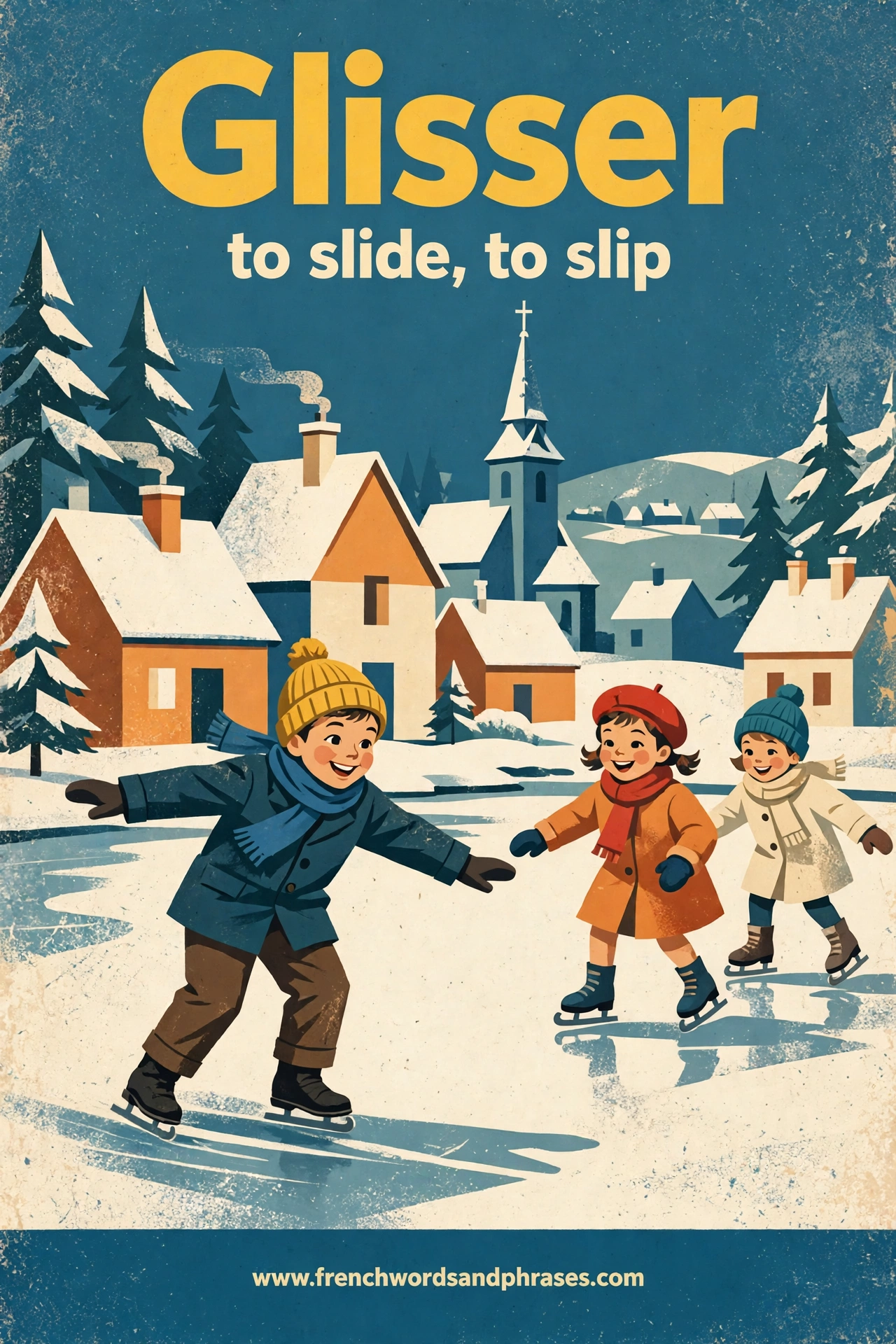
Glisser means to slide, to slip, or to glide.
A child gliding across a frozen lake, a drawer opening without a sound, a letter slipped under a door — glisser is the verb of smooth, silent movement, the one French uses whenever something moves without steps and without noise.
In this guide, you’ll learn how to conjugate glisser in all the major French tenses and moods. Explore complete conjugation tables, French examples, English translations, and practice quizzes.
Understanding the French Verb Glisser
Glisser is a regular French verb belonging to the first group of verbs, those ending in -er.
It means to slide, to slip, to glide. It is commonly used for sliding on ice and snow, slipping on wet floors, drawers and zips gliding open, slipping notes and keys under doors, and sneaking in or out without being seen in its reflexive form.
Verb classification: First group (-er)
Auxiliary verb: Avoir
Past participle: glissé
Present participle: glissant
English equivalents: To slide, to slip, to glide; (se glisser) to slip quietly into.
One important detail: glisser works in both directions. Things slide by themselves — le tiroir glisse, les enfants glissent sur la glace — and you slide things yourself: glisser une lettre sous la porte, to slip a letter under the door. The reflexive se glisser is to slip yourself quietly somewhere: se glisser dans le lit, to slip into bed.
Experience the Word
Glisser is the verb of smooth, silent movement — no steps, no noise, just one surface floating over another.
Imagine a frozen lake in the Jura at dawn. A child takes three running steps, then lets go: arms wide, scarf flying, she glides twenty metres without moving her feet.
You have not walked. You have glided — and the ice did all the work.
How to Conjugate Glisser: Complete French Conjugation Guide
Let’s explore every major conjugation of glisser, beginning with the indicative mood.
How to Conjugate Glisser in the Indicative Mood
The indicative mood is used to express facts, observations, actions, and events.
How to Conjugate Glisser in the Present Tense (Présent)
Used for actions happening now, habitual actions, and general truths.
| Subject | Conjugation |
|---|---|
| je | glisse |
| tu | glisses |
| il / elle | glisse |
| nous | glissons |
| vous | glissez |
| ils / elles | glissent |
Example
Les enfants glissent sur la glace du lac.
The children are sliding on the ice of the lake.
Quick Quiz 1
Complete the sentence:
Les patineurs ______ sur la glace.
Reveal the answer
glissent
Les patineurs glissent sur la glace.
The skaters are gliding on the ice.
How to Conjugate Glisser in the Passé Composé
Used for completed actions in the past. Glisser takes the auxiliary verb avoir.
| Subject | Conjugation |
|---|---|
| j’ | ai glissé |
| tu | as glissé |
| il / elle | a glissé |
| nous | avons glissé |
| vous | avez glissé |
| ils / elles | ont glissé |
Example
Il a glissé sur une peau de banane.
He slipped on a banana skin.
How to Conjugate Glisser in the Imparfait (Imperfect Tense)
Used for habitual past actions, descriptions, and ongoing situations in the past.
| Subject | Conjugation |
|---|---|
| je | glissais |
| tu | glissais |
| il / elle | glissait |
| nous | glissions |
| vous | glissiez |
| ils / elles | glissaient |
Example
Le traîneau glissait doucement sur la neige.
The sledge used to glide gently over the snow.
Quick Quiz 2
Choose the correct form:
She slipped the key under the door.
Elle ______ la clé sous la porte. (a glissé / est glissée)
Reveal the answer
a glissé
Elle a glissé la clé sous la porte.
Glisser takes avoir.
How to Conjugate Glisser in the Plus-que-parfait
Used to describe an action that had already been completed before another past event.
| Subject | Conjugation |
|---|---|
| j’ | avais glissé |
| tu | avais glissé |
| il / elle | avait glissé |
| nous | avions glissé |
| vous | aviez glissé |
| ils / elles | avaient glissé |
Example
Elle avait glissé la lettre sous la porte.
She had slipped the letter under the door.
How to Conjugate Glisser in the Passé Simple
Primarily used in formal writing, literature, and historical narratives. It is rarely used in everyday conversation.
| Subject | Conjugation |
|---|---|
| je | glissai |
| tu | glissas |
| il / elle | glissa |
| nous | glissâmes |
| vous | glissâtes |
| ils / elles | glissèrent |
Example
Le bateau glissa sans bruit vers le large.
The boat glided noiselessly out to sea.
How to Conjugate Glisser in the Passé Antérieur
A literary tense used to express an action completed immediately before another past action, generally in the passé simple.
| Subject | Conjugation |
|---|---|
| j’ | eus glissé |
| tu | eus glissé |
| il / elle | eut glissé |
| nous | eûmes glissé |
| vous | eûtes glissé |
| ils / elles | eurent glissé |
Example
Dès qu’il eut glissé sur la glace, il se releva.
As soon as he had slipped on the ice, he got back up.
How to Conjugate Glisser in the Future Tense (Futur Simple)
Used to describe actions that will take place in the future.
| Subject | Conjugation |
|---|---|
| je | glisserai |
| tu | glisseras |
| il / elle | glissera |
| nous | glisserons |
| vous | glisserez |
| ils / elles | glisseront |
Example
Les patineurs glisseront sur la glace neuve.
The skaters will glide over the new ice.
How to Conjugate Glisser in the Futur Antérieur (Future Perfect)
Used for an action that will have been completed before a particular point in the future.
| Subject | Conjugation |
|---|---|
| j’ | aurai glissé |
| tu | auras glissé |
| il / elle | aura glissé |
| nous | aurons glissé |
| vous | aurez glissé |
| ils / elles | auront glissé |
Example
À la fin de la descente, ils auront glissé sur deux kilomètres.
By the end of the descent, they will have slid for two kilometres.
How to Conjugate Glisser in the Near Future (Futur Proche)
Used to describe something that is going to happen soon. Formed with aller + infinitive.
| Subject | Conjugation |
|---|---|
| je | vais glisser |
| tu | vas glisser |
| il / elle | va glisser |
| nous | allons glisser |
| vous | allez glisser |
| ils / elles | vont glisser |
Example
Attention, le sol est mouillé, tu vas glisser !
Careful, the floor is wet, you are going to slip!
How to Conjugate Glisser in the Conditional Mood
The conditional mood expresses what would happen under certain circumstances. It is also frequently used to make polite requests or express wishes.
How to Conjugate Glisser in the Present Conditional
| Subject | Conjugation |
|---|---|
| je | glisserais |
| tu | glisserais |
| il / elle | glisserait |
| nous | glisserions |
| vous | glisseriez |
| ils / elles | glisseraient |
Example
Sans la rampe, je glisserais sur ces marches.
Without the handrail, I would slip on these steps.
How to Conjugate Glisser in the Past Conditional
| Subject | Conjugation |
|---|---|
| j’ | aurais glissé |
| tu | aurais glissé |
| il / elle | aurait glissé |
| nous | aurions glissé |
| vous | auriez glissé |
| ils / elles | auraient glissé |
Example
Il aurait glissé si tu ne l’avais pas retenu.
He would have slipped if you had not caught him.
Glisser in the Literary Past Conditional Form
This less common literary form uses the imperfect subjunctive of avoir.
| Subject | Conjugation |
|---|---|
| j’ | eusse glissé |
| tu | eusses glissé |
| il / elle | eût glissé |
| nous | eussions glissé |
| vous | eussiez glissé |
| ils / elles | eussent glissé |
Example
Le traîneau eût glissé jusqu’au village sans le vent contraire.
The sledge would have glided all the way to the village without the headwind.
How to Conjugate Glisser in the Subjunctive Mood
The subjunctive is used to express wishes, emotions, doubts, necessity, and uncertainty. It frequently follows expressions such as il faut que (it is necessary that) or bien que (although).
How to Conjugate Glisser in the Present Subjunctive
| Subject | Conjugation |
|---|---|
| que je | glisse |
| que tu | glisses |
| qu’il / qu’elle | glisse |
| que nous | glissions |
| que vous | glissiez |
| qu’ils / qu’elles | glissent |
Example
Il faut que le tiroir glisse sans forcer.
The drawer must slide without forcing it.
Quick Quiz 3
Complete the sentence using the subjunctive:
Il faut que le tiroir ______ sans bruit.
Reveal the answer
glisse
Il faut que le tiroir glisse sans bruit.
The drawer must slide noiselessly.
How to Conjugate Glisser in the Imperfect Subjunctive
A literary tense, rarely encountered in modern spoken French.
| Subject | Conjugation |
|---|---|
| que je | glissasse |
| que tu | glissasses |
| qu’il / qu’elle | glissât |
| que nous | glissassions |
| que vous | glissassiez |
| qu’ils / qu’elles | glissassent |
Example
Je craignais qu’elle glissât sur le verglas.
I feared she might slip on the black ice.
How to Conjugate Glisser in the Pluperfect Subjunctive
A literary construction used to express an action completed before another past action.
| Subject | Conjugation |
|---|---|
| que j’ | eusse glissé |
| que tu | eusses glissé |
| qu’il / qu’elle | eût glissé |
| que nous | eussions glissé |
| que vous | eussiez glissé |
| qu’ils / qu’elles | eussent glissé |
Example
Il regrettait que nous eussions glissé la note sous la mauvaise porte.
He regretted that we had slipped the note under the wrong door.
How to Conjugate Glisser in the Past Subjunctive
| Subject | Conjugation |
|---|---|
| que j’ | aie glissé |
| que tu | aies glissé |
| qu’il / qu’elle | ait glissé |
| que nous | ayons glissé |
| que vous | ayez glissé |
| qu’ils / qu’elles | aient glissé |
Example
Je suis sûr que tu as glissé sur la glace au moins une fois.
I am sure you have slipped on the ice at least once.
How to Conjugate Glisser in the Imperative
The imperative is used to give commands, instructions, invitations, or suggestions. Subject pronouns are omitted.
How to Conjugate Glisser in the Present Imperative
| Person | Conjugation |
|---|---|
| (tu) | glisse |
| (nous) | glissons |
| (vous) | glissez |
Example
Glisse la clé sous le paillasson !
Slip the key under the doormat!
Quick Quiz 4
How would you say Slip the letter under the door (tu form)?
Reveal the answer
Glisse la lettre sous la porte !
French Participles of Glisser
Participles are verb forms that can be used in compound tenses and other grammatical constructions.
Present Participle of Glisser
glissant
En glissant sur le parquet, elle a failli tomber.
Sliding across the wooden floor, she nearly fell.
Past Participle of Glisser
glissé
La lettre, une fois glissée sous la porte, attendait son retour.
The letter, once slipped under the door, awaited his return.
Glisser in Everyday French: Real-Life Examples
Now that you know the conjugations, let’s see how glisser appears in everyday French.
Example 1 — Present
Les enfants glissent sur la glace.
The children are sliding on the ice.
Example 2 — Passé composé
J’ai glissé sur le sol mouillé.
I slipped on the wet floor.
Example 3 — Imparfait
Le traîneau glissait sur la neige.
The sledge used to glide over the snow.
Example 4 — Future
Tu glisseras si tu cours ici.
You will slip if you run here.
Example 5 — Conditional
On glisserait facilement sur ce verglas.
You could easily slip on this black ice.
Example 6 — Imperative
Glisse-toi dans ton lit, il est tard !
Slip into your bed, it is late!
Beyond Translation: The Meaning of Glisser
English divides the movement between slide, slip and glide; French trusts glisser with all three, plus the quiet art of slipping things into place.
Its reflexive is the verb of discretion.
Se glisser dans le lit, se glisser dans la foule, se glisser hors de la pièce — to slip into bed, into the crowd, out of the room, without anyone noticing. Glisser moves objects; se glisser moves you.
How to Remember the French Verb Glisser
Remember it this way: Glisser is about smooth and silent — ice, drawers and letters under doors.
- Glisser works both ways — la glace glisse, and je glisse la lettre sous la porte.
- Se glisser — to slip yourself in quietly: elle se glisse dans son lit.
- Regular -er: je glisse, nous glissons, past participle glissé.
The key idea is smooth and silent — ice, drawers and letters under doors.
Test Your Knowledge of Glisser
Let’s see how much you’ve learned. Try answering these questions before revealing the answers.
Question 1
What does se glisser dans le lit mean?
Reveal the answer
To slip into bed — to slide yourself quietly under the covers.
Question 2
How do you say The children are sliding on the ice in French?
Reveal the answer
Les enfants glissent sur la glace.
Question 3
Translate: He slipped on the wet floor.
Reveal the answer
Il a glissé sur le sol mouillé.
Question 4
What is the past participle of glisser?
Reveal the answer
Glissé.
Question 5
Complete the sentence:
Attention, tu vas ______ sur le verglas !
Reveal the answer
glisser
Attention, tu vas glisser sur le verglas !
Careful, you are going to slip on the black ice!
Your Final Challenge
Can You Use It?
How would you say this in French?
In the evening, she slips into bed with a good book.
Reveal the answer
Le soir, elle se glisse dans son lit avec un bon livre.
In the evening, she slips into bed with a good book.
A little French. A little curiosity. A richer everyday life.
LEARN FRENCH ONE WORD AT A TIME