A French Word to Live By
How to Conjugate Engluer in French
/ɑ̃.ɡlɥe/
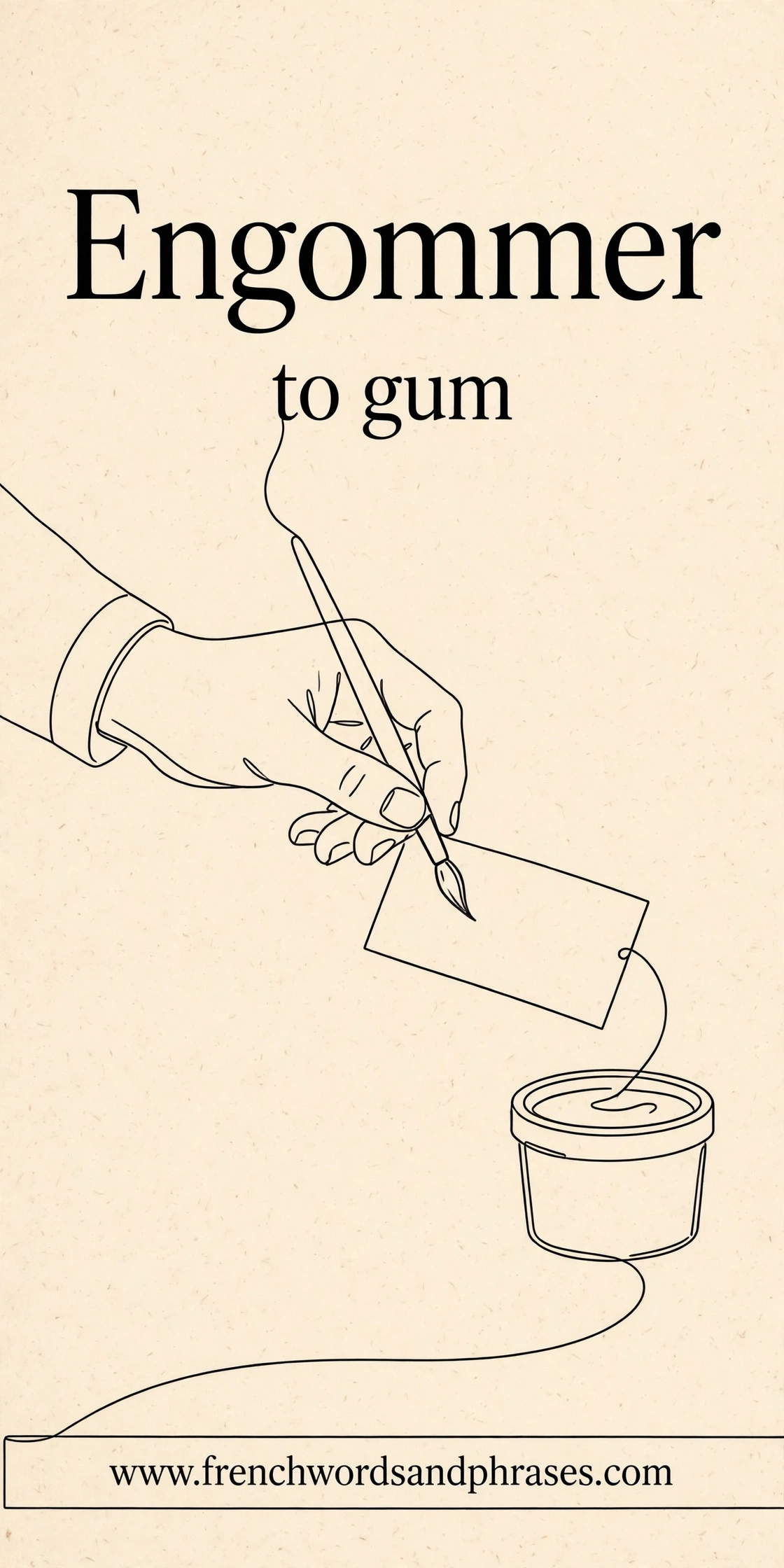
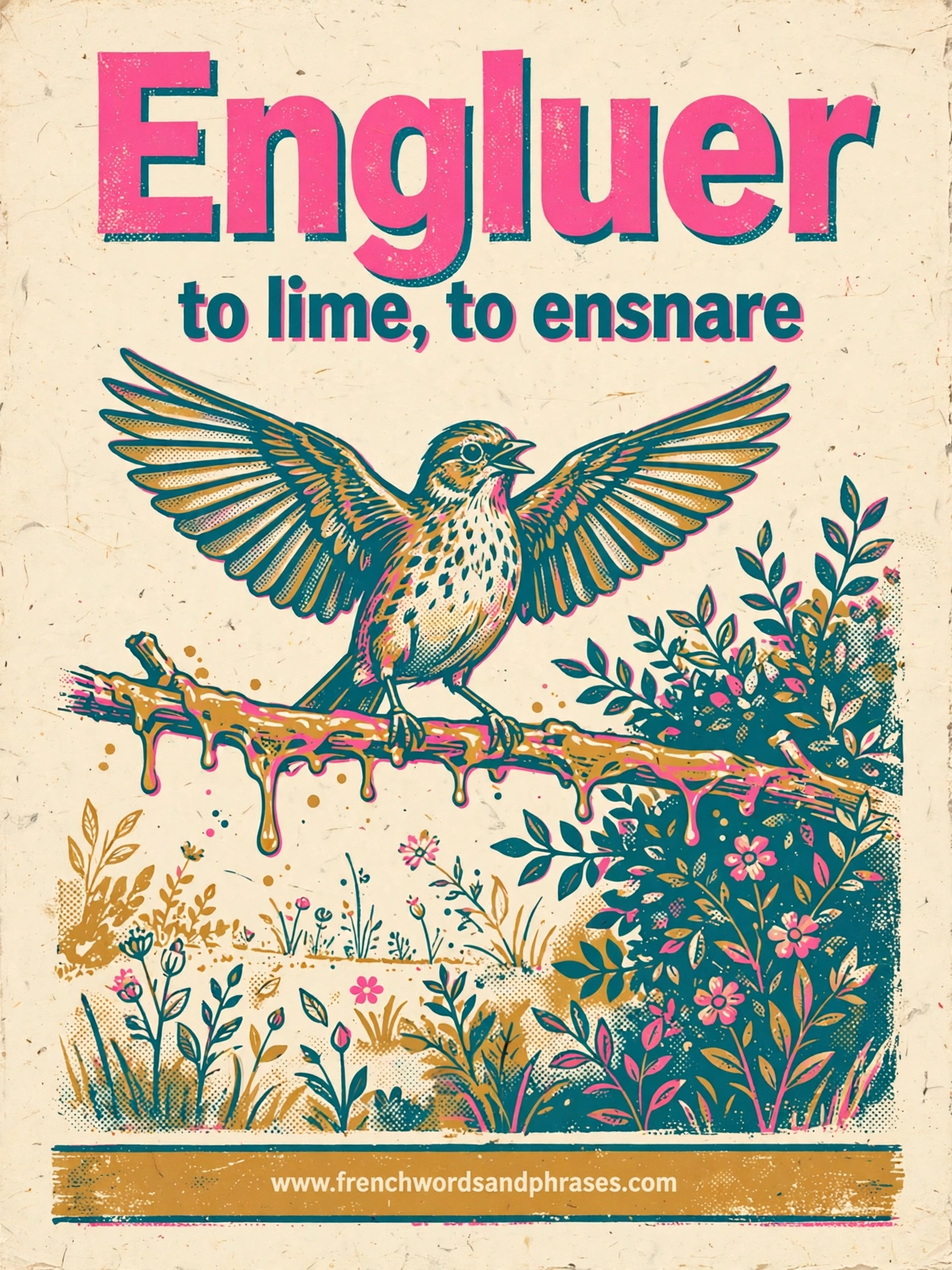
Engluer means to lime, to ensnare — to smear something with birdlime, the sticky glue once spread on branches to trap birds, and by extension to get anything stuck fast.
A bird-catcher at dawn smearing twigs with sticky lime, a fly struggling in resin, fingers glued together by syrup — engluer is the verb of sticky traps: to coat something with glue so that whatever touches it cannot get free.
In this guide, you’ll learn how to conjugate engluer in all the major French tenses and moods. Explore complete conjugation tables, French examples, English translations, and practice quizzes.
Understanding the French Verb Engluer
Engluer is a regular French verb belonging to the first group of verbs, those ending in-er.
It means to lime, to ensnare. It is commonly used of the old birdlime traps, of sticky substances coating hands, tools and feathers, and figuratively of being stuck — englué dans la bureaucratie, englué dans un scandale — where the glue is paperwork or disgrace and the bird is you.
Verb classification: First group (-er)
Auxiliary verb: Avoir
Past participle: englué
Present participle: engluant
English equivalents: To lime, to smear with birdlime, to ensnare, to get stuck fast; engluer des branches — to lime branches (to trap birds); la glu — birdlime, glue; être englué dans — to be stuck fast in (mud, a scandal, paperwork); des doigts englués — sticky, glued-up fingers.
One important detail: engluer is built on la glu, birdlime — the sticky substance hunters once spread on branches so that birds’ feet stuck fast; the old sport was called la chasse à la glu. The verb is a regular -er: j’englue, nous engluons, ils engluent, past participle englué. Note the u after the l, pronounced as one slippery syllable: en-glu-er. Modern French uses it mostly for anything hopelessly sticky — honey, resin, chewing gum — and figuratively for people stuck in situations they cannot escape.
Experience the Word
Engluer is the verb of the sticky trap — touch it once, and every struggle only spreads the glue further.
Imagine an old-fashioned bird-catcher before dawn. He climbs his tree with a pot of glu, englue the thin branches one by one, then hides and waits. The first thrush that lands will beat its wings in vain — the branch itself has become the trap.
The bird has not been caught by a net or a cage. It has been limed — englué — by the very branch it trusted.
How to Conjugate Engluer: Complete French Conjugation Guide
Let’s explore every major conjugation of engluer, beginning with the indicative mood.
How to Conjugate Engluer in the Indicative Mood
The indicative mood is used to express facts, observations, actions, and events.
How to Conjugate Engluer in the Present Tense (Présent)
Used for actions happening now, habitual actions, and general truths.
| Subject | Conjugation |
|---|---|
| je | englue |
| tu | englues |
| il / elle | englue |
| nous | engluons |
| vous | engluez |
| ils / elles | engluent |
Example
L’oiseleur englue les branches pour attraper les oiseaux.
The bird-catcher limes the branches to catch the birds.
Quick Quiz 1
Complete the sentence:
Nous ______ les branches avant l’aube.
Reveal the answer
engluons
Nous engluons les branches avant l’aube.
We lime the branches before dawn.
How to Conjugate Engluer in the Passé Composé
Used for completed actions in the past. Engluer takes the auxiliary verb avoir.
| Subject | Conjugation |
|---|---|
| j’ | ai englué |
| tu | as englué |
| il / elle | a englué |
| nous | avons englué |
| vous | avez englué |
| ils / elles | ont englué |
Example
La résine a englué mes doigts.
The resin has glued up my fingers.
How to Conjugate Engluer in the Imparfait (Imperfect Tense)
Used for habitual past actions, descriptions, and ongoing situations in the past.
| Subject | Conjugation |
|---|---|
| je | engluais |
| tu | engluais |
| il / elle | engluait |
| nous | engluions |
| vous | engluiez |
| ils / elles | engluaient |
Example
Autrefois, on engluait des baguettes pour piéger les grives.
In the old days, people limed little sticks to trap thrushes.
Quick Quiz 2
Choose the correct form:
The resin has glued up my fingers.
La résine ______ mes doigts. (a englué / est engluée)
Reveal the answer
a englué
La résine a englué mes doigts.
Engluer takes avoir.
How to Conjugate Engluer in the Plus-que-parfait
Used to describe an action that had already been completed before another past event.
| Subject | Conjugation |
|---|---|
| j’ | avais englué |
| tu | avais englué |
| il / elle | avait englué |
| nous | avions englué |
| vous | aviez englué |
| ils / elles | avaient englué |
Example
Elle avait englué le piège avant l’aube.
She had limed the trap before dawn.
How to Conjugate Engluer in the Passé Simple
Primarily used in formal writing, literature, and historical narratives. It is rarely used in everyday conversation.
| Subject | Conjugation |
|---|---|
| je | engluai |
| tu | engluas |
| il / elle | englua |
| nous | engluâmes |
| vous | engluâtes |
| ils / elles | engluèrent |
Example
Le chasseur englua les rameaux au bord de la clairière.
The hunter limed the twigs at the edge of the clearing.
How to Conjugate Engluer in the Passé Antérieur
A literary tense used to express an action completed immediately before another past action, generally in the passé simple.
| Subject | Conjugation |
|---|---|
| j’ | eus englué |
| tu | eus englué |
| il / elle | eut englué |
| nous | eûmes englué |
| vous | eûtes englué |
| ils / elles | eurent englué |
Example
Quand il eut englué les branches, il se cacha derrière les buissons.
When he had limed the branches, he hid behind the bushes.
How to Conjugate Engluer in the Future Tense (Futur Simple)
Used to describe actions that will take place in the future.
| Subject | Conjugation |
|---|---|
| je | engluerai |
| tu | englueras |
| il / elle | engluera |
| nous | engluerons |
| vous | engluerez |
| ils / elles | englueront |
Example
Ce sirop engluera le papier si tu le renverses.
This syrup will glue up the paper if you spill it.
How to Conjugate Engluer in the Futur Antérieur (Future Perfect)
Used for an action that will have been completed before a particular point in the future.
| Subject | Conjugation |
|---|---|
| j’ | aurai englué |
| tu | auras englué |
| il / elle | aura englué |
| nous | aurons englué |
| vous | aurez englué |
| ils / elles | auront englué |
Example
À la fin de la journée, la colle aura englué tous les outils.
By the end of the day, the glue will have gummed up all the tools.
How to Conjugate Engluer in the Near Future (Futur Proche)
Used to describe something that is going to happen soon. Formed with aller + infinitive.
| Subject | Conjugation |
|---|---|
| je | vais engluer |
| tu | vas engluer |
| il / elle | va engluer |
| nous | allons engluer |
| vous | allez engluer |
| ils / elles | vont engluer |
Example
Attention, cette colle va engluer tes doigts.
Careful, this glue is going to stick your fingers together.
How to Conjugate Engluer in the Conditional Mood
The conditional mood expresses what would happen under certain circumstances. It is also frequently used to make polite requests or express wishes.
How to Conjugate Engluer in the Present Conditional
| Subject | Conjugation |
|---|---|
| je | engluerais |
| tu | engluerais |
| il / elle | engluerait |
| nous | engluerions |
| vous | englueriez |
| ils / elles | englueraient |
Example
Un peu de miel engluerait la mouche sur le papier.
A little honey would trap the fly on the paper.
How to Conjugate Engluer in the Past Conditional
| Subject | Conjugation |
|---|---|
| j’ | aurais englué |
| tu | aurais englué |
| il / elle | aurait englué |
| nous | aurions englué |
| vous | auriez englué |
| ils / elles | auraient englué |
Example
Tu aurais englué toute la table avec ce pot de confiture.
You would have made the whole table sticky with that pot of jam.
Engluer in the Literary Past Conditional Form
This less common literary form uses the imperfect subjunctive of avoir.
| Subject | Conjugation |
|---|---|
| j’ | eusse englué |
| tu | eusses englué |
| il / elle | eût englué |
| nous | eussions englué |
| vous | eussiez englué |
| ils / elles | eussent englué |
Example
La glu eût englué l’oiseau sans le vent qui le sauva.
The lime would have trapped the bird, without the wind that saved it.
How to Conjugate Engluer in the Subjunctive Mood
The subjunctive is used to express wishes, emotions, doubts, necessity, and uncertainty. It frequently follows expressions such as il faut que (it is necessary that) or bien que (although).
How to Conjugate Engluer in the Present Subjunctive
| Subject | Conjugation |
|---|---|
| que je | englue |
| que tu | englues |
| qu’il / qu’elle | englue |
| que nous | engluions |
| que vous | engluiez |
| qu’ils / qu’elles | engluent |
Example
Il ne faut pas que la résine englue les plumes de l’oiseau.
The resin must not gum up the bird’s feathers.
Quick Quiz 3
Complete the sentence using the subjunctive:
Il faut que la colle n’______ pas les pages du livre.
Reveal the answer
englue
Il faut que la colle n’englue pas les pages du livre.
The glue must not stick the pages of the book together.
How to Conjugate Engluer in the Imperfect Subjunctive
A literary tense, rarely encountered in modern spoken French.
| Subject | Conjugation |
|---|---|
| que je | engluasse |
| que tu | engluasses |
| qu’il / qu’elle | engluât |
| que nous | engluassions |
| que vous | engluassiez |
| qu’ils / qu’elles | engluassent |
Example
On craignait que la colle engluât les pages du livre.
People feared the glue might stick the pages of the book together.
How to Conjugate Engluer in the Pluperfect Subjunctive
A literary construction used to express an action completed before another past action.
| Subject | Conjugation |
|---|---|
| que j’ | eusse englué |
| que tu | eusses englué |
| qu’il / qu’elle | eût englué |
| que nous | eussions englué |
| que vous | eussiez englué |
| qu’ils / qu’elles | eussent englué |
Example
On racontait que la vase eût englué les roues du chariot.
People said the mud had stuck the cart’s wheels fast.
How to Conjugate Engluer in the Past Subjunctive
| Subject | Conjugation |
|---|---|
| que j’ | aie englué |
| que tu | aies englué |
| qu’il / qu’elle | ait englué |
| que nous | ayons englué |
| que vous | ayez englué |
| ils / elles | aient englué |
Example
Je suis fâché que la peinture ait englué mes pinceaux.
I am annoyed the paint has gummed up my brushes.
How to Conjugate Engluer in the Imperative
The imperative is used to give commands, instructions, invitations, or suggestions. Subject pronouns are omitted.
How to Conjugate Engluer in the Present Imperative
| Person | Conjugation |
|---|---|
| (tu) | englue |
| (nous) | engluons |
| (vous) | engluez |
Example
N’englue pas tes doigts, essuie-les tout de suite !
Do not get your fingers sticky, wipe them at once!
Quick Quiz 4
How would you say Do not get your fingers sticky (tu form)?
Reveal the answer
N’englue pas tes doigts !
French Participles of Engluer
Participles are verb forms that can be used in compound tenses and other grammatical constructions.
Present Participle of Engluer
engluant
En engluant les branches, l’oiseleur préparait son piège.
By liming the branches, the bird-catcher was preparing his trap.
Past Participle of Engluer
englué
Englué dans la résine, l’insecte ne pouvait plus bouger.
Stuck fast in the resin, the insect could no longer move.
Engluer in Everyday French: Real-Life Examples
Now that you know the conjugations, let’s see how engluer appears in everyday French.
Example 1 — Present
L’oiseleur englue les branches.
The bird-catcher limes the branches.
Example 2 — Passé composé
La résine a englué mes doigts.
The resin has glued up my fingers.
Example 3 — Imparfait
On engluait des baguettes pour piéger les grives.
People used to lime little sticks to trap thrushes.
Example 4 — Future
Cette colle engluera tous les outils.
This glue will gum up all the tools.
Example 5 — Conditional
Tu engluerais toute la table avec ce pot de confiture.
You would make the whole table sticky with that pot of jam.
Example 6 — Imperative
N’englue pas tes doigts !
Do not get your fingers sticky!
Beyond Translation: The Meaning of Engluer
English to lime a branch is the exact twin of engluer — birdlime, la glu, was the same cruel technology on both sides of the Channel, and both languages kept the verb after the practice faded.
The figurative sense is the one you will meet.
A minister englué dans un scandale, a project englué dans les démarches — stuck fast, wings beating, going nowhere: the bird on the branch is the perfect picture of a modern mess.
How to Remember the French Verb Engluer
Remember it this way: Engluer is about the bird stuck fast to the limed branch.
- Built on la glu, birdlime: engluer is to smear with glue so that things stick fast.
- Literal home: the bird-catcher’s limed branches; modern home: sticky fingers and stuck situations.
- Regular -er: j’englue, nous engluons, past participle englué.
The key idea is the bird stuck fast to the limed branch.
Test Your Knowledge of Engluer
Let’s see how much you’ve learned. Try answering these questions before revealing the answers.
Question 1
What is la glu?
Reveal the answer
Birdlime — the sticky substance spread on branches to trap birds; engluer is to smear with it.
Question 2
How do you say The resin has glued up my fingers in French?
Reveal the answer
La résine a englué mes doigts.
Question 3
Translate: The bird-catcher limes the branches to catch the birds.
Reveal the answer
L’oiseleur englue les branches pour attraper les oiseaux.
Question 4
What is the past participle of engluer?
Reveal the answer
Englué.
Question 5
Complete the sentence:
Il ne faut pas que la résine ______ les plumes de l’oiseau.
Reveal the answer
englue
Il ne faut pas que la résine englue les plumes de l’oiseau.
The resin must not gum up the bird’s feathers.
Your Final Challenge
Can You Use It?
How would you say this in French?
The bird landed on the limed branch, and the oldest trap in the world closed on it.
Reveal the answer
L’oiseau s’est posé sur la branche engluée, et le piège le plus ancien du monde s’est refermé.
The bird landed on the limed branch, and the oldest trap in the world closed on it.
A little French. A little curiosity. A richer everyday life.
LEARN FRENCH ONE WORD AT A TIME