A French Word to Live By
How to Conjugate Embêter in French
/ɑ̃.be.te/
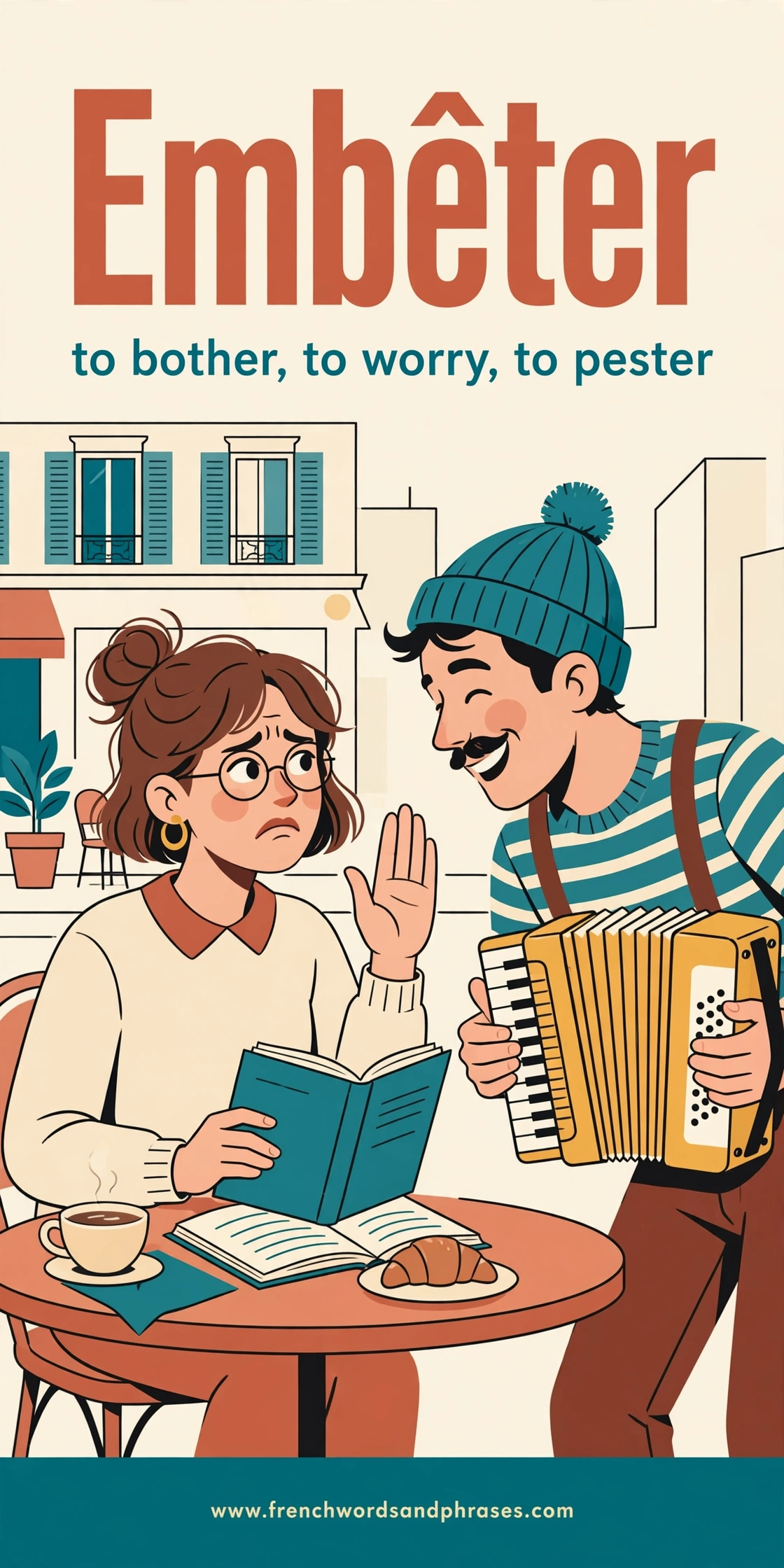
Embêter means to bother, to worry, to pester — to get on someone’s nerves with noise, questions or sheer persistence.
A mosquito circling the lamp at midnight, a little brother asking the same question forty times, a neighbour’s drill starting at dawn — embêter is the everyday French verb of being bothered: small annoyances, repeated until they fill the whole day.
In this guide, you’ll learn how to conjugate embêter in all the major French tenses and moods. Explore complete conjugation tables, French examples, English translations, and practice quizzes.
Understanding the French Verb Embêter
Embêter is a regular French verb belonging to the first group of verbs, those ending in-er.
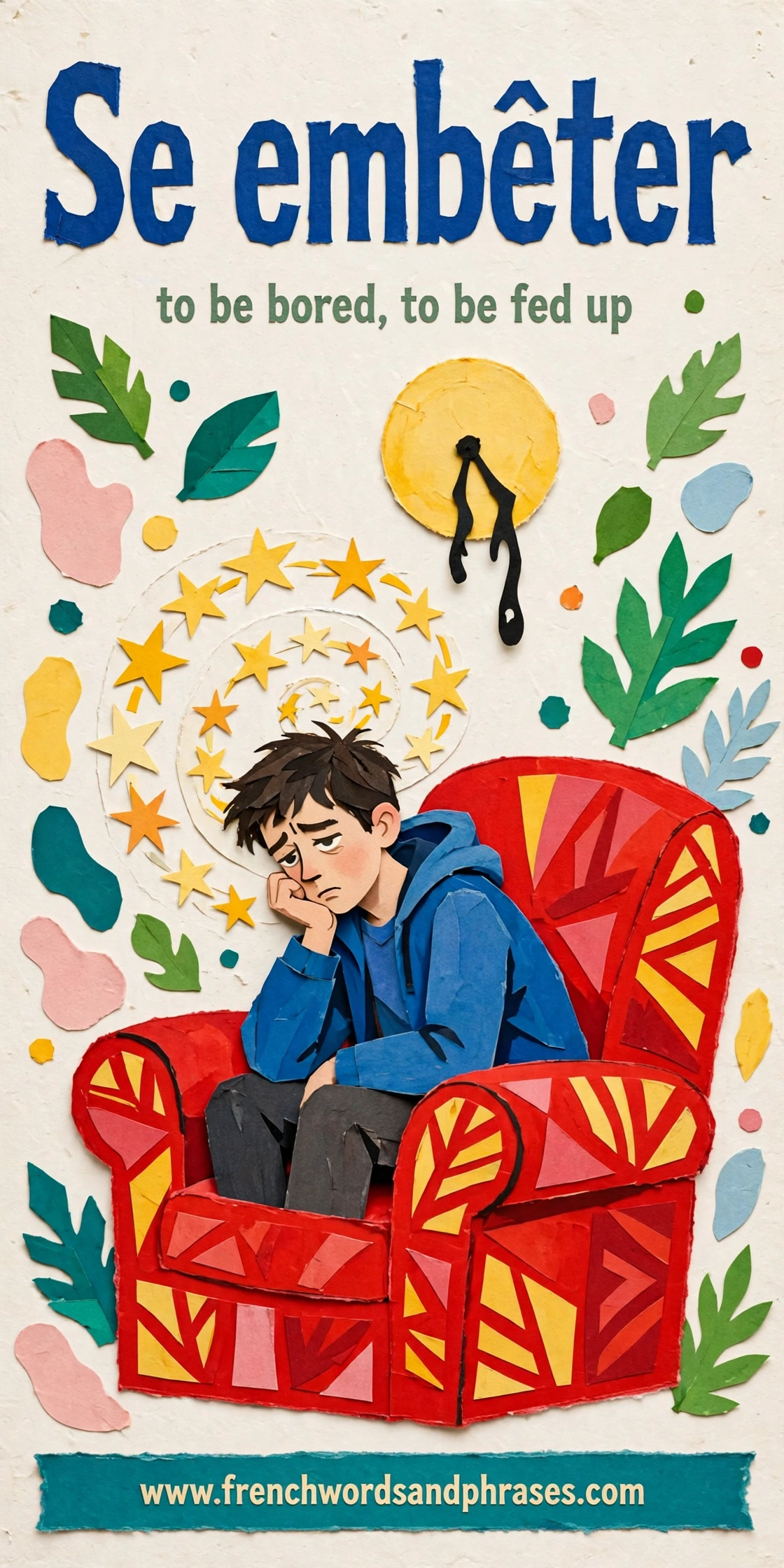
It means to bother, to worry, to pester. It is commonly used for people pestering each other, for noises, weather and breakdowns that annoy, and — very often — in the polite negative: ne vous embêtez pas, do not put yourself out. Its reflexive twin, s’embêter, turns the annoyance inward and means to be bored or fed up.
Verb classification: First group (-er)
Auxiliary verb: Avoir
Past participle: embêté
Present participle: embêtant
English equivalents: To bother, to annoy, to pester; embêter quelqu’un — to bother someone; ça m’embête — that annoys me, that is a nuisance; ne m’embête pas ! — leave me alone!, do not bother me!; être embêté — to be in an awkward spot, to be put out.
One important detail: embêter is softer than its English look-alike suggests — it is not quite ennuyer (to bore, or to annoy more gravely) and far below harceler (to harass). It is the verb of the mild, everyday nuisance: ça m’embête can even mean ‘that puts me in an awkward position’, and être embêté often means simply to be stuck or embarrassed by a problem. The circumflex on the ê never moves and the verb is perfectly regular: je embête, nous embêtons, ils embêtent.
Experience the Word
Embêter is the verb of the small thorn — nothing serious, nothing tragic, just a persistent little irritation that will not leave you alone.
Imagine a summer evening on a terrace. The dinner is perfect, the wine is cool — and one mosquito has chosen you. It circles, it lands, it returns. It is tiny, it is nothing, and yet il vous embête so completely that the whole evening becomes about that one insect.
Nothing has gone wrong, exactly. You have simply been bothered — embêté, all evening, by almost nothing.
How to Conjugate Embêter: Complete French Conjugation Guide
Let’s explore every major conjugation of embêter, beginning with the indicative mood.
How to Conjugate Embêter in the Indicative Mood
The indicative mood is used to express facts, observations, actions, and events.
How to Conjugate Embêter in the Present Tense (Présent)
Used for actions happening now, habitual actions, and general truths.
| Subject | Conjugation |
|---|---|
| je | embête |
| tu | embêtes |
| il / elle | embête |
| nous | embêtons |
| vous | embêtez |
| ils / elles | embêtent |
Example
Le bruit des travaux embête tout le quartier depuis ce matin.
The noise from the roadworks has been bothering the whole neighbourhood since this morning.
Quick Quiz 1
Complete the sentence:
Nous ______ le voisin avec notre musique.
Reveal the answer
embêtons
Nous embêtons le voisin avec notre musique.
We are bothering the neighbour with our music.
How to Conjugate Embêter in the Passé Composé
Used for completed actions in the past. Embêter takes the auxiliary verb avoir.
| Subject | Conjugation |
|---|---|
| j’ | ai embêté |
| tu | as embêté |
| il / elle | a embêté |
| nous | avons embêté |
| vous | avez embêté |
| ils / elles | ont embêté |
Example
Son petit frère l’a embêtée toute la journée avec ses questions.
Her little brother pestered her all day with his questions.
How to Conjugate Embêter in the Imparfait (Imperfect Tense)
Used for habitual past actions, descriptions, and ongoing situations in the past.
| Subject | Conjugation |
|---|---|
| je | embêtais |
| tu | embêtais |
| il / elle | embêtait |
| nous | embêtions |
| vous | embêtiez |
| ils / elles | embêtaient |
Example
Quand j’étais enfant, les mouches nous embêtaient pendant les repas.
When I was a child, the flies used to bother us during meals.
Quick Quiz 2
Choose the correct form:
She pestered her brother all day.
Elle ______ son frère toute la journée. (a embêté / est embêtée)
Reveal the answer
a embêté
Elle a embêté son frère toute la journée.
Embêter takes avoir.
How to Conjugate Embêter in the Plus-que-parfait
Used to describe an action that had already been completed before another past event.
| Subject | Conjugation |
|---|---|
| j’ | avais embêté |
| tu | avais embêté |
| il / elle | avait embêté |
| nous | avions embêté |
| vous | aviez embêté |
| ils / elles | avaient embêté |
Example
Il m’avait embêté pendant des semaines avant que je cède.
He had been pestering me for weeks before I gave in.
How to Conjugate Embêter in the Passé Simple
Primarily used in formal writing, literature, and historical narratives. It is rarely used in everyday conversation.
| Subject | Conjugation |
|---|---|
| je | embêtai |
| tu | embêtas |
| il / elle | embêta |
| nous | embêtâmes |
| vous | embêtâtes |
| ils / elles | embêtèrent |
Example
Le vendeur embêta les passants jusqu’à la tombée de la nuit.
The salesman pestered the passers-by until nightfall.
How to Conjugate Embêter in the Passé Antérieur
A literary tense used to express an action completed immediately before another past action, generally in the passé simple.
| Subject | Conjugation |
|---|---|
| j’ | eus embêté |
| tu | eus embêté |
| il / elle | eut embêté |
| nous | eûmes embêté |
| vous | eûtes embêté |
| ils / elles | eurent embêté |
Example
Quand il eut embêté tout le monde, il partit enfin, satisfait.
When he had bothered everyone, he finally left, satisfied.
How to Conjugate Embêter in the Future Tense (Futur Simple)
Used to describe actions that will take place in the future.
| Subject | Conjugation |
|---|---|
| je | embêterai |
| tu | embêteras |
| il / elle | embêtera |
| nous | embêterons |
| vous | embêterez |
| ils / elles | embêteront |
Example
Ce robinet qui goutte embêtera les voisins si tu ne le répares pas.
That dripping tap will bother the neighbours if you do not fix it.
How to Conjugate Embêter in the Futur Antérieur (Future Perfect)
Used for an action that will have been completed before a particular point in the future.
| Subject | Conjugation |
|---|---|
| j’ | aurai embêté |
| tu | auras embêté |
| il / elle | aura embêté |
| nous | aurons embêté |
| vous | aurez embêté |
| ils / elles | auront embêté |
Example
À la fin de la semaine, il aura embêté tous ses collègues avec cette histoire.
By the end of the week, he will have bothered all his colleagues with that story.
How to Conjugate Embêter in the Near Future (Futur Proche)
Used to describe something that is going to happen soon. Formed with aller + infinitive.
| Subject | Conjugation |
|---|---|
| je | vais embêter |
| tu | vas embêter |
| il / elle | va embêter |
| nous | allons embêter |
| vous | allez embêter |
| ils / elles | vont embêter |
Example
Tu vas embêter ta sœur si tu touches à ses affaires.
You are going to bother your sister if you touch her things.
How to Conjugate Embêter in the Conditional Mood
The conditional mood expresses what would happen under certain circumstances. It is also frequently used to make polite requests or express wishes.
How to Conjugate Embêter in the Present Conditional
| Subject | Conjugation |
|---|---|
| je | embêterais |
| tu | embêterais |
| il / elle | embêterait |
| nous | embêterions |
| vous | embêteriez |
| ils / elles | embêteraient |
Example
Ce moustique embêterait même un saint.
That mosquito would bother even a saint.
How to Conjugate Embêter in the Past Conditional
| Subject | Conjugation |
|---|---|
| j’ | aurais embêté |
| tu | aurais embêté |
| il / elle | aurait embêté |
| nous | aurions embêté |
| vous | auriez embêté |
| ils / elles | auraient embêté |
Example
Tu aurais embêté tout le quartier avec ta trompette.
You would have bothered the whole neighbourhood with your trumpet.
Embêter in the Literary Past Conditional Form
This less common literary form uses the imperfect subjunctive of avoir.
| Subject | Conjugation |
|---|---|
| j’ | eusse embêté |
| tu | eusses embêté |
| il / elle | eût embêté |
| nous | eussions embêté |
| vous | eussiez embêté |
| ils / elles | eussent embêté |
Example
Il eût embêté le monde entier sans cette fatigue soudaine.
He would have bothered the whole world without that sudden tiredness.
How to Conjugate Embêter in the Subjunctive Mood
The subjunctive is used to express wishes, emotions, doubts, necessity, and uncertainty. It frequently follows expressions such as il faut que (it is necessary that) or bien que (although).
How to Conjugate Embêter in the Present Subjunctive
| Subject | Conjugation |
|---|---|
| que je | embête |
| que tu | embêtes |
| qu’il / qu’elle | embête |
| que nous | embêtions |
| que vous | embêtiez |
| qu’ils / qu’elles | embêtent |
Example
Il est possible que ce retard vous embête, et je m’en excuse.
It is possible that this delay bothers you, and I apologise for it.
Quick Quiz 3
Complete the sentence using the subjunctive:
Je crains que ce bruit ______ les invités.
Reveal the answer
embête
Je crains que ce bruit embête les invités.
I fear this noise may bother the guests.
How to Conjugate Embêter in the Imperfect Subjunctive
A literary tense, rarely encountered in modern spoken French.
| Subject | Conjugation |
|---|---|
| que je | embêtasse |
| que tu | embêtasses |
| qu’il / qu’elle | embêtât |
| que nous | embêtassions |
| que vous | embêtassiez |
| qu’ils / qu’elles | embêtassent |
Example
Je craignais que le bruit embêtât les invités.
I feared the noise might bother the guests.
How to Conjugate Embêter in the Pluperfect Subjunctive
A literary construction used to express an action completed before another past action.
| Subject | Conjugation |
|---|---|
| que j’ | eusse embêté |
| que tu | eusses embêté |
| qu’il / qu’elle | eût embêté |
| que nous | eussions embêté |
| que vous | eussiez embêté |
| qu’ils / qu’elles | eussent embêté |
Example
Elle regrettait qu’il eût embêté sa grand-mère avec ses demandes.
She regretted that he had pestered her grandmother with his requests.
How to Conjugate Embêter in the Past Subjunctive
| Subject | Conjugation |
|---|---|
| que j’ | aie embêté |
| que tu | aies embêté |
| qu’il / qu’elle | ait embêté |
| que nous | ayons embêté |
| que vous | ayez embêté |
| qu’ils / qu’elles | aient embêté |
Example
Je suis désolé que cela vous ait embêté.
I am sorry that this bothered you.
How to Conjugate Embêter in the Imperative
The imperative is used to give commands, instructions, invitations, or suggestions. Subject pronouns are omitted.
How to Conjugate Embêter in the Present Imperative
| Person | Conjugation |
|---|---|
| (tu) | embête |
| (nous) | embêtons |
| (vous) | embêtez |
Example
N’embête pas ton petit frère pendant qu’il travaille !
Do not bother your little brother while he is working!
Quick Quiz 4
How would you say Do not bother the cat (tu form)?
Reveal the answer
N’embête pas le chat !
French Participles of Embêter
Participles are verb forms that can be used in compound tenses and other grammatical constructions.
Present Participle of Embêter
embêtant
En embêtant ses camarades, il a fini tout seul dans la cour.
By pestering his classmates, he ended up all alone in the playground.
Past Participle of Embêter
embêté
Embêté par les mouches, le cheval frappait le sol du sabot.
Bothered by the flies, the horse stamped its hoof on the ground.
Embêter in Everyday French: Real-Life Examples
Now that you know the conjugations, let’s see how embêter appears in everyday French.
Example 1 — Present
Ce bruit m’embête depuis ce matin.
This noise has been bothering me since this morning.
Example 2 — Passé composé
Il a embêté sa sœur toute la journée.
He pestered his sister all day.
Example 3 — Imparfait
Les mouches nous embêtaient à table.
The flies used to bother us at the table.
Example 4 — Future
Ce problème embêtera les voisins.
This problem will bother the neighbours.
Example 5 — Conditional
Tu embêterais tout le monde avec cette musique.
You would bother everyone with that music.
Example 6 — Imperative
N’embête pas le chat !
Do not bother the cat!
Beyond Translation: The Meaning of Embêter
English speakers reach for bother, and French embêter is its perfect match in tone — the word of life’s small change.
Its genius is its mildness.
To say ça m’embête is to file a complaint at exactly the right level: the broken lift, the late train, the dripping tap. And être embêté adds a very French nuance — to be awkwardly stuck, caught between a problem and politeness.
How to Remember the French Verb Embêter
Remember it this way: Embêter is about the mosquito at the dinner table — small, and utterly in charge.
- The verb of the small nuisance: ça m’embête — that bothers me, that is a pain.
- Être embêté often means to be in an awkward spot, not just annoyed.
- Regular -er: je embête, nous embêtons, past participle embêté — the circumflex never moves.
The key idea is the mosquito at the dinner table — small, and utterly in charge.
Test Your Knowledge of Embêter
Let’s see how much you’ve learned. Try answering these questions before revealing the answers.
Question 1
What does être embêté often mean beyond ‘to be annoyed’?
Reveal the answer
To be in an awkward spot — stuck with a problem: je suis bien embêté, I am in a real fix.
Question 2
How do you say This noise bothers me in French?
Reveal the answer
Ce bruit m’embête.
Question 3
Translate: He pestered his sister all day.
Reveal the answer
Il a embêté sa sœur toute la journée.
Question 4
What is the past participle of embêter?
Reveal the answer
Embêté.
Question 5
Complete the sentence:
Je suis désolé que cela vous ______.
Reveal the answer
ait embêté
Je suis désolé que cela vous ait embêté.
I am sorry that this bothered you.
Your Final Challenge
Can You Use It?
How would you say this in French?
A single mosquito can bother a whole evening, and yet the evening stays beautiful.
Reveal the answer
Un seul moustique peut embêter toute une soirée, et pourtant la soirée reste belle.
A single mosquito can bother a whole evening, and yet the evening stays beautiful.
A little French. A little curiosity. A richer everyday life.
LEARN FRENCH ONE WORD AT A TIME