A French Word to Live By
How to Conjugate Écheniller in French
/eʃ.ni.je/
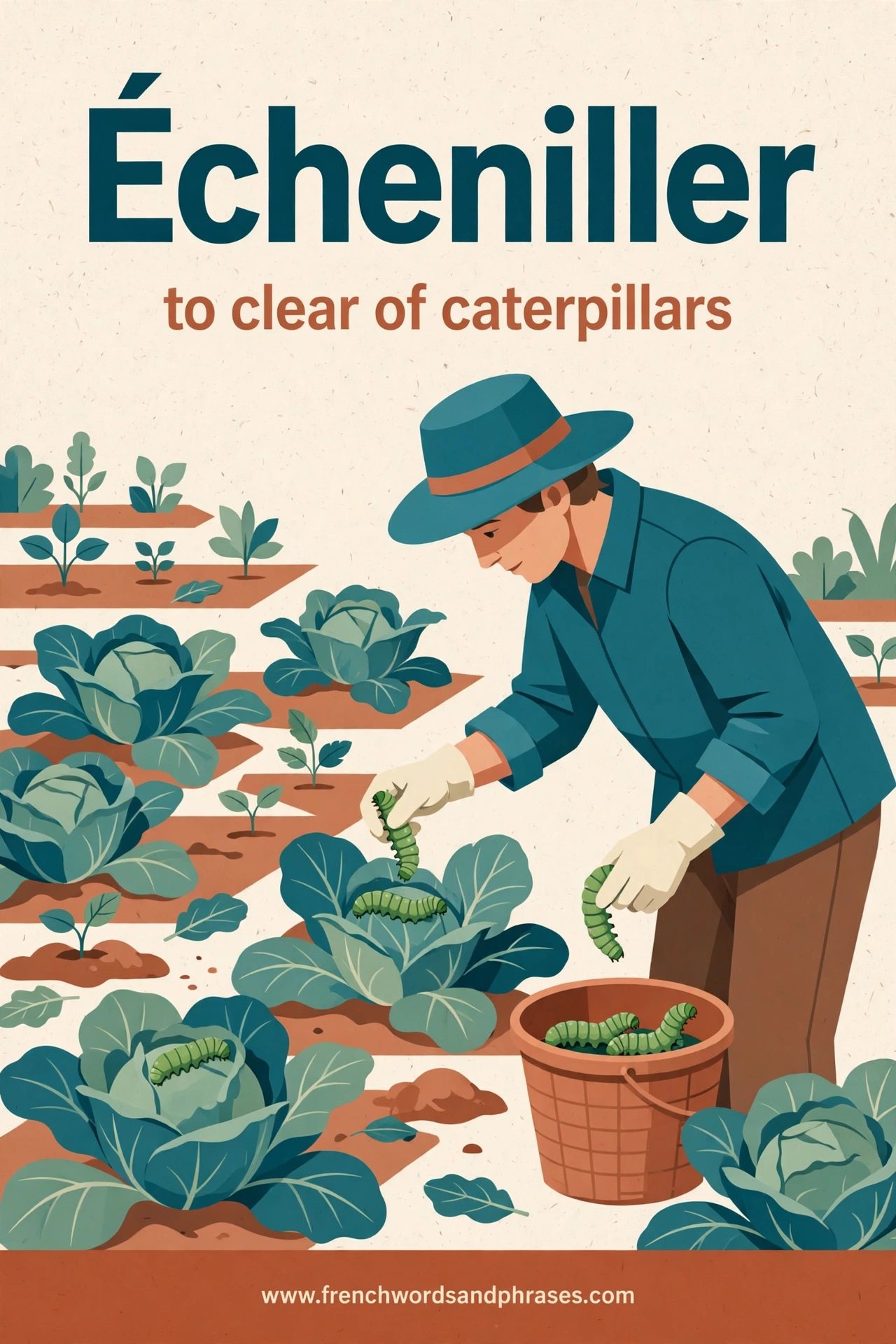
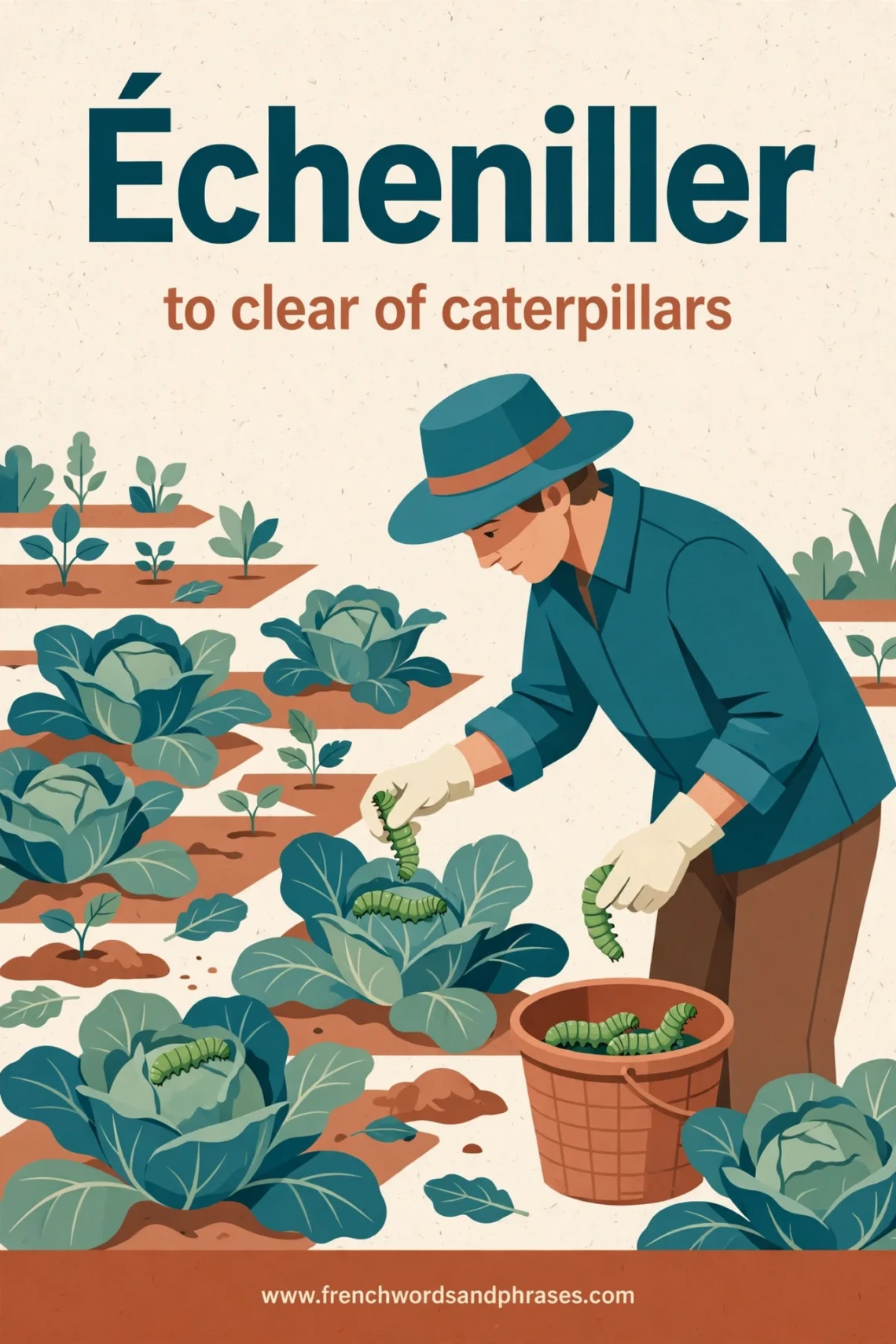
Écheniller means to clear of caterpillars.
Nests of silk swelling in the pine branches, hairy processions already marching down the trunk, a gardener pulling on gloves and taking up the shears — écheniller is the verb of clearing trees of caterpillars before they strip them bare.
In this guide, you’ll learn how to conjugate écheniller in all the major French tenses and moods. Explore complete conjugation tables, French examples, English translations, and practice quizzes.
Understanding the French Verb Écheniller
Écheniller is a regular French verb belonging to the first group of verbs, those ending in -er.
It means to clear of caterpillars. It is commonly used for removing caterpillar nests from pines, fruit trees and hedges, for protecting gardens and orchards in spring, and by town services clearing the processionary caterpillars from parks and schoolyards.
Verb classification: First group (-er)
Auxiliary verb: Avoir
Past participle: échenillé
Present participle: échenillant
English equivalents: To clear (a tree) of caterpillars; la chenille — the caterpillar; un nid de chenilles — a caterpillars’ nest; la chenille processionnaire — the pine processionary caterpillar.
One important detail: écheniller is built on la chenille, the caterpillar — a word French also uses for tank tracks, which the marching insects rather resemble. The pine processionary (la chenille processionnaire) is the verb’s great enemy: its silk nests are cut out and burned, its hairs sting skin and poison dogs, so écheniller is serious spring work in the south of France. The verb itself is a gentle regular -er: j’échenille, nous échenillons.
Experience the Word
Écheniller is the verb of the tree surgeon in gloves — patient, thorough, and quietly at war.
Imagine a pine wood in March. White silk nests swell in the branches like cotton wool, and below, the first procession is already forming nose to tail. The gardener climbs, cuts and burns each nest: he échenille before the march begins.
The trees have not changed at all. They have been cleared — every nest out, every caterpillar gone.
How to Conjugate Écheniller: Complete French Conjugation Guide
Let’s explore every major conjugation of écheniller, beginning with the indicative mood.
How to Conjugate Écheniller in the Indicative Mood
The indicative mood is used to express facts, observations, actions, and events.
How to Conjugate Écheniller in the Present Tense (Présent)
Used for actions happening now, habitual actions, and general truths.
| Subject | Conjugation |
|---|---|
| je | échenille |
| tu | échenilles |
| il / elle | échenille |
| nous | échenillons |
| vous | échenillez |
| ils / elles | échenillent |
Example
Le jardinier échenille les pins dès le mois de mars.
The gardener clears the pines of caterpillars from March onwards.
Quick Quiz 1
Complete the sentence:
Nous ______ les pommiers ce matin.
Reveal the answer
échenillons
Nous échenillons les pommiers ce matin.
We clear the apple trees of caterpillars this morning.
How to Conjugate Écheniller in the Passé Composé
Used for completed actions in the past. Écheniller takes the auxiliary verb avoir.
| Subject | Conjugation |
|---|---|
| j’ | ai échenillé |
| tu | as échenillé |
| il / elle | a échenillé |
| nous | avons échenillé |
| vous | avez échenillé |
| ils / elles | ont échenillé |
Example
Nous avons échenillé tous les pommiers ce matin.
We cleared all the apple trees of caterpillars this morning.
How to Conjugate Écheniller in the Imparfait (Imperfect Tense)
Used for habitual past actions, descriptions, and ongoing situations in the past.
| Subject | Conjugation |
|---|---|
| je | échenillais |
| tu | échenillais |
| il / elle | échenillait |
| nous | échenillions |
| vous | échenilliez |
| ils / elles | échenillaient |
Example
Autrefois, on échenillait les haies à la main.
In the old days, people used to clear the hedges of caterpillars by hand.
Quick Quiz 2
Choose the correct form:
They cleared the hedges of caterpillars.
Ils ______ les haies. (ont échenillé / sont échenillés)
Reveal the answer
ont échenillé
Ils ont échenillé les haies.
Écheniller takes avoir.
How to Conjugate Écheniller in the Plus-que-parfait
Used to describe an action that had already been completed before another past event.
| Subject | Conjugation |
|---|---|
| j’ | avais échenillé |
| tu | avais échenillé |
| il / elle | avait échenillé |
| nous | avions échenillé |
| vous | aviez échenillé |
| ils / elles | avaient échenillé |
Example
Ils avaient échenillé le verger avant la floraison.
They had cleared the orchard of caterpillars before the blossom.
How to Conjugate Écheniller in the Passé Simple
Primarily used in formal writing, literature, and historical narratives. It is rarely used in everyday conversation.
| Subject | Conjugation |
|---|---|
| je | échenillai |
| tu | échenillas |
| il / elle | échenilla |
| nous | échenillâmes |
| vous | échenillâtes |
| ils / elles | échenillèrent |
Example
La commune échenilla les pins de l’école en une journée.
The town cleared the school pines of caterpillars in a single day.
How to Conjugate Écheniller in the Passé Antérieur
A literary tense used to express an action completed immediately before another past action, generally in the passé simple.
| Subject | Conjugation |
|---|---|
| j’ | eus échenillé |
| tu | eus échenillé |
| il / elle | eut échenillé |
| nous | eûmes échenillé |
| vous | eûtes échenillé |
| ils / elles | eurent échenillé |
Example
Quand il eut échenillé les arbres, il brûla les nids.
When he had cleared the trees of caterpillars, he burned the nests.
How to Conjugate Écheniller in the Future Tense (Futur Simple)
Used to describe actions that will take place in the future.
| Subject | Conjugation |
|---|---|
| je | échenillerai |
| tu | échenilleras |
| il / elle | échenillera |
| nous | échenillerons |
| vous | échenillerez |
| ils / elles | échenilleront |
Example
Demain, nous échenillerons la haie du jardin.
Tomorrow, we will clear the garden hedge of caterpillars.
How to Conjugate Écheniller in the Futur Antérieur (Future Perfect)
Used for an action that will have been completed before a particular point in the future.
| Subject | Conjugation |
|---|---|
| j’ | aurai échenillé |
| tu | auras échenillé |
| il / elle | aura échenillé |
| nous | aurons échenillé |
| vous | aurez échenillé |
| ils / elles | auront échenillé |
Example
Au printemps, ils auront échenillé tout le parc.
By spring, they will have cleared the whole park of caterpillars.
How to Conjugate Écheniller in the Near Future (Futur Proche)
Used to describe something that is going to happen soon. Formed with aller + infinitive.
| Subject | Conjugation |
|---|---|
| je | vais écheniller |
| tu | vas écheniller |
| il / elle | va écheniller |
| nous | allons écheniller |
| vous | allez écheniller |
| ils / elles | vont écheniller |
Example
Je vais écheniller ce pin avant que les chenilles descendent.
I am going to clear this pine of caterpillars before they come down.
How to Conjugate Écheniller in the Conditional Mood
The conditional mood expresses what would happen under certain circumstances. It is also frequently used to make polite requests or express wishes.
How to Conjugate Écheniller in the Present Conditional
| Subject | Conjugation |
|---|---|
| je | échenillerais |
| tu | échenillerais |
| il / elle | échenillerait |
| nous | échenillerions |
| vous | échenilleriez |
| ils / elles | échenilleraient |
Example
Avec une nacelle, on échenillerait les grands pins sans danger.
With a cherry picker, we would clear the tall pines of caterpillars safely.
How to Conjugate Écheniller in the Past Conditional
| Subject | Conjugation |
|---|---|
| j’ | aurais échenillé |
| tu | aurais échenillé |
| il / elle | aurait échenillé |
| nous | aurions échenillé |
| vous | auriez échenillé |
| ils / elles | auraient échenillé |
Example
Elle aurait échenillé les arbres si elle avait eu des gants.
She would have cleared the trees of caterpillars if she had had gloves.
Écheniller in the Literary Past Conditional Form
This less common literary form uses the imperfect subjunctive of avoir.
| Subject | Conjugation |
|---|---|
| j’ | eusse échenillé |
| tu | eusses échenillé |
| il / elle | eût échenillé |
| nous | eussions échenillé |
| vous | eussiez échenillé |
| ils / elles | eussent échenillé |
Example
Le jardinier eût échenillé chaque arbre du verger.
The gardener would have cleared every tree in the orchard of caterpillars.
How to Conjugate Écheniller in the Subjunctive Mood
The subjunctive is used to express wishes, emotions, doubts, necessity, and uncertainty. It frequently follows expressions such as il faut que (it is necessary that) or bien que (although).
How to Conjugate Écheniller in the Present Subjunctive
| Subject | Conjugation |
|---|---|
| que je | échenille |
| que tu | échenilles |
| qu’il / qu’elle | échenille |
| que nous | échenillions |
| que vous | échenilliez |
| qu’ils / qu’elles | échenillent |
Example
Il faut que tu échenilles les pins avant mars.
You must clear the pines of caterpillars before March.
Quick Quiz 3
Complete the sentence using the subjunctive:
Il faut que vous ______ les arbres.
Reveal the answer
échenilliez
Il faut que vous échenilliez les arbres.
You must clear the trees of caterpillars.
How to Conjugate Écheniller in the Imperfect Subjunctive
A literary tense, rarely encountered in modern spoken French.
| Subject | Conjugation |
|---|---|
| que je | échenillasse |
| que tu | échenillasses |
| qu’il / qu’elle | échenillât |
| que nous | échenillassions |
| que vous | échenillassiez |
| qu’ils / qu’elles | échenillassent |
Example
Le maire voulait que la commune échenillât les arbres des écoles.
The mayor wanted the town to clear the school trees of caterpillars.
How to Conjugate Écheniller in the Pluperfect Subjunctive
A literary construction used to express an action completed before another past action.
| Subject | Conjugation |
|---|---|
| que j’ | eusse échenillé |
| que tu | eusses échenillé |
| qu’il / qu’elle | eût échenillé |
| que nous | eussions échenillé |
| que vous | eussiez échenillé |
| qu’ils / qu’elles | eussent échenillé |
Example
On craignait qu’ils n’eussent pas échenillé les nids à temps.
People feared they had not cleared the nests of caterpillars in time.
How to Conjugate Écheniller in the Past Subjunctive
| Subject | Conjugation |
|---|---|
| que j’ | aie échenillé |
| que tu | aies échenillé |
| qu’il / qu’elle | ait échenillé |
| que nous | ayons échenillé |
| que vous | ayez échenillé |
| qu’ils / qu’elles | aient échenillé |
Example
Je suis content que vous ayez échenillé le verger.
I am glad you cleared the orchard of caterpillars.
How to Conjugate Écheniller in the Imperative
The imperative is used to give commands, instructions, invitations, or suggestions. Subject pronouns are omitted.
How to Conjugate Écheniller in the Present Imperative
| Person | Conjugation |
|---|---|
| (tu) | échenille |
| (nous) | échenillons |
| (vous) | échenillez |
Example
Échenille ce pin, mais mets des gants !
Clear this pine of caterpillars, but wear gloves!
Quick Quiz 4
How would you say Clear this pine of caterpillars (tu form)?
Reveal the answer
Échenille ce pin !
French Participles of Écheniller
Participles are verb forms that can be used in compound tenses and other grammatical constructions.
Present Participle of Écheniller
échenillant
En échenillant les haies, elle a trouvé un nid de merles.
While clearing the hedges of caterpillars, she found a blackbirds’ nest.
Past Participle of Écheniller
échenillé
Échenillés en février, les pins passent un printemps tranquille.
Cleared of caterpillars in February, the pines enjoy a quiet spring.
Écheniller in Everyday French: Real-Life Examples
Now that you know the conjugations, let’s see how écheniller appears in everyday French.
Example 1 — Present
On échenille les pins du parc chaque hiver.
The park pines are cleared of caterpillars every winter.
Example 2 — Passé composé
Ils ont échenillé les pommiers hier.
They cleared the apple trees of caterpillars yesterday.
Example 3 — Imparfait
Mon père échenillait les haies au printemps.
My father used to clear the hedges of caterpillars in spring.
Example 4 — Future
Nous échenillerons le verger la semaine prochaine.
We will clear the orchard of caterpillars next week.
Example 5 — Conditional
Tu échenillerais ce pin avec des gants, j’espère.
You would clear this pine of caterpillars with gloves on, I hope.
Example 6 — Imperative
Échenillez les arbres avant la descente des chenilles !
Clear the trees of caterpillars before the caterpillars come down!
Beyond Translation: The Meaning of Écheniller
English needs a whole phrase — to clear a tree of caterpillars; French écheniller packs the tree, the pest and the removal into one tidy verb.
The é- strips something away.
Like écailler or éplucher, the prefix does the removing: what remains, once you have échenillé, is a tree with its caterpillars gone.
How to Remember the French Verb Écheniller
Remember it this way: Écheniller is about gloves, shears and silk nests — trees cleared of caterpillars.
- La chenille — the caterpillar: écheniller takes the chenilles off the tree.
- La chenille processionnaire — the pine processionary, the verb’s great enemy.
- Regular -er: j’échenille, nous échenillons, past participle échenillé.
The key idea is gloves, shears and silk nests — trees cleared of caterpillars.
Test Your Knowledge of Écheniller
Let’s see how much you’ve learned. Try answering these questions before revealing the answers.
Question 1
What is une chenille?
Reveal the answer
A caterpillar — the pest écheniller removes.
Question 2
How do you say We cleared the apple trees of caterpillars in French?
Reveal the answer
Nous avons échenillé les pommiers.
Question 3
Translate: The gardener clears the pines from March.
Reveal the answer
Le jardinier échenille les pins dès mars.
Question 4
What is the past participle of écheniller?
Reveal the answer
Échenillé.
Question 5
Complete the sentence:
Il faut que tu ______ les pins avant mars.
Reveal the answer
échenilles
Il faut que tu échenilles les pins avant mars.
You must clear the pines of caterpillars before March.
Your Final Challenge
Can You Use It?
How would you say this in French?
The gardener clears the pines of caterpillars in February, and spring will be peaceful.
Reveal the answer
Le jardinier échenille les pins en février, et le printemps sera tranquille.
The gardener clears the pines of caterpillars in February, and spring will be peaceful.
A little French. A little curiosity. A richer everyday life.
LEARN FRENCH ONE WORD AT A TIME