A French Word to Live By
How to Conjugate Détaxer in French
/de.tak.se/
Détaxer means to take off tax — to remove a duty or tax from a product, a price or a traveller’s purchases.
A finance minister striking a product off the taxed list, an airport shop handing a tourist the form that wipes the VAT off a watch — détaxer is the verb of the tax removed: the price stays, the tax on it comes off.
In this guide, you’ll learn how to conjugate détaxer in all the major French tenses and moods. Explore complete conjugation tables, French examples, English translations, and practice quizzes.
Understanding the French Verb Détaxer
Détaxer is a regular French verb belonging to the first group of verbs, those ending in-er.
It means to take off tax. It is commonly used in economics and politics for governments lifting or cutting a tax on a category of goods — fuel, books, local products — and in travel, where détaxer ses achats means reclaiming the VAT at the border. The past participle often works as an adjective: un produit détaxé, a product sold tax-free.
Verb classification: First group (-er)
Auxiliary verb: Avoir
Past participle: détaxé
Present participle: détaxant
English equivalents: To take off tax, to exempt from tax, to give tax relief on; détaxer un produit — to remove the tax from a product; détaxer les carburants — to cut the tax on fuel; la détaxe — tax refund (for tourists); faire détaxer ses achats — to claim the tax back on one’s purchases.
One important detail: détaxer is the dé- of taxer, and its noun la détaxe is the word every visitor to France meets at the airport: the scheme that refunds the VAT (la TVA) on goods taken out of the country. The verb is regular: je détaxe, nous détaxons, ils détaxent, past participle détaxé. Mind the x, pronounced like ks: dé-ta-xer. Governments détaxent products, sectors or fuels; travellers font détaxer their purchases — the same verb serves the ministry and the departure lounge.
Experience the Word
Détaxer is the verb of the shrinking receipt — the goods stay the same, the line marked taxe quietly disappears.
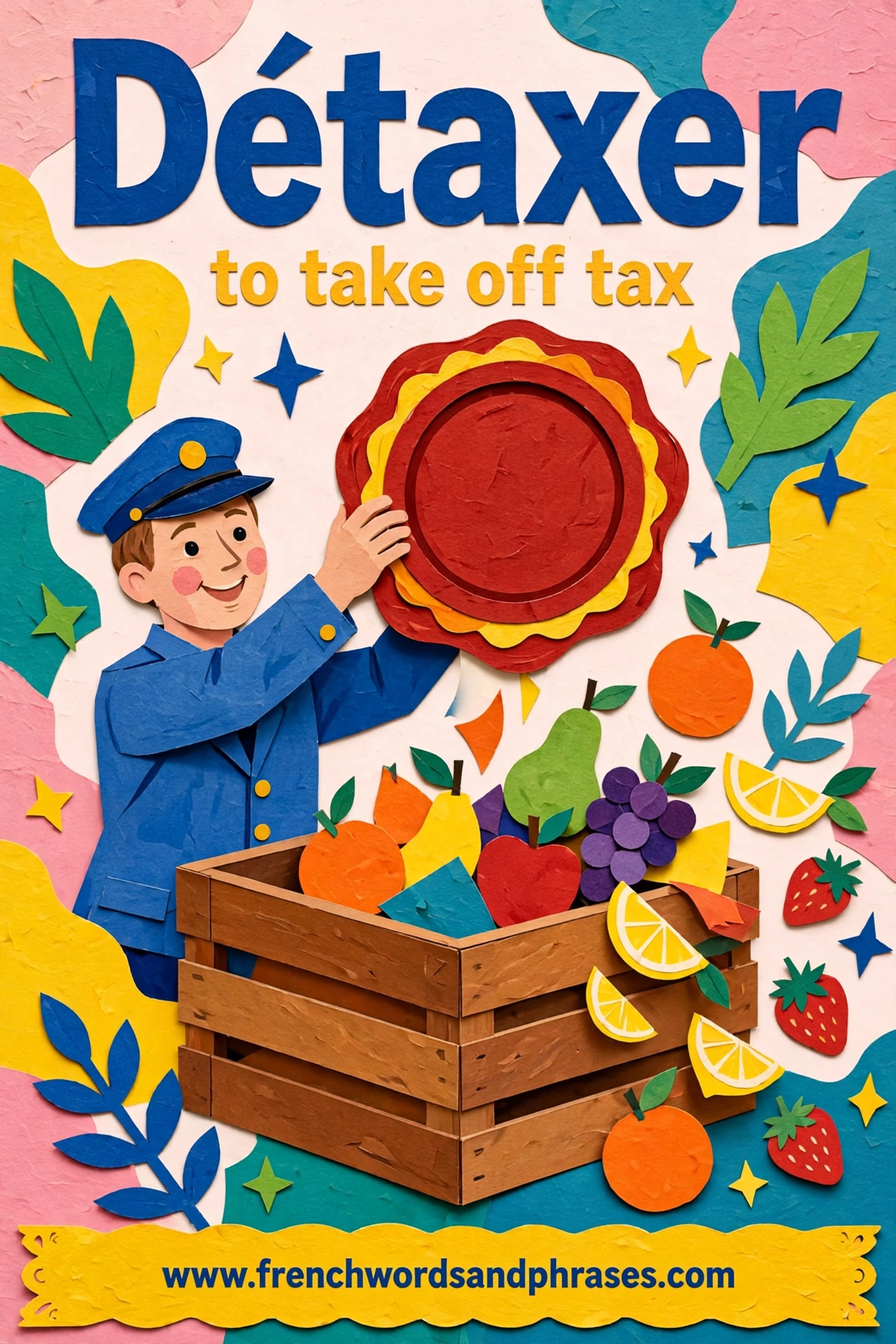
Imagine a traveller at the airport with a new camera bought in Paris. At the détaxe desk, the officer scans the form, stamps it, and the VAT melts off the price she paid. She détaxe her purchase in five minutes — the camera is unchanged, but it has just become twelve per cent cheaper.
Same camera, same shop, same day. It has been relieved of its tax — détaxé — at the border.
How to Conjugate Détaxer: Complete French Conjugation Guide
Let’s explore every major conjugation of détaxer, beginning with the indicative mood.
How to Conjugate Détaxer in the Indicative Mood
The indicative mood is used to express facts, observations, actions, and events.
How to Conjugate Détaxer in the Present Tense (Présent)
Used for actions happening now, habitual actions, and general truths.
| Subject | Conjugation |
|---|---|
| je | détaxe |
| tu | détaxes |
| il / elle | détaxe |
| nous | détaxons |
| vous | détaxez |
| ils / elles | détaxent |
Example
Le gouvernement détaxe les livres depuis des années.
The government has exempted books from tax for years.
Quick Quiz 1
Complete the sentence:
Nous ______ nos achats à l’aéroport.
Reveal the answer
détaxons
Nous détaxons nos achats à l’aéroport.
We claim the tax back on our purchases at the airport.
How to Conjugate Détaxer in the Passé Composé
Used for completed actions in the past. Détaxer takes the auxiliary verb avoir.
| Subject | Conjugation |
|---|---|
| j’ | ai détaxé |
| tu | as détaxé |
| il / elle | a détaxé |
| nous | avons détaxé |
| vous | avez détaxé |
| ils / elles | ont détaxé |
Example
Elle a détaxé tous ses achats à l’aéroport.
She claimed the tax back on all her purchases at the airport.
How to Conjugate Détaxer in the Imparfait (Imperfect Tense)
Used for habitual past actions, descriptions, and ongoing situations in the past.
| Subject | Conjugation |
|---|---|
| je | détaxais |
| tu | détaxais |
| il / elle | détaxait |
| nous | détaxions |
| vous | détaxiez |
| ils / elles | détaxaient |
Example
Autrefois, l’État détaxait rarement les carburants.
In the past, the state rarely cut the tax on fuel.
Quick Quiz 2
Choose the correct form:
The minister exempted medicines from tax.
Le ministre ______ les médicaments. (a détaxé / est détaxé)
Reveal the answer
a détaxé
Le ministre a détaxé les médicaments.
Détaxer takes avoir.
How to Conjugate Détaxer in the Plus-que-parfait
Used to describe an action that had already been completed before another past event.
| Subject | Conjugation |
|---|---|
| j’ | avais détaxé |
| tu | avais détaxé |
| il / elle | avait détaxé |
| nous | avions détaxé |
| vous | aviez détaxé |
| ils / elles | avaient détaxé |
Example
Ils avaient détaxé les produits locaux avant la foire.
They had removed the tax from local products before the fair.
How to Conjugate Détaxer in the Passé Simple
Primarily used in formal writing, literature, and historical narratives. It is rarely used in everyday conversation.
| Subject | Conjugation |
|---|---|
| je | détaxai |
| tu | détaxas |
| il / elle | détaxa |
| nous | détaxâmes |
| vous | détaxâtes |
| ils / elles | détaxèrent |
Example
Le ministre détaxa les médicaments essentiels en 1962.
The minister exempted essential medicines from tax in 1962.
How to Conjugate Détaxer in the Passé Antérieur
A literary tense used to express an action completed immediately before another past action, generally in the passé simple.
| Subject | Conjugation |
|---|---|
| j’ | eus détaxé |
| tu | eus détaxé |
| il / elle | eut détaxé |
| nous | eûmes détaxé |
| vous | eûtes détaxé |
| ils / elles | eurent détaxé |
Example
Quand le parlement eut détaxé le pain, les prix baissèrent.
When parliament had removed the tax on bread, prices fell.
How to Conjugate Détaxer in the Future Tense (Futur Simple)
Used to describe actions that will take place in the future.
| Subject | Conjugation |
|---|---|
| je | détaxerai |
| tu | détaxeras |
| il / elle | détaxera |
| nous | détaxerons |
| vous | détaxerez |
| ils / elles | détaxeront |
Example
La nouvelle loi détaxera les petites entreprises.
The new law will give tax relief to small businesses.
How to Conjugate Détaxer in the Futur Antérieur (Future Perfect)
Used for an action that will have been completed before a particular point in the future.
| Subject | Conjugation |
|---|---|
| j’ | aurai détaxé |
| tu | auras détaxé |
| il / elle | aura détaxé |
| nous | aurons détaxé |
| vous | aurez détaxé |
| ils / elles | auront détaxé |
Example
À la fin de l’année, l’État aura détaxé tout le secteur.
By the end of the year, the state will have exempted the whole sector.
How to Conjugate Détaxer in the Near Future (Futur Proche)
Used to describe something that is going to happen soon. Formed with aller + infinitive.
| Subject | Conjugation |
|---|---|
| je | vais détaxer |
| tu | vas détaxer |
| il / elle | va détaxer |
| nous | allons détaxer |
| vous | allez détaxer |
| ils / elles | vont détaxer |
Example
Le magasin va détaxer vos achats à la caisse.
The shop is going to process the tax refund on your purchases at the till.
How to Conjugate Détaxer in the Conditional Mood
The conditional mood expresses what would happen under certain circumstances. It is also frequently used to make polite requests or express wishes.
How to Conjugate Détaxer in the Present Conditional
| Subject | Conjugation |
|---|---|
| je | détaxerais |
| tu | détaxerais |
| il / elle | détaxerait |
| nous | détaxerions |
| vous | détaxeriez |
| ils / elles | détaxeraient |
Example
Un tel budget détaxerait les produits de première nécessité.
Such a budget would remove tax from basic necessities.
How to Conjugate Détaxer in the Past Conditional
| Subject | Conjugation |
|---|---|
| j’ | aurais détaxé |
| tu | aurais détaxé |
| il / elle | aurait détaxé |
| nous | aurions détaxé |
| vous | auriez détaxé |
| ils / elles | auraient détaxé |
Example
Le gouvernement aurait détaxé l’essence sans la crise.
The government would have cut the tax on petrol without the crisis.
Détaxer in the Literary Past Conditional Form
This less common literary form uses the imperfect subjunctive of avoir.
| Subject | Conjugation |
|---|---|
| j’ | eusse détaxé |
| tu | eusses détaxé |
| il / elle | eût détaxé |
| nous | eussions détaxé |
| vous | eussiez détaxé |
| ils / elles | eussent détaxé |
Example
Le roi eût détaxé le sel pour calmer le peuple.
The king would have removed the tax on salt to calm the people.
How to Conjugate Détaxer in the Subjunctive Mood
The subjunctive is used to express wishes, emotions, doubts, necessity, and uncertainty. It frequently follows expressions such as il faut que (it is necessary that) or bien que (although).
How to Conjugate Détaxer in the Present Subjunctive
| Subject | Conjugation |
|---|---|
| que je | détaxe |
| que tu | détaxes |
| qu’il / qu’elle | détaxe |
| que nous | détaxions |
| que vous | détaxiez |
| qu’ils / qu’elles | détaxent |
Example
Je ne crois pas que l’État détaxe les carburants cette année.
I do not think the state will cut fuel tax this year.
Quick Quiz 3
Complete the sentence using the subjunctive:
Il faut que vous ______ vos achats avant la douane.
Reveal the answer
détaxiez
Il faut que vous détaxiez vos achats avant la douane.
You must claim the tax back on your purchases before customs.
How to Conjugate Détaxer in the Imperfect Subjunctive
A literary tense, rarely encountered in modern spoken French.
| Subject | Conjugation |
|---|---|
| que je | détaxasse |
| que tu | détaxasses |
| qu’il / qu’elle | détaxât |
| que nous | détaxassions |
| que vous | détaxassiez |
| qu’ils / qu’elles | détaxassent |
Example
Il fallait que le ministre détaxât les médicaments.
The minister had to exempt medicines from tax.
How to Conjugate Détaxer in the Pluperfect Subjunctive
A literary construction used to express an action completed before another past action.
| Subject | Conjugation |
|---|---|
| que j’ | eusse détaxé |
| que tu | eusses détaxé |
| qu’il / qu’elle | eût détaxé |
| que nous | eussions détaxé |
| que vous | eussiez détaxé |
| qu’ils / qu’elles | eussent détaxé |
Example
On disait que le roi eût détaxé le sel dès l’hiver.
People said the king had removed the salt tax as early as winter.
How to Conjugate Détaxer in the Past Subjunctive
| Subject | Conjugation |
|---|---|
| que j’ | aie détaxé |
| que tu | aies détaxé |
| qu’il / qu’elle | ait détaxé |
| que nous | ayons détaxé |
| que vous | ayez détaxé |
| qu’ils / qu’elles | aient détaxé |
Example
Je suis content qu’on ait détaxé les livres.
I am glad they exempted books from tax.
How to Conjugate Détaxer in the Imperative
The imperative is used to give commands, instructions, invitations, or suggestions. Subject pronouns are omitted.
How to Conjugate Détaxer in the Present Imperative
| Person | Conjugation |
|---|---|
| (tu) | détaxe |
| (nous) | détaxons |
| (vous) | détaxez |
Example
Détaxez vos achats avant de passer la douane !
Claim the tax back on your purchases before going through customs!
Quick Quiz 4
How would you say Claim the tax back on your purchases (tu form)?
Reveal the answer
Détaxe tes achats !
French Participles of Détaxer
Participles are verb forms that can be used in compound tenses and other grammatical constructions.
Present Participle of Détaxer
détaxant
En détaxant les carburants, le gouvernement calme les prix.
By cutting the tax on fuel, the government calms prices.
Past Participle of Détaxer
détaxé
Détaxé à la frontière, l’appareil coûte moins cher.
Relieved of tax at the border, the camera costs less.
Détaxer in Everyday French: Real-Life Examples
Now that you know the conjugations, let’s see how détaxer appears in everyday French.
Example 1 — Present
Le gouvernement détaxe les livres.
The government exempts books from tax.
Example 2 — Passé composé
Elle a détaxé ses achats à l’aéroport.
She claimed the tax back on her purchases at the airport.
Example 3 — Imparfait
L’État détaxait rarement les carburants.
The state rarely cut the tax on fuel.
Example 4 — Future
La loi détaxera les petites entreprises.
The law will give tax relief to small businesses.
Example 5 — Conditional
Ce budget détaxerait les produits essentiels.
This budget would remove tax from essential products.
Example 6 — Imperative
Détaxe tes achats avant la douane !
Claim the tax back on your purchases before customs!
Beyond Translation: The Meaning of Détaxer
English splits the idea — exempt, zero-rate, refund the VAT — while French détaxer and its noun la détaxe handle the ministry and the airport desk with the same word.
Every traveller learns this verb at the border.
The détaxe is one of the small ceremonies of leaving France: form, stamp, refund. And in politics the verb carries the opposite weight — to détaxer is to give something up, and governments announce it loudly and do it rarely.
How to Remember the French Verb Détaxer
Remember it this way: Détaxer is about the airport desk where the tax melts off the price.
- Taxer adds the tax, détaxer takes it off — the dé- of the finance ministry.
- Picture the airport détaxe desk: form, stamp, and the VAT melts off the camera.
- Regular -er with an x like ks: je détaxe, nous détaxons, past participle détaxé.
The key idea is the airport desk where the tax melts off the price.
Test Your Knowledge of Détaxer
Let’s see how much you’ve learned. Try answering these questions before revealing the answers.
Question 1
What is la détaxe at an airport?
Reveal the answer
The VAT refund scheme — travellers claim back the tax on goods they take out of the country.
Question 2
How do you say She claimed the tax back on her purchases in French?
Reveal the answer
Elle a détaxé ses achats à l’aéroport.
Question 3
Translate: The government exempts books from tax.
Reveal the answer
Le gouvernement détaxe les livres.
Question 4
What is the past participle of détaxer?
Reveal the answer
Détaxé.
Question 5
Complete the sentence:
Je ne crois pas que l’État ______ les carburants cette année.
Reveal the answer
détaxe
Je ne crois pas que l’État détaxe les carburants cette année.
I do not think the state will cut fuel tax this year.
Your Final Challenge
Can You Use It?
How would you say this in French?
At the border, she claims the tax back on her camera, and Paris gives her back a little of its price.
Reveal the answer
À la frontière, elle détaxe son appareil photo, et Paris lui rend un peu de son prix.
At the border, she claims the tax back on her camera, and Paris gives her back a little of its price.
A little French. A little curiosity. A richer everyday life.
LEARN FRENCH ONE WORD AT A TIME