A French Word to Live By
How to Conjugate Désoler in French
/de.zɔ.le/
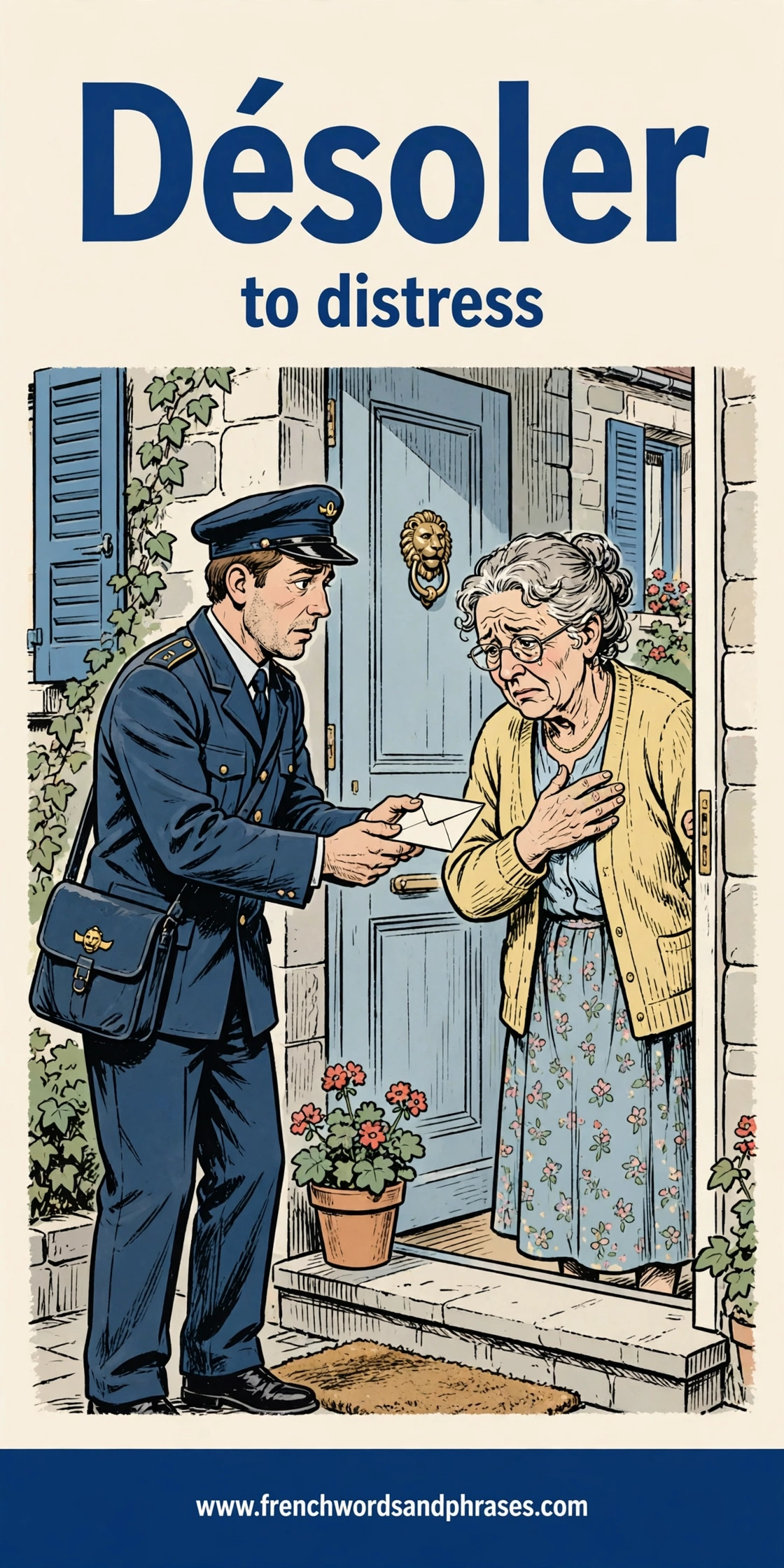
Désoler means to distress — to plunge someone into sorrow or dismay, and in its famous adjective form, to be terribly sorry.
A letter bearing bad news, a valley emptied by drought, and the phrase every French learner meets in the first week — je suis désolé — désoler is the verb of distress in all its forms: the grief you cause, the desolation you see, and the apology you make.
In this guide, you’ll learn how to conjugate désoler in all the major French tenses and moods. Explore complete conjugation tables, French examples, English translations, and practice quizzes.
Understanding the French Verb Désoler
Désoler is a regular French verb belonging to the first group of verbs, those ending in-er.
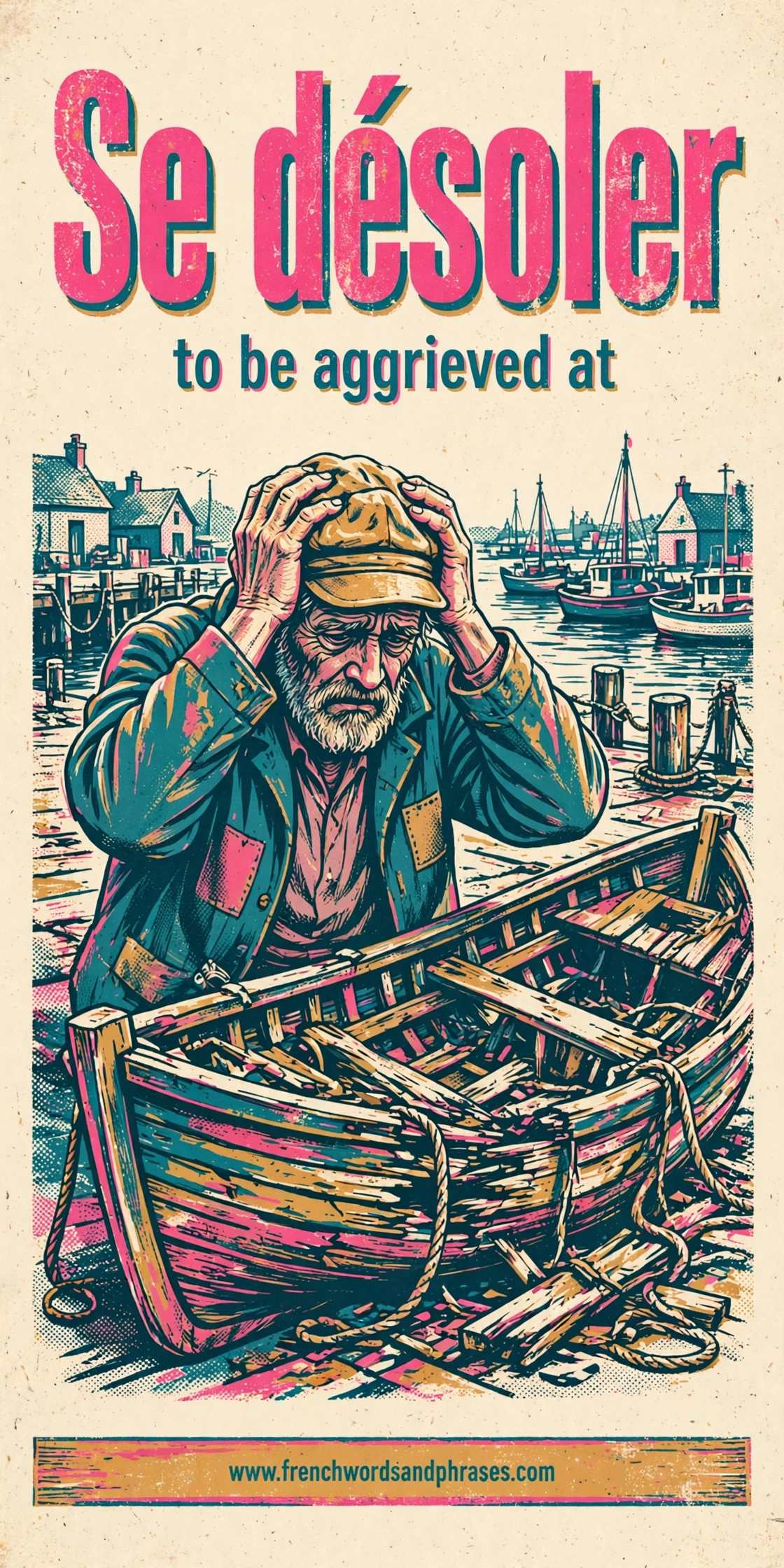
It means to distress. It is commonly used in the apology formula être désolé, of news and losses that distress (cette défaite désole les supporters), and of landscapes and regions laid waste by war, drought or abandonment. The reflexive se désoler, taught on its own page, is the inward version: to grieve and lament over something yourself.
Verb classification: First group (-er)
Auxiliary verb: Avoir
Past participle: désolé
Present participle: désolant
English equivalents: To distress, to devastate; désoler quelqu’un — to distress someone; être désolé — to be very sorry; Je suis désolé — I am sorry; un paysage désolé — a desolate landscape; une région désolée par la sécheresse — a region devastated by drought.
One important detail: the living heart of désoler is its past participle used as an adjective — désolé, désolée — because je suis désolé is the standard French way to say I am sorry, softer and warmer than a bare excuse: je suis désolé pour le retard, je suis vraiment désolée. The verb itself, désoler quelqu’un, means to distress or grieve someone deeply — cette nouvelle le désole — and a place can be désolé too: un paysage désolé is a desolate, ravaged landscape. Regular -er throughout: je désole, nous désolons.
Experience the Word
Désoler is the verb of sorrow with an address — distress delivered to someone, by news, by loss, or by your own lateness.
Imagine a station platform at midnight. The last train has gone, the rain has started, and a young woman reads the message on her phone twice: her friend will not come. La nouvelle la désole — she stands in the wet light with her suitcase, distressed in the old, full sense of the word.
And tomorrow she will say the other half of the verb herself: je suis désolée — distressed, and sorry, in a single word.
How to Conjugate Désoler: Complete French Conjugation Guide
Let’s explore every major conjugation of désoler, beginning with the indicative mood.
How to Conjugate Désoler in the Indicative Mood
The indicative mood is used to express facts, observations, actions, and events.
How to Conjugate Désoler in the Present Tense (Présent)
Used for actions happening now, habitual actions, and general truths.
| Subject | Conjugation |
|---|---|
| je | désole |
| tu | désoles |
| il / elle | désole |
| nous | désolons |
| vous | désolez |
| ils / elles | désolent |
Example
Cette nouvelle désole toute la famille.
This news distresses the whole family.
Quick Quiz 1
Complete the sentence:
Nous ne voulons pas ______ vos parents.
Reveal the answer
désoler
Nous ne voulons pas désoler vos parents.
We do not want to distress your parents.
How to Conjugate Désoler in the Passé Composé
Used for completed actions in the past. Désoler takes the auxiliary verb avoir.
| Subject | Conjugation |
|---|---|
| j’ | ai désolé |
| tu | as désolé |
| il / elle | a désolé |
| nous | avons désolé |
| vous | avez désolé |
| ils / elles | ont désolé |
Example
La sécheresse a désolé la région entière.
The drought devastated the whole region.
How to Conjugate Désoler in the Imparfait (Imperfect Tense)
Used for habitual past actions, descriptions, and ongoing situations in the past.
| Subject | Conjugation |
|---|---|
| je | désolais |
| tu | désolais |
| il / elle | désolait |
| nous | désolions |
| vous | désoliez |
| ils / elles | désolaient |
Example
Son silence désolait ses parents depuis des mois.
His silence had been distressing his parents for months.
Quick Quiz 2
Choose the correct form:
The drought devastated the region.
La sécheresse ______ la région. (a désolé / est désolé)
Reveal the answer
a désolé
La sécheresse a désolé la région.
Désoler takes avoir.
How to Conjugate Désoler in the Plus-que-parfait
Used to describe an action that had already been completed before another past event.
| Subject | Conjugation |
|---|---|
| j’ | avais désolé |
| tu | avais désolé |
| il / elle | avait désolé |
| nous | avions désolé |
| vous | aviez désolé |
| ils / elles | avaient désolé |
Example
La guerre avait désolé ces villages autrefois prospères.
The war had laid waste to these once-prosperous villages.
How to Conjugate Désoler in the Passé Simple
Primarily used in formal writing, literature, and historical narratives. It is rarely used in everyday conversation.
| Subject | Conjugation |
|---|---|
| je | désolai |
| tu | désolas |
| il / elle | désola |
| nous | désolâmes |
| vous | désolâtes |
| ils / elles | désolèrent |
Example
La défaite désola les supporters du club.
The defeat distressed the club’s supporters.
How to Conjugate Désoler in the Passé Antérieur
A literary tense used to express an action completed immediately before another past action, generally in the passé simple.
| Subject | Conjugation |
|---|---|
| j’ | eus désolé |
| tu | eus désolé |
| il / elle | eut désolé |
| nous | eûmes désolé |
| vous | eûtes désolé |
| ils / elles | eurent désolé |
Example
Quand la nouvelle eut désolé la maison, un long silence suivit.
When the news had distressed the household, a long silence followed.
How to Conjugate Désoler in the Future Tense (Futur Simple)
Used to describe actions that will take place in the future.
| Subject | Conjugation |
|---|---|
| je | désolerai |
| tu | désoleras |
| il / elle | désolera |
| nous | désolerons |
| vous | désolerez |
| ils / elles | désoleront |
Example
Ce retard désolera les voyageurs du dernier train.
This delay will distress the passengers of the last train.
How to Conjugate Désoler in the Futur Antérieur (Future Perfect)
Used for an action that will have been completed before a particular point in the future.
| Subject | Conjugation |
|---|---|
| j’ | aurai désolé |
| tu | auras désolé |
| il / elle | aura désolé |
| nous | aurons désolé |
| vous | aurez désolé |
| ils / elles | auront désolé |
Example
À la fin de l’été, la sécheresse aura désolé trois départements.
By the end of summer, the drought will have devastated three departments.
How to Conjugate Désoler in the Near Future (Futur Proche)
Used to describe something that is going to happen soon. Formed with aller + infinitive.
| Subject | Conjugation |
|---|---|
| je | vais désoler |
| tu | vas désoler |
| il / elle | va désoler |
| nous | allons désoler |
| vous | allez désoler |
| ils / elles | vont désoler |
Example
Je vais désoler tes parents avec cette nouvelle.
I am going to distress your parents with this news.
How to Conjugate Désoler in the Conditional Mood
The conditional mood expresses what would happen under certain circumstances. It is also frequently used to make polite requests or express wishes.
How to Conjugate Désoler in the Present Conditional
| Subject | Conjugation |
|---|---|
| je | désolerais |
| tu | désolerais |
| il / elle | désolerait |
| nous | désolerions |
| vous | désoleriez |
| ils / elles | désoleraient |
Example
Une telle erreur désolerait n’importe quel professeur.
Such a mistake would distress any teacher.
How to Conjugate Désoler in the Past Conditional
| Subject | Conjugation |
|---|---|
| j’ | aurais désolé |
| tu | aurais désolé |
| il / elle | aurait désolé |
| nous | aurions désolé |
| vous | auriez désolé |
| ils / elles | auraient désolé |
Example
Son départ aurait désolé ses élèves.
His departure would have distressed his pupils.
Désoler in the Literary Past Conditional Form
This less common literary form uses the imperfect subjunctive of avoir.
| Subject | Conjugation |
|---|---|
| j’ | eusse désolé |
| tu | eusses désolé |
| il / elle | eût désolé |
| nous | eussions désolé |
| vous | eussiez désolé |
| ils / elles | eussent désolé |
Example
La nouvelle eût désolé le vieil homme sans la présence de sa fille.
The news would have distressed the old man without his daughter’s presence.
How to Conjugate Désoler in the Subjunctive Mood
The subjunctive is used to express wishes, emotions, doubts, necessity, and uncertainty. It frequently follows expressions such as il faut que (it is necessary that) or bien que (although).
How to Conjugate Désoler in the Present Subjunctive
| Subject | Conjugation |
|---|---|
| que je | désole |
| que tu | désoles |
| qu’il / qu’elle | désole |
| que nous | désolions |
| que vous | désoliez |
| qu’ils / qu’elles | désolent |
Example
Je crains que ce résultat désole ton père.
I fear this result will distress your father.
Quick Quiz 3
Complete the sentence using the subjunctive:
Je crains que vous ______ vos élèves avec cette annonce.
Reveal the answer
désoliez
Je crains que vous désoliez vos élèves avec cette annonce.
I fear you will distress your pupils with this announcement.
How to Conjugate Désoler in the Imperfect Subjunctive
A literary tense, rarely encountered in modern spoken French.
| Subject | Conjugation |
|---|---|
| que je | désolasse |
| que tu | désolasses |
| qu’il / qu’elle | désolât |
| que nous | désolassions |
| que vous | désolassiez |
| qu’ils / qu’elles | désolassent |
Example
Il parlait doucement, de peur que ses mots désolassent la malade.
He spoke softly, for fear his words might distress the patient.
How to Conjugate Désoler in the Pluperfect Subjunctive
A literary construction used to express an action completed before another past action.
| Subject | Conjugation |
|---|---|
| que j’ | eusse désolé |
| que tu | eusses désolé |
| qu’il / qu’elle | eût désolé |
| que nous | eussions désolé |
| que vous | eussiez désolé |
| qu’ils / qu’elles | eussent désolé |
Example
On racontait que la peste eût désolé la ville en un hiver.
People said the plague had devastated the town in one winter.
How to Conjugate Désoler in the Past Subjunctive
| Subject | Conjugation |
|---|---|
| que j’ | aie désolé |
| que tu | aies désolé |
| qu’il / qu’elle | ait désolé |
| que nous | ayons désolé |
| que vous | ayez désolé |
| ils / elles | aient désolé |
Example
Je regrette que la nouvelle ait désolé tes parents.
I regret that the news distressed your parents.
How to Conjugate Désoler in the Imperative
The imperative is used to give commands, instructions, invitations, or suggestions. Subject pronouns are omitted.
How to Conjugate Désoler in the Present Imperative
| Person | Conjugation |
|---|---|
| (tu) | désole |
| (nous) | désolons |
| (vous) | désolez |
Example
Ne désole pas ta mère avec ces histoires !
Do not distress your mother with these stories!
Quick Quiz 4
How would you say Do not distress your mother (tu form)?
Reveal the answer
Ne désole pas ta mère !
French Participles of Désoler
Participles are verb forms that can be used in compound tenses and other grammatical constructions.
Present Participle of Désoler
désolant
En désolant ses proches, il ne se rendait pas compte de sa dureté.
By distressing his loved ones, he did not realise his harshness.
Past Participle of Désoler
désolé
Désolé par la nouvelle, il resta silencieux toute la soirée.
Distressed by the news, he stayed silent all evening.
Désoler in Everyday French: Real-Life Examples
Now that you know the conjugations, let’s see how désoler appears in everyday French.
Example 1 — Present
Cette nouvelle désole toute la famille.
This news distresses the whole family.
Example 2 — Passé composé
La sécheresse a désolé la région.
The drought devastated the region.
Example 3 — Imparfait
Son silence désolait ses parents.
His silence was distressing his parents.
Example 4 — Future
Ce retard désolera les voyageurs.
This delay will distress the passengers.
Example 5 — Conditional
Une telle erreur désolerait n’importe quel professeur.
Such a mistake would distress any teacher.
Example 6 — Imperative
Ne désole pas ta mère !
Do not distress your mother!
Beyond Translation: The Meaning of Désoler
English desolate is the same Latin word — desolare, to leave alone, to lay waste — and French désoler kept both of its destinies: the wasted landscape and the grieved heart.
Then it took a third: the apology.
Je suis désolé says, literally, I am devastated — which is why French apologies carry a warmth English has to borrow adverbs for: je suis vraiment, sincèrement désolé.
How to Remember the French Verb Désoler
Remember it this way: Désoler is about the midnight platform — and je suis désolé.
- Je suis désolé — I am sorry — is this verb’s past participle at work; the apology is the first form to learn.
- Two sorrows: désoler quelqu’un (to distress someone) and un paysage désolé (a desolate landscape).
- Regular -er: je désole, nous désolons, past participle désolé — agreeing in être désolée for a woman.
The key idea is the midnight platform — and je suis désolé.
Test Your Knowledge of Désoler
Let’s see how much you’ve learned. Try answering these questions before revealing the answers.
Question 1
How does a French speaker say I am sorry using this verb’s family?
Reveal the answer
Je suis désolé (désolée for a woman) — literally, I am distressed.
Question 2
How do you say This news distresses the whole family in French?
Reveal the answer
Cette nouvelle désole toute la famille.
Question 3
Translate: The drought devastated the whole region.
Reveal the answer
La sécheresse a désolé la région entière.
Question 4
What is the past participle of désoler?
Reveal the answer
Désolé — the famous apology word.
Question 5
Complete the sentence:
Je crains que ce résultat ______ ton père.
Reveal the answer
désole
Je crains que ce résultat désole ton père.
I fear this result will distress your father.
Your Final Challenge
Can You Use It?
How would you say this in French?
A desolate landscape and a distressed heart bear the same name: the absence of what made them live.
Reveal the answer
Un paysage désolé et un cœur désolé portent le même nom : l’absence de ce qui faisait vivre.
A desolate landscape and a distressed heart bear the same name: the absence of what made them live.
A little French. A little curiosity. A richer everyday life.
LEARN FRENCH ONE WORD AT A TIME