A French Word to Live By
How to Conjugate Désenfler in French
/de.zɑ̃.fle/
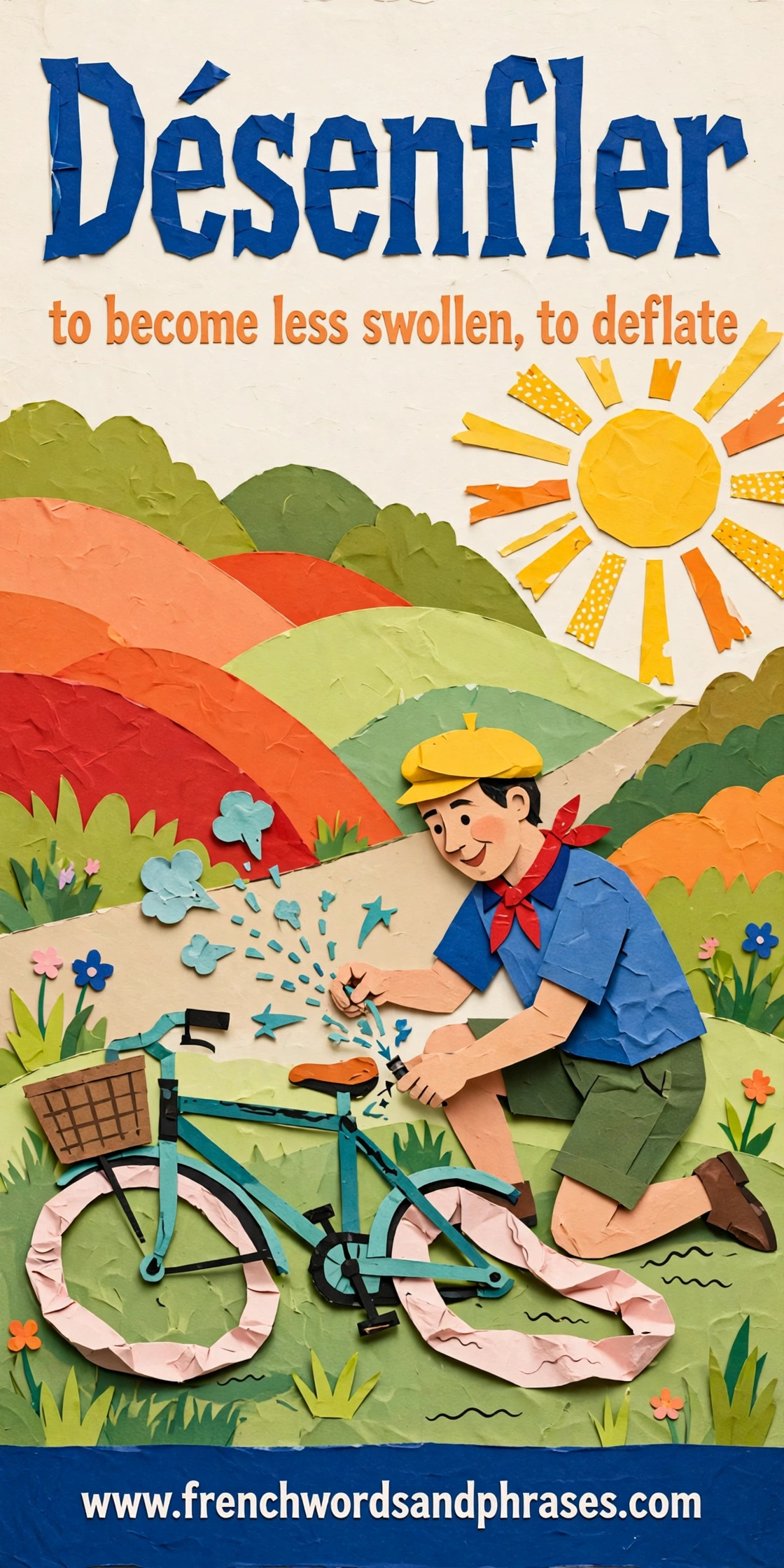
Désenfler means to become less swollen, to deflate — to go down slowly, whether it is an ankle after a sprain or a balloon losing its air.
The morning after a sprain, an ankle slowly returns to ankle shape; a party balloon sags a little more each day — désenfler is the verb of swelling subsiding and air escaping: the long, quiet exhale of anything that was blown up too much.
In this guide, you’ll learn how to conjugate désenfler in all the major French tenses and moods. Explore complete conjugation tables, French examples, English translations, and practice quizzes.
Understanding the French Verb Désenfler
Désenfler is a regular French verb belonging to the first group of verbs, those ending in-er.
It means to become less swollen, to deflate. It is used of ankles, fingers, eyes and faces returning to normal after injury, stings and tears, and of balloons, tyres and inflatable boats losing air. Doctors ask about it at every follow-up visit: ça désenfle ?
Verb classification: First group (-er)
Auxiliary verb: Avoir
Past participle: désenflé
Present participle: désenflant
English equivalents: To become less swollen, to go down, to deflate; la cheville désenfle — the ankle is going down; le ballon désenfle — the balloon is deflating; désenfler un ballon — to let a balloon down.
One important detail: désenfler is mostly intransitive — things désenflent by themselves once the cause is treated: la cheville désenfle, le pneu désenfle, and it takes avoir: la cheville a désenflé. Its mirror twin is enfler (to swell), and its close neighbour is désenflammer: désenfler is about size going down, désenflammer about heat and redness calming. Perfectly regular: je désenfle, nous désenflons, past participle désenflé.
Experience the Word
Désenfler is the verb of the morning after — the slow, welcome return of things to their proper size.
Imagine a hiker who twisted her ankle on the first day of the trek. Three days of ice, bandages and rest later, she wiggles her toes, compares the two ankles — la cheville désenfle, the shoe nearly fits again, and the mountain is possible once more.
Nothing dramatic happened overnight. The ankle has simply gone down — désenflé — millimetre by millimetre.
How to Conjugate Désenfler: Complete French Conjugation Guide
Let’s explore every major conjugation of désenfler, beginning with the indicative mood.
How to Conjugate Désenfler in the Indicative Mood
The indicative mood is used to express facts, observations, actions, and events.
How to Conjugate Désenfler in the Present Tense (Présent)
Used for actions happening now, habitual actions, and general truths.
| Subject | Conjugation |
|---|---|
| je | désenfle |
| tu | désenfles |
| il / elle | désenfle |
| nous | désenflons |
| vous | désenflez |
| ils / elles | désenflent |
Example
Ta cheville désenfle déjà, c’est bon signe.
Your ankle is already going down, that is a good sign.
Quick Quiz 1
Complete the sentence:
Nous constatons que le pneu ______.
Reveal the answer
désenfle
Nous constatons que le pneu désenfle.
We notice the tyre is going flat.
How to Conjugate Désenfler in the Passé Composé
Used for completed actions in the past. Désenfler takes the auxiliary verb avoir.
| Subject | Conjugation |
|---|---|
| j’ | ai désenflé |
| tu | as désenflé |
| il / elle | a désenflé |
| nous | avons désenflé |
| vous | avez désenflé |
| ils / elles | ont désenflé |
Example
Le ballon a désenflé pendant la nuit.
The balloon deflated during the night.
How to Conjugate Désenfler in the Imparfait (Imperfect Tense)
Used for habitual past actions, descriptions, and ongoing situations in the past.
| Subject | Conjugation |
|---|---|
| je | désenflais |
| tu | désenflais |
| il / elle | désenflait |
| nous | désenflions |
| vous | désenfliez |
| ils / elles | désenflaient |
Example
Ses yeux désenflaient lentement après la crise d’allergie.
His eyes were slowly going down after the allergy attack.
Quick Quiz 2
Choose the correct form:
His ankle went down.
Sa cheville ______ . (a désenflé / s’est désenflée)
Reveal the answer
a désenflé
Sa cheville a désenflé.
Désenfler takes avoir, even for body parts.
How to Conjugate Désenfler in the Plus-que-parfait
Used to describe an action that had already been completed before another past event.
| Subject | Conjugation |
|---|---|
| j’ | avais désenflé |
| tu | avais désenflé |
| il / elle | avait désenflé |
| nous | avions désenflé |
| vous | aviez désenflé |
| ils / elles | avaient désenflé |
Example
Le pneu avait désenflé avant même le départ.
The tyre had gone flat before we even set off.
How to Conjugate Désenfler in the Passé Simple
Primarily used in formal writing, literature, and historical narratives. It is rarely used in everyday conversation.
| Subject | Conjugation |
|---|---|
| je | désenflai |
| tu | désenflas |
| il / elle | désenfla |
| nous | désenflâmes |
| vous | désenflâtes |
| ils / elles | désenflèrent |
Example
En trois jours, la main désenfla complètement.
In three days, the hand went down completely.
How to Conjugate Désenfler in the Passé Antérieur
A literary tense used to express an action completed immediately before another past action, generally in the passé simple.
| Subject | Conjugation |
|---|---|
| j’ | eus désenflé |
| tu | eus désenflé |
| il / elle | eut désenflé |
| nous | eûmes désenflé |
| vous | eûtes désenflé |
| ils / elles | eurent désenflé |
Example
Dès que le doigt eut désenflé, elle remit sa bague.
As soon as her finger had gone down, she put her ring back on.
How to Conjugate Désenfler in the Future Tense (Futur Simple)
Used to describe actions that will take place in the future.
| Subject | Conjugation |
|---|---|
| je | désenflerai |
| tu | désenfleras |
| il / elle | désenflera |
| nous | désenflerons |
| vous | désenflerez |
| ils / elles | désenfleront |
Example
Avec du repos, ton genou désenflera vite.
With rest, your knee will go down quickly.
How to Conjugate Désenfler in the Futur Antérieur (Future Perfect)
Used for an action that will have been completed before a particular point in the future.
| Subject | Conjugation |
|---|---|
| j’ | aurai désenflé |
| tu | auras désenflé |
| il / elle | aura désenflé |
| nous | aurons désenflé |
| vous | aurez désenflé |
| ils / elles | auront désenflé |
Example
Demain matin, la piqûre aura désenflé.
By tomorrow morning, the sting will have gone down.
How to Conjugate Désenfler in the Near Future (Futur Proche)
Used to describe something that is going to happen soon. Formed with aller + infinitive.
| Subject | Conjugation |
|---|---|
| je | vais désenfler |
| tu | vas désenfler |
| il / elle | va désenfler |
| nous | allons désenfler |
| vous | allez désenfler |
| ils / elles | vont désenfler |
Example
Regarde, le ballon va désenfler si tu le lâches.
Look, the balloon is going to deflate if you let go of it.
How to Conjugate Désenfler in the Conditional Mood
The conditional mood expresses what would happen under certain circumstances. It is also frequently used to make polite requests or express wishes.
How to Conjugate Désenfler in the Present Conditional
| Subject | Conjugation |
|---|---|
| je | désenflerais |
| tu | désenflerais |
| il / elle | désenflerait |
| nous | désenflerions |
| vous | désenfleriez |
| ils / elles | désenfleraient |
Example
Sans le froid, la cheville désenflerait moins vite.
Without the cold, the ankle would go down more slowly.
How to Conjugate Désenfler in the Past Conditional
| Subject | Conjugation |
|---|---|
| j’ | aurais désenflé |
| tu | aurais désenflé |
| il / elle | aurait désenflé |
| nous | aurions désenflé |
| vous | auriez désenflé |
| ils / elles | auraient désenflé |
Example
Le matelas aurait désenflé si la valve était restée ouverte.
The air mattress would have deflated if the valve had stayed open.
Désenfler in the Literary Past Conditional Form
This less common literary form uses the imperfect subjunctive of avoir.
| Subject | Conjugation |
|---|---|
| j’ | eusse désenflé |
| tu | eusses désenflé |
| il / elle | eût désenflé |
| nous | eussions désenflé |
| vous | eussiez désenflé |
| ils / elles | eussent désenflé |
Example
Le ballon eût désenflé avant la fin de la fête.
The balloon would have deflated before the end of the party.
How to Conjugate Désenfler in the Subjunctive Mood
The subjunctive is used to express wishes, emotions, doubts, necessity, and uncertainty. It frequently follows expressions such as il faut que (it is necessary that) or bien que (although).
How to Conjugate Désenfler in the Present Subjunctive
| Subject | Conjugation |
|---|---|
| que je | désenfle |
| que tu | désenfles |
| qu’il / qu’elle | désenfle |
| que nous | désenflions |
| que vous | désenfliez |
| qu’ils / qu’elles | désenflent |
Example
Il faut que la cheville désenfle avant le match.
The ankle must go down before the match.
Quick Quiz 3
Complete the sentence using the subjunctive:
Il faut que le genou ______ avant l’opération.
Reveal the answer
désenfle
Il faut que le genou désenfle avant l’opération.
The knee must go down before the operation.
How to Conjugate Désenfler in the Imperfect Subjunctive
A literary tense, rarely encountered in modern spoken French.
| Subject | Conjugation |
|---|---|
| que je | désenflasse |
| que tu | désenflasses |
| qu’il / qu’elle | désenflât |
| que nous | désenflassions |
| que vous | désenflassiez |
| qu’ils / qu’elles | désenflassent |
Example
Le médecin attendait que le genou désenflât avant d’opérer.
The doctor was waiting for the knee to go down before operating.
How to Conjugate Désenfler in the Pluperfect Subjunctive
A literary construction used to express an action completed before another past action.
| Subject | Conjugation |
|---|---|
| que j’ | eusse désenflé |
| que tu | eusses désenflé |
| qu’il / qu’elle | eût désenflé |
| nous | eussions désenflé |
| que vous | eussiez désenflé |
| qu’ils / qu’elles | eussent désenflé |
Example
On espérait que la piqûre eût désenflé avant la photo.
People hoped the sting had gone down before the photo.
How to Conjugate Désenfler in the Past Subjunctive
| Subject | Conjugation |
|---|---|
| que j’ | aie désenflé |
| que tu | aies désenflé |
| qu’il / qu’elle | ait désenflé |
| que nous | ayons désenflé |
| que vous | ayez désenflé |
| qu’ils / qu’elles | aient désenflé |
Example
Je suis content que ton œil ait désenflé.
I am glad your eye has gone down.
How to Conjugate Désenfler in the Imperative
The imperative is used to give commands, instructions, invitations, or suggestions. Subject pronouns are omitted.
How to Conjugate Désenfler in the Present Imperative
| Person | Conjugation |
|---|---|
| (tu) | désenfle |
| (nous) | désenflons |
| (vous) | désenflez |
Example
Désenfle un peu ce ballon, il va éclater !
Let this balloon down a little, it is going to burst!
Quick Quiz 4
How would you say Let the balloon down a little (tu form)?
Reveal the answer
Désenfle un peu le ballon !
French Participles of Désenfler
Participles are verb forms that can be used in compound tenses and other grammatical constructions.
Present Participle of Désenfler
désenflant
En désenflant jour après jour, la cheville a retrouvé sa forme.
By going down day after day, the ankle regained its shape.
Past Participle of Désenfler
désenflé
Désenflé après une semaine, le pneu attendait sa réparation.
Gone flat after a week, the tyre was waiting to be repaired.
Désenfler in Everyday French: Real-Life Examples
Now that you know the conjugations, let’s see how désenfler appears in everyday French.
Example 1 — Present
Ma cheville désenfle doucement.
My ankle is slowly going down.
Example 2 — Passé composé
Le ballon a désenflé pendant la nuit.
The balloon deflated during the night.
Example 3 — Imparfait
Ses yeux désenflaient après l’allergie.
His eyes used to go down after the allergy.
Example 4 — Future
Ton genou désenflera avec du repos.
Your knee will go down with rest.
Example 5 — Conditional
La piqûre désenflerait plus vite avec de la glace.
The sting would go down faster with ice.
Example 6 — Imperative
Désenfle ce ballon avant de le ranger !
Let this balloon down before putting it away!
Beyond Translation: The Meaning of Désenfler
Enfler is to swell — it is in un fleuve qui enfle, a river swelling, and in the proud, puffed-up enflé of old insults.
Désenfler is the swelling’s retreat.
English splits the idea in two — go down for bodies, deflate for balloons — but French keeps one verb for both, because an ankle and a balloon obey the same law: what has been blown up must come down.
How to Remember the French Verb Désenfler
Remember it this way: Désenfler is about the sprained ankle returning to ankle shape, the balloon sagging.
- The opposite of enfler (to swell): what swells must désenfler — go down.
- Mostly intransitive and with avoir: la cheville a désenflé, le ballon a désenflé.
- Regular -er: je désenfle, nous désenflons, past participle désenflé.
The key idea is the sprained ankle returning to ankle shape, the balloon sagging.
Test Your Knowledge of Désenfler
Let’s see how much you’ve learned. Try answering these questions before revealing the answers.
Question 1
Which auxiliary does désenfler take in la cheville ___ désenflé?
Reveal the answer
Avoir — la cheville a désenflé; désenfler is neither reflexive nor a movement verb.
Question 2
How do you say The balloon deflated during the night in French?
Reveal the answer
Le ballon a désenflé pendant la nuit.
Question 3
Translate: Your ankle is already going down.
Reveal the answer
Ta cheville désenfle déjà.
Question 4
What is the past participle of désenfler?
Reveal the answer
Désenflé.
Question 5
Complete the sentence:
Il faut que la cheville ______ avant le match.
Reveal the answer
désenfle
Il faut que la cheville désenfle avant le match.
The ankle must go down before the match.
Your Final Challenge
Can You Use It?
How would you say this in French?
The balloon slowly deflates in a corner, and the party ends in silence.
Reveal the answer
Le ballon désenfle lentement dans un coin, et la fête se termine en silence.
The balloon slowly deflates in a corner, and the party ends in silence.
A little French. A little curiosity. A richer everyday life.
LEARN FRENCH ONE WORD AT A TIME