A French Word to Live By
How to Conjugate Désarçonner in French
/de.zaʁ.sɔ.ne/
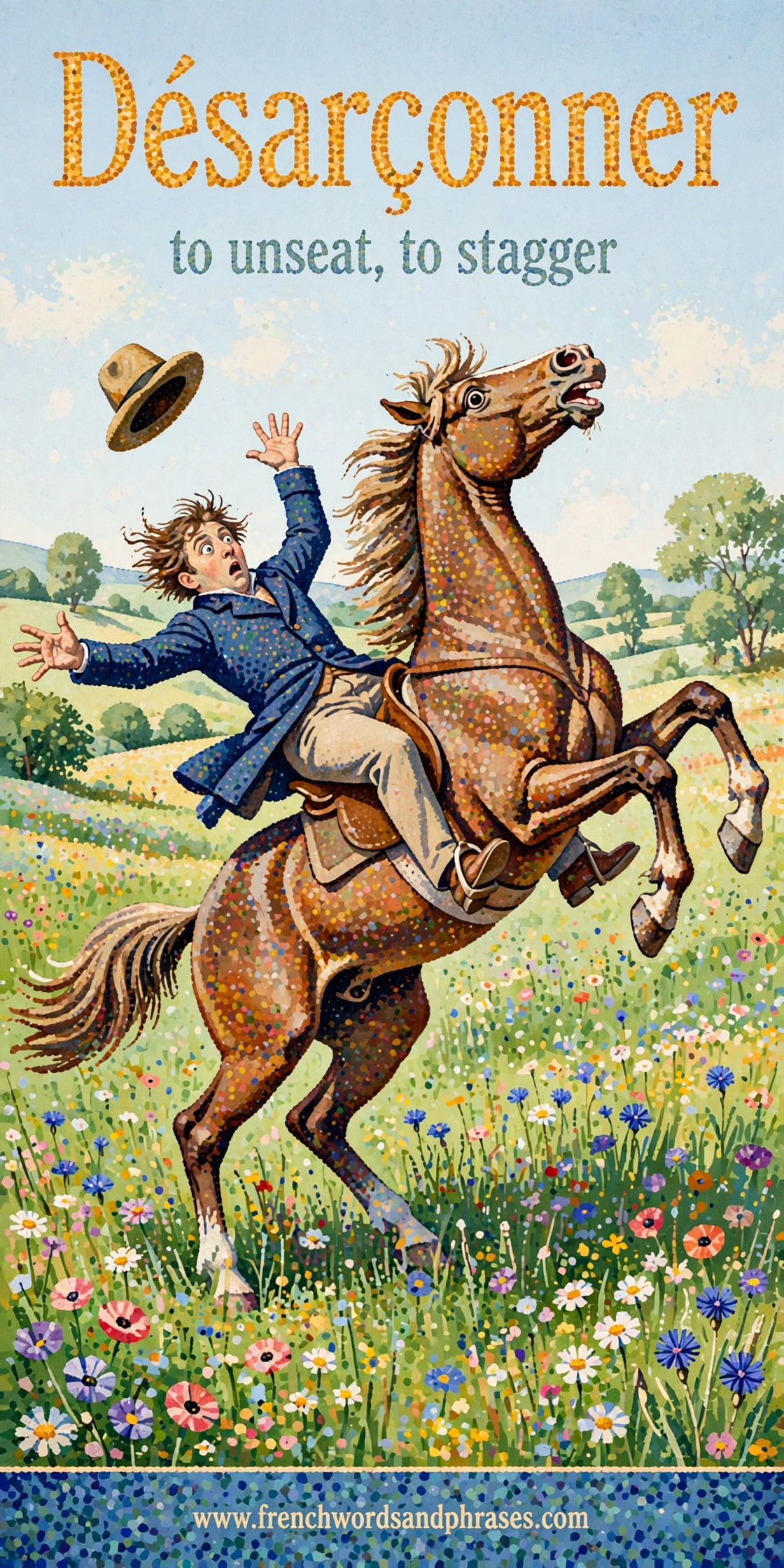
Désarçonner means to unseat, to stagger — to throw a rider out of the saddle, and, figuratively, to leave someone speechless and off balance.
A horse shies at a fence and the rider is suddenly in the mud; a single unexpected question does the same to a confident speaker. Désarçonner covers both falls: out of the saddle, and out of one’s composure.
In this guide, you’ll learn how to conjugate désarçonner in all the major French tenses and moods. Explore complete conjugation tables, French examples, English translations, and practice quizzes.
Understanding the French Verb Désarçonner
Désarçonner is a regular French verb belonging to the first group of verbs, those ending in-er.
It means to unseat, to stagger. At the riding school it is still literal — a horse désarçonne its rider at a refusal or a sudden shy. Everywhere else it is the verb of being floored without falling: examiners, journalists and cheeky children désarçonnent adults with one question too many.
Verb classification: First group (-er)
Auxiliary verb: Avoir
Past participle: désarçonné
Present participle: désarçonnant
English equivalents: To unseat, to throw (a rider); to stagger, to nonplus; désarçonner un cavalier — to unseat a rider; être désarçonné par une question — to be staggered by a question; désarçonner son adversaire — to throw one’s opponent off balance.
One important detail: désarçonner is a -cer verb built on les arçons, the bows of a saddle — to désarçonner is literally to lift someone out of the arçons. The c takes a cedilla before a and o: je désarçonne, nous désarçonnons, je désarçonnais, je désarçonnai. In modern French the figurative sense rules: a remark, a question or a piece of news vous désarçonne when it knocks you sideways and leaves you searching for words.
Experience the Word
Désarçonner is the verb of the sudden empty space where your balance used to be — in the saddle or in the argument.
Imagine a riding lesson on a grey morning. The mare stops dead at the brush fence she has jumped a hundred times; the rider sails over her neck and lands sitting in the sand, hat over one eye. Le cheval l’a désarçonné — and the whole school is trying not to laugh.
He is unhurt, only astonished. He has been unseated — désarçonné — exactly as a question désarçonne a minister: all at once, and in public.
How to Conjugate Désarçonner: Complete French Conjugation Guide
Let’s explore every major conjugation of désarçonner, beginning with the indicative mood.
How to Conjugate Désarçonner in the Indicative Mood
The indicative mood is used to express facts, observations, actions, and events.
How to Conjugate Désarçonner in the Present Tense (Présent)
Used for actions happening now, habitual actions, and general truths.
| Subject | Conjugation |
|---|---|
| je | désarçonne |
| tu | désarçonnes |
| il / elle | désarçonne |
| nous | désarçonnons |
| vous | désarçonnez |
| ils / elles | désarçonnent |
Example
Ce cheval désarçonne tous les cavaliers débutants.
This horse unseats every beginner rider.
Quick Quiz 1
Complete the sentence:
Nous ______ les candidats avec des questions simples.
Reveal the answer
désarçonnons
Nous désarçonnons les candidats avec des questions simples.
We throw the candidates off balance with simple questions.
How to Conjugate Désarçonner in the Passé Composé
Used for completed actions in the past. Désarçonner takes the auxiliary verb avoir.
| Subject | Conjugation |
|---|---|
| j’ | ai désarçonné |
| tu | as désarçonné |
| il / elle | a désarçonné |
| nous | avons désarçonné |
| vous | avez désarçonné |
| ils / elles | ont désarçonné |
Example
Sa question a désarçonné le ministre en pleine conférence.
Her question staggered the minister in the middle of the press conference.
How to Conjugate Désarçonner in the Imparfait (Imperfect Tense)
Used for habitual past actions, descriptions, and ongoing situations in the past.
| Subject | Conjugation |
|---|---|
| je | désarçonnais |
| tu | désarçonnais |
| il / elle | désarçonnait |
| nous | désarçonnions |
| vous | désarçonniez |
| ils / elles | désarçonnaient |
Example
Le vieux pur-sang désarçonnait même les cavaliers expérimentés.
The old thoroughbred used to unseat even experienced riders.
Quick Quiz 2
Choose the correct form:
The horse unseated its rider.
Le cheval ______ son cavalier. (a désarçonné / est désarçonné)
Reveal the answer
a désarçonné
Le cheval a désarçonné son cavalier.
Désarçonner takes avoir.
How to Conjugate Désarçonner in the Plus-que-parfait
Used to describe an action that had already been completed before another past event.
| Subject | Conjugation |
|---|---|
| j’ | avais désarçonné |
| tu | avais désarçonné |
| il / elle | avait désarçonné |
| nous | avions désarçonné |
| vous | aviez désarçonné |
| ils / elles | avaient désarçonné |
Example
La nouvelle avait désarçonné toute l’équipe dès le matin.
The news had staggered the whole team first thing in the morning.
How to Conjugate Désarçonner in the Passé Simple
Primarily used in formal writing, literature, and historical narratives. It is rarely used in everyday conversation.
| Subject | Conjugation |
|---|---|
| je | désarçonnai |
| tu | désarçonnas |
| il / elle | désarçonna |
| nous | désarçonnâmes |
| vous | désarçonnâtes |
| ils / elles | désarçonnèrent |
Example
Le cheval désarçonna son cavalier devant la barrière.
The horse unseated its rider in front of the fence.
How to Conjugate Désarçonner in the Passé Antérieur
A literary tense used to express an action completed immediately before another past action, generally in the passé simple.
| Subject | Conjugation |
|---|---|
| j’ | eus désarçonné |
| tu | eus désarçonné |
| il / elle | eut désarçonné |
| nous | eûmes désarçonné |
| vous | eûtes désarçonné |
| ils / elles | eurent désarçonné |
Example
Quand la remarque eut désarçonné l’orateur, un silence gêné suivit.
When the remark had staggered the speaker, an embarrassed silence followed.
How to Conjugate Désarçonner in the Future Tense (Futur Simple)
Used to describe actions that will take place in the future.
| Subject | Conjugation |
|---|---|
| je | désarçonnerai |
| tu | désarçonneras |
| il / elle | désarçonnera |
| nous | désarçonnerons |
| vous | désarçonnerez |
| ils / elles | désarçonneront |
Example
Cette objection désarçonnera les plus sûrs d’eux-mêmes.
This objection will stagger even the most self-assured.
How to Conjugate Désarçonner in the Futur Antérieur (Future Perfect)
Used for an action that will have been completed before a particular point in the future.
| Subject | Conjugation |
|---|---|
| j’ | aurai désarçonné |
| tu | auras désarçonné |
| il / elle | aura désarçonné |
| nous | aurons désarçonné |
| vous | aurez désarçonné |
| ils / elles | auront désarçonné |
Example
À la fin de l’interrogatoire, ils auront désarçonné trois témoins.
By the end of the questioning, they will have thrown three witnesses off balance.
How to Conjugate Désarçonner in the Near Future (Futur Proche)
Used to describe something that is going to happen soon. Formed with aller + infinitive.
| Subject | Conjugation |
|---|---|
| je | vais désarçonner |
| tu | vas désarçonner |
| il / elle | va désarçonner |
| nous | allons désarçonner |
| vous | allez désarçonner |
| ils / elles | vont désarçonner |
Example
Tu vas désarçonner ton professeur avec cette question.
You are going to floor your teacher with that question.
How to Conjugate Désarçonner in the Conditional Mood
The conditional mood expresses what would happen under certain circumstances. It is also frequently used to make polite requests or express wishes.
How to Conjugate Désarçonner in the Present Conditional
| Subject | Conjugation |
|---|---|
| je | désarçonnerais |
| tu | désarçonnerais |
| il / elle | désarçonnerait |
| nous | désarçonnerions |
| vous | désarçonneriez |
| ils / elles | désarçonneraient |
Example
Un seul chiffre désarçonnerait tout son argumentaire.
A single figure would stagger his whole line of argument.
How to Conjugate Désarçonner in the Past Conditional
| Subject | Conjugation |
|---|---|
| j’ | aurais désarçonné |
| tu | aurais désarçonné |
| il / elle | aurait désarçonné |
| nous | aurions désarçonné |
| vous | auriez désarçonné |
| ils / elles | auraient désarçonné |
Example
Elle aurait désarçonné le jury avec une réponse plus calme.
She would have thrown the jury off balance with a calmer answer.
Désarçonner in the Literary Past Conditional Form
This less common literary form uses the imperfect subjunctive of avoir.
| Subject | Conjugation |
|---|---|
| j’ | eusse désarçonné |
| tu | eusses désarçonné |
| il / elle | eût désarçonné |
| nous | eussions désarçonné |
| vous | eussiez désarçonné |
| ils / elles | eussent désarçonné |
Example
Le cheval eût désarçonné le prince sans l’aide des écuyers.
The horse would have unseated the prince without the grooms’ help.
How to Conjugate Désarçonner in the Subjunctive Mood
The subjunctive is used to express wishes, emotions, doubts, necessity, and uncertainty. It frequently follows expressions such as il faut que (it is necessary that) or bien que (although).
How to Conjugate Désarçonner in the Present Subjunctive
| Subject | Conjugation |
|---|---|
| que je | désarçonne |
| que tu | désarçonnes |
| qu’il / qu’elle | désarçonne |
| que nous | désarçonnions |
| que vous | désarçonniez |
| qu’ils / qu’elles | désarçonnent |
Example
Il est rare qu’une question désarçonne un avocat si expérimenté.
It is rare for a question to stagger such an experienced lawyer.
Quick Quiz 3
Complete the sentence using the subjunctive:
Je crains que cette nouvelle ______ les enfants.
Reveal the answer
désarçonne
Je crains que cette nouvelle désarçonne les enfants.
I fear this news may stagger the children.
How to Conjugate Désarçonner in the Imperfect Subjunctive
A literary tense, rarely encountered in modern spoken French.
| Subject | Conjugation |
|---|---|
| que je | désarçonnasse |
| que tu | désarçonnasses |
| qu’il / qu’elle | désarçonnât |
| que nous | désarçonnassions |
| que vous | désarçonnassiez |
| qu’ils / qu’elles | désarçonnassent |
Example
Je craignais que la nouvelle désarçonnât les enfants.
I feared the news might stagger the children.
How to Conjugate Désarçonner in the Pluperfect Subjunctive
A literary construction used to express an action completed before another past action.
| Subject | Conjugation |
|---|---|
| que j’ | eusse désarçonné |
| que tu | eusses désarçonné |
| qu’il / qu’elle | eût désarçonné |
| nous | eussions désarçonné |
| que vous | eussiez désarçonné |
| qu’ils / qu’elles | eussent désarçonné |
Example
On racontait que sa réponse eût désarçonné toute l’assemblée.
People said her answer had staggered the whole assembly.
How to Conjugate Désarçonner in the Past Subjunctive
| Subject | Conjugation |
|---|---|
| que j’ | aie désarçonné |
| que tu | aies désarçonné |
| qu’il / qu’elle | ait désarçonné |
| que nous | ayons désarçonné |
| que vous | ayez désarçonné |
| qu’ils / elles | aient désarçonné |
Example
Je suis étonné que ce détail ait désarçonné le directeur.
I am surprised this detail threw the director off balance.
How to Conjugate Désarçonner in the Imperative
The imperative is used to give commands, instructions, invitations, or suggestions. Subject pronouns are omitted.
How to Conjugate Désarçonner in the Present Imperative
| Person | Conjugation |
|---|---|
| (tu) | désarçonne |
| (nous) | désarçonnons |
| (vous) | désarçonnez |
Example
Ne désarçonne pas ton petit frère avec tes questions pièges !
Do not floor your little brother with your trick questions!
Quick Quiz 4
How would you say Do not floor your brother with your traps (tu form)?
Reveal the answer
Ne désarçonne pas ton frère avec tes pièges !
French Participles of Désarçonner
Participles are verb forms that can be used in compound tenses and other grammatical constructions.
Present Participle of Désarçonner
désarçonnant
En désarçonnant son adversaire dès la première minute, elle a gagné le débat.
By throwing her opponent off balance in the first minute, she won the debate.
Past Participle of Désarçonner
désarçonné
Désarçonné par la question, le candidat est resté muet.
Staggered by the question, the candidate remained speechless.
Désarçonner in Everyday French: Real-Life Examples
Now that you know the conjugations, let’s see how désarçonner appears in everyday French.
Example 1 — Present
Ce cheval désarçonne les débutants.
This horse unseats beginners.
Example 2 — Passé composé
Sa question a désarçonné le ministre.
Her question staggered the minister.
Example 3 — Imparfait
Le pur-sang désarçonnait même les experts.
The thoroughbred used to unseat even the experts.
Example 4 — Future
Cette objection désarçonnera les plus confiants.
This objection will stagger the most confident.
Example 5 — Conditional
Un chiffre désarçonnerait son argument.
One figure would stagger his argument.
Example 6 — Imperative
Ne désarçonne pas ton frère avec tes pièges !
Do not floor your brother with your traps!
Beyond Translation: The Meaning of Désarçonner
English unseat keeps a little of the saddle, but désarçonner has galloped much further into figurative French — today it unseats speakers, ministers and candidates far more often than riders.
Les arçons are the saddle’s wooden bows.
To be désarçonné is to be lifted clean out of that frame: the body follows in the riding school, but in the debating chamber only the confidence falls.
How to Remember the French Verb Désarçonner
Remember it this way: Désarçonner is about the rider in the sand, the minister lost for words — same fall.
- Les arçons are the bows of the saddle: désarçonner lifts the rider out of them.
- Mind the cedilla before a and o: nous désarçonnons, je désarçonnais.
- Today mostly figurative: une question qui désarçonne — a question that leaves you speechless.
The key idea is the rider in the sand, the minister lost for words — same fall.
Test Your Knowledge of Désarçonner
Let’s see how much you’ve learned. Try answering these questions before revealing the answers.
Question 1
Why does désarçonner take a cedilla in nous désarçonnons?
Reveal the answer
To keep the soft s sound before o — désarçonner is a -cer verb: je désarçonne, nous désarçonnons, je désarçonnais.
Question 2
How do you say Her question staggered the minister in French?
Reveal the answer
Sa question a désarçonné le ministre.
Question 3
Translate: This horse unseats every beginner.
Reveal the answer
Ce cheval désarçonne tous les débutants.
Question 4
What is the past participle of désarçonner?
Reveal the answer
Désarçonné.
Question 5
Complete the sentence:
Il est rare qu’une question ______ un avocat si expérimenté.
Reveal the answer
désarçonne
Il est rare qu’une question désarçonne un avocat si expérimenté.
It is rare for a question to stagger such an experienced lawyer.
Your Final Challenge
Can You Use It?
How would you say this in French?
A single question staggered him, and the silence that followed was worth all the applause.
Reveal the answer
Une seule question l’a désarçonné, et le silence qui suivit valait tous les applaudissements.
A single question staggered him, and the silence that followed was worth all the applause.
A little French. A little curiosity. A richer everyday life.
LEARN FRENCH ONE WORD AT A TIME