A French Word to Live By
How to Conjugate Désaltérer in French
/de.zal.te.ʁe/
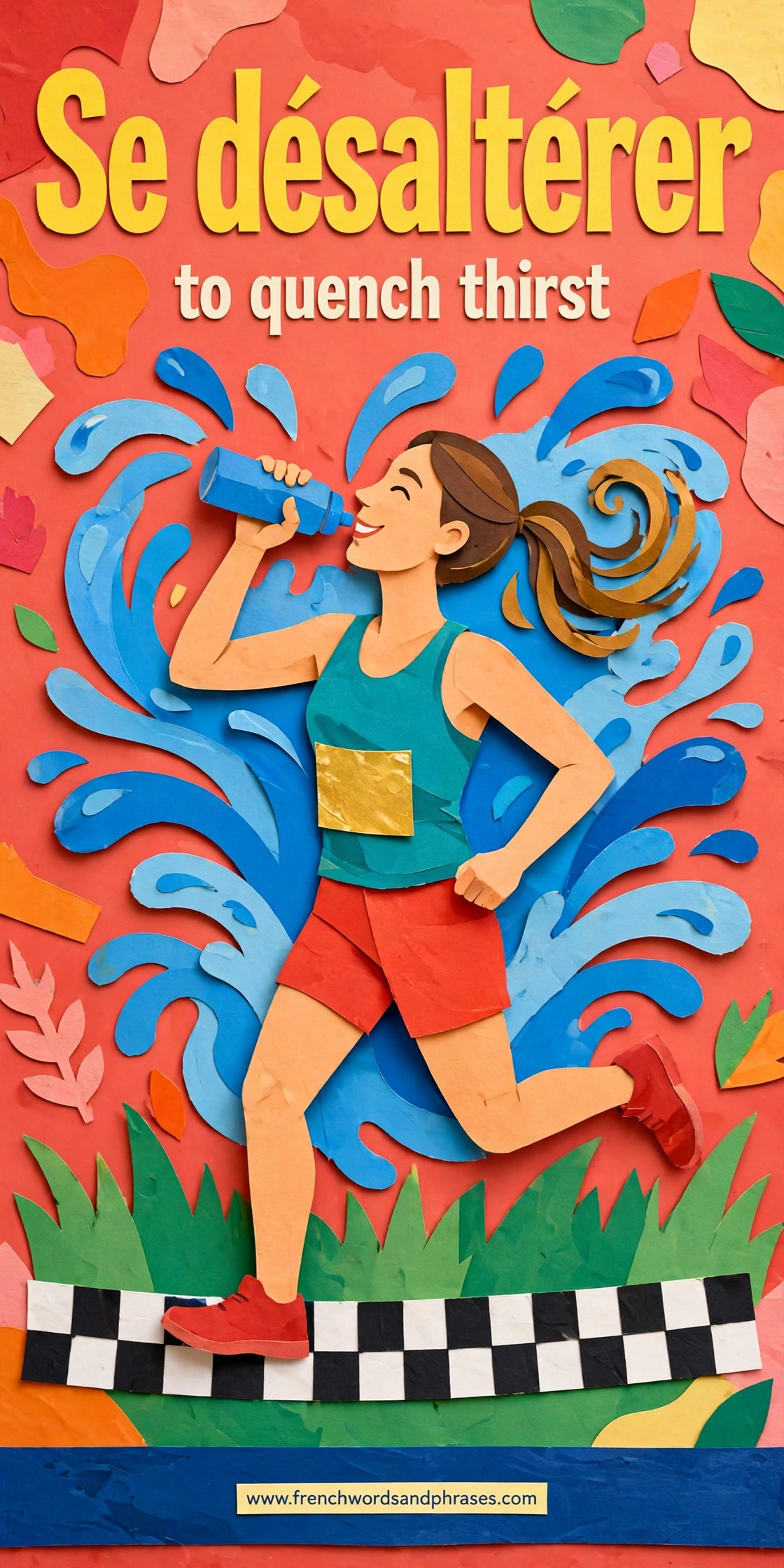
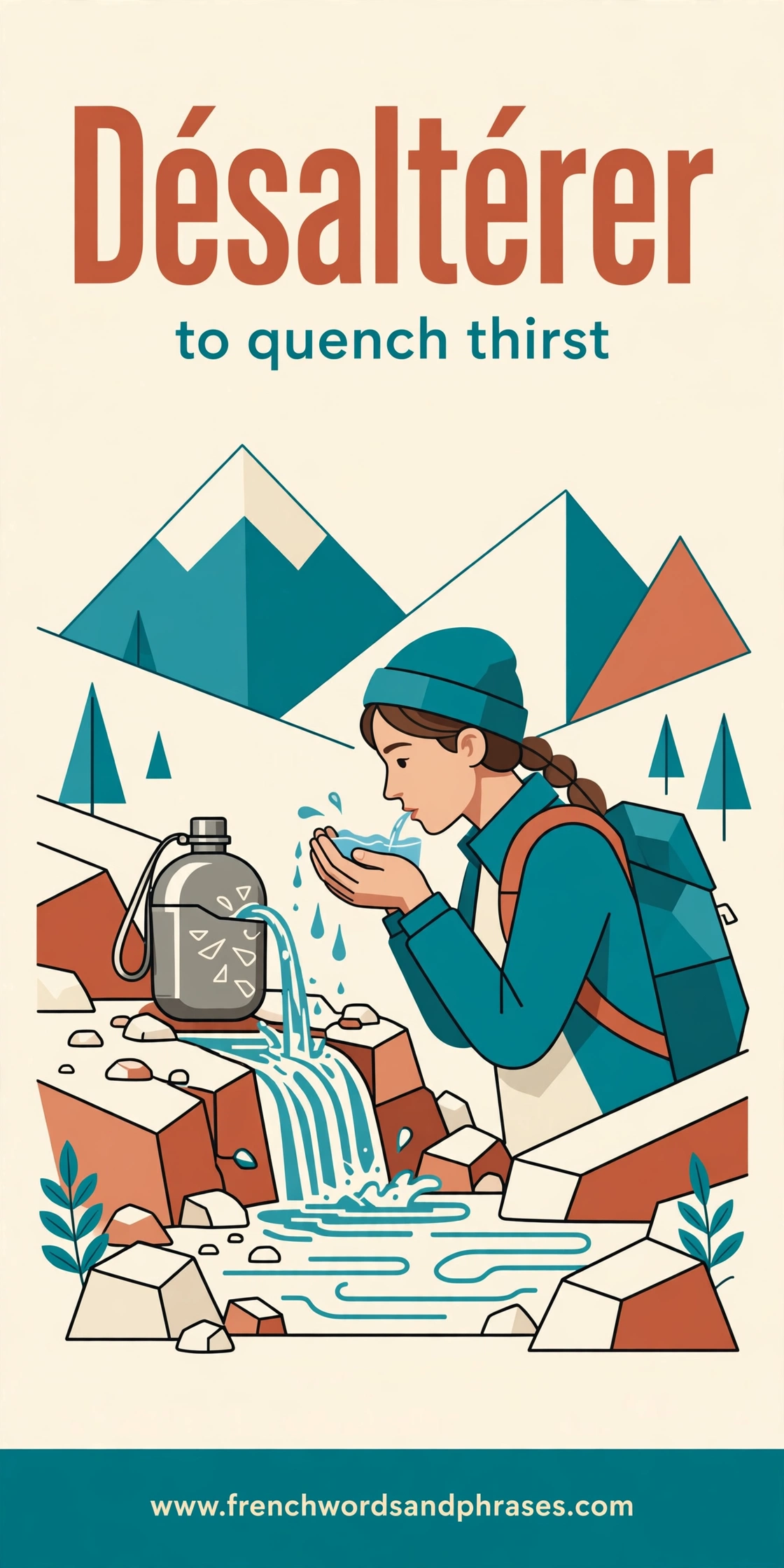
Désaltérer means to quench thirst — what a cold drink does to a thirsty traveller, or what you do for him by putting that drink in his hand.
A fountain at the end of a dusty climb, a glass of lemonade after the harvest, water carried to runners at the roadside — désaltérer is the verb of thirst answered: the dry throat, the raised glass, the long first swallow.
In this guide, you’ll learn how to conjugate désaltérer in all the major French tenses and moods. Explore complete conjugation tables, French examples, English translations, and practice quizzes.
Understanding the French Verb Désaltérer
Désaltérer is a regular French verb belonging to the first group of verbs, those ending in-er.
It means to quench thirst. It is used of drinks that refresh — rien ne désaltère comme l’eau — and of people providing drink to the thirsty: travellers, runners, harvesters. The adjective désaltérant, thirst-quenching, labels every summer drink in France: une boisson désaltérante.
Verb classification: First group (-er)
Auxiliary verb: Avoir
Past participle: désaltéré
Present participle: désaltérant
English equivalents: To quench thirst, to refresh with drink; une boisson qui désaltère — a thirst-quenching drink; désaltérer les coureurs — to give the runners something to drink; de l’eau pour désaltérer les voyageurs — water to quench the travellers’ thirst.
One important detail: désaltérer follows the céder pattern — the é opens to è before a mute syllable: je désaltère, tu désaltères, il désaltère, ils désaltèrent, and through the future and conditional, je désaltèrerai. The é stays where the ending is sounded: nous désaltérons, vous désaltérez, je désaltérais, infinitive désaltérer, participle désaltéré. In daily life the reflexive twin does most of the work — se désaltérer, to have a drink and quench one’s own thirst — while the plain verb belongs to the drink itself, or to the kind hand that offers it.
Experience the Word
Désaltérer is the verb of the answered thirst — the moment the dry mouth meets the cold glass.
Imagine harvesters at the end of a row of vines, shirts dark with sweat. The farmer’s daughter comes down the path with a jug of cool water, et l’eau désaltère les vendangeurs un par un. Nobody speaks until the jug is empty; thirst, not talk, is the order of the hour.
One jug, six dry throats. The water has done its work — désaltérés, the harvesters can laugh again.
How to Conjugate Désaltérer: Complete French Conjugation Guide
Let’s explore every major conjugation of désaltérer, beginning with the indicative mood.
How to Conjugate Désaltérer in the Indicative Mood
The indicative mood is used to express facts, observations, actions, and events.
How to Conjugate Désaltérer in the Present Tense (Présent)
Used for actions happening now, habitual actions, and general truths.
| Subject | Conjugation |
|---|---|
| je | désaltère |
| tu | désaltères |
| il / elle | désaltère |
| nous | désaltérons |
| vous | désaltérez |
| ils / elles | désaltèrent |
Example
Rien ne désaltère comme un verre d’eau fraîche.
Nothing quenches thirst like a glass of cool water.
Quick Quiz 1
Complete the sentence:
Nous ______ les vendangeurs à la pause.
Reveal the answer
désaltérons
Nous désaltérons les vendangeurs à la pause.
We give the harvesters a drink at the break.
How to Conjugate Désaltérer in the Passé Composé
Used for completed actions in the past. Désaltérer takes the auxiliary verb avoir.
| Subject | Conjugation |
|---|---|
| j’ | ai désaltéré |
| tu | as désaltéré |
| il / elle | a désaltéré |
| nous | avons désaltéré |
| vous | avez désaltéré |
| ils / elles | ont désaltéré |
Example
Cette citronnade a désaltéré tous les coureurs.
This lemonade quenched all the runners’ thirst.
How to Conjugate Désaltérer in the Imparfait (Imperfect Tense)
Used for habitual past actions, descriptions, and ongoing situations in the past.
| Subject | Conjugation |
|---|---|
| je | désaltérais |
| tu | désaltérais |
| il / elle | désaltérait |
| nous | désaltérions |
| vous | désaltériez |
| ils / elles | désaltéraient |
Example
La fontaine du village désaltérait les voyageurs depuis toujours.
The village fountain had always quenched travellers’ thirst.
Quick Quiz 2
Choose the correct form:
This lemonade quenched the runners’ thirst.
Cette citronnade ______ les coureurs. (a désaltéré / est désaltérée)
Reveal the answer
a désaltéré
Cette citronnade a désaltéré les coureurs.
Désaltérer takes avoir.
How to Conjugate Désaltérer in the Plus-que-parfait
Used to describe an action that had already been completed before another past event.
| Subject | Conjugation |
|---|---|
| j’ | avais désaltéré |
| tu | avais désaltéré |
| il / elle | avait désaltéré |
| nous | avions désaltéré |
| vous | aviez désaltéré |
| ils / elles | avaient désaltéré |
Example
Elle avait désaltéré les vendangeurs avant la pause.
She had given the harvesters a drink before the break.
How to Conjugate Désaltérer in the Passé Simple
Primarily used in formal writing, literature, and historical narratives. It is rarely used in everyday conversation.
| Subject | Conjugation |
|---|---|
| je | désaltérai |
| tu | désaltéras |
| il / elle | désaltéra |
| nous | désaltérâmes |
| vous | désaltérâtes |
| ils / elles | désaltérèrent |
Example
L’eau de la source désaltéra les pèlerins au bout du chemin.
The spring water quenched the pilgrims’ thirst at the end of the road.
How to Conjugate Désaltérer in the Passé Antérieur
A literary tense used to express an action completed immediately before another past action, generally in the passé simple.
| Subject | Conjugation |
|---|---|
| j’ | eus désaltéré |
| tu | eus désaltéré |
| il / elle | eut désaltéré |
| nous | eûmes désaltéré |
| vous | eûtes désaltéré |
| ils / elles | eurent désaltéré |
Example
Quand la cruche eut désaltéré les six hommes, on reprit le travail.
When the jug had quenched the six men’s thirst, work resumed.
How to Conjugate Désaltérer in the Future Tense (Futur Simple)
Used to describe actions that will take place in the future.
| Subject | Conjugation |
|---|---|
| je | désaltèrerai |
| tu | désaltèreras |
| il / elle | désaltèrera |
| nous | désaltèrerons |
| vous | désaltèrerez |
| ils / elles | désaltèreront |
Example
Cette boisson désaltèrera les randonneurs au refuge.
This drink will quench the hikers’ thirst at the refuge.
How to Conjugate Désaltérer in the Futur Antérieur (Future Perfect)
Used for an action that will have been completed before a particular point in the future.
| Subject | Conjugation |
|---|---|
| j’ | aurai désaltéré |
| tu | auras désaltéré |
| il / elle | aura désaltéré |
| nous | aurons désaltéré |
| vous | aurez désaltéré |
| ils / elles | auront désaltéré |
Example
À midi, la fontaine aura désaltéré tout le village.
By noon, the fountain will have quenched the whole village’s thirst.
How to Conjugate Désaltérer in the Near Future (Futur Proche)
Used to describe something that is going to happen soon. Formed with aller + infinitive.
| Subject | Conjugation |
|---|---|
| je | vais désaltérer |
| tu | vas désaltérer |
| il / elle | va désaltérer |
| nous | allons désaltérer |
| vous | allez désaltérer |
| ils / elles | vont désaltérer |
Example
Ce jus frais va désaltérer les enfants après le match.
This cool juice is going to quench the children’s thirst after the match.
How to Conjugate Désaltérer in the Conditional Mood
The conditional mood expresses what would happen under certain circumstances. It is also frequently used to make polite requests or express wishes.
How to Conjugate Désaltérer in the Present Conditional
| Subject | Conjugation |
|---|---|
| je | désaltèrerais |
| tu | désaltèrerais |
| il / elle | désaltèrerait |
| nous | désaltèrerions |
| vous | désaltèreriez |
| ils / elles | désaltèreraient |
Example
Un peu de citron désaltèrerait encore mieux.
A little lemon would quench thirst even better.
How to Conjugate Désaltérer in the Past Conditional
| Subject | Conjugation |
|---|---|
| j’ | aurais désaltéré |
| tu | aurais désaltéré |
| il / elle | aurait désaltéré |
| nous | aurions désaltéré |
| vous | auriez désaltéré |
| ils / elles | auraient désaltéré |
Example
Sans la fontaine, rien n’aurait désaltéré les voyageurs.
Without the fountain, nothing would have quenched the travellers’ thirst.
Désaltérer in the Literary Past Conditional Form
This less common literary form uses the imperfect subjunctive of avoir.
| Subject | Conjugation |
|---|---|
| j’ | eusse désaltéré |
| tu | eusses désaltéré |
| il / elle | eût désaltéré |
| nous | eussions désaltéré |
| vous | eussiez désaltéré |
| ils / elles | eussent désaltéré |
Example
La source eût désaltéré l’armée entière au soir de la bataille.
The spring would have quenched the whole army’s thirst on the evening of the battle.
How to Conjugate Désaltérer in the Subjunctive Mood
The subjunctive is used to express wishes, emotions, doubts, necessity, and uncertainty. It frequently follows expressions such as il faut que (it is necessary that) or bien que (although).
How to Conjugate Désaltérer in the Present Subjunctive
| Subject | Conjugation |
|---|---|
| que je | désaltère |
| que tu | désaltères |
| qu’il / qu’elle | désaltère |
| que nous | désaltérions |
| que vous | désaltériez |
| qu’ils / qu’elles | désaltèrent |
Example
Il faut qu’une boisson désaltère sans être trop sucrée.
A drink must quench thirst without being too sweet.
Quick Quiz 3
Complete the sentence using the subjunctive:
Il faut que vous ______ les randonneurs au refuge.
Reveal the answer
désaltériez
Il faut que vous désaltériez les randonneurs au refuge.
You must give the hikers a drink at the refuge.
How to Conjugate Désaltérer in the Imperfect Subjunctive
A literary tense, rarely encountered in modern spoken French.
| Subject | Conjugation |
|---|---|
| que je | désaltérasse |
| que tu | désaltérasses |
| qu’il / qu’elle | désaltérât |
| que nous | désaltérassions |
| que vous | désaltérassiez |
| qu’ils / qu’elles | désaltérassent |
Example
On espérait que la pluie désaltérât la terre desséchée.
People hoped the rain would quench the parched earth.
How to Conjugate Désaltérer in the Pluperfect Subjunctive
A literary construction used to express an action completed before another past action.
| Subject | Conjugation |
|---|---|
| que j’ | eusse désaltéré |
| que tu | eusses désaltéré |
| qu’il / qu’elle | eût désaltéré |
| que nous | eussions désaltéré |
| que vous | eussiez désaltéré |
| qu’ils / qu’elles | eussent désaltéré |
Example
Les anciens racontaient que cette source eût désaltéré des générations de pèlerins.
The old people told how this spring had quenched generations of pilgrims’ thirst.
How to Conjugate Désaltérer in the Past Subjunctive
| Subject | Conjugation |
|---|---|
| que j’ | aie désaltéré |
| que tu | aies désaltéré |
| qu’il / qu’elle | ait désaltéré |
| que nous | ayons désaltéré |
| que vous | ayez désaltéré |
| qu’ils / qu’elles | aient désaltéré |
Example
Je suis content que l’eau ait désaltéré les coureurs.
I am glad the water quenched the runners’ thirst.
How to Conjugate Désaltérer in the Imperative
The imperative is used to give commands, instructions, invitations, or suggestions. Subject pronouns are omitted.
How to Conjugate Désaltérer in the Present Imperative
| Person | Conjugation |
|---|---|
| (tu) | désaltère |
| (nous) | désaltérons |
| (vous) | désaltérez |
Example
Désaltère les coureurs au prochain ravitaillement !
Give the runners a drink at the next water station!
Quick Quiz 4
How would you say Give the runners a drink (tu form)?
Reveal the answer
Désaltère les coureurs !
French Participles of Désaltérer
Participles are verb forms that can be used in compound tenses and other grammatical constructions.
Present Participle of Désaltérer
désaltérant
En désaltérant les voyageurs, la fontaine est devenue le cœur du village.
By quenching travellers’ thirst, the fountain became the heart of the village.
Past Participle of Désaltérer
désaltéré
Désaltérés par la source, les pèlerins reprirent la route en chantant.
Their thirst quenched by the spring, the pilgrims took to the road again, singing.
Désaltérer in Everyday French: Real-Life Examples
Now that you know the conjugations, let’s see how désaltérer appears in everyday French.
Example 1 — Present
Rien ne désaltère comme l’eau fraîche.
Nothing quenches thirst like cool water.
Example 2 — Passé composé
Cette citronnade a désaltéré tous les coureurs.
This lemonade quenched all the runners’ thirst.
Example 3 — Imparfait
La fontaine désaltérait les voyageurs.
The fountain used to quench travellers’ thirst.
Example 4 — Future
Cette boisson désaltèrera les randonneurs.
This drink will quench the hikers’ thirst.
Example 5 — Conditional
Un peu de citron désaltèrerait encore mieux.
A little lemon would quench thirst even better.
Example 6 — Imperative
Désaltère les coureurs au ravitaillement !
Give the runners a drink at the water station!
Beyond Translation: The Meaning of Désaltérer
The verb keeps its roots on display: altérer once meant to make thirsty — la soif altère — and désaltérer undoes the thirst it names.
Its adjective runs every café terrace in France.
Désaltérant, thirst-quenching, is the promise on every summer menu — and the plain verb is what the lemonade quietly does while the reflexive se désaltérer takes all the credit.
How to Remember the French Verb Désaltérer
Remember it this way: Désaltérer is about the jug of cool water passed down the row of harvesters.
- Céder pattern: je désaltère with è, but nous désaltérons with é.
- The drink does it: rien ne désaltère comme l’eau fraîche — or the kind hand that offers it.
- Future takes è throughout: je désaltèrerai; the adjective is désaltérant, thirst-quenching.
The key idea is the jug of cool water passed down the row of harvesters.
Test Your Knowledge of Désaltérer
Let’s see how much you’ve learned. Try answering these questions before revealing the answers.
Question 1
Why does je désaltère have a grave accent but nous désaltérons an acute one?
Reveal the answer
The céder-type rule — é becomes è before a mute syllable (je désaltère), and stays é where the ending is sounded (nous désaltérons).
Question 2
How do you say Nothing quenches thirst like cool water in French?
Reveal the answer
Rien ne désaltère comme l’eau fraîche.
Question 3
Translate: This lemonade quenched all the runners’ thirst.
Reveal the answer
Cette citronnade a désaltéré tous les coureurs.
Question 4
What is the past participle of désaltérer?
Reveal the answer
Désaltéré.
Question 5
Complete the sentence:
Cette boisson ______ les randonneurs au refuge.
Reveal the answer
désaltèrera
Cette boisson désaltèrera les randonneurs au refuge.
This drink will quench the hikers’ thirst at the refuge.
Your Final Challenge
Can You Use It?
How would you say this in French?
At the end of the path, the fountain quenches the walkers’ thirst, and the whole village fits in a trickle of water.
Reveal the answer
Au bout du sentier, la fontaine désaltère les marcheurs, et le village entier tient dans un filet d’eau.
At the end of the path, the fountain quenches the walkers’ thirst, and the whole village fits in a trickle of water.
A little French. A little curiosity. A richer everyday life.
LEARN FRENCH ONE WORD AT A TIME