A French Word to Live By
How to Conjugate Désaccoutumer in French
/de.za.ku.ty.me/
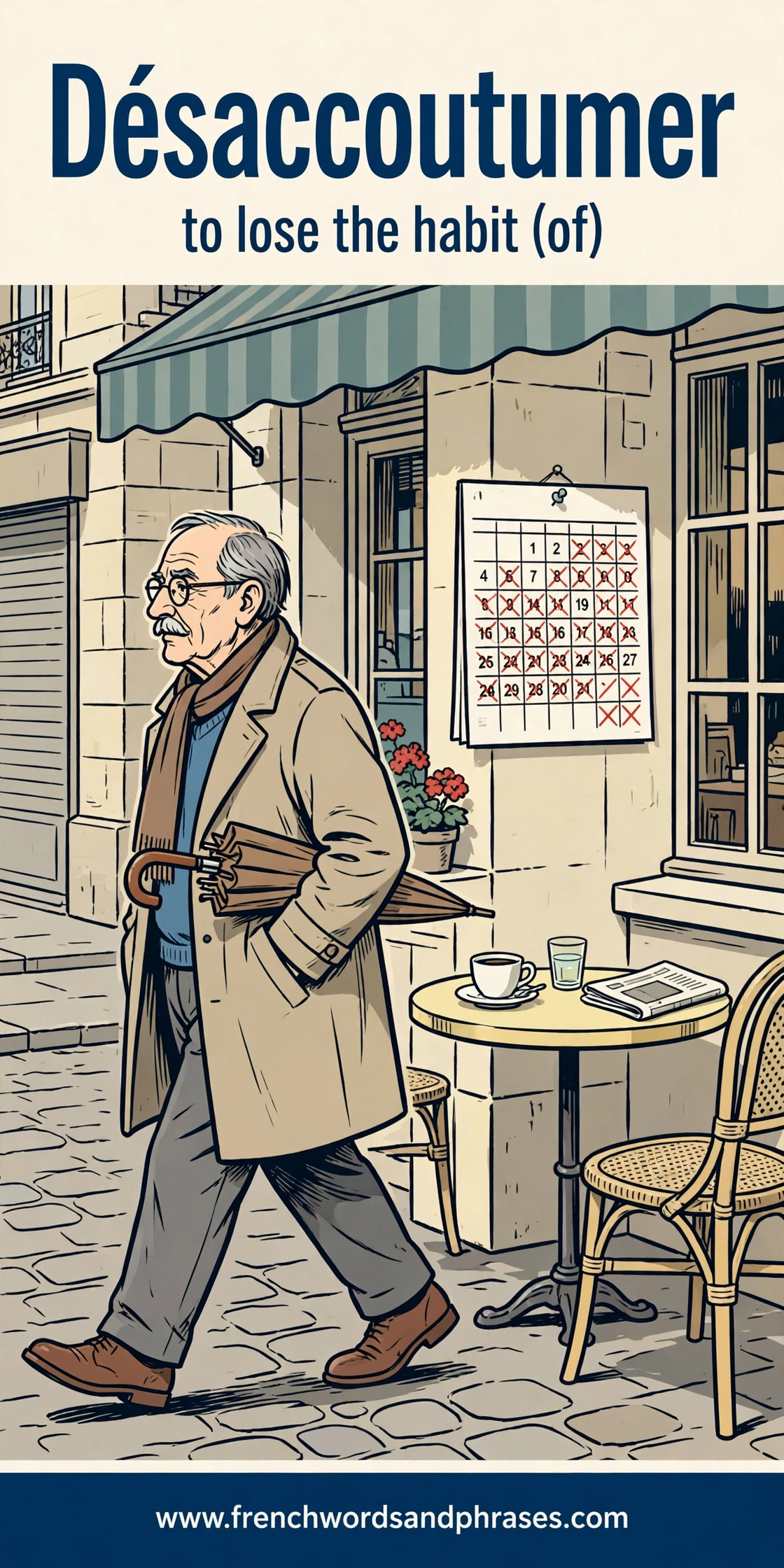
Désaccoutumer means to lose the habit (of) — to break someone of a settled habit, so that what was once automatic slowly stops happening.
A toddler and his thumb, a dog begging at the table, a smoker and his evening cigarette — désaccoutumer is the patient verb of weaning someone off a habit, one small refusal at a time.
In this guide, you’ll learn how to conjugate désaccoutumer in all the major French tenses and moods. Explore complete conjugation tables, French examples, English translations, and practice quizzes.
Understanding the French Verb Désaccoutumer
Désaccoutumer is a regular French verb belonging to the first group of verbs, those ending in-er.
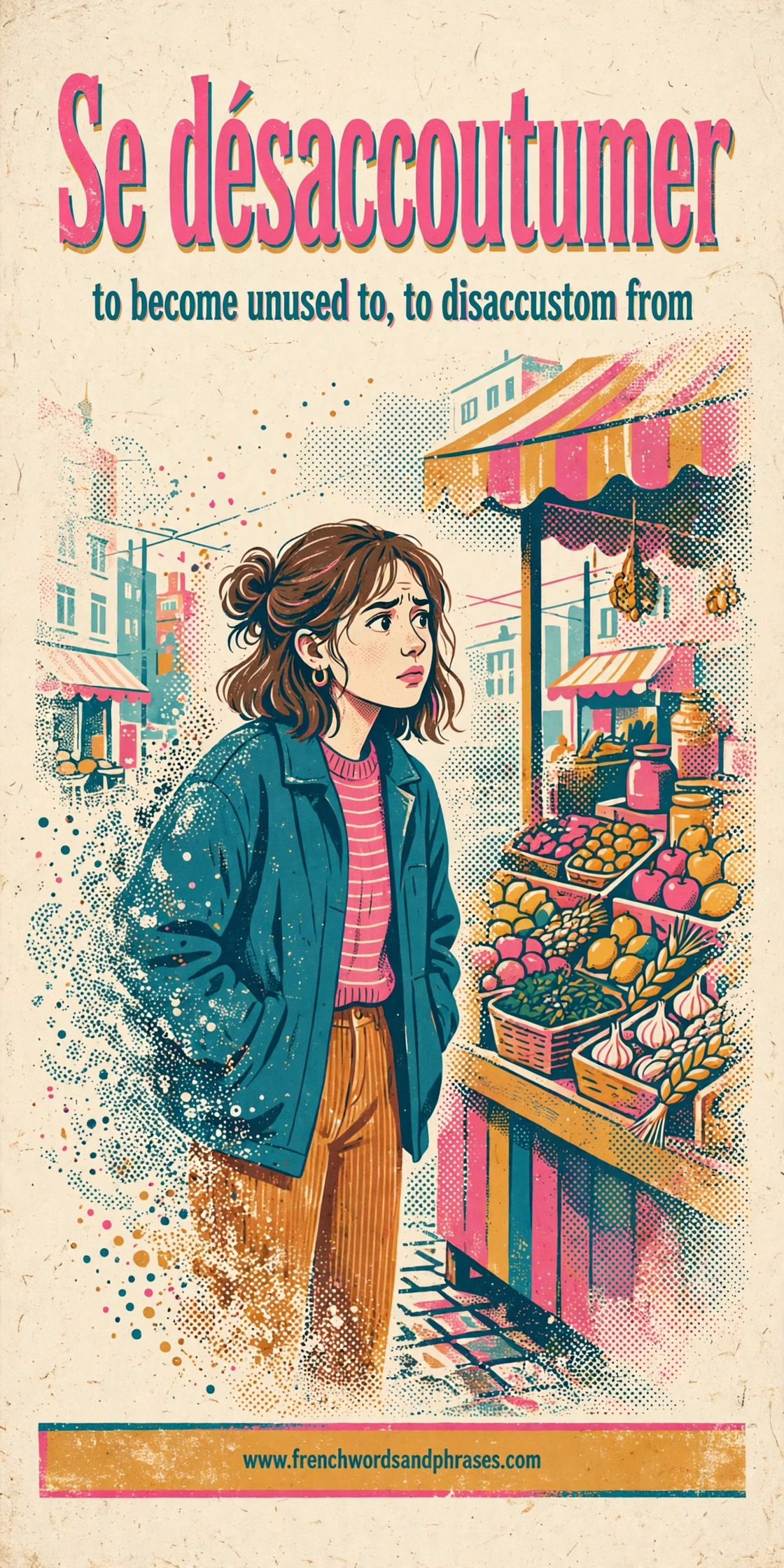
It means to lose the habit (of). It is a somewhat formal verb of upbringing, training and medicine — parents, trainers and doctors désaccoutument. In everyday speech people more often use perdre l’habitude de for themselves and the reflexive se désaccoutumer de for the slow process of getting out of a habit.
Verb classification: First group (-er)
Auxiliary verb: Avoir
Past participle: désaccoutumé
Present participle: désaccoutumant
English equivalents: To lose the habit (of), to break of a habit; désaccoutumer un enfant de sucer son pouce — to break a child of sucking his thumb; désaccoutumer quelqu’un de quelque chose — to wean someone off something; désaccoutumer un chien de mendier — to break a dog of begging.
One important detail: désaccoutumer works with the preposition de — one désaccoutume someone de something: désaccoutumer un enfant de son pouce, désaccoutumer les chiens de la mendicité. It is a regular -er verb: je désaccoutume, nous désaccoutumons, past participle désaccoutumé. For the habit one loses oneself, French turns the verb around: se désaccoutumer de — to become unused to something.
Experience the Word
Désaccoutumer is the verb of the long weaning — no drama, no punishment, just a habit starved a little more each day.
Imagine a grandmother and a little boy who still sucks his thumb at four. She does not scold; she offers a story, a game, a pair of mittens at bedtime. Semaine après semaine, elle le désaccoutume — and one evening the thumb stays out all by itself.
Nothing was forbidden or torn away. The habit was unlearned — désaccoutumé, gently, day after day.
How to Conjugate Désaccoutumer: Complete French Conjugation Guide
Let’s explore every major conjugation of désaccoutumer, beginning with the indicative mood.
How to Conjugate Désaccoutumer in the Indicative Mood
The indicative mood is used to express facts, observations, actions, and events.
How to Conjugate Désaccoutumer in the Present Tense (Présent)
Used for actions happening now, habitual actions, and general truths.
| Subject | Conjugation |
|---|---|
| je | désaccoutume |
| tu | désaccoutumes |
| il / elle | désaccoutume |
| nous | désaccoutumons |
| vous | désaccoutumez |
| ils / elles | désaccoutument |
Example
Elle désaccoutume son fils de sucer son pouce.
She is breaking her son of sucking his thumb.
Quick Quiz 1
Complete the sentence:
Nous ______ le chien de mendier à table.
Reveal the answer
désaccoutumons
Nous désaccoutumons le chien de mendier à table.
We are breaking the dog of begging at the table.
How to Conjugate Désaccoutumer in the Passé Composé
Used for completed actions in the past. Désaccoutumer takes the auxiliary verb avoir.
| Subject | Conjugation |
|---|---|
| j’ | ai désaccoutumé |
| tu | as désaccoutumé |
| il / elle | a désaccoutumé |
| nous | avons désaccoutumé |
| vous | avez désaccoutumé |
| ils / elles | ont désaccoutumé |
Example
Ils ont désaccoutumé le chien de mendier à table.
They broke the dog of begging at the table.
How to Conjugate Désaccoutumer in the Imparfait (Imperfect Tense)
Used for habitual past actions, descriptions, and ongoing situations in the past.
| Subject | Conjugation |
|---|---|
| je | désaccoutumais |
| tu | désaccoutumais |
| il / elle | désaccoutumait |
| nous | désaccoutumions |
| vous | désaccoutumiez |
| ils / elles | désaccoutumaient |
Example
La nourrice désaccoutumait les enfants de la tétine avec patience.
The nanny used to wean the children off the dummy with patience.
Quick Quiz 2
Choose the correct form:
They broke the dog of begging.
Ils ______ le chien de mendier. (ont désaccoutumé / sont désaccoutumés)
Reveal the answer
ont désaccoutumé
Ils ont désaccoutumé le chien de mendier.
Désaccoutumer takes avoir.
How to Conjugate Désaccoutumer in the Plus-que-parfait
Used to describe an action that had already been completed before another past event.
| Subject | Conjugation |
|---|---|
| j’ | avais désaccoutumé |
| tu | avais désaccoutumé |
| il / elle | avait désaccoutumé |
| nous | avions désaccoutumé |
| vous | aviez désaccoutumé |
| ils / elles | avaient désaccoutumé |
Example
Il avait désaccoutumé son cheval de ruer.
He had broken his horse of kicking.
How to Conjugate Désaccoutumer in the Passé Simple
Primarily used in formal writing, literature, and historical narratives. It is rarely used in everyday conversation.
| Subject | Conjugation |
|---|---|
| je | désaccoutumai |
| tu | désaccoutumas |
| il / elle | désaccoutuma |
| nous | désaccoutumâmes |
| vous | désaccoutumâtes |
| ils / elles | désaccoutumèrent |
Example
Le médecin désaccoutuma le malade du sucre en trois mois.
The doctor weaned the patient off sugar in three months.
How to Conjugate Désaccoutumer in the Passé Antérieur
A literary tense used to express an action completed immediately before another past action, generally in the passé simple.
| Subject | Conjugation |
|---|---|
| j’ | eus désaccoutumé |
| tu | eus désaccoutumé |
| il / elle | eut désaccoutumé |
| nous | eûmes désaccoutumé |
| vous | eûtes désaccoutumé |
| ils / elles | eurent désaccoutumé |
Example
Quand elle eut désaccoutumé l’enfant de la tétine, il dormit enfin paisiblement.
When she had weaned the child off the dummy, he finally slept peacefully.
How to Conjugate Désaccoutumer in the Future Tense (Futur Simple)
Used to describe actions that will take place in the future.
| Subject | Conjugation |
|---|---|
| je | désaccoutumerai |
| tu | désaccoutumeras |
| il / elle | désaccoutumera |
| nous | désaccoutumerons |
| vous | désaccoutumerez |
| ils / elles | désaccoutumeront |
Example
Ce programme désaccoutumera les fumeurs en douceur.
This programme will wean smokers off cigarettes gently.
How to Conjugate Désaccoutumer in the Futur Antérieur (Future Perfect)
Used for an action that will have been completed before a particular point in the future.
| Subject | Conjugation |
|---|---|
| j’ | aurai désaccoutumé |
| tu | auras désaccoutumé |
| il / elle | aura désaccoutumé |
| nous | aurons désaccoutumé |
| vous | aurez désaccoutumé |
| ils / elles | auront désaccoutumé |
Example
À Noël, tu auras désaccoutumé le chat de monter sur la table.
By Christmas, you will have broken the cat of climbing on the table.
How to Conjugate Désaccoutumer in the Near Future (Futur Proche)
Used to describe something that is going to happen soon. Formed with aller + infinitive.
| Subject | Conjugation |
|---|---|
| je | vais désaccoutumer |
| tu | vas désaccoutumer |
| il / elle | va désaccoutumer |
| nous | allons désaccoutumer |
| vous | allez désaccoutumer |
| ils / elles | vont désaccoutumer |
Example
Nous allons désaccoutumer le chien d’aboyer la nuit.
We are going to break the dog of barking at night.
How to Conjugate Désaccoutumer in the Conditional Mood
The conditional mood expresses what would happen under certain circumstances. It is also frequently used to make polite requests or express wishes.
How to Conjugate Désaccoutumer in the Present Conditional
| Subject | Conjugation |
|---|---|
| je | désaccoutumerais |
| tu | désaccoutumerais |
| il / elle | désaccoutumerait |
| nous | désaccoutumerions |
| vous | désaccoutumeriez |
| ils / elles | désaccoutumeraient |
Example
Avec plus de fermeté, elle désaccoutumerait son fils plus vite.
With more firmness, she would break her son of the habit faster.
How to Conjugate Désaccoutumer in the Past Conditional
| Subject | Conjugation |
|---|---|
| j’ | aurais désaccoutumé |
| tu | aurais désaccoutumé |
| il / elle | aurait désaccoutumé |
| nous | aurions désaccoutumé |
| vous | auriez désaccoutumé |
| ils / elles | auraient désaccoutumé |
Example
Sans aide, il n’aurait jamais désaccoutumé son père de fumer.
Without help, he would never have weaned his father off smoking.
Désaccoutumer in the Literary Past Conditional Form
This less common literary form uses the imperfect subjunctive of avoir.
| Subject | Conjugation |
|---|---|
| j’ | eusse désaccoutumé |
| tu | eusses désaccoutumé |
| il / elle | eût désaccoutumé |
| nous | eussions désaccoutumé |
| vous | eussiez désaccoutumé |
| ils / elles | eussent désaccoutumé |
Example
La gouvernante eût désaccoutumé l’enfant de ses caprices.
The governess would have broken the child of his whims.
How to Conjugate Désaccoutumer in the Subjunctive Mood
The subjunctive is used to express wishes, emotions, doubts, necessity, and uncertainty. It frequently follows expressions such as il faut que (it is necessary that) or bien que (although).
How to Conjugate Désaccoutumer in the Present Subjunctive
| Subject | Conjugation |
|---|---|
| que je | désaccoutume |
| que tu | désaccoutumes |
| qu’il / qu’elle | désaccoutume |
| que nous | désaccoutumions |
| que vous | désaccoutumiez |
| qu’ils / qu’elles | désaccoutument |
Example
Il faut que vous désaccoutumiez le chien de mendier.
You must break the dog of begging.
Quick Quiz 3
Complete the sentence using the subjunctive:
Il faut que tu ______ ton fils de la tétine.
Reveal the answer
désaccoutumes
Il faut que tu désaccoutumes ton fils de la tétine.
You must wean your son off the dummy.
How to Conjugate Désaccoutumer in the Imperfect Subjunctive
A literary tense, rarely encountered in modern spoken French.
| Subject | Conjugation |
|---|---|
| que je | désaccoutumasse |
| que tu | désaccoutumasses |
| qu’il / qu’elle | désaccoutumât |
| que nous | désaccoutumassions |
| que vous | désaccoutumassiez |
| qu’ils / qu’elles | désaccoutumassent |
Example
Elle souhaitait que la nourrice désaccoutumât l’enfant en douceur.
She hoped the nanny would wean the child gently.
How to Conjugate Désaccoutumer in the Pluperfect Subjunctive
A literary construction used to express an action completed before another past action.
| Subject | Conjugation |
|---|---|
| que j’ | eusse désaccoutumé |
| que tu | eusses désaccoutumé |
| qu’il / qu’elle | eût désaccoutumé |
| que nous | eussions désaccoutumé |
| que vous | eussiez désaccoutumé |
| qu’ils / qu’elles | eussent désaccoutumé |
Example
On doutait qu’il eût désaccoutumé le cheval de ruer.
People doubted he had broken the horse of kicking.
How to Conjugate Désaccoutumer in the Past Subjunctive
| Subject | Conjugation |
|---|---|
| que j’ | aie désaccoutumé |
| que tu | aies désaccoutumé |
| qu’il / qu’elle | ait désaccoutumé |
| que nous | ayons désaccoutumé |
| que vous | ayez désaccoutumé |
| qu’ils / qu’elles | aient désaccoutumé |
Example
Je suis ravi qu’elle ait désaccoutumé son fils du pouce.
I am delighted she broke her son of the thumb habit.
How to Conjugate Désaccoutumer in the Imperative
The imperative is used to give commands, instructions, invitations, or suggestions. Subject pronouns are omitted.
How to Conjugate Désaccoutumer in the Present Imperative
| Person | Conjugation |
|---|---|
| (tu) | désaccoutume |
| (nous) | désaccoutumons |
| (vous) | désaccoutumez |
Example
Désaccoutume le chien de mendier, mais sans crier !
Break the dog of begging, but without shouting!
Quick Quiz 4
How would you say Break the cat of climbing on the table (tu form)?
Reveal the answer
Désaccoutume le chat de monter sur la table !
French Participles of Désaccoutumer
Participles are verb forms that can be used in compound tenses and other grammatical constructions.
Present Participle of Désaccoutumer
désaccoutumant
En désaccoutumant l’enfant peu à peu, elle a évité les larmes.
By weaning the child little by little, she avoided tears.
Past Participle of Désaccoutumer
désaccoutumé
Désaccoutumé du sucre, le malade se sentait plus léger.
Weaned off sugar, the patient felt lighter.
Désaccoutumer in Everyday French: Real-Life Examples
Now that you know the conjugations, let’s see how désaccoutumer appears in everyday French.
Example 1 — Present
Elle désaccoutume son fils de sucer son pouce.
She is breaking her son of sucking his thumb.
Example 2 — Passé composé
Ils ont désaccoutumé le chien de mendier.
They broke the dog of begging.
Example 3 — Imparfait
La nourrice désaccoutumait les enfants avec patience.
The nanny used to wean the children patiently.
Example 4 — Future
Ce programme désaccoutumera les fumeurs en douceur.
This programme will wean smokers off gently.
Example 5 — Conditional
Elle le désaccoutumerait plus vite avec de l’aide.
She would break him of it faster with help.
Example 6 — Imperative
Désaccoutume le chat de monter sur la table !
Break the cat of climbing on the table!
Beyond Translation: The Meaning of Désaccoutumer
The verb is transparent: la coutume is a custom, s’accoutumer is to get used to something, and désaccoutumer runs the film backwards.
A habit is only a custom of one.
French treats a child’s thumb and a nation’s customs with the same word — and this verb is how either one is given up.
How to Remember the French Verb Désaccoutumer
Remember it this way: Désaccoutumer is about the grandmother weaning the little boy off his thumb, one story at a time.
- The frame is désaccoutumer quelqu’un de quelque chose — someone is weaned de a habit.
- For your own habits, turn it around: se désaccoutumer de — je me désaccoutume du sucre.
- Regular -er: je désaccoutume, nous désaccoutumons, past participle désaccoutumé.
The key idea is the grandmother weaning the little boy off his thumb, one story at a time.
Test Your Knowledge of Désaccoutumer
Let’s see how much you’ve learned. Try answering these questions before revealing the answers.
Question 1
Which preposition follows désaccoutumer, and in what pattern?
Reveal the answer
De — désaccoutumer quelqu’un de quelque chose: désaccoutumer un enfant de son pouce.
Question 2
How do you say She is breaking her son of sucking his thumb in French?
Reveal the answer
Elle désaccoutume son fils de sucer son pouce.
Question 3
Translate: They broke the dog of begging at the table.
Reveal the answer
Ils ont désaccoutumé le chien de mendier à table.
Question 4
What is the past participle of désaccoutumer?
Reveal the answer
Désaccoutumé.
Question 5
Complete the sentence:
Il faut que vous ______ le chien de mendier.
Reveal the answer
désaccoutumiez
Il faut que vous désaccoutumiez le chien de mendier.
You must break the dog of begging.
Your Final Challenge
Can You Use It?
How would you say this in French?
She weans her son off his thumb with stories, and every evening the victory grows.
Reveal the answer
Elle désaccoutume son fils du pouce avec des histoires, et chaque soir la victoire grandit.
She weans her son off his thumb with stories, and every evening the victory grows.
A little French. A little curiosity. A richer everyday life.
LEARN FRENCH ONE WORD AT A TIME