A French Word to Live By
How to Conjugate Décroûter in French
/de.kʁu.te/
Décroûter means to skin (casting) — to strip the crust or skin off a casting, and more broadly to scrape a hard crust off anything.
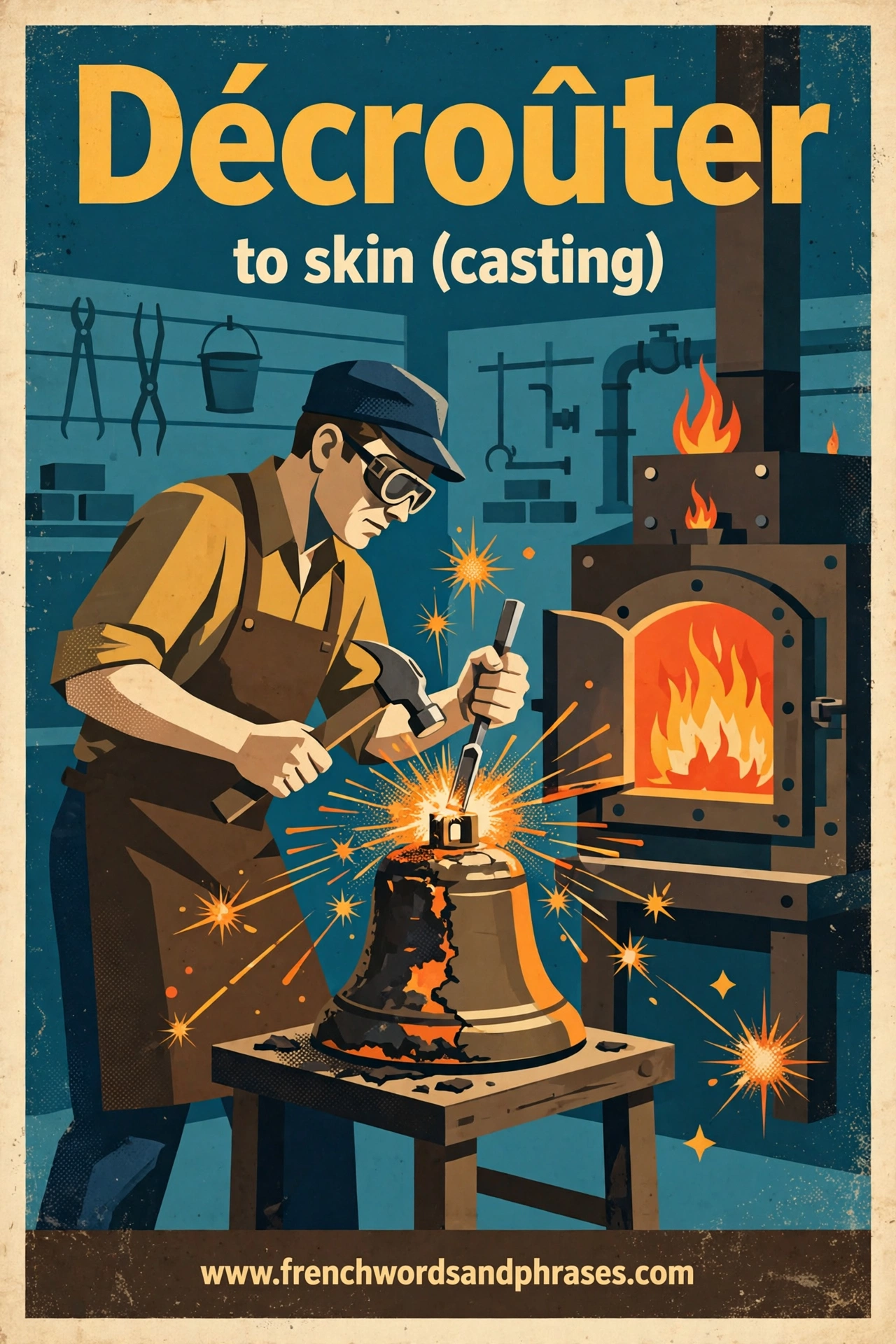
A bronze statue fresh from the mould, still wearing its rough coat of sand and scale, waiting for the founder’s hammer and chisel — décroûter is the verb of that first unveiling, stripping the hard skin off a casting so the true surface can appear.
In this guide, you’ll learn how to conjugate décroûter in all the major French tenses and moods. Explore complete conjugation tables, French examples, English translations, and practice quizzes.
Understanding the French Verb Décroûter
Décroûter is a regular French verb belonging to the first group of verbs, those ending in -er.
It means to skin (casting). It is commonly used in metal foundries for cleaning a fresh casting — removing the moulding sand, scale and rough skin from bronze, iron or aluminium pieces — in workshops for scraping encrusted surfaces clean, and in familiar speech for giving a rough, unkempt person a good polish.
Verb classification: First group (-er)
Auxiliary verb: Avoir
Past participle: décroûté
Present participle: décroûtant
English equivalents: To skin a casting, to strip the crust off; (figurative, familiar) to polish up, to smarten up someone rough around the edges.
One important detail: décroûter is built on la croûte, the crust — of bread, of earth, of dried mud — with the removing prefix dé-. In the foundry, the croûte is the rough skin of sand and oxide that coats a new casting, and décroûter is the fettling work that takes it off. Familiar French borrows the image for people: décroûter quelqu’un is to scrape the rough edges off a person — to polish up their manners, their clothes, their ways.
Experience the Word
Décroûter is the verb of the reveal — the moment the rough coat comes off and the real surface, smooth and shining, shows itself.
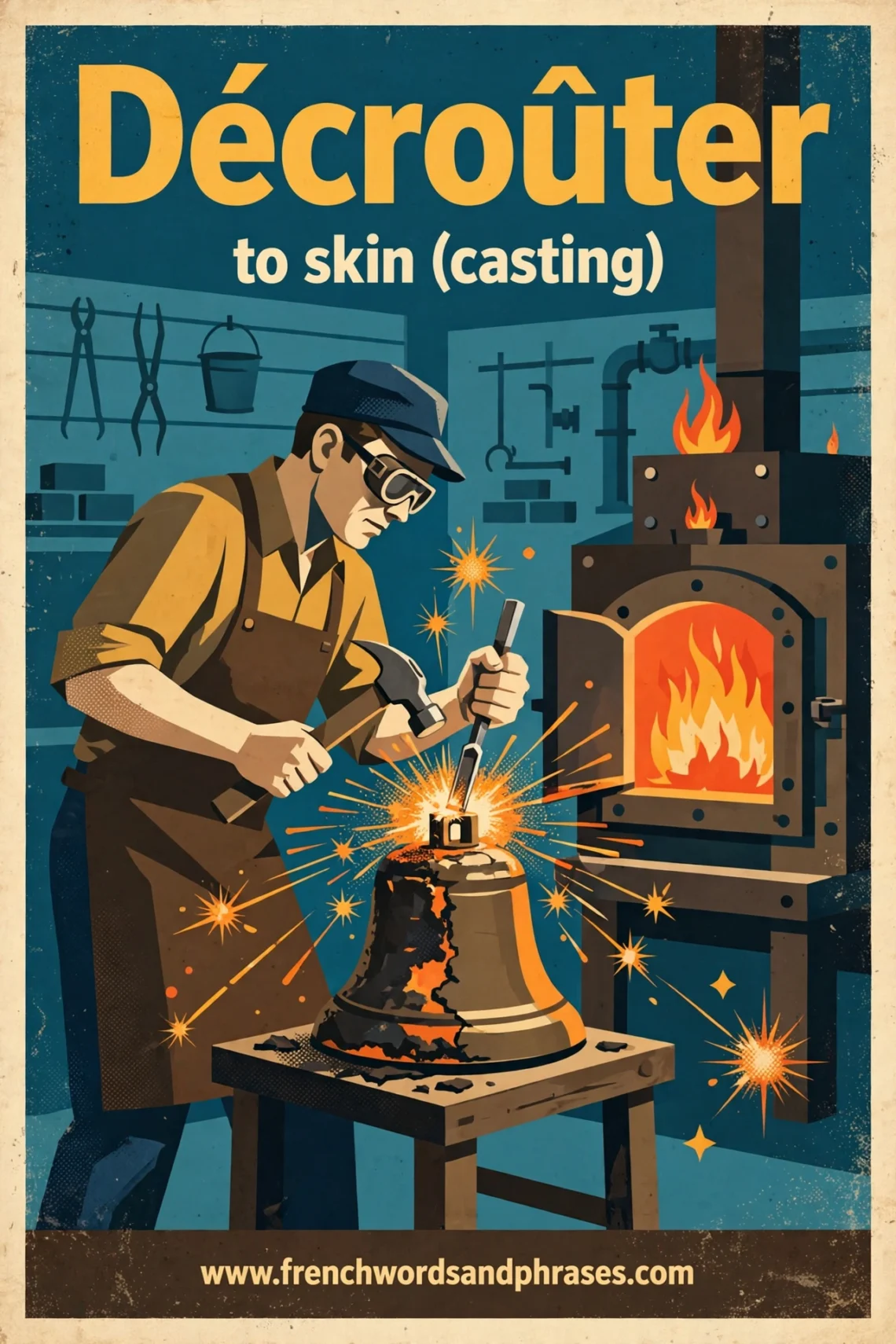
Imagine a small bronze foundry. The mould breaks open, and the new statue stands there dull and gritty, still wearing its skin of sand. The founder takes up his tools and, blow by blow, he décroûte the piece until the bronze begins to glow.
The statue was always inside the crust. It had to be skinned — décroûté — before anyone could see it.
How to Conjugate Décroûter: Complete French Conjugation Guide
Let’s explore every major conjugation of décroûter, beginning with the indicative mood.
How to Conjugate Décroûter in the Indicative Mood
The indicative mood is used to express facts, observations, actions, and events.
How to Conjugate Décroûter in the Present Tense (Présent)
Used for actions happening now, habitual actions, and general truths.
| Subject | Conjugation |
|---|---|
| je | décroûte |
| tu | décroûtes |
| il / elle | décroûte |
| nous | décroûtons |
| vous | décroûtez |
| ils / elles | décroûtent |
Example
Le fondeur décroûte la statue dès sa sortie du moule.
The founder skins the statue as soon as it comes out of the mould.
Quick Quiz 1
Complete the sentence:
Nous ______ les pièces une à une.
Reveal the answer
décroûtons
Nous décroûtons les pièces une à une.
We skin the pieces one by one.
How to Conjugate Décroûter in the Passé Composé
Used for completed actions in the past. Décroûter takes the auxiliary verb avoir.
| Subject | Conjugation |
|---|---|
| j’ | ai décroûté |
| tu | as décroûté |
| il / elle | a décroûté |
| nous | avons décroûté |
| vous | avez décroûté |
| ils / elles | ont décroûté |
Example
Ils ont décroûté toutes les pièces avant le polissage.
They skinned all the pieces before polishing.
How to Conjugate Décroûter in the Imparfait (Imperfect Tense)
Used for habitual past actions, descriptions, and ongoing situations in the past.
| Subject | Conjugation |
|---|---|
| je | décroûtais |
| tu | décroûtais |
| il / elle | décroûtait |
| nous | décroûtions |
| vous | décroûtiez |
| ils / elles | décroûtaient |
Example
Autrefois, on décroûtait les cloches à la main, au marteau.
In the old days, bells were skinned by hand, with a hammer.
Quick Quiz 2
Choose the correct form:
They skinned the bell.
Ils ______ la cloche. (ont décroûté / sont décroûtés)
Reveal the answer
ont décroûté
Ils ont décroûté la cloche.
Décroûter takes avoir.
How to Conjugate Décroûter in the Plus-que-parfait
Used to describe an action that had already been completed before another past event.
| Subject | Conjugation |
|---|---|
| j’ | avais décroûté |
| tu | avais décroûté |
| il / elle | avait décroûté |
| nous | avions décroûté |
| vous | aviez décroûté |
| ils / elles | avaient décroûté |
Example
L’ouvrier avait décroûté la pièce avant l’arrivée du client.
The worker had skinned the piece before the client arrived.
How to Conjugate Décroûter in the Passé Simple
Primarily used in formal writing, literature, and historical narratives. It is rarely used in everyday conversation.
| Subject | Conjugation |
|---|---|
| je | décroûtai |
| tu | décroûtas |
| il / elle | décroûta |
| nous | décroûtâmes |
| vous | décroûtâtes |
| ils / elles | décroûtèrent |
Example
Le fondeur décroûta le bronze et le métal apparut, brillant.
The founder skinned the bronze and the metal appeared, shining.
How to Conjugate Décroûter in the Passé Antérieur
A literary tense used to express an action completed immediately before another past action, generally in the passé simple.
| Subject | Conjugation |
|---|---|
| j’ | eus décroûté |
| tu | eus décroûté |
| il / elle | eut décroûté |
| nous | eûmes décroûté |
| vous | eûtes décroûté |
| ils / elles | eurent décroûté |
Example
Quand il eut décroûté la cloche, il la suspendit dans l’atelier.
When he had skinned the bell, he hung it in the workshop.
How to Conjugate Décroûter in the Future Tense (Futur Simple)
Used to describe actions that will take place in the future.
| Subject | Conjugation |
|---|---|
| je | décroûterai |
| tu | décroûteras |
| il / elle | décroûtera |
| nous | décroûterons |
| vous | décroûterez |
| ils / elles | décroûteront |
Example
Demain, nous décroûterons les pièces de la nouvelle série.
Tomorrow, we will skin the pieces of the new series.
How to Conjugate Décroûter in the Futur Antérieur (Future Perfect)
Used for an action that will have been completed before a particular point in the future.
| Subject | Conjugation |
|---|---|
| j’ | aurai décroûté |
| tu | auras décroûté |
| il / elle | aura décroûté |
| nous | aurons décroûté |
| vous | aurez décroûté |
| ils / elles | auront décroûté |
Example
À midi, l’équipe aura décroûté toutes les fontes du matin.
By noon, the team will have skinned all the morning’s castings.
How to Conjugate Décroûter in the Near Future (Futur Proche)
Used to describe something that is going to happen soon. Formed with aller + infinitive.
| Subject | Conjugation |
|---|---|
| je | vais décroûter |
| tu | vas décroûter |
| il / elle | va décroûter |
| nous | allons décroûter |
| vous | allez décroûter |
| ils / elles | vont décroûter |
Example
Je vais décroûter cette pièce avec une brosse métallique.
I am going to skin this piece with a wire brush.
How to Conjugate Décroûter in the Conditional Mood
The conditional mood expresses what would happen under certain circumstances. It is also frequently used to make polite requests or express wishes.
How to Conjugate Décroûter in the Present Conditional
| Subject | Conjugation |
|---|---|
| je | décroûterais |
| tu | décroûterais |
| il / elle | décroûterait |
| nous | décroûterions |
| vous | décroûteriez |
| ils / elles | décroûteraient |
Example
Avec un jet de sable, on décroûterait ces pièces en cinq minutes.
With a sand jet, we would skin these pieces in five minutes.
How to Conjugate Décroûter in the Past Conditional
| Subject | Conjugation |
|---|---|
| j’ | aurais décroûté |
| tu | aurais décroûté |
| il / elle | aurait décroûté |
| nous | aurions décroûté |
| vous | auriez décroûté |
| ils / elles | auraient décroûté |
Example
Ils auraient décroûté la statue plus tôt sans la panne.
They would have skinned the statue earlier if not for the breakdown.
Décroûter in the Literary Past Conditional Form
This less common literary form uses the imperfect subjunctive of avoir.
| Subject | Conjugation |
|---|---|
| j’ | eusse décroûté |
| tu | eusses décroûté |
| il / elle | eût décroûté |
| nous | eussions décroûté |
| vous | eussiez décroûté |
| ils / elles | eussent décroûté |
Example
Le fondeur eût décroûté la cloche avant la fête du village.
The founder would have skinned the bell before the village festival.
How to Conjugate Décroûter in the Subjunctive Mood
The subjunctive is used to express wishes, emotions, doubts, necessity, and uncertainty. It frequently follows expressions such as il faut que (it is necessary that) or bien que (although).
How to Conjugate Décroûter in the Present Subjunctive
| Subject | Conjugation |
|---|---|
| que je | décroûte |
| que tu | décroûtes |
| qu’il / qu’elle | décroûte |
| que nous | décroûtions |
| que vous | décroûtiez |
| qu’ils / qu’elles | décroûtent |
Example
Il faut que vous décroûtiez la pièce avant de la polir.
You must skin the piece before polishing it.
Quick Quiz 3
Complete the sentence using the subjunctive:
Il faut que vous ______ cette pièce doucement.
Reveal the answer
décroûtiez
Il faut que vous décroûtiez cette pièce doucement.
You must skin this piece gently.
How to Conjugate Décroûter in the Imperfect Subjunctive
A literary tense, rarely encountered in modern spoken French.
| Subject | Conjugation |
|---|---|
| que je | décroûtasse |
| que tu | décroûtasses |
| qu’il / qu’elle | décroûtât |
| que nous | décroûtassions |
| que vous | décroûtassiez |
| qu’ils / qu’elles | décroûtassent |
Example
Le maître voulait que l’apprenti décroûtât sa première pièce seul.
The master wanted the apprentice to skin his first piece alone.
How to Conjugate Décroûter in the Pluperfect Subjunctive
A literary construction used to express an action completed before another past action.
| Subject | Conjugation |
|---|---|
| que j’ | eusse décroûté |
| que tu | eusses décroûté |
| qu’il / qu’elle | eût décroûté |
| que nous | eussions décroûté |
| que vous | eussiez décroûté |
| qu’ils / qu’elles | eussent décroûté |
Example
On craignait qu’ils eussent décroûté le bronze trop fort.
People feared they had skinned the bronze too hard.
How to Conjugate Décroûter in the Past Subjunctive
| Subject | Conjugation |
|---|---|
| que j’ | aie décroûté |
| que tu | aies décroûté |
| qu’il / qu’elle | ait décroûté |
| que nous | ayons décroûté |
| que vous | ayez décroûté |
| qu’ils / qu’elles | aient décroûté |
Example
Je suis content que vous ayez décroûté la statue à temps.
I am glad you skinned the statue in time.
How to Conjugate Décroûter in the Imperative
The imperative is used to give commands, instructions, invitations, or suggestions. Subject pronouns are omitted.
How to Conjugate Décroûter in the Present Imperative
| Person | Conjugation |
|---|---|
| (tu) | décroûte |
| (nous) | décroûtons |
| (vous) | décroûtez |
Example
Décroûte cette pièce doucement, le bronze est tendre !
Skin this piece gently, the bronze is soft!
Quick Quiz 4
How would you say Skin this piece gently (tu form)?
Reveal the answer
Décroûte cette pièce doucement !
French Participles of Décroûter
Participles are verb forms that can be used in compound tenses and other grammatical constructions.
Present Participle of Décroûter
décroûtant
En décroûtant la fonte, il a découvert une petite fissure.
While skinning the casting, he discovered a small crack.
Past Participle of Décroûter
décroûté
Décroûtée et polie, la statue brillait au soleil.
Skinned and polished, the statue shone in the sun.
Décroûter in Everyday French: Real-Life Examples
Now that you know the conjugations, let’s see how décroûter appears in everyday French.
Example 1 — Present
Le fondeur décroûte les pièces une à une.
The founder skins the pieces one by one.
Example 2 — Passé composé
Nous avons décroûté la cloche ce matin.
We skinned the bell this morning.
Example 3 — Imparfait
Il décroûtait les fontes au marteau et au burin.
He used to skin the castings with hammer and chisel.
Example 4 — Future
Vous décroûterez la nouvelle série demain.
You will skin the new series tomorrow.
Example 5 — Conditional
On décroûterait plus vite avec une sableuse.
We would skin faster with a sandblaster.
Example 6 — Imperative
Décroûtez la pièce avant le polissage !
Skin the piece before polishing!
Beyond Translation: The Meaning of Décroûter
English foundry language says to fettle or to dress a casting; French décroûter says it with bread on its mind — every rough surface is a croûte waiting to come off.
And the word escaped the foundry.
In familiar French, a person can be décroûté too: the crust of rough manners scraped away until the polished human underneath appears.
How to Remember the French Verb Décroûter
Remember it this way: Décroûter is about stripping the rough skin off a casting — the reveal under the crust.
- La croûte — the crust; décroûter is taking the crust off, in the foundry or on a person.
- Décroûter une pièce — the first cleaning of a fresh casting, before polishing.
- Regular -er: je décroûte, nous décroûtons, past participle décroûté.
The key idea is stripping the rough skin off a casting — the reveal under the crust.
Test Your Knowledge of Décroûter
Let’s see how much you’ve learned. Try answering these questions before revealing the answers.
Question 1
What is la croûte in décroûter?
Reveal the answer
The crust — the rough skin that coats a fresh casting.
Question 2
How do you say The founder skins the statue in French?
Reveal the answer
Le fondeur décroûte la statue.
Question 3
Translate: They skinned all the pieces before polishing.
Reveal the answer
Ils ont décroûté toutes les pièces avant le polissage.
Question 4
What is the past participle of décroûter?
Reveal the answer
Décroûté.
Question 5
Complete the sentence:
Il faut que vous ______ la pièce avant de la polir.
Reveal the answer
décroûtiez
Il faut que vous décroûtiez la pièce avant de la polir.
You must skin the piece before polishing it.
Your Final Challenge
Can You Use It?
How would you say this in French?
The founder skins the statue, and the sleeping bronze wakes up under his hands.
Reveal the answer
Le fondeur décroûte la statue, et le bronze endormi se réveille sous ses mains.
The founder skins the statue, and the sleeping bronze wakes up under his hands.
A little French. A little curiosity. A richer everyday life.
LEARN FRENCH ONE WORD AT A TIME