A French Word to Live By
How to Conjugate Bâtir in French
/bɑ.tiʁ/
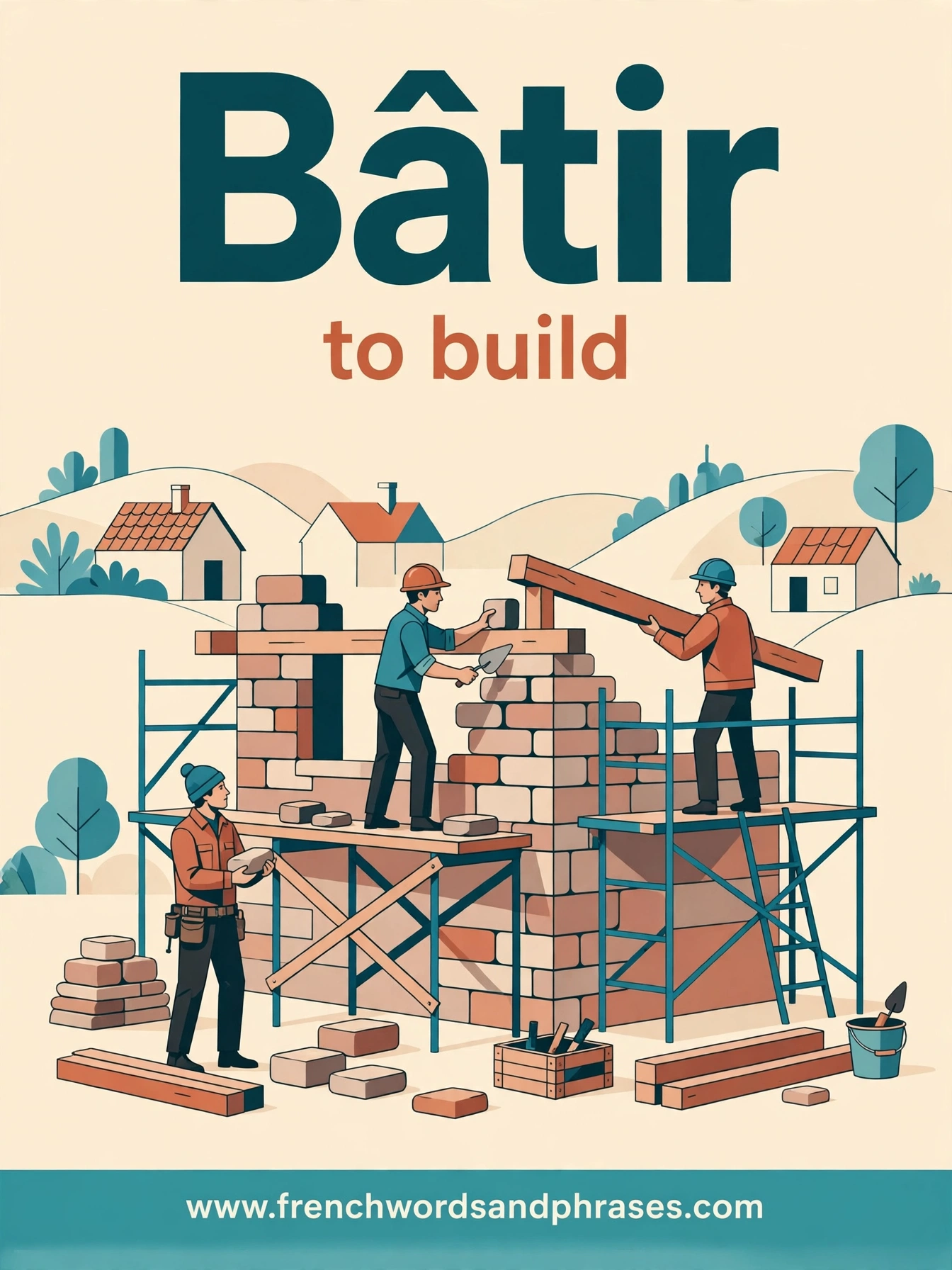
Bâtir means to build.
First a patch of empty ground, then walls, a roof, a door that opens. You build a house for your family, a school for the village, a future with your own hands — that is bâtir.
In this guide, you’ll learn how to conjugate bâtir in all the major French tenses and moods. Explore complete conjugation tables, French examples, English translations, and practice quizzes.
Understanding the French Verb Bâtir
Bâtir is a regular French verb belonging to the second group of verbs, those ending in -ir.
It means to build. It is commonly used for building houses and monuments, and figuratively for building a career, a reputation, or a business, as in bâtir une entreprise.
Verb classification: Second group (-ir)
Auxiliary verb: Avoir
Past participle: bâti
Present participle: bâtissant
English equivalents: To build.
One important spelling detail: the stem changes from bât- in the singular present — je bâtis, il bâtit — to bâtiss- in the plural and in the imperfect — nous bâtissons, je bâtissais — and the circumflex on the â is kept in every form.
Experience the Word
Bâtir is more than stacking stones. It is turning an idea into something that stands, something that lasts.
Imagine an old mason placing the first stone of a house. One day, his grandchildren will sleep under that very roof.
You have not just worked. You have built.
How to Conjugate Bâtir: Complete French Conjugation Guide
Let’s explore every major conjugation of bâtir, beginning with the indicative mood.
How to Conjugate Bâtir in the Indicative Mood
The indicative mood is used to express facts, observations, actions, and events.
How to Conjugate Bâtir in the Present Tense (Présent)
Used for actions happening now, habitual actions, and general truths.
| Subject | Conjugation |
|---|---|
| je | bâtis |
| tu | bâtis |
| il / elle | bâtit |
| nous | bâtissons |
| vous | bâtissez |
| ils / elles | bâtissent |
Example
Il faut bâtir cette maison avant l’hiver.
We must build this house before winter.
Quick Quiz 1
Complete the sentence:
Nous ______ toujours avec des matériaux solides.
Reveal the answer
bâtissons
Nous bâtissons toujours avec des matériaux solides.
We always build with solid materials.
How to Conjugate Bâtir in the Passé Composé
Used for completed actions in the past. Bâtir takes the auxiliary verb avoir.
| Subject | Conjugation |
|---|---|
| j’ | ai bâti |
| tu | as bâti |
| il / elle | a bâti |
| nous | avons bâti |
| vous | avez bâti |
| ils / elles | ont bâti |
Example
J’ai bâti une cabane dans le jardin.
I built a cabin in the garden.
How to Conjugate Bâtir in the Imparfait (Imperfect Tense)
Used for habitual past actions, descriptions, and ongoing situations in the past.
| Subject | Conjugation |
|---|---|
| je | bâtissais |
| tu | bâtissais |
| il / elle | bâtissait |
| nous | bâtissions |
| vous | bâtissiez |
| ils / elles | bâtissaient |
Example
Quand il était jeune, il bâtissait des maisons en pierre.
When he was young, he built stone houses.
Quick Quiz 2
Choose the correct form:
When we were young, we used to build cabins.
Quand nous étions jeunes, nous ______ des cabanes.
Reveal the answer
bâtissions
Quand nous étions jeunes, nous bâtissions des cabanes.
How to Conjugate Bâtir in the Plus-que-parfait
Used to describe an action that had already been completed before another past event.
| Subject | Conjugation |
|---|---|
| j’ | avais bâti |
| tu | avais bâti |
| il / elle | avait bâti |
| nous | avions bâti |
| vous | aviez bâti |
| ils / elles | avaient bâti |
Example
J’avais déjà bâti le mur avant qu’il n’arrive.
I had already built the wall before he arrived.
How to Conjugate Bâtir in the Passé Simple
Primarily used in formal writing, literature, and historical narratives. It is rarely used in everyday conversation.
| Subject | Conjugation |
|---|---|
| je | bâtis |
| tu | bâtis |
| il / elle | bâtit |
| nous | bâtîmes |
| vous | bâtîtes |
| ils / elles | bâtirent |
Example
Il bâtit la maison en une année.
He built the house in one year.
How to Conjugate Bâtir in the Passé Antérieur
A literary tense used to express an action completed immediately before another past action, generally in the passé simple.
| Subject | Conjugation |
|---|---|
| j’ | eus bâti |
| tu | eus bâti |
| il / elle | eut bâti |
| nous | eûmes bâti |
| vous | eûtes bâti |
| ils / elles | eurent bâti |
Example
Dès qu’il eut bâti le toit, la famille emménagea.
As soon as he had built the roof, the family moved in.
How to Conjugate Bâtir in the Future Tense (Futur Simple)
Used to describe actions that will take place in the future.
| Subject | Conjugation |
|---|---|
| je | bâtirai |
| tu | bâtiras |
| il / elle | bâtira |
| nous | bâtirons |
| vous | bâtirez |
| ils / elles | bâtiront |
Example
Demain, nous bâtirons le mur du jardin.
Tomorrow, we will build the garden wall.
How to Conjugate Bâtir in the Futur Antérieur (Future Perfect)
Used for an action that will have been completed before a particular point in the future.
| Subject | Conjugation |
|---|---|
| j’ | aurai bâti |
| tu | auras bâti |
| il / elle | aura bâti |
| nous | aurons bâti |
| vous | aurez bâti |
| ils / elles | auront bâti |
Example
À midi, j’aurai déjà bâti la moitié du mur.
By noon, I will already have built half the wall.
How to Conjugate Bâtir in the Near Future (Futur Proche)
Used to describe something that is going to happen soon. Formed with aller + infinitive.
| Subject | Conjugation |
|---|---|
| je | vais bâtir |
| tu | vas bâtir |
| il / elle | va bâtir |
| nous | allons bâtir |
| vous | allez bâtir |
| ils / elles | vont bâtir |
Example
Je vais bâtir une étagère dès ce soir.
I am going to build a shelf this evening.
How to Conjugate Bâtir in the Conditional Mood
The conditional mood expresses what would happen under certain circumstances. It is also frequently used to make polite requests or express wishes.
How to Conjugate Bâtir in the Present Conditional
| Subject | Conjugation |
|---|---|
| je | bâtirais |
| tu | bâtirais |
| il / elle | bâtirait |
| nous | bâtirions |
| vous | bâtiriez |
| ils / elles | bâtiraient |
Example
Je bâtirais une maison en bois si je pouvais.
I would build a wooden house if I could.
How to Conjugate Bâtir in the Past Conditional
| Subject | Conjugation |
|---|---|
| j’ | aurais bâti |
| tu | aurais bâti |
| il / elle | aurait bâti |
| nous | aurions bâti |
| vous | auriez bâti |
| ils / elles | auraient bâti |
Example
J’aurais bâti la maison plus tôt si j’avais eu le temps.
I would have built the house earlier if I had had the time.
Bâtir in the Literary Past Conditional Form
This less common literary form uses the imperfect subjunctive of avoir.
| Subject | Conjugation |
|---|---|
| j’ | eusse bâti |
| tu | eusses bâti |
| il / elle | eût bâti |
| nous | eussions bâti |
| vous | eussiez bâti |
| ils / elles | eussent bâti |
Example
Il eût bâti autrement s’il avait pu.
He would have built differently if he had been able to.
How to Conjugate Bâtir in the Subjunctive Mood
The subjunctive is used to express wishes, emotions, doubts, necessity, and uncertainty. It frequently follows expressions such as il faut que (it is necessary that) or bien que (although).
How to Conjugate Bâtir in the Present Subjunctive
| Subject | Conjugation |
|---|---|
| que je | bâtisse |
| que tu | bâtisses |
| qu’il / qu’elle | bâtisse |
| que nous | bâtissions |
| que vous | bâtissiez |
| qu’ils / qu’elles | bâtissent |
Example
Il faut que je bâtisse ce mur.
I need to build this wall.
Quick Quiz 3
Complete the sentence using the subjunctive:
Il faut que nous ______ ce mur.
Reveal the answer
bâtissions
Il faut que nous bâtissions ce mur.
We need to build this wall.
How to Conjugate Bâtir in the Imperfect Subjunctive
A literary tense, rarely encountered in modern spoken French.
| Subject | Conjugation |
|---|---|
| que je | bâtisse |
| que tu | bâtisses |
| qu’il / qu’elle | bâtît |
| que nous | bâtissions |
| que vous | bâtissiez |
| qu’ils / qu’elles | bâtissent |
Example
Il souhaitait qu’elle bâtît une maison près de la mer.
He wished that she would build a house by the sea.
How to Conjugate Bâtir in the Pluperfect Subjunctive
A literary construction used to express an action completed before another past action.
| Subject | Conjugation |
|---|---|
| que j’ | eusse bâti |
| que tu | eusses bâti |
| qu’il / qu’elle | eût bâti |
| que nous | eussions bâti |
| que vous | eussiez bâti |
| qu’ils / qu’elles | eussent bâti |
Example
Il regrettait que nous eussions bâti si vite.
He regretted that we had built so quickly.
How to Conjugate Bâtir in the Past Subjunctive
| Subject | Conjugation |
|---|---|
| que j’ | aie bâti |
| que tu | aies bâti |
| qu’il / qu’elle | ait bâti |
| que nous | ayons bâti |
| que vous | ayez bâti |
| qu’ils / qu’elles | aient bâti |
Example
Je suis heureux que tu aies bâti cette cabane.
I am happy that you built this cabin.
How to Conjugate Bâtir in the Imperative
The imperative is used to give commands, instructions, invitations, or suggestions. Subject pronouns are omitted.
How to Conjugate Bâtir in the Present Imperative
| Person | Conjugation |
|---|---|
| (tu) | bâtis |
| (nous) | bâtissons |
| (vous) | bâtissez |
Example
Bâtis le mur, ne tarde pas !
Build the wall, don’t delay!
Quick Quiz 4
How would you say Build the wall! (tu form)?
Reveal the answer
Bâtis le mur !
French Participles of Bâtir
Participles are verb forms that can be used in compound tenses and other grammatical constructions.
Present Participle of Bâtir
bâtissant
En bâtissant lentement, il a créé une maison solide.
By building slowly, he created a solid house.
Past Participle of Bâtir
bâti
Nous avons bâti pour loger nos enfants.
We built to house our children.
Bâtir in Everyday French: Real-Life Examples
Now that you know the conjugations, let’s see how bâtir appears in everyday French.
Example 1 — Present
Nous bâtissons toujours avec des matériaux solides.
We always build with solid materials.
Example 2 — Passé composé
Elle a bâti une entreprise prospère.
She built a successful business.
Example 3 — Imparfait
Il bâtissait souvent des cabanes dans les arbres.
He often built cabins in the trees.
Example 4 — Future
Ils bâtiront la maison dès demain matin.
They will build the house tomorrow morning.
Example 5 — Conditional
Je bâtirais une autre maison si je pouvais.
I would build another house if I could.
Example 6 — Subjunctive
Bien que nous bâtissions vite, la maison n’est pas finie.
Although we build quickly, the house is not finished.
Beyond Translation: The Meaning of Bâtir
English has one word, build, for the meaning of bâtir. But the French word also covers raising monuments and creating a life’s work — one bâtit a house, but also a reputation and a future.
Building is believing in tomorrow.
To bâtir is to leave something standing behind you. It evokes patience, skill, and the slow pride of work that outlives the worker.
How to Remember the French Verb Bâtir
Remember it this way: Bâtir is about turning ideas into something that stands.
- You raise the walls of a house stone by stone — tu bâtis.
- You start a company from nothing — tu bâtis une entreprise.
- You dream of a home by the sea — tu veux bâtir une maison.
The key idea is turning ideas into something that stands.
Test Your Knowledge of Bâtir
Let’s see how much you’ve learned. Try answering these questions before revealing the answers.
Question 1
What auxiliary verb is used with bâtir in compound tenses?
Reveal the answer
Avoir
Question 2
How do you say I will build in French?
Reveal the answer
Je bâtirai.
Question 3
Translate: We built to house our children.
Reveal the answer
Nous avons bâti pour loger nos enfants.
Question 4
What is the present participle of bâtir?
Reveal the answer
Bâtissant.
Question 5
Complete the sentence:
Si je pouvais, je ______ une maison en bois.
Reveal the answer
bâtirais
Si je pouvais, je bâtirais une maison en bois.
If I could, I would build a wooden house.
Your Final Challenge
Can You Use It?
How would you say this in French?
“Tomorrow, I want to build a cabin for my children.”
Reveal the answer
Demain, je veux bâtir une cabane pour mes enfants.
Tomorrow, I want to build a cabin for my children.
A little French. A little curiosity. A richer everyday life.
LEARN FRENCH ONE WORD AT A TIME