A French Word to Live By
How to Conjugate Acquitter in French
/a.ki.te/
Acquitter means to acquit, to pay off — to clear a person in court, or to settle a debt down to the last centime.
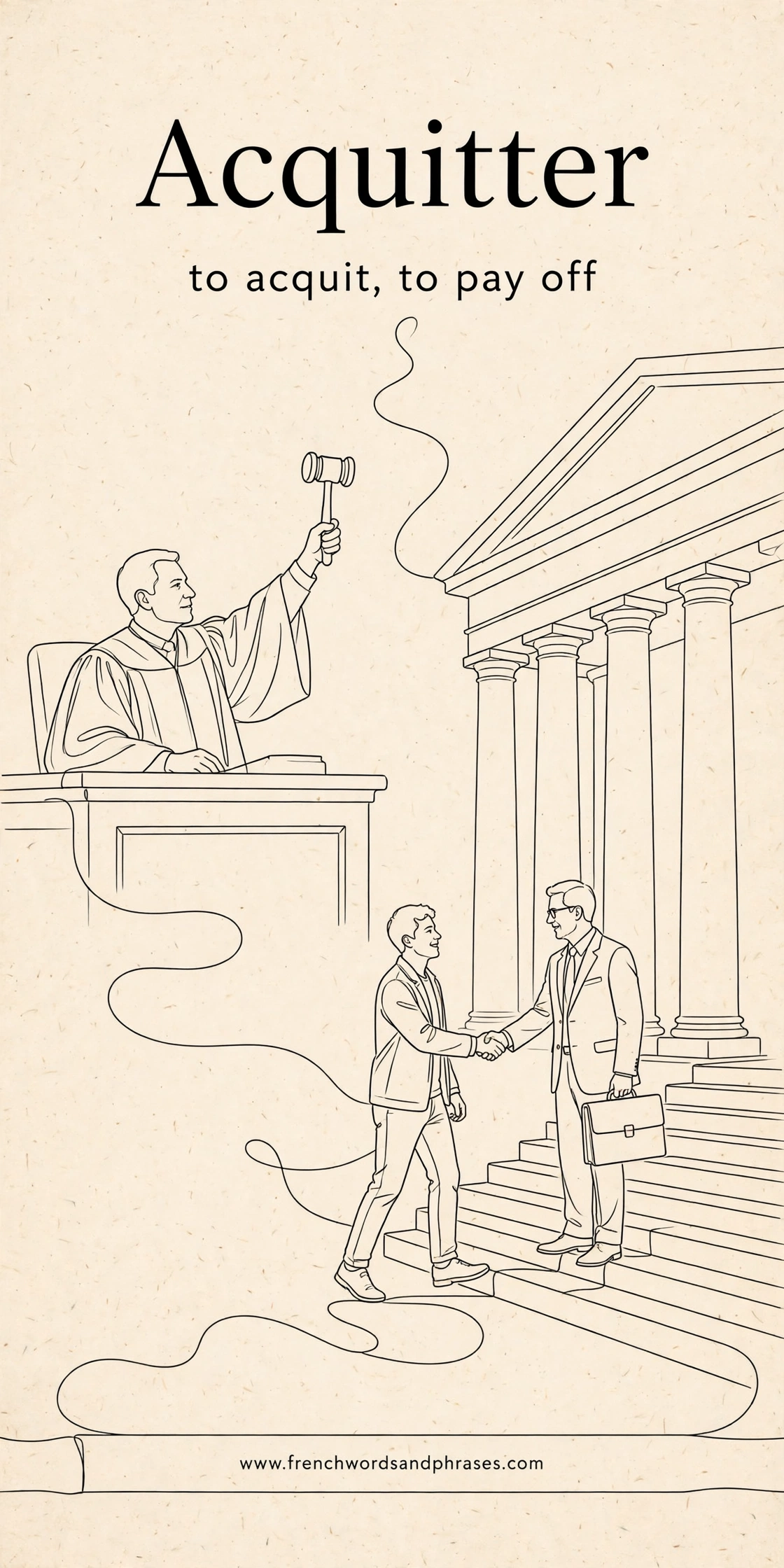
A courtroom holding its breath for a verdict, and a shopkeeper stamping a bill paid — acquitter serves both rooms. The judge’s acquitter declares the accused free of the charge; the accountant’s acquitter declares the debt free of anything owing. Either way, someone walks away clear.
In this guide, you’ll learn how to conjugate acquitter in all the major French tenses and moods. Explore complete conjugation tables, French examples, English translations, and practice quizzes.
Understanding the French Verb Acquitter
Acquitter is a regular French verb belonging to the first group of verbs, those ending in-er.
It means to acquit, to pay off. In law, acquitter is the criminal court’s verdict of not guilty — stronger than a dismissal, it clears the accused completely, and its noun is l’acquittement. In commerce and administration it is the everyday verb of settling what is owed: bills, taxes, fees and debts are acquittés, and the receipt that proves it is un acquit.
Verb classification: First group (-er)
Auxiliary verb: Avoir
Past participle: acquitté
Present participle: acquittant
English equivalents: To acquit, to pay off, to settle, to discharge; acquitter un accusé — to acquit an accused person; acquitter une facture — to settle a bill; acquitter une dette — to pay off a debt; acquitter un droit — to pay a duty or fee; une facture acquittée — a receipted, paid bill.
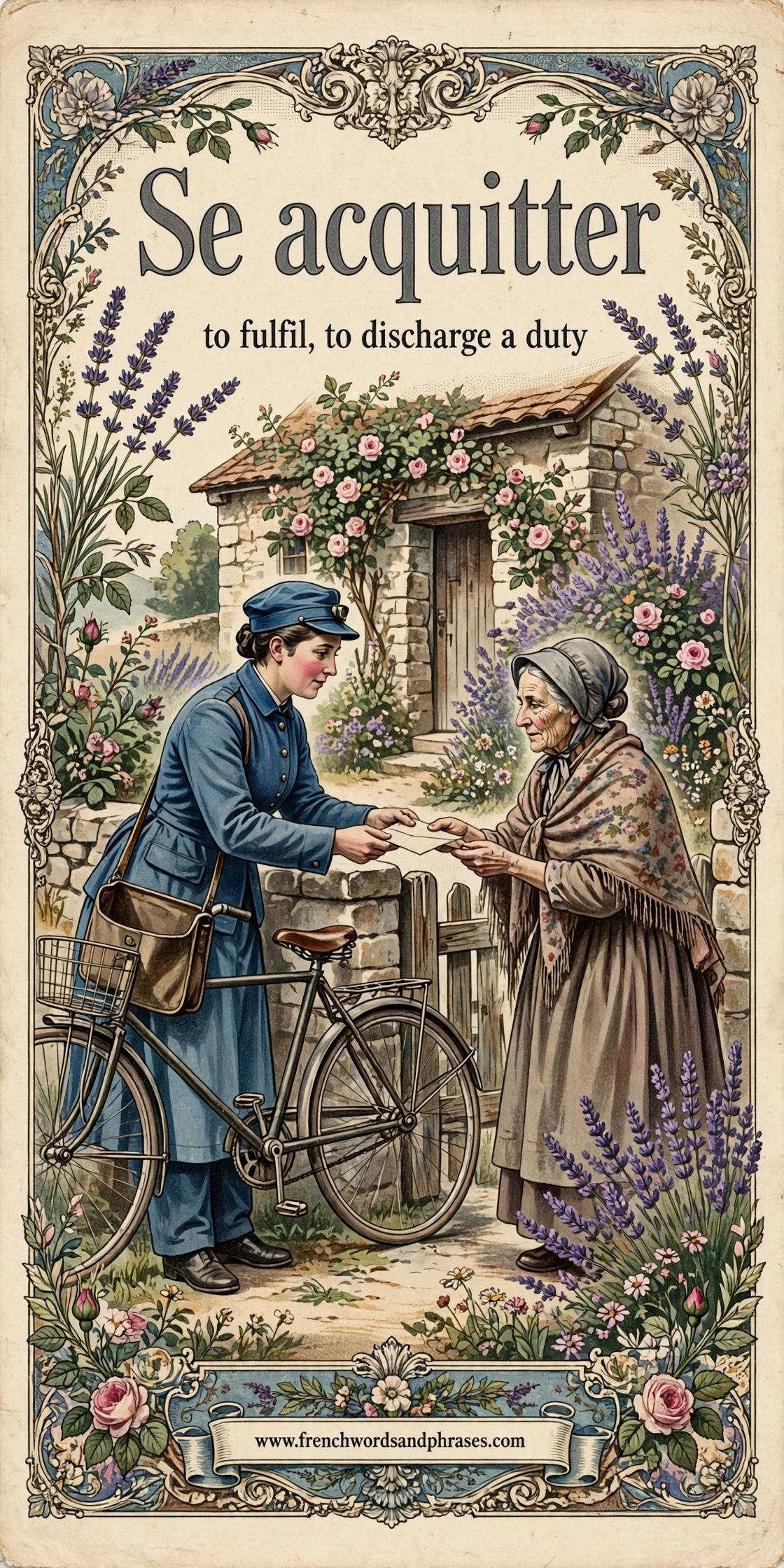
One important detail: acquitter has two great territories, the court and the cash desk, and French keeps them apart by object: a person is acquitted of a charge — acquitter un accusé — while a sum is acquitted by payment — acquitter une facture, une dette, un droit. The verb is a regular -er: j’acquitte, nous acquittons, past participle acquitté — and acquittée is the word stamped on a settled bill: facture acquittée, paid in full. Do not confuse the courtroom sense with its reflexive twin: se acquitter de is how one discharges a duty.
Experience the Word
Acquitter is the verb of the clean slate — a charge dropped by a verdict, a debt closed by a payment.
Imagine the last afternoon of a long trial. The jury files back, the foreman stands, and the word falls into the silent room: acquitté. The accused sits down slowly, a free man — le tribunal l’a acquitté — while outside, in a small office across town, a clerk stamps his own kind of freedom onto a bill: acquittée, paid, closed, done.
Courtroom or cash desk, the result is the same. Nothing remains owing — acquitté, and clear.
How to Conjugate Acquitter: Complete French Conjugation Guide
Let’s explore every major conjugation of acquitter, beginning with the indicative mood.
How to Conjugate Acquitter in the Indicative Mood
The indicative mood is used to express facts, observations, actions, and events.
How to Conjugate Acquitter in the Present Tense (Présent)
Used for actions happening now, habitual actions, and general truths.
| Subject | Conjugation |
|---|---|
| je | acquitte |
| tu | acquittes |
| il / elle | acquitte |
| nous | acquittons |
| vous | acquittez |
| ils / elles | acquittent |
Example
Le jury acquitte l’accusé faute de preuves.
The jury acquits the accused for lack of evidence.
Quick Quiz 1
Complete the sentence:
Nous ______ nos factures dès leur arrivée.
Reveal the answer
acquittons
Nous acquittons nos factures dès leur arrivée.
We settle our bills as soon as they arrive.
How to Conjugate Acquitter in the Passé Composé
Used for completed actions in the past. Acquitter takes the auxiliary verb avoir.
| Subject | Conjugation |
|---|---|
| j’ | ai acquitté |
| tu | as acquitté |
| il / elle | a acquitté |
| nous | avons acquitté |
| vous | avez acquitté |
| ils / elles | ont acquitté |
Example
La cour a acquitté le prévenu après deux heures de délibération.
The court acquitted the defendant after two hours of deliberation.
How to Conjugate Acquitter in the Imparfait (Imperfect Tense)
Used for habitual past actions, descriptions, and ongoing situations in the past.
| Subject | Conjugation |
|---|---|
| je | acquittais |
| tu | acquittais |
| il / elle | acquittait |
| nous | acquittions |
| vous | acquittiez |
| ils / elles | acquittaient |
Example
Ce tribunal acquittait rarement les accusés de fraude.
This court rarely acquitted those accused of fraud.
Quick Quiz 2
Choose the correct form:
The court acquitted the defendant.
La cour ______ le prévenu. (a acquitté / est acquittée)
Reveal the answer
a acquitté
La cour a acquitté le prévenu.
Acquitter takes avoir.
How to Conjugate Acquitter in the Plus-que-parfait
Used to describe an action that had already been completed before another past event.
| Subject | Conjugation |
|---|---|
| j’ | avais acquitté |
| tu | avais acquitté |
| il / elle | avait acquitté |
| nous | avions acquitté |
| vous | aviez acquitté |
| ils / elles | avaient acquitté |
Example
Elle avait acquitté toutes ses dettes avant Noël.
She had paid off all her debts before Christmas.
How to Conjugate Acquitter in the Passé Simple
Primarily used in formal writing, literature, and historical narratives. It is rarely used in everyday conversation.
| Subject | Conjugation |
|---|---|
| je | acquittai |
| tu | acquittas |
| il / elle | acquitta |
| nous | acquittâmes |
| vous | acquittâtes |
| ils / elles | acquittèrent |
Example
Le jury acquitta l’accusé à l’unanimité.
The jury acquitted the accused unanimously.
How to Conjugate Acquitter in the Passé Antérieur
A literary tense used to express an action completed immediately before another past action, generally in the passé simple.
| Subject | Conjugation |
|---|---|
| j’ | eus acquitté |
| tu | eus acquitté |
| il / elle | eut acquitté |
| nous | eûmes acquitté |
| vous | eûtes acquitté |
| ils / elles | eurent acquitté |
Example
Quand le trésorier eut acquitté la facture, le fournisseur livra la marchandise.
When the treasurer had settled the bill, the supplier delivered the goods.
How to Conjugate Acquitter in the Future Tense (Futur Simple)
Used to describe actions that will take place in the future.
| Subject | Conjugation |
|---|---|
| je | acquitterai |
| tu | acquitteras |
| il / elle | acquittera |
| nous | acquitterons |
| vous | acquitterez |
| ils / elles | acquitteront |
Example
Le tribunal acquittera cet homme, les preuves sont trop faibles.
The court will acquit this man, the evidence is too weak.
How to Conjugate Acquitter in the Futur Antérieur (Future Perfect)
Used for an action that will have been completed before a particular point in the future.
| Subject | Conjugation |
|---|---|
| j’ | aurai acquitté |
| tu | auras acquitté |
| il / elle | aura acquitté |
| nous | aurons acquitté |
| vous | aurez acquitté |
| ils / elles | auront acquitté |
Example
À la fin du mois, nous aurons acquitté le loyer et les charges.
By the end of the month, we will have paid the rent and the charges.
How to Conjugate Acquitter in the Near Future (Futur Proche)
Used to describe something that is going to happen soon. Formed with aller + infinitive.
| Subject | Conjugation |
|---|---|
| je | vais acquitter |
| tu | vas acquitter |
| il / elle | va acquitter |
| nous | allons acquitter |
| vous | allez acquitter |
| ils / elles | vont acquitter |
Example
Le comptable va acquitter la facture cet après-midi.
The accountant is going to settle the bill this afternoon.
How to Conjugate Acquitter in the Conditional Mood
The conditional mood expresses what would happen under certain circumstances. It is also frequently used to make polite requests or express wishes.
How to Conjugate Acquitter in the Present Conditional
| Subject | Conjugation |
|---|---|
| je | acquitterais |
| tu | acquitterais |
| il / elle | acquitterait |
| nous | acquitterions |
| vous | acquitteriez |
| ils / elles | acquitteraient |
Example
Avec un tel alibi, le jury acquitterait l’accusé sans hésiter.
With such an alibi, the jury would acquit the accused without hesitating.
How to Conjugate Acquitter in the Past Conditional
| Subject | Conjugation |
|---|---|
| j’ | aurais acquitté |
| tu | aurais acquitté |
| il / elle | aurait acquitté |
| nous | aurions acquitté |
| vous | auriez acquitté |
| ils / elles | auraient acquitté |
Example
Elle aurait acquitté sa dette plus tôt avec un meilleur salaire.
She would have paid off her debt sooner with a better salary.
Acquitter in the Literary Past Conditional Form
This less common literary form uses the imperfect subjunctive of avoir.
| Subject | Conjugation |
|---|---|
| j’ | eusse acquitté |
| tu | eusses acquitté |
| il / elle | eût acquitté |
| nous | eussions acquitté |
| vous | eussiez acquitté |
| ils / elles | eussent acquitté |
Example
Le jury eût acquitté l’accusé sans ces faux témoignages.
The jury would have acquitted the accused without that false testimony.
How to Conjugate Acquitter in the Subjunctive Mood
The subjunctive is used to express wishes, emotions, doubts, necessity, and uncertainty. It frequently follows expressions such as il faut que (it is necessary that) or bien que (although).
How to Conjugate Acquitter in the Present Subjunctive
| Subject | Conjugation |
|---|---|
| que je | acquitte |
| que tu | acquittes |
| qu’il / qu’elle | acquitte |
| que nous | acquittions |
| que vous | acquittiez |
| qu’ils / qu’elles | acquittent |
Example
Il est possible que le tribunal acquitte l’accusé.
It is possible the court may acquit the accused.
Quick Quiz 3
Complete the sentence using the subjunctive:
Il est possible que vous ______ l’accusé.
Reveal the answer
acquittiez
Il est possible que vous acquittiez l’accusé.
It is possible you may acquit the accused.
How to Conjugate Acquitter in the Imperfect Subjunctive
A literary tense, rarely encountered in modern spoken French.
| Subject | Conjugation |
|---|---|
| que je | acquittasse |
| que tu | acquittasses |
| qu’il / qu’elle | acquittât |
| que nous | acquittassions |
| que vous | acquittassiez |
| qu’ils / qu’elles | acquittassent |
Example
On attendait que le jury acquittât l’accusé avant la nuit.
People waited for the jury to acquit the accused before nightfall.
How to Conjugate Acquitter in the Pluperfect Subjunctive
A literary construction used to express an action completed before another past action.
| Subject | Conjugation |
|---|---|
| que j’ | eusse acquitté |
| que tu | eusses acquitté |
| qu’il / qu’elle | eût acquitté |
| que nous | eussions acquitté |
| que vous | eussiez acquitté |
| qu’ils / qu’elles | eussent acquitté |
Example
Les journaux racontaient que la cour eût acquitté le ministre.
The newspapers reported that the court had acquitted the minister.
How to Conjugate Acquitter in the Past Subjunctive
| Subject | Conjugation |
|---|---|
| que j’ | aie acquitté |
| que tu | aies acquitté |
| qu’il / qu’elle | ait acquitté |
| que nous | ayons acquitté |
| que vous | ayez acquitté |
| qu’ils / qu’elles | aient acquitté |
Example
Je suis soulagé que tu aies acquitté cette vieille dette.
I am relieved you paid off that old debt.
How to Conjugate Acquitter in the Imperative
The imperative is used to give commands, instructions, invitations, or suggestions. Subject pronouns are omitted.
How to Conjugate Acquitter in the Present Imperative
| Person | Conjugation |
|---|---|
| (tu) | acquitte |
| (nous) | acquittons |
| (vous) | acquittez |
Example
Acquittez cette facture avant vendredi, s’il vous plaît !
Settle this bill before Friday, please!
Quick Quiz 4
How would you say Settle this bill (tu form)?
Reveal the answer
Acquitte cette facture !
French Participles of Acquitter
Participles are verb forms that can be used in compound tenses and other grammatical constructions.
Present Participle of Acquitter
acquittant
En acquittant l’accusé, le jury a reconnu l’erreur de l’enquête.
By acquitting the accused, the jury acknowledged the investigation’s mistake.
Past Participle of Acquitter
acquitté
Acquittée par le jury, elle a quitté le palais en pleurant de joie.
Acquitted by the jury, she left the courthouse weeping with joy.
Acquitter in Everyday French: Real-Life Examples
Now that you know the conjugations, let’s see how acquitter appears in everyday French.
Example 1 — Present
Le jury acquitte l’accusé.
The jury acquits the accused.
Example 2 — Passé composé
La cour a acquitté le prévenu.
The court acquitted the defendant.
Example 3 — Imparfait
Elle acquittait ses factures dès leur arrivée.
She used to settle her bills as soon as they arrived.
Example 4 — Future
Nous acquitterons le loyer demain.
We will pay the rent tomorrow.
Example 5 — Conditional
Le jury acquitterait cet homme avec un tel alibi.
The jury would acquit this man with such an alibi.
Example 6 — Imperative
Acquitte cette dette dès que possible !
Pay off this debt as soon as possible!
Beyond Translation: The Meaning of Acquitter
English acquit kept only the courtroom; French acquitter kept the whole family — from Latin quietus, at rest, through the idea of a debt or a charge finally quieted.
To acquit is to make quiet.
That is why the same verb stamps the bill: acquittée means the account can rest. A person acquitted and a debt acquitted share one deep sense — nothing more is owed, to the law or to the ledger.
How to Remember the French Verb Acquitter
Remember it this way: Acquitter is about the verdict and the stamp — accused cleared, bill closed.
- Two territories: acquitter un accusé in court, acquitter une facture at the desk — people are cleared, sums are settled.
- The stamp on a paid bill: facture acquittée — paid in full, nothing owing.
- Regular -er: j’acquitte, nous acquittons, past participle acquitté; its noun is l’acquittement.
The key idea is the verdict and the stamp — accused cleared, bill closed.
Test Your Knowledge of Acquitter
Let’s see how much you’ve learned. Try answering these questions before revealing the answers.
Question 1
What are the two great territories of acquitter?
Reveal the answer
The court and the ledger — acquitter un accusé (to acquit) and acquitter une facture, une dette (to settle, to pay off).
Question 2
How do you say The jury acquits the accused in French?
Reveal the answer
Le jury acquitte l’accusé.
Question 3
Translate: She had paid off all her debts before Christmas.
Reveal the answer
Elle avait acquitté toutes ses dettes avant Noël.
Question 4
What is the past participle of acquitter?
Reveal the answer
Acquitté — as in une facture acquittée, a bill paid in full.
Question 5
Complete the sentence:
Il est possible que le tribunal ______ l’accusé.
Reveal the answer
acquitte
Il est possible que le tribunal acquitte l’accusé.
It is possible the court may acquit the accused.
Your Final Challenge
Can You Use It?
How would you say this in French?
The jury acquits the accused, and the whole room finally breathes.
Reveal the answer
Le jury acquitte l’accusé, et la salle entière respire enfin.
The jury acquits the accused, and the whole room finally breathes.
A little French. A little curiosity. A richer everyday life.
LEARN FRENCH ONE WORD AT A TIME