A French Word to Live By
How to Conjugate Déshabituer in French
/de.za.bi.tɥe/
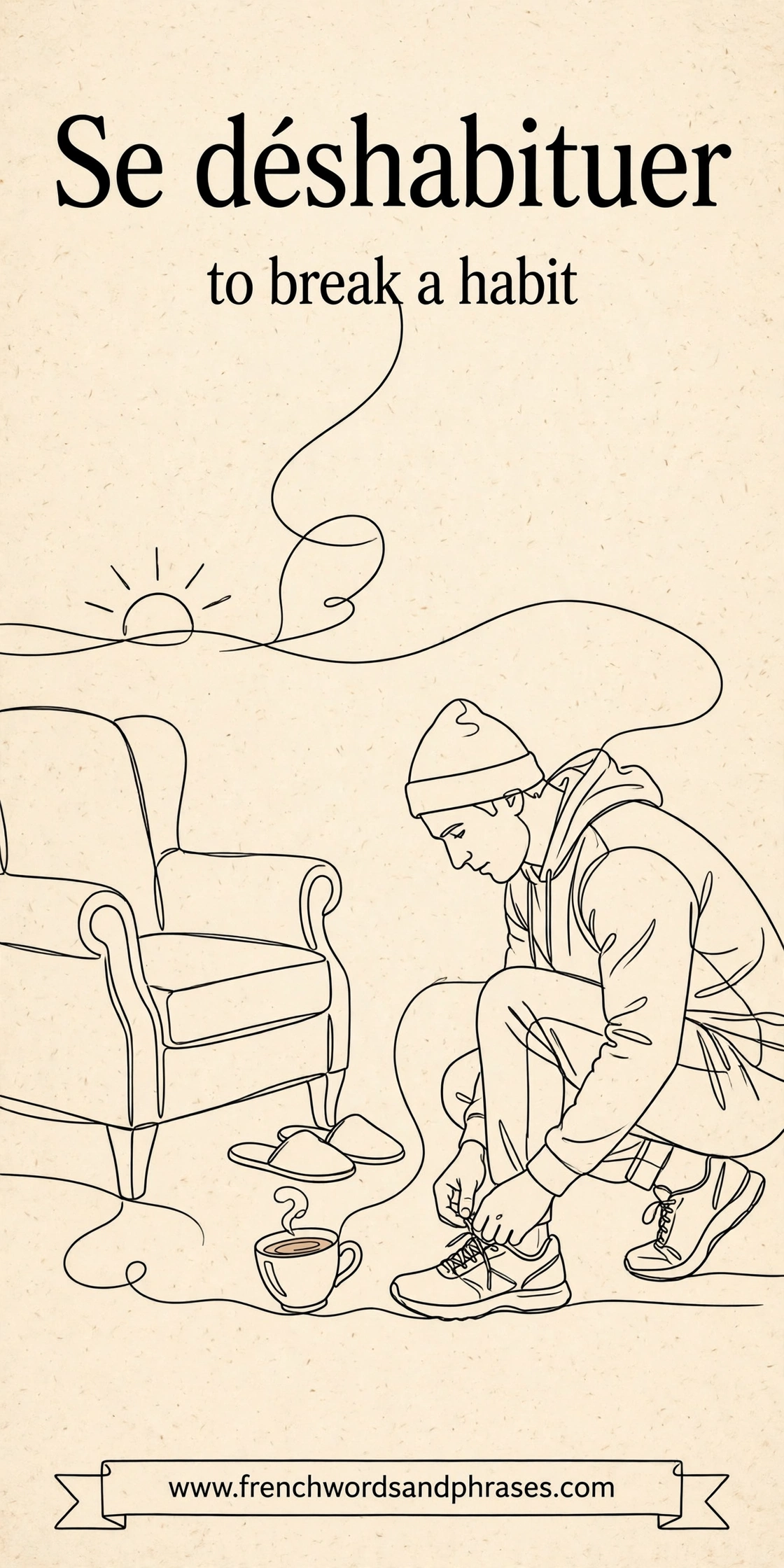
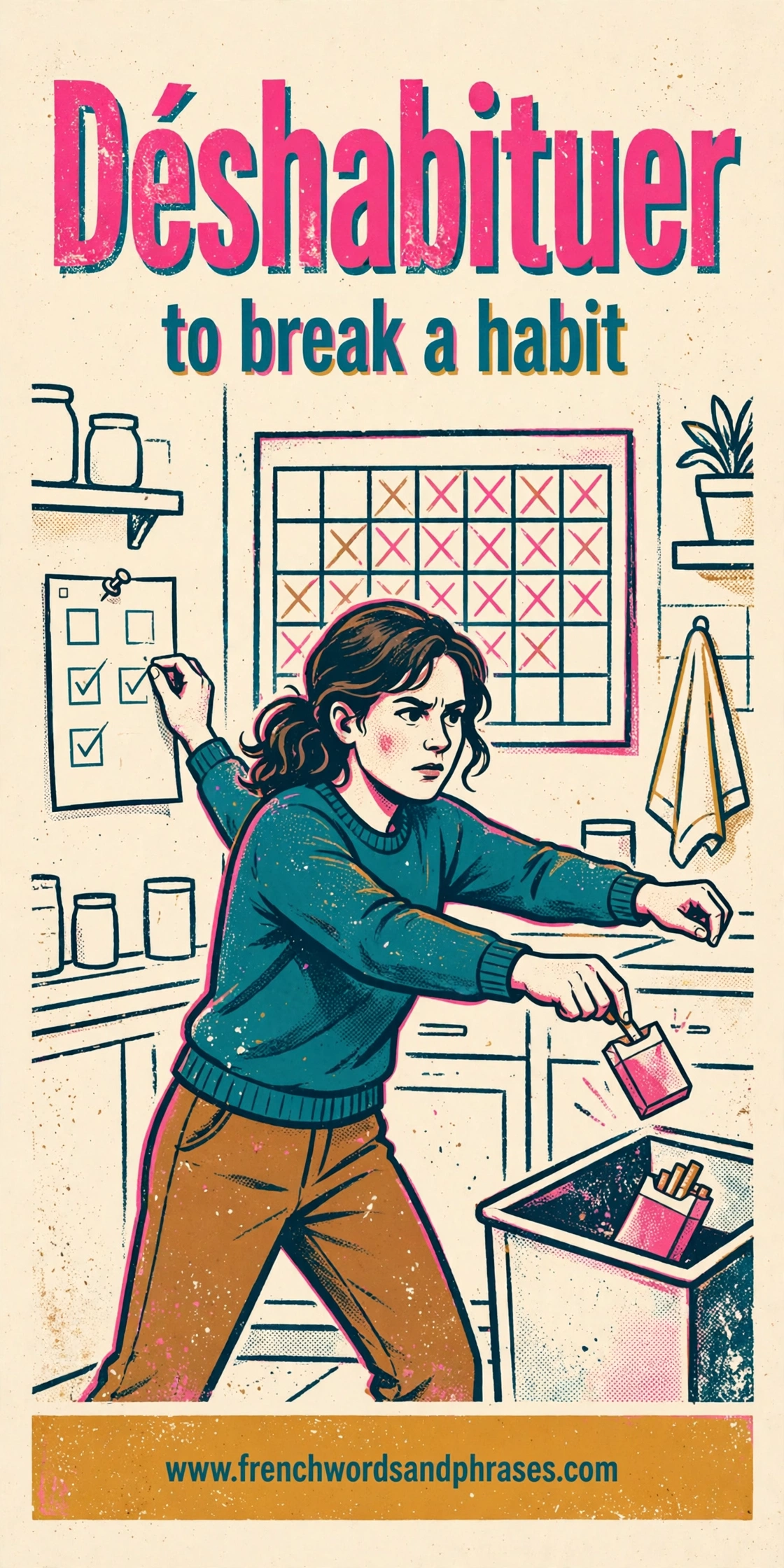
Déshabituer means to break a habit — to get someone out of a habit they have fallen into, gently un-teaching what habit taught.
A toddler who still sucks his thumb, a class that has fallen into chatting, a patient weaning off a medicine taken for years — déshabituer is the verb of un-habiting: one person patiently breaking another of a habit, day by day, until the old reflex lets go.
In this guide, you’ll learn how to conjugate déshabituer in all the major French tenses and moods. Explore complete conjugation tables, French examples, English translations, and practice quizzes.
Understanding the French Verb Déshabituer
Déshabituer is a regular French verb belonging to the first group of verbs, those ending in-er.
It means to break a habit. Parents déshabituent toddlers of thumbs and dummies, teachers déshabituent classes of bad reflexes, and doctors déshabituent patients of medicines and substances — the word of the sevrage, the weaning, in all its forms. It is always gradual: nobody is déshabitué in a day.
Verb classification: First group (-er)
Auxiliary verb: Avoir
Past participle: déshabitué
Present participle: déshabituant
English equivalents: To break of a habit, to get out of the habit; déshabituer un enfant de sucer son pouce — to break a child of thumb-sucking; déshabituer quelqu’un de fumer — to break someone of smoking; déshabituer les élèves de bavarder — to break pupils of chatting; le contraire : habituer — to accustom.
One important detail: déshabituer is transitive and takes its habit with de: déshabituer quelqu’un de quelque chose, déshabituer un enfant de sucer son pouce. To break your own habit, French turns reflexive: se déshabituer de fumer. The verb itself is regular, with the -uer glide kept throughout: je déshabitue, nous déshabituons, ils déshabituent, past participle déshabitué — and the family word in the middle is une habitude, a habit.
Experience the Word
Déshabituer is the verb of patient un-teaching — a habit built in months is dismantled in weeks, one day at a time.
Imagine a nursery school in September. Half the class arrives with thumbs in mouths, and the teacher begins her gentle campaign: stories, stickers, busy hands, a song whenever a thumb wanders. By Christmas, sans crier ni punir, elle a déshabitué presque tous les enfants de sucer leur pouce.
No battle was won, only a habit dissolved. They are déshabitués — and their thumbs are free.
How to Conjugate Déshabituer: Complete French Conjugation Guide
Let’s explore every major conjugation of déshabituer, beginning with the indicative mood.
How to Conjugate Déshabituer in the Indicative Mood
The indicative mood is used to express facts, observations, actions, and events.
How to Conjugate Déshabituer in the Present Tense (Présent)
Used for actions happening now, habitual actions, and general truths.
| Subject | Conjugation |
|---|---|
| je | déshabitue |
| tu | déshabitues |
| il / elle | déshabitue |
| nous | déshabituons |
| vous | déshabituez |
| ils / elles | déshabituent |
Example
Elle déshabitue son fils de sucer son pouce.
She is breaking her son of sucking his thumb.
Quick Quiz 1
Complete the sentence:
Nous ______ le chat de griffer les rideaux.
Reveal the answer
déshabituons
Nous déshabituons le chat de griffer les rideaux.
We are breaking the cat of scratching the curtains.
How to Conjugate Déshabituer in the Passé Composé
Used for completed actions in the past. Déshabituer takes the auxiliary verb avoir.
| Subject | Conjugation |
|---|---|
| j’ | ai déshabitué |
| tu | as déshabitué |
| il / elle | a déshabitué |
| nous | avons déshabitué |
| vous | avez déshabitué |
| ils / elles | ont déshabitué |
Example
Le médecin a déshabitué le patient de ce médicament.
The doctor weaned the patient off this medicine.
How to Conjugate Déshabituer in the Imparfait (Imperfect Tense)
Used for habitual past actions, descriptions, and ongoing situations in the past.
| Subject | Conjugation |
|---|---|
| je | déshabituais |
| tu | déshabituais |
| il / elle | déshabituait |
| nous | déshabituions |
| vous | déshabituiez |
| ils / elles | déshabituaient |
Example
La maîtresse déshabituait les élèves de bavarder.
The teacher used to break the pupils of chatting.
Quick Quiz 2
Choose the correct form:
The teacher broke the pupils of chatting.
La maîtresse ______ les élèves de bavarder. (a déshabitué / s’est déshabituée)
Reveal the answer
a déshabitué
La maîtresse a déshabitué les élèves de bavarder.
Déshabituer is transitive and takes avoir — she broke others of the habit.
How to Conjugate Déshabituer in the Plus-que-parfait
Used to describe an action that had already been completed before another past event.
| Subject | Conjugation |
|---|---|
| j’ | avais déshabitué |
| tu | avais déshabitué |
| il / elle | avait déshabitué |
| nous | avions déshabitué |
| vous | aviez déshabitué |
| ils / elles | avaient déshabitué |
Example
Ils avaient déshabitué le chien de monter sur le canapé.
They had broken the dog of climbing on the sofa.
How to Conjugate Déshabituer in the Passé Simple
Primarily used in formal writing, literature, and historical narratives. It is rarely used in everyday conversation.
| Subject | Conjugation |
|---|---|
| je | déshabituai |
| tu | déshabituas |
| il / elle | déshabitua |
| nous | déshabituâmes |
| vous | déshabituâtes |
| ils / elles | déshabituèrent |
Example
En trois mois, elle déshabitua l’enfant de sa tétine.
In three months, she broke the child of his dummy.
How to Conjugate Déshabituer in the Passé Antérieur
A literary tense used to express an action completed immediately before another past action, generally in the passé simple.
| Subject | Conjugation |
|---|---|
| j’ | eus déshabitué |
| tu | eus déshabitué |
| il / elle | eut déshabitué |
| nous | eûmes déshabitué |
| vous | eûtes déshabitué |
| ils / elles | eurent déshabitué |
Example
Quand il eut déshabitué le malade de ce somnifère, celui-ci dormit mieux.
When he had weaned the patient off this sleeping pill, the man slept better.
How to Conjugate Déshabituer in the Future Tense (Futur Simple)
Used to describe actions that will take place in the future.
| Subject | Conjugation |
|---|---|
| je | déshabituerai |
| tu | déshabitueras |
| il / elle | déshabituera |
| nous | déshabituerons |
| vous | déshabituerez |
| ils / elles | déshabitueront |
Example
Nous déshabituerons le chat de griffer les rideaux.
We will break the cat of scratching the curtains.
How to Conjugate Déshabituer in the Futur Antérieur (Future Perfect)
Used for an action that will have been completed before a particular point in the future.
| Subject | Conjugation |
|---|---|
| j’ | aurai déshabitué |
| tu | auras déshabitué |
| il / elle | aura déshabitué |
| nous | aurons déshabitué |
| vous | aurez déshabitué |
| ils / elles | auront déshabitué |
Example
À Noël, elle aura déshabitué tous ses élèves de ce réflexe.
By Christmas, she will have broken all her pupils of this reflex.
How to Conjugate Déshabituer in the Near Future (Futur Proche)
Used to describe something that is going to happen soon. Formed with aller + infinitive.
| Subject | Conjugation |
|---|---|
| je | vais déshabituer |
| tu | vas déshabituer |
| il / elle | va déshabituer |
| nous | allons déshabituer |
| vous | allez déshabituer |
| ils / elles | vont déshabituer |
Example
Le pédiatre va déshabituer le petit de la tétine.
The paediatrician is going to break the little one of the dummy.
How to Conjugate Déshabituer in the Conditional Mood
The conditional mood expresses what would happen under certain circumstances. It is also frequently used to make polite requests or express wishes.
How to Conjugate Déshabituer in the Present Conditional
| Subject | Conjugation |
|---|---|
| je | déshabituerais |
| tu | déshabituerais |
| il / elle | déshabituerait |
| nous | déshabituerions |
| vous | déshabitueriez |
| ils / elles | déshabitueraient |
Example
Avec de la patience, tu déshabituerais ton chien de bien des choses.
With patience, you would break your dog of many things.
How to Conjugate Déshabituer in the Past Conditional
| Subject | Conjugation |
|---|---|
| j’ | aurais déshabitué |
| tu | aurais déshabitué |
| il / elle | aurait déshabitué |
| nous | aurions déshabitué |
| vous | auriez déshabitué |
| ils / elles | auraient déshabitué |
Example
Elle aurait déshabitué l’enfant plus tôt sans les vacances.
She would have broken the child of the habit earlier if not for the holidays.
Déshabituer in the Literary Past Conditional Form
This less common literary form uses the imperfect subjunctive of avoir.
| Subject | Conjugation |
|---|---|
| j’ | eusse déshabitué |
| tu | eusses déshabitué |
| il / elle | eût déshabitué |
| nous | eussions déshabitué |
| vous | eussiez déshabitué |
| ils / elles | eussent déshabitué |
Example
La nourrice eût déshabitué l’enfant de son pouce en douceur.
The nanny would have broken the child of his thumb gently.
How to Conjugate Déshabituer in the Subjunctive Mood
The subjunctive is used to express wishes, emotions, doubts, necessity, and uncertainty. It frequently follows expressions such as il faut que (it is necessary that) or bien que (although).
How to Conjugate Déshabituer in the Present Subjunctive
| Subject | Conjugation |
|---|---|
| que je | déshabitue |
| que tu | déshabitues |
| qu’il / qu’elle | déshabitue |
| que nous | déshabituions |
| que vous | déshabituiez |
| qu’ils / qu’elles | déshabituent |
Example
Il faut que tu déshabitues ton fils de ce réflexe.
You must break your son of this reflex.
Quick Quiz 3
Complete the sentence using the subjunctive:
Il faut que vous ______ vos élèves de ce réflexe.
Reveal the answer
déshabituiez
Il faut que vous déshabituiez vos élèves de ce réflexe.
You must break your pupils of this reflex.
How to Conjugate Déshabituer in the Imperfect Subjunctive
A literary tense, rarely encountered in modern spoken French.
| Subject | Conjugation |
|---|---|
| que je | déshabituasse |
| que tu | déshabituasses |
| qu’il / qu’elle | déshabituât |
| que nous | déshabituassions |
| que vous | déshabituassiez |
| qu’ils / qu’elles | déshabituassent |
Example
Elle souhaitait que l’école déshabituât les enfants de crier.
She wished the school would break the children of shouting.
How to Conjugate Déshabituer in the Pluperfect Subjunctive
A literary construction used to express an action completed before another past action.
| Subject | Conjugation |
|---|---|
| que j’ | eusse déshabitué |
| que tu | eusses déshabitué |
| qu’il / qu’elle | eût déshabitué |
| que nous | eussions déshabitué |
| que vous | eussiez déshabitué |
| qu’ils / qu’elles | eussent déshabitué |
Example
On racontait qu’elle eût déshabitué des générations d’élèves.
People said she had broken generations of pupils of their bad habits.
How to Conjugate Déshabituer in the Past Subjunctive
| Subject | Conjugation |
|---|---|
| que j’ | aie déshabitué |
| que tu | aies déshabitué |
| qu’il / qu’elle | ait déshabitué |
| que nous | ayons déshabitué |
| que vous | ayez déshabitué |
| qu’ils / qu’elles | aient déshabitué |
Example
Je suis content qu’elle ait déshabitué le petit de sa tétine.
I am glad she broke the little one of his dummy.
How to Conjugate Déshabituer in the Imperative
The imperative is used to give commands, instructions, invitations, or suggestions. Subject pronouns are omitted.
How to Conjugate Déshabituer in the Present Imperative
| Person | Conjugation |
|---|---|
| (tu) | déshabitue |
| (nous) | déshabituons |
| (vous) | déshabituez |
Example
Déshabitue ton chien de monter sur le lit !
Break your dog of climbing on the bed!
Quick Quiz 4
How would you say Break your dog of climbing on the bed (tu form)?
Reveal the answer
Déshabitue ton chien de monter sur le lit !
French Participles of Déshabituer
Participles are verb forms that can be used in compound tenses and other grammatical constructions.
Present Participle of Déshabituer
déshabituant
En déshabituant les élèves de bavarder, elle a transformé la classe.
By breaking the pupils of chatting, she transformed the class.
Past Participle of Déshabituer
déshabitué
Déshabitué de son pouce, l’enfant dort enfin paisiblement.
Broken of his thumb, the child finally sleeps peacefully.
Déshabituer in Everyday French: Real-Life Examples
Now that you know the conjugations, let’s see how déshabituer appears in everyday French.
Example 1 — Present
Elle déshabitue son fils de sucer son pouce.
She is breaking her son of sucking his thumb.
Example 2 — Passé composé
Le médecin a déshabitué le patient de ce médicament.
The doctor weaned the patient off this medicine.
Example 3 — Imparfait
La maîtresse déshabituait les élèves de bavarder.
The teacher used to break the pupils of chatting.
Example 4 — Future
Nous déshabituerons le chat de griffer les rideaux.
We will break the cat of scratching the curtains.
Example 5 — Conditional
Tu déshabituerais ton chien avec de la patience.
You would break your dog of it with patience.
Example 6 — Imperative
Déshabitue ton chien de monter sur le lit !
Break your dog of climbing on the bed!
Beyond Translation: The Meaning of Déshabituer
English splits the idea — break someone of a habit, wean off; French déshabituer is the single tidy verb, built openly on une habitude, a habit.
Habituer builds the groove; déshabituer fills it in.
And its reflexive twin, se déshabituer, is the same work done on oneself — proof that in French, habits are things one person can install, and another, patiently, remove.
How to Remember the French Verb Déshabituer
Remember it this way: Déshabituer is about the teacher’s gentle campaign — stickers, songs, and thumbs forgotten by Christmas.
- Transitive with de: déshabituer quelqu’un de quelque chose — to break someone of something.
- For your own habit, go reflexive: se déshabituer de fumer.
- Regular -uer: je déshabitue, nous déshabituons, past participle déshabitué.
The key idea is the teacher’s gentle campaign — stickers, songs, and thumbs forgotten by Christmas.
Test Your Knowledge of Déshabituer
Let’s see how much you’ve learned. Try answering these questions before revealing the answers.
Question 1
Which preposition carries the habit after déshabituer?
Reveal the answer
De — déshabituer un enfant de sucer son pouce, to break a child of sucking his thumb.
Question 2
How do you say She is breaking her son of sucking his thumb in French?
Reveal the answer
Elle déshabitue son fils de sucer son pouce.
Question 3
Translate: The doctor weaned the patient off this medicine.
Reveal the answer
Le médecin a déshabitué le patient de ce médicament.
Question 4
What is the past participle of déshabituer?
Reveal the answer
Déshabitué.
Question 5
Complete the sentence:
Il faut que tu ______ ton fils de ce réflexe.
Reveal the answer
déshabitues
Il faut que tu déshabitues ton fils de ce réflexe.
You must break your son of this reflex.
Your Final Challenge
Can You Use It?
How would you say this in French?
With patience, she broke her son of sucking his thumb, and he grew up.
Reveal the answer
Avec patience, elle a déshabitué son fils de sucer son pouce, et il est devenu grand.
With patience, she broke her son of sucking his thumb, and he grew up.
A little French. A little curiosity. A richer everyday life.
LEARN FRENCH ONE WORD AT A TIME