A French Word to Live By
How to Conjugate Désengager in French
/de.zɑ̃.ɡa.ʒe/
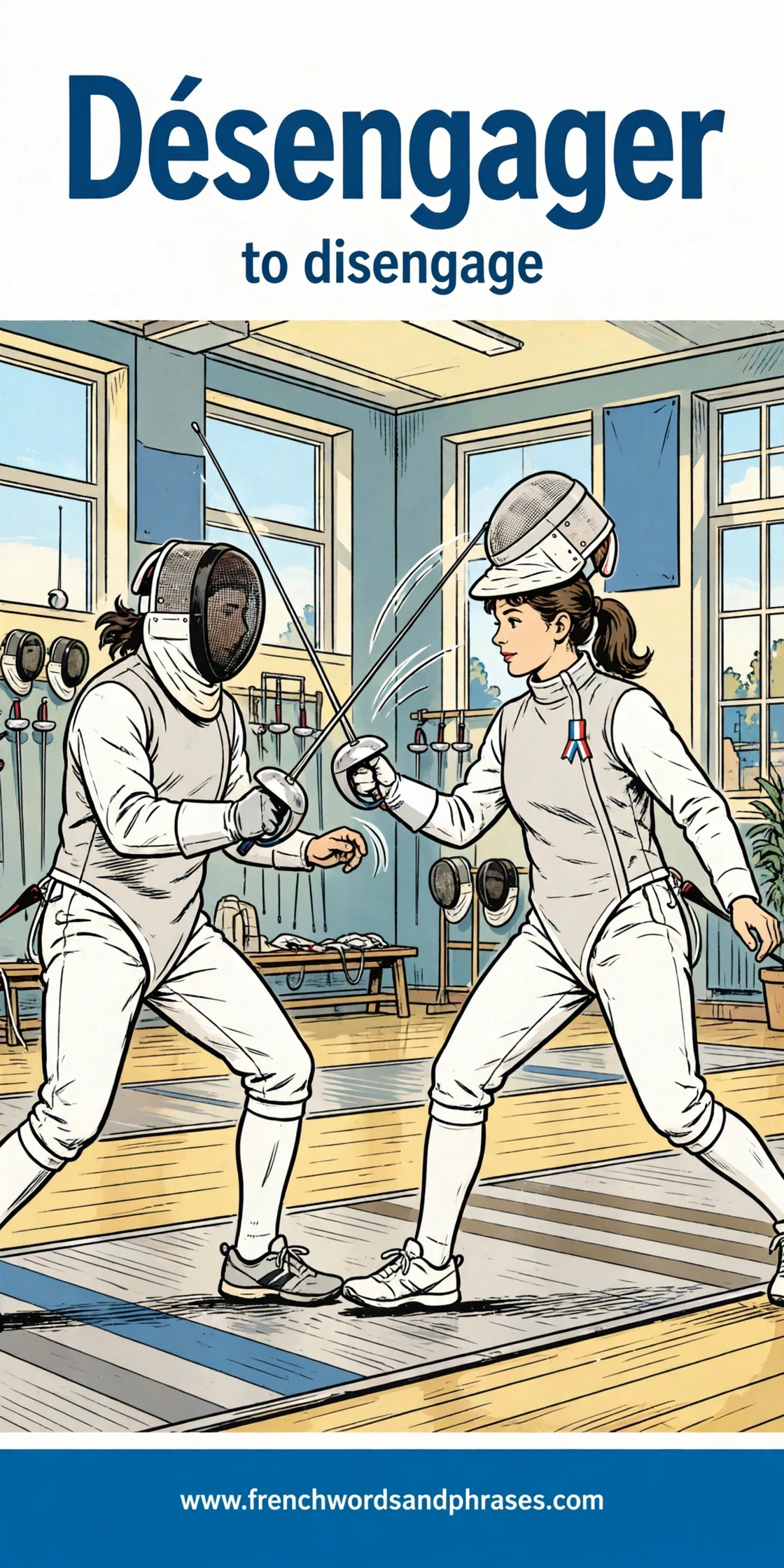
Désengager means to disengage — to release something from a grip, a gear or a commitment, and set it free to move or withdraw.
A pilot switching off the autopilot, an army pulling troops back from a front line, a driver releasing a clutch — désengager is the verb of the deliberate release: whatever was engaged, locked in, committed, is let go.
In this guide, you’ll learn how to conjugate désengager in all the major French tenses and moods. Explore complete conjugation tables, French examples, English translations, and practice quizzes.
Understanding the French Verb Désengager
Désengager is a regular French verb belonging to the first group of verbs, those ending in-er.
It means to disengage. It is used of armies withdrawing units, pilots disengaging automatic systems, machines releasing gears and governments pulling back from operations. The noun le désengagement is a fixture of news reports about conflicts and peacekeeping.
Verb classification: First group (-er)
Auxiliary verb: Avoir
Past participle: désengagé
Present participle: désengageant
English equivalents: To disengage, to release, to withdraw; désengager des troupes — to withdraw troops; désengager le pilote automatique — to disengage the autopilot; désengager sa responsabilité — to disclaim responsibility.
One important detail: désengager is a manger-type verb — the g keeps an e before a and o so it stays soft: nous désengageons, je désengageais, en désengageant, but je désengage, vous désengagez without it. Its reflexive twin se désengager (to back out of a commitment) is the everyday one; the plain verb belongs to cockpits, barracks and machinery, where things are engaged and disengaged. Past participle désengagé.
Experience the Word
Désengager is the verb of the hand coming off the lever — a decision to release, withdraw and step back.
Imagine the last evening of a peacekeeping mission. Radios crackle, engines start in the dark, and one by one the units pull back from their positions: le commandant désengage ses troupes, quietly, in order, without a single shot — the hardest manoeuvre in war, done perfectly.
Nothing was abandoned in panic. The troops were disengaged — désengagés — by choice, on schedule, like a gear released.
How to Conjugate Désengager: Complete French Conjugation Guide
Let’s explore every major conjugation of désengager, beginning with the indicative mood.
How to Conjugate Désengager in the Indicative Mood
The indicative mood is used to express facts, observations, actions, and events.
How to Conjugate Désengager in the Present Tense (Présent)
Used for actions happening now, habitual actions, and general truths.
| Subject | Conjugation |
|---|---|
| je | désengage |
| tu | désengages |
| il / elle | désengage |
| nous | désengageons |
| vous | désengagez |
| ils / elles | désengagent |
Example
Le pilote désengage le pilote automatique avant l’atterrissage.
The pilot disengages the autopilot before landing.
Quick Quiz 1
Complete the sentence:
Nous ______ le mécanisme à chaque arrêt.
Reveal the answer
désengageons
Nous désengageons le mécanisme à chaque arrêt.
We disengage the mechanism at every stop.
How to Conjugate Désengager in the Passé Composé
Used for completed actions in the past. Désengager takes the auxiliary verb avoir.
| Subject | Conjugation |
|---|---|
| j’ | ai désengagé |
| tu | as désengagé |
| il / elle | a désengagé |
| nous | avons désengagé |
| vous | avez désengagé |
| ils / elles | ont désengagé |
Example
L’armée a désengagé deux bataillons cette semaine.
The army withdrew two battalions this week.
How to Conjugate Désengager in the Imparfait (Imperfect Tense)
Used for habitual past actions, descriptions, and ongoing situations in the past.
| Subject | Conjugation |
|---|---|
| je | désengageais |
| tu | désengageais |
| il / elle | désengageait |
| nous | désengagions |
| vous | désengagiez |
| ils / elles | désengageaient |
Example
Le mécanicien désengageait le mécanisme à chaque arrêt.
The mechanic used to disengage the mechanism at every stop.
Quick Quiz 2
Choose the correct form:
She disengaged the machine.
Elle ______ la machine. (a désengagé / est désengagée)
Reveal the answer
a désengagé
Elle a désengagé la machine.
Désengager takes avoir.
How to Conjugate Désengager in the Plus-que-parfait
Used to describe an action that had already been completed before another past event.
| Subject | Conjugation |
|---|---|
| j’ | avais désengagé |
| tu | avais désengagé |
| il / elle | avait désengagé |
| nous | avions désengagé |
| vous | aviez désengagé |
| ils / elles | avaient désengagé |
Example
Ils avaient désengagé la machine avant la panne.
They had disengaged the machine before the breakdown.
How to Conjugate Désengager in the Passé Simple
Primarily used in formal writing, literature, and historical narratives. It is rarely used in everyday conversation.
| Subject | Conjugation |
|---|---|
| je | désengageai |
| tu | désengageas |
| il / elle | désengagea |
| nous | désengageâmes |
| vous | désengageâtes |
| ils / elles | désengageèrent |
Example
Le général désengagea ses troupes à la tombée de la nuit.
The general withdrew his troops at nightfall.
How to Conjugate Désengager in the Passé Antérieur
A literary tense used to express an action completed immediately before another past action, generally in the passé simple.
| Subject | Conjugation |
|---|---|
| j’ | eus désengagé |
| tu | eus désengagé |
| il / elle | eut désengagé |
| nous | eûmes désengagé |
| vous | eûtes désengagé |
| ils / elles | eurent désengagé |
Example
Quand il eut désengagé l’embrayage, la voiture cala.
When he had disengaged the clutch, the car stalled.
How to Conjugate Désengager in the Future Tense (Futur Simple)
Used to describe actions that will take place in the future.
| Subject | Conjugation |
|---|---|
| je | désengagerai |
| tu | désengageras |
| il / elle | désengagera |
| nous | désengagerons |
| vous | désengagerez |
| ils / elles | désengageront |
Example
Demain, la mission désengagera ses derniers soldats.
Tomorrow, the mission will withdraw its last soldiers.
How to Conjugate Désengager in the Futur Antérieur (Future Perfect)
Used for an action that will have been completed before a particular point in the future.
| Subject | Conjugation |
|---|---|
| j’ | aurai désengagé |
| tu | auras désengagé |
| il / elle | aura désengagé |
| nous | aurons désengagé |
| vous | aurez désengagé |
| ils / elles | auront désengagé |
Example
À la fin du mois, nous aurons désengagé toutes les unités.
By the end of the month, we will have withdrawn all the units.
How to Conjugate Désengager in the Near Future (Futur Proche)
Used to describe something that is going to happen soon. Formed with aller + infinitive.
| Subject | Conjugation |
|---|---|
| je | vais désengager |
| tu | vas désengager |
| il / elle | va désengager |
| nous | allons désengager |
| vous | allez désengager |
| ils / elles | vont désengager |
Example
Attention, le pilote va désengager le système automatique.
Careful, the pilot is going to disengage the automatic system.
How to Conjugate Désengager in the Conditional Mood
The conditional mood expresses what would happen under certain circumstances. It is also frequently used to make polite requests or express wishes.
How to Conjugate Désengager in the Present Conditional
| Subject | Conjugation |
|---|---|
| je | désengagerais |
| tu | désengagerais |
| il / elle | désengagerait |
| nous | désengagerions |
| vous | désengageriez |
| ils / elles | désengageraient |
Example
Sans ordre écrit, le commandant ne désengagerait pas ses hommes.
Without a written order, the commander would not withdraw his men.
How to Conjugate Désengager in the Past Conditional
| Subject | Conjugation |
|---|---|
| j’ | aurais désengagé |
| tu | aurais désengagé |
| il / elle | aurait désengagé |
| nous | aurions désengagé |
| vous | auriez désengagé |
| ils / elles | auraient désengagé |
Example
Elle aurait désengagé la machine si le voyant avait clignoté.
She would have disengaged the machine if the warning light had flashed.
Désengager in the Literary Past Conditional Form
This less common literary form uses the imperfect subjunctive of avoir.
| Subject | Conjugation |
|---|---|
| j’ | eusse désengagé |
| tu | eusses désengagé |
| il / elle | eût désengagé |
| nous | eussions désengagé |
| vous | eussiez désengagé |
| ils / elles | eussent désengagé |
Example
Le général eût désengagé l’armée entière avant l’hiver.
The general would have withdrawn the entire army before winter.
How to Conjugate Désengager in the Subjunctive Mood
The subjunctive is used to express wishes, emotions, doubts, necessity, and uncertainty. It frequently follows expressions such as il faut que (it is necessary that) or bien que (although).
How to Conjugate Désengager in the Present Subjunctive
| Subject | Conjugation |
|---|---|
| que je | désengage |
| que tu | désengages |
| qu’il / qu’elle | désengage |
| que nous | désengagions |
| que vous | désengagiez |
| qu’ils / qu’elles | désengagent |
Example
Il faut que le pilote désengage le pilote automatique maintenant.
The pilot must disengage the autopilot now.
Quick Quiz 3
Complete the sentence using the subjunctive:
Il faut que vous ______ le pilote automatique.
Reveal the answer
désengagiez
Il faut que vous désengagiez le pilote automatique.
You must disengage the autopilot.
How to Conjugate Désengager in the Imperfect Subjunctive
A literary tense, rarely encountered in modern spoken French.
| Subject | Conjugation |
|---|---|
| que je | désengagasse |
| que tu | désengagasses |
| qu’il / qu’elle | désengagât |
| que nous | désengagassions |
| que vous | désengagassiez |
| qu’ils / qu’elles | désengagassent |
Example
L’ordre exigeait que l’unité désengageât sans bruit.
The order required the unit to disengage silently.
How to Conjugate Désengager in the Pluperfect Subjunctive
A literary construction used to express an action completed before another past action.
| Subject | Conjugation |
|---|---|
| que j’ | eusse désengagé |
| que tu | eusses désengagé |
| qu’il / qu’elle | eût désengagé |
| que nous | eussions désengagé |
| que vous | eussiez désengagé |
| qu’ils / qu’elles | eussent désengagé |
Example
On admirait que le commandant eût désengagé ses troupes sans pertes.
People admired that the commander had withdrawn his troops without losses.
How to Conjugate Désengager in the Past Subjunctive
| Subject | Conjugation |
|---|---|
| que j’ | aie désengagé |
| que tu | aies désengagé |
| qu’il / qu’elle | ait désengagé |
| que nous | ayons désengagé |
| que vous | ayez désengagé |
| qu’ils / qu’elles | aient désengagé |
Example
Je suis soulagé que l’armée ait désengagé ce secteur.
I am relieved the army has withdrawn from this sector.
How to Conjugate Désengager in the Imperative
The imperative is used to give commands, instructions, invitations, or suggestions. Subject pronouns are omitted.
How to Conjugate Désengager in the Present Imperative
| Person | Conjugation |
|---|---|
| (tu) | désengage |
| (nous) | désengageons |
| (vous) | désengagez |
Example
Désengage le mécanisme avant de toucher au moteur !
Disengage the mechanism before touching the engine!
Quick Quiz 4
How would you say Disengage the mechanism (tu form)?
Reveal the answer
Désengage le mécanisme !
French Participles of Désengager
Participles are verb forms that can be used in compound tenses and other grammatical constructions.
Present Participle of Désengager
désengageant
En désengageant ses troupes, le général a sauvé la mission.
By withdrawing his troops, the general saved the mission.
Past Participle of Désengager
désengagé
Désengagés à temps, les soldats ont évité l’embuscade.
Withdrawn in time, the soldiers avoided the ambush.
Désengager in Everyday French: Real-Life Examples
Now that you know the conjugations, let’s see how désengager appears in everyday French.
Example 1 — Present
Le pilote désengage le pilote automatique.
The pilot disengages the autopilot.
Example 2 — Passé composé
L’armée a désengagé ses troupes.
The army withdrew its troops.
Example 3 — Imparfait
Le mécanicien désengageait le mécanisme.
The mechanic used to disengage the mechanism.
Example 4 — Future
La mission désengagera ses soldats demain.
The mission will withdraw its soldiers tomorrow.
Example 5 — Conditional
Il désengagerait la machine en cas de panne.
He would disengage the machine in case of breakdown.
Example 6 — Imperative
Désengagez le système avant l’atterrissage !
Disengage the system before landing!
Beyond Translation: The Meaning of Désengager
Engager once meant to put something in pawn — en gage — and the family still carries the idea of being bound: un engagement is a commitment, a promise, an enlistment.
Désengager hands the pledge back.
English disengage is the same Latin machinery wearing a different uniform, but French uses its word on the evening news: every withdrawal of troops, every pulled-back mission, is un désengagement.
How to Remember the French Verb Désengager
Remember it this way: Désengager is about the pilot’s hand switching off the autopilot, troops pulling back at dusk.
- Gage is a pledge: engager binds, désengager releases — troops, gears, autopilots.
- Manger-type spelling: nous désengageons and je désengageais keep the e after g.
- Past participle désengagé; the everyday reflexive cousin is se désengager, to back out.
The key idea is the pilot’s hand switching off the autopilot, troops pulling back at dusk.
Test Your Knowledge of Désengager
Let’s see how much you’ve learned. Try answering these questions before revealing the answers.
Question 1
Why does nous désengageons keep an e after the g?
Reveal the answer
To keep the g soft — before a and o, -ger verbs insert an e: nous désengageons, je désengageais.
Question 2
How do you say The army withdrew its troops in French?
Reveal the answer
L’armée a désengagé ses troupes.
Question 3
Translate: The pilot disengages the autopilot.
Reveal the answer
Le pilote désengage le pilote automatique.
Question 4
What is the past participle of désengager?
Reveal the answer
Désengagé.
Question 5
Complete the sentence:
Il faut que le pilote ______ le système maintenant.
Reveal the answer
désengage
Il faut que le pilote désengage le système maintenant.
The pilot must disengage the system now.
Your Final Challenge
Can You Use It?
How would you say this in French?
At nightfall, the general withdraws his troops in silence.
Reveal the answer
À la tombée de la nuit, le général désengage ses troupes en silence.
At nightfall, the general withdraws his troops in silence.
A little French. A little curiosity. A richer everyday life.
LEARN FRENCH ONE WORD AT A TIME