A French Word to Live By
How to Conjugate Désenchanter in French
/de.zɑ̃.ʃɑ̃.te/
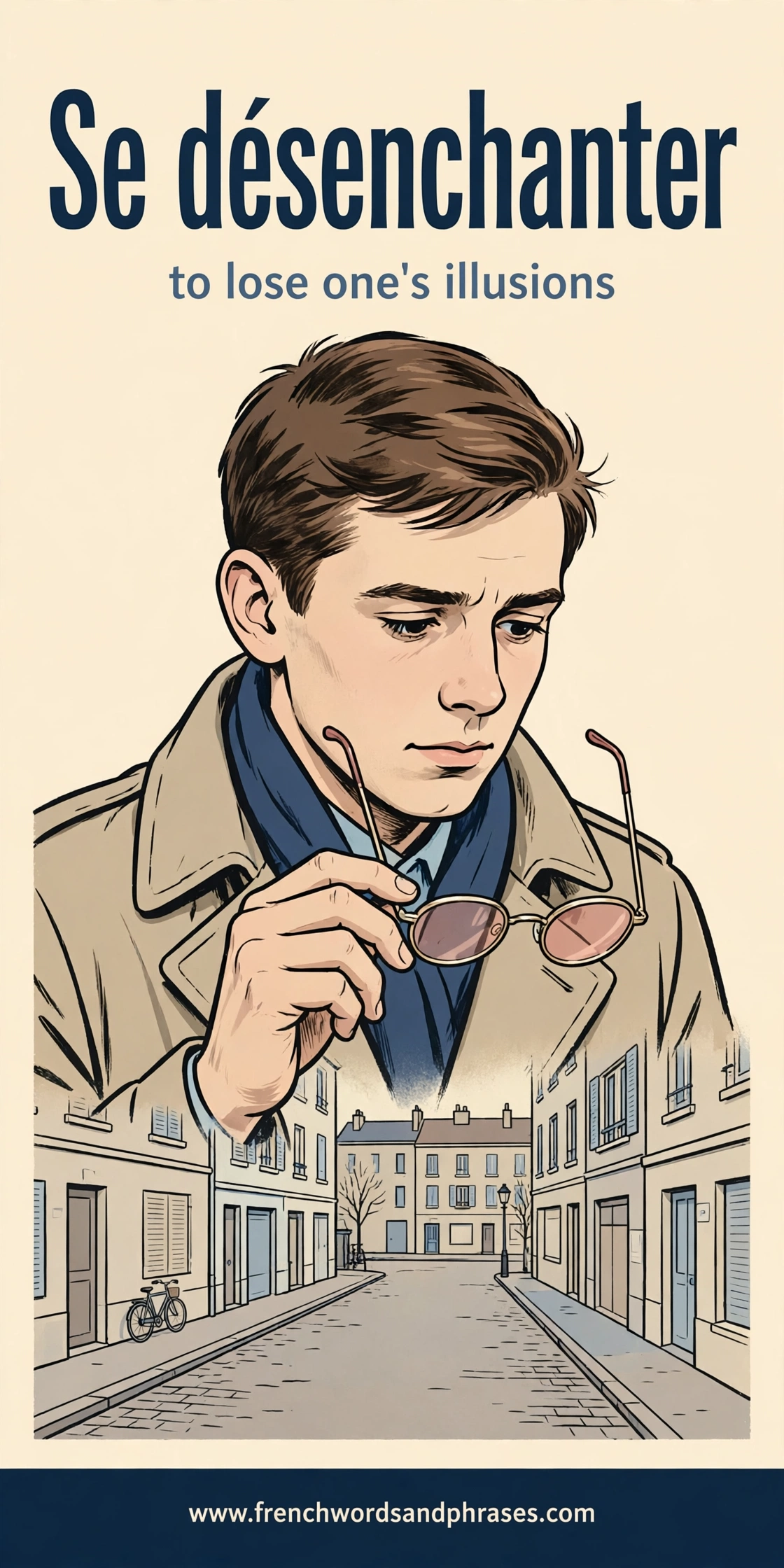
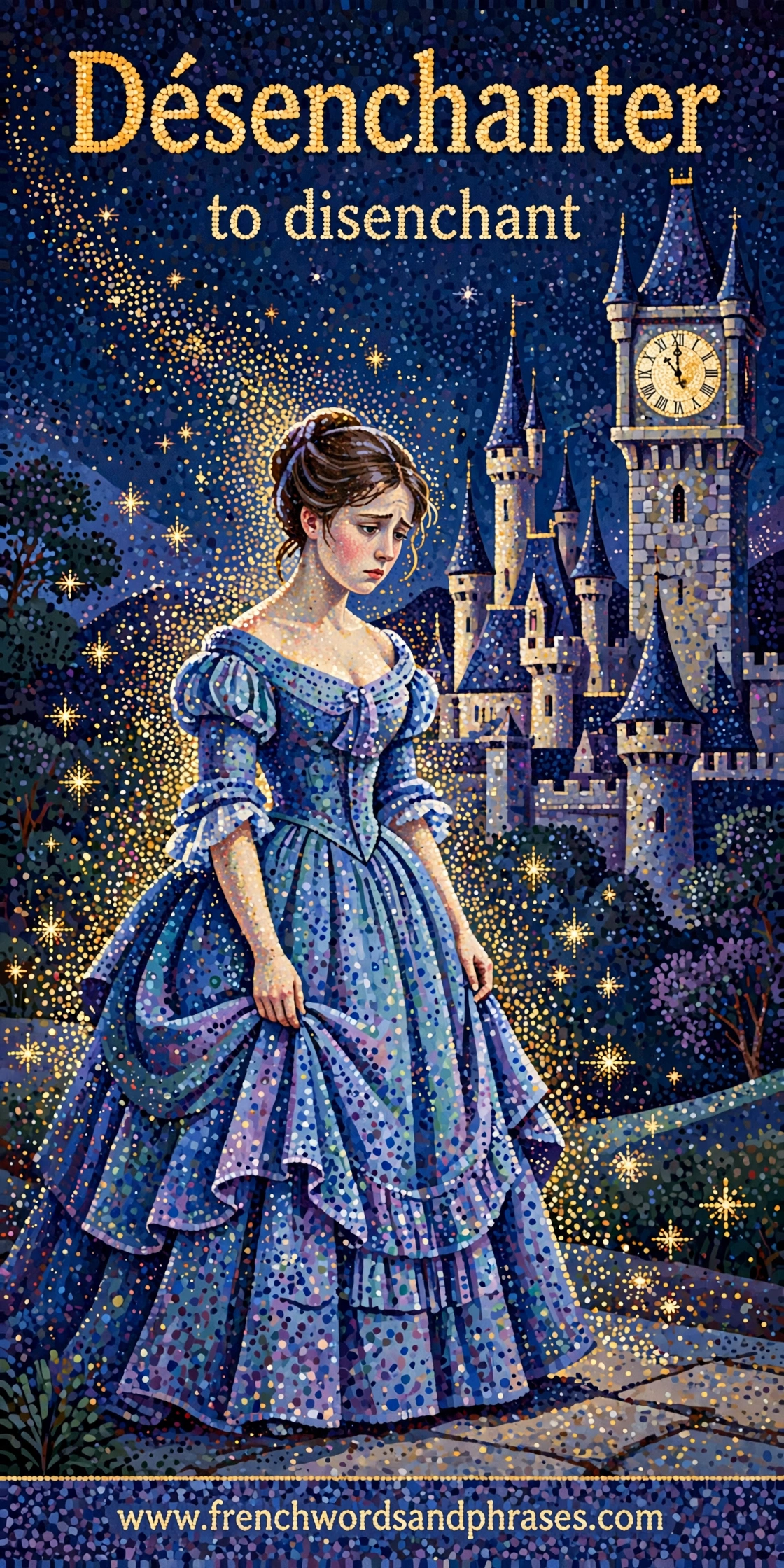
Désenchanter means to disenchant — to break the spell over someone, whether a fairy’s spell in a tale or the spell of an illusion in real life.
A prince trapped in a frog’s body waiting for the spell to break, a crowd drifting away from a leader it once adored — désenchanter is the verb of the spell lifting: magic undone, eyes opened.
In this guide, you’ll learn how to conjugate désenchanter in all the major French tenses and moods. Explore complete conjugation tables, French examples, English translations, and practice quizzes.
Understanding the French Verb Désenchanter
Désenchanter is a regular French verb belonging to the first group of verbs, those ending in-er.
It means to disenchant. It is used in tales for victims of enchantment restored to themselves, and in modern prose for anything that strips away an illusion — a speech, a scandal, a disappointment that désenchante voters, fans or lovers. Its noun, le désenchantement, is famous: le désenchantement du monde, the disenchantment of the world.
Verb classification: First group (-er)
Auxiliary verb: Avoir
Past participle: désenchanté
Present participle: désenchantant
English equivalents: To disenchant, to break the spell over, to disillusion; désenchanter un prince — to disenchant a prince; désenchanter les électeurs — to disenchant the voters; le désenchantement — disenchantment.
One important detail: désenchanter is enchanter reversed — enchanter casts the spell (its root is chant, a song: spells were sung), and désenchanter breaks it. The verb is regular: je désenchante, nous désenchantons. It works in both its worlds: in fairy tales a kiss or a counter-spell désenchante the victim; in politics and love, reality does the job — les promesses non tenues ont désenchanté les électeurs.
Experience the Word
Désenchanter is the verb of waking up — the spell, sweet or sinister, loses its power and the world is ordinary again.
Imagine the frog prince at the edge of the pond, a hundred years into his enchantment. The princess keeps her promise, the old magic cracks like ice on the water — elle l’a désenchanté, and a bewildered young man is standing in the reeds, blinking at his own hands.
The pond has not changed at all. He has been disenchanted — désenchanté — and ordinary life feels miraculous.
How to Conjugate Désenchanter: Complete French Conjugation Guide
Let’s explore every major conjugation of désenchanter, beginning with the indicative mood.
How to Conjugate Désenchanter in the Indicative Mood
The indicative mood is used to express facts, observations, actions, and events.
How to Conjugate Désenchanter in the Present Tense (Présent)
Used for actions happening now, habitual actions, and general truths.
| Subject | Conjugation |
|---|---|
| je | désenchante |
| tu | désenchantes |
| il / elle | désenchante |
| nous | désenchantons |
| vous | désenchantez |
| ils / elles | désenchantent |
Example
La réalité désenchante vite les rêveurs.
Reality quickly disenchants dreamers.
Quick Quiz 1
Complete the sentence:
Nous ______ rarement les rêveurs.
Reveal the answer
désenchantons
Nous désenchantons rarement les rêveurs.
We rarely disenchant dreamers.
How to Conjugate Désenchanter in the Passé Composé
Used for completed actions in the past. Désenchanter takes the auxiliary verb avoir.
| Subject | Conjugation |
|---|---|
| j’ | ai désenchanté |
| tu | as désenchanté |
| il / elle | a désenchanté |
| nous | avons désenchanté |
| vous | avez désenchanté |
| ils / elles | ont désenchanté |
Example
Son discours a désenchanté les électeurs.
His speech disenchanted the voters.
How to Conjugate Désenchanter in the Imparfait (Imperfect Tense)
Used for habitual past actions, descriptions, and ongoing situations in the past.
| Subject | Conjugation |
|---|---|
| je | désenchantais |
| tu | désenchantais |
| il / elle | désenchantait |
| nous | désenchantions |
| vous | désenchantiez |
| ils / elles | désenchantaient |
Example
Peu à peu, la vie désenchantait le jeune poète.
Little by little, life was disenchanting the young poet.
Quick Quiz 2
Choose the correct form:
The defeat had disenchanted them.
La défaite ______ . (les avait désenchantés / s’était désenchantée)
Reveal the answer
les avait désenchantés
La défaite les avait désenchantés.
Désenchanter takes avoir.
How to Conjugate Désenchanter in the Plus-que-parfait
Used to describe an action that had already been completed before another past event.
| Subject | Conjugation |
|---|---|
| j’ | avais désenchanté |
| tu | avais désenchanté |
| il / elle | avait désenchanté |
| nous | avions désenchanté |
| vous | aviez désenchanté |
| ils / elles | avaient désenchanté |
Example
La défaite les avait désenchantés pour longtemps.
The defeat had disenchanted them for a long time.
How to Conjugate Désenchanter in the Passé Simple
Primarily used in formal writing, literature, and historical narratives. It is rarely used in everyday conversation.
| Subject | Conjugation |
|---|---|
| je | désenchantai |
| tu | désenchantas |
| il / elle | désenchanta |
| nous | désenchantâmes |
| vous | désenchantâtes |
| ils / elles | désenchantèrent |
Example
Un baiser désenchanta le prince changé en grenouille.
A kiss disenchanted the prince turned into a frog.
How to Conjugate Désenchanter in the Passé Antérieur
A literary tense used to express an action completed immediately before another past action, generally in the passé simple.
| Subject | Conjugation |
|---|---|
| j’ | eus désenchanté |
| tu | eus désenchanté |
| il / elle | eut désenchanté |
| nous | eûmes désenchanté |
| vous | eûtes désenchanté |
| ils / elles | eurent désenchanté |
Example
Quand la fée eut désenchanté le prince, la cour se réveilla.
When the fairy had disenchanted the prince, the court awoke.
How to Conjugate Désenchanter in the Future Tense (Futur Simple)
Used to describe actions that will take place in the future.
| Subject | Conjugation |
|---|---|
| je | désenchanterai |
| tu | désenchanteras |
| il / elle | désenchantera |
| nous | désenchanterons |
| vous | désenchanterez |
| ils / elles | désenchanteront |
Example
Ce voyage ne te désenchantera pas, promis.
This trip will not disenchant you, I promise.
How to Conjugate Désenchanter in the Futur Antérieur (Future Perfect)
Used for an action that will have been completed before a particular point in the future.
| Subject | Conjugation |
|---|---|
| j’ | aurai désenchanté |
| tu | auras désenchanté |
| il / elle | aura désenchanté |
| nous | aurons désenchanté |
| vous | aurez désenchanté |
| ils / elles | auront désenchanté |
Example
À la fin du conte, la fée aura désenchanté tout le château.
By the end of the tale, the fairy will have disenchanted the whole castle.
How to Conjugate Désenchanter in the Near Future (Futur Proche)
Used to describe something that is going to happen soon. Formed with aller + infinitive.
| Subject | Conjugation |
|---|---|
| je | vais désenchanter |
| tu | vas désenchanter |
| il / elle | va désenchanter |
| nous | allons désenchanter |
| vous | allez désenchanter |
| ils / elles | vont désenchanter |
Example
Ce rapport va désenchanter les plus optimistes.
This report is going to disenchant the most optimistic.
How to Conjugate Désenchanter in the Conditional Mood
The conditional mood expresses what would happen under certain circumstances. It is also frequently used to make polite requests or express wishes.
How to Conjugate Désenchanter in the Present Conditional
| Subject | Conjugation |
|---|---|
| je | désenchanterais |
| tu | désenchanterais |
| il / elle | désenchanterait |
| nous | désenchanterions |
| vous | désenchanteriez |
| ils / elles | désenchanteraient |
Example
Rien ne désenchanterait un enfant devant la mer.
Nothing would disenchant a child in front of the sea.
How to Conjugate Désenchanter in the Past Conditional
| Subject | Conjugation |
|---|---|
| j’ | aurais désenchanté |
| tu | aurais désenchanté |
| il / elle | aurait désenchanté |
| nous | aurions désenchanté |
| vous | auriez désenchanté |
| ils / elles | auraient désenchanté |
Example
La pluie aurait désenchanté la fête sans le chapiteau.
The rain would have disenchanted the party without the marquee.
Désenchanter in the Literary Past Conditional Form
This less common literary form uses the imperfect subjunctive of avoir.
| Subject | Conjugation |
|---|---|
| j’ | eusse désenchanté |
| tu | eusses désenchanté |
| il / elle | eût désenchanté |
| nous | eussions désenchanté |
| vous | eussiez désenchanté |
| ils / elles | eussent désenchanté |
Example
La fée eût désenchanté le prince sans le sort contraire.
The fairy would have disenchanted the prince without the counter-spell.
How to Conjugate Désenchanter in the Subjunctive Mood
The subjunctive is used to express wishes, emotions, doubts, necessity, and uncertainty. It frequently follows expressions such as il faut que (it is necessary that) or bien que (although).
How to Conjugate Désenchanter in the Present Subjunctive
| Subject | Conjugation |
|---|---|
| que je | désenchante |
| que tu | désenchantes |
| qu’il / qu’elle | désenchante |
| que nous | désenchantions |
| que vous | désenchantiez |
| qu’ils / qu’elles | désenchantent |
Example
Je ne veux pas que ce livre désenchante les enfants.
I do not want this book to disenchant the children.
Quick Quiz 3
Complete the sentence using the subjunctive:
On craint que l’âge ______ le poète.
Reveal the answer
désenchante
On craint que l’âge désenchante le poète.
People fear age will disenchant the poet.
How to Conjugate Désenchanter in the Imperfect Subjunctive
A literary tense, rarely encountered in modern spoken French.
| Subject | Conjugation |
|---|---|
| que je | désenchantasse |
| que tu | désenchantasses |
| qu’il / qu’elle | désenchantât |
| que nous | désenchantassions |
| que vous | désenchantassiez |
| qu’ils / qu’elles | désenchantassent |
Example
On craignait que l’âge désenchantât le poète.
People feared age might disenchant the poet.
How to Conjugate Désenchanter in the Pluperfect Subjunctive
A literary construction used to express an action completed before another past action.
| Subject | Conjugation |
|---|---|
| que j’ | eusse désenchanté |
| que tu | eusses désenchanté |
| qu’il / qu’elle | eût désenchanté |
| que nous | eussions désenchanté |
| que vous | eussiez désenchanté |
| qu’ils / qu’elles | eussent désenchanté |
Example
Le conte disait que la fée eût désenchanté le château entier.
The tale said the fairy had disenchanted the whole castle.
How to Conjugate Désenchanter in the Past Subjunctive
| Subject | Conjugation |
|---|---|
| que j’ | aie désenchanté |
| que tu | aies désenchanté |
| qu’il / qu’elle | ait désenchanté |
| que nous | ayons désenchanté |
| que vous | ayez désenchanté |
| qu’ils / qu’elles | aient désenchanté |
Example
C’est dommage que ce scandale ait désenchanté les électeurs.
It is a pity this scandal disenchanted the voters.
How to Conjugate Désenchanter in the Imperative
The imperative is used to give commands, instructions, invitations, or suggestions. Subject pronouns are omitted.
How to Conjugate Désenchanter in the Present Imperative
| Person | Conjugation |
|---|---|
| (tu) | désenchante |
| (nous) | désenchantons |
| (vous) | désenchantez |
Example
Ne désenchante pas les enfants, laisse-leur la magie !
Do not disenchant the children, leave them the magic!
Quick Quiz 4
How would you say Do not disenchant the children (tu form)?
Reveal the answer
Ne désenchante pas les enfants !
French Participles of Désenchanter
Participles are verb forms that can be used in compound tenses and other grammatical constructions.
Present Participle of Désenchanter
désenchantant
En désenchantant le prince, la fée a brisé le vieux sort.
By disenchanting the prince, the fairy broke the old spell.
Past Participle of Désenchanter
désenchanté
Désenchanté par la politique, il ne vote plus.
Disenchanted by politics, he no longer votes.
Désenchanter in Everyday French: Real-Life Examples
Now that you know the conjugations, let’s see how désenchanter appears in everyday French.
Example 1 — Present
La réalité désenchante les rêveurs.
Reality disenchants dreamers.
Example 2 — Passé composé
Son discours a désenchanté les électeurs.
His speech disenchanted the voters.
Example 3 — Imparfait
La vie désenchantait le poète.
Life was disenchanting the poet.
Example 4 — Future
Ce voyage ne te désenchantera pas.
This trip will not disenchant you.
Example 5 — Conditional
Rien ne désenchanterait un enfant devant la mer.
Nothing would disenchant a child in front of the sea.
Example 6 — Imperative
Ne désenchante pas les enfants !
Do not disenchant the children!
Beyond Translation: The Meaning of Désenchanter
English disenchant is the same word wearing the same Latin root: incantare, to sing a spell over someone — an enchantment was originally a song.
To désenchanter is to stop the song.
The sociologist Max Weber made the noun immortal — le désenchantement du monde, the disenchantment of the world — but the verb still does its older, kinder work in the tales, where the song stops and the prince comes back.
How to Remember the French Verb Désenchanter
Remember it this way: Désenchanter is about the kiss that breaks the spell on the frog prince.
- Enchanter casts the spell; désenchanter breaks it — a kiss in the tales, reality in the newspapers.
- Its famous noun is le désenchantement — as in le désenchantement du monde.
- Regular -er: je désenchante, nous désenchantons, past participle désenchanté.
The key idea is the kiss that breaks the spell on the frog prince.
Test Your Knowledge of Désenchanter
Let’s see how much you’ve learned. Try answering these questions before revealing the answers.
Question 1
What is le désenchantement du monde?
Reveal the answer
The disenchantment of the world — Weber’s famous phrase for the modern loss of magic; désenchanter is its verb.
Question 2
How do you say His speech disenchanted the voters in French?
Reveal the answer
Son discours a désenchanté les électeurs.
Question 3
Translate: A kiss disenchanted the prince.
Reveal the answer
Un baiser a désenchanté le prince.
Question 4
What is the past participle of désenchanter?
Reveal the answer
Désenchanté.
Question 5
Complete the sentence:
Je ne veux pas que ce livre ______ les enfants.
Reveal the answer
désenchante
Je ne veux pas que ce livre désenchante les enfants.
I do not want this book to disenchant the children.
Your Final Challenge
Can You Use It?
How would you say this in French?
Reality disenchants the dreamers, but it spares the poets.
Reveal the answer
La réalité désenchante les rêveurs, mais elle épargne les poètes.
Reality disenchants the dreamers, but it spares the poets.
A little French. A little curiosity. A richer everyday life.
LEARN FRENCH ONE WORD AT A TIME