A French Word to Live By
How to Conjugate Désenchaîner in French
/de.zɑ̃.ʃɛ.ne/
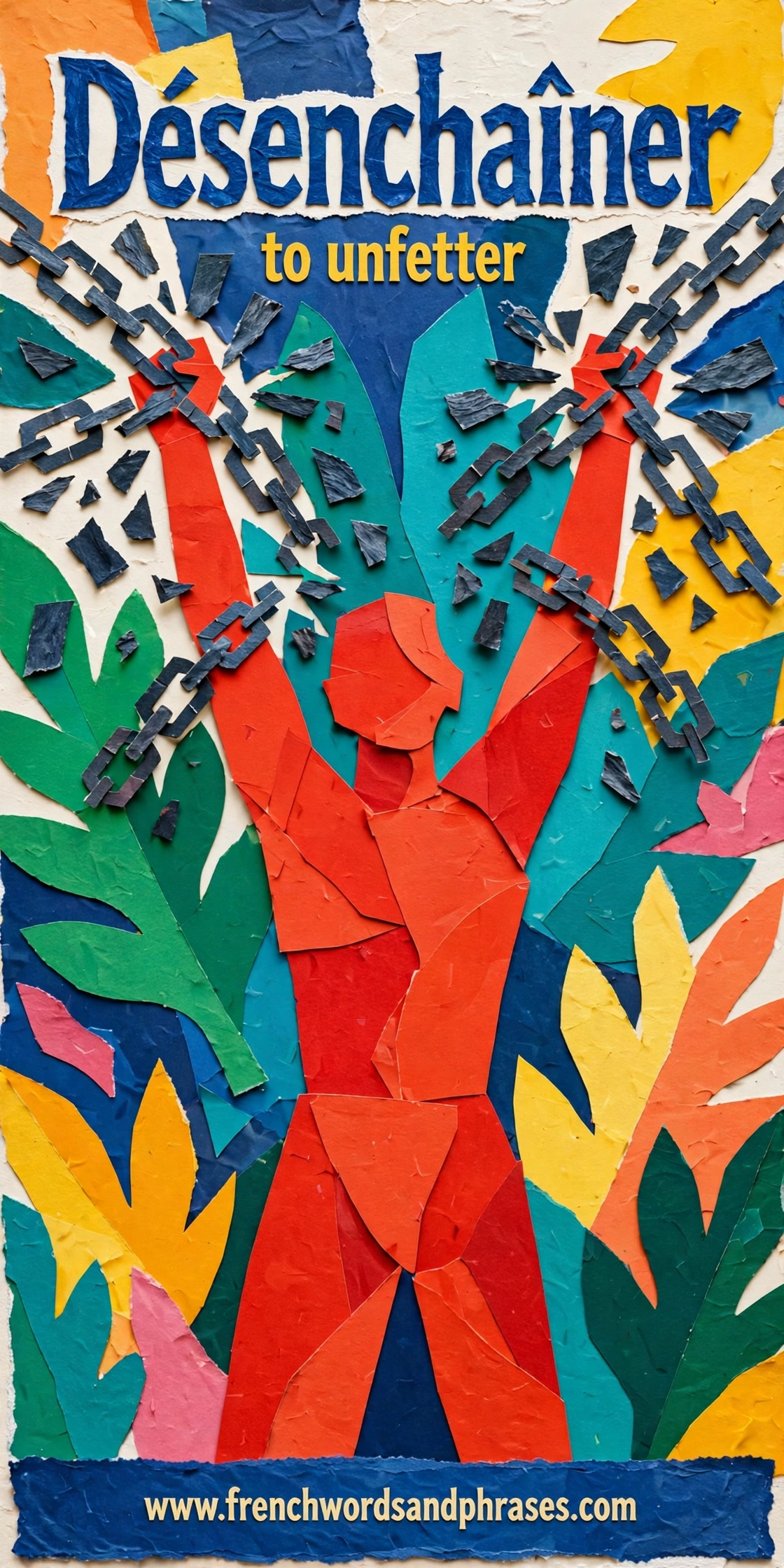
Désenchaîner means to unfetter — to take the chains off a prisoner, a dog or a bicycle, and give back the freedom to move.
A gaoler’s key in an iron lock, a farm dog waiting for its evening run, a bicycle padlocked to a city railing — désenchaîner is the verb of chains coming off: iron links opened, freedom handed back.
In this guide, you’ll learn how to conjugate désenchaîner in all the major French tenses and moods. Explore complete conjugation tables, French examples, English translations, and practice quizzes.
Understanding the French Verb Désenchaîner
Désenchaîner is a regular French verb belonging to the first group of verbs, those ending in-er.
It means to unfetter. It is used of prisoners and captives in stories and history, of guard dogs let off for the night, and — its most everyday modern scene — of bicycles unchained from railings and posts. Figuratively it can free anything that was literally or symbolically kept in chains.
Verb classification: First group (-er)
Auxiliary verb: Avoir
Past participle: désenchaîné
Present participle: désenchaînant
English equivalents: To unfetter, to unchain, to release from chains; désenchaîner un prisonnier — to unchain a prisoner; désenchaîner son vélo — to unchain one’s bicycle; désenchaîner le chien — to let the dog off its chain.
One important detail: désenchaîner must not be confused with its close neighbour déchaîner. Déchaîner means to unleash — storms, crowds and passions se déchaînent. Désenchaîner means to take chains off: a prisoner, a dog, a bicycle at a railing. The circumflex on the î never moves: je désenchaîne, nous désenchaînons, ils désenchaînent. If there is a literal chain and a literal lock, désenchaîner is your verb.
Experience the Word
Désenchaîner is the verb of the opening padlock — the small click that ends a captivity, whether of a prisoner or of a bicycle.
Imagine the evening ritual at a farm. All day the great dog has watched the yard from the end of his chain. The farmer crosses the yard with the key, kneels, and le désenchaîne — and the dog explodes into his one great circuit of freedom, round the barn, round the well, back to the hand that freed him.
The chain is only iron on the ground now. The dog has been unfettered — désenchaîné — and the yard is his again.
How to Conjugate Désenchaîner: Complete French Conjugation Guide
Let’s explore every major conjugation of désenchaîner, beginning with the indicative mood.
How to Conjugate Désenchaîner in the Indicative Mood
The indicative mood is used to express facts, observations, actions, and events.
How to Conjugate Désenchaîner in the Present Tense (Présent)
Used for actions happening now, habitual actions, and general truths.
| Subject | Conjugation |
|---|---|
| je | désenchaîne |
| tu | désenchaînes |
| il / elle | désenchaîne |
| nous | désenchaînons |
| vous | désenchaînez |
| ils / elles | désenchaînent |
Example
Le gardien désenchaîne le prisonnier à la porte de la prison.
The warder unchains the prisoner at the prison gate.
Quick Quiz 1
Complete the sentence:
Nous ______ le chien pour la nuit.
Reveal the answer
désenchaînons
Nous désenchaînons le chien pour la nuit.
We unchain the dog for the night.
How to Conjugate Désenchaîner in the Passé Composé
Used for completed actions in the past. Désenchaîner takes the auxiliary verb avoir.
| Subject | Conjugation |
|---|---|
| j’ | ai désenchaîné |
| tu | as désenchaîné |
| il / elle | a désenchaîné |
| nous | avons désenchaîné |
| vous | avez désenchaîné |
| ils / elles | ont désenchaîné |
Example
On a désenchaîné le chien pour la nuit.
They unchained the dog for the night.
How to Conjugate Désenchaîner in the Imparfait (Imperfect Tense)
Used for habitual past actions, descriptions, and ongoing situations in the past.
| Subject | Conjugation |
|---|---|
| je | désenchaînais |
| tu | désenchaînais |
| il / elle | désenchaînait |
| nous | désenchaînions |
| vous | désenchaîniez |
| ils / elles | désenchaînaient |
Example
Chaque soir, le fermier désenchaînait son chien de garde.
Every evening, the farmer used to unchain his guard dog.
Quick Quiz 2
Choose the correct form:
The gaoler unchained the captive.
Le geôlier ______ le captif. (a désenchaîné / est désenchaîné)
Reveal the answer
a désenchaîné
Le geôlier a désenchaîné le captif.
Désenchaîner takes avoir.
How to Conjugate Désenchaîner in the Plus-que-parfait
Used to describe an action that had already been completed before another past event.
| Subject | Conjugation |
|---|---|
| j’ | avais désenchaîné |
| tu | avais désenchaîné |
| il / elle | avait désenchaîné |
| nous | avions désenchaîné |
| vous | aviez désenchaîné |
| ils / elles | avaient désenchaîné |
Example
Ils avaient désenchaîné les prisonniers avant l’aube.
They had unchained the prisoners before dawn.
How to Conjugate Désenchaîner in the Passé Simple
Primarily used in formal writing, literature, and historical narratives. It is rarely used in everyday conversation.
| Subject | Conjugation |
|---|---|
| je | désenchaînai |
| tu | désenchaînas |
| il / elle | désenchaîna |
| nous | désenchaînâmes |
| vous | désenchaînâtes |
| ils / elles | désenchaînèrent |
Example
Le geôlier désenchaîna le captif et ouvrit la porte.
The gaoler unchained the captive and opened the door.
How to Conjugate Désenchaîner in the Passé Antérieur
A literary tense used to express an action completed immediately before another past action, generally in the passé simple.
| Subject | Conjugation |
|---|---|
| j’ | eus désenchaîné |
| tu | eus désenchaîné |
| il / elle | eut désenchaîné |
| nous | eûmes désenchaîné |
| vous | eûtes désenchaîné |
| ils / elles | eurent désenchaîné |
Example
Quand on eut désenchaîné le chien, il courut dans la cour.
When they had unchained the dog, it ran into the yard.
How to Conjugate Désenchaîner in the Future Tense (Futur Simple)
Used to describe actions that will take place in the future.
| Subject | Conjugation |
|---|---|
| je | désenchaînerai |
| tu | désenchaîneras |
| il / elle | désenchaînera |
| nous | désenchaînerons |
| vous | désenchaînerez |
| ils / elles | désenchaîneront |
Example
Demain, on désenchaînera les détenus libérés.
Tomorrow, they will unchain the released prisoners.
How to Conjugate Désenchaîner in the Futur Antérieur (Future Perfect)
Used for an action that will have been completed before a particular point in the future.
| Subject | Conjugation |
|---|---|
| j’ | aurai désenchaîné |
| tu | auras désenchaîné |
| il / elle | aura désenchaîné |
| nous | aurons désenchaîné |
| vous | aurez désenchaîné |
| ils / elles | auront désenchaîné |
Example
À midi, le gardien aura désenchaîné tous les chiens du chenil.
By noon, the keeper will have unchained all the dogs in the kennel.
How to Conjugate Désenchaîner in the Near Future (Futur Proche)
Used to describe something that is going to happen soon. Formed with aller + infinitive.
| Subject | Conjugation |
|---|---|
| je | vais désenchaîner |
| tu | vas désenchaîner |
| il / elle | va désenchaîner |
| nous | allons désenchaîner |
| vous | allez désenchaîner |
| ils / elles | vont désenchaîner |
Example
Le fermier va désenchaîner son chien.
The farmer is going to unchain his dog.
How to Conjugate Désenchaîner in the Conditional Mood
The conditional mood expresses what would happen under certain circumstances. It is also frequently used to make polite requests or express wishes.
How to Conjugate Désenchaîner in the Present Conditional
| Subject | Conjugation |
|---|---|
| je | désenchaînerais |
| tu | désenchaînerais |
| il / elle | désenchaînerait |
| nous | désenchaînerions |
| vous | désenchaîneriez |
| ils / elles | désenchaîneraient |
Example
Sans la clé, personne ne désenchaînerait le prisonnier.
Without the key, nobody would unchain the prisoner.
How to Conjugate Désenchaîner in the Past Conditional
| Subject | Conjugation |
|---|---|
| j’ | aurais désenchaîné |
| tu | aurais désenchaîné |
| il / elle | aurait désenchaîné |
| nous | aurions désenchaîné |
| vous | auriez désenchaîné |
| ils / elles | auraient désenchaîné |
Example
J’aurais désenchaîné le chien si la cour avait été fermée.
I would have unchained the dog if the yard had been enclosed.
Désenchaîner in the Literary Past Conditional Form
This less common literary form uses the imperfect subjunctive of avoir.
| Subject | Conjugation |
|---|---|
| j’ | eusse désenchaîné |
| tu | eusses désenchaîné |
| il / elle | eût désenchaîné |
| nous | eussions désenchaîné |
| vous | eussiez désenchaîné |
| ils / elles | eussent désenchaîné |
Example
Le gardien eût désenchaîné le captif sans l’ordre du juge.
The keeper would have unchained the captive without the judge’s order.
How to Conjugate Désenchaîner in the Subjunctive Mood
The subjunctive is used to express wishes, emotions, doubts, necessity, and uncertainty. It frequently follows expressions such as il faut que (it is necessary that) or bien que (although).
How to Conjugate Désenchaîner in the Present Subjunctive
| Subject | Conjugation |
|---|---|
| que je | désenchaîne |
| que tu | désenchaînes |
| qu’il / qu’elle | désenchaîne |
| que nous | désenchaînions |
| que vous | désenchaîniez |
| qu’ils / qu’elles | désenchaînent |
Example
Il faut que tu désenchaînes le vélo avant de partir.
You must unchain the bicycle before leaving.
Quick Quiz 3
Complete the sentence using the subjunctive:
Il faut que vous ______ les chiens du chenil.
Reveal the answer
désenchaîniez
Il faut que vous désenchaîniez les chiens du chenil.
You must unchain the dogs in the kennel.
How to Conjugate Désenchaîner in the Imperfect Subjunctive
A literary tense, rarely encountered in modern spoken French.
| Subject | Conjugation |
|---|---|
| que je | désenchaînasse |
| tu | désenchaînasses |
| qu’il / qu’elle | désenchaînât |
| que nous | désenchaînassions |
| que vous | désenchaînassiez |
| qu’ils / qu’elles | désenchaînassent |
Example
On attendait que le gardien désenchaînât les prisonniers.
They waited for the keeper to unchain the prisoners.
How to Conjugate Désenchaîner in the Pluperfect Subjunctive
A literary construction used to express an action completed before another past action.
| Subject | Conjugation |
|---|---|
| que j’ | eusse désenchaîné |
| que tu | eusses désenchaîné |
| qu’il / qu’elle | eût désenchaîné |
| que nous | eussions désenchaîné |
| que vous | eussiez désenchaîné |
| qu’ils / qu’elles | eussent désenchaîné |
Example
On racontait que le peuple eût désenchaîné les captifs de la Bastille.
People said the crowd had unchained the captives of the Bastille.
How to Conjugate Désenchaîner in the Past Subjunctive
| Subject | Conjugation |
|---|---|
| que j’ | aie désenchaîné |
| que tu | aies désenchaîné |
| qu’il / qu’elle | ait désenchaîné |
| que nous | ayons désenchaîné |
| que vous | ayez désenchaîné |
| qu’ils / qu’elles | aient désenchaîné |
Example
Je suis content qu’on ait désenchaîné le chien.
I am glad they unchained the dog.
How to Conjugate Désenchaîner in the Imperative
The imperative is used to give commands, instructions, invitations, or suggestions. Subject pronouns are omitted.
How to Conjugate Désenchaîner in the Present Imperative
| Person | Conjugation |
|---|---|
| (tu) | désenchaîne |
| (nous) | désenchaînons |
| (vous) | désenchaînez |
Example
Désenchaîne ton vélo, on part dans cinq minutes !
Unchain your bicycle, we are leaving in five minutes!
Quick Quiz 4
How would you say Unchain your bicycle (tu form)?
Reveal the answer
Désenchaîne ton vélo !
French Participles of Désenchaîner
Participles are verb forms that can be used in compound tenses and other grammatical constructions.
Present Participle of Désenchaîner
désenchaînant
En désenchaînant le chien, il lui a rendu sa liberté.
By unchaining the dog, he gave it back its freedom.
Past Participle of Désenchaîner
désenchaîné
Désenchaîné après des années, le chien hésitait à courir.
Unchained after years, the dog hesitated to run.
Désenchaîner in Everyday French: Real-Life Examples
Now that you know the conjugations, let’s see how désenchaîner appears in everyday French.
Example 1 — Present
Le gardien désenchaîne le prisonnier.
The warder unchains the prisoner.
Example 2 — Passé composé
On a désenchaîné le chien.
They unchained the dog.
Example 3 — Imparfait
Le fermier désenchaînait son chien.
The farmer used to unchain his dog.
Example 4 — Future
On désenchaînera les détenus demain.
They will unchain the prisoners tomorrow.
Example 5 — Conditional
Je désenchaînerais le chien si la cour était fermée.
I would unchain the dog if the yard were enclosed.
Example 6 — Imperative
Désenchaîne ton vélo !
Unchain your bicycle!
Beyond Translation: The Meaning of Désenchaîner
The root is la chaîne, the chain — and French mythology keeps its most famous chained figure, Prométhée enchaîné, Prometheus Bound, punished on his rock.
To désenchaîner is to play the liberating god for a moment.
Most modern désenchaînements are humbler — a padlock, a railing, a bicycle at the end of the working day — but the verb keeps its old grandeur: chains off, freedom back.
How to Remember the French Verb Désenchaîner
Remember it this way: Désenchaîner is about the key turning in the bicycle chain’s padlock.
- Literal chains only: désenchaîner takes them OFF (a prisoner, a dog, a bike); déchaîner unleashes storms and passions.
- The î never moves: je désenchaîne, nous désenchaînons, en désenchaînant.
- Regular -er: past participle désenchaîné, and the commonest modern scene is a bicycle at a railing.
The key idea is the key turning in the bicycle chain’s padlock.
Test Your Knowledge of Désenchaîner
Let’s see how much you’ve learned. Try answering these questions before revealing the answers.
Question 1
What is the difference between désenchaîner and déchaîner?
Reveal the answer
Désenchaîner takes chains off (a prisoner, a dog, a bike); déchaîner unleashes — storms, crowds, passions.
Question 2
How do you say They unchained the dog for the night in French?
Reveal the answer
On a désenchaîné le chien pour la nuit.
Question 3
Translate: You must unchain the bicycle before leaving.
Reveal the answer
Il faut que tu désenchaînes le vélo avant de partir.
Question 4
What is the past participle of désenchaîner?
Reveal the answer
Désenchaîné.
Question 5
Complete the sentence:
Chaque soir, le fermier ______ son chien de garde.
Reveal the answer
désenchaînait
Chaque soir, le fermier désenchaînait son chien de garde.
Every evening, the farmer unchained his guard dog.
Your Final Challenge
Can You Use It?
How would you say this in French?
He unchains his old bicycle, and the morning city opens up before him.
Reveal the answer
Il désenchaîne son vieux vélo, et la ville du matin s’ouvre devant lui.
He unchains his old bicycle, and the morning city opens up before him.
A little French. A little curiosity. A richer everyday life.
LEARN FRENCH ONE WORD AT A TIME