A French Word to Live By
How to Conjugate Désemprisonner in French
/de.zɑ̃.pʁi.zɔ.ne/
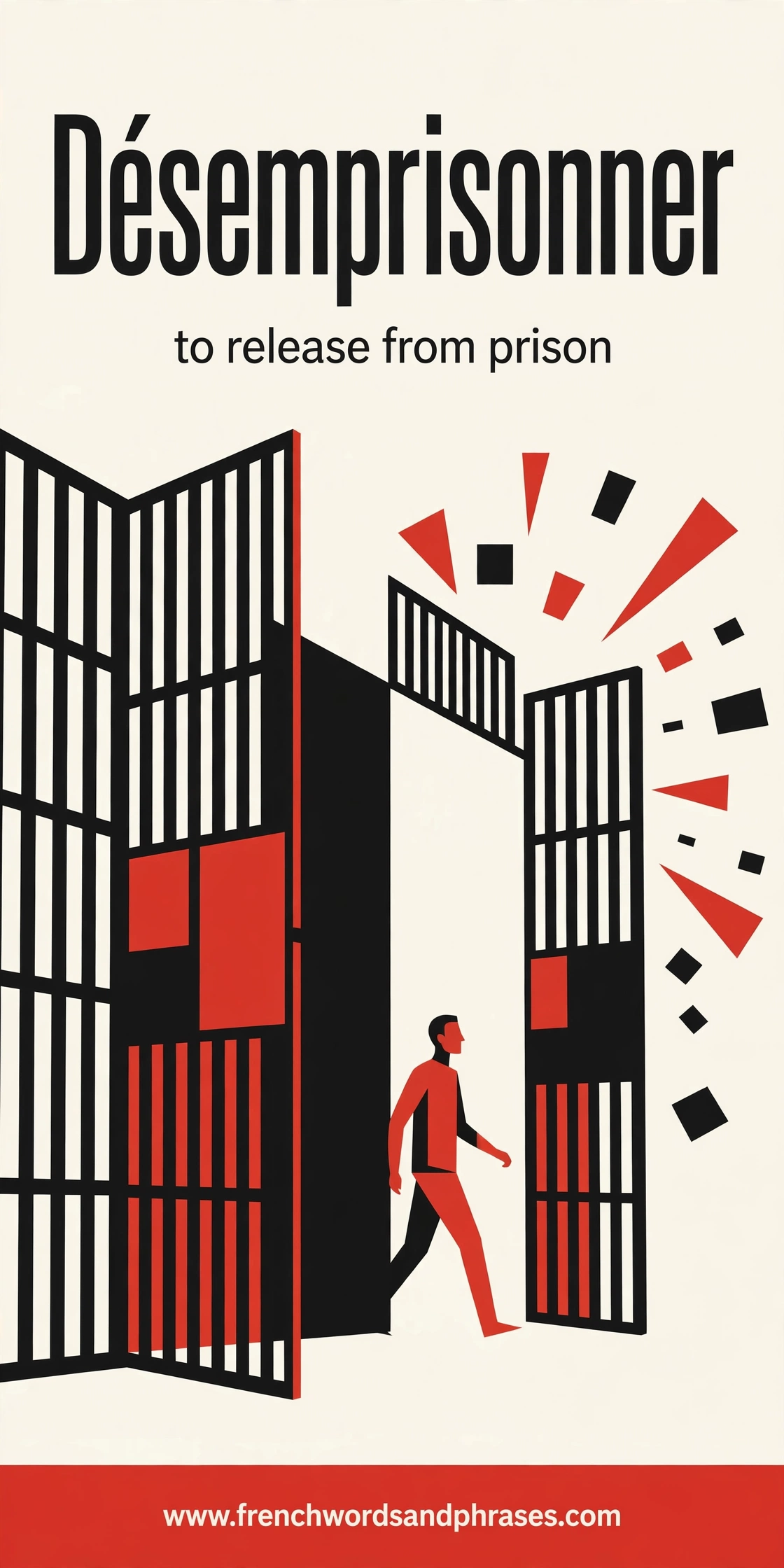
Désemprisonner means to release from prison — to open the cell door and give a prisoner back the sky.
A heavy key turning at dawn, a name called from a list, a man blinking in the courtyard light after twenty years — désemprisonner is the solemn reverse of emprisonner: the gate opening from the inside.
In this guide, you’ll learn how to conjugate désemprisonner in all the major French tenses and moods. Explore complete conjugation tables, French examples, English translations, and practice quizzes.
Understanding the French Verb Désemprisonner
Désemprisonner is a regular French verb belonging to the first group of verbs, those ending in-er.
It means to release from prison. It is used of judges, kings, governments and amnesty laws releasing prisoners — rarely of a single warder with a key. The word carries ceremony: where libérer is the act, désemprisonner is the un-prisoning, the formal undoing of an emprisonnement.
Verb classification: First group (-er)
Auxiliary verb: Avoir
Past participle: désemprisonné
Present participle: désemprisonnant
English equivalents: To release from prison, to free, to let out; désemprisonner un détenu — to release a prisoner; désemprisonner les innocents — to free the innocent; une amnistie désemprisonne — an amnesty empties the prisons.
One important detail: désemprisonner is the exact reverse of emprisonner, to imprison — dés- takes the prison off the person. It is a perfectly regular -er verb: je désemprisonne, nous désemprisonnons. Its register is elevated: everyday French frees people with libérer or relâcher, while désemprisonner belongs to decrees, amnesties, histories and novels — the word of kings opening gaols and laws emptying cells.
Experience the Word
Désemprisonner is the verb of the opening gate — authority reversing itself, the lock turning the other way.
Imagine the morning of a royal amnesty in an old fortress town. The clerk reads the names from the palace steps; one by one the men come blinking into the square — le roi les a désemprisonnés, and the bells, unsure whether to mourn or celebrate, ring anyway.
No wall was stormed and no lock picked. They were released — désemprisonnés — by the same power that had shut them in.
How to Conjugate Désemprisonner: Complete French Conjugation Guide
Let’s explore every major conjugation of désemprisonner, beginning with the indicative mood.
How to Conjugate Désemprisonner in the Indicative Mood
The indicative mood is used to express facts, observations, actions, and events.
How to Conjugate Désemprisonner in the Present Tense (Présent)
Used for actions happening now, habitual actions, and general truths.
| Subject | Conjugation |
|---|---|
| je | désemprisonne |
| tu | désemprisonnes |
| il / elle | désemprisonne |
| nous | désemprisonnons |
| vous | désemprisonnez |
| ils / elles | désemprisonnent |
Example
La nouvelle loi désemprisonne les détenus en fin de peine.
The new law releases prisoners near the end of their sentences.
Quick Quiz 1
Complete the sentence:
Nous ______ les prisonniers graciés.
Reveal the answer
désemprisonnons
Nous désemprisonnons les prisonniers graciés.
We release the pardoned prisoners.
How to Conjugate Désemprisonner in the Passé Composé
Used for completed actions in the past. Désemprisonner takes the auxiliary verb avoir.
| Subject | Conjugation |
|---|---|
| j’ | ai désemprisonné |
| tu | as désemprisonné |
| il / elle | a désemprisonné |
| nous | avons désemprisonné |
| vous | avez désemprisonné |
| ils / elles | ont désemprisonné |
Example
Le juge a désemprisonné le vieil homme après vingt ans.
The judge released the old man from prison after twenty years.
How to Conjugate Désemprisonner in the Imparfait (Imperfect Tense)
Used for habitual past actions, descriptions, and ongoing situations in the past.
| Subject | Conjugation |
|---|---|
| je | désemprisonnais |
| tu | désemprisonnais |
| il / elle | désemprisonnait |
| nous | désemprisonnions |
| vous | désemprisonniez |
| ils / elles | désemprisonnaient |
Example
Chaque année, la grâce royale désemprisonnait quelques condamnés.
Every year, the royal pardon used to release a few convicts.
Quick Quiz 2
Choose the correct form:
The judge released the old man.
Le juge ______ le vieil homme. (a désemprisonné / est désemprisonné)
Reveal the answer
a désemprisonné
Le juge a désemprisonné le vieil homme.
Désemprisonner takes avoir.
How to Conjugate Désemprisonner in the Plus-que-parfait
Used to describe an action that had already been completed before another past event.
| Subject | Conjugation |
|---|---|
| j’ | avais désemprisonné |
| tu | avais désemprisonné |
| il / elle | avait désemprisonné |
| nous | avions désemprisonné |
| vous | aviez désemprisonné |
| ils / elles | avaient désemprisonné |
Example
On avait désemprisonné les otages avant l’aube.
They had freed the hostages before dawn.
How to Conjugate Désemprisonner in the Passé Simple
Primarily used in formal writing, literature, and historical narratives. It is rarely used in everyday conversation.
| Subject | Conjugation |
|---|---|
| je | désemprisonnai |
| tu | désemprisonnas |
| il / elle | désemprisonna |
| nous | désemprisonnâmes |
| vous | désemprisonnâtes |
| ils / elles | désemprisonnèrent |
Example
Le roi désemprisonna les rebelles repentis.
The king released the repentant rebels from prison.
How to Conjugate Désemprisonner in the Passé Antérieur
A literary tense used to express an action completed immediately before another past action, generally in the passé simple.
| Subject | Conjugation |
|---|---|
| j’ | eus désemprisonné |
| tu | eus désemprisonné |
| il / elle | eut désemprisonné |
| nous | eûmes désemprisonné |
| vous | eûtes désemprisonné |
| ils / elles | eurent désemprisonné |
Example
Quand le gardien eut désemprisonné le dernier détenu, la prison ferma.
When the warder had released the last prisoner, the prison closed.
How to Conjugate Désemprisonner in the Future Tense (Futur Simple)
Used to describe actions that will take place in the future.
| Subject | Conjugation |
|---|---|
| je | désemprisonnerai |
| tu | désemprisonneras |
| il / elle | désemprisonnera |
| nous | désemprisonnerons |
| vous | désemprisonnerez |
| ils / elles | désemprisonneront |
Example
La réforme désemprisonnera des milliers de détenus.
The reform will release thousands of prisoners.
How to Conjugate Désemprisonner in the Futur Antérieur (Future Perfect)
Used for an action that will have been completed before a particular point in the future.
| Subject | Conjugation |
|---|---|
| j’ | aurai désemprisonné |
| tu | auras désemprisonné |
| il / elle | aura désemprisonné |
| nous | aurons désemprisonné |
| vous | aurez désemprisonné |
| ils / elles | auront désemprisonné |
Example
À la fin du mois, la loi aura désemprisonné tous les prisonniers âgés.
By the end of the month, the law will have released all the elderly prisoners.
How to Conjugate Désemprisonner in the Near Future (Futur Proche)
Used to describe something that is going to happen soon. Formed with aller + infinitive.
| Subject | Conjugation |
|---|---|
| je | vais désemprisonner |
| tu | vas désemprisonner |
| il / elle | va désemprisonner |
| nous | allons désemprisonner |
| vous | allez désemprisonner |
| ils / elles | vont désemprisonner |
Example
Le directeur va désemprisonner les détenus graciés.
The governor is going to release the pardoned prisoners.
How to Conjugate Désemprisonner in the Conditional Mood
The conditional mood expresses what would happen under certain circumstances. It is also frequently used to make polite requests or express wishes.
How to Conjugate Désemprisonner in the Present Conditional
| Subject | Conjugation |
|---|---|
| je | désemprisonnerais |
| tu | désemprisonnerais |
| il / elle | désemprisonnerait |
| nous | désemprisonnerions |
| vous | désemprisonneriez |
| ils / elles | désemprisonneraient |
Example
Une amnistie désemprisonnerait la moitié des détenus.
An amnesty would release half the prisoners.
How to Conjugate Désemprisonner in the Past Conditional
| Subject | Conjugation |
|---|---|
| j’ | aurais désemprisonné |
| tu | aurais désemprisonné |
| il / elle | aurait désemprisonné |
| nous | aurions désemprisonné |
| vous | auriez désemprisonné |
| ils / elles | auraient désemprisonné |
Example
Le juge aurait désemprisonné l’accusé sans ce témoignage.
The judge would have released the accused without that testimony.
Désemprisonner in the Literary Past Conditional Form
This less common literary form uses the imperfect subjunctive of avoir.
| Subject | Conjugation |
|---|---|
| j’ | eusse désemprisonné |
| tu | eusses désemprisonné |
| il / elle | eût désemprisonné |
| nous | eussions désemprisonné |
| vous | eussiez désemprisonné |
| ils / elles | eussent désemprisonné |
Example
Le roi eût désemprisonné les rebelles sans ses conseillers.
The king would have freed the rebels without his counsellors.
How to Conjugate Désemprisonner in the Subjunctive Mood
The subjunctive is used to express wishes, emotions, doubts, necessity, and uncertainty. It frequently follows expressions such as il faut que (it is necessary that) or bien que (although).
How to Conjugate Désemprisonner in the Present Subjunctive
| Subject | Conjugation |
|---|---|
| que je | désemprisonne |
| que tu | désemprisonnes |
| qu’il / qu’elle | désemprisonne |
| que nous | désemprisonnions |
| que vous | désemprisonniez |
| qu’ils / qu’elles | désemprisonnent |
Example
Il faut que la loi désemprisonne les innocents au plus vite.
The law must free the innocent as fast as possible.
Quick Quiz 3
Complete the sentence using the subjunctive:
Le peuple demande que le roi ______ les prisonniers politiques.
Reveal the answer
désemprisonne
Le peuple demande que le roi désemprisonne les prisonniers politiques.
The people demand that the king release the political prisoners.
How to Conjugate Désemprisonner in the Imperfect Subjunctive
A literary tense, rarely encountered in modern spoken French.
| Subject | Conjugation |
|---|---|
| que je | désemprisonnasse |
| que tu | désemprisonnasses |
| qu’il / qu’elle | désemprisonnât |
| que nous | désemprisonnassions |
| que vous | désemprisonnassiez |
| qu’ils / qu’elles | désemprisonnassent |
Example
Le peuple demandait que le roi désemprisonnât les prisonniers politiques.
The people demanded that the king release the political prisoners.
How to Conjugate Désemprisonner in the Pluperfect Subjunctive
A literary construction used to express an action completed before another past action.
| Subject | Conjugation |
|---|---|
| que j’ | eusse désemprisonné |
| que tu | eusses désemprisonné |
| qu’il / qu’elle | eût désemprisonné |
| que nous | eussions désemprisonné |
| que vous | eussiez désemprisonné |
| qu’ils / qu’elles | eussent désemprisonné |
Example
On espérait que l’amnistie eût désemprisonné tout le monde.
People hoped the amnesty had freed everyone.
How to Conjugate Désemprisonner in the Past Subjunctive
| Subject | Conjugation |
|---|---|
| que j’ | aie désemprisonné |
| que tu | aies désemprisonné |
| qu’il / qu’elle | ait désemprisonné |
| que nous | ayons désemprisonné |
| que vous | ayez désemprisonné |
| qu’ils / qu’elles | aient désemprisonné |
Example
Je suis heureux qu’on ait désemprisonné le vieux marin.
I am happy they released the old sailor from prison.
How to Conjugate Désemprisonner in the Imperative
The imperative is used to give commands, instructions, invitations, or suggestions. Subject pronouns are omitted.
How to Conjugate Désemprisonner in the Present Imperative
| Person | Conjugation |
|---|---|
| (tu) | désemprisonne |
| (nous) | désemprisonnons |
| (vous) | désemprisonnez |
Example
Désemprisonnez cet homme, son innocence est prouvée !
Release this man from prison, his innocence is proven!
Quick Quiz 4
How would you say Release this man (tu form)?
Reveal the answer
Désemprisonne cet homme !
French Participles of Désemprisonner
Participles are verb forms that can be used in compound tenses and other grammatical constructions.
Present Participle of Désemprisonner
désemprisonnant
En désemprisonnant les rebelles, le roi a gagné le cœur du peuple.
By freeing the rebels, the king won the people’s hearts.
Past Participle of Désemprisonner
désemprisonné
Désemprisonné après vingt ans, il a regardé le ciel longtemps.
Released after twenty years, he looked at the sky for a long time.
Désemprisonner in Everyday French: Real-Life Examples
Now that you know the conjugations, let’s see how désemprisonner appears in everyday French.
Example 1 — Present
La loi désemprisonne les détenus âgés.
The law releases the elderly prisoners.
Example 2 — Passé composé
Le juge a désemprisonné le vieil homme.
The judge released the old man.
Example 3 — Imparfait
La grâce désemprisonnait quelques condamnés.
The pardon used to release a few convicts.
Example 4 — Future
La réforme désemprisonnera des milliers de détenus.
The reform will release thousands of prisoners.
Example 5 — Conditional
Une amnistie désemprisonnerait la moitié des détenus.
An amnesty would release half the prisoners.
Example 6 — Imperative
Désemprisonnez cet homme !
Release this man!
Beyond Translation: The Meaning of Désemprisonner
French has a crowd of freeing verbs — libérer, relâcher, élargir — but désemprisonner is the mirror word: it contains the prison and removes it.
It is the verb of the gate, not of the road.
Libérer follows the prisoner out into his new life; désemprisonner stays at the threshold, at the exact moment the emprisonnement is undone and the door swings the other way.
How to Remember the French Verb Désemprisonner
Remember it this way: Désemprisonner is about the prison gate opening after twenty years.
- It is emprisonner read backwards: dés-emprisonner, to un-prison a person.
- Its agents are laws, kings, judges and amnesties — ceremony, not keys in a corridor.
- Regular -er: je désemprisonne, nous désemprisonnons, past participle désemprisonné.
The key idea is the prison gate opening after twenty years.
Test Your Knowledge of Désemprisonner
Let’s see how much you’ve learned. Try answering these questions before revealing the answers.
Question 1
Which everyday verbs does désemprisonner stand in for?
Reveal the answer
Libérer and relâcher — désemprisonner is their solemn, literary twin: to release from prison.
Question 2
How do you say The king released the rebels in French?
Reveal the answer
Le roi a désemprisonné les rebelles.
Question 3
Translate: The reform will release thousands of prisoners.
Reveal the answer
La réforme désemprisonnera des milliers de détenus.
Question 4
What is the past participle of désemprisonner?
Reveal the answer
Désemprisonné.
Question 5
Complete the sentence:
Il faut que la loi ______ les innocents.
Reveal the answer
désemprisonne
Il faut que la loi désemprisonne les innocents.
The law must free the innocent.
Your Final Challenge
Can You Use It?
How would you say this in French?
The king frees the rebels from prison, and the whole town comes down into the street.
Reveal the answer
Le roi désemprisonne les rebelles, et la ville entière descend dans la rue.
The king frees the rebels from prison, and the whole town comes down into the street.
A little French. A little curiosity. A richer everyday life.
LEARN FRENCH ONE WORD AT A TIME