A French Word to Live By
How to Conjugate Charroyer in French
/ʃa.ʁwa.je/
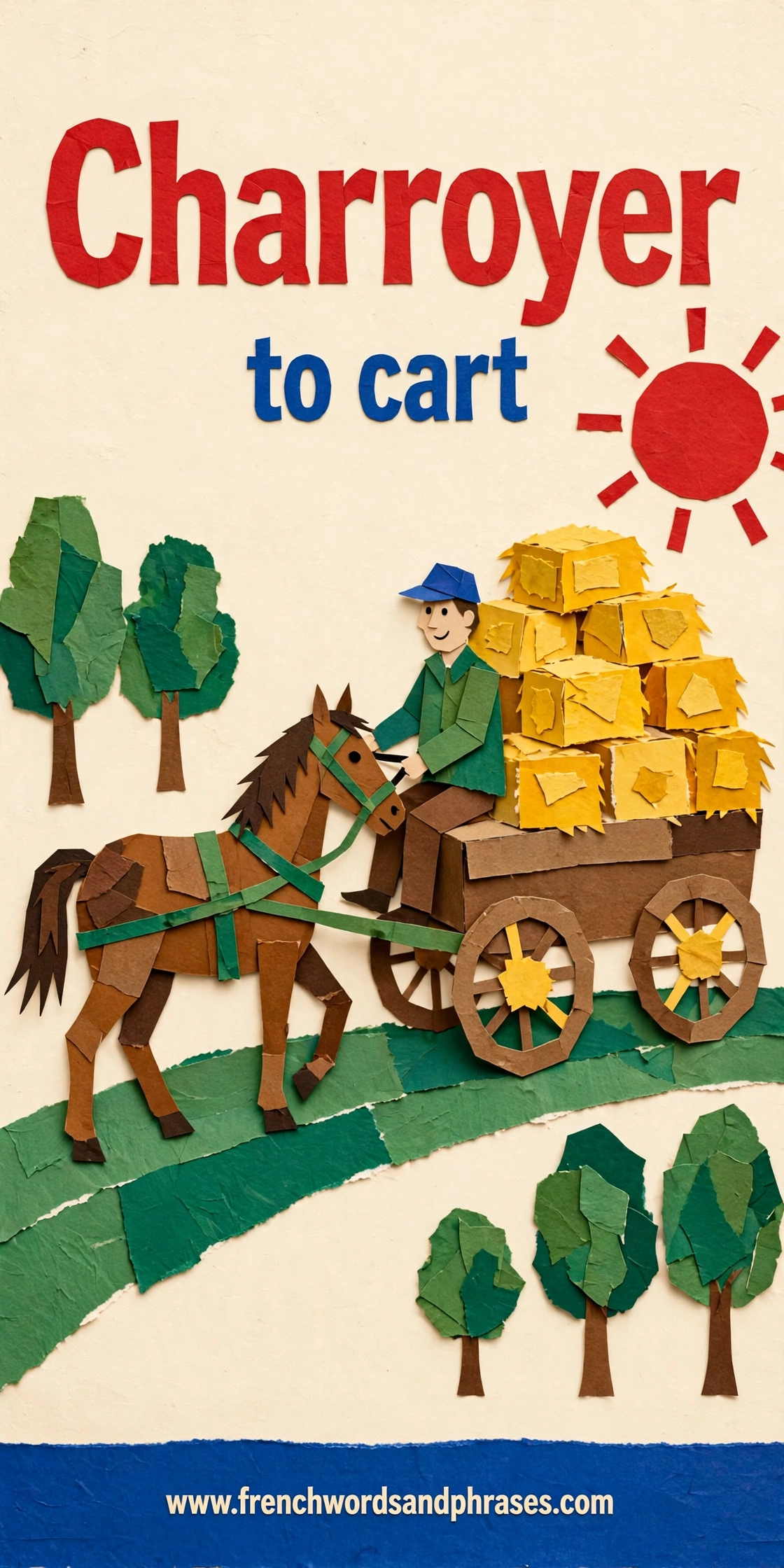
Charroyer means to cart — to carry goods by cart or wagon, load after load, along country roads.
Before the lorry, there was the ox-cart: hay in August, stones for the new bridge, barrels at the grape harvest, all of it charroyé at walking pace along rutted lanes. Charroyer is the old, patient verb of transport by wagon.
In this guide, you’ll learn how to conjugate charroyer in all the major French tenses and moods. Explore complete conjugation tables, French examples, English translations, and practice quizzes.
Understanding the French Verb Charroyer
Charroyer is a regular French verb belonging to the first group of verbs, those ending in-er.
It means to cart. It is used for carting farm produce and building materials — hay, grain, stone, manure, barrels — and it always suggests the slow, heavy work of wagons rather than modern lorries, which French more often describes with transporter or charrier.
Verb classification: First group (-er)
Auxiliary verb: Avoir
Past participle: charroyé
Present participle: charroyant
English equivalents: To cart, to convey by wagon; charroyer le foin — to cart the hay; charroyer des pierres — to cart stones; charroyer le fumier — to cart manure to the fields; un charroi — carting, a convoy of carts.
One important detail: charroyer is an -oyer verb, and the y turns into i wherever the next syllable is mute: je charroie, tu charroies, il charroie, ils charroient, and through the future and conditional: je charroierai, je charroierais. The y survives where the ending is sounded: nous charroyons, vous charroyez, je charroyais, en charroyant. It is the older, more rural twin of charrier: today it lives in farming, in history books and in the army’s old word for its supply wagons, les charrois.
Experience the Word
Charroyer is the verb of the ox-cart — nothing hurried, nothing light, just load after load at the pace of hooves.
Imagine the hay harvest a century ago. From dawn the carts creak between meadow and barn, the oxen patient, the hay piled higher than the driver. All day the village charroie, and by dusk the barns are full and the lanes are strewn with gold.
No engines, no hurry. The harvest is home — charroyée, carted load by load, before the storm.
How to Conjugate Charroyer: Complete French Conjugation Guide
Let’s explore every major conjugation of charroyer, beginning with the indicative mood.
How to Conjugate Charroyer in the Indicative Mood
The indicative mood is used to express facts, observations, actions, and events.
How to Conjugate Charroyer in the Present Tense (Présent)
Used for actions happening now, habitual actions, and general truths.
| Subject | Conjugation |
|---|---|
| je | charroie |
| tu | charroies |
| il / elle | charroie |
| nous | charroyons |
| vous | charroyez |
| ils / elles | charroient |
Example
Je charroie le foin du pré jusqu’à la grange.
I cart the hay from the meadow to the barn.
Quick Quiz 1
Complete the sentence:
Nous ______ le grain au moulin.
Reveal the answer
charroyons
Nous charroyons le grain au moulin.
We cart the grain to the mill.
How to Conjugate Charroyer in the Passé Composé
Used for completed actions in the past. Charroyer takes the auxiliary verb avoir.
| Subject | Conjugation |
|---|---|
| j’ | ai charroyé |
| tu | as charroyé |
| il / elle | a charroyé |
| nous | avons charroyé |
| vous | avez charroyé |
| ils / elles | ont charroyé |
Example
Les paysans ont charroyé la récolte avant l’orage.
The farmers carted the harvest in before the storm.
How to Conjugate Charroyer in the Imparfait (Imperfect Tense)
Used for habitual past actions, descriptions, and ongoing situations in the past.
| Subject | Conjugation |
|---|---|
| je | charroyais |
| tu | charroyais |
| il / elle | charroyait |
| nous | charroyions |
| vous | charroyiez |
| ils / elles | charroyaient |
Example
Chaque automne, on charroyait les pommes vers le pressoir.
Every autumn, people used to cart the apples to the cider press.
Quick Quiz 2
Choose the correct form:
The oxen carted the stones.
Les bœufs ______ les pierres. (ont charroyé / sont charroyé)
Reveal the answer
ont charroyé
Les bœufs ont charroyé les pierres.
Charroyer takes avoir.
How to Conjugate Charroyer in the Plus-que-parfait
Used to describe an action that had already been completed before another past event.
| Subject | Conjugation |
|---|---|
| j’ | avais charroyé |
| tu | avais charroyé |
| il / elle | avait charroyé |
| nous | avions charroyé |
| vous | aviez charroyé |
| ils / elles | avaient charroyé |
Example
Ils avaient charroyé tout le bois avant la neige.
They had carted all the wood before the snow.
How to Conjugate Charroyer in the Passé Simple
Primarily used in formal writing, literature, and historical narratives. It is rarely used in everyday conversation.
| Subject | Conjugation |
|---|---|
| je | charroyai |
| tu | charroyas |
| il / elle | charroya |
| nous | charroyâmes |
| vous | charroyâtes |
| ils / elles | charroyèrent |
Example
Les bœufs charroyèrent les pierres du nouveau pont.
The oxen carted the stones for the new bridge.
How to Conjugate Charroyer in the Passé Antérieur
A literary tense used to express an action completed immediately before another past action, generally in the passé simple.
| Subject | Conjugation |
|---|---|
| j’ | eus charroyé |
| tu | eus charroyé |
| il / elle | eut charroyé |
| nous | eûmes charroyé |
| vous | eûtes charroyé |
| ils / elles | eurent charroyé |
Example
Quand il eut charroyé le dernier chargement, le soleil se couchait.
When he had carted the last load, the sun was setting.
How to Conjugate Charroyer in the Future Tense (Futur Simple)
Used to describe actions that will take place in the future.
| Subject | Conjugation |
|---|---|
| je | charroierai |
| tu | charroieras |
| il / elle | charroiera |
| nous | charroierons |
| vous | charroierez |
| ils / elles | charroieront |
Example
Demain, je charroierai le fumier dans les champs.
Tomorrow, I will cart the manure into the fields.
How to Conjugate Charroyer in the Futur Antérieur (Future Perfect)
Used for an action that will have been completed before a particular point in the future.
| Subject | Conjugation |
|---|---|
| j’ | aurai charroyé |
| tu | auras charroyé |
| il / elle | aura charroyé |
| nous | aurons charroyé |
| vous | aurez charroyé |
| ils / elles | auront charroyé |
Example
À la Saint-Michel, ils auront charroyé toute la récolte.
By Michaelmas, they will have carted in the whole harvest.
How to Conjugate Charroyer in the Near Future (Futur Proche)
Used to describe something that is going to happen soon. Formed with aller + infinitive.
| Subject | Conjugation |
|---|---|
| je | vais charroyer |
| tu | vas charroyer |
| il / elle | va charroyer |
| nous | allons charroyer |
| vous | allez charroyer |
| ils / elles | vont charroyer |
Example
Le fermier va charroyer le grain au moulin.
The farmer is going to cart the grain to the mill.
How to Conjugate Charroyer in the Conditional Mood
The conditional mood expresses what would happen under certain circumstances. It is also frequently used to make polite requests or express wishes.
How to Conjugate Charroyer in the Present Conditional
| Subject | Conjugation |
|---|---|
| je | charroierais |
| tu | charroierais |
| il / elle | charroierait |
| nous | charroierions |
| vous | charroieriez |
| ils / elles | charroieraient |
Example
Avec un tracteur, tu charroierais deux fois plus vite.
With a tractor, you would cart twice as fast.
How to Conjugate Charroyer in the Past Conditional
| Subject | Conjugation |
|---|---|
| j’ | aurais charroyé |
| tu | aurais charroyé |
| il / elle | aurait charroyé |
| nous | aurions charroyé |
| vous | auriez charroyé |
| ils / elles | auraient charroyé |
Example
Il aurait charroyé le bois si la charrette n’avait pas cassé.
He would have carted the wood if the cart had not broken.
Charroyer in the Literary Past Conditional Form
This less common literary form uses the imperfect subjunctive of avoir.
| Subject | Conjugation |
|---|---|
| j’ | eusse charroyé |
| tu | eusses charroyé |
| il / elle | eût charroyé |
| nous | eussions charroyé |
| vous | eussiez charroyé |
| ils / elles | eussent charroyé |
Example
Il eût charroyé les pierres lui-même, sans se plaindre.
He would have carted the stones himself, without complaining.
How to Conjugate Charroyer in the Subjunctive Mood
The subjunctive is used to express wishes, emotions, doubts, necessity, and uncertainty. It frequently follows expressions such as il faut que (it is necessary that) or bien que (although).
How to Conjugate Charroyer in the Present Subjunctive
| Subject | Conjugation |
|---|---|
| que je | charroie |
| que tu | charroies |
| qu’il / qu’elle | charroie |
| que nous | charroyions |
| que vous | charroyiez |
| qu’ils / qu’elles | charroient |
Example
Il faut que je charroie ces sacs avant la nuit.
I must cart these sacks before nightfall.
Quick Quiz 3
Complete the sentence using the subjunctive:
Il faut que tu ______ le foin avant la pluie.
Reveal the answer
charroies
Il faut que tu charroies le foin avant la pluie.
You must cart the hay in before the rain.
How to Conjugate Charroyer in the Imperfect Subjunctive
A literary tense, rarely encountered in modern spoken French.
| Subject | Conjugation |
|---|---|
| que je | charroyasse |
| que tu | charroyasses |
| qu’il / qu’elle | charroyât |
| que nous | charroyassions |
| que vous | charroyassiez |
| qu’ils / qu’elles | charroyassent |
Example
Le fermier voulait que son fils charroyât le foin dès l’aube.
The farmer wanted his son to cart the hay from dawn.
How to Conjugate Charroyer in the Pluperfect Subjunctive
A literary construction used to express an action completed before another past action.
| Subject | Conjugation |
|---|---|
| que j’ | eusse charroyé |
| que tu | eusses charroyé |
| qu’il / qu’elle | eût charroyé |
| que nous | eussions charroyé |
| que vous | eussiez charroyé |
| qu’ils / qu’elles | eussent charroyé |
Example
On racontait qu’ils eussent charroyé le trésor hors du château.
People said they had carted the treasure out of the castle.
How to Conjugate Charroyer in the Past Subjunctive
| Subject | Conjugation |
|---|---|
| que j’ | aie charroyé |
| que tu | aies charroyé |
| qu’il / qu’elle | ait charroyé |
| que nous | ayons charroyé |
| que vous | ayez charroyé |
| qu’ils / qu’elles | aient charroyé |
Example
Je suis content que tu aies charroyé le grain à temps.
I am glad you carted the grain in in time.
How to Conjugate Charroyer in the Imperative
The imperative is used to give commands, instructions, invitations, or suggestions. Subject pronouns are omitted.
How to Conjugate Charroyer in the Present Imperative
| Person | Conjugation |
|---|---|
| (tu) | charroie |
| (nous) | charroyons |
| (vous) | charroyez |
Example
Charroie le foin avant la pluie !
Cart the hay in before the rain!
Quick Quiz 4
How would you say Cart the hay (tu form)?
Reveal the answer
Charroie le foin !
French Participles of Charroyer
Participles are verb forms that can be used in compound tenses and other grammatical constructions.
Present Participle of Charroyer
charroyant
En charroyant des pierres, il a usé deux paires de roues.
While carting stones, he wore out two pairs of wheels.
Past Participle of Charroyer
charroyé
Charroyées par des bœufs, les pierres arrivaient lentement au chantier.
Carted by oxen, the stones arrived slowly at the building site.
Charroyer in Everyday French: Real-Life Examples
Now that you know the conjugations, let’s see how charroyer appears in everyday French.
Example 1 — Present
Je charroie le bois jusqu’à la ferme.
I cart the wood to the farm.
Example 2 — Passé composé
Ils ont charroyé le foin.
They carted the hay.
Example 3 — Imparfait
On charroyait le grain au moulin.
People used to cart the grain to the mill.
Example 4 — Future
Je charroierai le fumier demain.
I will cart the manure tomorrow.
Example 5 — Conditional
Tu charroierais plus vite avec un tracteur.
You would cart faster with a tractor.
Example 6 — Imperative
Charroyons les récoltes avant l’orage !
Let us cart the harvest in before the storm!
Beyond Translation: The Meaning of Charroyer
A charroi was the whole operation — the carts, the loads, the convoy — and armies kept the word for their supply train long after farms gave it up.
Charroyer is charrier’s country grandfather.
Both come from un char, a cart; charrier went to the river and the schoolyard, charroyer stayed on the farm lane with the oxen. Its y-to-i spelling dance is the same one you meet in nettoyer and envoyer.
How to Remember the French Verb Charroyer
Remember it this way: Charroyer is about the ox-cart hauling hay — je charroie with an i.
- -oyer rule: je charroie with an i, but nous charroyons with a y — the y bows only before a mute e.
- Think ox-cart, not lorry: hay, stones, manure, harvests, at walking pace.
- Future keeps the i too: je charroierai; past participle charroyé.
The key idea is the ox-cart hauling hay — je charroie with an i.
Test Your Knowledge of Charroyer
Let’s see how much you’ve learned. Try answering these questions before revealing the answers.
Question 1
Why is it je charroie but nous charroyons?
Reveal the answer
The -oyer rule — y becomes i before a mute syllable (je charroie), and stays y where the ending is sounded (nous charroyons).
Question 2
How do you say I cart the hay to the barn in French?
Reveal the answer
Je charroie le foin jusqu’à la grange.
Question 3
Translate: The farmers carted the harvest in before the storm.
Reveal the answer
Les paysans ont charroyé la récolte avant l’orage.
Question 4
What is the past participle of charroyer?
Reveal the answer
Charroyé.
Question 5
Complete the sentence:
Il faut que je ______ ces sacs avant la nuit.
Reveal the answer
charroie
Il faut que je charroie ces sacs avant la nuit.
I must cart these sacks before nightfall.
Your Final Challenge
Can You Use It?
How would you say this in French?
He has been carting the hay since dawn, and the last load smells sweetly of the sun.
Reveal the answer
Il charroie le foin depuis l’aube, et le dernier chargement sent bon le soleil.
He has been carting the hay since dawn, and the last load smells sweetly of the sun.
A little French. A little curiosity. A richer everyday life.
LEARN FRENCH ONE WORD AT A TIME