A French Word to Live By
How to Conjugate Chapeauter in French
/ʃa.po.te/
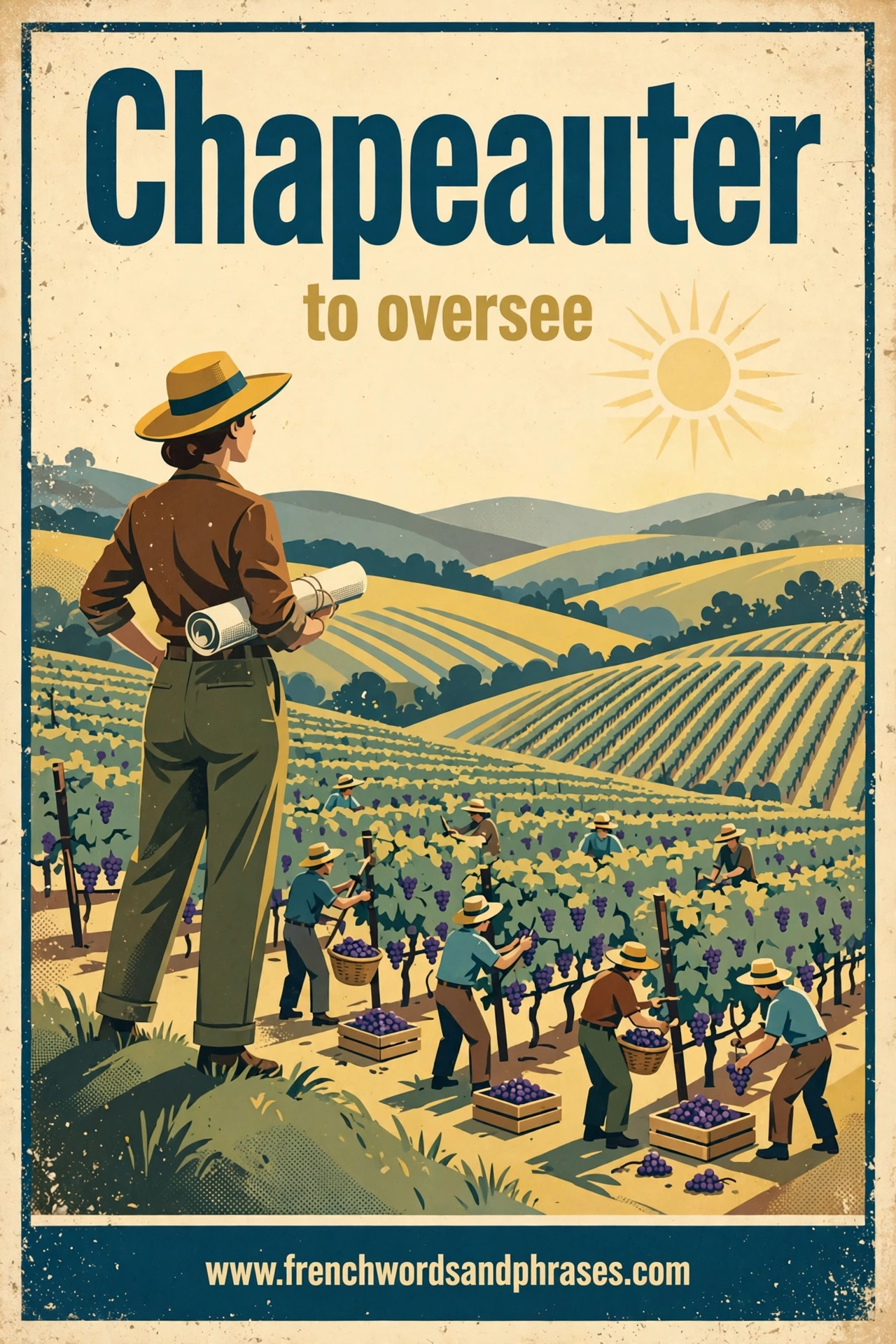
Chapeauter means to oversee — to sit at the head of a service or a project and supervise everything beneath you, like a hat crowning a head.
A ministry in Paris where one senior official supervises a dozen departments, a manager placed above several teams at once — chapeauter is the verb of the person at the top who oversees the whole structure, named for the hat that sits above everything else.
In this guide, you’ll learn how to conjugate chapeauter in all the major French tenses and moods. Explore complete conjugation tables, French examples, English translations, and practice quizzes.
Understanding the French Verb Chapeauter
Chapeauter is a regular French verb belonging to the first group of verbs, those ending in-er.
It means to oversee. It is used almost entirely of organisations and projects: a director chapeaute several services, an agency is chapeautée by a ministry, a coordinator chapeaute a whole programme. The subject is always the top layer; the object is everything underneath it.
Verb classification: First group (-er)
Auxiliary verb: Avoir
Past participle: chapeauté
Present participle: chapeautant
English equivalents: To oversee, to head, to supervise; chapeauter un service — to head a department; chapeauter plusieurs équipes — to oversee several teams; être chapeauté par un ministère — to come under a ministry; chapeauter un projet — to be in overall charge of a project.
One important detail: the picture inside chapeauter is literal — un chapeau is a hat, and to chapeauter is to put a hat on top. That is exactly the organisational sense: the person or body that wears the hat sits above the rest and supervises it. The verb is perfectly regular, and its home is the language of administration and journalism; for everyday supervision French more often says superviser or diriger. Do not confuse it with the rare kitchen sense, chapeauter un plat, to top a dish with something hat-shaped.
Experience the Word
Chapeauter is the verb of the top floor — one head, wearing the hat, watching over everything below.
Imagine a new director arriving at a publishing house in Paris. On paper, three departments — fiction, essays, children’s books — now answer to her alone: elle chapeaute les trois services, and every important decision climbs the stairs to her office.
She edits nothing herself. She oversees — chapeaute — the whole house from the top.
How to Conjugate Chapeauter: Complete French Conjugation Guide
Let’s explore every major conjugation of chapeauter, beginning with the indicative mood.
How to Conjugate Chapeauter in the Indicative Mood
The indicative mood is used to express facts, observations, actions, and events.
How to Conjugate Chapeauter in the Present Tense (Présent)
Used for actions happening now, habitual actions, and general truths.
| Subject | Conjugation |
|---|---|
| je | chapeaute |
| tu | chapeautes |
| il / elle | chapeaute |
| nous | chapeautons |
| vous | chapeautez |
| ils / elles | chapeautent |
Example
Mme Fabre chapeaute les trois services de la maison d’édition.
Mrs Fabre oversees the three departments of the publishing house.
Quick Quiz 1
Complete the sentence:
Nous ______ l’ensemble des agences régionales.
Reveal the answer
chapeautons
Nous chapeautons l’ensemble des agences régionales.
We oversee all the regional agencies.
How to Conjugate Chapeauter in the Passé Composé
Used for completed actions in the past. Chapeauter takes the auxiliary verb avoir.
| Subject | Conjugation |
|---|---|
| j’ | ai chapeauté |
| tu | as chapeauté |
| il / elle | a chapeauté |
| nous | avons chapeauté |
| vous | avez chapeauté |
| ils / elles | ont chapeauté |
Example
Il a chapeauté le projet de rénovation pendant deux ans.
He oversaw the renovation project for two years.
How to Conjugate Chapeauter in the Imparfait (Imperfect Tense)
Used for habitual past actions, descriptions, and ongoing situations in the past.
| Subject | Conjugation |
|---|---|
| je | chapeautais |
| tu | chapeautais |
| il / elle | chapeautait |
| nous | chapeautions |
| vous | chapeautiez |
| ils / elles | chapeautaient |
Example
À l’époque, un seul directeur chapeautait toutes les agences régionales.
At the time, a single director oversaw all the regional agencies.
Quick Quiz 2
Choose the correct form:
She oversees the department.
Elle ______ le service. (chapeaute / chapeautent)
Reveal the answer
chapeaute
Elle chapeaute le service.
Elle takes the singular form chapeaute.
How to Conjugate Chapeauter in the Plus-que-parfait
Used to describe an action that had already been completed before another past event.
| Subject | Conjugation |
|---|---|
| j’ | avais chapeauté |
| tu | avais chapeauté |
| il / elle | avait chapeauté |
| nous | avions chapeauté |
| vous | aviez chapeauté |
| ils / elles | avaient chapeauté |
Example
Elle avait chapeauté le service avant sa promotion.
She had headed the department before her promotion.
How to Conjugate Chapeauter in the Passé Simple
Primarily used in formal writing, literature, and historical narratives. It is rarely used in everyday conversation.
| Subject | Conjugation |
|---|---|
| je | chapeautai |
| tu | chapeautas |
| il / elle | chapeauta |
| nous | chapeautâmes |
| vous | chapeautâtes |
| ils / elles | chapeautèrent |
Example
Le préfet chapeauta l’ensemble des secours après la tempête.
The prefect oversaw the whole rescue operation after the storm.
How to Conjugate Chapeauter in the Passé Antérieur
A literary tense used to express an action completed immediately before another past action, generally in the passé simple.
| Subject | Conjugation |
|---|---|
| j’ | eus chapeauté |
| tu | eus chapeauté |
| il / elle | eut chapeauté |
| nous | eûmes chapeauté |
| vous | eûtes chapeauté |
| ils / elles | eurent chapeauté |
Example
Quand il eut chapeauté la mission pendant un an, il passa la main.
When he had overseen the mission for a year, he handed over.
How to Conjugate Chapeauter in the Future Tense (Futur Simple)
Used to describe actions that will take place in the future.
| Subject | Conjugation |
|---|---|
| je | chapeauterai |
| tu | chapeauteras |
| il / elle | chapeautera |
| nous | chapeauterons |
| vous | chapeauterez |
| ils / elles | chapeauteront |
Example
Dès janvier, vous chapeauterez le nouveau pôle numérique.
From January, you will oversee the new digital division.
How to Conjugate Chapeauter in the Futur Antérieur (Future Perfect)
Used for an action that will have been completed before a particular point in the future.
| Subject | Conjugation |
|---|---|
| j’ | aurai chapeauté |
| tu | auras chapeauté |
| il / elle | aura chapeauté |
| nous | aurons chapeauté |
| vous | aurez chapeauté |
| ils / elles | auront chapeauté |
Example
En cinq ans, elle aura chapeauté une vingtaine de projets.
In five years, she will have overseen some twenty projects.
How to Conjugate Chapeauter in the Near Future (Futur Proche)
Used to describe something that is going to happen soon. Formed with aller + infinitive.
| Subject | Conjugation |
|---|---|
| je | vais chapeauter |
| tu | vas chapeauter |
| il / elle | va chapeauter |
| nous | allons chapeauter |
| vous | allez chapeauter |
| ils / elles | vont chapeauter |
Example
Le directeur va chapeauter personnellement ce dossier sensible.
The director is going to oversee this sensitive file personally.
How to Conjugate Chapeauter in the Conditional Mood
The conditional mood expresses what would happen under certain circumstances. It is also frequently used to make polite requests or express wishes.
How to Conjugate Chapeauter in the Present Conditional
| Subject | Conjugation |
|---|---|
| je | chapeauterais |
| tu | chapeauterais |
| il / elle | chapeauterait |
| nous | chapeauterions |
| vous | chapeauteriez |
| ils / elles | chapeauteraient |
Example
Sans budget propre, elle chapeauterait le service à distance.
Without a budget of her own, she would oversee the department from a distance.
How to Conjugate Chapeauter in the Past Conditional
| Subject | Conjugation |
|---|---|
| j’ | aurais chapeauté |
| tu | aurais chapeauté |
| il / elle | aurait chapeauté |
| nous | aurions chapeauté |
| vous | auriez chapeauté |
| ils / elles | auraient chapeauté |
Example
Il aurait chapeauté l’opération si on le lui avait demandé.
He would have overseen the operation if he had been asked.
Chapeauter in the Literary Past Conditional Form
This less common literary form uses the imperfect subjunctive of avoir.
| Subject | Conjugation |
|---|---|
| j’ | eusse chapeauté |
| tu | eusses chapeauté |
| il / elle | eût chapeauté |
| nous | eussions chapeauté |
| vous | eussiez chapeauté |
| ils / elles | eussent chapeauté |
Example
Elle eût chapeauté le ministère entier sans sourciller.
She would have overseen the entire ministry without batting an eyelid.
How to Conjugate Chapeauter in the Subjunctive Mood
The subjunctive is used to express wishes, emotions, doubts, necessity, and uncertainty. It frequently follows expressions such as il faut que (it is necessary that) or bien que (although).
How to Conjugate Chapeauter in the Present Subjunctive
| Subject | Conjugation |
|---|---|
| que je | chapeaute |
| que tu | chapeautes |
| qu’il / qu’elle | chapeaute |
| que nous | chapeautions |
| que vous | chapeautiez |
| qu’ils / qu’elles | chapeautent |
Example
Il faut qu’un responsable chapeaute l’ensemble du chantier.
A manager must oversee the whole site.
Quick Quiz 3
Complete the sentence using the subjunctive:
Il faut que tu ______ les deux équipes.
Reveal the answer
chapeautes
Il faut que tu chapeautes les deux équipes.
You must oversee both teams.
How to Conjugate Chapeauter in the Imperfect Subjunctive
A literary tense, rarely encountered in modern spoken French.
| Subject | Conjugation |
|---|---|
| que je | chapeautasse |
| que tu | chapeautasses |
| qu’il / qu’elle | chapeautât |
| que nous | chapeautassions |
| que vous | chapeautassiez |
| qu’ils / qu’elles | chapeautassent |
Example
On voulait qu’elle chapeautât aussi la communication.
They wanted her to oversee communications as well.
How to Conjugate Chapeauter in the Pluperfect Subjunctive
A literary construction used to express an action completed before another past action.
| Subject | Conjugation |
|---|---|
| que j’ | eusse chapeauté |
| que tu | eusses chapeauté |
| qu’il / qu’elle | eût chapeauté |
| que nous | eussions chapeauté |
| que vous | eussiez chapeauté |
| ils / elles | eussent chapeauté |
Example
On disait qu’il eût chapeauté le groupe avant sa retraite.
It was said that he had headed the group before his retirement.
How to Conjugate Chapeauter in the Past Subjunctive
| Subject | Conjugation |
|---|---|
| que j’ | aie chapeauté |
| que tu | aies chapeauté |
| qu’il / qu’elle | ait chapeauté |
| que nous | ayons chapeauté |
| que vous | ayez chapeauté |
| qu’ils / qu’elles | aient chapeauté |
Example
Je suis heureux qu’elle ait chapeauté ce projet difficile.
I am glad she oversaw this difficult project.
How to Conjugate Chapeauter in the Imperative
The imperative is used to give commands, instructions, invitations, or suggestions. Subject pronouns are omitted.
How to Conjugate Chapeauter in the Present Imperative
| Person | Conjugation |
|---|---|
| (tu) | chapeaute |
| (nous) | chapeautons |
| (vous) | chapeautez |
Example
Chapeautez les deux équipes jusqu’à la fin du trimestre !
Oversee both teams until the end of the quarter!
Quick Quiz 4
How would you say Oversee the whole project (tu form)?
Reveal the answer
Chapeaute l’ensemble du projet !
French Participles of Chapeauter
Participles are verb forms that can be used in compound tenses and other grammatical constructions.
Present Participle of Chapeauter
chapeautant
En chapeautant quatre services, elle ne dort plus beaucoup.
Overseeing four departments, she does not sleep much anymore.
Past Participle of Chapeauter
chapeauté
Chapeauté par le ministère, le programme avance lentement.
Overseen by the ministry, the programme is advancing slowly.
Chapeauter in Everyday French: Real-Life Examples
Now that you know the conjugations, let’s see how chapeauter appears in everyday French.
Example 1 — Present
Elle chapeaute trois services à la fois.
She oversees three departments at once.
Example 2 — Passé composé
Il a chapeauté le projet pendant deux ans.
He oversaw the project for two years.
Example 3 — Imparfait
Un seul chef chapeautait toutes les équipes.
A single boss oversaw all the teams.
Example 4 — Future
Vous chapeauterez le nouveau service.
You will oversee the new department.
Example 5 — Conditional
Elle chapeauterait mieux avec un adjoint.
She would oversee better with a deputy.
Example 6 — Imperative
Chapeaute ce dossier jusqu’au bout !
Oversee this file right through to the end!
Beyond Translation: The Meaning of Chapeauter
French builds a small skyscraper on un chapeau: the hat goes on top of the head, so the official who chapeaute goes on top of the chart.
The hat decides nothing below — it crowns it.
The same word gives the delighted exclamation chapeau ! — hats off! — what you say when someone else does the work brilliantly while you merely supervise your own admiration.
How to Remember the French Verb Chapeauter
Remember it this way: Chapeauter is about the hat on top of the organisation chart.
- Un chapeau is a hat: the person who chapeaute is the hat of the organisation — on top, overseeing all of it.
- The subject is always the top layer: un directeur chapeaute un service, un ministère chapeaute une agence.
- Regular -er: je chapeaute, nous chapeautons, past participle chapeauté.
The key idea is the hat on top of the organisation chart.
Test Your Knowledge of Chapeauter
Let’s see how much you’ve learned. Try answering these questions before revealing the answers.
Question 1
What everyday object hides inside chapeauter, and what does it explain?
Reveal the answer
Un chapeau, a hat — the overseer sits on top of the organisation like a hat on a head.
Question 2
How do you say She oversees three departments in French?
Reveal the answer
Elle chapeaute trois services.
Question 3
Translate: He oversaw the project for two years.
Reveal the answer
Il a chapeauté le projet pendant deux ans.
Question 4
What is the past participle of chapeauter?
Reveal the answer
Chapeauté.
Question 5
Complete the sentence:
Il faut qu’un responsable ______ l’ensemble du chantier.
Reveal the answer
chapeaute
Il faut qu’un responsable chapeaute l’ensemble du chantier.
A manager must oversee the whole site.
Your Final Challenge
Can You Use It?
How would you say this in French?
She oversees the three departments with a calm hand, and the whole house breathes.
Reveal the answer
Elle chapeaute les trois services d’une main calme, et la maison entière respire.
She oversees the three departments with a calm hand, and the whole house breathes.
A little French. A little curiosity. A richer everyday life.
LEARN FRENCH ONE WORD AT A TIME