A French Word to Live By
How to Conjugate Bleuir in French
/blø.iʁ/
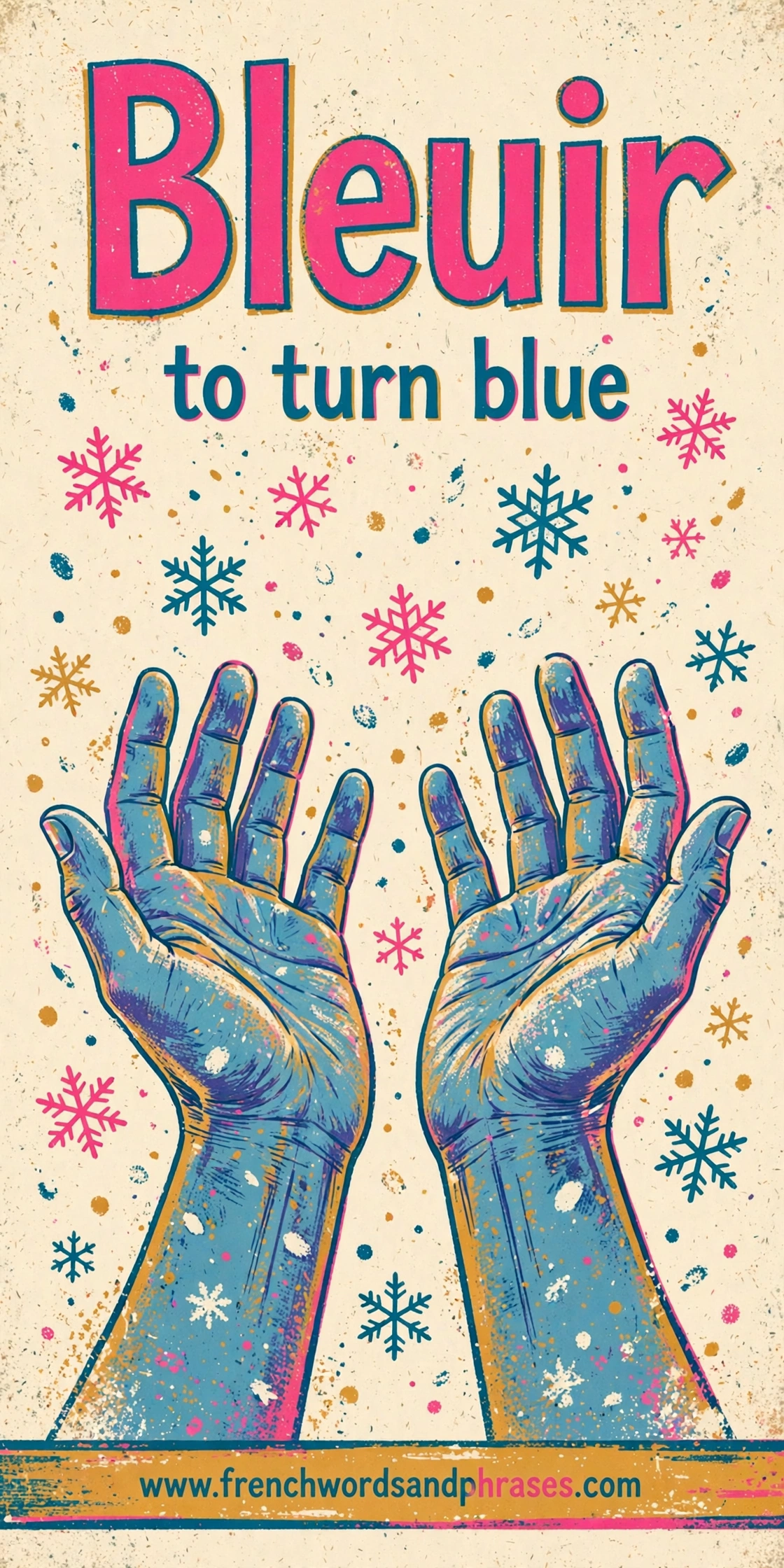
Bleuir means to turn blue — for lips, fingers, bruises or heated steel to take on the colour of cold and of deep water.
A swimmer’s lips after twenty minutes in a cold lake, a bruise darkening on a knee, a steel blade glowing blue above the forge — bleuir is the verb of things turning blue: slowly, under the pressure of cold, of a blow, or of fire.
In this guide, you’ll learn how to conjugate bleuir in all the major French tenses and moods. Explore complete conjugation tables, French examples, English translations, and practice quizzes.
Understanding the French Verb Bleuir
Bleuir is a regular French verb belonging to the second group of verbs, those ending in -ir.
It means to turn blue. It is used of the body first — lips, fingers, skin around a bruise — then of materials: steel bleuishes to a deep blue when heated, meat and fish take on a blue sheen as they spoil, and in the forge bleuir l’acier is a deliberate, skilled finishing step.
Verb classification: Second group (-ir)
Auxiliary verb: Avoir
Past participle: bleui
Present participle: bleuissant
English equivalents: To turn blue, to go blue; bleuir de froid — to go blue with cold; des doigts qui bleuissent — fingers turning blue; bleuir l’acier — to blue steel (heat-tinting); une marque qui bleuit — a mark that is turning blue.
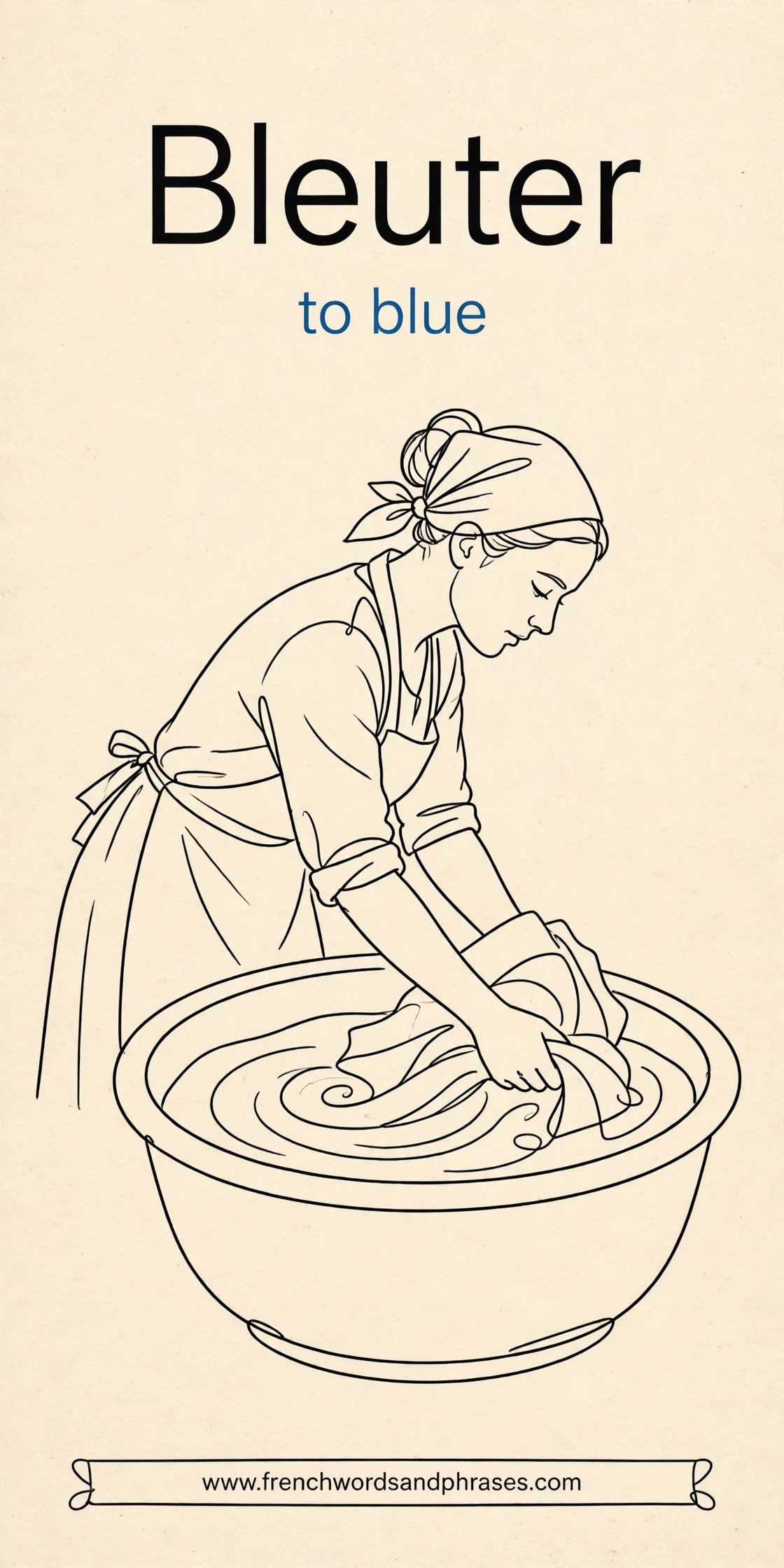
One important detail: bleuir is a regular second-group verb in -ir, built like finir: je bleuis, il bleuit, nous bleuissons, ils bleuissent, participle bleui, present participle bleuissant. Do not mix it up with its transitive neighbour bleuter, to blue something in the laundry: skin and steel bleuissent by themselves, while the washerwoman bleute her linen. The adjective for the result is simply bleui for a bruise or a lip — and a bruise itself, in everyday French, is just un bleu.
Experience the Word
Bleuir is the verb of colour arriving from the cold — blue creeping into lips, knuckles and bruises like ink into water.
Imagine a lake in the mountains in June. The water is snowmelt, beautiful and cruel; after fifteen minutes the children’s teeth are chattering, their lips bleuissent, and their grandmother, watching from the shore with the towels, calls them in before their fingers follow.
No paint, no dye — just cold doing its work. Their lips have turned blue — ont bleui — in a quarter of an hour.
How to Conjugate Bleuir: Complete French Conjugation Guide
Let’s explore every major conjugation of bleuir, beginning with the indicative mood.
How to Conjugate Bleuir in the Indicative Mood
The indicative mood is used to express facts, observations, actions, and events.
How to Conjugate Bleuir in the Present Tense (Présent)
Used for actions happening now, habitual actions, and general truths.
| Subject | Conjugation |
|---|---|
| je | bleuis |
| tu | bleuis |
| il / elle | bleuit |
| nous | bleuissons |
| vous | bleuissez |
| ils / elles | bleuissent |
Example
Ses lèvres bleuissent quand elle reste trop longtemps dans l’eau froide.
Her lips turn blue when she stays too long in the cold water.
Quick Quiz 1
Complete the sentence:
Dans l’eau glacée, nous ______ des lèvres en dix minutes.
Reveal the answer
bleuissons
Dans l’eau glacée, nous bleuissons des lèvres en dix minutes.
In the icy water, our lips turn blue in ten minutes.
How to Conjugate Bleuir in the Passé Composé
Used for completed actions in the past. Bleuir takes the auxiliary verb avoir.
| Subject | Conjugation |
|---|---|
| j’ | ai bleui |
| tu | as bleui |
| il / elle | a bleui |
| nous | avons bleui |
| vous | avez bleui |
| ils / elles | ont bleui |
Example
Ses doigts ont bleui à cause du froid.
His fingers turned blue because of the cold.
How to Conjugate Bleuir in the Imparfait (Imperfect Tense)
Used for habitual past actions, descriptions, and ongoing situations in the past.
| Subject | Conjugation |
|---|---|
| je | bleuissais |
| tu | bleuissais |
| il / elle | bleuissait |
| nous | bleuissions |
| vous | bleuissiez |
| ils / elles | bleuissaient |
Example
À la forge, l’acier bleuissait lentement sous la flamme.
At the forge, the steel used to turn blue slowly under the flame.
Quick Quiz 2
Choose the correct form:
His fingers turned blue.
Ses doigts ______ . (ont bleui / sont bleuis)
Reveal the answer
ont bleui
Ses doigts ont bleui.
Bleuir takes avoir.
How to Conjugate Bleuir in the Plus-que-parfait
Used to describe an action that had already been completed before another past event.
| Subject | Conjugation |
|---|---|
| j’ | avais bleui |
| tu | avais bleui |
| il / elle | avait bleui |
| nous | avions bleui |
| vous | aviez bleui |
| ils / elles | avaient bleui |
Example
Sa peau avait bleui tout autour de la contusion.
Her skin had turned blue all around the bruise.
How to Conjugate Bleuir in the Passé Simple
Primarily used in formal writing, literature, and historical narratives. It is rarely used in everyday conversation.
| Subject | Conjugation |
|---|---|
| je | bleuis |
| tu | bleuis |
| il / elle | bleuit |
| nous | bleuîmes |
| vous | bleuîtes |
| ils / elles | bleuirent |
Example
La lame bleuit peu à peu au-dessus du feu.
The blade slowly turned blue above the fire.
How to Conjugate Bleuir in the Passé Antérieur
A literary tense used to express an action completed immediately before another past action, generally in the passé simple.
| Subject | Conjugation |
|---|---|
| j’ | eus bleui |
| tu | eus bleui |
| il / elle | eut bleui |
| nous | eûmes bleui |
| vous | eûtes bleui |
| ils / elles | eurent bleui |
Example
Quand ses mains eurent bleui, on le fit rentrer à la maison.
When his hands had turned blue, they made him come indoors.
How to Conjugate Bleuir in the Future Tense (Futur Simple)
Used to describe actions that will take place in the future.
| Subject | Conjugation |
|---|---|
| je | bleuirai |
| tu | bleuiras |
| il / elle | bleuira |
| nous | bleuirons |
| vous | bleuirez |
| ils / elles | bleuiront |
Example
Tes orteils bleuiront si tu restes dans la neige sans chaussettes.
Your toes will turn blue if you stay in the snow without socks.
How to Conjugate Bleuir in the Futur Antérieur (Future Perfect)
Used for an action that will have been completed before a particular point in the future.
| Subject | Conjugation |
|---|---|
| j’ | aurai bleui |
| tu | auras bleui |
| il / elle | aura bleui |
| nous | aurons bleui |
| vous | aurez bleui |
| ils / elles | auront bleui |
Example
À la fin de la journée, la marque aura bleui entièrement.
By the end of the day, the mark will have turned completely blue.
How to Conjugate Bleuir in the Near Future (Futur Proche)
Used to describe something that is going to happen soon. Formed with aller + infinitive.
| Subject | Conjugation |
|---|---|
| je | vais bleuir |
| tu | vas bleuir |
| il / elle | va bleuir |
| nous | allons bleuir |
| vous | allez bleuir |
| ils / elles | vont bleuir |
Example
Regarde, l’acier va bleuir sous la flamme.
Look, the steel is going to turn blue under the flame.
How to Conjugate Bleuir in the Conditional Mood
The conditional mood expresses what would happen under certain circumstances. It is also frequently used to make polite requests or express wishes.
How to Conjugate Bleuir in the Present Conditional
| Subject | Conjugation |
|---|---|
| je | bleuirais |
| tu | bleuirais |
| il / elle | bleuirait |
| nous | bleuirions |
| vous | bleuiriez |
| ils / elles | bleuiraient |
Example
Sans gants, vos doigts bleuiraient en dix minutes.
Without gloves, your fingers would turn blue in ten minutes.
How to Conjugate Bleuir in the Past Conditional
| Subject | Conjugation |
|---|---|
| j’ | aurais bleui |
| tu | aurais bleui |
| il / elle | aurait bleui |
| nous | aurions bleui |
| vous | auriez bleui |
| ils / elles | auraient bleui |
Example
Il aurait bleui de froid sans sa couverture de survie.
He would have turned blue with cold without his survival blanket.
Bleuir in the Literary Past Conditional Form
This less common literary form uses the imperfect subjunctive of avoir.
| Subject | Conjugation |
|---|---|
| j’ | eusse bleui |
| tu | eusses bleui |
| il / elle | eût bleui |
| nous | eussions bleui |
| vous | eussiez bleui |
| ils / elles | eussent bleui |
Example
Ses lèvres eussent bleui dans l’eau glacée du torrent.
Her lips would have turned blue in the icy water of the torrent.
How to Conjugate Bleuir in the Subjunctive Mood
The subjunctive is used to express wishes, emotions, doubts, necessity, and uncertainty. It frequently follows expressions such as il faut que (it is necessary that) or bien que (although).
How to Conjugate Bleuir in the Present Subjunctive
| Subject | Conjugation |
|---|---|
| que je | bleuisse |
| que tu | bleuisses |
| qu’il / qu’elle | bleuisse |
| que nous | bleuissions |
| que vous | bleuissiez |
| qu’ils / qu’elles | bleuissent |
Example
Il est possible que la marque bleuisse encore davantage.
It is possible the mark may turn even bluer.
Quick Quiz 3
Complete the sentence using the subjunctive:
Il est possible que la marque ______ encore.
Reveal the answer
bleuisse
Il est possible que la marque bleuisse encore.
It is possible the mark may turn even bluer.
How to Conjugate Bleuir in the Imperfect Subjunctive
A literary tense, rarely encountered in modern spoken French.
| Subject | Conjugation |
|---|---|
| que je | bleuisse |
| que tu | bleuisses |
| qu’il / qu’elle | bleuît |
| que nous | bleuissions |
| que vous | bleuissiez |
| qu’ils / qu’elles | bleuissent |
Example
Je craignais que ses doigts bleuissent davantage.
I was afraid his fingers might turn even bluer.
How to Conjugate Bleuir in the Pluperfect Subjunctive
A literary construction used to express an action completed before another past action.
| Subject | Conjugation |
|---|---|
| que j’ | eusse bleui |
| que tu | eusses bleui |
| qu’il / qu’elle | eût bleui |
| que nous | eussions bleui |
| que vous | eussiez bleui |
| qu’ils / qu’elles | eussent bleui |
Example
On racontait que l’acier eût bleui à la chaleur de la forge.
People said the steel had turned blue in the heat of the forge.
How to Conjugate Bleuir in the Past Subjunctive
| Subject | Conjugation |
|---|---|
| que j’ | aie bleui |
| que tu | aies bleui |
| qu’il / qu’elle | ait bleui |
| que nous | ayons bleui |
| que vous | ayez bleui |
| qu’ils / qu’elles | aient bleui |
Example
Je suis étonné que la tache ait bleui si vite.
I am surprised the stain turned blue so quickly.
How to Conjugate Bleuir in the Imperative
The imperative is used to give commands, instructions, invitations, or suggestions. Subject pronouns are omitted.
How to Conjugate Bleuir in the Present Imperative
| Person | Conjugation |
|---|---|
| (tu) | bleuis |
| (nous) | bleuissons |
| (vous) | bleuissez |
Example
Bleuis sous la flamme, lame fidèle !
Turn blue under the flame, faithful blade!
Quick Quiz 4
How would you say Turn blue (tu form, to a steel blade)?
Reveal the answer
Bleuis !
French Participles of Bleuir
Participles are verb forms that can be used in compound tenses and other grammatical constructions.
Present Participle of Bleuir
bleuissant
En bleuissant, le métal prend des reflets d’orage.
As it turns blue, the metal takes on the sheen of a storm.
Past Participle of Bleuir
bleui
Bleuie par la chaleur, la lame brillait d’un bleu profond.
Turned blue by the heat, the blade shone a deep blue.
Bleuir in Everyday French: Real-Life Examples
Now that you know the conjugations, let’s see how bleuir appears in everyday French.
Example 1 — Present
Ses lèvres bleuissent dans l’eau froide.
Her lips turn blue in the cold water.
Example 2 — Passé composé
Ses doigts ont bleui de froid.
His fingers turned blue with cold.
Example 3 — Imparfait
L’acier bleuissait sous la flamme.
The steel used to turn blue under the flame.
Example 4 — Future
La marque bleuira encore un peu.
The mark will turn a little bluer still.
Example 5 — Conditional
Sans gants, tu bleuirais des doigts en dix minutes.
Without gloves, your fingers would turn blue in ten minutes.
Example 6 — Imperative
Bleuis, bel acier, sous la flamme du forgeron !
Turn blue, fine steel, under the blacksmith’s flame!
Beyond Translation: The Meaning of Bleuir
English to turn blue describes the event from outside; French bleuir belongs to a whole family of colour verbs in -ir — rougir, jaunir, noircir, blémir — that watch a colour arrive slowly, like weather.
Blue, in French, is something that happens to you.
Lips bleuir in cold water, a bruise bleuit as it deepens — and the everyday word for the bruise itself is simply un bleu, a blue, as if the colour were the injury.
How to Remember the French Verb Bleuir
Remember it this way: Bleuir is about the swimmer’s lips turning blue in the cold mountain lake.
- Second group, like finir: nous bleuissons, with the -iss- that gives it away.
- Skin bleuit by itself (cold, bruises); the laundress bleute her linen — do not swap them.
- Regular -ir: je bleuis, nous bleuissons, past participle bleui; a bruise is un bleu.
The key idea is the swimmer’s lips turning blue in the cold mountain lake.
Test Your Knowledge of Bleuir
Let’s see how much you’ve learned. Try answering these questions before revealing the answers.
Question 1
Which group does bleuir belong to, and what is the giveaway in its plural forms?
Reveal the answer
The second group (-ir) — the -iss- in nous bleuissons, ils bleuissent, like finir.
Question 2
How do you say Her lips turn blue in the cold water in French?
Reveal the answer
Ses lèvres bleuissent dans l’eau froide.
Question 3
Translate: His fingers turned blue with cold.
Reveal the answer
Ses doigts ont bleui de froid.
Question 4
What is the past participle of bleuir?
Reveal the answer
Bleui — agreeing: bleuie, bleuis, bleuies.
Question 5
Complete the sentence:
Je craignais que ses doigts ______ davantage.
Reveal the answer
bleuissent
Je craignais que ses doigts bleuissent davantage.
I was afraid his fingers might turn even bluer.
Your Final Challenge
Can You Use It?
How would you say this in French?
She stayed too long in the lake: her lips are turning blue, but she is still laughing.
Reveal the answer
Elle est restée trop longtemps dans le lac : ses lèvres bleuissent, mais elle rit encore.
She stayed too long in the lake: her lips are turning blue, but she is still laughing.
A little French. A little curiosity. A richer everyday life.
LEARN FRENCH ONE WORD AT A TIME