A French Word to Live By
How to Conjugate Varloper in French
/vaʁ.lɔ.pe/
Varloper means to plane — to smooth and true up wood with a long jointer plane.
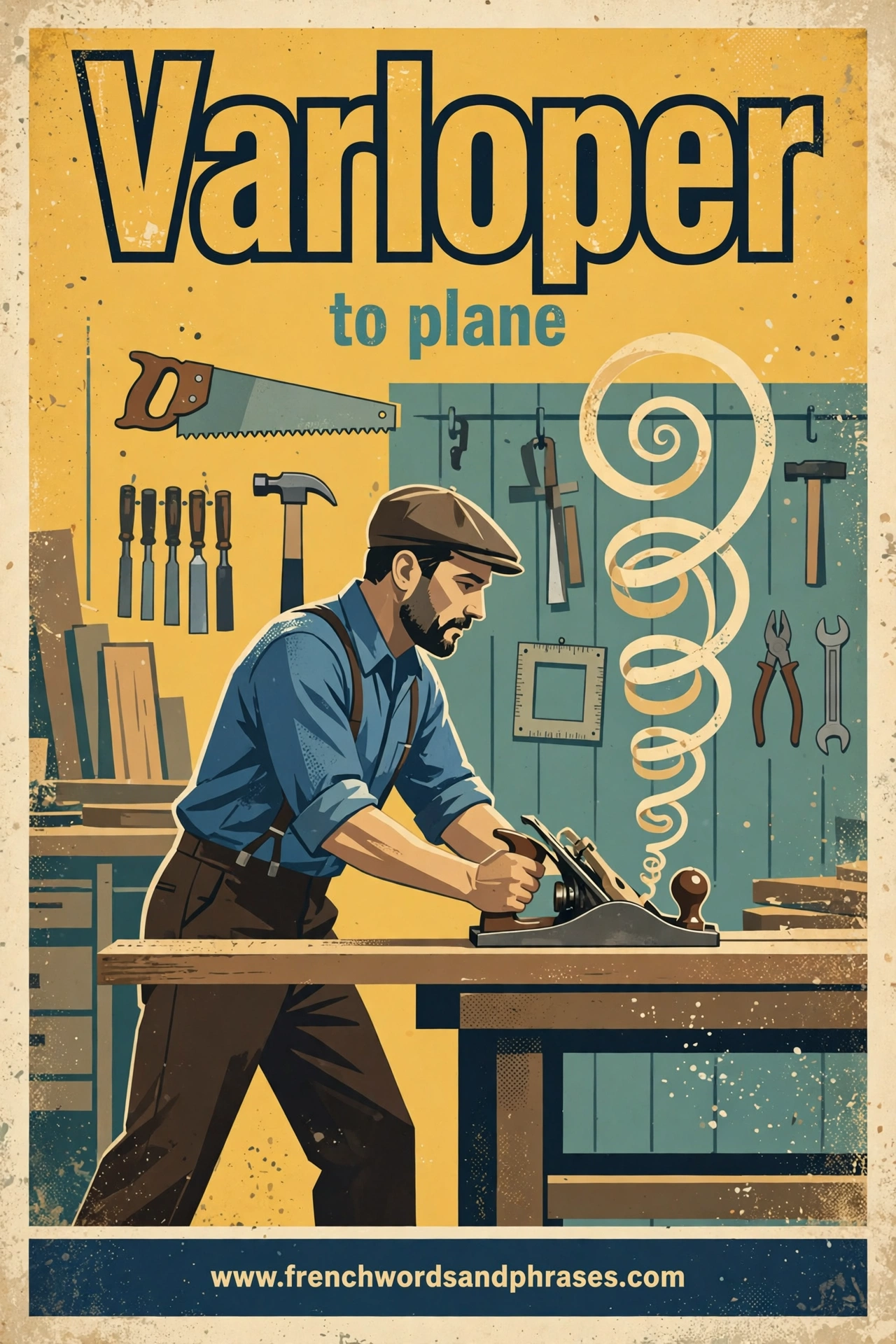
A ribbon of oak curls out of the plane’s mouth, thin as paper, and the board beneath turns silky — varloper is the carpenter’s verb for the long jointer plane, the varlope, gliding down a board until it is flat, straight and true.
In this guide, you’ll learn how to conjugate varloper in all the major French tenses and moods. Explore complete conjugation tables, French examples, English translations, and practice quizzes.
Understanding the French Verb Varloper
Varloper is a regular French verb belonging to the first group of verbs, those ending in -er.
It means to plane. It is commonly used in carpentry and cabinetmaking for planing boards, tabletops and doors flat and straight with a jointer plane, especially by hand in traditional workshops.
Verb classification: First group (-er)
Auxiliary verb: Avoir
Past participle: varlopé
Present participle: varlopant
English equivalents: To plane (with a jointer plane), to true up; une varlope — a long jointer plane; varloper une planche — to plane a board flat; le fil du bois — the grain of the wood.
One important detail: varloper is simply the verb of its tool — une varlope, the long jointer plane, longest of the bench planes, whose length bridges the hollows of a board and shaves only the high spots until the whole surface is true. The verb itself is perfectly regular: je varlope, nous varlopons, past participle varlopé. Do not confuse it with the short smoothing plane, le rabot, whose verb is raboter: you dégrossissez with one, you varlopez for the final truth of the surface.
Experience the Word
Varloper is the verb of patience in the workshop — the long plane cannot be hurried.
Imagine an old cabinetmaker’s bench. The oak board is clamped fast, the varlope rests at its end, and the craftsman leans his whole weight into the stroke: a shaving rises, curls, and falls like a wood ribbon. Stroke after stroke, il varlope — until a straightedge laid on the board shows no thread of light beneath it.
The board is flat, straight and honest. It has been planed true — varlopée — by hand.
How to Conjugate Varloper: Complete French Conjugation Guide
Let’s explore every major conjugation of varloper, beginning with the indicative mood.
How to Conjugate Varloper in the Indicative Mood
The indicative mood is used to express facts, observations, actions, and events.
How to Conjugate Varloper in the Present Tense (Présent)
Used for actions happening now, habitual actions, and general truths.
| Subject | Conjugation |
|---|---|
| je | varlope |
| tu | varlopes |
| il / elle | varlope |
| nous | varlopons |
| vous | varlopez |
| ils / elles | varlopent |
Example
Le menuisier varlope la planche de chêne.
The carpenter planes the oak board.
Quick Quiz 1
Complete the sentence:
Nous ______ les portes de l’armoire.
Reveal the answer
varlopons
Nous varlopons les portes de l’armoire.
We plane the wardrobe doors.
How to Conjugate Varloper in the Passé Composé
Used for completed actions in the past. Varloper takes the auxiliary verb avoir.
| Subject | Conjugation |
|---|---|
| j’ | ai varlopé |
| tu | as varlopé |
| il / elle | a varlopé |
| nous | avons varlopé |
| vous | avez varlopé |
| ils / elles | ont varlopé |
Example
Il a varlopé toutes les planches du parquet.
He planed all the floorboards.
How to Conjugate Varloper in the Imparfait (Imperfect Tense)
Used for habitual past actions, descriptions, and ongoing situations in the past.
| Subject | Conjugation |
|---|---|
| je | varlopais |
| tu | varlopais |
| il / elle | varlopait |
| nous | varlopions |
| vous | varlopiez |
| ils / elles | varlopaient |
Example
Le vieil ébéniste varlopait ses planches à la main.
The old cabinetmaker used to plane his boards by hand.
Quick Quiz 2
Choose the correct form:
He planed all the floorboards.
Il ______ toutes les planches du parquet. (a varlopé / est varlopé)
Reveal the answer
a varlopé
Il a varlopé toutes les planches du parquet.
Varloper takes avoir.
How to Conjugate Varloper in the Plus-que-parfait
Used to describe an action that had already been completed before another past event.
| Subject | Conjugation |
|---|---|
| j’ | avais varlopé |
| tu | avais varlopé |
| il / elle | avait varlopé |
| nous | avions varlopé |
| vous | aviez varlopé |
| ils / elles | avaient varlopé |
Example
Elle avait varlopé la table avant de la vernir.
She had planed the table before varnishing it.
How to Conjugate Varloper in the Passé Simple
Primarily used in formal writing, literature, and historical narratives. It is rarely used in everyday conversation.
| Subject | Conjugation |
|---|---|
| je | varlopai |
| tu | varlopas |
| il / elle | varlopa |
| nous | varlopâmes |
| vous | varlopâtes |
| ils / elles | varlopèrent |
Example
Il varlopa la planche jusqu’à la rendre lisse comme un miroir.
He planed the board until it was smooth as a mirror.
How to Conjugate Varloper in the Passé Antérieur
A literary tense used to express an action completed immediately before another past action, generally in the passé simple.
| Subject | Conjugation |
|---|---|
| j’ | eus varlopé |
| tu | eus varlopé |
| il / elle | eut varlopé |
| nous | eûmes varlopé |
| vous | eûtes varlopé |
| ils / elles | eurent varlopé |
Example
Quand il eut varlopé le plateau, il le ponça finement.
When he had planed the top, he sanded it finely.
How to Conjugate Varloper in the Future Tense (Futur Simple)
Used to describe actions that will take place in the future.
| Subject | Conjugation |
|---|---|
| je | varloperai |
| tu | varloperas |
| il / elle | varlopera |
| nous | varloperons |
| vous | varloperez |
| ils / elles | varloperont |
Example
Demain, nous varloperons les portes de l’armoire.
Tomorrow, we will plane the wardrobe doors.
How to Conjugate Varloper in the Futur Antérieur (Future Perfect)
Used for an action that will have been completed before a particular point in the future.
| Subject | Conjugation |
|---|---|
| j’ | aurai varlopé |
| tu | auras varlopé |
| il / elle | aura varlopé |
| nous | aurons varlopé |
| vous | aurez varlopé |
| ils / elles | auront varlopé |
Example
À midi, il aura varlopé tout le bois du chantier.
By noon, he will have planed all the wood on the site.
How to Conjugate Varloper in the Near Future (Futur Proche)
Used to describe something that is going to happen soon. Formed with aller + infinitive.
| Subject | Conjugation |
|---|---|
| je | vais varloper |
| tu | vas varloper |
| il / elle | va varloper |
| nous | allons varloper |
| vous | allez varloper |
| ils / elles | vont varloper |
Example
Je vais varloper cette planche, tiens-la bien.
I am going to plane this board, hold it steady.
How to Conjugate Varloper in the Conditional Mood
The conditional mood expresses what would happen under certain circumstances. It is also frequently used to make polite requests or express wishes.
How to Conjugate Varloper in the Present Conditional
| Subject | Conjugation |
|---|---|
| je | varloperais |
| tu | varloperais |
| il / elle | varloperait |
| nous | varloperions |
| vous | varloperiez |
| ils / elles | varloperaient |
Example
Avec une varlope bien affûtée, tu varloperais sans effort.
With a well-sharpened jointer plane, you would plane effortlessly.
How to Conjugate Varloper in the Past Conditional
| Subject | Conjugation |
|---|---|
| j’ | aurais varlopé |
| tu | aurais varlopé |
| il / elle | aurait varlopé |
| nous | aurions varlopé |
| vous | auriez varlopé |
| ils / elles | auraient varlopé |
Example
Il aurait varlopé le plateau si la lame n’avait pas été émoussée.
He would have planed the top if the blade had not been dull.
Varloper in the Literary Past Conditional Form
This less common literary form uses the imperfect subjunctive of avoir.
| Subject | Conjugation |
|---|---|
| j’ | eusse varlopé |
| tu | eusses varlopé |
| il / elle | eût varlopé |
| nous | eussions varlopé |
| vous | eussiez varlopé |
| ils / elles | eussent varlopé |
Example
Il eût varlopé la planche avant la nuit.
He would have planed the board before nightfall.
How to Conjugate Varloper in the Subjunctive Mood
The subjunctive is used to express wishes, emotions, doubts, necessity, and uncertainty. It frequently follows expressions such as il faut que (it is necessary that) or bien que (although).
How to Conjugate Varloper in the Present Subjunctive
| Subject | Conjugation |
|---|---|
| que je | varlope |
| que tu | varlopes |
| qu’il / qu’elle | varlope |
| que nous | varlopions |
| que vous | varlopiez |
| qu’ils / qu’elles | varlopent |
Example
Il faut que vous varlopiez dans le sens du fil du bois.
You must plane in the direction of the grain.
Quick Quiz 3
Complete the sentence using the subjunctive:
Il faut que vous ______ dans le sens du fil.
Reveal the answer
varlopiez
Il faut que vous varlopiez dans le sens du fil.
You must plane in the direction of the grain.
How to Conjugate Varloper in the Imperfect Subjunctive
A literary tense, rarely encountered in modern spoken French.
| Subject | Conjugation |
|---|---|
| que je | varlopasse |
| que tu | varlopasses |
| qu’il / qu’elle | varlopât |
| que nous | varlopassions |
| que vous | varlopassiez |
| qu’ils / qu’elles | varlopassent |
Example
Le maître voulait que l’apprenti varlopât lentement.
The master wanted the apprentice to plane slowly.
How to Conjugate Varloper in the Pluperfect Subjunctive
A literary construction used to express an action completed before another past action.
| Subject | Conjugation |
|---|---|
| que j’ | eusse varlopé |
| que tu | eusses varlopé |
| qu’il / qu’elle | eût varlopé |
| que nous | eussions varlopé |
| que vous | eussiez varlopé |
| qu’ils / qu’elles | eussent varlopé |
Example
On disait qu’il eût varlopé des planches toute sa vie.
People said he had planed boards all his life.
How to Conjugate Varloper in the Past Subjunctive
| Subject | Conjugation |
|---|---|
| que j’ | aie varlopé |
| que tu | aies varlopé |
| qu’il / qu’elle | ait varlopé |
| que nous | ayons varlopé |
| que vous | ayez varlopé |
| qu’ils / qu’elles | aient varlopé |
Example
Je suis content que tu aies varlopé la table avant le vernissage.
I am glad you planed the table before the varnishing.
How to Conjugate Varloper in the Imperative
The imperative is used to give commands, instructions, invitations, or suggestions. Subject pronouns are omitted.
How to Conjugate Varloper in the Present Imperative
| Person | Conjugation |
|---|---|
| (tu) | varlope |
| (nous) | varlopons |
| (vous) | varlopez |
Example
Varlope doucement, suis le fil du bois !
Plane gently, follow the grain of the wood!
Quick Quiz 4
How would you say Plane gently (tu form)?
Reveal the answer
Varlope doucement !
French Participles of Varloper
Participles are verb forms that can be used in compound tenses and other grammatical constructions.
Present Participle of Varloper
varlopant
En varlopant, il écoutait le chant du fer sur le chêne.
As he planed, he listened to the song of the iron on the oak.
Past Participle of Varloper
varlopé
Varlopée à la main, la planche était douce comme de la soie.
Planed by hand, the board was soft as silk.
Varloper in Everyday French: Real-Life Examples
Now that you know the conjugations, let’s see how varloper appears in everyday French.
Example 1 — Present
Le menuisier varlope la planche de chêne.
The carpenter planes the oak board.
Example 2 — Passé composé
Il a varlopé toutes les planches du parquet.
He planed all the floorboards.
Example 3 — Imparfait
L’ébéniste varlopait ses planches à la main.
The cabinetmaker used to plane his boards by hand.
Example 4 — Future
Nous varloperons les portes demain.
We will plane the doors tomorrow.
Example 5 — Conditional
Tu varloperais sans effort avec une bonne varlope.
You would plane effortlessly with a good jointer plane.
Example 6 — Imperative
Varlopez dans le sens du fil du bois !
Plane in the direction of the grain!
Beyond Translation: The Meaning of Varloper
French workshop French loves naming the verb after the tool: la varlope gives varloper, just as le rabot gives raboter and la scie gives scier.
The longest plane tells the truth.
A short plane follows every dip in a board; the long varlope rides over the hollows and cuts only the hills — which is why varloper means not just planing, but planing true: flat, straight, ready to join.
How to Remember the French Verb Varloper
Remember it this way: Varloper is about a long plane gliding down an oak board, shavings curling like ribbons.
- The verb is its tool: une varlope, the long jointer plane — varloper, to plane with it.
- Perfectly regular: je varlope, nous varlopons, past participle varlopé.
- Not the same as raboter: the varlope is the long plane that makes a surface true.
The key idea is a long plane gliding down an oak board, shavings curling like ribbons.
Test Your Knowledge of Varloper
Let’s see how much you’ve learned. Try answering these questions before revealing the answers.
Question 1
How do you say The carpenter planes the oak board in French?
Reveal the answer
Le menuisier varlope la planche de chêne.
Question 2
What is a varlope?
Reveal the answer
A long jointer plane — the longest bench plane, used to make boards flat and true.
Question 3
Translate: He planed all the floorboards.
Reveal the answer
Il a varlopé toutes les planches du parquet.
Question 4
What is the past participle of varloper?
Reveal the answer
Varlopé.
Question 5
Complete the sentence:
Il faut que vous ______ dans le sens du fil du bois.
Reveal the answer
varlopiez
Il faut que vous varlopiez dans le sens du fil du bois.
You must plane in the direction of the grain.
Your Final Challenge
Can You Use It?
How would you say this in French?
The cabinetmaker planes the oak board, and the shavings fall like ribbons.
Reveal the answer
L’ébéniste varlope la planche de chêne, et les copeaux tombent comme des rubans.
The cabinetmaker planes the oak board, and the shavings fall like ribbons.
A little French. A little curiosity. A richer everyday life.
LEARN FRENCH ONE WORD AT A TIME