A French Word to Live By
How to Conjugate Utiliser in French
/y.ti.li.ze/
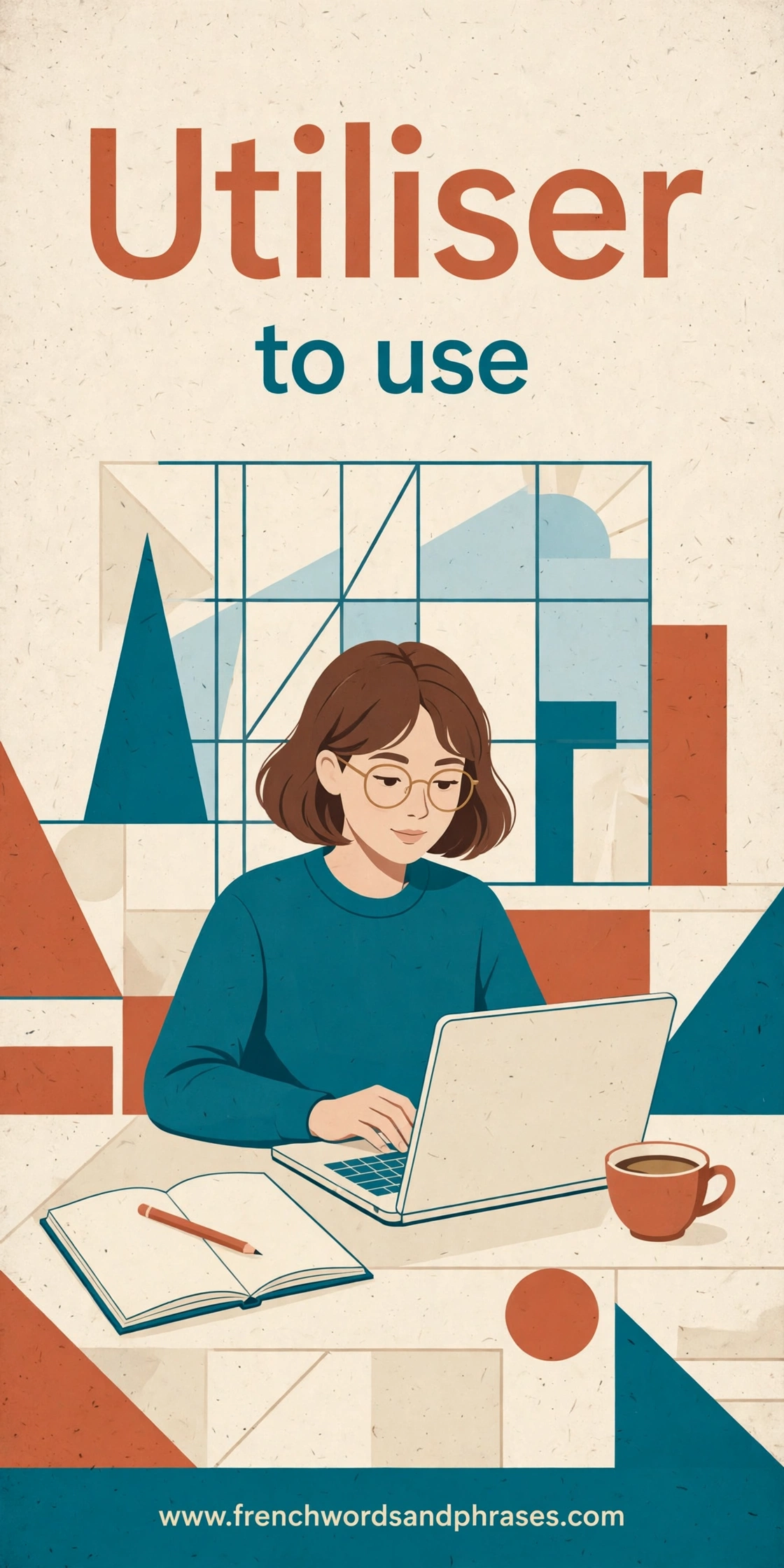
Utiliser means to use — to put a thing to work for a purpose.
A cook reaching for the right knife, a student opening a dictionary, a mechanic choosing the one wrench that fits — utiliser is the everyday verb of putting things to work, the most useful use-verb French has.
In this guide, you’ll learn how to conjugate utiliser in all the major French tenses and moods. Explore complete conjugation tables, French examples, English translations, and practice quizzes.
Understanding the French Verb Utiliser
Utiliser is a regular French verb belonging to the first group of verbs, those ending in -er.
It means to use. It is commonly used for tools, machines, vehicles and software, for words, methods and techniques, for ingredients in cooking and materials in crafts — in short, for almost every act of using anything, at home, at work and in the classroom.
Verb classification: First group (-er)
Auxiliary verb: Avoir
Past participle: utilisé
Present participle: utilisant
English equivalents: To use, to make use of; utiliser un outil — to use a tool; s’utiliser — to be used (ce mot s’utilise souvent — this word is often used); utile — useful; un utilisateur — a user.
One important detail: utiliser is the everyday twin of user. For tools, machines, words and methods, utiliser is the verb French reaches for: j’utilise un marteau, on utilise ce mot. Its older twin user survives in set phrases and the reflexive — user de patience (formal, to make use of patience) and s’user (to wear out) — so learn utiliser for using, and user for wearing away. The word family is generous: utile (useful), un utilisateur (a user, especially of computers), réutiliser (to reuse). The conjugation is a plain regular -er: j’utilise, nous utilisons, past participle utilisé.
Experience the Word
Utiliser is the verb of the right tool at the right moment — purpose turning into action.
Imagine a kitchen at six in the evening. The cook moves without hesitation: she utilise le grand couteau for the onions, la cuillère en bois for the sauce, le vieux torchon for the hot pan — every object in the room is used, and dinner appears as if by magic.
Nothing here is decorative. Everything has been used — utilisé — and supper is ready.
How to Conjugate Utiliser: Complete French Conjugation Guide
Let’s explore every major conjugation of utiliser, beginning with the indicative mood.
How to Conjugate Utiliser in the Indicative Mood
The indicative mood is used to express facts, observations, actions, and events.
How to Conjugate Utiliser in the Present Tense (Présent)
Used for actions happening now, habitual actions, and general truths.
| Subject | Conjugation |
|---|---|
| je | utilise |
| tu | utilises |
| il / elle | utilise |
| nous | utilisons |
| vous | utilisez |
| ils / elles | utilisent |
Example
Le cuisinier utilise un couteau bien aiguisé.
The cook uses a well-sharpened knife.
Quick Quiz 1
Complete the sentence:
Nous ______ ce logiciel tous les jours.
Reveal the answer
utilisons
Nous utilisons ce logiciel tous les jours.
We use this software every day.
How to Conjugate Utiliser in the Passé Composé
Used for completed actions in the past. Utiliser takes the auxiliary verb avoir.
| Subject | Conjugation |
|---|---|
| j’ | ai utilisé |
| tu | as utilisé |
| il / elle | a utilisé |
| nous | avons utilisé |
| vous | avez utilisé |
| ils / elles | ont utilisé |
Example
Nous avons utilisé la carte pour traverser la ville.
We used the map to cross the city.
How to Conjugate Utiliser in the Imparfait (Imperfect Tense)
Used for habitual past actions, descriptions, and ongoing situations in the past.
| Subject | Conjugation |
|---|---|
| je | utilisais |
| tu | utilisais |
| il / elle | utilisait |
| nous | utilisions |
| vous | utilisiez |
| ils / elles | utilisaient |
Example
Autrefois, on utilisait des chevaux pour labourer.
In the old days, horses were used for ploughing.
Quick Quiz 2
Choose the correct form:
We used the map.
Nous ______ la carte. (avons utilisé / sommes utilisés)
Reveal the answer
avons utilisé
Nous avons utilisé la carte.
Utiliser takes avoir.
How to Conjugate Utiliser in the Plus-que-parfait
Used to describe an action that had already been completed before another past event.
| Subject | Conjugation |
|---|---|
| j’ | avais utilisé |
| tu | avais utilisé |
| il / elle | avait utilisé |
| nous | avions utilisé |
| vous | aviez utilisé |
| ils / elles | avaient utilisé |
Example
Elle avait utilisé tout le fil pour son pull.
She had used all the wool for her sweater.
How to Conjugate Utiliser in the Passé Simple
Primarily used in formal writing, literature, and historical narratives. It is rarely used in everyday conversation.
| Subject | Conjugation |
|---|---|
| je | utilisai |
| tu | utilisas |
| il / elle | utilisa |
| nous | utilisâmes |
| vous | utilisâtes |
| ils / elles | utilisèrent |
Example
L’artisan utilisa un ciseau pour sculpter la poutre.
The craftsman used a chisel to carve the beam.
How to Conjugate Utiliser in the Passé Antérieur
A literary tense used to express an action completed immediately before another past action, generally in the passé simple.
| Subject | Conjugation |
|---|---|
| j’ | eus utilisé |
| tu | eus utilisé |
| il / elle | eut utilisé |
| nous | eûmes utilisé |
| vous | eûtes utilisé |
| ils / elles | eurent utilisé |
Example
Quand il eut utilisé la dernière vis, l’étagère tint enfin.
When he had used the last screw, the shelf finally held.
How to Conjugate Utiliser in the Future Tense (Futur Simple)
Used to describe actions that will take place in the future.
| Subject | Conjugation |
|---|---|
| je | utiliserai |
| tu | utiliseras |
| il / elle | utilisera |
| nous | utiliserons |
| vous | utiliserez |
| ils / elles | utiliseront |
Example
Demain, nous utiliserons le nouveau logiciel.
Tomorrow, we will use the new software.
How to Conjugate Utiliser in the Futur Antérieur (Future Perfect)
Used for an action that will have been completed before a particular point in the future.
| Subject | Conjugation |
|---|---|
| j’ | aurai utilisé |
| tu | auras utilisé |
| il / elle | aura utilisé |
| nous | aurons utilisé |
| vous | aurez utilisé |
| ils / elles | auront utilisé |
Example
À midi, ils auront utilisé toute la farine.
By noon, they will have used all the flour.
How to Conjugate Utiliser in the Near Future (Futur Proche)
Used to describe something that is going to happen soon. Formed with aller + infinitive.
| Subject | Conjugation |
|---|---|
| je | vais utiliser |
| tu | vas utiliser |
| il / elle | va utiliser |
| nous | allons utiliser |
| vous | allez utiliser |
| ils / elles | vont utiliser |
Example
Je vais utiliser ton vélo ce matin.
I am going to use your bike this morning.
How to Conjugate Utiliser in the Conditional Mood
The conditional mood expresses what would happen under certain circumstances. It is also frequently used to make polite requests or express wishes.
How to Conjugate Utiliser in the Present Conditional
| Subject | Conjugation |
|---|---|
| je | utiliserais |
| tu | utiliserais |
| il / elle | utiliserait |
| nous | utiliserions |
| vous | utiliseriez |
| ils / elles | utiliseraient |
Example
Avec ce dictionnaire, tu utiliserais les mots justes.
With this dictionary, you would use the right words.
How to Conjugate Utiliser in the Past Conditional
| Subject | Conjugation |
|---|---|
| j’ | aurais utilisé |
| tu | aurais utilisé |
| il / elle | aurait utilisé |
| nous | aurions utilisé |
| vous | auriez utilisé |
| ils / elles | auraient utilisé |
Example
Il aurait utilisé le train si la grève n’avait pas bloqué la gare.
He would have used the train if the strike had not blocked the station.
Utiliser in the Literary Past Conditional Form
This less common literary form uses the imperfect subjunctive of avoir.
| Subject | Conjugation |
|---|---|
| j’ | eusse utilisé |
| tu | eusses utilisé |
| il / elle | eût utilisé |
| nous | eussions utilisé |
| vous | eussiez utilisé |
| ils / elles | eussent utilisé |
Example
Le voyageur eût utilisé la carte avant la nuit.
The traveller would have used the map before nightfall.
How to Conjugate Utiliser in the Subjunctive Mood
The subjunctive is used to express wishes, emotions, doubts, necessity, and uncertainty. It frequently follows expressions such as il faut que (it is necessary that) or bien que (although).
How to Conjugate Utiliser in the Present Subjunctive
| Subject | Conjugation |
|---|---|
| que je | utilise |
| que tu | utilises |
| qu’il / qu’elle | utilise |
| que nous | utilisions |
| que vous | utilisiez |
| qu’ils / qu’elles | utilisent |
Example
Il faut que vous utilisiez ce produit avec précaution.
You must use this product with care.
Quick Quiz 3
Complete the sentence using the subjunctive:
Il faut que vous ______ le dictionnaire.
Reveal the answer
utilisiez
Il faut que vous utilisiez le dictionnaire.
You must use the dictionary.
How to Conjugate Utiliser in the Imperfect Subjunctive
A literary tense, rarely encountered in modern spoken French.
| Subject | Conjugation |
|---|---|
| que je | utilisasse |
| que tu | utilisasses |
| qu’il / qu’elle | utilisât |
| que nous | utilisassions |
| que vous | utilisassiez |
| qu’ils / qu’elles | utilisassent |
Example
Le maître voulait que l’élève utilisât le dictionnaire.
The teacher wanted the pupil to use the dictionary.
How to Conjugate Utiliser in the Pluperfect Subjunctive
A literary construction used to express an action completed before another past action.
| Subject | Conjugation |
|---|---|
| que j’ | eusse utilisé |
| que tu | eusses utilisé |
| qu’il / qu’elle | eût utilisé |
| que nous | eussions utilisé |
| que vous | eussiez utilisé |
| qu’ils / qu’elles | eussent utilisé |
Example
On s’étonnait qu’ils eussent utilisé si peu de matériaux.
People were surprised they had used so few materials.
How to Conjugate Utiliser in the Past Subjunctive
| Subject | Conjugation |
|---|---|
| que j’ | aie utilisé |
| que tu | aies utilisé |
| qu’il / qu’elle | ait utilisé |
| que nous | ayons utilisé |
| que vous | ayez utilisé |
| qu’ils / qu’elles | aient utilisé |
Example
Je suis content que tu aies utilisé la bonne méthode.
I am glad you used the right method.
How to Conjugate Utiliser in the Imperative
The imperative is used to give commands, instructions, invitations, or suggestions. Subject pronouns are omitted.
How to Conjugate Utiliser in the Present Imperative
| Person | Conjugation |
|---|---|
| (tu) | utilise |
| (nous) | utilisons |
| (vous) | utilisez |
Example
Utilise la grande échelle pour le toit !
Use the big ladder for the roof!
Quick Quiz 4
How would you say Use the big ladder (tu form)?
Reveal the answer
Utilise la grande échelle !
French Participles of Utiliser
Participles are verb forms that can be used in compound tenses and other grammatical constructions.
Present Participle of Utiliser
utilisant
En utilisant cette application, tu gagneras du temps.
By using this app, you will save time.
Past Participle of Utiliser
utilisé
Utilisée correctement, cette machine dure vingt ans.
Used correctly, this machine lasts twenty years.
Utiliser in Everyday French: Real-Life Examples
Now that you know the conjugations, let’s see how utiliser appears in everyday French.
Example 1 — Present
Le cuisinier utilise un couteau bien aiguisé.
The cook uses a well-sharpened knife.
Example 2 — Passé composé
Nous avons utilisé la carte pour traverser la ville.
We used the map to cross the city.
Example 3 — Imparfait
On utilisait des chevaux pour labourer.
Horses were used for ploughing.
Example 4 — Future
Nous utiliserons le nouveau logiciel demain.
We will use the new software tomorrow.
Example 5 — Conditional
Tu utiliserais les mots justes avec ce dictionnaire.
You would use the right words with this dictionary.
Example 6 — Imperative
Utilisez ce produit avec précaution !
Use this product with care!
Beyond Translation: The Meaning of Utiliser
English use does everything; French splits the work between utiliser, the brisk everyday verb of tools and methods, and its older twin user, kept for formal phrases and for wearing things away.
Utiliser puts things to work; user wears them out.
Master that one distinction and a hundred French sentences sort themselves out — utilise le marteau today, and in twenty years le marteau sera usé.
How to Remember the French Verb Utiliser
Remember it this way: Utiliser is about the right tool put to work — the everyday verb of using.
- Utiliser is the everyday use-verb — tools, words, methods, machines.
- Its twin user lives on in user de patience and s’user, to wear out.
- Regular -er: j’utilise, nous utilisons, past participle utilisé.
The key idea is the right tool put to work — the everyday verb of using.
Test Your Knowledge of Utiliser
Let’s see how much you’ve learned. Try answering these questions before revealing the answers.
Question 1
Which verb for using a tool: utiliser or user?
Reveal the answer
Utiliser — user is for wearing away and set phrases like user de patience.
Question 2
How do you say We used the map to cross the city in French?
Reveal the answer
Nous avons utilisé la carte pour traverser la ville.
Question 3
Translate: The cook uses a well-sharpened knife.
Reveal the answer
Le cuisinier utilise un couteau bien aiguisé.
Question 4
What is the past participle of utiliser?
Reveal the answer
Utilisé.
Question 5
Complete the sentence:
Il faut que vous ______ ce produit avec précaution.
Reveal the answer
utilisiez
Il faut que vous utilisiez ce produit avec précaution.
You must use this product with care.
Your Final Challenge
Can You Use It?
How would you say this in French?
She uses her grandfather’s old dictionary, and every word becomes a little journey.
Reveal the answer
Elle utilise le vieux dictionnaire de son grand-père, et chaque mot devient un petit voyage.
She uses her grandfather’s old dictionary, and every word becomes a little journey.
A little French. A little curiosity. A richer everyday life.
LEARN FRENCH ONE WORD AT A TIME