
A French Word to Live By
How to Conjugate Tranquilliser in French
/tʁɑ̃.ki.li.ze/
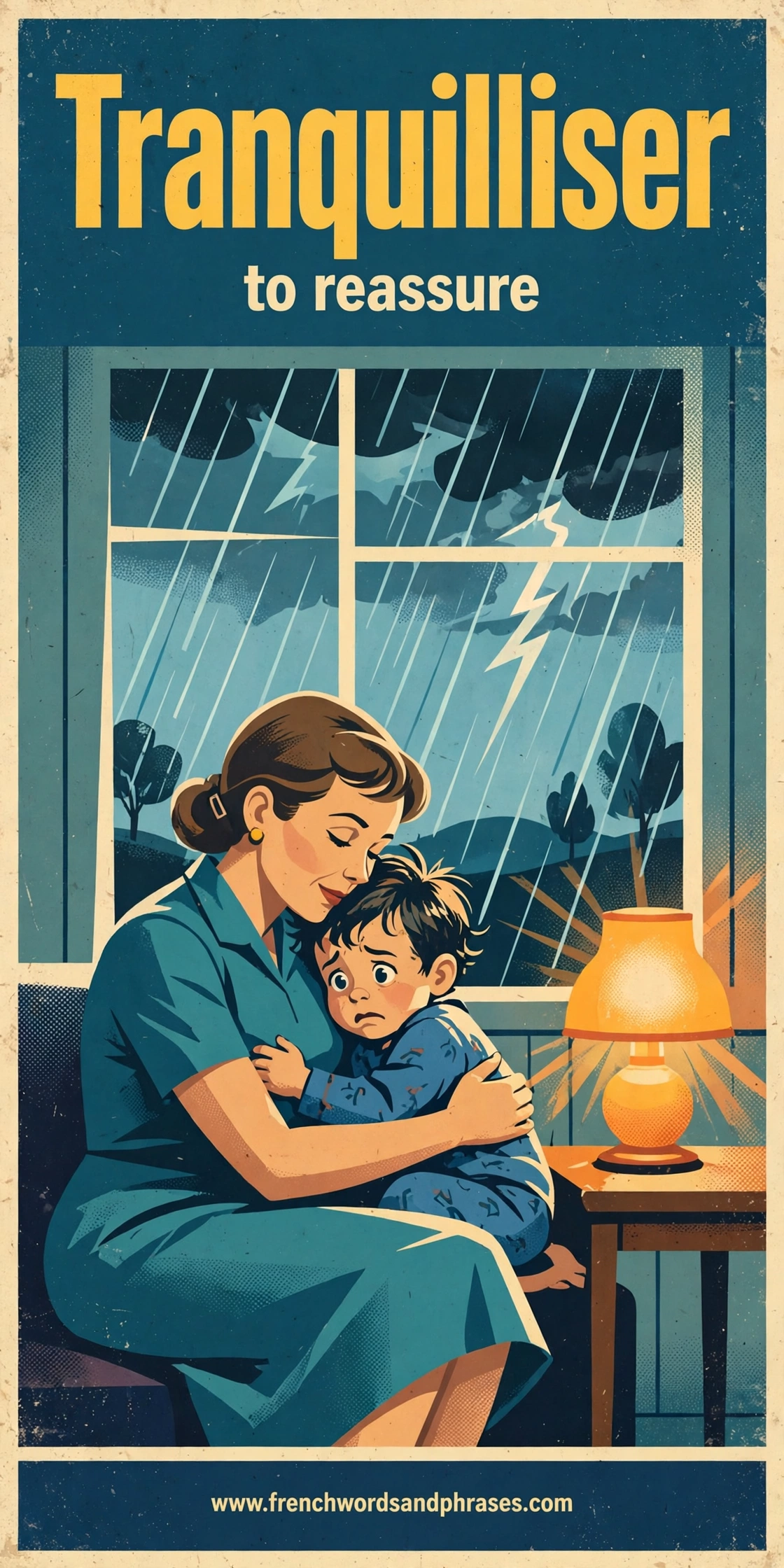
Tranquilliser means to reassure — to calm someone’s fears and give them peace of mind.
A hand on a shoulder before the exam results, a calm voice on the telephone at midnight — tranquilliser is the verb of fears being quieted, of someone bringing peace back into a worried room.
In this guide, you’ll learn how to conjugate tranquilliser in all the major French tenses and moods. Explore complete conjugation tables, French examples, English translations, and practice quizzes.
Understanding the French Verb Tranquilliser
Tranquilliser is a regular French verb belonging to the first group of verbs, those ending in -er.
It means to reassure. It is commonly used by doctors, parents and friends calming someone down, for news and letters that reassure, before exams, flights and results, and in the reflexive whenever anyone talks himself back to calm.
Verb classification: First group (-er)
Auxiliary verb: Avoir
Past participle: tranquillisé
Present participle: tranquillisant
English equivalents: To reassure, to calm, to set someone’s mind at rest; se tranquilliser — to calm down, to stop worrying; tranquillise-toi — calm down, do not worry.
One important detail: tranquilliser keeps the double l of tranquille in every form — je tranquillise, nous tranquillisons, tranquillisé. The reflexive is the everyday treasure: se tranquilliser, to calm down, conjugated with être in compound tenses — elle s’est tranquillisée après son appel — and its imperative is the kindest order in French: tranquillise-toi !, calm down, stop worrying.
Experience the Word
Tranquilliser is the verb of the steady voice — it does not solve the problem, it quiets the fear around it.
Imagine a hospital corridor at two in the morning. A mother paces outside the operating theatre; the surgeon comes out, takes her hand, and one sentence — tout s’est bien passé — la tranquillise. The night changes temperature.
Nothing about the facts has changed yet. She has been reassured — tranquillisée — and she can breathe again.
How to Conjugate Tranquilliser: Complete French Conjugation Guide
Let’s explore every major conjugation of tranquilliser, beginning with the indicative mood.
How to Conjugate Tranquilliser in the Indicative Mood
The indicative mood is used to express facts, observations, actions, and events.
How to Conjugate Tranquilliser in the Present Tense (Présent)
Used for actions happening now, habitual actions, and general truths.
| Subject | Conjugation |
|---|---|
| je | tranquillise |
| tu | tranquillises |
| il / elle | tranquillise |
| nous | tranquillisons |
| vous | tranquillisez |
| ils / elles | tranquillisent |
Example
Sa voix calme tranquillise les enfants.
Her calm voice reassures the children.
Quick Quiz 1
Complete the sentence:
Nous ______ les enfants avant l’orage.
Reveal the answer
tranquillisons
Nous tranquillisons les enfants avant l’orage.
We calm the children before the storm.
How to Conjugate Tranquilliser in the Passé Composé
Used for completed actions in the past. Tranquilliser takes the auxiliary verb avoir.
| Subject | Conjugation |
|---|---|
| j’ | ai tranquillisé |
| tu | as tranquillisé |
| il / elle | a tranquillisé |
| nous | avons tranquillisé |
| vous | avez tranquillisé |
| ils / elles | ont tranquillisé |
Example
Le médecin a tranquillisé la famille d’un seul mot.
The doctor reassured the family with a single word.
How to Conjugate Tranquilliser in the Imparfait (Imperfect Tense)
Used for habitual past actions, descriptions, and ongoing situations in the past.
| Subject | Conjugation |
|---|---|
| je | tranquillisais |
| tu | tranquillisais |
| il / elle | tranquillisait |
| nous | tranquillisions |
| vous | tranquillisiez |
| ils / elles | tranquillisaient |
Example
Elle se tranquillisait en écoutant la pluie.
She used to calm herself down listening to the rain.
Quick Quiz 2
Choose the correct form:
She calmed down after the call.
Elle ______ après l’appel. (a tranquillisé / s’est tranquillisée)
Reveal the answer
s’est tranquillisée
Elle s’est tranquillisée après l’appel.
Se tranquilliser takes être.
How to Conjugate Tranquilliser in the Plus-que-parfait
Used to describe an action that had already been completed before another past event.
| Subject | Conjugation |
|---|---|
| j’ | avais tranquillisé |
| tu | avais tranquillisé |
| il / elle | avait tranquillisé |
| nous | avions tranquillisé |
| vous | aviez tranquillisé |
| ils / elles | avaient tranquillisé |
Example
Il avait tranquillisé tout le monde avant l’orage.
He had calmed everyone down before the storm.
How to Conjugate Tranquilliser in the Passé Simple
Primarily used in formal writing, literature, and historical narratives. It is rarely used in everyday conversation.
| Subject | Conjugation |
|---|---|
| je | tranquillisai |
| tu | tranquillisas |
| il / elle | tranquillisa |
| nous | tranquillisâmes |
| vous | tranquillisâtes |
| ils / elles | tranquillisèrent |
Example
D’un geste, elle tranquillisa le cheval effrayé.
With one gesture, she calmed the frightened horse.
How to Conjugate Tranquilliser in the Passé Antérieur
A literary tense used to express an action completed immediately before another past action, generally in the passé simple.
| Subject | Conjugation |
|---|---|
| j’ | eus tranquillisé |
| tu | eus tranquillisé |
| il / elle | eut tranquillisé |
| nous | eûmes tranquillisé |
| vous | eûtes tranquillisé |
| ils / elles | eurent tranquillisé |
Example
Quand il eut tranquillisé les enfants, la maison retrouva le silence.
When he had calmed the children down, the house became quiet again.
How to Conjugate Tranquilliser in the Future Tense (Futur Simple)
Used to describe actions that will take place in the future.
| Subject | Conjugation |
|---|---|
| je | tranquilliserai |
| tu | tranquilliseras |
| il / elle | tranquillisera |
| nous | tranquilliserons |
| vous | tranquilliserez |
| ils / elles | tranquilliseront |
Example
Cette nouvelle tranquillisera tes parents.
This news will reassure your parents.
How to Conjugate Tranquilliser in the Futur Antérieur (Future Perfect)
Used for an action that will have been completed before a particular point in the future.
| Subject | Conjugation |
|---|---|
| j’ | aurai tranquillisé |
| tu | auras tranquillisé |
| il / elle | aura tranquillisé |
| nous | aurons tranquillisé |
| vous | aurez tranquillisé |
| ils / elles | auront tranquillisé |
Example
À ton retour, je me serai tranquillisé.
By the time you come back, I will have calmed down.
How to Conjugate Tranquilliser in the Near Future (Futur Proche)
Used to describe something that is going to happen soon. Formed with aller + infinitive.
| Subject | Conjugation |
|---|---|
| je | vais tranquilliser |
| tu | vas tranquilliser |
| il / elle | va tranquilliser |
| nous | allons tranquilliser |
| vous | allez tranquilliser |
| ils / elles | vont tranquilliser |
Example
Je vais me tranquilliser avec une tasse de thé.
I am going to calm down with a cup of tea.
How to Conjugate Tranquilliser in the Conditional Mood
The conditional mood expresses what would happen under certain circumstances. It is also frequently used to make polite requests or express wishes.
How to Conjugate Tranquilliser in the Present Conditional
| Subject | Conjugation |
|---|---|
| je | tranquilliserais |
| tu | tranquilliserais |
| il / elle | tranquilliserait |
| nous | tranquilliserions |
| vous | tranquilliseriez |
| ils / elles | tranquilliseraient |
Example
Un message de ta part les tranquilliserait.
A message from you would reassure them.
How to Conjugate Tranquilliser in the Past Conditional
| Subject | Conjugation |
|---|---|
| j’ | aurais tranquillisé |
| tu | aurais tranquillisé |
| il / elle | aurait tranquillisé |
| nous | aurions tranquillisé |
| vous | auriez tranquillisé |
| ils / elles | auraient tranquillisé |
Example
Elle se serait tranquillisée si tu l’avais appelée.
She would have calmed down if you had called her.
Tranquilliser in the Literary Past Conditional Form
This less common literary form uses the imperfect subjunctive of avoir.
| Subject | Conjugation |
|---|---|
| j’ | eusse tranquillisé |
| tu | eusses tranquillisé |
| il / elle | eût tranquillisé |
| nous | eussions tranquillisé |
| vous | eussiez tranquillisé |
| ils / elles | eussent tranquillisé |
Example
Il se fût tranquillisé en entendant sa voix.
He would have calmed down on hearing her voice.
How to Conjugate Tranquilliser in the Subjunctive Mood
The subjunctive is used to express wishes, emotions, doubts, necessity, and uncertainty. It frequently follows expressions such as il faut que (it is necessary that) or bien que (although).
How to Conjugate Tranquilliser in the Present Subjunctive
| Subject | Conjugation |
|---|---|
| que je | tranquillise |
| que tu | tranquillises |
| qu’il / qu’elle | tranquillise |
| que nous | tranquillisions |
| que vous | tranquillisiez |
| qu’ils / qu’elles | tranquillisent |
Example
Il faut que tu te tranquillises, tout va bien.
You must calm down, everything is fine.
Quick Quiz 3
Complete the sentence using the subjunctive:
Il faut que vous vous ______ avant l’examen.
Reveal the answer
tranquillisiez
Il faut que vous vous tranquillisiez avant l’examen.
You must calm down before the exam.
How to Conjugate Tranquilliser in the Imperfect Subjunctive
A literary tense, rarely encountered in modern spoken French.
| Subject | Conjugation |
|---|---|
| que je | tranquillisasse |
| que tu | tranquillisasses |
| qu’il / qu’elle | tranquillisât |
| que nous | tranquillisassions |
| que vous | tranquillisassiez |
| qu’ils / qu’elles | tranquillisassent |
Example
Je voulais qu’elle se tranquillisât avant l’examen.
I wanted her to calm down before the exam.
How to Conjugate Tranquilliser in the Pluperfect Subjunctive
A literary construction used to express an action completed before another past action.
| Subject | Conjugation |
|---|---|
| que j’ | eusse tranquillisé |
| que tu | eusses tranquillisé |
| qu’il / qu’elle | eût tranquillisé |
| que nous | eussions tranquillisé |
| que vous | eussiez tranquillisé |
| qu’ils / qu’elles | eussent tranquillisé |
Example
On espérait qu’il se fût tranquillisé avant la réunion.
People hoped he had calmed down before the meeting.
How to Conjugate Tranquilliser in the Past Subjunctive
| Subject | Conjugation |
|---|---|
| que j’ | aie tranquillisé |
| que tu | aies tranquillisé |
| qu’il / qu’elle | ait tranquillisé |
| que nous | ayons tranquillisé |
| que vous | ayez tranquillisé |
| qu’ils / qu’elles | aient tranquillisé |
Example
Je suis content que tu te sois tranquillisé.
I am glad you calmed down.
How to Conjugate Tranquilliser in the Imperative
The imperative is used to give commands, instructions, invitations, or suggestions. Subject pronouns are omitted.
How to Conjugate Tranquilliser in the Present Imperative
| Person | Conjugation |
|---|---|
| (tu) | tranquillise |
| (nous) | tranquillisons |
| (vous) | tranquillisez |
Example
Tranquillisez-vous, il n’y a aucun danger !
Calm down, there is no danger!
Quick Quiz 4
How would you say Calm down (tu form)?
Reveal the answer
Tranquillise-toi !
French Participles of Tranquilliser
Participles are verb forms that can be used in compound tenses and other grammatical constructions.
Present Participle of Tranquilliser
tranquillisant
En se tranquillisant peu à peu, elle a retrouvé le sourire.
Calming down little by little, she smiled again.
Past Participle of Tranquilliser
tranquillisé
Tranquillisée par la bonne nouvelle, elle a enfin dormi.
Reassured by the good news, she finally slept.
Tranquilliser in Everyday French: Real-Life Examples
Now that you know the conjugations, let’s see how tranquilliser appears in everyday French.
Example 1 — Present
Sa présence tranquillise tout le monde.
Her presence reassures everyone.
Example 2 — Passé composé
Je me suis tranquillisé après son appel.
I calmed down after her call.
Example 3 — Imparfait
Il tranquillisait les enfants d’une chanson.
He used to calm the children with a song.
Example 4 — Future
Cette lettre tranquillisera ta mère.
This letter will reassure your mother.
Example 5 — Conditional
Tu te tranquilliserais si tu savais la vérité.
You would calm down if you knew the truth.
Example 6 — Imperative
Tranquillise-toi, ce n’est rien !
Calm down, it is nothing!
Beyond Translation: The Meaning of Tranquilliser
English separates reassure, for other people, from calm down, for yourself; French tranquilliser covers both with one word and one reflexive.
Tranquillise-toi is a complete philosophy.
Built on tranquille, calm, the verb treats worry as noise to be quieted — for a friend, for a child, or, in the mirror, for yourself.
How to Remember the French Verb Tranquilliser
Remember it this way: Tranquilliser is about the steady voice that quiets the fear in the room.
- Tranquilliser calms others; se tranquilliser calms yourself — with être.
- Double l everywhere, like tranquille: tranquillise, tranquillisons, tranquillisé.
- Regular -er: je tranquillise, nous tranquillisons, past participle tranquillisé.
The key idea is the steady voice that quiets the fear in the room.
Test Your Knowledge of Tranquilliser
Let’s see how much you’ve learned. Try answering these questions before revealing the answers.
Question 1
How do you say Calm down, it is nothing! in French?
Reveal the answer
Tranquillise-toi, ce n’est rien !
Question 2
How do you say The doctor reassured the family in French?
Reveal the answer
Le médecin a tranquillisé la famille.
Question 3
Translate: I calmed down after her call.
Reveal the answer
Je me suis tranquillisé après son appel.
Question 4
What is the past participle of tranquilliser?
Reveal the answer
Tranquillisé.
Question 5
Complete the sentence:
Il faut que tu te ______, tout va bien.
Reveal the answer
tranquillises
Il faut que tu te tranquillises, tout va bien.
You must calm down, everything is fine.
Your Final Challenge
Can You Use It?
How would you say this in French?
Her voice reassures the children, and the whole house finds its calm again.
Reveal the answer
Sa voix tranquillise les enfants, et la maison entière retrouve le calme.
Her voice reassures the children, and the whole house finds its calm again.
A little French. A little curiosity. A richer everyday life.
LEARN FRENCH ONE WORD AT A TIME




