
A French Word to Live By
How to Conjugate Traînailler in French
/tʁɛ.na.je/
Traînailler means to dawdle — to linger, hang about and take forever on the way, usually without the slightest guilt.
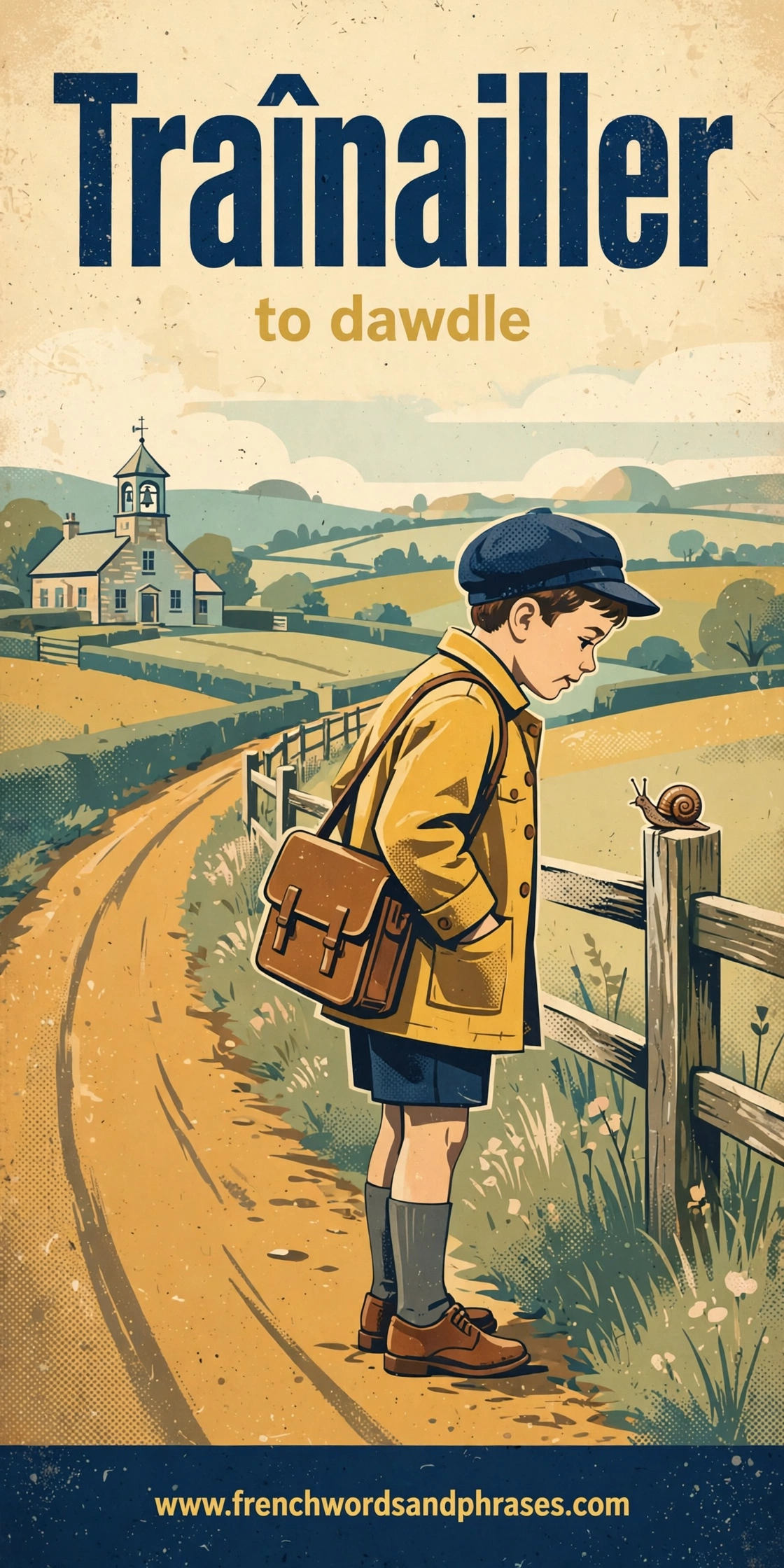
The school bell rings in ten minutes, but there is a beetle on the path, a window full of cakes, a puddle that needs jumping. The child on that pavement is traînaillant — traînailler is the verb of the unhurried, of journeys that stretch because the world is interesting.
In this guide, you’ll learn how to conjugate traînailler in all the major French tenses and moods. Explore complete conjugation tables, French examples, English translations, and practice quizzes.
Understanding the French Verb Traînailler
Traînailler is a regular French verb belonging to the first group of verbs, those ending in -er.
It means to dawdle. It is commonly used for children dawdling on the way to school, for slow Sunday mornings in bed, for browsers in markets and bookshops, and by parents and teachers everywhere in the negative: ne traînaille pas !
Verb classification: First group (-er)
Auxiliary verb: Avoir
Past participle: traînaillé
Present participle: traînaillant
English equivalents: To dawdle, to linger, to hang about; traînailler en route — to dawdle on the way; traînailler au lit — to laze in bed; un traînard — a dawdler, a straggler; close cousin of traîner — to drag, to dawdle.
One important detail: traînailler is traîner (to drag, to dawdle) stretched out with the suffix -ailler, the suffix of long, drawn-out, slightly aimless activity — compare criailler, to keep squawking. The traditional spelling keeps the circumflex on the î; the reformed spelling allows trainailler. Where traîner can drag objects, feet and time alike, traînailler is pure lingering: nobody is dragging anything except the moment itself.
Experience the Word
Traînailler is the verb of time taken rather than time spent — the scenic route through an ordinary day.
Imagine a Saturday market in a small town. One shopper arrives with a list and leaves in twenty minutes; another traînaille from stall to stall, tasting, chatting, comparing lettuces like paintings, and comes home two hours later, happy, with exactly the same shopping.
Nothing was achieved and nothing was wasted. That is traînailler — the journey was the point.
How to Conjugate Traînailler: Complete French Conjugation Guide
Let’s explore every major conjugation of traînailler, beginning with the indicative mood.
How to Conjugate Traînailler in the Indicative Mood
The indicative mood is used to express facts, observations, actions, and events.
How to Conjugate Traînailler in the Present Tense (Présent)
Used for actions happening now, habitual actions, and general truths.
| Subject | Conjugation |
|---|---|
| je | traînaille |
| tu | traînailles |
| il / elle | traînaille |
| nous | traînaillons |
| vous | traînaillez |
| ils / elles | traînaillent |
Example
Les enfants traînaillent sur le chemin de l’école.
The children dawdle on the way to school.
Quick Quiz 1
Complete the sentence:
Les enfants ______ sur le chemin de l’école. (traînailler, present)
Reveal the answer
traînaillent
Les enfants traînaillent sur le chemin de l’école.
The children dawdle on the way to school.
How to Conjugate Traînailler in the Passé Composé
Used for completed actions in the past. Traînailler takes the auxiliary verb avoir.
| Subject | Conjugation |
|---|---|
| j’ | ai traînaillé |
| tu | as traînaillé |
| il / elle | a traînaillé |
| nous | avons traînaillé |
| vous | avez traînaillé |
| ils / elles | ont traînaillé |
Example
Nous avons traînaillé au marché toute la matinée.
We dawdled around the market all morning.
How to Conjugate Traînailler in the Imparfait (Imperfect Tense)
Used for habitual past actions, descriptions, and ongoing situations in the past.
| Subject | Conjugation |
|---|---|
| je | traînaillais |
| tu | traînaillais |
| il / elle | traînaillait |
| nous | traînaillions |
| vous | traînailliez |
| ils / elles | traînaillaient |
Example
Le dimanche, il traînaillait au lit jusqu’à midi.
On Sundays, he used to laze in bed until noon.
Quick Quiz 2
Choose the correct form:
We lingered by the river.
Nous ______ au bord de la rivière. (avons traînaillé / sommes traînaillés)
Reveal the answer
avons traînaillé
Nous avons traînaillé au bord de la rivière.
Traînailler takes avoir.
How to Conjugate Traînailler in the Plus-que-parfait
Used to describe an action that had already been completed before another past event.
| Subject | Conjugation |
|---|---|
| j’ | avais traînaillé |
| tu | avais traînaillé |
| il / elle | avait traînaillé |
| nous | avions traînaillé |
| vous | aviez traînaillé |
| ils / elles | avaient traînaillé |
Example
Elle avait traînaillé si longtemps que le magasin était fermé.
She had dawdled so long that the shop was closed.
How to Conjugate Traînailler in the Passé Simple
Primarily used in formal writing, literature, and historical narratives. It is rarely used in everyday conversation.
| Subject | Conjugation |
|---|---|
| je | traînaillai |
| tu | traînaillas |
| il / elle | traînailla |
| nous | traînaillâmes |
| vous | traînaillâtes |
| ils / elles | traînaillèrent |
Example
Il traînailla dans les rues avant de rentrer.
He dawdled in the streets before going home.
How to Conjugate Traînailler in the Passé Antérieur
A literary tense used to express an action completed immediately before another past action, generally in the passé simple.
| Subject | Conjugation |
|---|---|
| j’ | eus traînaillé |
| tu | eus traînaillé |
| il / elle | eut traînaillé |
| nous | eûmes traînaillé |
| vous | eûtes traînaillé |
| ils / elles | eurent traînaillé |
Example
Quand ils eurent traînaillé une heure au café, ils se décidèrent enfin.
When they had lingered an hour at the café, they finally made up their minds.
How to Conjugate Traînailler in the Future Tense (Futur Simple)
Used to describe actions that will take place in the future.
| Subject | Conjugation |
|---|---|
| je | traînaillerai |
| tu | traînailleras |
| il / elle | traînaillera |
| nous | traînaillerons |
| vous | traînaillerez |
| ils / elles | traînailleront |
Example
Si tu traînailles encore, tu vas rater ton train.
If you dawdle any more, you will miss your train.
How to Conjugate Traînailler in the Futur Antérieur (Future Perfect)
Used for an action that will have been completed before a particular point in the future.
| Subject | Conjugation |
|---|---|
| j’ | aurai traînaillé |
| tu | auras traînaillé |
| il / elle | aura traînaillé |
| nous | aurons traînaillé |
| vous | aurez traînaillé |
| ils / elles | auront traînaillé |
Example
À ce rythme, vous aurez traînaillé toute la journée.
At this rate, you will have dawdled the whole day away.
How to Conjugate Traînailler in the Near Future (Futur Proche)
Used to describe something that is going to happen soon. Formed with aller + infinitive.
| Subject | Conjugation |
|---|---|
| je | vais traînailler |
| tu | vas traînailler |
| il / elle | va traînailler |
| nous | allons traînailler |
| vous | allez traînailler |
| ils / elles | vont traînailler |
Example
Je vais encore traînailler devant les vitrines.
I am going to dawdle in front of the shop windows again.
How to Conjugate Traînailler in the Conditional Mood
The conditional mood expresses what would happen under certain circumstances. It is also frequently used to make polite requests or express wishes.
How to Conjugate Traînailler in the Present Conditional
| Subject | Conjugation |
|---|---|
| je | traînaillerais |
| tu | traînaillerais |
| il / elle | traînaillerait |
| nous | traînaillerions |
| vous | traînailleriez |
| ils / elles | traînailleraient |
Example
Sans l’école, les enfants traînailleraient jusqu’au soir.
Without school, the children would dawdle until evening.
How to Conjugate Traînailler in the Past Conditional
| Subject | Conjugation |
|---|---|
| j’ | aurais traînaillé |
| tu | aurais traînaillé |
| il / elle | aurait traînaillé |
| nous | aurions traînaillé |
| vous | auriez traînaillé |
| ils / elles | auraient traînaillé |
Example
Tu n’aurais pas traînaillé si tu avais su l’heure.
You would not have dawdled if you had known the time.
Traînailler in the Literary Past Conditional Form
This less common literary form uses the imperfect subjunctive of avoir.
| Subject | Conjugation |
|---|---|
| j’ | eusse traînaillé |
| tu | eusses traînaillé |
| il / elle | eût traînaillé |
| nous | eussions traînaillé |
| vous | eussiez traînaillé |
| ils / elles | eussent traînaillé |
Example
Elle eût traînaillé tout l’après-midi sans le rendez-vous.
She would have dawdled all afternoon without the appointment.
How to Conjugate Traînailler in the Subjunctive Mood
The subjunctive is used to express wishes, emotions, doubts, necessity, and uncertainty. It frequently follows expressions such as il faut que (it is necessary that) or bien que (although).
How to Conjugate Traînailler in the Present Subjunctive
| Subject | Conjugation |
|---|---|
| que je | traînaille |
| que tu | traînailles |
| qu’il / qu’elle | traînaille |
| que nous | traînaillions |
| que vous | traînailliez |
| qu’ils / qu’elles | traînaillent |
Example
Il ne faut pas que tu traînailles en route.
You must not dawdle on the way.
Quick Quiz 3
Complete the sentence using the subjunctive:
Il ne faut pas que tu ______ en route.
Reveal the answer
traînailles
Il ne faut pas que tu traînailles en route.
You must not dawdle on the way.
How to Conjugate Traînailler in the Imperfect Subjunctive
A literary tense, rarely encountered in modern spoken French.
| Subject | Conjugation |
|---|---|
| que je | traînaillasse |
| que tu | traînaillasses |
| qu’il / qu’elle | traînaillât |
| que nous | traînaillassions |
| que vous | traînaillassiez |
| qu’ils / qu’elles | traînaillassent |
Example
Sa mère craignait qu’il traînaillât devant les magasins de jouets.
His mother feared he might dawdle in front of the toy shops.
How to Conjugate Traînailler in the Pluperfect Subjunctive
A literary construction used to express an action completed before another past action.
| Subject | Conjugation |
|---|---|
| que j’ | eusse traînaillé |
| que tu | eusses traînaillé |
| qu’il / qu’elle | eût traînaillé |
| que nous | eussions traînaillé |
| que vous | eussiez traînaillé |
| qu’ils / qu’elles | eussent traînaillé |
Example
On riait qu’ils eussent traînaillé même le jour de leur mariage.
People laughed that they had dawdled even on their wedding day.
How to Conjugate Traînailler in the Past Subjunctive
| Subject | Conjugation |
|---|---|
| que j’ | aie traînaillé |
| que tu | aies traînaillé |
| qu’il / qu’elle | ait traînaillé |
| que nous | ayons traînaillé |
| que vous | ayez traînaillé |
| qu’ils / qu’elles | aient traînaillé |
Example
Je suis étonné que vous ayez traînaillé si longtemps.
I am surprised you dawdled so long.
How to Conjugate Traînailler in the Imperative
The imperative is used to give commands, instructions, invitations, or suggestions. Subject pronouns are omitted.
How to Conjugate Traînailler in the Present Imperative
| Person | Conjugation |
|---|---|
| (tu) | traînaille |
| (nous) | traînaillons |
| (vous) | traînaillez |
Example
Ne traînaille pas, le train n’attendra pas !
Do not dawdle, the train will not wait!
Quick Quiz 4
How would you say Do not dawdle (vous form)?
Reveal the answer
Ne traînaillez pas !
French Participles of Traînailler
Participles are verb forms that can be used in compound tenses and other grammatical constructions.
Present Participle of Traînailler
traînaillant
En traînaillant devant les étals, elle a trouvé des merveilles.
Dawdling in front of the stalls, she found some treasures.
Past Participle of Traînailler
traînaillé
La matinée, traînaillée au soleil, a passé comme un rêve.
The morning, dawdled away in the sunshine, passed like a dream.
Traînailler in Everyday French: Real-Life Examples
Now that you know the conjugations, let’s see how traînailler appears in everyday French.
Example 1 — Present
Il traînaille toujours avant de partir.
He always dawdles before leaving.
Example 2 — Passé composé
Nous avons traînaillé au bord de la rivière.
We lingered by the river.
Example 3 — Imparfait
Enfant, elle traînaillait devant chaque vitrine.
As a child, she used to dawdle in front of every shop window.
Example 4 — Future
Vous traînaillerez moins si je vous accompagne.
You will dawdle less if I come with you.
Example 5 — Conditional
Je traînaillerais bien encore une heure ici.
I would gladly linger here another hour.
Example 6 — Imperative
Ne traînaillez pas en route !
Do not dawdle on the way!
Beyond Translation: The Meaning of Traînailler
English dawdle usually scolds; French traînailler can scold too — ne traînaille pas ! — but it just as often describes a pleasure: the long way home, the extra hour at the market.
The suffix stretches the verb like the moment it names.
Traîner drags; traînailler lingers. The added -aill- is the sound of time being deliberately, deliciously wasted.
How to Remember the French Verb Traînailler
Remember it this way: Traînailler is about the sweet art of taking forever on the way.
- Traînailler — to dawdle, to linger; traîner — to drag (and also to dawdle); un traînard — a straggler.
- The suffix -ailler stretches an action out: traînailler, criailler.
- Regular -er: je traînaille, nous traînaillons, past participle traînaillé.
The key idea is the sweet art of taking forever on the way.
Test Your Knowledge of Traînailler
Let’s see how much you’ve learned. Try answering these questions before revealing the answers.
Question 1
How do you say to dawdle in French?
Reveal the answer
Traînailler.
Question 2
How do you say Do not dawdle on the way! in French?
Reveal the answer
Ne traînaille pas en route !
Question 3
Translate: The children dawdle on the way to school.
Reveal the answer
Les enfants traînaillent sur le chemin de l’école.
Question 4
What is the past participle of traînailler?
Reveal the answer
Traînaillé.
Question 5
Complete the sentence:
Si tu ______ encore, tu vas rater ton train.
Reveal the answer
traînailles
Si tu traînailles encore, tu vas rater ton train.
If you dawdle any more, you will miss your train.
Your Final Challenge
Can You Use It?
How would you say this in French?
They dawdle along the river, and evening catches them far from home.
Reveal the answer
Ils traînaillent le long de la rivière, et le soir les surprend loin de la maison.
They dawdle along the river, and evening catches them far from home.
A little French. A little curiosity. A richer everyday life.
LEARN FRENCH ONE WORD AT A TIME




