A French Word to Live By
How to Conjugate Opérer in French
/ɔ.pe.ʁe/
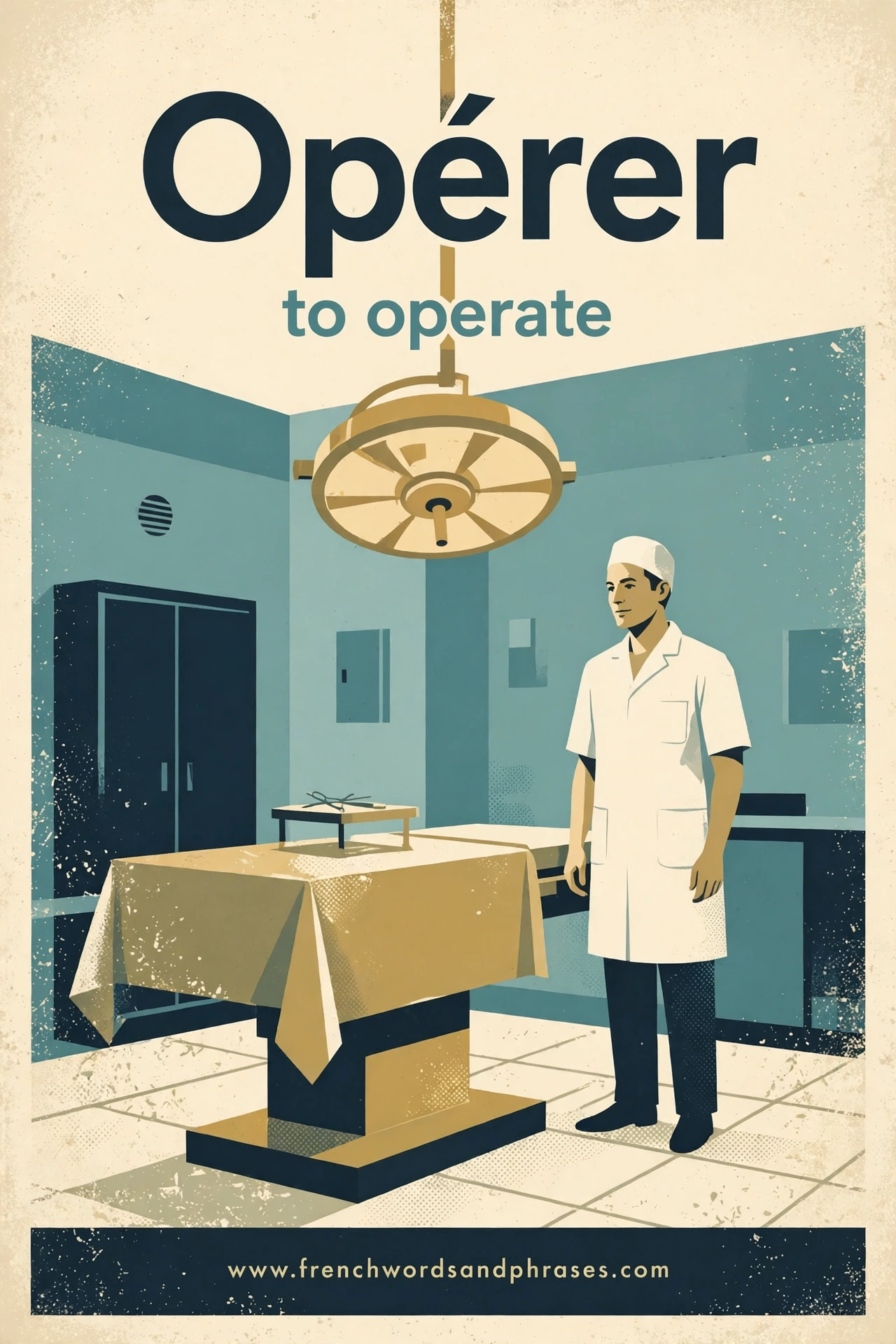
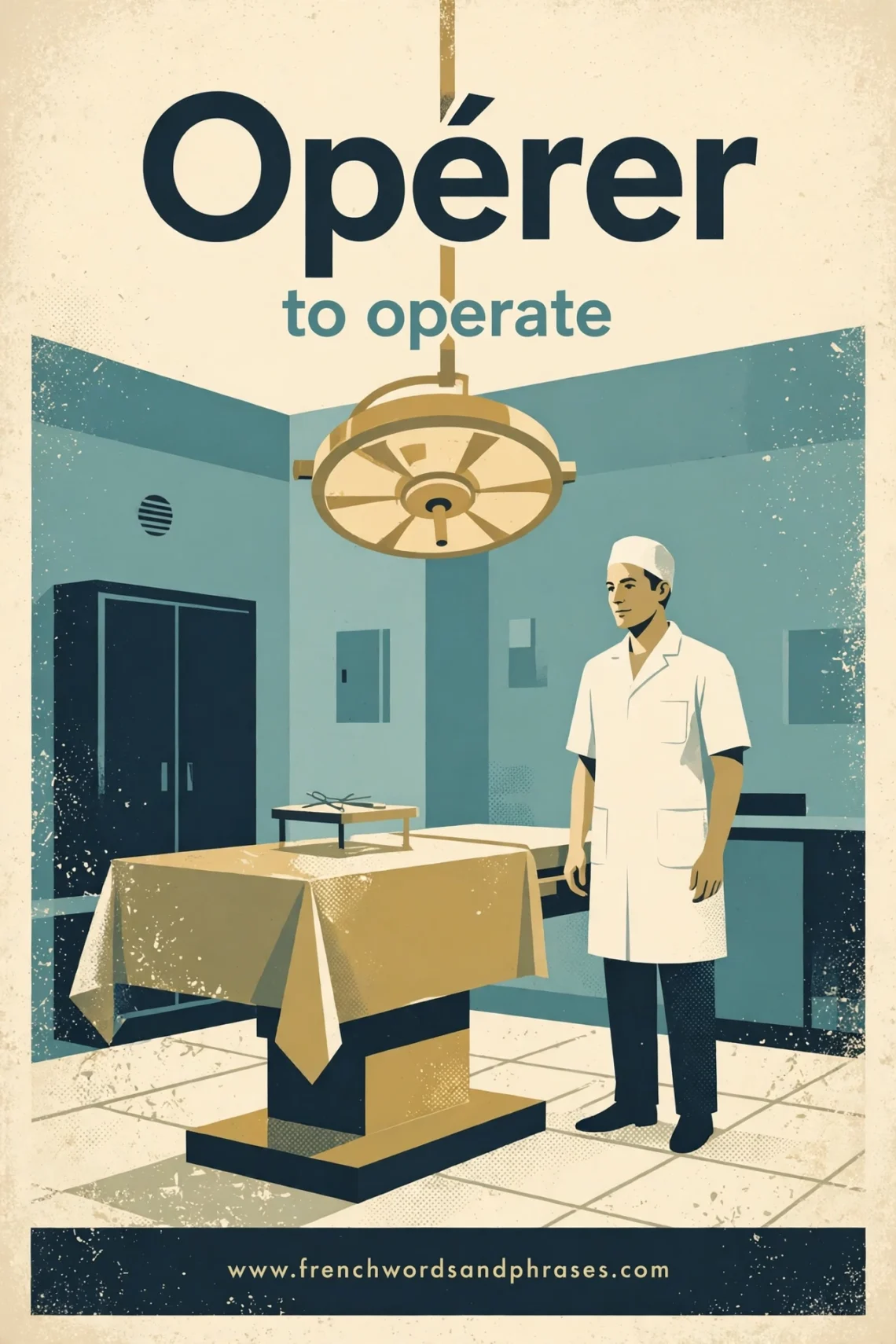
Opérer means to operate — above all, to perform surgery on a patient.
Five in the morning, a silent corridor, green light over an operating table: a surgeon washes her hands, breathes once, and steps forward — opérer is the verb of the steadiest hands in the hospital.
In this guide, you’ll learn how to conjugate opérer in all the major French tenses and moods. Explore complete conjugation tables, French examples, English translations, and practice quizzes.
Understanding the French Verb Opérer
Opérer is a regular French verb belonging to the first group of verbs, those ending in -er.
It means to operate. It is commonly used in medicine for performing surgery, in formal French for carrying out a change, an arrest or a transfer, and in its reflexive form s’opérer for changes that take place or come about.
Verb classification: First group (-er)
Auxiliary verb: Avoir
Past participle: opéré
Present participle: opérant
English equivalents: To operate, to carry out; opérer un patient — to operate on a patient; opérer quelqu’un de l’appendicite — to operate on someone for appendicitis; s’opérer — to take place, to happen; se faire opérer — to have an operation.
One important detail: opérer is a céder-type verb — the é opens to è whenever the next syllable is mute: j’opère, tu opères, ils opèrent, and in the future j’opèrerai — but nous opérons, vous opérez keep the é. Its worlds: the surgeon opère a patient; changes and miracles s’opèrent, they take place; and a patient who is operated on usually says je me fais opérer, I am having an operation.
Experience the Word
Opérer is the verb of skilled hands and held breath — the moment where knowledge becomes gesture.
Imagine the operating theatre at dawn. Outside, a family waits on plastic chairs, watching the clock. Inside, the surgeon opère in near silence: a word here, an instrument there, three hours folded into one long act of concentration — then the door opens, and she is smiling.
The waiting is over. The operation has been done — le patient a été opéré — and it went well.
How to Conjugate Opérer: Complete French Conjugation Guide
Let’s explore every major conjugation of opérer, beginning with the indicative mood.
How to Conjugate Opérer in the Indicative Mood
The indicative mood is used to express facts, observations, actions, and events.
How to Conjugate Opérer in the Present Tense (Présent)
Used for actions happening now, habitual actions, and general truths.
| Subject | Conjugation |
|---|---|
| je | opère |
| tu | opères |
| il / elle | opère |
| nous | opérons |
| vous | opérez |
| ils / elles | opèrent |
Example
Le chirurgien opère le malade en urgence.
The surgeon is operating on the patient as an emergency.
Quick Quiz 1
Complete the sentence:
J’______ ce patient avant midi.
Reveal the answer
opère
J’opère ce patient avant midi.
I am operating on this patient before noon — the é opens to è.
How to Conjugate Opérer in the Passé Composé
Used for completed actions in the past. Opérer takes the auxiliary verb avoir.
| Subject | Conjugation |
|---|---|
| j’ | ai opéré |
| tu | as opéré |
| il / elle | a opéré |
| nous | avons opéré |
| vous | avez opéré |
| ils / elles | ont opéré |
Example
Ils ont opéré le patient pendant trois heures.
They operated on the patient for three hours.
How to Conjugate Opérer in the Imparfait (Imperfect Tense)
Used for habitual past actions, descriptions, and ongoing situations in the past.
| Subject | Conjugation |
|---|---|
| je | opérais |
| tu | opérais |
| il / elle | opérait |
| nous | opérions |
| vous | opériez |
| ils / elles | opéraient |
Example
Autrefois, on opérait sans anesthésie.
In the old days, surgeons operated without anaesthesia.
Quick Quiz 2
Choose the correct form:
They operated on the patient.
Ils ______ le patient. (ont opéré / sont opérés)
Reveal the answer
ont opéré
Ils ont opéré le patient.
Opérer takes avoir.
How to Conjugate Opérer in the Plus-que-parfait
Used to describe an action that had already been completed before another past event.
| Subject | Conjugation |
|---|---|
| j’ | avais opéré |
| tu | avais opéré |
| il / elle | avait opéré |
| nous | avions opéré |
| vous | aviez opéré |
| ils / elles | avaient opéré |
Example
Le médecin avait opéré deux malades avant midi.
The doctor had operated on two patients before noon.
How to Conjugate Opérer in the Passé Simple
Primarily used in formal writing, literature, and historical narratives. It is rarely used in everyday conversation.
| Subject | Conjugation |
|---|---|
| je | opérai |
| tu | opéras |
| il / elle | opéra |
| nous | opérâmes |
| vous | opérâtes |
| ils / elles | opérèrent |
Example
Le chirurgien opéra le blessé sur place.
The surgeon operated on the wounded man on the spot.
How to Conjugate Opérer in the Passé Antérieur
A literary tense used to express an action completed immediately before another past action, generally in the passé simple.
| Subject | Conjugation |
|---|---|
| j’ | eus opéré |
| tu | eus opéré |
| il / elle | eut opéré |
| nous | eûmes opéré |
| vous | eûtes opéré |
| ils / elles | eurent opéré |
Example
Quand il eut opéré le dernier patient, il se reposa enfin.
When he had operated on the last patient, he finally rested.
How to Conjugate Opérer in the Future Tense (Futur Simple)
Used to describe actions that will take place in the future.
| Subject | Conjugation |
|---|---|
| je | opèrerai |
| tu | opèreras |
| il / elle | opèrera |
| nous | opèrerons |
| vous | opèrerez |
| ils / elles | opèreront |
Example
Demain, j’opèrerai à cœur ouvert pour la première fois.
Tomorrow, I will operate on an open heart for the first time.
How to Conjugate Opérer in the Futur Antérieur (Future Perfect)
Used for an action that will have been completed before a particular point in the future.
| Subject | Conjugation |
|---|---|
| j’ | aurai opéré |
| tu | auras opéré |
| il / elle | aura opéré |
| nous | aurons opéré |
| vous | aurez opéré |
| ils / elles | auront opéré |
Example
À midi, ils auront opéré les trois urgences.
By noon, they will have operated on the three emergencies.
How to Conjugate Opérer in the Near Future (Futur Proche)
Used to describe something that is going to happen soon. Formed with aller + infinitive.
| Subject | Conjugation |
|---|---|
| je | vais opérer |
| tu | vas opérer |
| il / elle | va opérer |
| nous | allons opérer |
| vous | allez opérer |
| ils / elles | vont opérer |
Example
On va opérer ta grand-mère la semaine prochaine.
They are going to operate on your grandmother next week.
How to Conjugate Opérer in the Conditional Mood
The conditional mood expresses what would happen under certain circumstances. It is also frequently used to make polite requests or express wishes.
How to Conjugate Opérer in the Present Conditional
| Subject | Conjugation |
|---|---|
| je | opèrerais |
| tu | opèrerais |
| il / elle | opèrerait |
| nous | opèrerions |
| vous | opèreriez |
| ils / elles | opèreraient |
Example
Avec plus de temps, j’opèrerais plus calmement.
With more time, I would operate more calmly.
How to Conjugate Opérer in the Past Conditional
| Subject | Conjugation |
|---|---|
| j’ | aurais opéré |
| tu | aurais opéré |
| il / elle | aurait opéré |
| nous | aurions opéré |
| vous | auriez opéré |
| ils / elles | auraient opéré |
Example
Il aurait opéré plus tôt si le scanner avait été libre.
He would have operated earlier if the scanner had been free.
Opérer in the Literary Past Conditional Form
This less common literary form uses the imperfect subjunctive of avoir.
| Subject | Conjugation |
|---|---|
| j’ | eusse opéré |
| tu | eusses opéré |
| il / elle | eût opéré |
| nous | eussions opéré |
| vous | eussiez opéré |
| ils / elles | eussent opéré |
Example
Le vieux chirurgien eût opéré même sans lumière.
The old surgeon would have operated even without light.
How to Conjugate Opérer in the Subjunctive Mood
The subjunctive is used to express wishes, emotions, doubts, necessity, and uncertainty. It frequently follows expressions such as il faut que (it is necessary that) or bien que (although).
How to Conjugate Opérer in the Present Subjunctive
| Subject | Conjugation |
|---|---|
| que je | opère |
| que tu | opères |
| qu’il / qu’elle | opère |
| que nous | opérions |
| que vous | opériez |
| qu’ils / qu’elles | opèrent |
Example
Il faut que j’opère ce patient avant midi.
I must operate on this patient before noon.
Quick Quiz 3
Complete the sentence using the subjunctive:
Il faut que nous ______ ensemble.
Reveal the answer
opérions
Il faut que nous opérions ensemble.
We must operate together — the nous form keeps é.
How to Conjugate Opérer in the Imperfect Subjunctive
A literary tense, rarely encountered in modern spoken French.
| Subject | Conjugation |
|---|---|
| que je | opérasse |
| que tu | opérasses |
| qu’il / qu’elle | opérât |
| que nous | opérassions |
| que vous | opérassiez |
| qu’ils / qu’elles | opérassent |
Example
Le chef de service voulait que j’opérasse le malade moi-même.
The head of department wanted me to operate on the patient myself.
How to Conjugate Opérer in the Pluperfect Subjunctive
A literary construction used to express an action completed before another past action.
| Subject | Conjugation |
|---|---|
| que j’ | eusse opéré |
| que tu | eusses opéré |
| qu’il / qu’elle | eût opéré |
| que nous | eussions opéré |
| que vous | eussiez opéré |
| qu’ils / qu’elles | eussent opéré |
Example
On racontait qu’il eût opéré dans des conditions impossibles.
People told how he had operated in impossible conditions.
How to Conjugate Opérer in the Past Subjunctive
| Subject | Conjugation |
|---|---|
| que j’ | aie opéré |
| que tu | aies opéré |
| qu’il / qu’elle | ait opéré |
| que nous | ayons opéré |
| que vous | ayez opéré |
| qu’ils / qu’elles | aient opéré |
Example
Je suis soulagé que le chirurgien ait opéré à temps.
I am relieved the surgeon operated in time.
How to Conjugate Opérer in the Imperative
The imperative is used to give commands, instructions, invitations, or suggestions. Subject pronouns are omitted.
How to Conjugate Opérer in the Present Imperative
| Person | Conjugation |
|---|---|
| (tu) | opère |
| (nous) | opérons |
| (vous) | opérez |
Example
Opère doucement, le patient est fragile !
Operate gently, the patient is fragile!
Quick Quiz 4
How would you say Operate gently (tu form)?
Reveal the answer
Opère doucement !
French Participles of Opérer
Participles are verb forms that can be used in compound tenses and other grammatical constructions.
Present Participle of Opérer
opérant
En opérant, le chirurgien découvrit une deuxième tumeur.
While operating, the surgeon discovered a second tumour.
Past Participle of Opérer
opéré
Opéré en urgence, le patient se remet doucement.
Operated on as an emergency, the patient is recovering slowly.
Opérer in Everyday French: Real-Life Examples
Now that you know the conjugations, let’s see how opérer appears in everyday French.
Example 1 — Present
Le chirurgien opère le malade en urgence.
The surgeon is operating on the patient as an emergency.
Example 2 — Passé composé
Ils ont opéré le patient pendant trois heures.
They operated on the patient for three hours.
Example 3 — Imparfait
Autrefois, on opérait sans anesthésie.
In the old days, they operated without anaesthesia.
Example 4 — Future
Demain, j’opèrerai à cœur ouvert.
Tomorrow, I will operate on an open heart.
Example 5 — Conditional
Avec plus de temps, j’opèrerais plus calmement.
With more time, I would operate more calmly.
Example 6 — Imperative
Opère doucement, le patient est fragile !
Operate gently, the patient is fragile!
Beyond Translation: The Meaning of Opérer
English operate runs machines and businesses as happily as surgery; French opérer keeps its hands in the operating theatre first, and only secondly carries out changes and arrests.
And changes, in French, operate themselves.
Un changement s’opère — a change takes place, as if history itself were the surgeon; the reflexive turns the verb from the ward to the world.
How to Remember the French Verb Opérer
Remember it this way: Opérer is about green light, washed hands, one steady breath.
- Opérer = the surgeon’s verb: opérer un patient, to operate on a patient.
- Céder-type spelling: j’opère, j’opèrerai with è, but nous opérons keeps é.
- S’opérer = to take place; se faire opérer = to have an operation.
The key idea is green light, washed hands, one steady breath.
Test Your Knowledge of Opérer
Let’s see how much you’ve learned. Try answering these questions before revealing the answers.
Question 1
How do you say to operate on a patient in French?
Reveal the answer
Opérer un patient.
Question 2
How do you say The surgeon operates in French?
Reveal the answer
Le chirurgien opère.
Question 3
Translate: They operated on the patient for three hours.
Reveal the answer
Ils ont opéré le patient pendant trois heures.
Question 4
What is the past participle of opérer?
Reveal the answer
Opéré.
Question 5
Complete the sentence:
Il faut que nous ______ ensemble sur ce cas difficile.
Reveal the answer
opérions
Il faut que nous opérions ensemble sur ce cas difficile.
We must operate together on this difficult case — nous keeps the é.
Your Final Challenge
Can You Use It?
How would you say this in French?
The surgeon operates in silence, and three hours later, he gives the family the good news.
Reveal the answer
Le chirurgien opère en silence, et trois heures plus tard, il annonce la bonne nouvelle à la famille.
The surgeon operates in silence, and three hours later, he gives the family the good news.
A little French. A little curiosity. A richer everyday life.
LEARN FRENCH ONE WORD AT A TIME