
A French Word to Live By
How to Conjugate Raccorder in French
/ʁa.kɔʁ.de/
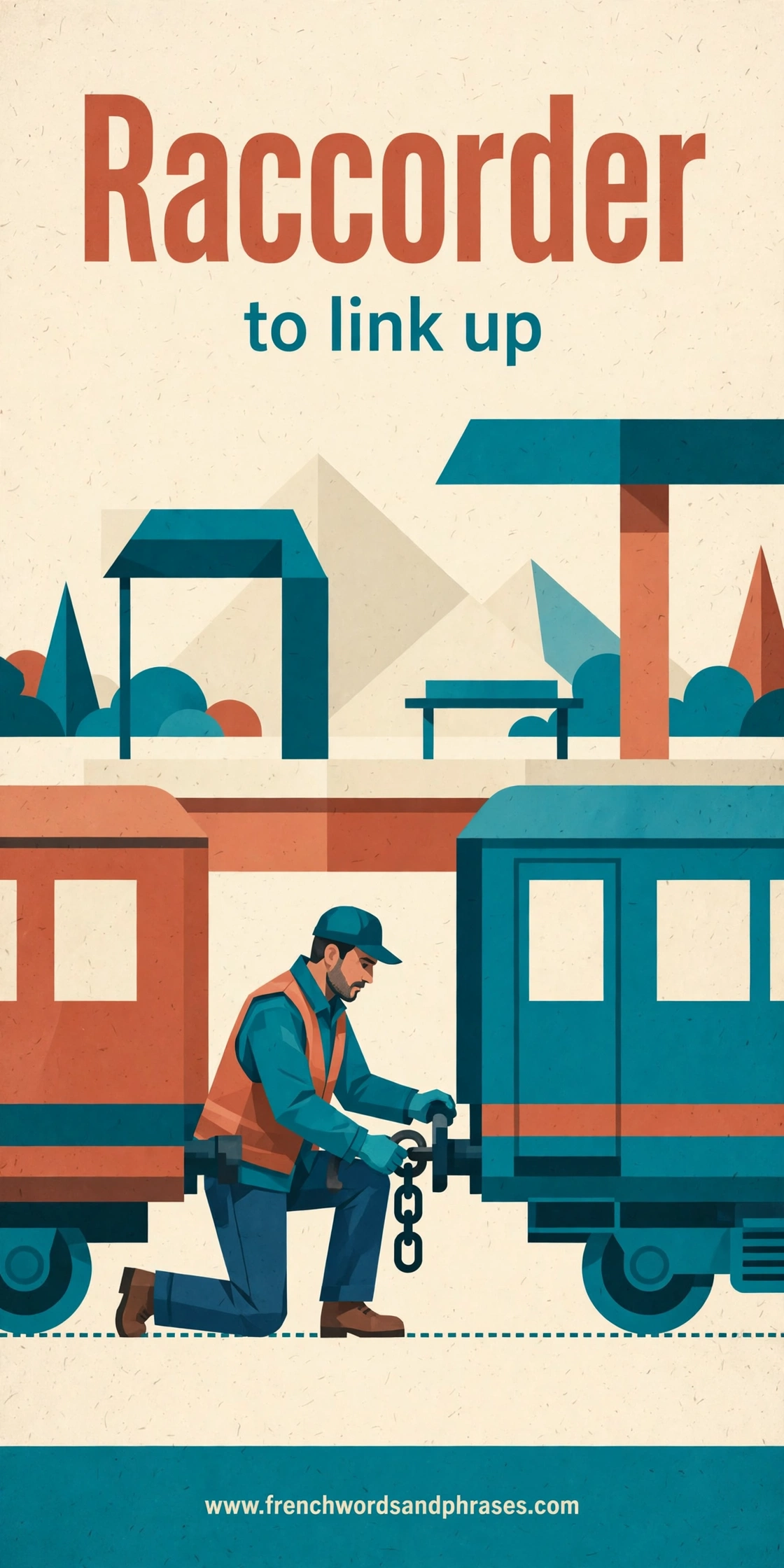
Raccorder means to link up — to connect two things so that they join and work together.
A plumber joining two pipes, a new road meeting the motorway, a village finally wired to the internet — raccorder is the verb of the connection made: two separate things, linked into one working whole.
In this guide, you’ll learn how to conjugate raccorder in all the major French tenses and moods. Explore complete conjugation tables, French examples, English translations, and practice quizzes.
Understanding the French Verb Raccorder
Raccorder is a regular French verb belonging to the first group of verbs, those ending in -er.
It means to link up. It is commonly used for connecting pipes, cables and wires, for linking a house to water, gas, electricity or fibre networks, for joining roads and railway lines, and in film, where un raccord is the matching of two shots so that the join stays invisible.
Verb classification: First group (-er)
Auxiliary verb: Avoir
Past participle: raccordé
Present participle: raccordant
English equivalents: To link up, to connect, to join; se raccorder à — to connect to (a network); un raccord — a joint, a fitting, a connection.
One important detail: raccorder is built on un raccord, the joint itself — the fitting that joins two pipes, the splice that joins two cables. Plumbers, electricians and railway engineers live by it: raccorder une maison au tout-à-l’égout, to connect a house to the mains drainage; raccorder au réseau, to hook up to the network. In the reflexive, se raccorder à is what a line, a road or a user does when they connect to the system.
Experience the Word
Raccorder is the verb of the missing link — before it, two ends facing each other; after it, one continuous line.
Imagine a mountain village waiting for fibre internet. One grey morning the engineers arrive with their cables and their van, and by evening the last house is raccordée — the village has joined the rest of the world down a thread of glass.
Nothing new was built. Two ends were simply joined — raccordés — and everything flowed.
How to Conjugate Raccorder: Complete French Conjugation Guide
Let’s explore every major conjugation of raccorder, beginning with the indicative mood.
How to Conjugate Raccorder in the Indicative Mood
The indicative mood is used to express facts, observations, actions, and events.
How to Conjugate Raccorder in the Present Tense (Présent)
Used for actions happening now, habitual actions, and general truths.
| Subject | Conjugation |
|---|---|
| je | raccorde |
| tu | raccordes |
| il / elle | raccorde |
| nous | raccordons |
| vous | raccordez |
| ils / elles | raccordent |
Example
Les ouvriers raccordent le village au réseau d’eau.
The workers are connecting the village to the water network.
Quick Quiz 1
Complete the sentence:
Nous ______ le tuyau à la pompe.
Reveal the answer
raccordons
Nous raccordons le tuyau à la pompe.
We connect the pipe to the pump.
How to Conjugate Raccorder in the Passé Composé
Used for completed actions in the past. Raccorder takes the auxiliary verb avoir.
| Subject | Conjugation |
|---|---|
| j’ | ai raccordé |
| tu | as raccordé |
| il / elle | a raccordé |
| nous | avons raccordé |
| vous | avez raccordé |
| ils / elles | ont raccordé |
Example
Ils ont raccordé la maison à la fibre optique.
They connected the house to fibre optic.
How to Conjugate Raccorder in the Imparfait (Imperfect Tense)
Used for habitual past actions, descriptions, and ongoing situations in the past.
| Subject | Conjugation |
|---|---|
| je | raccordais |
| tu | raccordais |
| il / elle | raccordait |
| nous | raccordions |
| vous | raccordiez |
| ils / elles | raccordaient |
Example
On raccordait les wagons à la main, autrefois.
People used to couple the wagons by hand, in the old days.
Quick Quiz 2
Choose the correct form:
They connected the cables.
Ils ______ les câbles. (ont raccordé / sont raccordés)
Reveal the answer
ont raccordé
Ils ont raccordé les câbles.
Raccorder takes avoir.
How to Conjugate Raccorder in the Plus-que-parfait
Used to describe an action that had already been completed before another past event.
| Subject | Conjugation |
|---|---|
| j’ | avais raccordé |
| tu | avais raccordé |
| il / elle | avait raccordé |
| nous | avions raccordé |
| vous | aviez raccordé |
| ils / elles | avaient raccordé |
Example
L’électricien avait raccordé le tableau avant l’inspection.
The electrician had connected the board before the inspection.
How to Conjugate Raccorder in the Passé Simple
Primarily used in formal writing, literature, and historical narratives. It is rarely used in everyday conversation.
| Subject | Conjugation |
|---|---|
| je | raccordai |
| tu | raccordas |
| il / elle | raccorda |
| nous | raccordâmes |
| vous | raccordâtes |
| ils / elles | raccordèrent |
Example
L’ingénieur raccorda les deux rives par un pont de bateaux.
The engineer linked the two banks with a pontoon bridge.
How to Conjugate Raccorder in the Passé Antérieur
A literary tense used to express an action completed immediately before another past action, generally in the passé simple.
| Subject | Conjugation |
|---|---|
| j’ | eus raccordé |
| tu | eus raccordé |
| il / elle | eut raccordé |
| nous | eûmes raccordé |
| vous | eûtes raccordé |
| ils / elles | eurent raccordé |
Example
Quand ils eurent raccordé le dernier câble, les lumières s’allumèrent.
When they had connected the last cable, the lights came on.
How to Conjugate Raccorder in the Future Tense (Futur Simple)
Used to describe actions that will take place in the future.
| Subject | Conjugation |
|---|---|
| je | raccorderai |
| tu | raccorderas |
| il / elle | raccordera |
| nous | raccorderons |
| vous | raccorderez |
| ils / elles | raccorderont |
Example
La fibre raccordera toutes les fermes de la vallée.
Fibre will connect all the farms in the valley.
How to Conjugate Raccorder in the Futur Antérieur (Future Perfect)
Used for an action that will have been completed before a particular point in the future.
| Subject | Conjugation |
|---|---|
| j’ | aurai raccordé |
| tu | auras raccordé |
| il / elle | aura raccordé |
| nous | aurons raccordé |
| vous | aurez raccordé |
| ils / elles | auront raccordé |
Example
À la fin du mois, on aura raccordé deux cents foyers.
By the end of the month, they will have connected two hundred homes.
How to Conjugate Raccorder in the Near Future (Futur Proche)
Used to describe something that is going to happen soon. Formed with aller + infinitive.
| Subject | Conjugation |
|---|---|
| je | vais raccorder |
| tu | vas raccorder |
| il / elle | va raccorder |
| nous | allons raccorder |
| vous | allez raccorder |
| ils / elles | vont raccorder |
Example
Le plombier va raccorder la nouvelle salle de bains.
The plumber is going to connect up the new bathroom.
How to Conjugate Raccorder in the Conditional Mood
The conditional mood expresses what would happen under certain circumstances. It is also frequently used to make polite requests or express wishes.
How to Conjugate Raccorder in the Present Conditional
| Subject | Conjugation |
|---|---|
| je | raccorderais |
| tu | raccorderais |
| il / elle | raccorderait |
| nous | raccorderions |
| vous | raccorderiez |
| ils / elles | raccorderaient |
Example
Un deuxième câble raccorderait mieux les deux bâtiments.
A second cable would link the two buildings better.
How to Conjugate Raccorder in the Past Conditional
| Subject | Conjugation |
|---|---|
| j’ | aurais raccordé |
| tu | aurais raccordé |
| il / elle | aurait raccordé |
| nous | aurions raccordé |
| vous | auriez raccordé |
| ils / elles | auraient raccordé |
Example
Sans la grève, ils auraient raccordé le quartier en juin.
Without the strike, they would have connected the district in June.
Raccorder in the Literary Past Conditional Form
This less common literary form uses the imperfect subjunctive of avoir.
| Subject | Conjugation |
|---|---|
| j’ | eusse raccordé |
| tu | eusses raccordé |
| il / elle | eût raccordé |
| nous | eussions raccordé |
| vous | eussiez raccordé |
| ils / elles | eussent raccordé |
Example
Le fontainier eût raccordé les tuyaux avant la nuit.
The fountain keeper would have connected the pipes before nightfall.
How to Conjugate Raccorder in the Subjunctive Mood
The subjunctive is used to express wishes, emotions, doubts, necessity, and uncertainty. It frequently follows expressions such as il faut que (it is necessary that) or bien que (although).
How to Conjugate Raccorder in the Present Subjunctive
| Subject | Conjugation |
|---|---|
| que je | raccorde |
| que tu | raccordes |
| qu’il / qu’elle | raccorde |
| que nous | raccordions |
| que vous | raccordiez |
| qu’ils / qu’elles | raccordent |
Example
Il faut que le technicien raccorde votre ligne aujourd’hui.
The technician must connect your line today.
Quick Quiz 3
Complete the sentence using the subjunctive:
Il faut que vous ______ ce câble.
Reveal the answer
raccordiez
Il faut que vous raccordiez ce câble.
You must connect this cable.
How to Conjugate Raccorder in the Imperfect Subjunctive
A literary tense, rarely encountered in modern spoken French.
| Subject | Conjugation |
|---|---|
| que je | raccordasse |
| que tu | raccordasses |
| qu’il / qu’elle | raccordât |
| que nous | raccordassions |
| que vous | raccordassiez |
| qu’ils / qu’elles | raccordassent |
Example
Le maire voulait qu’on raccordât le hameau au gaz.
The mayor wanted the hamlet to be connected to the gas supply.
How to Conjugate Raccorder in the Pluperfect Subjunctive
A literary construction used to express an action completed before another past action.
| Subject | Conjugation |
|---|---|
| que j’ | eusse raccordé |
| que tu | eusses raccordé |
| qu’il / qu’elle | eût raccordé |
| que nous | eussions raccordé |
| que vous | eussiez raccordé |
| qu’ils / qu’elles | eussent raccordé |
Example
On doutait qu’ils eussent raccordé les deux réseaux à temps.
People doubted they had linked the two networks in time.
How to Conjugate Raccorder in the Past Subjunctive
| Subject | Conjugation |
|---|---|
| que j’ | aie raccordé |
| que tu | aies raccordé |
| qu’il / qu’elle | ait raccordé |
| que nous | ayons raccordé |
| que vous | ayez raccordé |
| qu’ils / qu’elles | aient raccordé |
Example
Je suis content que le plombier ait raccordé l’eau chaude.
I am glad the plumber connected the hot water.
How to Conjugate Raccorder in the Imperative
The imperative is used to give commands, instructions, invitations, or suggestions. Subject pronouns are omitted.
How to Conjugate Raccorder in the Present Imperative
| Person | Conjugation |
|---|---|
| (tu) | raccorde |
| (nous) | raccordons |
| (vous) | raccordez |
Example
Raccordez ce tuyau à la machine !
Connect this pipe to the machine!
Quick Quiz 4
How would you say Connect this pipe (tu form)?
Reveal the answer
Raccorde ce tuyau !
French Participles of Raccorder
Participles are verb forms that can be used in compound tenses and other grammatical constructions.
Present Participle of Raccorder
raccordant
En raccordant les câbles, il a trouvé le défaut.
While connecting the cables, he found the fault.
Past Participle of Raccorder
raccordé
Raccordée au réseau, la maison a enfin l’eau courante.
Connected to the network, the house finally has running water.
Raccorder in Everyday French: Real-Life Examples
Now that you know the conjugations, let’s see how raccorder appears in everyday French.
Example 1 — Present
On raccorde la maison au tout-à-l’égout.
We are connecting the house to the mains drainage.
Example 2 — Passé composé
La fibre a raccordé tout le village.
Fibre connected the whole village.
Example 3 — Imparfait
Les cheminots raccordaient les wagons le matin.
The railwaymen used to couple the wagons in the morning.
Example 4 — Future
Ils raccorderont le quartier au gaz en mars.
They will connect the district to the gas in March.
Example 5 — Conditional
Ce câble raccorderait les deux pièces.
This cable would link the two rooms.
Example 6 — Imperative
Raccorde l’ordinateur à l’écran !
Connect the computer to the screen!
Beyond Translation: The Meaning of Raccorder
English reaches for connect, join, hook up, link; French raccorder names the act by its result — le raccord, the joint.
Every raccordement erases a gap.
Between two pipes, two networks or two villages, raccorder is the moment separate things become one system — and start to flow.
How to Remember the French Verb Raccorder
Remember it this way: Raccorder is about the joint made — two ends become one flowing line.
- Un raccord is the joint; raccorder is making the joint — pipes, cables, networks.
- Raccorder à — to connect TO: raccorder la maison à la fibre, au gaz, au réseau.
- Regular -er: je raccorde, nous raccordons, past participle raccordé.
The key idea is the joint made — two ends become one flowing line.
Test Your Knowledge of Raccorder
Let’s see how much you’ve learned. Try answering these questions before revealing the answers.
Question 1
What is un raccord?
Reveal the answer
A joint or fitting — the piece that joins two pipes or cables.
Question 2
How do you say They connected the house to fibre optic in French?
Reveal the answer
Ils ont raccordé la maison à la fibre optique.
Question 3
Translate: The technician must connect your line today.
Reveal the answer
Il faut que le technicien raccorde votre ligne aujourd’hui.
Question 4
What is the past participle of raccorder?
Reveal the answer
Raccordé.
Question 5
Complete the sentence:
Il faut que vous ______ la maison au réseau.
Reveal the answer
raccordiez
Il faut que vous raccordiez la maison au réseau.
You must connect the house to the network.
Your Final Challenge
Can You Use It?
How would you say this in French?
The workers connect the village to fibre, and the whole village steps into the new century.
Reveal the answer
Les ouvriers raccordent le village à la fibre, et le village entier entre dans le siècle nouveau.
The workers connect the village to fibre, and the whole village steps into the new century.
A little French. A little curiosity. A richer everyday life.
LEARN FRENCH ONE WORD AT A TIME




