A French Word to Live By
How to Conjugate Édicter in French
/e.dik.te/
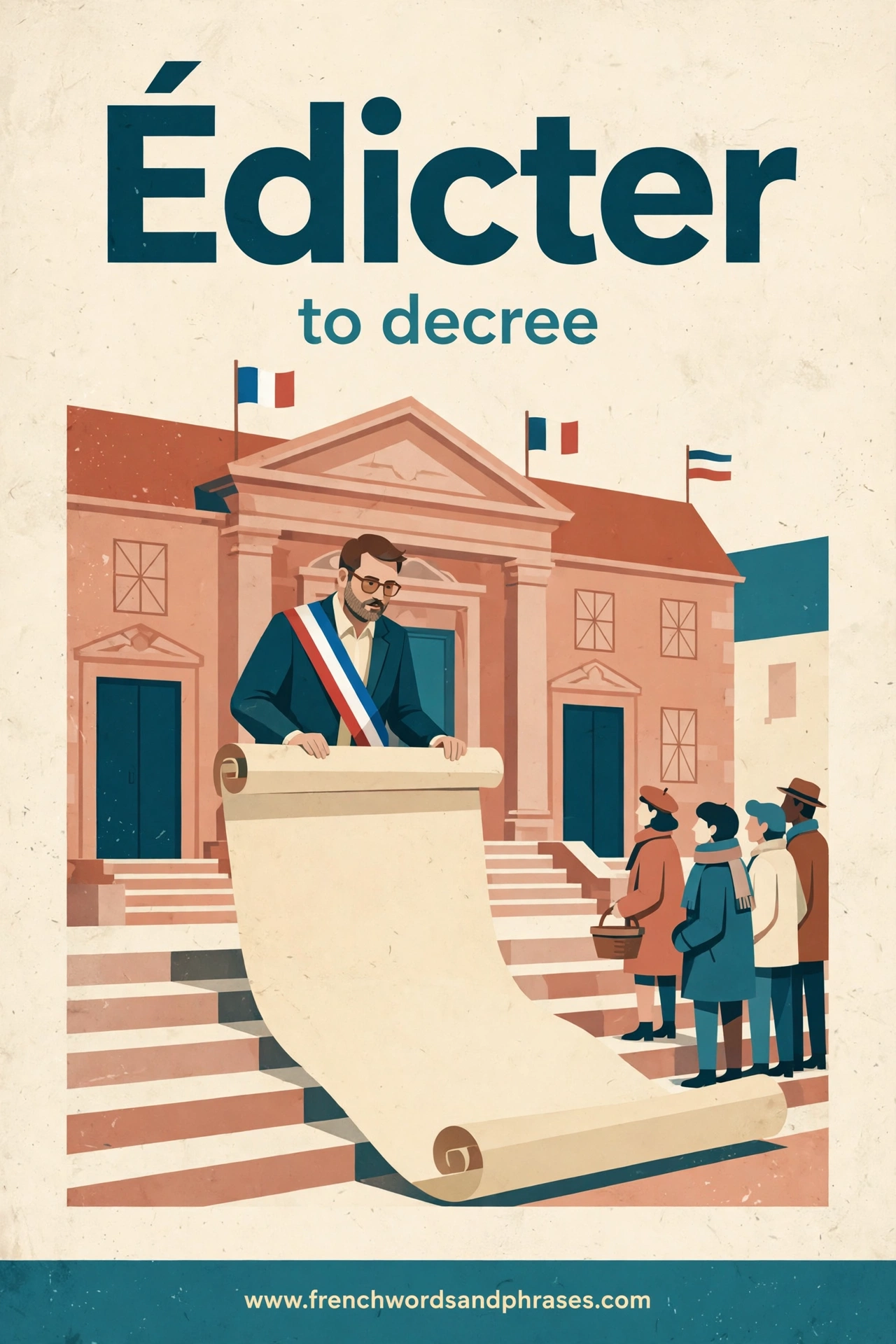
Édicter means to decree.
A seal pressed into wax, a signature at the foot of a solemn page, a rule that will bind thousands of people who were never asked — édicter is the verb of authority laying down the law, the word of kings, parliaments and committees.
In this guide, you’ll learn how to conjugate édicter in all the major French tenses and moods. Explore complete conjugation tables, French examples, English translations, and practice quizzes.
Understanding the French Verb Édicter
Édicter is a regular French verb belonging to the first group of verbs, those ending in -er.
It means to decree. It is commonly used for laws and decrees issued by a government, for regulations and safety standards laid down by an authority, and for the rules of a competition, a profession or an organisation — always where the rule-maker has the power to impose the rule.
Verb classification: First group (-er)
Auxiliary verb: Avoir
Past participle: édicté
Present participle: édictant
English equivalents: To decree, to enact, to lay down (rules); un édit — an edict, as in l’Édit de Nantes.
One important detail: édicter belongs to formal, legal French — it is what states, councils and federations do with laws, decrees and standards. Its noun cousin un édit is the historic royal decree: l’Édit de Nantes (1598) is the one every French schoolchild knows. In everyday speech nobody édicte the house rules — you simply fixez des règles. Save édicter for texts with real authority behind them, and note that the -ct- never changes: j’édicte, nous édictons.
Experience the Word
Édicter is the verb of the official page — nothing is discussed, everything is pronounced.
Imagine a council chamber in 1598. Candles, parchment, a long silence — then the king’s secretary reads the text that will let two religions live side by side. One verb has just changed a kingdom: il a édicté.
The words have not been suggested or debated. They have been decreed — édictés, and binding on everyone.
How to Conjugate Édicter: Complete French Conjugation Guide
Let’s explore every major conjugation of édicter, beginning with the indicative mood.
How to Conjugate Édicter in the Indicative Mood
The indicative mood is used to express facts, observations, actions, and events.
How to Conjugate Édicter in the Present Tense (Présent)
Used for actions happening now, habitual actions, and general truths.
| Subject | Conjugation |
|---|---|
| je | édicte |
| tu | édictes |
| il / elle | édicte |
| nous | édictons |
| vous | édictez |
| ils / elles | édictent |
Example
Le gouvernement édicte de nouvelles règles de sécurité.
The government is decreeing new safety rules.
Quick Quiz 1
Complete the sentence:
Nous ______ les règles du tournoi demain.
Reveal the answer
édicterons
Nous édicterons les règles du tournoi demain.
We will lay down the tournament rules tomorrow.
How to Conjugate Édicter in the Passé Composé
Used for completed actions in the past. Édicter takes the auxiliary verb avoir.
| Subject | Conjugation |
|---|---|
| j’ | ai édicté |
| tu | as édicté |
| il / elle | a édicté |
| nous | avons édicté |
| vous | avez édicté |
| ils / elles | ont édicté |
Example
Le maire a édicté un arrêté interdisant les feux.
The mayor decreed an order banning fires.
How to Conjugate Édicter in the Imparfait (Imperfect Tense)
Used for habitual past actions, descriptions, and ongoing situations in the past.
| Subject | Conjugation |
|---|---|
| je | édictais |
| tu | édictais |
| il / elle | édictait |
| nous | édictions |
| vous | édictiez |
| ils / elles | édictaient |
Example
Autrefois, le roi édictait seul les lois du royaume.
In the old days, the king alone used to decree the laws of the kingdom.
Quick Quiz 2
Choose the correct form:
The mayor decreed the order.
Le maire ______ l’arrêté. (a édicté / est édicté)
Reveal the answer
a édicté
Le maire a édicté l’arrêté.
Édicter takes avoir.
How to Conjugate Édicter in the Plus-que-parfait
Used to describe an action that had already been completed before another past event.
| Subject | Conjugation |
|---|---|
| j’ | avais édicté |
| tu | avais édicté |
| il / elle | avait édicté |
| nous | avions édicté |
| vous | aviez édicté |
| ils / elles | avaient édicté |
Example
Le comité avait édicté le règlement avant l’ouverture du concours.
The committee had laid down the rules before the competition opened.
How to Conjugate Édicter in the Passé Simple
Primarily used in formal writing, literature, and historical narratives. It is rarely used in everyday conversation.
| Subject | Conjugation |
|---|---|
| je | édictai |
| tu | édictas |
| il / elle | édicta |
| nous | édictâmes |
| vous | édictâtes |
| ils / elles | édictèrent |
Example
En 1598, Henri IV édicta le célèbre Édit de Nantes.
In 1598, Henry IV decreed the famous Edict of Nantes.
How to Conjugate Édicter in the Passé Antérieur
A literary tense used to express an action completed immediately before another past action, generally in the passé simple.
| Subject | Conjugation |
|---|---|
| j’ | eus édicté |
| tu | eus édicté |
| il / elle | eut édicté |
| nous | eûmes édicté |
| vous | eûtes édicté |
| ils / elles | eurent édicté |
Example
Quand le conseil eut édicté la norme, les entreprises s’adaptèrent.
When the council had laid down the standard, the companies adapted.
How to Conjugate Édicter in the Future Tense (Futur Simple)
Used to describe actions that will take place in the future.
| Subject | Conjugation |
|---|---|
| je | édicterai |
| tu | édicteras |
| il / elle | édictera |
| nous | édicterons |
| vous | édicterez |
| ils / elles | édicteront |
Example
L’assemblée édictera bientôt une loi sur l’eau.
The assembly will soon enact a law on water.
How to Conjugate Édicter in the Futur Antérieur (Future Perfect)
Used for an action that will have been completed before a particular point in the future.
| Subject | Conjugation |
|---|---|
| j’ | aurai édicté |
| tu | auras édicté |
| il / elle | aura édicté |
| nous | aurons édicté |
| vous | aurez édicté |
| ils / elles | auront édicté |
Example
À la fin de la session, le parlement aura édicté dix lois.
By the end of the session, parliament will have enacted ten laws.
How to Conjugate Édicter in the Near Future (Futur Proche)
Used to describe something that is going to happen soon. Formed with aller + infinitive.
| Subject | Conjugation |
|---|---|
| je | vais édicter |
| tu | vas édicter |
| il / elle | va édicter |
| nous | allons édicter |
| vous | allez édicter |
| ils / elles | vont édicter |
Example
Le préfet va édicter de nouvelles mesures ce soir.
The prefect is going to decree new measures this evening.
How to Conjugate Édicter in the Conditional Mood
The conditional mood expresses what would happen under certain circumstances. It is also frequently used to make polite requests or express wishes.
How to Conjugate Édicter in the Present Conditional
| Subject | Conjugation |
|---|---|
| je | édicterais |
| tu | édicterais |
| il / elle | édicterait |
| nous | édicterions |
| vous | édicteriez |
| ils / elles | édicteraient |
Example
Sans l’accord des régions, le ministère n’édicterait pas cette règle.
Without the regions’ agreement, the ministry would not decree this rule.
How to Conjugate Édicter in the Past Conditional
| Subject | Conjugation |
|---|---|
| j’ | aurais édicté |
| tu | aurais édicté |
| il / elle | aurait édicté |
| nous | aurions édicté |
| vous | auriez édicté |
| ils / elles | auraient édicté |
Example
Le roi aurait édicté la loi si ses conseillers l’avaient soutenu.
The king would have decreed the law if his advisers had backed him.
Édicter in the Literary Past Conditional Form
This less common literary form uses the imperfect subjunctive of avoir.
| Subject | Conjugation |
|---|---|
| j’ | eusse édicté |
| tu | eusses édicté |
| il / elle | eût édicté |
| nous | eussions édicté |
| vous | eussiez édicté |
| ils / elles | eussent édicté |
Example
Le prince eût édicté des lois plus douces.
The prince would have decreed gentler laws.
How to Conjugate Édicter in the Subjunctive Mood
The subjunctive is used to express wishes, emotions, doubts, necessity, and uncertainty. It frequently follows expressions such as il faut que (it is necessary that) or bien que (although).
How to Conjugate Édicter in the Present Subjunctive
| Subject | Conjugation |
|---|---|
| que je | édicte |
| que tu | édictes |
| qu’il / qu’elle | édicte |
| que nous | édictions |
| que vous | édictiez |
| qu’ils / qu’elles | édictent |
Example
Il faut que l’État édicte des règles claires.
The State must lay down clear rules.
Quick Quiz 3
Complete the sentence using the subjunctive:
Il faut que vous ______ des règles claires.
Reveal the answer
édictiez
Il faut que vous édictiez des règles claires.
You must lay down clear rules.
How to Conjugate Édicter in the Imperfect Subjunctive
A literary tense, rarely encountered in modern spoken French.
| Subject | Conjugation |
|---|---|
| que je | édictasse |
| que tu | édictasses |
| qu’il / qu’elle | édictât |
| que nous | édictassions |
| que vous | édictassiez |
| qu’ils / qu’elles | édictassent |
Example
Le peuple ne voulait pas que le roi édictât seul les impôts.
The people did not want the king to decree taxes alone.
How to Conjugate Édicter in the Pluperfect Subjunctive
A literary construction used to express an action completed before another past action.
| Subject | Conjugation |
|---|---|
| que j’ | eusse édicté |
| que tu | eusses édicté |
| qu’il / qu’elle | eût édicté |
| que nous | eussions édicté |
| que vous | eussiez édicté |
| qu’ils / qu’elles | eussent édicté |
Example
On regretta que le conseil eût édicté la norme sans débat.
People regretted that the council had laid down the standard without debate.
How to Conjugate Édicter in the Past Subjunctive
| Subject | Conjugation |
|---|---|
| que j’ | aie édicté |
| que tu | aies édicté |
| qu’il / qu’elle | ait édicté |
| que nous | ayons édicté |
| que vous | ayez édicté |
| qu’ils / qu’elles | aient édicté |
Example
Je suis content que la mairie ait édicté cet arrêté.
I am glad the town hall decreed this order.
How to Conjugate Édicter in the Imperative
The imperative is used to give commands, instructions, invitations, or suggestions. Subject pronouns are omitted.
How to Conjugate Édicter in the Present Imperative
| Person | Conjugation |
|---|---|
| (tu) | édicte |
| (nous) | édictons |
| (vous) | édictez |
Example
Édictez des règles simples, tout le monde les suivra !
Lay down simple rules, everyone will follow them!
Quick Quiz 4
How would you say State the rule clearly (tu form)?
Reveal the answer
Édicte la règle clairement !
French Participles of Édicter
Participles are verb forms that can be used in compound tenses and other grammatical constructions.
Present Participle of Édicter
édictant
En édictant cette loi, le gouvernement a surpris tout le monde.
By enacting this law, the government surprised everyone.
Past Participle of Édicter
édicté
Édictées en 1905, ces règles sont toujours en vigueur.
Laid down in 1905, these rules are still in force.
Édicter in Everyday French: Real-Life Examples
Now that you know the conjugations, let’s see how édicter appears in everyday French.
Example 1 — Present
Le gouvernement édicte une nouvelle norme.
The government is laying down a new standard.
Example 2 — Passé composé
Ils ont édicté le règlement l’an dernier.
They laid down the regulations last year.
Example 3 — Imparfait
Le roi édictait les lois sans consulter personne.
The king used to decree the laws without consulting anyone.
Example 4 — Future
Nous édicterons les règles du tournoi demain.
We will lay down the tournament rules tomorrow.
Example 5 — Conditional
Tu édicterais des règles plus justes, toi.
You would lay down fairer rules.
Example 6 — Imperative
Édicte la règle clairement !
State the rule clearly!
Beyond Translation: The Meaning of Édicter
English keeps edict as a museum noun — something emperors issued long ago. French édicter is a working verb of modern administration: ministries édictent standards this week, and the local mairie édicte its arrêtés every month.
The authority is built into the word.
Anyone can proposer a rule; only power can l’édicter — which is why journalists reach for it when they want a decision to sound heavy, distant and final.
How to Remember the French Verb Édicter
Remember it this way: Édicter is about authority laying down the law — solemn, official, binding.
- Édicter is the verb inside un édit — an edict: to édicter is to issue one.
- Formal register: governments édictent des lois; friends simply fixent des règles.
- Regular -er: j’édicte, nous édictons, past participle édicté — the -ct- never moves.
The key idea is authority laying down the law — solemn, official, binding.
Test Your Knowledge of Édicter
Let’s see how much you’ve learned. Try answering these questions before revealing the answers.
Question 1
What is un édit?
Reveal the answer
An edict — a formal decree, like the Édit de Nantes of 1598.
Question 2
How do you say The government enacted a new law in French?
Reveal the answer
Le gouvernement a édicté une nouvelle loi.
Question 3
Translate: The mayor decreed an order banning fires.
Reveal the answer
Le maire a édicté un arrêté interdisant les feux.
Question 4
What is the past participle of édicter?
Reveal the answer
Édicté.
Question 5
Complete the sentence:
Il faut que l’État ______ des règles claires.
Reveal the answer
édicte
Il faut que l’État édicte des règles claires.
The State must lay down clear rules.
Your Final Challenge
Can You Use It?
How would you say this in French?
The council laid down simple rules, and the whole neighbourhood respects them.
Reveal the answer
Le conseil a édicté des règles simples, et tout le quartier les respecte.
The council laid down simple rules, and the whole neighbourhood respects them.
A little French. A little curiosity. A richer everyday life.
LEARN FRENCH ONE WORD AT A TIME