A French Word to Live By
How to Conjugate Décorner in French
/de.kɔʁ.ne/
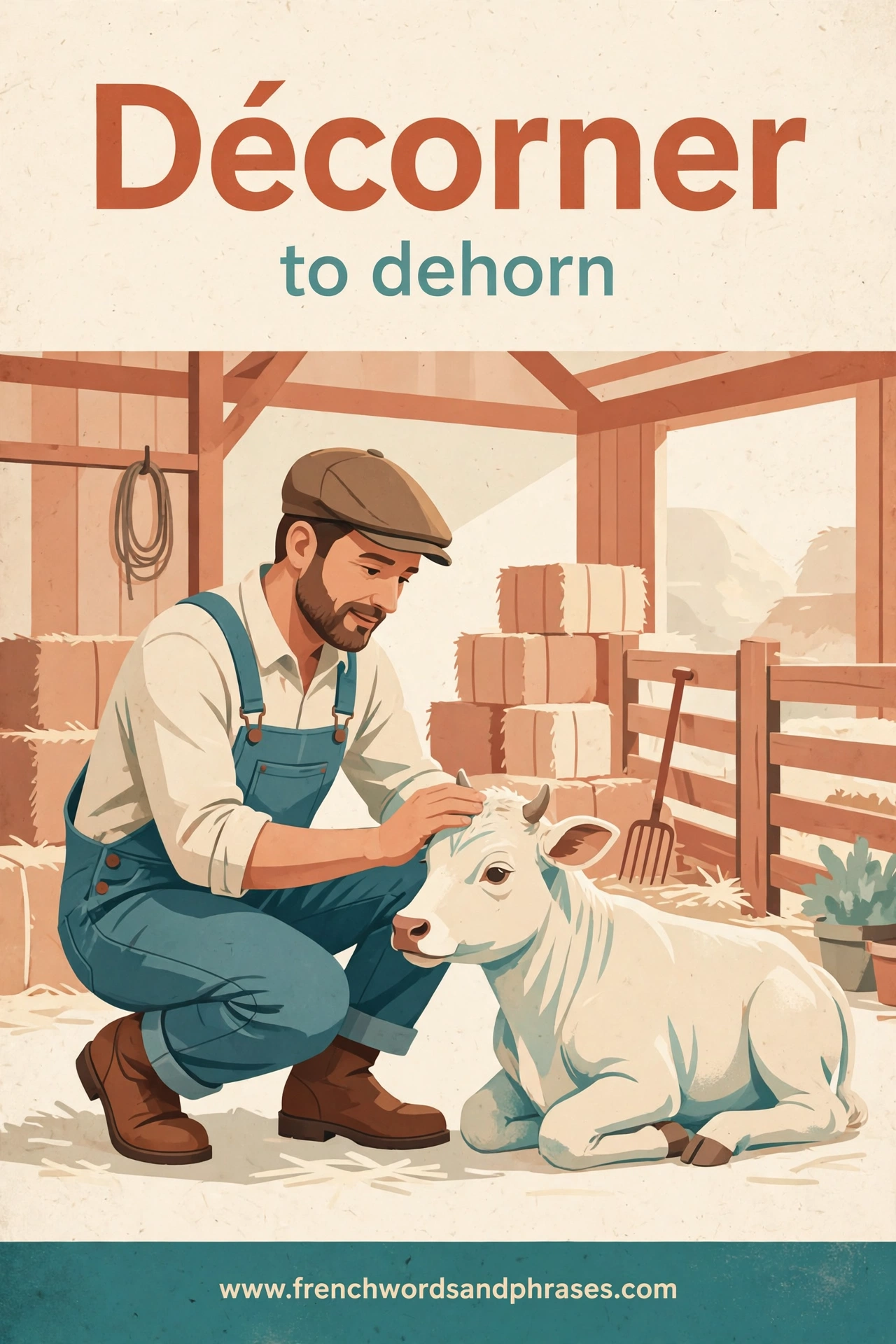
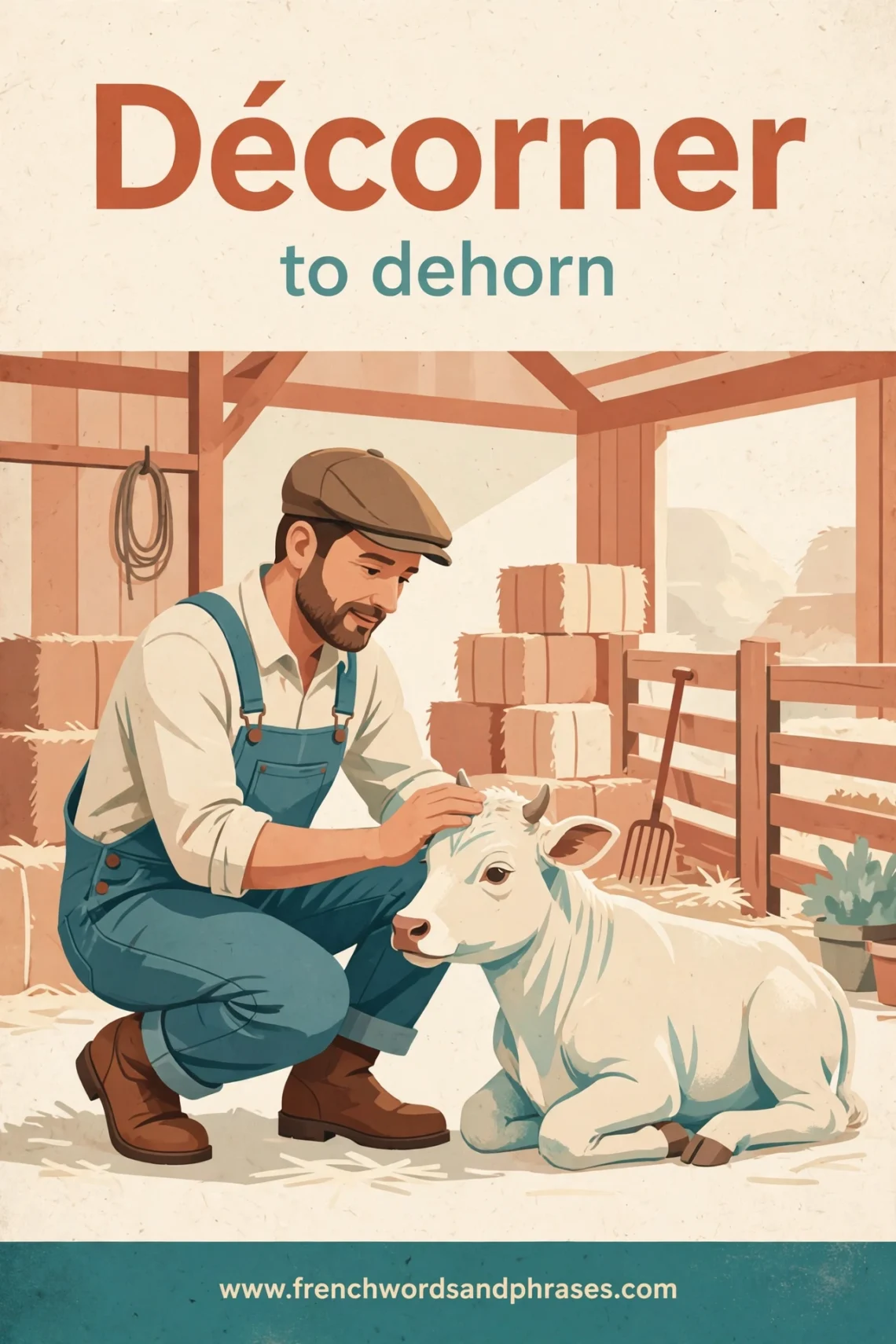
Décorner means to dehorn — to remove the horns of an animal.
A calf held gently in the handling chute, a farmer working quickly and kindly, a herd made safer for itself — décorner is the verb of removing horns, and of one of the most beloved weather expressions in the French language.
In this guide, you’ll learn how to conjugate décorner in all the major French tenses and moods. Explore complete conjugation tables, French examples, English translations, and practice quizzes.
Understanding the French Verb Décorner
Décorner is a regular French verb belonging to the first group of verbs, those ending in -er.
It means to dehorn. It is commonly used on farms for dehorning calves and cattle, in veterinary practice, and — far beyond the farm — in the set phrase un vent à décorner les bœufs, France’s standard hyperbole for a violent wind.
Verb classification: First group (-er)
Auxiliary verb: Avoir
Past participle: décorné
Present participle: décornant
English equivalents: To dehorn (cattle); un vent à décorner les bœufs — a howling gale (literally, a wind to blow the horns off the oxen).
One important detail: décorner gave French its favourite way to describe a storm — un vent à décorner les bœufs, a wind strong enough to tear the horns off the oxen. You will hear it every winter, usually through a window, with admiration. On the farm itself the verb is plain work: calves are décornés young, for the safety of the herd and of the farmer, and the job itself is called le décornage.
Experience the Word
Décorner is the verb of the safer herd — and, by a happy detour, of the wildest weather in the language.
Imagine a farm in the Cantal in early spring. One by one the calves pass through the handling chute, quickly and calmly décornés, then run back to their mothers, shaking their heads at the strangeness of it all.
The horns will never grow back. The herd has been dehorned — and will live more peacefully for it.
How to Conjugate Décorner: Complete French Conjugation Guide
Let’s explore every major conjugation of décorner, beginning with the indicative mood.
How to Conjugate Décorner in the Indicative Mood
The indicative mood is used to express facts, observations, actions, and events.
How to Conjugate Décorner in the Present Tense (Présent)
Used for actions happening now, habitual actions, and general truths.
| Subject | Conjugation |
|---|---|
| je | décorne |
| tu | décornes |
| il / elle | décorne |
| nous | décornons |
| vous | décornez |
| ils / elles | décornent |
Example
Le vétérinaire décorne les veaux au printemps.
The vet dehorns the calves in spring.
Quick Quiz 1
Complete the sentence:
Nous ______ les veaux au printemps.
Reveal the answer
décornons
Nous décornons les veaux au printemps.
We dehorn the calves in spring.
How to Conjugate Décorner in the Passé Composé
Used for completed actions in the past. Décorner takes the auxiliary verb avoir.
| Subject | Conjugation |
|---|---|
| j’ | ai décorné |
| tu | as décorné |
| il / elle | a décorné |
| nous | avons décorné |
| vous | avez décorné |
| ils / elles | ont décorné |
Example
Nous avons décorné tout le troupeau cette semaine.
We dehorned the whole herd this week.
How to Conjugate Décorner in the Imparfait (Imperfect Tense)
Used for habitual past actions, descriptions, and ongoing situations in the past.
| Subject | Conjugation |
|---|---|
| je | décornais |
| tu | décornais |
| il / elle | décornait |
| nous | décornions |
| vous | décorniez |
| ils / elles | décornaient |
Example
Autrefois, on décornait les bœufs avant les foires.
In the old days, people used to dehorn the oxen before the fairs.
Quick Quiz 2
Choose the correct form:
They dehorned the herd.
Ils ______ le troupeau. (ont décorné / sont décornés)
Reveal the answer
ont décorné
Ils ont décorné le troupeau.
Décorner takes avoir.
How to Conjugate Décorner in the Plus-que-parfait
Used to describe an action that had already been completed before another past event.
| Subject | Conjugation |
|---|---|
| j’ | avais décorné |
| tu | avais décorné |
| il / elle | avait décorné |
| nous | avions décorné |
| vous | aviez décorné |
| ils / elles | avaient décorné |
Example
Il avait décorné les génisses avant de les vendre.
He had dehorned the heifers before selling them.
How to Conjugate Décorner in the Passé Simple
Primarily used in formal writing, literature, and historical narratives. It is rarely used in everyday conversation.
| Subject | Conjugation |
|---|---|
| je | décornai |
| tu | décornas |
| il / elle | décorna |
| nous | décornâmes |
| vous | décornâtes |
| ils / elles | décornèrent |
Example
Le fermier décorna ses vaches en une matinée.
The farmer dehorned his cows in a single morning.
How to Conjugate Décorner in the Passé Antérieur
A literary tense used to express an action completed immediately before another past action, generally in the passé simple.
| Subject | Conjugation |
|---|---|
| j’ | eus décorné |
| tu | eus décorné |
| il / elle | eut décorné |
| nous | eûmes décorné |
| vous | eûtes décorné |
| ils / elles | eurent décorné |
Example
Quand il eut décorné la dernière vache, il rangea ses outils.
When he had dehorned the last cow, he put away his tools.
How to Conjugate Décorner in the Future Tense (Futur Simple)
Used to describe actions that will take place in the future.
| Subject | Conjugation |
|---|---|
| je | décornerai |
| tu | décorneras |
| il / elle | décornera |
| nous | décornerons |
| vous | décornerez |
| ils / elles | décorneront |
Example
La semaine prochaine, nous décornerons les jeunes taureaux.
Next week, we will dehorn the young bulls.
How to Conjugate Décorner in the Futur Antérieur (Future Perfect)
Used for an action that will have been completed before a particular point in the future.
| Subject | Conjugation |
|---|---|
| j’ | aurai décorné |
| tu | auras décorné |
| il / elle | aura décorné |
| nous | aurons décorné |
| vous | aurez décorné |
| ils / elles | auront décorné |
Example
À la fin du mois, l’éleveur aura décorné toutes ses bêtes.
By the end of the month, the breeder will have dehorned all his animals.
How to Conjugate Décorner in the Near Future (Futur Proche)
Used to describe something that is going to happen soon. Formed with aller + infinitive.
| Subject | Conjugation |
|---|---|
| je | vais décorner |
| tu | vas décorner |
| il / elle | va décorner |
| nous | allons décorner |
| vous | allez décorner |
| ils / elles | vont décorner |
Example
Le vétérinaire va décorner les veaux cet après-midi.
The vet is going to dehorn the calves this afternoon.
How to Conjugate Décorner in the Conditional Mood
The conditional mood expresses what would happen under certain circumstances. It is also frequently used to make polite requests or express wishes.
How to Conjugate Décorner in the Present Conditional
| Subject | Conjugation |
|---|---|
| je | décornerais |
| tu | décornerais |
| il / elle | décornerait |
| nous | décornerions |
| vous | décorneriez |
| ils / elles | décorneraient |
Example
Sans aide, je ne décornerais pas ces bêtes tout seul.
Without help, I would not dehorn these animals on my own.
How to Conjugate Décorner in the Past Conditional
| Subject | Conjugation |
|---|---|
| j’ | aurais décorné |
| tu | aurais décorné |
| il / elle | aurait décorné |
| nous | aurions décorné |
| vous | auriez décorné |
| ils / elles | auraient décorné |
Example
Ils auraient décorné le troupeau plus tôt sans la tempête.
They would have dehorned the herd earlier if not for the storm.
Décorner in the Literary Past Conditional Form
This less common literary form uses the imperfect subjunctive of avoir.
| Subject | Conjugation |
|---|---|
| j’ | eusse décorné |
| tu | eusses décorné |
| il / elle | eût décorné |
| nous | eussions décorné |
| vous | eussiez décorné |
| ils / elles | eussent décorné |
Example
Le vent eût décorné les bœufs, tant il soufflait cette nuit-là.
The wind would have blown the horns off the oxen, it blew so hard that night.
How to Conjugate Décorner in the Subjunctive Mood
The subjunctive is used to express wishes, emotions, doubts, necessity, and uncertainty. It frequently follows expressions such as il faut que (it is necessary that) or bien que (although).
How to Conjugate Décorner in the Present Subjunctive
| Subject | Conjugation |
|---|---|
| que je | décorne |
| que tu | décornes |
| qu’il / qu’elle | décorne |
| que nous | décornions |
| que vous | décorniez |
| qu’ils / qu’elles | décornent |
Example
Il faut que le vétérinaire décorne les veaux avant l’été.
The vet must dehorn the calves before summer.
Quick Quiz 3
Complete the sentence using the subjunctive:
Il faut que vous ______ les génisses.
Reveal the answer
décorniez
Il faut que vous décorniez les génisses.
You must dehorn the heifers.
How to Conjugate Décorner in the Imperfect Subjunctive
A literary tense, rarely encountered in modern spoken French.
| Subject | Conjugation |
|---|---|
| que je | décornasse |
| que tu | décornasses |
| qu’il / qu’elle | décornât |
| que nous | décornassions |
| que vous | décornassiez |
| qu’ils / qu’elles | décornassent |
Example
L’éleveur voulait que l’on décornât les génisses au printemps.
The breeder wanted the heifers to be dehorned in spring.
How to Conjugate Décorner in the Pluperfect Subjunctive
A literary construction used to express an action completed before another past action.
| Subject | Conjugation |
|---|---|
| que j’ | eusse décorné |
| que tu | eusses décorné |
| qu’il / qu’elle | eût décorné |
| que nous | eussions décorné |
| que vous | eussiez décorné |
| qu’ils / qu’elles | eussent décorné |
Example
On vérifia qu’il eût décorné les bêtes avant la foire.
They checked that he had dehorned the animals before the fair.
How to Conjugate Décorner in the Past Subjunctive
| Subject | Conjugation |
|---|---|
| que j’ | aie décorné |
| que tu | aies décorné |
| qu’il / qu’elle | ait décorné |
| que nous | ayons décorné |
| que vous | ayez décorné |
| qu’ils / qu’elles | aient décorné |
Example
Je suis soulagé que vous ayez décorné le troupeau sans accident.
I am relieved that you dehorned the herd without an accident.
How to Conjugate Décorner in the Imperative
The imperative is used to give commands, instructions, invitations, or suggestions. Subject pronouns are omitted.
How to Conjugate Décorner in the Present Imperative
| Person | Conjugation |
|---|---|
| (tu) | décorne |
| (nous) | décornons |
| (vous) | décornez |
Example
Décorne les veaux avec douceur, ils sont jeunes !
Dehorn the calves gently, they are young!
Quick Quiz 4
How would you say Dehorn the calves gently (tu form)?
Reveal the answer
Décorne les veaux avec douceur !
French Participles of Décorner
Participles are verb forms that can be used in compound tenses and other grammatical constructions.
Present Participle of Décorner
décornant
En décornant les vaches, il pensait à la sécurité de tout le troupeau.
While dehorning the cows, he was thinking of the safety of the whole herd.
Past Participle of Décorner
décorné
Décornées dès leur jeune âge, ces vaches vivent en paix.
Dehorned from a young age, these cows live in peace.
Décorner in Everyday French: Real-Life Examples
Now that you know the conjugations, let’s see how décorner appears in everyday French.
Example 1 — Present
Le vent souffle à décorner les bœufs aujourd’hui !
The wind is blowing a gale today!
Example 2 — Passé composé
Ils ont décorné les veaux ce matin.
They dehorned the calves this morning.
Example 3 — Imparfait
On décornait les bœufs avant de les atteler.
People used to dehorn oxen before yoking them.
Example 4 — Future
Nous décornerons le troupeau au printemps.
We will dehorn the herd in spring.
Example 5 — Conditional
Ce vent décornerait les bœufs s’il durait toute la nuit.
This wind would blow the horns off the oxen if it lasted all night.
Example 6 — Imperative
Décornez les génisses avant la foire !
Dehorn the heifers before the fair!
Beyond Translation: The Meaning of Décorner
English dehorn stays on the farm; French décorner escaped into the weather forecast.
Un vent à décorner les bœufs is pure France.
No English gale, however strong, has ever been measured in horns — the French one is, every single winter.
How to Remember the French Verb Décorner
Remember it this way: Décorner is about horns off — safer herds and a legendary gale.
- Un vent à décorner les bœufs — a howling gale, France’s favourite storm.
- On the farm it is plain work: décorner les veaux, to dehorn the calves.
- Regular -er: je décorne, nous décornons, past participle décorné.
The key idea is horns off — safer herds and a legendary gale.
Test Your Knowledge of Décorner
Let’s see how much you’ve learned. Try answering these questions before revealing the answers.
Question 1
What does un vent à décorner les bœufs mean?
Reveal the answer
A howling gale — literally, a wind strong enough to blow the horns off the oxen.
Question 2
How do you say The vet dehorns the calves in spring in French?
Reveal the answer
Le vétérinaire décorne les veaux au printemps.
Question 3
Translate: We dehorned the whole herd this week.
Reveal the answer
Nous avons décorné tout le troupeau cette semaine.
Question 4
What is the past participle of décorner?
Reveal the answer
Décorné.
Question 5
Complete the sentence:
Il faut que le vétérinaire ______ les veaux avant l’été.
Reveal the answer
décorne
Il faut que le vétérinaire décorne les veaux avant l’été.
The vet must dehorn the calves before summer.
Your Final Challenge
Can You Use It?
How would you say this in French?
Outside, a howling gale shakes the barn, and the dehorned cows sleep in peace.
Reveal the answer
Dehors, un vent à décorner les bœufs secoue la grange, et les vaches décornées dorment en paix.
Outside, a howling gale shakes the barn, and the dehorned cows sleep in peace.
A little French. A little curiosity. A richer everyday life.
LEARN FRENCH ONE WORD AT A TIME