A French Word to Live By
How to Conjugate Décocher in French
/de.kɔ.ʃe/
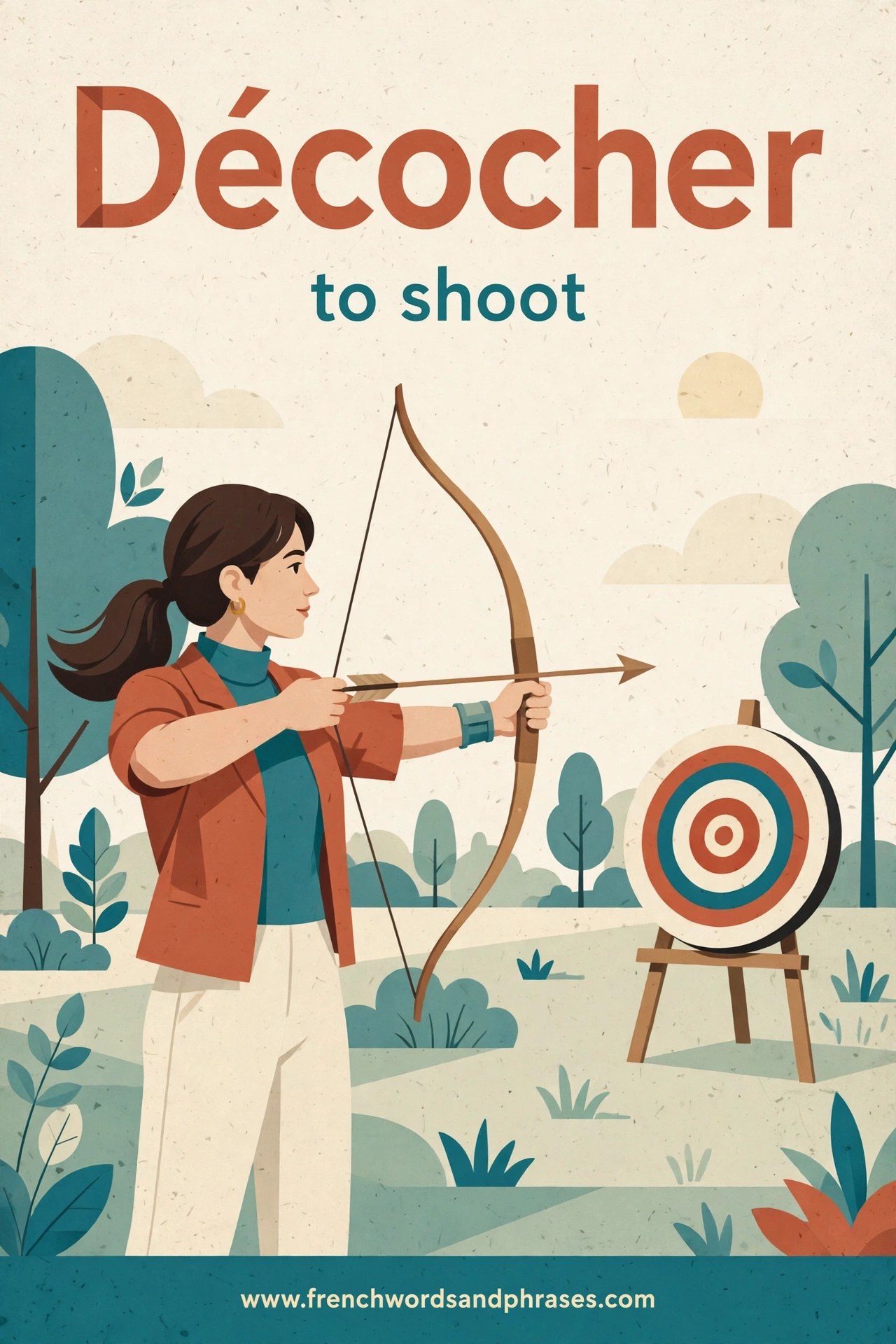
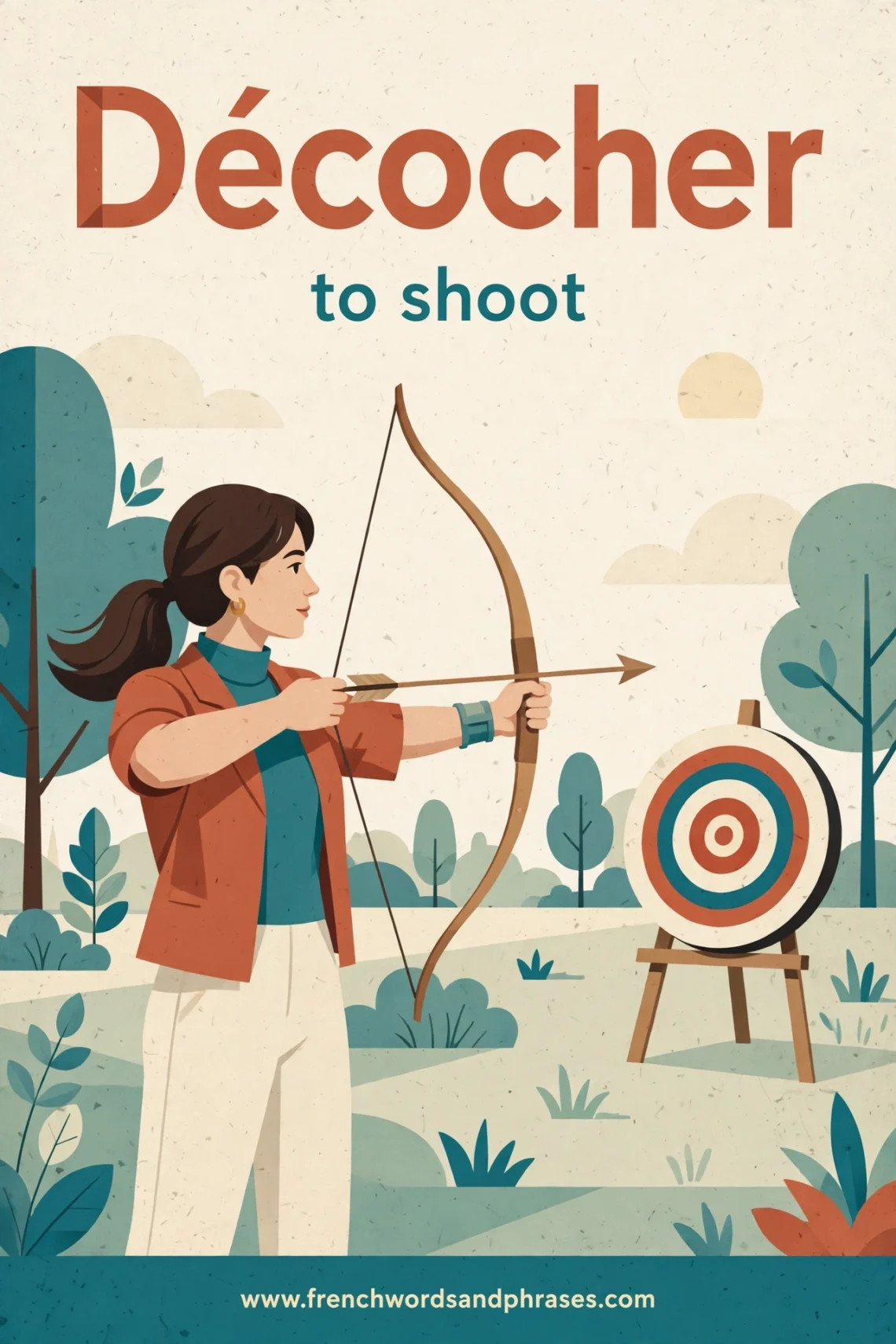
Décocher means to shoot — to loose off an arrow.
The bow drawn to the cheek, one held breath, and the string released — décocher is the verb of the arrow leaving the bow, and French also fires it at glances, smiles and sharp remarks.
In this guide, you’ll learn how to conjugate décocher in all the major French tenses and moods. Explore complete conjugation tables, French examples, English translations, and practice quizzes.
Understanding the French Verb Décocher
Décocher is a regular French verb belonging to the first group of verbs, those ending in -er.
It means to shoot. It is commonly used in archery for shooting arrows and bolts, and figuratively for glances, smiles, kisses and remarks sent across a room in a split second — anything launched with aim and speed.
Verb classification: First group (-er)
Auxiliary verb: Avoir
Past participle: décoché
Present participle: décochant
English equivalents: To shoot, to loose off (an arrow); décocher un regard — to shoot a glance; décocher un sourire — to flash a smile; décocher une remarque — to fire off a remark.
One important detail: décocher comes from la coche, the notch — the notch of the arrow that sits on the bowstring. To décocher is literally to un-notch the arrow by letting it fly. That is why the verb’s favourite figurative shots are things released in an instant: décocher un regard noir, to shoot a black look; décocher un sourire, to flash a smile; décocher un trait d’esprit, to fire off a witty line.
Experience the Word
Décocher is the verb of the released instant — aimed, held, and suddenly gone.
Imagine an archery field at dawn. The archer raises the bow, the string comes back to the cheek, the world narrows to a gold circle — and she décoche. The arrow is gone before the sound reaches you.
The shot cannot be taken back. It has been loosed — décoché — and it flies.
How to Conjugate Décocher: Complete French Conjugation Guide
Let’s explore every major conjugation of décocher, beginning with the indicative mood.
How to Conjugate Décocher in the Indicative Mood
The indicative mood is used to express facts, observations, actions, and events.
How to Conjugate Décocher in the Present Tense (Présent)
Used for actions happening now, habitual actions, and general truths.
| Subject | Conjugation |
|---|---|
| je | décoche |
| tu | décoches |
| il / elle | décoche |
| nous | décochons |
| vous | décochez |
| ils / elles | décochent |
Example
L’archer décoche sa flèche en silence.
The archer looses his arrow in silence.
Quick Quiz 1
Complete the sentence:
Nous ______ nos flèches au signal.
Reveal the answer
décochons
Nous décochons nos flèches au signal.
We loose our arrows at the signal.
How to Conjugate Décocher in the Passé Composé
Used for completed actions in the past. Décocher takes the auxiliary verb avoir.
| Subject | Conjugation |
|---|---|
| j’ | ai décoché |
| tu | as décoché |
| il / elle | a décoché |
| nous | avons décoché |
| vous | avez décoché |
| ils / elles | ont décoché |
Example
Elle a décoché un regard noir au retardataire.
She shot a black look at the latecomer.
How to Conjugate Décocher in the Imparfait (Imperfect Tense)
Used for habitual past actions, descriptions, and ongoing situations in the past.
| Subject | Conjugation |
|---|---|
| je | décochais |
| tu | décochais |
| il / elle | décochait |
| nous | décochions |
| vous | décochiez |
| ils / elles | décochaient |
Example
Les archers décochaient leurs flèches en cadence.
The archers used to loose their arrows in rhythm.
Quick Quiz 2
Choose the correct form:
She shot a black look at him.
Elle ______ un regard noir. (a décoché / est décochée)
Reveal the answer
a décoché
Elle a décoché un regard noir.
Décocher takes avoir.
How to Conjugate Décocher in the Plus-que-parfait
Used to describe an action that had already been completed before another past event.
| Subject | Conjugation |
|---|---|
| j’ | avais décoché |
| tu | avais décoché |
| il / elle | avait décoché |
| nous | avions décoché |
| vous | aviez décoché |
| ils / elles | avaient décoché |
Example
Il avait décoché trois flèches avant l’orage.
He had shot three arrows before the storm.
How to Conjugate Décocher in the Passé Simple
Primarily used in formal writing, literature, and historical narratives. It is rarely used in everyday conversation.
| Subject | Conjugation |
|---|---|
| je | décochai |
| tu | décochas |
| il / elle | décocha |
| nous | décochâmes |
| vous | décochâtes |
| ils / elles | décochèrent |
Example
Il décocha un trait qui atteignit la cible.
He loosed a shaft that hit the target.
How to Conjugate Décocher in the Passé Antérieur
A literary tense used to express an action completed immediately before another past action, generally in the passé simple.
| Subject | Conjugation |
|---|---|
| j’ | eus décoché |
| tu | eus décoché |
| il / elle | eut décoché |
| nous | eûmes décoché |
| vous | eûtes décoché |
| ils / elles | eurent décoché |
Example
Quand il eut décoché sa dernière flèche, le silence revint.
When he had shot his last arrow, silence returned.
How to Conjugate Décocher in the Future Tense (Futur Simple)
Used to describe actions that will take place in the future.
| Subject | Conjugation |
|---|---|
| je | décocherai |
| tu | décocheras |
| il / elle | décochera |
| nous | décocherons |
| vous | décocherez |
| ils / elles | décocheront |
Example
Au signal, vous décocherez vos flèches ensemble.
At the signal, you will loose your arrows together.
How to Conjugate Décocher in the Futur Antérieur (Future Perfect)
Used for an action that will have been completed before a particular point in the future.
| Subject | Conjugation |
|---|---|
| j’ | aurai décoché |
| tu | auras décoché |
| il / elle | aura décoché |
| nous | aurons décoché |
| vous | aurez décoché |
| ils / elles | auront décoché |
Example
À la fin du concours, il aura décoché cent flèches.
By the end of the contest, he will have shot a hundred arrows.
How to Conjugate Décocher in the Near Future (Futur Proche)
Used to describe something that is going to happen soon. Formed with aller + infinitive.
| Subject | Conjugation |
|---|---|
| je | vais décocher |
| tu | vas décocher |
| il / elle | va décocher |
| nous | allons décocher |
| vous | allez décocher |
| ils / elles | vont décocher |
Example
Je vais décocher un sourire à la caméra.
I am going to flash a smile at the camera.
How to Conjugate Décocher in the Conditional Mood
The conditional mood expresses what would happen under certain circumstances. It is also frequently used to make polite requests or express wishes.
How to Conjugate Décocher in the Present Conditional
| Subject | Conjugation |
|---|---|
| je | décocherais |
| tu | décocherais |
| il / elle | décocherait |
| nous | décocherions |
| vous | décocheriez |
| ils / elles | décocheraient |
Example
Sans le vent, elle décocherait des flèches parfaites.
Without the wind, she would shoot perfect arrows.
How to Conjugate Décocher in the Past Conditional
| Subject | Conjugation |
|---|---|
| j’ | aurais décoché |
| tu | aurais décoché |
| il / elle | aurait décoché |
| nous | aurions décoché |
| vous | auriez décoché |
| ils / elles | auraient décoché |
Example
Il aurait décoché sa flèche si la corde n’avait pas cassé.
He would have shot his arrow if the string had not snapped.
Décocher in the Literary Past Conditional Form
This less common literary form uses the imperfect subjunctive of avoir.
| Subject | Conjugation |
|---|---|
| j’ | eusse décoché |
| tu | eusses décoché |
| il / elle | eût décoché |
| nous | eussions décoché |
| vous | eussiez décoché |
| ils / elles | eussent décoché |
Example
L’archer eût décoché son trait au lever du soleil.
The archer would have loosed his shaft at sunrise.
How to Conjugate Décocher in the Subjunctive Mood
The subjunctive is used to express wishes, emotions, doubts, necessity, and uncertainty. It frequently follows expressions such as il faut que (it is necessary that) or bien que (although).
How to Conjugate Décocher in the Present Subjunctive
| Subject | Conjugation |
|---|---|
| que je | décoche |
| que tu | décoches |
| qu’il / qu’elle | décoche |
| que nous | décochions |
| que vous | décochiez |
| qu’ils / qu’elles | décochent |
Example
Il faut que tu décoches sans trembler.
You must shoot without trembling.
Quick Quiz 3
Complete the sentence using the subjunctive:
Il faut que vous ______ sans trembler.
Reveal the answer
décochiez
Il faut que vous décochiez sans trembler.
You must shoot without trembling.
How to Conjugate Décocher in the Imperfect Subjunctive
A literary tense, rarely encountered in modern spoken French.
| Subject | Conjugation |
|---|---|
| que je | décochasse |
| que tu | décochasses |
| qu’il / qu’elle | décochât |
| que nous | décochassions |
| que vous | décochassiez |
| qu’ils / qu’elles | décochassent |
Example
Le roi voulait que l’archer décochât la première flèche.
The king wanted the archer to shoot the first arrow.
How to Conjugate Décocher in the Pluperfect Subjunctive
A literary construction used to express an action completed before another past action.
| Subject | Conjugation |
|---|---|
| que j’ | eusse décoché |
| que tu | eusses décoché |
| qu’il / qu’elle | eût décoché |
| que nous | eussions décoché |
| que vous | eussiez décoché |
| qu’ils / qu’elles | eussent décoché |
Example
On racontait qu’il eût décoché la flèche décisive.
People told how he had loosed the decisive arrow.
How to Conjugate Décocher in the Past Subjunctive
| Subject | Conjugation |
|---|---|
| que j’ | aie décoché |
| que tu | aies décoché |
| qu’il / qu’elle | ait décoché |
| que nous | ayons décoché |
| que vous | ayez décoché |
| qu’ils / qu’elles | aient décoché |
Example
Je suis fier que tu aies décoché une flèche parfaite.
I am proud that you shot a perfect arrow.
How to Conjugate Décocher in the Imperative
The imperative is used to give commands, instructions, invitations, or suggestions. Subject pronouns are omitted.
How to Conjugate Décocher in the Present Imperative
| Person | Conjugation |
|---|---|
| (tu) | décoche |
| (nous) | décochons |
| (vous) | décochez |
Example
Décoche ta flèche, vise le centre !
Loose your arrow, aim for the centre!
Quick Quiz 4
How would you say Loose your arrow (tu form)?
Reveal the answer
Décoche ta flèche !
French Participles of Décocher
Participles are verb forms that can be used in compound tenses and other grammatical constructions.
Present Participle of Décocher
décochant
En décochant son trait, il retint son souffle.
As he loosed his shaft, he held his breath.
Past Participle of Décocher
décoché
Décochée au bon moment, la flèche a touché le cœur de la cible.
Loosed at the right moment, the arrow hit the heart of the target.
Décocher in Everyday French: Real-Life Examples
Now that you know the conjugations, let’s see how décocher appears in everyday French.
Example 1 — Present
L’archer décoche sa flèche en silence.
The archer looses his arrow in silence.
Example 2 — Passé composé
Elle m’a décoché un sourire.
She flashed me a smile.
Example 3 — Imparfait
Les archers décochaient leurs flèches en cadence.
The archers used to loose their arrows in rhythm.
Example 4 — Future
Au signal, nous décocherons ensemble.
At the signal, we will shoot together.
Example 5 — Conditional
Sans le vent, elle décocherait mieux.
Without the wind, she would shoot better.
Example 6 — Imperative
Décochez vos flèches au signal !
Loose your arrows at the signal!
Beyond Translation: The Meaning of Décocher
English says shoot for arrows, guns, cameras and glances alike; French décocher is narrower and sharper — it belongs to the bow first.
But its figurative shots are pure French.
A look, a smile, a cutting remark: anything that leaves you fast and lands on someone across the room can be décoché, and the target always feels it.
How to Remember the French Verb Décocher
Remember it this way: Décocher is about the arrow leaving the bow — and glances fired across a room.
- La coche is the arrow’s notch — décocher is to un-notch it by shooting.
- Décocher un regard, un sourire, une remarque — to shoot a glance, flash a smile, fire a remark.
- Regular -er: je décoche, nous décochons, past participle décoché.
The key idea is the arrow leaving the bow — and glances fired across a room.
Test Your Knowledge of Décocher
Let’s see how much you’ve learned. Try answering these questions before revealing the answers.
Question 1
What does décocher un regard mean?
Reveal the answer
To shoot a glance — a look loosed like an arrow.
Question 2
How do you say She flashed me a smile in French?
Reveal the answer
Elle m’a décoché un sourire.
Question 3
Translate: The archer loosed his arrow in silence.
Reveal the answer
L’archer a décoché sa flèche en silence.
Question 4
What is the past participle of décocher?
Reveal the answer
Décoché.
Question 5
Complete the sentence:
Il faut que tu ______ sans trembler.
Reveal the answer
décoches
Il faut que tu décoches sans trembler.
You must shoot without trembling.
Your Final Challenge
Can You Use It?
How would you say this in French?
She looses her last arrow, and the silence of the archery field bursts into applause.
Reveal the answer
Elle décoche sa dernière flèche, et le silence du champ de tir explose en applaudissements.
She looses her last arrow, and the silence of the archery field bursts into applause.
A little French. A little curiosity. A richer everyday life.
LEARN FRENCH ONE WORD AT A TIME