A French Word to Live By
How to Conjugate Menacer in French
/mə.na.se/
Menacer means to threaten.
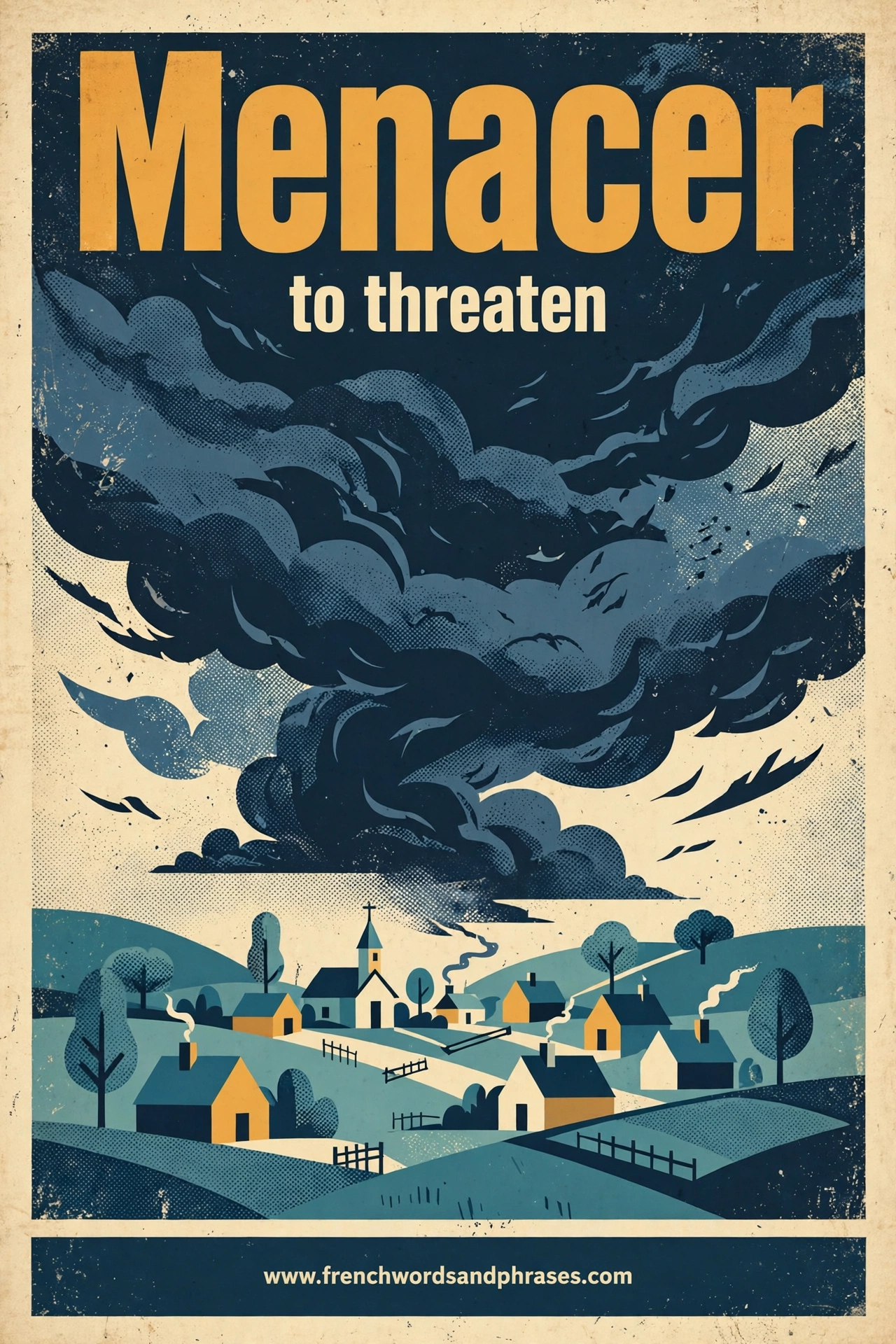
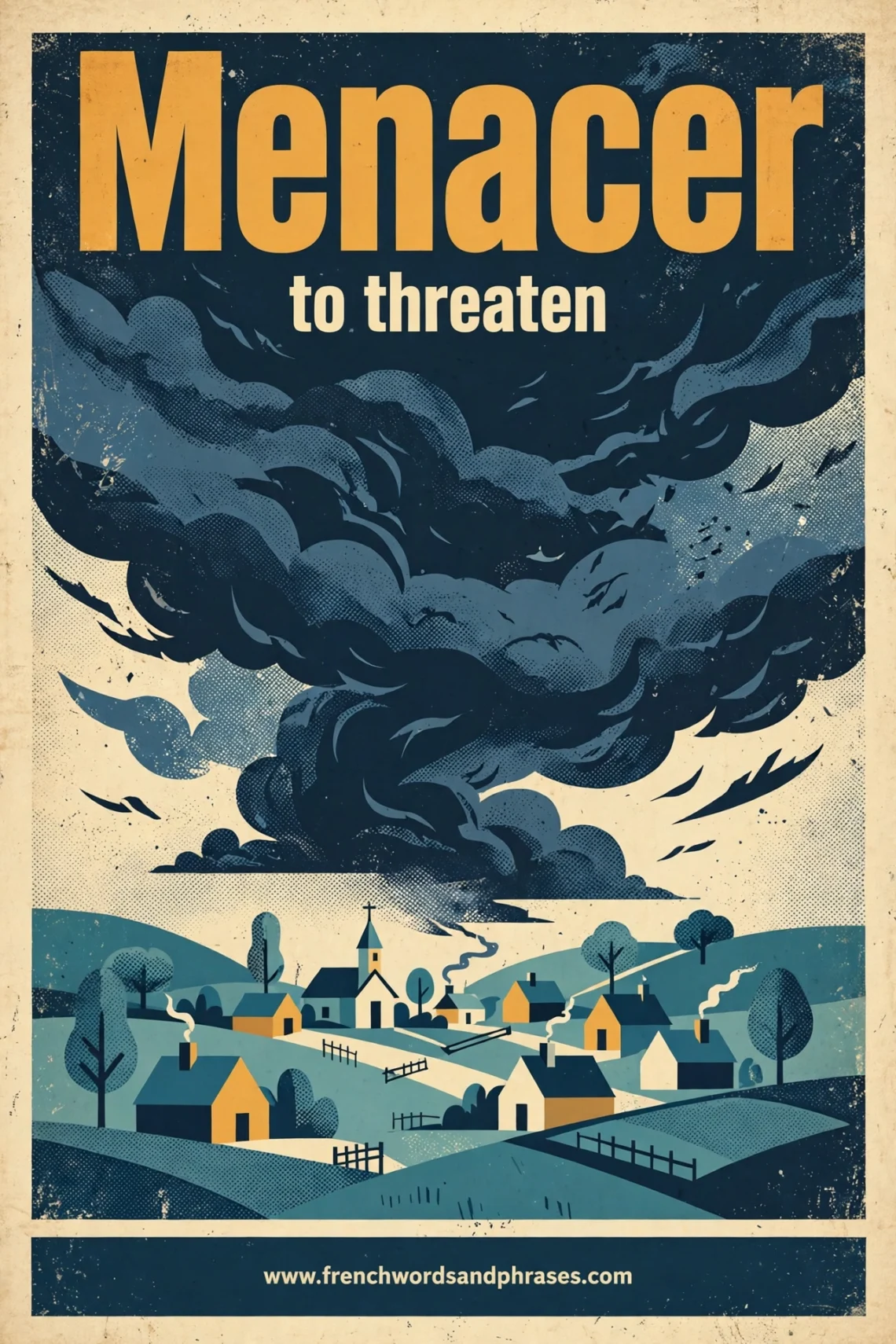
A fist shaken at the sky, a dark cloud bank gathering over the hills, an old wall leaning a little further every year — menacer is the verb of the warning sign, the moment danger announces itself before it strikes.
In this guide, you’ll learn how to conjugate menacer in all the major French tenses and moods. Explore complete conjugation tables, French examples, English translations, and practice quizzes.
Understanding the French Verb Menacer
Menacer is a regular French verb belonging to the first group of verbs, those ending in -er.
It means to threaten. It is commonly used for threatening a person directly (menacer quelqu’un), for threatening to act (menacer de démissionner, menacer de tout raconter), for weather that turns ugly (le ciel menace, la pluie menace), and for buildings and structures in danger — menacer ruine, menacer de s’effondrer.
Verb classification: First group (-er)
Auxiliary verb: Avoir
Past participle: menacé
Present participle: menaçant
English equivalents: To threaten; menacer de + infinitive — to threaten to do something; menacer ruine — to threaten to collapse, to be on the verge of falling down.
One important detail: menacer is a -cer verb, and the c becomes ç before a and o to keep its soft s sound: nous menaçons, je menaçais — but before i the plain c returns: nous menacions, vous menaciez. The verb points two ways: a person menaces (il menace son voisin), and a thing hangs threateningly (le ciel menace, the sky looks threatening; la maison menace ruine, the house is on the verge of collapse). With de plus an infinitive it makes a promise of harm: il menace de partir, he threatens to leave.
Experience the Word
Menacer is the verb of the held breath — nothing has happened yet, but everyone in the room has understood what could.
Imagine a village fête under a sky that has gone the colour of slate. The band plays on, the dancers glance upward, and the old mayor looks at the clouds and says the sentence everyone was thinking: ça menace.
No blow has fallen, no drop of rain. But the threat has been made — and a threat, in French as in life, is already an event.
How to Conjugate Menacer: Complete French Conjugation Guide
Let’s explore every major conjugation of menacer, beginning with the indicative mood.
How to Conjugate Menacer in the Indicative Mood
The indicative mood is used to express facts, observations, actions, and events.
How to Conjugate Menacer in the Present Tense (Présent)
Used for actions happening now, habitual actions, and general truths.
| Subject | Conjugation |
|---|---|
| je | menace |
| tu | menaces |
| il / elle | menace |
| nous | menaçons |
| vous | menacez |
| ils / elles | menacent |
Example
Le voisin menace de porter plainte pour le bruit.
The neighbour threatens to file a complaint about the noise.
Quick Quiz 1
Complete the sentence:
Nous ______ de tout raconter.
Reveal the answer
menaçons
Nous menaçons de tout raconter.
We are threatening to tell everything. Note the ç in menaçons.
How to Conjugate Menacer in the Passé Composé
Used for completed actions in the past. Menacer takes the auxiliary verb avoir.
| Subject | Conjugation |
|---|---|
| j’ | ai menacé |
| tu | as menacé |
| il / elle | a menacé |
| nous | avons menacé |
| vous | avez menacé |
| ils / elles | ont menacé |
Example
Il a menacé de démissionner si le projet échouait.
He threatened to resign if the project failed.
How to Conjugate Menacer in the Imparfait (Imperfect Tense)
Used for habitual past actions, descriptions, and ongoing situations in the past.
| Subject | Conjugation |
|---|---|
| je | menaçais |
| tu | menaçais |
| il / elle | menaçait |
| nous | menacions |
| vous | menaciez |
| ils / elles | menaçaient |
Example
Chaque été, la vieille grange menaçait ruine un peu plus.
Every summer, the old barn threatened to collapse a little more.
Quick Quiz 2
Choose the correct form:
He threatened to resign.
Il ______ de démissionner. (a menacé / est menacé)
Reveal the answer
a menacé
Il a menacé de démissionner.
Menacer takes avoir.
How to Conjugate Menacer in the Plus-que-parfait
Used to describe an action that had already been completed before another past event.
| Subject | Conjugation |
|---|---|
| j’ | avais menacé |
| tu | avais menacé |
| il / elle | avait menacé |
| nous | avions menacé |
| vous | aviez menacé |
| ils / elles | avaient menacé |
Example
Elle avait menacé de tout raconter à la directrice.
She had threatened to tell the headmistress everything.
How to Conjugate Menacer in the Passé Simple
Primarily used in formal writing, literature, and historical narratives. It is rarely used in everyday conversation.
| Subject | Conjugation |
|---|---|
| je | menaçai |
| tu | menaças |
| il / elle | menaça |
| nous | menaçâmes |
| vous | menaçâtes |
| ils / elles | menaçèrent |
Example
Le ciel menaça toute la journée, puis l’orage éclata.
The sky threatened all day, then the storm broke.
How to Conjugate Menacer in the Passé Antérieur
A literary tense used to express an action completed immediately before another past action, generally in the passé simple.
| Subject | Conjugation |
|---|---|
| j’ | eus menacé |
| tu | eus menacé |
| il / elle | eut menacé |
| nous | eûmes menacé |
| vous | eûtes menacé |
| ils / elles | eurent menacé |
Example
Quand il eut menacé de partir, le silence se fit dans la pièce.
When he had threatened to leave, silence fell over the room.
How to Conjugate Menacer in the Future Tense (Futur Simple)
Used to describe actions that will take place in the future.
| Subject | Conjugation |
|---|---|
| je | menacerai |
| tu | menaceras |
| il / elle | menacera |
| nous | menacerons |
| vous | menacerez |
| ils / elles | menaceront |
Example
Demain, la pluie menacera encore la région.
Tomorrow, rain will threaten the region again.
How to Conjugate Menacer in the Futur Antérieur (Future Perfect)
Used for an action that will have been completed before a particular point in the future.
| Subject | Conjugation |
|---|---|
| j’ | aurai menacé |
| tu | auras menacé |
| il / elle | aura menacé |
| nous | aurons menacé |
| vous | aurez menacé |
| ils / elles | auront menacé |
Example
À ce rythme, le mur aura menacé ruine pendant dix ans avant de tomber.
At this rate, the wall will have been threatening to collapse for ten years before it falls.
How to Conjugate Menacer in the Near Future (Futur Proche)
Used to describe something that is going to happen soon. Formed with aller + infinitive.
| Subject | Conjugation |
|---|---|
| je | vais menacer |
| tu | vas menacer |
| il / elle | va menacer |
| nous | allons menacer |
| vous | allez menacer |
| ils / elles | vont menacer |
Example
Ce nuage noir va menacer notre pique-nique.
That black cloud is going to threaten our picnic.
How to Conjugate Menacer in the Conditional Mood
The conditional mood expresses what would happen under certain circumstances. It is also frequently used to make polite requests or express wishes.
How to Conjugate Menacer in the Present Conditional
| Subject | Conjugation |
|---|---|
| je | menacerais |
| tu | menacerais |
| il / elle | menacerait |
| nous | menacerions |
| vous | menaceriez |
| ils / elles | menaceraient |
Example
Sans réparations, la tour menacerait de s’effondrer.
Without repairs, the tower would threaten to collapse.
How to Conjugate Menacer in the Past Conditional
| Subject | Conjugation |
|---|---|
| j’ | aurais menacé |
| tu | aurais menacé |
| il / elle | aurait menacé |
| nous | aurions menacé |
| vous | auriez menacé |
| ils / elles | auraient menacé |
Example
Il aurait menacé de démissionner, mais il a préféré négocier.
He would have threatened to resign, but he preferred to negotiate.
Menacer in the Literary Past Conditional Form
This less common literary form uses the imperfect subjunctive of avoir.
| Subject | Conjugation |
|---|---|
| j’ | eusse menacé |
| tu | eusses menacé |
| il / elle | eût menacé |
| nous | eussions menacé |
| vous | eussiez menacé |
| ils / elles | eussent menacé |
Example
Elle eût menacé de tout quitter pour un mot de travers.
She would have threatened to leave everything over one wrong word.
How to Conjugate Menacer in the Subjunctive Mood
The subjunctive is used to express wishes, emotions, doubts, necessity, and uncertainty. It frequently follows expressions such as il faut que (it is necessary that) or bien que (although).
How to Conjugate Menacer in the Present Subjunctive
| Subject | Conjugation |
|---|---|
| que je | menace |
| que tu | menaces |
| qu’il / qu’elle | menace |
| que nous | menacions |
| que vous | menaciez |
| qu’ils / qu’elles | menacent |
Example
Je crains qu’il menace encore de partir.
I fear he is threatening to leave again.
Quick Quiz 3
Complete the sentence using the subjunctive:
Je crains que vous ______ de partir.
Reveal the answer
menaciez
Je crains que vous menaciez de partir.
I fear you are threatening to leave. No ç before i in menaciez.
How to Conjugate Menacer in the Imperfect Subjunctive
A literary tense, rarely encountered in modern spoken French.
| Subject | Conjugation |
|---|---|
| que je | menacasse |
| que tu | menacasses |
| qu’il / qu’elle | menacât |
| que nous | menacassions |
| que vous | menacassiez |
| qu’ils / qu’elles | menacassent |
Example
Personne ne voulait qu’elle menaçât les employés de renvoi.
Nobody wanted her to threaten the employees with dismissal.
How to Conjugate Menacer in the Pluperfect Subjunctive
A literary construction used to express an action completed before another past action.
| Subject | Conjugation |
|---|---|
| que j’ | eusse menacé |
| que tu | eusses menacé |
| qu’il / qu’elle | eût menacé |
| que nous | eussions menacé |
| que vous | eussiez menacé |
| qu’ils / qu’elles | eussent menacé |
Example
Il regrettait qu’ils eussent menacé le témoin.
He regretted that they had threatened the witness.
How to Conjugate Menacer in the Past Subjunctive
| Subject | Conjugation |
|---|---|
| que j’ | aie menacé |
| que tu | aies menacé |
| qu’il / qu’elle | ait menacé |
| que nous | ayons menacé |
| que vous | ayez menacé |
| qu’ils / qu’elles | aient menacé |
Example
Je suis étonné qu’elle ait menacé de porter plainte.
I am surprised she threatened to file a complaint.
How to Conjugate Menacer in the Imperative
The imperative is used to give commands, instructions, invitations, or suggestions. Subject pronouns are omitted.
How to Conjugate Menacer in the Present Imperative
| Person | Conjugation |
|---|---|
| (tu) | menace |
| (nous) | menaçons |
| (vous) | menacez |
Example
Ne menace personne, explique-toi calmement !
Do not threaten anyone, explain yourself calmly!
Quick Quiz 4
How would you say Do not threaten me (tu form)?
Reveal the answer
Ne me menace pas !
French Participles of Menacer
Participles are verb forms that can be used in compound tenses and other grammatical constructions.
Present Participle of Menacer
menaçant
En menaçant de démissionner, il a obtenu une augmentation.
By threatening to resign, he got a raise.
Past Participle of Menacer
menacé
Menacé par la tempête, le petit port a fermé ses portes.
Threatened by the storm, the little harbour closed its gates.
Menacer in Everyday French: Real-Life Examples
Now that you know the conjugations, let’s see how menacer appears in everyday French.
Example 1 — Present
Le ciel menace, rentrons avant la pluie.
The sky looks threatening, let us go in before the rain.
Example 2 — Passé composé
Il a menacé de ne plus jamais revenir.
He threatened never to come back again.
Example 3 — Imparfait
La vieille maison menaçait ruine depuis des années.
The old house had been threatening to collapse for years.
Example 4 — Future
La grève menacera les trains ce week-end.
The strike will threaten the trains this weekend.
Example 5 — Conditional
Tu menacerais de partir pour si peu ?
You would threaten to leave over so little?
Example 6 — Imperative
Ne me menace pas, discutons !
Do not threaten me, let us talk!
Beyond Translation: The Meaning of Menacer
English threaten mostly needs a person behind it; French menacer lets the whole world do the threatening — skies, strikes, old barns and bad knees.
Its most picturesque job is architecture.
Menacer ruine — literally to threaten ruin — is how French describes a building that is still standing but visibly negotiating with gravity: a wall, a church, a château can all menacer ruine, picturesquely, for centuries.
How to Remember the French Verb Menacer
Remember it this way: Menacer is about the warning sign — dark skies, shaken fists and buildings that threaten ruin.
- The ç keeps the s soft: nous menaçons — but nous menacions without it.
- Menacer de + infinitive — to threaten to do something: il menace de partir.
- Menacer ruine — a building on the verge of collapse; regular -cer, past participle menacé.
The key idea is the warning sign — dark skies, shaken fists and buildings that threaten ruin.
Test Your Knowledge of Menacer
Let’s see how much you’ve learned. Try answering these questions before revealing the answers.
Question 1
What does menacer ruine mean?
Reveal the answer
To threaten to collapse — to be on the verge of falling down, said of a building.
Question 2
How do you say He threatens to leave in French?
Reveal the answer
Il menace de partir.
Question 3
Translate: The sky looks threatening, let us go home.
Reveal the answer
Le ciel menace, rentrons à la maison.
Question 4
What is the past participle of menacer?
Reveal the answer
Menacé.
Question 5
Complete the sentence:
Nous ______ les voisins de porter plainte.
Reveal the answer
menaçons
Nous menaçons les voisins de porter plainte.
We are threatening the neighbours with a complaint. Note the ç in menaçons.
Your Final Challenge
Can You Use It?
How would you say this in French?
The sky has been threatening since morning, and the party takes shelter in the barn.
Reveal the answer
Le ciel menace depuis le matin, et la fête se réfugie sous la grange.
The sky has been threatening since morning, and the party takes shelter in the barn.
A little French. A little curiosity. A richer everyday life.
LEARN FRENCH ONE WORD AT A TIME