A French Word to Live By
How to Conjugate Marauder in French
/ma.ʁo.de/
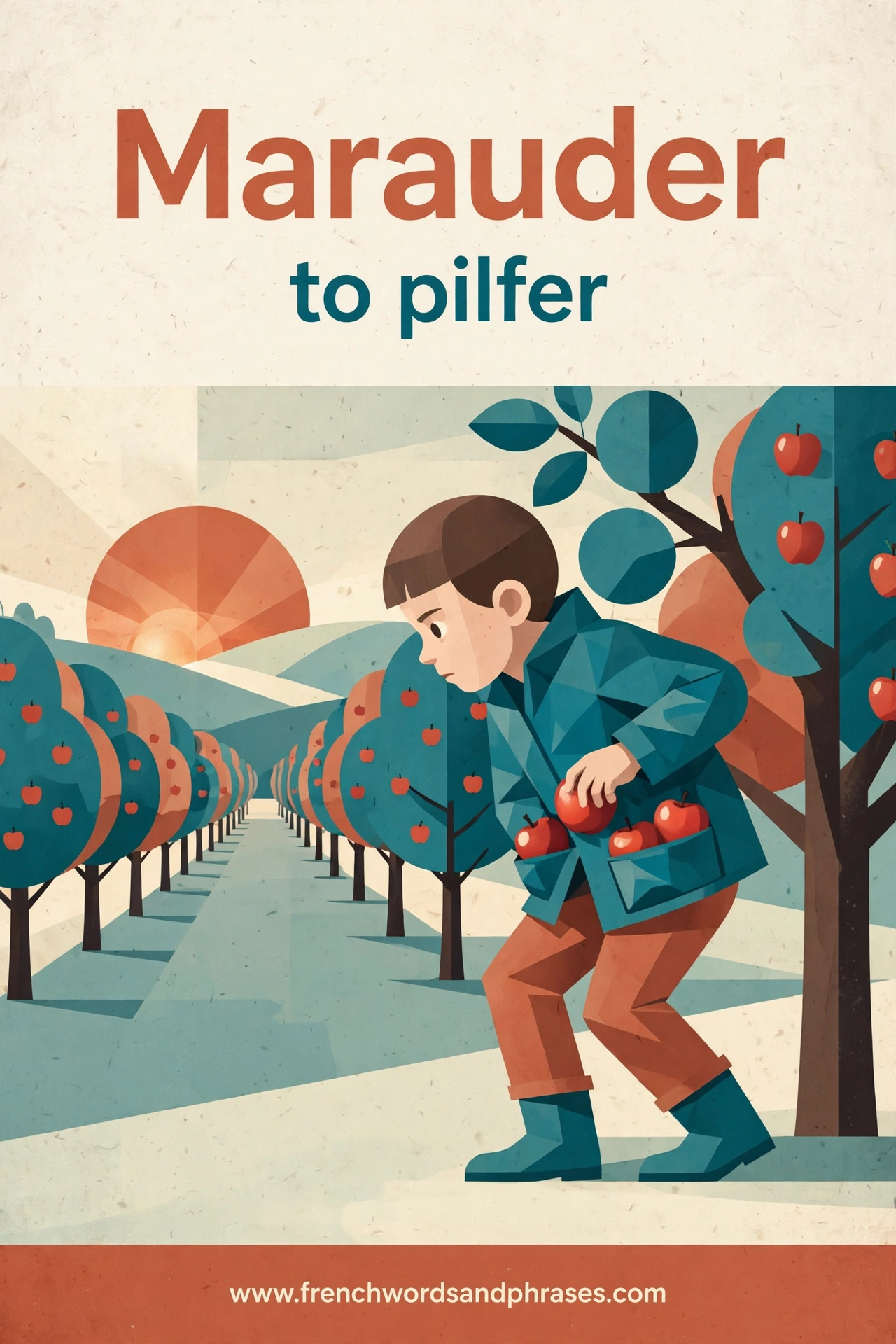
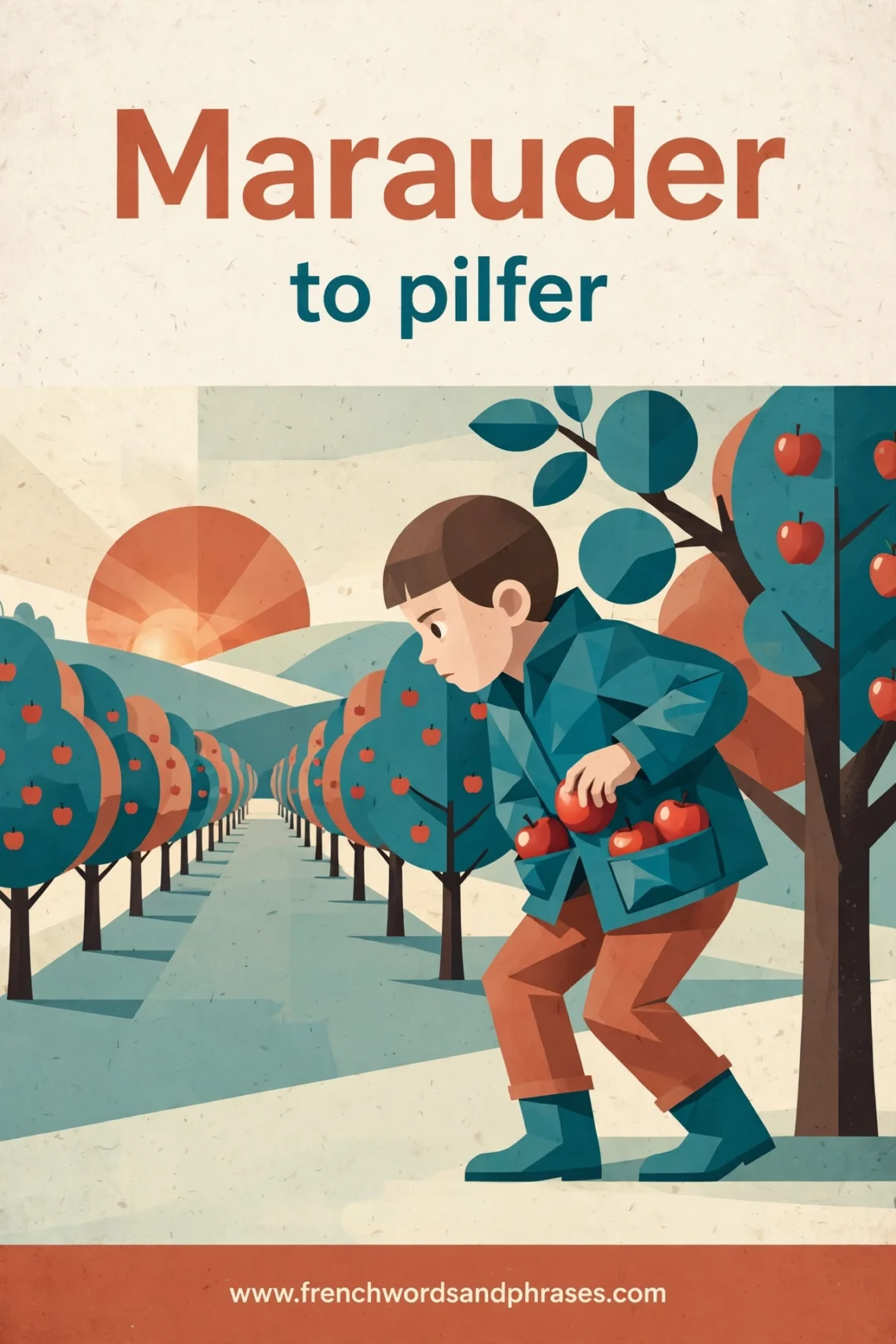
Marauder means to pilfer.
Boys slipping over a garden wall for cherries, a fox testing the henhouse fence, taxis crawling the avenues at midnight — marauder is the verb of roaming with light fingers, stealing small things on the move.
In this guide, you’ll learn how to conjugate marauder in all the major French tenses and moods. Explore complete conjugation tables, French examples, English translations, and practice quizzes.
Understanding the French Verb Marauder
Marauder is a regular French verb belonging to the first group of verbs, those ending in -er.
It means to pilfer. It is commonly used for pilfering fruit from orchards and gardens, for petty roaming theft in markets and camps, for foxes and cats prowling around farms, and — in the taxi trade — for cruising the streets in search of passengers instead of waiting at a rank.
Verb classification: First group (-er)
Auxiliary verb: Avoir
Past participle: maraudé
Present participle: maraudant
English equivalents: To pilfer, to roam stealing; (of taxis) to cruise for fares; un maraudeur — a pilferer, a marauder.
One important detail: marauder began as a soldier’s word — troops en maraude slipped away from camp to forage and steal food, and la maraude is still the act itself. Modern French gives the verb a second, respectable life on the taxi rank: marauder is what taxis do as they cruise slowly looking for a raised hand, and la maraude is the cruising itself — as opposed to waiting at a rank or being booked. Same roaming, no theft.
Experience the Word
Marauder is the verb of the opportunistic wander — no plan, no break-in, just eyes open and hands ready as you pass.
Imagine a village lane in June. Three schoolboys slow down by the cherry tree, look left, look right, and in thirty seconds the lowest branches are bare and three mouths are red — a perfect little maraude.
Nothing was burgled or broken. It was pilfered — snatched in passing, by roamers.
How to Conjugate Marauder: Complete French Conjugation Guide
Let’s explore every major conjugation of marauder, beginning with the indicative mood.
How to Conjugate Marauder in the Indicative Mood
The indicative mood is used to express facts, observations, actions, and events.
How to Conjugate Marauder in the Present Tense (Présent)
Used for actions happening now, habitual actions, and general truths.
| Subject | Conjugation |
|---|---|
| je | maraude |
| tu | maraudes |
| il / elle | maraude |
| nous | maraudons |
| vous | maraudez |
| ils / elles | maraudent |
Example
Les enfants maraudent les cerises du voisin chaque été.
The children pilfer the neighbour’s cherries every summer.
Quick Quiz 1
Complete the sentence:
Nous ______ les cerises du voisin, autrefois.
Reveal the answer
maraudions
Nous maraudions les cerises du voisin, autrefois.
We used to pilfer the neighbour’s cherries.
How to Conjugate Marauder in the Passé Composé
Used for completed actions in the past. Marauder takes the auxiliary verb avoir.
| Subject | Conjugation |
|---|---|
| j’ | ai maraudé |
| tu | as maraudé |
| il / elle | a maraudé |
| nous | avons maraudé |
| vous | avez maraudé |
| ils / elles | ont maraudé |
Example
Un renard a maraudé deux poules cette nuit.
A fox pilfered two hens last night.
How to Conjugate Marauder in the Imparfait (Imperfect Tense)
Used for habitual past actions, descriptions, and ongoing situations in the past.
| Subject | Conjugation |
|---|---|
| je | maraudais |
| tu | maraudais |
| il / elle | maraudait |
| nous | maraudions |
| vous | maraudiez |
| ils / elles | maraudaient |
Example
Les taxis maraudaient autour de la gare à minuit.
The taxis used to cruise around the station at midnight.
Quick Quiz 2
Choose the correct form:
The children pilfered the plums.
Les enfants ______ les prunes. (ont maraudé / sont maraudés)
Reveal the answer
ont maraudé
Les enfants ont maraudé les prunes.
Marauder takes avoir.
How to Conjugate Marauder in the Plus-que-parfait
Used to describe an action that had already been completed before another past event.
| Subject | Conjugation |
|---|---|
| j’ | avais maraudé |
| tu | avais maraudé |
| il / elle | avait maraudé |
| nous | avions maraudé |
| vous | aviez maraudé |
| ils / elles | avaient maraudé |
Example
Ils avaient maraudé toutes les prunes avant la récolte.
They had pilfered all the plums before the harvest.
How to Conjugate Marauder in the Passé Simple
Primarily used in formal writing, literature, and historical narratives. It is rarely used in everyday conversation.
| Subject | Conjugation |
|---|---|
| je | maraudai |
| tu | maraudas |
| il / elle | marauda |
| nous | maraudâmes |
| vous | maraudâtes |
| ils / elles | maraudèrent |
Example
Le chat marauda un poisson sur l’étal du marché.
The cat pilfered a fish from the market stall.
How to Conjugate Marauder in the Passé Antérieur
A literary tense used to express an action completed immediately before another past action, generally in the passé simple.
| Subject | Conjugation |
|---|---|
| j’ | eus maraudé |
| tu | eus maraudé |
| il / elle | eut maraudé |
| nous | eûmes maraudé |
| vous | eûtes maraudé |
| ils / elles | eurent maraudé |
Example
Quand les soldats eurent maraudé les vergers, le village se plaignit.
When the soldiers had pilfered the orchards, the village complained.
How to Conjugate Marauder in the Future Tense (Futur Simple)
Used to describe actions that will take place in the future.
| Subject | Conjugation |
|---|---|
| je | marauderai |
| tu | marauderas |
| il / elle | maraudera |
| nous | marauderons |
| vous | marauderez |
| ils / elles | marauderont |
Example
Ce soir, les taxis marauderont devant les théâtres.
This evening, the taxis will cruise in front of the theatres.
How to Conjugate Marauder in the Futur Antérieur (Future Perfect)
Used for an action that will have been completed before a particular point in the future.
| Subject | Conjugation |
|---|---|
| j’ | aurai maraudé |
| tu | auras maraudé |
| il / elle | aura maraudé |
| nous | aurons maraudé |
| vous | aurez maraudé |
| ils / elles | auront maraudé |
Example
À la fin de l’été, les oiseaux auront maraudé la moitié des figues.
By the end of summer, the birds will have pilfered half the figs.
How to Conjugate Marauder in the Near Future (Futur Proche)
Used to describe something that is going to happen soon. Formed with aller + infinitive.
| Subject | Conjugation |
|---|---|
| je | vais marauder |
| tu | vas marauder |
| il / elle | va marauder |
| nous | allons marauder |
| vous | allez marauder |
| ils / elles | vont marauder |
Example
Je crois que le chat va marauder le poulet rôti.
I think the cat is going to pilfer the roast chicken.
How to Conjugate Marauder in the Conditional Mood
The conditional mood expresses what would happen under certain circumstances. It is also frequently used to make polite requests or express wishes.
How to Conjugate Marauder in the Present Conditional
| Subject | Conjugation |
|---|---|
| je | marauderais |
| tu | marauderais |
| il / elle | marauderait |
| nous | marauderions |
| vous | marauderiez |
| ils / elles | marauderaient |
Example
Sans le mur, les enfants marauderaient toutes les pommes.
Without the wall, the children would pilfer all the apples.
How to Conjugate Marauder in the Past Conditional
| Subject | Conjugation |
|---|---|
| j’ | aurais maraudé |
| tu | aurais maraudé |
| il / elle | aurait maraudé |
| nous | aurions maraudé |
| vous | auriez maraudé |
| ils / elles | auraient maraudé |
Example
Le renard aurait maraudé plus de poules sans le chien.
The fox would have pilfered more hens without the dog.
Marauder in the Literary Past Conditional Form
This less common literary form uses the imperfect subjunctive of avoir.
| Subject | Conjugation |
|---|---|
| j’ | eusse maraudé |
| tu | eusses maraudé |
| il / elle | eût maraudé |
| nous | eussions maraudé |
| vous | eussiez maraudé |
| ils / elles | eussent maraudé |
Example
Les soldats eussent maraudé les fermes des alentours.
The soldiers would have pilfered the farms round about.
How to Conjugate Marauder in the Subjunctive Mood
The subjunctive is used to express wishes, emotions, doubts, necessity, and uncertainty. It frequently follows expressions such as il faut que (it is necessary that) or bien que (although).
How to Conjugate Marauder in the Present Subjunctive
| Subject | Conjugation |
|---|---|
| que je | maraude |
| que tu | maraudes |
| qu’il / qu’elle | maraude |
| que nous | maraudions |
| que vous | maraudiez |
| qu’ils / qu’elles | maraudent |
Example
Le fermier ne veut pas que les corbeaux maraudent son maïs.
The farmer does not want the crows to pilfer his corn.
Quick Quiz 3
Complete the sentence using the subjunctive:
Il faut que les taxis ______ devant la gare.
Reveal the answer
maraudent
Il faut que les taxis maraudent devant la gare.
The taxis must cruise in front of the station.
How to Conjugate Marauder in the Imperfect Subjunctive
A literary tense, rarely encountered in modern spoken French.
| Subject | Conjugation |
|---|---|
| que je | maraudasse |
| que tu | maraudasses |
| qu’il / qu’elle | maraudât |
| que nous | maraudassions |
| que vous | maraudassiez |
| qu’ils / qu’elles | maraudassent |
Example
Il craignait que les enfants maraudassent ses fraises.
He feared the children might pilfer his strawberries.
How to Conjugate Marauder in the Pluperfect Subjunctive
A literary construction used to express an action completed before another past action.
| Subject | Conjugation |
|---|---|
| que j’ | eusse maraudé |
| que tu | eusses maraudé |
| qu’il / qu’elle | eût maraudé |
| que nous | eussions maraudé |
| que vous | eussiez maraudé |
| qu’ils / qu’elles | eussent maraudé |
Example
On accusa les campeurs d’avoir maraudé — qu’ils eussent maraudé les jardins du village.
The campers were accused of pilfering — of having pilfered the village gardens.
How to Conjugate Marauder in the Past Subjunctive
| Subject | Conjugation |
|---|---|
| que j’ | aie maraudé |
| que tu | aies maraudé |
| qu’il / qu’elle | ait maraudé |
| que nous | ayons maraudé |
| que vous | ayez maraudé |
| qu’ils / qu’elles | aient maraudé |
Example
Je suis sûr que le chat a maraudé le jambon.
I am sure the cat pilfered the ham.
How to Conjugate Marauder in the Imperative
The imperative is used to give commands, instructions, invitations, or suggestions. Subject pronouns are omitted.
How to Conjugate Marauder in the Present Imperative
| Person | Conjugation |
|---|---|
| (tu) | maraude |
| (nous) | maraudons |
| (vous) | maraudez |
Example
Ne maraudez plus dans mon jardin !
Stop pilfering in my garden!
Quick Quiz 4
How would you say Do not pilfer in the garden (tu form)?
Reveal the answer
Ne maraude pas dans le jardin !
French Participles of Marauder
Participles are verb forms that can be used in compound tenses and other grammatical constructions.
Present Participle of Marauder
maraudant
En maraudant des cerises, il a déchiré son pantalon sur le mur.
While pilfering cherries, he tore his trousers on the wall.
Past Participle of Marauder
maraudé
Maraudées au crépuscule, les cerises ont un goût d’aventure.
Pilfered at dusk, cherries taste of adventure.
Marauder in Everyday French: Real-Life Examples
Now that you know the conjugations, let’s see how marauder appears in everyday French.
Example 1 — Present
Le chat maraude toujours près de la poubelle.
The cat always prowls around the dustbin, pilfering.
Example 2 — Passé composé
Les enfants ont maraudé des pommes chez le voisin.
The children pilfered some apples at the neighbour’s.
Example 3 — Imparfait
Les taxis maraudaient lentement dans les rues désertes.
The taxis used to cruise slowly through the deserted streets.
Example 4 — Future
Le renard maraudera encore cette nuit, j’en suis sûr.
The fox will pilfer again tonight, I am sure of it.
Example 5 — Conditional
Ils marauderaient les raisins si le chien dormait.
They would pilfer the grapes if the dog were asleep.
Example 6 — Imperative
Ne maraude pas dans le potager !
Do not pilfer in the vegetable garden!
Beyond Translation: The Meaning of Marauder
English maraud survives mostly in history books; French marauder stayed alive by splitting in two.
Petty theft on one side, honest cruising on the other.
The boys over the garden wall and the taxi at midnight share the same slow, watchful roaming — la maraude — and context alone tells you whether to call the police or raise your hand.
How to Remember the French Verb Marauder
Remember it this way: Marauder is about roaming with light fingers — orchards, henhouses and cruising taxis.
- La maraude — the roaming itself: pilfering for thieves, cruising for taxis.
- Un maraudeur — a pilferer; the fox around the henhouse is the classic one.
- Regular -er: je maraude, nous maraudons, past participle maraudé.
The key idea is roaming with light fingers — orchards, henhouses and cruising taxis.
Test Your Knowledge of Marauder
Let’s see how much you’ve learned. Try answering these questions before revealing the answers.
Question 1
What do taxis do when they maraudent?
Reveal the answer
They cruise the streets looking for passengers — instead of waiting at a rank.
Question 2
How do you say The children pilfered some apples in French?
Reveal the answer
Les enfants ont maraudé des pommes.
Question 3
Translate: The fox pilfered two hens last night.
Reveal the answer
Un renard a maraudé deux poules cette nuit.
Question 4
What is the past participle of marauder?
Reveal the answer
Maraudé.
Question 5
Complete the sentence:
Le fermier ne veut pas que les corbeaux ______ son maïs.
Reveal the answer
maraudent
Le fermier ne veut pas que les corbeaux maraudent son maïs.
The farmer does not want the crows to pilfer his corn.
Your Final Challenge
Can You Use It?
How would you say this in French?
The cat prowls around the kitchen pilfering, and the roast chicken is no longer safe.
Reveal the answer
Le chat maraude autour de la cuisine, et le poulet rôti n’est plus en sécurité.
The cat prowls around the kitchen pilfering, and the roast chicken is no longer safe.
A little French. A little curiosity. A richer everyday life.
LEARN FRENCH ONE WORD AT A TIME