A French Word to Live By
How to Conjugate Éplucher in French
/e.ply.ʃe/
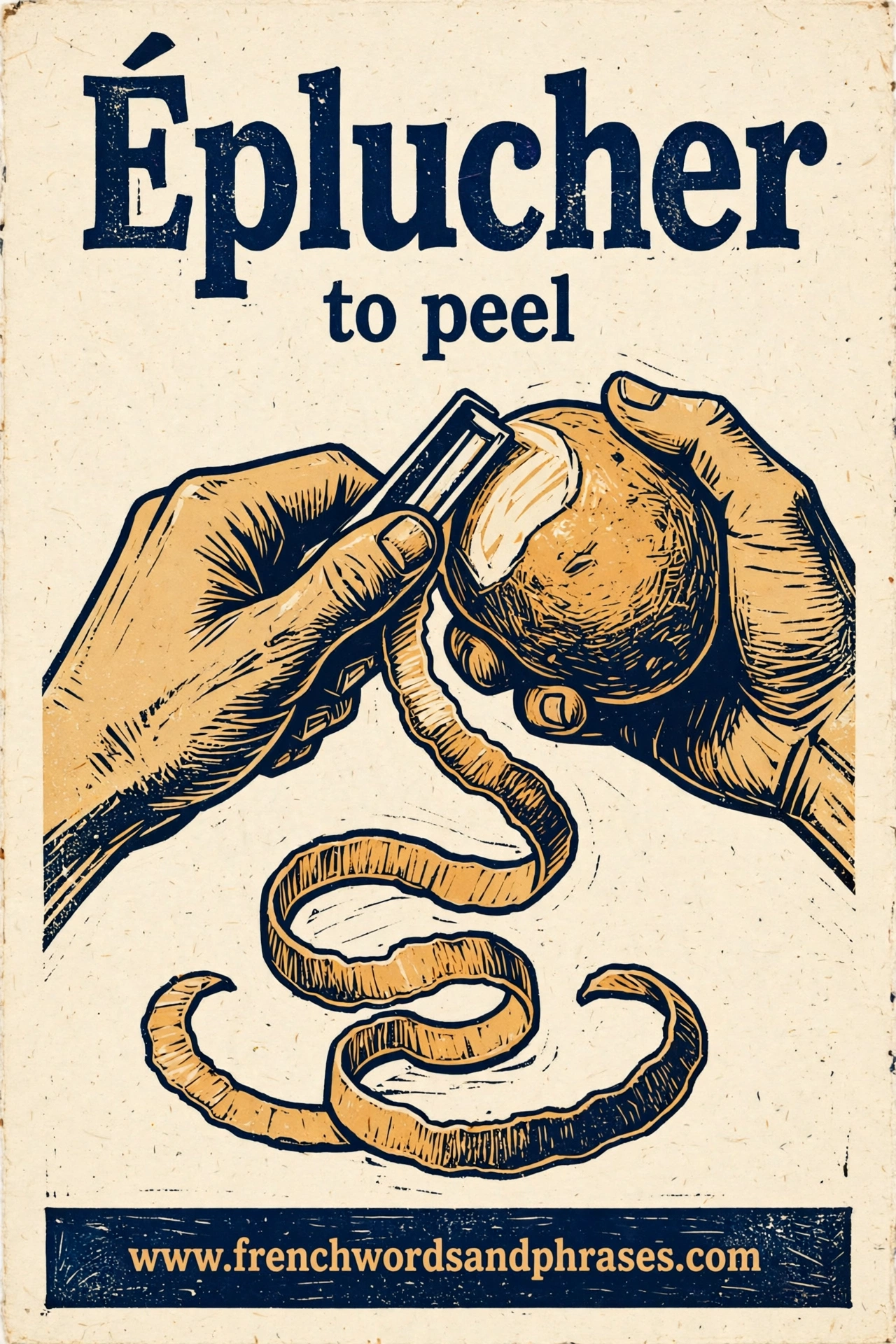
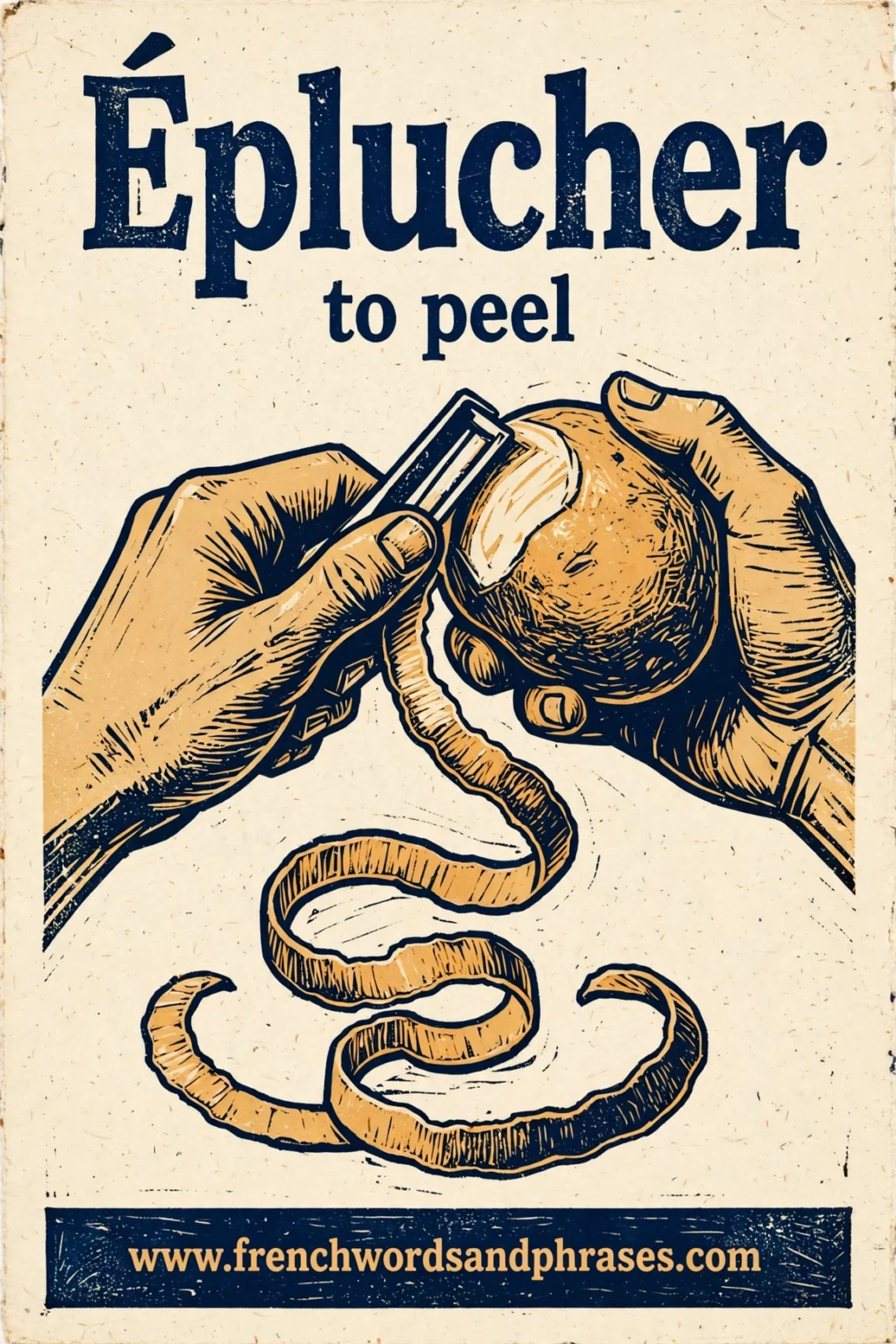
Éplucher means to peel.
Potatoes over the sink, apples for a tart, garlic for the sauce — éplucher is the cook’s quiet first step, the verb that strips away the skin so the real work can begin.
In this guide, you’ll learn how to conjugate éplucher in all the major French tenses and moods. Explore complete conjugation tables, French examples, English translations, and practice quizzes.
Understanding the French Verb Éplucher
Éplucher is a regular French verb belonging to the first group of verbs, those ending in -er.
It means to peel. It is commonly used for peeling potatoes, apples, onions, carrots and bananas, and in its detective sense for files, bills, results and lists — éplucher les résultats, to pore over the results.
Verb classification: First group (-er)
Auxiliary verb: Avoir
Past participle: épluché
Present participle: épluchant
English equivalents: To peel; (figurative) to go through closely, to examine line by line.
One important detail: éplucher peels fruit and vegetables — éplucher une pomme, éplucher l’ail — and then, figuratively, it goes through anything with the same patience: éplucher un dossier, to examine a file closely, éplucher les comptes, to go through the accounts. The tool is un économe, a peeler, and the peelings themselves are les épluchures.
Experience the Word
Éplucher is the verb of preparation — unhurried, one piece at a time, the pile of skins growing on one side and the clean fruit on the other.
Imagine a farmhouse kitchen in autumn: two sisters at the table with a basket of apples between them, peelers in hand, talking of everything and nothing while the tart waits to be born.
Nothing is cooked yet. But everything has been peeled — and the recipe can truly start.
How to Conjugate Éplucher: Complete French Conjugation Guide
Let’s explore every major conjugation of éplucher, beginning with the indicative mood.
How to Conjugate Éplucher in the Indicative Mood
The indicative mood is used to express facts, observations, actions, and events.
How to Conjugate Éplucher in the Present Tense (Présent)
Used for actions happening now, habitual actions, and general truths.
| Subject | Conjugation |
|---|---|
| je | épluche |
| tu | épluches |
| il / elle | épluche |
| nous | épluchons |
| vous | épluchez |
| ils / elles | épluchent |
Example
Elle épluche les pommes de terre au-dessus de l’évier.
She peels the potatoes over the sink.
Quick Quiz 1
Complete the sentence:
Nous ______ les carottes pour la soupe.
Reveal the answer
épluchons
Nous épluchons les carottes pour la soupe.
We peel the carrots for the soup.
How to Conjugate Éplucher in the Passé Composé
Used for completed actions in the past. Éplucher takes the auxiliary verb avoir.
| Subject | Conjugation |
|---|---|
| j’ | ai épluché |
| tu | as épluché |
| il / elle | a épluché |
| nous | avons épluché |
| vous | avez épluché |
| ils / elles | ont épluché |
Example
Il a épluché trois kilos de pommes pour la tarte.
He peeled three kilos of apples for the tart.
How to Conjugate Éplucher in the Imparfait (Imperfect Tense)
Used for habitual past actions, descriptions, and ongoing situations in the past.
| Subject | Conjugation |
|---|---|
| je | épluchais |
| tu | épluchais |
| il / elle | épluchait |
| nous | épluchions |
| vous | épluchiez |
| ils / elles | épluchaient |
Example
Grand-mère épluchait les légumes en écoutant la radio.
Grandmother used to peel the vegetables while listening to the radio.
Quick Quiz 2
Choose the correct form:
She peeled an orange.
Elle ______ une orange. (a épluché / est épluchée)
Reveal the answer
a épluché
Elle a épluché une orange.
Éplucher takes avoir.
How to Conjugate Éplucher in the Plus-que-parfait
Used to describe an action that had already been completed before another past event.
| Subject | Conjugation |
|---|---|
| j’ | avais épluché |
| tu | avais épluché |
| il / elle | avait épluché |
| nous | avions épluché |
| vous | aviez épluché |
| ils / elles | avaient épluché |
Example
Nous avions épluché les carottes avant l’arrivée des invités.
We had peeled the carrots before the guests arrived.
How to Conjugate Éplucher in the Passé Simple
Primarily used in formal writing, literature, and historical narratives. It is rarely used in everyday conversation.
| Subject | Conjugation |
|---|---|
| je | épluchai |
| tu | épluchas |
| il / elle | éplucha |
| nous | épluchâmes |
| vous | épluchâtes |
| ils / elles | épluchèrent |
Example
Le cuisinier éplucha les oignons sans verser une larme.
The cook peeled the onions without shedding a tear.
How to Conjugate Éplucher in the Passé Antérieur
A literary tense used to express an action completed immediately before another past action, generally in the passé simple.
| Subject | Conjugation |
|---|---|
| j’ | eus épluché |
| tu | eus épluché |
| il / elle | eut épluché |
| nous | eûmes épluché |
| vous | eûtes épluché |
| ils / elles | eurent épluché |
Example
Quand elle eut épluché les pommes, elle prépara la pâte.
When she had peeled the apples, she prepared the pastry.
How to Conjugate Éplucher in the Future Tense (Futur Simple)
Used to describe actions that will take place in the future.
| Subject | Conjugation |
|---|---|
| je | éplucherai |
| tu | éplucheras |
| il / elle | épluchera |
| nous | éplucherons |
| vous | éplucherez |
| ils / elles | éplucheront |
Example
Demain, tu éplucheras les légumes pour la soupe.
Tomorrow, you will peel the vegetables for the soup.
How to Conjugate Éplucher in the Futur Antérieur (Future Perfect)
Used for an action that will have been completed before a particular point in the future.
| Subject | Conjugation |
|---|---|
| j’ | aurai épluché |
| tu | auras épluché |
| il / elle | aura épluché |
| nous | aurons épluché |
| vous | aurez épluché |
| ils / elles | auront épluché |
Example
À midi, nous aurons épluché toutes les pommes de terre.
By noon, we will have peeled all the potatoes.
How to Conjugate Éplucher in the Near Future (Futur Proche)
Used to describe something that is going to happen soon. Formed with aller + infinitive.
| Subject | Conjugation |
|---|---|
| je | vais éplucher |
| tu | vas éplucher |
| il / elle | va éplucher |
| nous | allons éplucher |
| vous | allez éplucher |
| ils / elles | vont éplucher |
Example
Je vais éplucher l’ail pour la sauce.
I am going to peel the garlic for the sauce.
How to Conjugate Éplucher in the Conditional Mood
The conditional mood expresses what would happen under certain circumstances. It is also frequently used to make polite requests or express wishes.
How to Conjugate Éplucher in the Present Conditional
| Subject | Conjugation |
|---|---|
| je | éplucherais |
| tu | éplucherais |
| il / elle | éplucherait |
| nous | éplucherions |
| vous | éplucheriez |
| ils / elles | éplucheraient |
Example
Sans économe, j’éplucherais les carottes au couteau.
Without a peeler, I would peel the carrots with a knife.
How to Conjugate Éplucher in the Past Conditional
| Subject | Conjugation |
|---|---|
| j’ | aurais épluché |
| tu | aurais épluché |
| il / elle | aurait épluché |
| nous | aurions épluché |
| vous | auriez épluché |
| ils / elles | auraient épluché |
Example
Elle aurait épluché les bananes plus tôt si elles avaient été mûres.
She would have peeled the bananas earlier if they had been ripe.
Éplucher in the Literary Past Conditional Form
This less common literary form uses the imperfect subjunctive of avoir.
| Subject | Conjugation |
|---|---|
| j’ | eusse épluché |
| tu | eusses épluché |
| il / elle | eût épluché |
| nous | eussions épluché |
| vous | eussiez épluché |
| ils / elles | eussent épluché |
Example
Il eût épluché le dossier ligne par ligne.
He would have gone through the file line by line.
How to Conjugate Éplucher in the Subjunctive Mood
The subjunctive is used to express wishes, emotions, doubts, necessity, and uncertainty. It frequently follows expressions such as il faut que (it is necessary that) or bien que (although).
How to Conjugate Éplucher in the Present Subjunctive
| Subject | Conjugation |
|---|---|
| que je | épluche |
| que tu | épluches |
| qu’il / qu’elle | épluche |
| que nous | épluchions |
| que vous | épluchiez |
| qu’ils / qu’elles | épluchent |
Example
Il faut que tu épluches les oignons pour la soupe.
You must peel the onions for the soup.
Quick Quiz 3
Complete the sentence using the subjunctive:
Il faut que vous ______ l’ail.
Reveal the answer
épluchiez
Il faut que vous épluchiez l’ail.
You must peel the garlic.
How to Conjugate Éplucher in the Imperfect Subjunctive
A literary tense, rarely encountered in modern spoken French.
| Subject | Conjugation |
|---|---|
| que je | épluchasse |
| que tu | épluchasses |
| qu’il / qu’elle | épluchât |
| que nous | épluchassions |
| que vous | épluchassiez |
| qu’ils / qu’elles | épluchassent |
Example
Je voulais qu’il épluchât les pommes sans se couper.
I wanted him to peel the apples without cutting himself.
How to Conjugate Éplucher in the Pluperfect Subjunctive
A literary construction used to express an action completed before another past action.
| Subject | Conjugation |
|---|---|
| que j’ | eusse épluché |
| que tu | eusses épluché |
| qu’il / qu’elle | eût épluché |
| que nous | eussions épluché |
| que vous | eussiez épluché |
| qu’ils / qu’elles | eussent épluché |
Example
Elle regrettait que nous eussions épluché les fruits trop tôt.
She regretted that we had peeled the fruit too early.
How to Conjugate Éplucher in the Past Subjunctive
| Subject | Conjugation |
|---|---|
| que j’ | aie épluché |
| que tu | aies épluché |
| qu’il / qu’elle | ait épluché |
| que nous | ayons épluché |
| que vous | ayez épluché |
| qu’ils / qu’elles | aient épluché |
Example
Je suis content que tu aies épluché l’ail.
I am glad you peeled the garlic.
How to Conjugate Éplucher in the Imperative
The imperative is used to give commands, instructions, invitations, or suggestions. Subject pronouns are omitted.
How to Conjugate Éplucher in the Present Imperative
| Person | Conjugation |
|---|---|
| (tu) | épluche |
| (nous) | épluchons |
| (vous) | épluchez |
Example
Épluche les pommes, s’il te plaît !
Peel the apples, please!
Quick Quiz 4
How would you say Peel the apples (tu form)?
Reveal the answer
Épluche les pommes !
French Participles of Éplucher
Participles are verb forms that can be used in compound tenses and other grammatical constructions.
Present Participle of Éplucher
épluchant
En épluchant les comptes, il a découvert l’erreur.
While going through the accounts, he discovered the error.
Past Participle of Éplucher
épluché
Épluché par la commission, le dossier n’a rien révélé.
Gone through by the committee, the file revealed nothing.
Éplucher in Everyday French: Real-Life Examples
Now that you know the conjugations, let’s see how éplucher appears in everyday French.
Example 1 — Present
J’épluche les pommes de terre pour le dîner.
I peel the potatoes for dinner.
Example 2 — Passé composé
Elle a épluché une orange pour l’enfant.
She peeled an orange for the child.
Example 3 — Imparfait
Le dimanche, papa épluchait les légumes en chantant.
On Sundays, Dad used to peel the vegetables while singing.
Example 4 — Future
Nous éplucherons les carottes après le marché.
We will peel the carrots after the market.
Example 5 — Conditional
J’éplucherais bien les oignons, mais ils me font pleurer.
I would gladly peel the onions, but they make me cry.
Example 6 — Imperative
Épluchez l’ail et les échalotes !
Peel the garlic and the shallots!
Beyond Translation: The Meaning of Éplucher
English peel stays in the kitchen; French éplucher escapes it — any careful, line-by-line examination is an épluchage, from tax returns to election results.
The peeler’s patience becomes the detective’s.
To éplucher a file is to strip it layer by layer until nothing is hidden — the same gesture, the same slowness, whether the skin belongs to a potato or to a secret.
How to Remember the French Verb Éplucher
Remember it this way: Éplucher is about peeling — potatoes, apples and suspicious files.
- Éplucher un dossier — to go through a file closely: the verb peels paper as happily as potatoes.
- The tool is un économe, and the peelings are les épluchures.
- Regular -er: j’épluche, nous épluchons, past participle épluché.
The key idea is peeling — potatoes, apples and suspicious files.
Test Your Knowledge of Éplucher
Let’s see how much you’ve learned. Try answering these questions before revealing the answers.
Question 1
What does éplucher un dossier mean?
Reveal the answer
To go through a file closely — éplucher examines paper the way it peels a potato, layer by layer.
Question 2
How do you say She peels the potatoes in French?
Reveal the answer
Elle épluche les pommes de terre.
Question 3
Translate: He peeled three kilos of apples.
Reveal the answer
Il a épluché trois kilos de pommes.
Question 4
What is the past participle of éplucher?
Reveal the answer
Épluché.
Question 5
Complete the sentence:
Il faut que tu ______ les oignons pour la soupe.
Reveal the answer
épluches
Il faut que tu épluches les oignons pour la soupe.
You must peel the onions for the soup.
Your Final Challenge
Can You Use It?
How would you say this in French?
Peel the apples gently, the tart will be for this evening.
Reveal the answer
Épluche les pommes doucement, la tarte sera pour ce soir.
Peel the apples gently, the tart will be for this evening.
A little French. A little curiosity. A richer everyday life.
LEARN FRENCH ONE WORD AT A TIME