A French Word to Live By
How to Conjugate Abîmer in French
/a.bi.me/
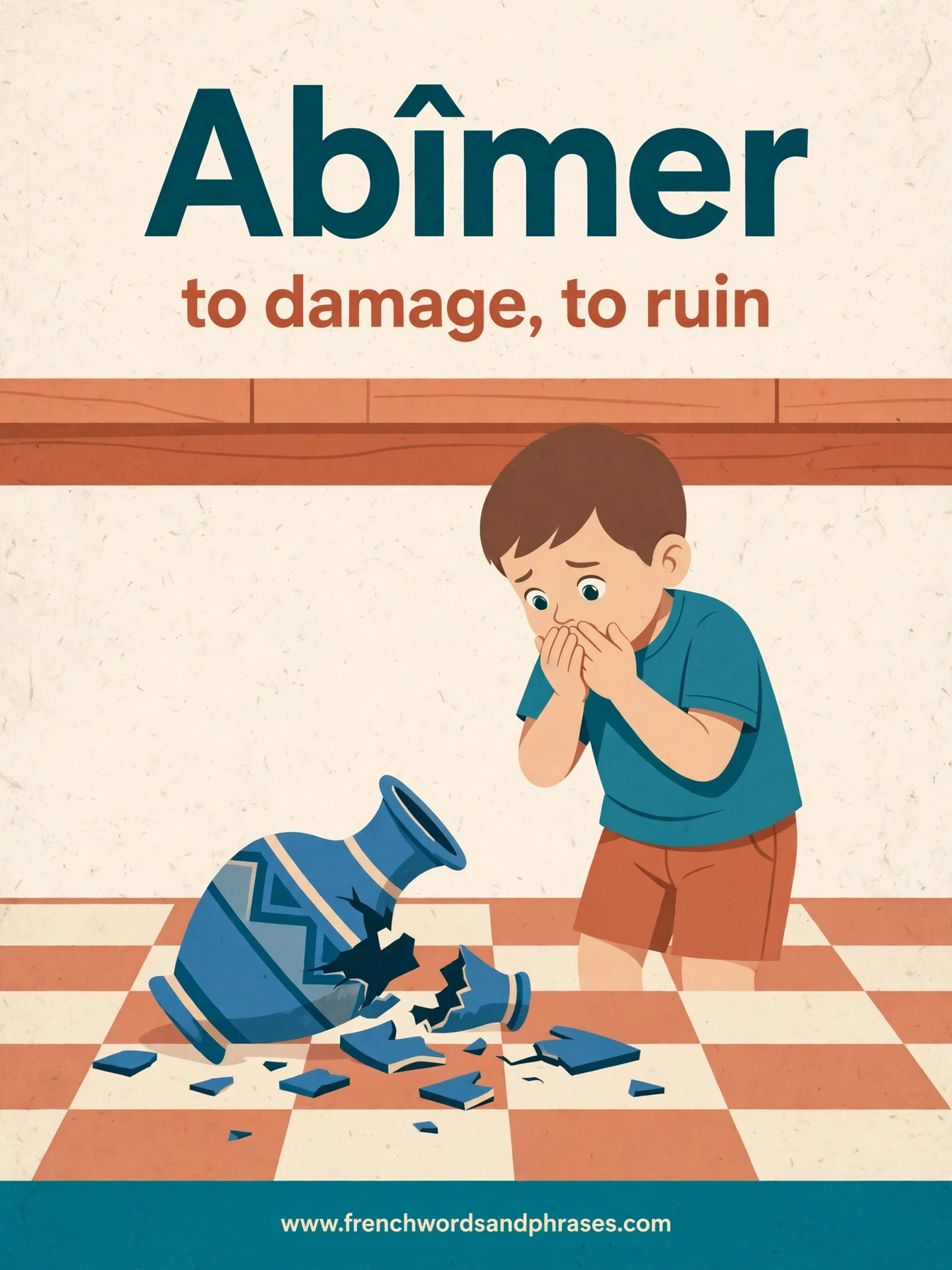
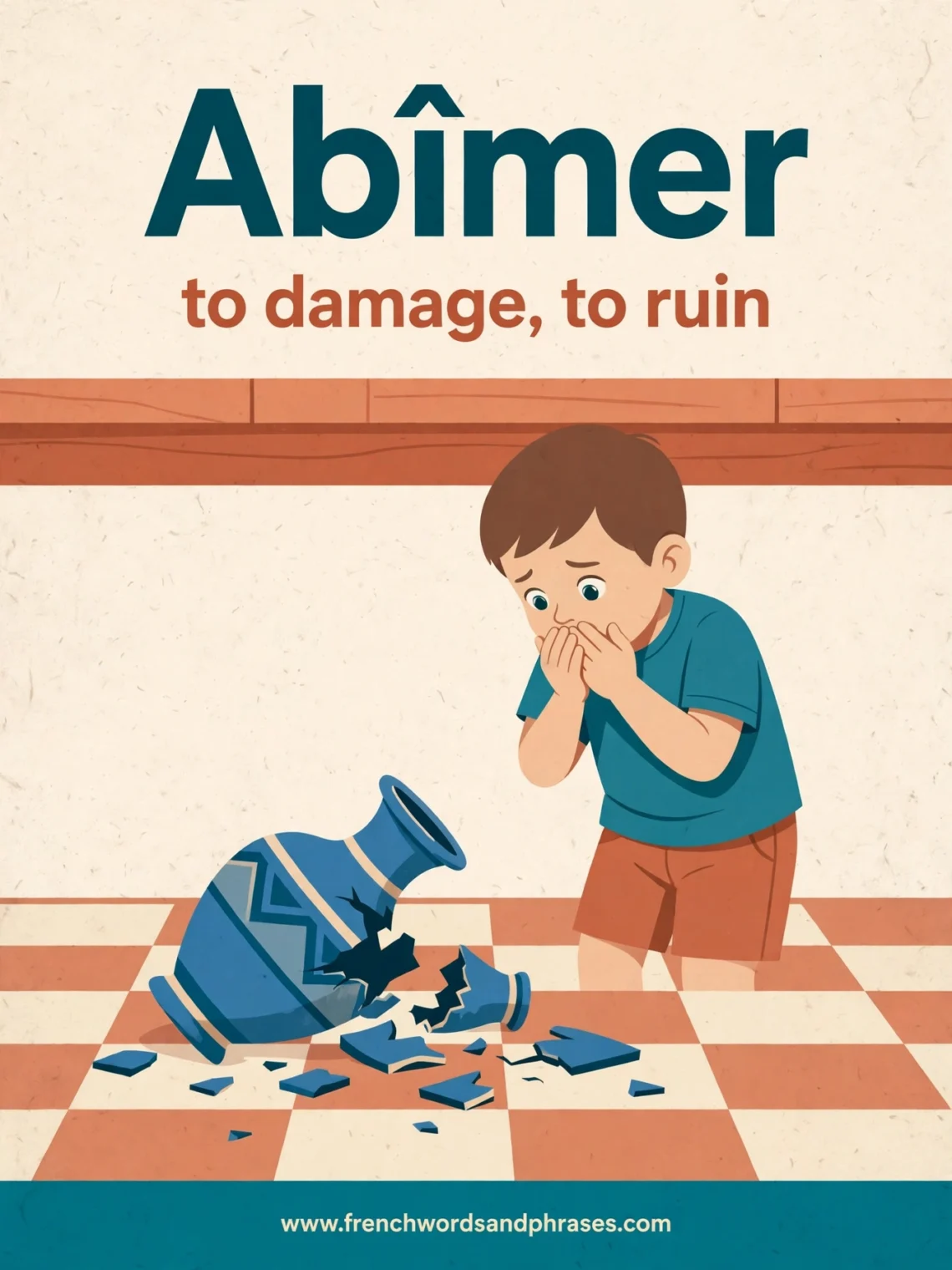
Abîmer means to damage or to ruin.
A book dropped in the rain, shoes scuffed on gravel, a favourite jumper shrunk in the wash — abîmer is the sad little verb of things spoiled before their time.
In this guide, you’ll learn how to conjugate abîmer in all the major French tenses and moods. Explore complete conjugation tables, French examples, English translations, and practice quizzes.
Understanding the French Verb Abîmer
Abîmer is a regular French verb belonging to the first group of verbs, those ending in -er.
It means to damage, to ruin. It is commonly used for damaging objects, books, clothes and eyes (trop lire abîme les yeux, in grandmother’s opinion), and for fruit and food going off — les pêches s’abîment vite, peaches spoil quickly.
Verb classification: First group (-er)
Auxiliary verb: Avoir
Past participle: abîmé
Present participle: abîmant
English equivalents: To damage, to spoil, to ruin; (se) to get damaged, to sink down.
One important detail: abîmer keeps its circumflex on the î in the infinitive and the past participle abîmé. Its reflexive does two jobs: things s’abîment — get damaged, wear out — and in older, literary French a ship or a heart s’abîme, sinks into the deep. The everyday warning is simple: attention, tu vas l’abîmer ! — careful, you’ll ruin it!
Experience the Word
Abîmer is the verb of the small disaster — the scratch, the stain, the tear that arrives in one careless second.
Imagine a schoolboy in 1960, satchel on his back, running home through the rain with a brand-new exercise book. One puddle, one slip — and his mother sighs the eternal sentence: tu as abîmé ton cahier.
The thing is not destroyed. It is damaged — and somebody cares about it.
How to Conjugate Abîmer: Complete French Conjugation Guide
Let’s explore every major conjugation of abîmer, beginning with the indicative mood.
How to Conjugate Abîmer in the Indicative Mood
The indicative mood is used to express facts, observations, actions, and events.
How to Conjugate Abîmer in the Present Tense (Présent)
Used for actions happening now, habitual actions, and general truths.
| Subject | Conjugation |
|---|---|
| je | abîme |
| tu | abîmes |
| il / elle | abîme |
| nous | abîmons |
| vous | abîmez |
| ils / elles | abîment |
Example
La pluie abîme les livres laissés dehors.
Rain ruins books left outside.
Quick Quiz 1
Complete the sentence:
Le soleil ______ les rideaux.
Reveal the answer
abîme
Le soleil abîme les rideaux.
The sun damages the curtains.
How to Conjugate Abîmer in the Passé Composé
Used for completed actions in the past. Abîmer takes the auxiliary verb avoir.
| Subject | Conjugation |
|---|---|
| j’ | ai abîmé |
| tu | as abîmé |
| il / elle | a abîmé |
| nous | avons abîmé |
| vous | avez abîmé |
| ils / elles | ont abîmé |
Example
Il a abîmé sa chemise en réparant le vélo.
He ruined his shirt while repairing the bike.
How to Conjugate Abîmer in the Imparfait (Imperfect Tense)
Used for habitual past actions, descriptions, and ongoing situations in the past.
| Subject | Conjugation |
|---|---|
| je | abîmais |
| tu | abîmais |
| il / elle | abîmait |
| nous | abîmions |
| vous | abîmiez |
| ils / elles | abîmaient |
Example
Le soleil abîmait les rideaux de la véranda.
The sun used to damage the veranda curtains.
Quick Quiz 2
Choose the correct form:
You ruined your new shoes.
Tu ______ tes chaussures neuves. (as abîmé / es abîmé)
Reveal the answer
as abîmé
Tu as abîmé tes chaussures neuves.
Abîmer takes avoir.
How to Conjugate Abîmer in the Plus-que-parfait
Used to describe an action that had already been completed before another past event.
| Subject | Conjugation |
|---|---|
| j’ | avais abîmé |
| tu | avais abîmé |
| il / elle | avait abîmé |
| nous | avions abîmé |
| vous | aviez abîmé |
| ils / elles | avaient abîmé |
Example
Nous avions abîmé le parquet en déplaçant le piano.
We had damaged the floorboards moving the piano.
How to Conjugate Abîmer in the Passé Simple
Primarily used in formal writing, literature, and historical narratives. It is rarely used in everyday conversation.
| Subject | Conjugation |
|---|---|
| je | abîmai |
| tu | abîmas |
| il / elle | abîma |
| nous | abîmâmes |
| vous | abîmâtes |
| ils / elles | abîmèrent |
Example
La tempête abîma les toits du village.
The storm damaged the roofs of the village.
How to Conjugate Abîmer in the Passé Antérieur
A literary tense used to express an action completed immediately before another past action, generally in the passé simple.
| Subject | Conjugation |
|---|---|
| j’ | eus abîmé |
| tu | eus abîmé |
| il / elle | eut abîmé |
| nous | eûmes abîmé |
| vous | eûtes abîmé |
| ils / elles | eurent abîmé |
Example
Quand la grêle eut abîmé les vignes, les vignerons soupirèrent.
When the hail had damaged the vines, the winegrowers sighed.
How to Conjugate Abîmer in the Future Tense (Futur Simple)
Used to describe actions that will take place in the future.
| Subject | Conjugation |
|---|---|
| je | abîmerai |
| tu | abîmeras |
| il / elle | abîmera |
| nous | abîmerons |
| vous | abîmerez |
| ils / elles | abîmeront |
Example
Ce produit abîmera tes cheveux, choisis-en un autre.
That product will damage your hair, choose another one.
How to Conjugate Abîmer in the Futur Antérieur (Future Perfect)
Used for an action that will have been completed before a particular point in the future.
| Subject | Conjugation |
|---|---|
| j’ | aurai abîmé |
| tu | auras abîmé |
| il / elle | aura abîmé |
| nous | aurons abîmé |
| vous | aurez abîmé |
| ils / elles | auront abîmé |
Example
À force de jouer dehors, il aura abîmé toutes ses chaussures.
By playing outside so much, he will have worn out all his shoes.
How to Conjugate Abîmer in the Near Future (Futur Proche)
Used to describe something that is going to happen soon. Formed with aller + infinitive.
| Subject | Conjugation |
|---|---|
| je | vais abîmer |
| tu | vas abîmer |
| il / elle | va abîmer |
| nous | allons abîmer |
| vous | allez abîmer |
| ils / elles | vont abîmer |
Example
Attention, tu vas abîmer la couverture du livre !
Careful, you are going to damage the book cover!
How to Conjugate Abîmer in the Conditional Mood
The conditional mood expresses what would happen under certain circumstances. It is also frequently used to make polite requests or express wishes.
How to Conjugate Abîmer in the Present Conditional
| Subject | Conjugation |
|---|---|
| je | abîmerais |
| tu | abîmerais |
| il / elle | abîmerait |
| nous | abîmerions |
| vous | abîmeriez |
| ils / elles | abîmeraient |
Example
Sans étui, l’instrument s’abîmerait vite.
Without a case, the instrument would get damaged quickly.
How to Conjugate Abîmer in the Past Conditional
| Subject | Conjugation |
|---|---|
| j’ | aurais abîmé |
| tu | aurais abîmé |
| il / elle | aurait abîmé |
| nous | aurions abîmé |
| vous | auriez abîmé |
| ils / elles | auraient abîmé |
Example
Elle aurait abîmé la robe en repassant trop chaud.
She would have damaged the dress by ironing too hot.
Abîmer in the Literary Past Conditional Form
This less common literary form uses the imperfect subjunctive of avoir.
| Subject | Conjugation |
|---|---|
| j’ | eusse abîmé |
| tu | eusses abîmé |
| il / elle | eût abîmé |
| nous | eussions abîmé |
| vous | eussiez abîmé |
| ils / elles | eussent abîmé |
Example
La mer eût abîmé la coque en une seule nuit.
The sea would have damaged the hull in a single night.
How to Conjugate Abîmer in the Subjunctive Mood
The subjunctive is used to express wishes, emotions, doubts, necessity, and uncertainty. It frequently follows expressions such as il faut que (it is necessary that) or bien que (although).
How to Conjugate Abîmer in the Present Subjunctive
| Subject | Conjugation |
|---|---|
| que je | abîme |
| que tu | abîmes |
| qu’il / qu’elle | abîme |
| que nous | abîmions |
| que vous | abîmiez |
| qu’ils / qu’elles | abîment |
Example
Il faut que tu n’abîmes pas tes lunettes.
You must not damage your glasses.
Quick Quiz 3
Complete the sentence using the subjunctive:
Il faut que vous n’______ pas les livres.
Reveal the answer
abîmiez
Il faut que vous n’abîmiez pas les livres.
You must not damage the books.
How to Conjugate Abîmer in the Imperfect Subjunctive
A literary tense, rarely encountered in modern spoken French.
| Subject | Conjugation |
|---|---|
| que je | abîmasse |
| que tu | abîmasses |
| qu’il / qu’elle | abîmât |
| que nous | abîmassions |
| que vous | abîmassiez |
| qu’ils / qu’elles | abîmassent |
Example
Je craignais qu’il abîmât le disque en le touchant.
I feared he might damage the record by touching it.
How to Conjugate Abîmer in the Pluperfect Subjunctive
A literary construction used to express an action completed before another past action.
| Subject | Conjugation |
|---|---|
| que j’ | eusse abîmé |
| que tu | eusses abîmé |
| qu’il / qu’elle | eût abîmé |
| que nous | eussions abîmé |
| que vous | eussiez abîmé |
| qu’ils / qu’elles | eussent abîmé |
Example
Il regrettait que la pluie eût abîmé les affiches.
He regretted that the rain had ruined the posters.
How to Conjugate Abîmer in the Past Subjunctive
| Subject | Conjugation |
|---|---|
| que j’ | aie abîmé |
| que tu | aies abîmé |
| qu’il / qu’elle | ait abîmé |
| que nous | ayons abîmé |
| que vous | ayez abîmé |
| qu’ils / qu’elles | aient abîmé |
Example
Je suis désolé que tu aies abîmé ton téléphone.
I am sorry you damaged your phone.
How to Conjugate Abîmer in the Imperative
The imperative is used to give commands, instructions, invitations, or suggestions. Subject pronouns are omitted.
How to Conjugate Abîmer in the Present Imperative
| Person | Conjugation |
|---|---|
| (tu) | abîme |
| (nous) | abîmons |
| (vous) | abîmez |
Example
N’abîme pas ce cahier, il est neuf !
Do not ruin this exercise book, it is new!
Quick Quiz 4
How would you say Do not ruin it (tu form)?
Reveal the answer
Ne l’abîme pas !
French Participles of Abîmer
Participles are verb forms that can be used in compound tenses and other grammatical constructions.
Present Participle of Abîmer
abîmant
En abîmant la serrure, il a réveillé toute la maison.
By damaging the lock, he woke the whole house.
Past Participle of Abîmer
abîmé
Abîmé par les années, le vieux banc tenait encore.
Damaged by the years, the old bench still held.
Abîmer in Everyday French: Real-Life Examples
Now that you know the conjugations, let’s see how abîmer appears in everyday French.
Example 1 — Present
Le soleil abîme les couleurs des rideaux.
The sun fades (damages) the colours of the curtains.
Example 2 — Passé composé
Tu as abîmé tes chaussures neuves dans la boue.
You ruined your new shoes in the mud.
Example 3 — Imparfait
Les enfants abîmaient toujours leurs jouets.
The children always used to damage their toys.
Example 4 — Future
La pluie abîmera les fleurs du jardin.
The rain will damage the garden flowers.
Example 5 — Conditional
Ce savon abîmerait ta peau, ne l’utilise pas.
That soap would damage your skin, do not use it.
Example 6 — Imperative
N’abîmez pas les livres de la bibliothèque !
Do not damage the library books!
Beyond Translation: The Meaning of Abîmer
English separates damage, spoil, ruin and wear out; French abîmer covers the whole sad family with one word — if it is worse than before, it is abîmé.
And its noun is a surprise.
Un abîme is an abyss — the deep a thing falls into when it is utterly ruined. To abîmer something is, in the verb’s old imagination, to drop it into the depths.
How to Remember the French Verb Abîmer
Remember it this way: Abîmer is about spoiling — books, shoes and favourite things.
- The warning of every French parent: attention, tu vas l’abîmer !
- Things get damaged reflexively — les fruits s’abîment vite.
- Regular -er with a circumflex: j’abîme, nous abîmons, past participle abîmé.
The key idea is spoiling — books, shoes and favourite things.
Test Your Knowledge of Abîmer
Let’s see how much you’ve learned. Try answering these questions before revealing the answers.
Question 1
How does a French parent say Careful, you’ll ruin it?
Reveal the answer
Attention, tu vas l’abîmer !
Question 2
How do you say He ruined his shirt in French?
Reveal the answer
Il a abîmé sa chemise.
Question 3
Translate: Peaches spoil quickly.
Reveal the answer
Les pêches s’abîment vite.
Question 4
What is the past participle of abîmer?
Reveal the answer
Abîmé.
Question 5
Complete the sentence:
Il faut que tu n’______ pas tes lunettes.
Reveal the answer
abîmes
Il faut que tu n’abîmes pas tes lunettes.
You must not damage your glasses.
Your Final Challenge
Can You Use It?
How would you say this in French?
Put your book away, or the rain will ruin it.
Reveal the answer
Range ton livre, sinon la pluie va l’abîmer.
Put your book away, or the rain will ruin it.
A little French. A little curiosity. A richer everyday life.
LEARN FRENCH ONE WORD AT A TIME