A French Word to Live By
How to Conjugate Capuchonner in French
/ka.py.ʃɔ.ne/
Capuchonner means to cover up — to put a cap, hood or cover over something, protecting its top the way a monk’s hood covers his head.
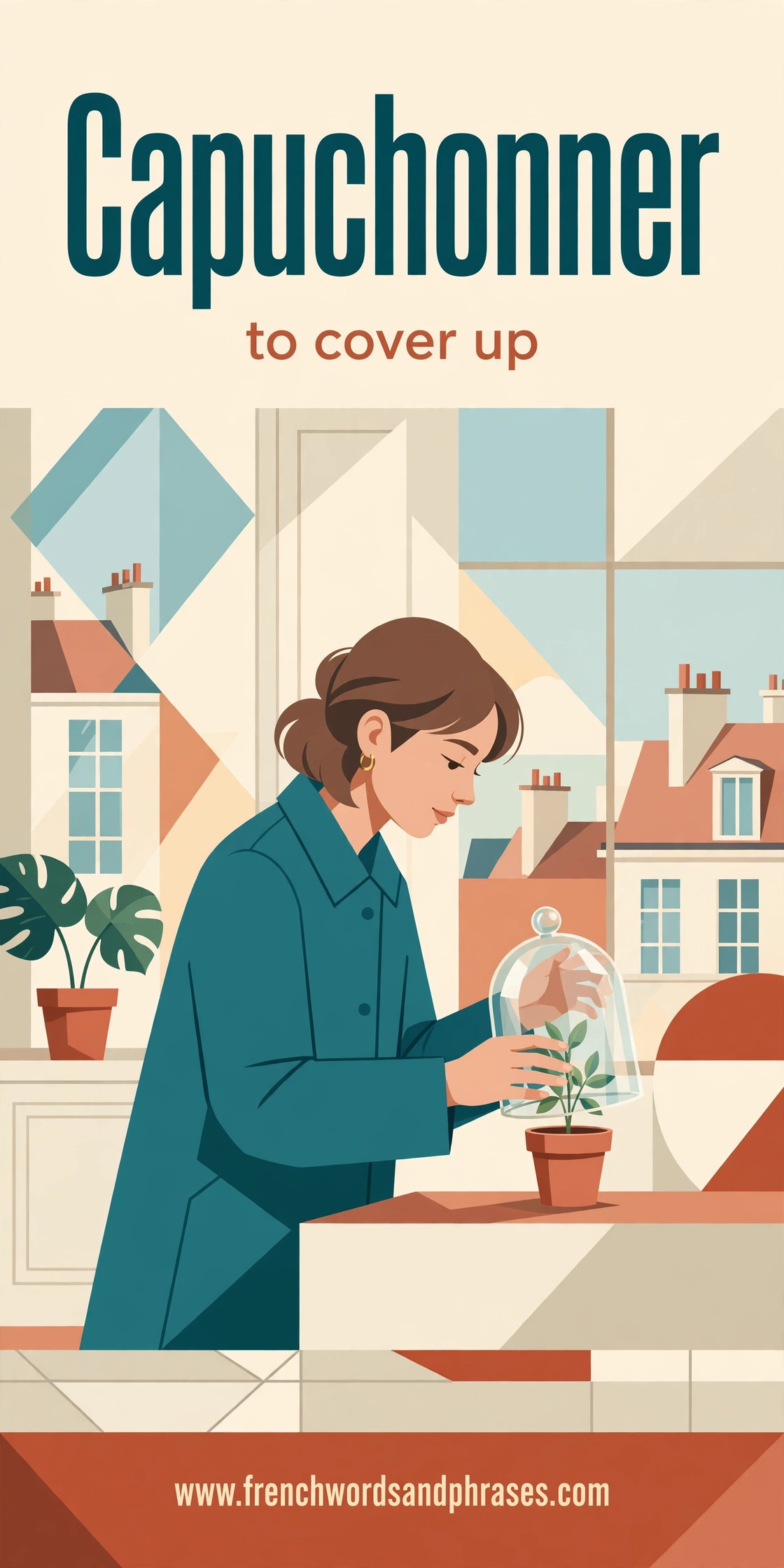
A gardener slipping a cover over a tender plant before the frost, a beekeeper capping the hive for winter — capuchonner is the verb of the protective cover: something precious underneath, and a hood drawn over it against the weather.
In this guide, you’ll learn how to conjugate capuchonner in all the major French tenses and moods. Explore complete conjugation tables, French examples, English translations, and practice quizzes.
Understanding the French Verb Capuchonner
Capuchonner is a regular French verb belonging to the first group of verbs, those ending in-er.
It means to cover up. Expect it in practical, outdoor contexts — protecting young plants, chimneys, hives and jars — and in the reflexive for people muffling themselves against wind and rain. In ordinary speech, couvrir does the everyday work; capuchonner adds the picture of the hood.
Verb classification: First group (-er)
Auxiliary verb: Avoir
Past participle: capuchonné
Present participle: capuchonnant
English equivalents: To cover up, to cap, to hood; capuchonner une plante — to cover a plant (against frost); capuchonner une ruche — to cap a hive; capuchonner un pot — to put a cover on a jar; se capuchonner — to wrap oneself up, hood up.
One important detail: capuchonner is built on le capuchon, the hood — the same word as the capuchin monk’s hood and the hood of a coat. It is a rare verb: most of its life is lived in the reflexive se capuchonner, to wrap oneself up with the hood raised, and in gardening and beekeeping, where plants and hives are covered against the cold. The conjugation is perfectly regular: je capuchonne, nous capuchonnons, ils capuchonnent, past participle capuchonné.
Experience the Word
Capuchonner is the verb of the hood drawn over — the last protective gesture before the frost arrives.
Imagine a gardener at dusk in November. The radio promises the first hard frost tonight; she goes down the row of young artichokes with an armful of covers, et capuchonne chaque plante, one by one, tucking each in like a child before bed.
The frost will come, but it will find hoods, not leaves. Every plant is covered — capuchonnée, safe under its cap.
How to Conjugate Capuchonner: Complete French Conjugation Guide
Let’s explore every major conjugation of capuchonner, beginning with the indicative mood.
How to Conjugate Capuchonner in the Indicative Mood
The indicative mood is used to express facts, observations, actions, and events.
How to Conjugate Capuchonner in the Present Tense (Présent)
Used for actions happening now, habitual actions, and general truths.
| Subject | Conjugation |
|---|---|
| je | capuchonne |
| tu | capuchonnes |
| il / elle | capuchonne |
| nous | capuchonnons |
| vous | capuchonnez |
| ils / elles | capuchonnent |
Example
Le jardinier capuchonne les plantes avant la gelée.
The gardener covers up the plants before the frost.
Quick Quiz 1
Complete the sentence:
Nous ______ les ruches pour l’hiver.
Reveal the answer
capuchonnons
Nous capuchonnons les ruches pour l’hiver.
We cap the hives for the winter.
How to Conjugate Capuchonner in the Passé Composé
Used for completed actions in the past. Capuchonner takes the auxiliary verb avoir.
| Subject | Conjugation |
|---|---|
| j’ | ai capuchonné |
| tu | as capuchonné |
| il / elle | a capuchonné |
| nous | avons capuchonné |
| vous | avez capuchonné |
| ils / elles | ont capuchonné |
Example
Elle a capuchonné les ruches pour l’hiver.
She capped the hives for the winter.
How to Conjugate Capuchonner in the Imparfait (Imperfect Tense)
Used for habitual past actions, descriptions, and ongoing situations in the past.
| Subject | Conjugation |
|---|---|
| je | capuchonnais |
| tu | capuchonnais |
| il / elle | capuchonnait |
| nous | capuchonnions |
| vous | capuchonniez |
| ils / elles | capuchonnaient |
Example
Chaque automne, on capuchonnait les jeunes rosiers.
Every autumn, they used to cover up the young rose bushes.
Quick Quiz 2
Choose the correct form:
She capped the hives.
Elle ______ les ruches. (a capuchonné / est capuchonné)
Reveal the answer
a capuchonné
Elle a capuchonné les ruches.
Capuchonner takes avoir.
How to Conjugate Capuchonner in the Plus-que-parfait
Used to describe an action that had already been completed before another past event.
| Subject | Conjugation |
|---|---|
| j’ | avais capuchonné |
| tu | avais capuchonné |
| il / elle | avait capuchonné |
| nous | avions capuchonné |
| vous | aviez capuchonné |
| ils / elles | avaient capuchonné |
Example
Il avait capuchonné les pots avant l’orage.
He had covered the jars before the storm.
How to Conjugate Capuchonner in the Passé Simple
Primarily used in formal writing, literature, and historical narratives. It is rarely used in everyday conversation.
| Subject | Conjugation |
|---|---|
| je | capuchonnai |
| tu | capuchonnas |
| il / elle | capuchonna |
| nous | capuchonnâmes |
| vous | capuchonnâtes |
| ils / elles | capuchonnèrent |
Example
La fermière capuchonna ses plantes en une soirée.
The farmer’s wife covered up her plants in one evening.
How to Conjugate Capuchonner in the Passé Antérieur
A literary tense used to express an action completed immediately before another past action, generally in the passé simple.
| Subject | Conjugation |
|---|---|
| j’ | eus capuchonné |
| tu | eus capuchonné |
| il / elle | eut capuchonné |
| nous | eûmes capuchonné |
| vous | eûtes capuchonné |
| ils / elles | eurent capuchonné |
Example
Quand ils eurent capuchonné les ruches, l’hiver pouvait venir.
When they had capped the hives, winter could come.
How to Conjugate Capuchonner in the Future Tense (Futur Simple)
Used to describe actions that will take place in the future.
| Subject | Conjugation |
|---|---|
| je | capuchonnerai |
| tu | capuchonneras |
| il / elle | capuchonnera |
| nous | capuchonnerons |
| vous | capuchonnerez |
| ils / elles | capuchonneront |
Example
Ce soir, nous capuchonnerons les artichauts.
This evening, we will cover up the artichokes.
How to Conjugate Capuchonner in the Futur Antérieur (Future Perfect)
Used for an action that will have been completed before a particular point in the future.
| Subject | Conjugation |
|---|---|
| j’ | aurai capuchonné |
| tu | auras capuchonné |
| il / elle | aura capuchonné |
| nous | aurons capuchonné |
| vous | aurez capuchonné |
| ils / elles | auront capuchonné |
Example
À la nuit tombée, elle aura capuchonné tout le potager.
By nightfall, she will have covered the whole vegetable garden.
How to Conjugate Capuchonner in the Near Future (Futur Proche)
Used to describe something that is going to happen soon. Formed with aller + infinitive.
| Subject | Conjugation |
|---|---|
| je | vais capuchonner |
| tu | vas capuchonner |
| il / elle | va capuchonner |
| nous | allons capuchonner |
| vous | allez capuchonner |
| ils / elles | vont capuchonner |
Example
Le froid arrive, je vais capuchonner les plantes fragiles.
The cold is coming, I am going to cover up the tender plants.
How to Conjugate Capuchonner in the Conditional Mood
The conditional mood expresses what would happen under certain circumstances. It is also frequently used to make polite requests or express wishes.
How to Conjugate Capuchonner in the Present Conditional
| Subject | Conjugation |
|---|---|
| je | capuchonnerais |
| tu | capuchonnerais |
| il / elle | capuchonnerait |
| nous | capuchonnerions |
| vous | capuchonneriez |
| ils / elles | capuchonneraient |
Example
Sans gelée annoncée, on ne capuchonnerait pas si tôt.
Without frost forecast, they would not cover up so early.
How to Conjugate Capuchonner in the Past Conditional
| Subject | Conjugation |
|---|---|
| j’ | aurais capuchonné |
| tu | aurais capuchonné |
| il / elle | aurait capuchonné |
| nous | aurions capuchonné |
| vous | auriez capuchonné |
| ils / elles | auraient capuchonné |
Example
Tu aurais capuchonné les rosiers si tu avais écouté la météo.
You would have covered the rose bushes if you had listened to the forecast.
Capuchonner in the Literary Past Conditional Form
This less common literary form uses the imperfect subjunctive of avoir.
| Subject | Conjugation |
|---|---|
| j’ | eusse capuchonné |
| tu | eusses capuchonné |
| il / elle | eût capuchonné |
| nous | eussions capuchonné |
| vous | eussiez capuchonné |
| ils / elles | eussent capuchonné |
Example
Le jardinier eût capuchonné ses plantes avant la neige.
The gardener would have covered his plants before the snow.
How to Conjugate Capuchonner in the Subjunctive Mood
The subjunctive is used to express wishes, emotions, doubts, necessity, and uncertainty. It frequently follows expressions such as il faut que (it is necessary that) or bien que (although).
How to Conjugate Capuchonner in the Present Subjunctive
| Subject | Conjugation |
|---|---|
| que je | capuchonne |
| que tu | capuchonnes |
| qu’il / qu’elle | capuchonne |
| que nous | capuchonnions |
| que vous | capuchonniez |
| qu’ils / qu’elles | capuchonnent |
Example
Il faut que tu capuchonnes les plantes ce soir.
You must cover up the plants this evening.
Quick Quiz 3
Complete the sentence using the subjunctive:
Il faut que vous ______ les rosiers avant la gelée.
Reveal the answer
capuchonniez
Il faut que vous capuchonniez les rosiers avant la gelée.
You must cover up the rose bushes before the frost.
How to Conjugate Capuchonner in the Imperfect Subjunctive
A literary tense, rarely encountered in modern spoken French.
| Subject | Conjugation |
|---|---|
| que je | capuchonnasse |
| que tu | capuchonnasses |
| qu’il / qu’elle | capuchonnât |
| que nous | capuchonnassions |
| que vous | capuchonnassiez |
| qu’ils / qu’elles | capuchonnassent |
Example
La météo conseillait que l’on capuchonnât les jeunes plants.
The forecast advised covering up the young plants.
How to Conjugate Capuchonner in the Pluperfect Subjunctive
A literary construction used to express an action completed before another past action.
| Subject | Conjugation |
|---|---|
| que j’ | eusse capuchonné |
| que tu | eusses capuchonné |
| qu’il / qu’elle | eût capuchonné |
| que nous | eussions capuchonné |
| que vous | eussiez capuchonné |
| qu’ils / qu’elles | eussent capuchonné |
Example
On disait qu’elle eût capuchonné les ruches dès octobre.
People said she had capped the hives as early as October.
How to Conjugate Capuchonner in the Past Subjunctive
| Subject | Conjugation |
|---|---|
| que j’ | aie capuchonné |
| que tu | aies capuchonné |
| qu’il / qu’elle | ait capuchonné |
| que nous | ayons capuchonné |
| que vous | ayez capuchonné |
| qu’ils / qu’elles | aient capuchonné |
Example
Je suis content que vous ayez capuchonné les rosiers.
I am glad you covered up the rose bushes.
How to Conjugate Capuchonner in the Imperative
The imperative is used to give commands, instructions, invitations, or suggestions. Subject pronouns are omitted.
How to Conjugate Capuchonner in the Present Imperative
| Person | Conjugation |
|---|---|
| (tu) | capuchonne |
| (nous) | capuchonnons |
| (vous) | capuchonnez |
Example
Capuchonne les plantes avant la nuit !
Cover up the plants before nightfall!
Quick Quiz 4
How would you say Cover up the plants (tu form)?
Reveal the answer
Capuchonne les plantes !
French Participles of Capuchonner
Participles are verb forms that can be used in compound tenses and other grammatical constructions.
Present Participle of Capuchonner
capuchonnant
En capuchonnant les ruches, l’apiculteur chantonnait.
While capping the hives, the beekeeper hummed.
Past Participle of Capuchonner
capuchonné
Capuchonnées contre le gel, les plantes ont survécu.
Covered up against the frost, the plants survived.
Capuchonner in Everyday French: Real-Life Examples
Now that you know the conjugations, let’s see how capuchonner appears in everyday French.
Example 1 — Present
Le jardinier capuchonne les plantes avant la gelée.
The gardener covers up the plants before the frost.
Example 2 — Passé composé
Elle a capuchonné les ruches pour l’hiver.
She capped the hives for the winter.
Example 3 — Imparfait
On capuchonnait les jeunes rosiers chaque automne.
They used to cover up the young rose bushes every autumn.
Example 4 — Future
Nous capuchonnerons les artichauts ce soir.
We will cover up the artichokes this evening.
Example 5 — Conditional
On ne capuchonnerait pas si tôt sans gelée annoncée.
They would not cover up so early without frost forecast.
Example 6 — Imperative
Capuchonne les plantes avant la nuit !
Cover up the plants before nightfall!
Beyond Translation: The Meaning of Capuchonner
English hood is a noun doing quiet work; French capuchonner turns le capuchon into an action — and the word carries its monks with it, for the capuchon is the Capuchins’ hood.
Every covered plant wears a tiny monk’s hood.
That is the charm of this rare verb: gardening, beekeeping and muffling yourself against the rain all borrow the same brown hood from the friars.
How to Remember the French Verb Capuchonner
Remember it this way: Capuchonner is about the gardener tucking hoods over the artichokes before the frost.
- Le capuchon is the hood — capuchonner is to put a hood-like cover over something.
- Its favourite home is the reflexive: se capuchonner, to wrap up with your hood up.
- Regular -er: je capuchonne, nous capuchonnons, past participle capuchonné.
The key idea is the gardener tucking hoods over the artichokes before the frost.
Test Your Knowledge of Capuchonner
Let’s see how much you’ve learned. Try answering these questions before revealing the answers.
Question 1
What object gives capuchonner its name and picture?
Reveal the answer
Le capuchon, the hood — to capuchonner is to cover something as a hood covers a head.
Question 2
How do you say The gardener covers up the plants in French?
Reveal the answer
Le jardinier capuchonne les plantes.
Question 3
Translate: She capped the hives for the winter.
Reveal the answer
Elle a capuchonné les ruches pour l’hiver.
Question 4
What is the past participle of capuchonner?
Reveal the answer
Capuchonné.
Question 5
Complete the sentence:
Il faut que tu ______ les plantes ce soir.
Reveal the answer
capuchonnes
Il faut que tu capuchonnes les plantes ce soir.
You must cover up the plants this evening.
Your Final Challenge
Can You Use It?
How would you say this in French?
The gardener covers up his plants one by one, and the garden falls asleep under a thousand little hoods.
Reveal the answer
Le jardinier capuchonne ses plantes une à une, et le jardin s’endort sous mille petits capuchons.
The gardener covers up his plants one by one, and the garden falls asleep under a thousand little hoods.
A little French. A little curiosity. A richer everyday life.
LEARN FRENCH ONE WORD AT A TIME