
A French Word to Live By
How to Conjugate Inonder in French
/i.nɔ̃.de/
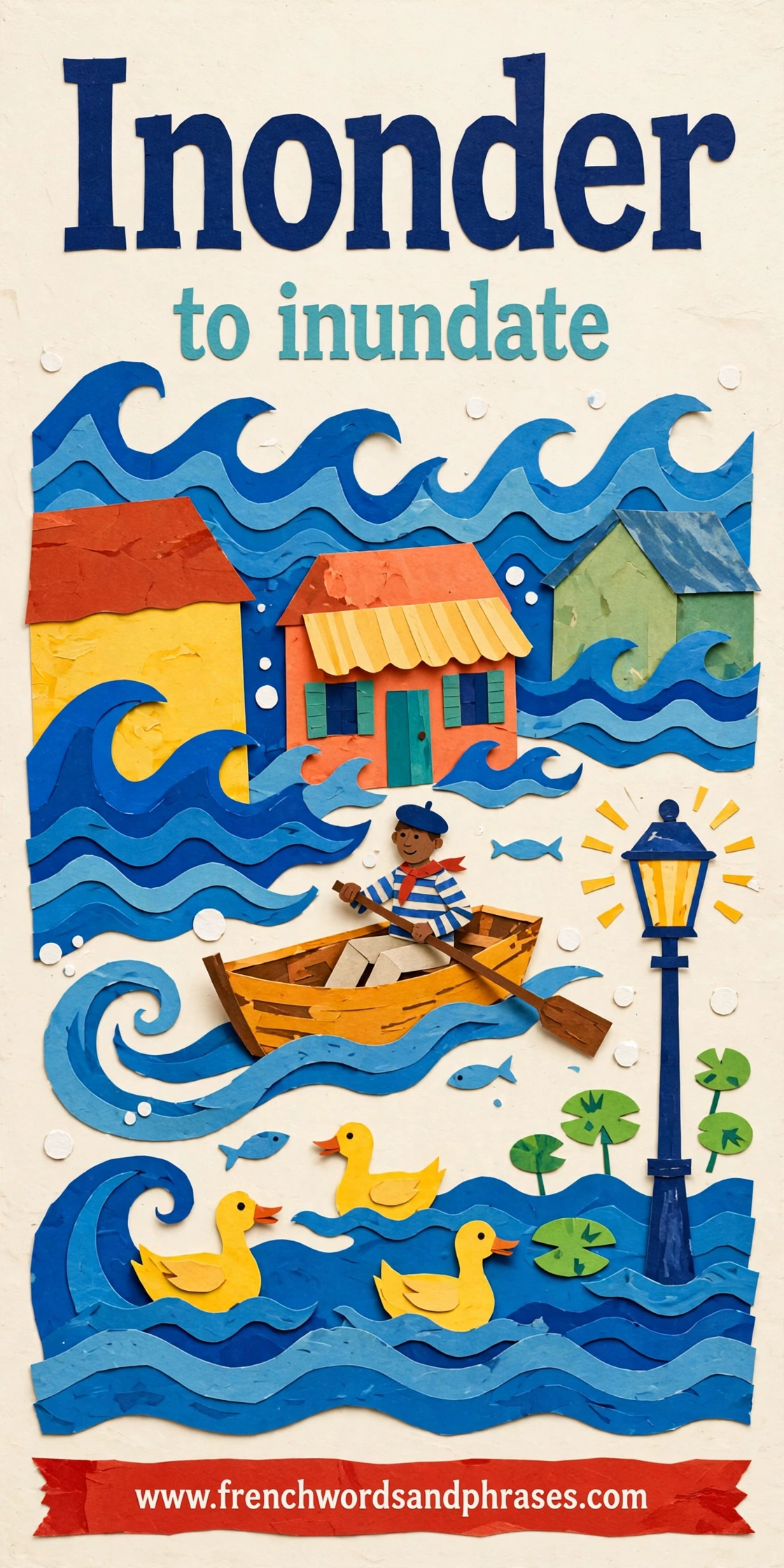
Inonder means to inundate, to flood — to cover a place with water, and, by extension, to overwhelm with letters, messages, gifts or light.
A river climbing its banks in the night, a market stall buried under flowers, a writer’s desk disappearing under readers’ letters — inonder is the verb of too much arriving at once: first water, then everything that behaves like water.
In this guide, you’ll learn how to conjugate inonder in all the major French tenses and moods. Explore complete conjugation tables, French examples, English translations, and practice quizzes.
Understanding the French Verb Inonder
Inonder is a regular French verb belonging to the first group of verbs, those ending in-er.
It means to inundate, to flood. Literally, it is the verb of floods and flood reports: la crue a inondé la plaine, les caves sont inondées. Figuratively, French reaches for it whenever quantity becomes a tide — mail, tourists, sunlight, cheap imports — and the thing flooded can be a person, a desk, a market or a whole country.
Verb classification: First group (-er)
Auxiliary verb: Avoir
Past participle: inondé
Present participle: inondant
English equivalents: To flood, to inundate, to swamp; la rivière inonde le village — the river floods the village; être inondé de lettres — to be inundated with letters; inonder le marché — to flood the market; le soleil inonde la pièce — the sun floods the room.
One important detail: inonder is built on unda, the Latin wave — the same root as une onde, a ripple. Its figurative empire is huge: anything that arrives in overwhelming quantity inonde — inonder quelqu’un de cadeaux, être inondé de demandes, inonder le marché de produits bon marché. The passive picture is just as common: le village est inondé, sa boîte est inondée de messages. It is perfectly regular: j’inonde, nous inondons, ils inondent, past participle inondé.
Experience the Word
Inonder is the verb of the rising level — the moment quantity stops being countable and becomes a landscape.
Imagine a village in a valley after three days of rain. In the night the river leaves its bed, silently, street by street — au matin, la rivière a inondé la place, and the café tables stand in brown water like patient islands.
Nobody counted the litres. The village is simply flooded — inondé — and the water is in charge.
How to Conjugate Inonder: Complete French Conjugation Guide
Let’s explore every major conjugation of inonder, beginning with the indicative mood.
How to Conjugate Inonder in the Indicative Mood
The indicative mood is used to express facts, observations, actions, and events.
How to Conjugate Inonder in the Present Tense (Présent)
Used for actions happening now, habitual actions, and general truths.
| Subject | Conjugation |
|---|---|
| je | inonde |
| tu | inondes |
| il / elle | inonde |
| nous | inondons |
| vous | inondez |
| ils / elles | inondent |
Example
Chaque printemps, la rivière inonde les prés du village.
Every spring, the river floods the village meadows.
Quick Quiz 1
Complete the sentence:
Nous ______ le marché de nos produits chaque été.
Reveal the answer
inondons
Nous inondons le marché de nos produits chaque été.
We flood the market with our products every summer.
How to Conjugate Inonder in the Passé Composé
Used for completed actions in the past. Inonder takes the auxiliary verb avoir.
| Subject | Conjugation |
|---|---|
| j’ | ai inondé |
| tu | as inondé |
| il / elle | a inondé |
| nous | avons inondé |
| vous | avez inondé |
| ils / elles | ont inondé |
Example
La crue a inondé la plaine en une nuit.
The flood inundated the plain in one night.
How to Conjugate Inonder in the Imparfait (Imperfect Tense)
Used for habitual past actions, descriptions, and ongoing situations in the past.
| Subject | Conjugation |
|---|---|
| je | inondais |
| tu | inondais |
| il / elle | inondait |
| nous | inondions |
| vous | inondiez |
| ils / elles | inondaient |
Example
Autrefois, le fleuve inondait régulièrement les caves.
In the old days, the river regularly flooded the cellars.
Quick Quiz 2
Choose the correct form:
The flood inundated the plain.
La crue ______ la plaine. (a inondé / est inondé)
Reveal the answer
a inondé
La crue a inondé la plaine.
Inonder takes avoir.
How to Conjugate Inonder in the Plus-que-parfait
Used to describe an action that had already been completed before another past event.
| Subject | Conjugation |
|---|---|
| j’ | avais inondé |
| tu | avais inondé |
| il / elle | avait inondé |
| nous | avions inondé |
| vous | aviez inondé |
| ils / elles | avaient inondé |
Example
Les pluies avaient inondé les routes avant la tempête.
The rains had flooded the roads before the storm.
How to Conjugate Inonder in the Passé Simple
Primarily used in formal writing, literature, and historical narratives. It is rarely used in everyday conversation.
| Subject | Conjugation |
|---|---|
| je | inondai |
| tu | inondas |
| il / elle | inonda |
| nous | inondâmes |
| vous | inondâtes |
| ils / elles | inondèrent |
Example
En 1910, la Seine inonda les quais de Paris.
In 1910, the Seine flooded the quays of Paris.
How to Conjugate Inonder in the Passé Antérieur
A literary tense used to express an action completed immediately before another past action, generally in the passé simple.
| Subject | Conjugation |
|---|---|
| j’ | eus inondé |
| tu | eus inondé |
| il / elle | eut inondé |
| nous | eûmes inondé |
| vous | eûtes inondé |
| ils / elles | eurent inondé |
Example
Quand l’eau eut inondé la cave, on coupa l’électricité.
When the water had flooded the cellar, they cut the electricity.
How to Conjugate Inonder in the Future Tense (Futur Simple)
Used to describe actions that will take place in the future.
| Subject | Conjugation |
|---|---|
| je | inonderai |
| tu | inonderas |
| il / elle | inondera |
| nous | inonderons |
| vous | inonderez |
| ils / elles | inonderont |
Example
Si la pluie continue, le ruisseau inondera le jardin.
If the rain continues, the stream will flood the garden.
How to Conjugate Inonder in the Futur Antérieur (Future Perfect)
Used for an action that will have been completed before a particular point in the future.
| Subject | Conjugation |
|---|---|
| j’ | aurai inondé |
| tu | auras inondé |
| il / elle | aura inondé |
| nous | aurons inondé |
| vous | aurez inondé |
| ils / elles | auront inondé |
Example
À l’aube, la marée aura inondé la moitié de la plage.
By dawn, the tide will have flooded half the beach.
How to Conjugate Inonder in the Near Future (Futur Proche)
Used to describe something that is going to happen soon. Formed with aller + infinitive.
| Subject | Conjugation |
|---|---|
| je | vais inonder |
| tu | vas inonder |
| il / elle | va inonder |
| nous | allons inonder |
| vous | allez inonder |
| ils / elles | vont inonder |
Example
Attention, l’eau va inonder le garage !
Careful, the water is going to flood the garage!
How to Conjugate Inonder in the Conditional Mood
The conditional mood expresses what would happen under certain circumstances. It is also frequently used to make polite requests or express wishes.
How to Conjugate Inonder in the Present Conditional
| Subject | Conjugation |
|---|---|
| je | inonderais |
| tu | inonderais |
| il / elle | inonderait |
| nous | inonderions |
| vous | inonderiez |
| ils / elles | inonderaient |
Example
Sans la digue, la mer inonderait le port chaque hiver.
Without the dyke, the sea would flood the harbour every winter.
How to Conjugate Inonder in the Past Conditional
| Subject | Conjugation |
|---|---|
| j’ | aurais inondé |
| tu | aurais inondé |
| il / elle | aurait inondé |
| nous | aurions inondé |
| vous | auriez inondé |
| ils / elles | auraient inondé |
Example
La rivière aurait inondé le village sans les sacs de sable.
The river would have flooded the village without the sandbags.
Inonder in the Literary Past Conditional Form
This less common literary form uses the imperfect subjunctive of avoir.
| Subject | Conjugation |
|---|---|
| j’ | eusse inondé |
| tu | eusses inondé |
| il / elle | eût inondé |
| nous | eussions inondé |
| vous | eussiez inondé |
| ils / elles | eussent inondé |
Example
On craignait que la crue inondât les faubourgs.
People feared the flood might inundate the suburbs.
How to Conjugate Inonder in the Subjunctive Mood
The subjunctive is used to express wishes, emotions, doubts, necessity, and uncertainty. It frequently follows expressions such as il faut que (it is necessary that) or bien que (although).
How to Conjugate Inonder in the Present Subjunctive
| Subject | Conjugation |
|---|---|
| que je | inonde |
| que tu | inondes |
| qu’il / qu’elle | inonde |
| que nous | inondions |
| que vous | inondiez |
| qu’ils / qu’elles | inondent |
Example
Je crains que l’eau n’inonde la cave cette nuit.
I fear the water may flood the cellar tonight.
Quick Quiz 3
Complete the sentence using the subjunctive:
Je crains que vous n’______ la cave avec ce tuyau.
Reveal the answer
inondiez
Je crains que vous n’inondiez la cave avec ce tuyau.
I fear you may flood the cellar with that hose.
How to Conjugate Inonder in the Imperfect Subjunctive
A literary tense, rarely encountered in modern spoken French.
| Subject | Conjugation |
|---|---|
| que je | inondasse |
| que tu | inondasses |
| qu’il / qu’elle | inondât |
| que nous | inondassions |
| que vous | inondassiez |
| qu’ils / qu’elles | inondassent |
Example
Tout le monde redoutait que le fleuve inondât la plaine.
Everyone dreaded that the river might flood the plain.
How to Conjugate Inonder in the Pluperfect Subjunctive
A literary construction used to express an action completed before another past action.
| Subject | Conjugation |
|---|---|
| que j’ | eusse inondé |
| que tu | eusses inondé |
| qu’il / qu’elle | eût inondé |
| que nous | eussions inondé |
| que vous | eussiez inondé |
| qu’ils / qu’elles | eussent inondé |
Example
On racontait que la mer eût inondé l’ancien port en une marée.
People said the sea had flooded the old harbour in a single tide.
How to Conjugate Inonder in the Past Subjunctive
| Subject | Conjugation |
|---|---|
| que j’ | aie inondé |
| que tu | aies inondé |
| qu’il / qu’elle | ait inondé |
| que nous | ayons inondé |
| que vous | ayez inondé |
| qu’ils / qu’elles | aient inondé |
Example
Je suis désolé que la pluie ait inondé votre jardin.
I am sorry the rain flooded your garden.
How to Conjugate Inonder in the Imperative
The imperative is used to give commands, instructions, invitations, or suggestions. Subject pronouns are omitted.
How to Conjugate Inonder in the Present Imperative
| Person | Conjugation |
|---|---|
| (tu) | inonde |
| (nous) | inondons |
| (vous) | inondez |
Example
N’inondez pas le marché de ces copies bon marché !
Do not flood the market with those cheap copies!
Quick Quiz 4
How would you say Do not flood the cellar (tu form)?
Reveal the answer
N’inonde pas la cave !
French Participles of Inonder
Participles are verb forms that can be used in compound tenses and other grammatical constructions.
Present Participle of Inonder
inondant
En inondant la plaine, la rivière a nourri les terres.
By flooding the plain, the river nourished the land.
Past Participle of Inonder
inondé
Inondée de lettres, l’écrivaine ne répondait plus.
Inundated with letters, the writer no longer replied.
Inonder in Everyday French: Real-Life Examples
Now that you know the conjugations, let’s see how inonder appears in everyday French.
Example 1 — Present
La rivière inonde les prés au printemps.
The river floods the meadows in spring.
Example 2 — Passé composé
La crue a inondé la plaine en une nuit.
The flood inundated the plain in one night.
Example 3 — Imparfait
Le fleuve inondait régulièrement les caves.
The river regularly flooded the cellars.
Example 4 — Future
Le ruisseau inondera le jardin si la pluie continue.
The stream will flood the garden if the rain continues.
Example 5 — Conditional
La mer inonderait le port sans la digue.
The sea would flood the harbour without the dyke.
Example 6 — Imperative
N’inonde pas le marché de copies !
Do not flood the market with copies!
Beyond Translation: The Meaning of Inonder
English inundate is the learned twin; everyday English says flood.
French uses inonder for both, and then keeps going.
Water is only the first citizen of this verb’s world: letters, sunlight, tourists and cheap toys all inondent in French, because the picture is never the liquid — it is the level rising past the point of control.
How to Remember the French Verb Inonder
Remember it this way: Inonder is about the river in the village square — and a desk drowning in letters.
- From unda, the wave: first water — la rivière inonde le village — then anything in overwhelming quantity.
- The figurative frames: être inondé de lettres, de messages, de cadeaux; inonder le marché.
- Regular -er: j’inonde, nous inondons, past participle inondé.
The key idea is the river in the village square — and a desk drowning in letters.
Test Your Knowledge of Inonder
Let’s see how much you’ve learned. Try answering these questions before revealing the answers.
Question 1
What kinds of things can inonder beyond water?
Reveal the answer
Anything overwhelming — letters, messages, gifts, tourists, sunlight: être inondé de demandes.
Question 2
How do you say The river floods the village in French?
Reveal the answer
La rivière inonde le village.
Question 3
Translate: The flood inundated the plain in one night.
Reveal the answer
La crue a inondé la plaine en une nuit.
Question 4
What is the past participle of inonder?
Reveal the answer
Inondé.
Question 5
Complete the sentence:
Je crains que l’eau n’______ la cave cette nuit.
Reveal the answer
inonde
Je crains que l’eau n’inonde la cave cette nuit.
I fear the water may flood the cellar tonight.
Your Final Challenge
Can You Use It?
How would you say this in French?
In spring, the river floods the meadows, and in summer the tourists flood the village: two tides, one verb.
Reveal the answer
Au printemps, la rivière inonde les prés, et en été, les touristes inondent le village : deux marées, un seul verbe.
In spring, the river floods the meadows, and in summer the tourists flood the village: two tides, one verb.
A little French. A little curiosity. A richer everyday life.
LEARN FRENCH ONE WORD AT A TIME




