A French Word to Live By
How to Conjugate Incomber in French
/ɛ̃.kɔ̃.be/
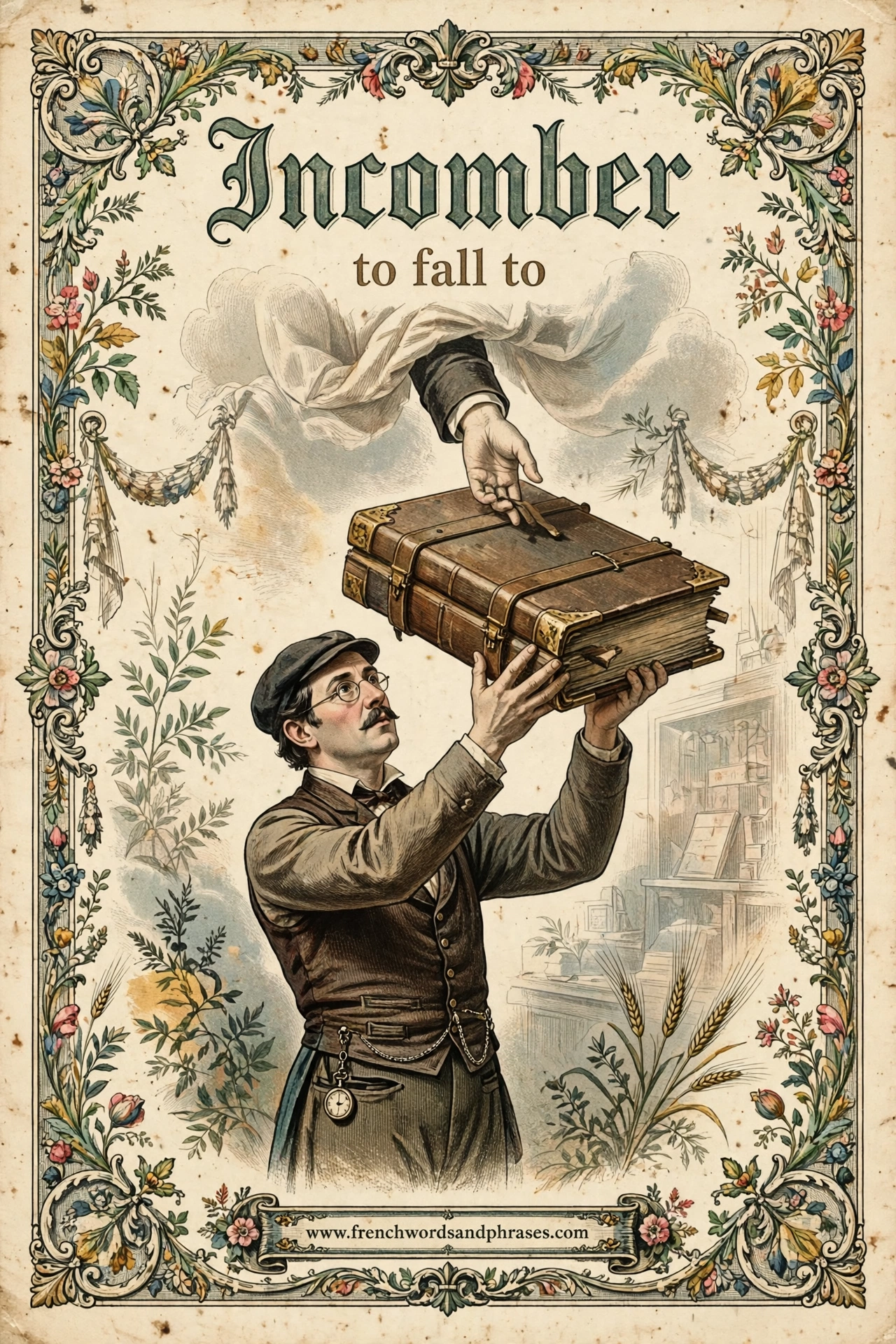
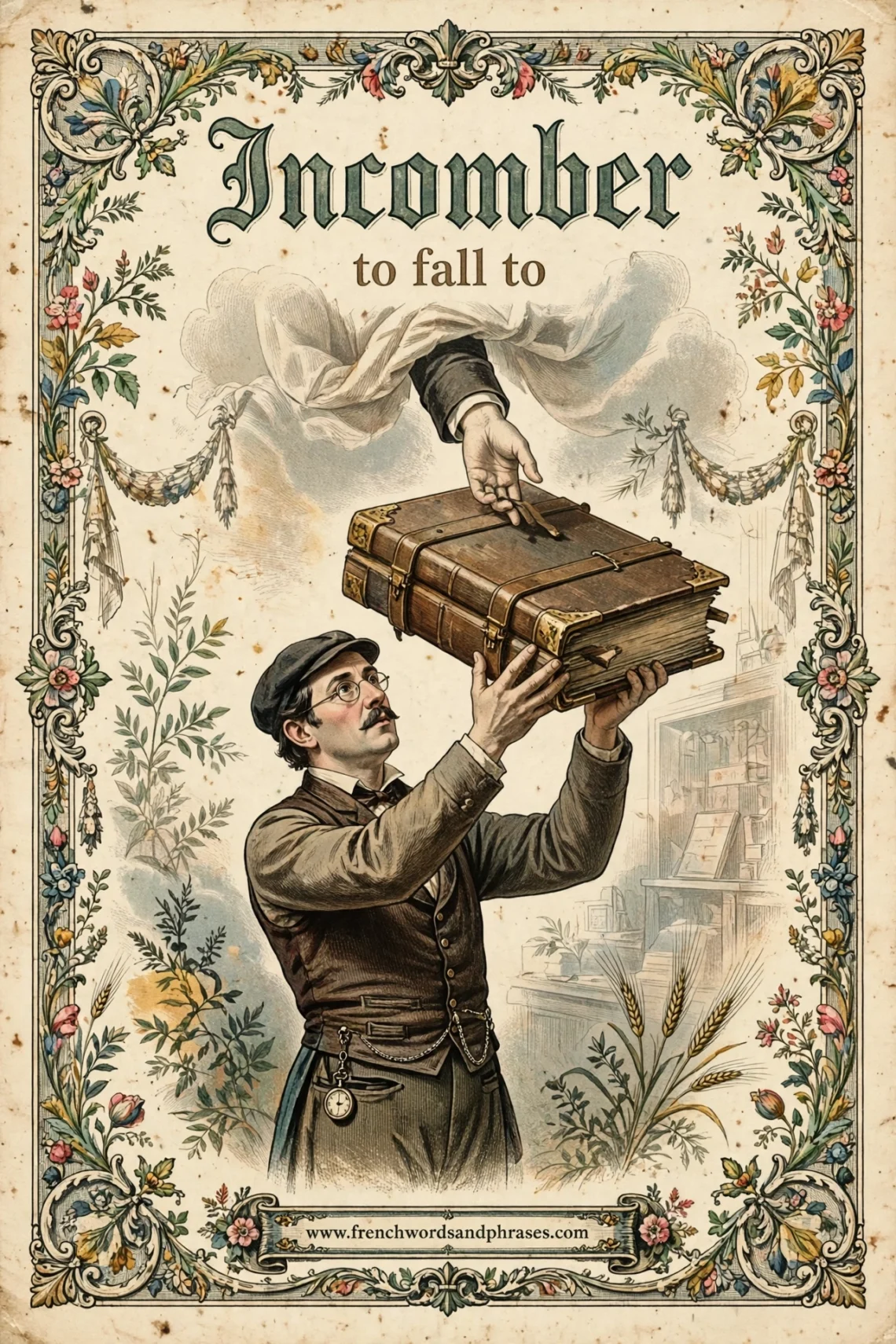
Incomber means to fall to, to devolve upon — it is the formal verb for a duty, a cost or a responsibility landing on someone’s shoulders: il incombe à quelqu’un de faire quelque chose.
A signature at the bottom of an official letter, an inheritance that brings debts with it, a night watch nobody volunteered for — incomber is the verb of duties arriving by law, by rank or by fate: the task does not ask your permission, it simply falls to you.
In this guide, you’ll learn how to conjugate incomber in all the major French tenses and moods. Explore complete conjugation tables, French examples, English translations, and practice quizzes.
Understanding the French Verb Incomber
Incomber is a regular French verb belonging to the first group of verbs, those ending in-er.
It means to fall to, to devolve upon. Expect it in official, legal and administrative French: contracts (les réparations incombent au propriétaire), ceremonies (il incombe au président d’ouvrir la séance), and inheritances, where charges and debts incombent aux héritiers. It is never used for things physically falling — that is tomber. If devoir is the everyday word, incomber is devoir in a suit and tie.
Verb classification: First group (-er)
Auxiliary verb: Avoir
Past participle: incombé
Present participle: incombant
English equivalents: To fall to, to be incumbent upon, to devolve upon; il incombe à quelqu’un de + infinitive — it is someone’s duty to…; cette tâche m’incombe — this task falls to me; les frais incombent à l’acheteur — the costs fall to the buyer; incomber à l’aîné — to devolve upon the eldest.
One important detail: incomber is a regular -er verb — il incombe, les frais incombent, past participle incombé — but it lives almost entirely in the third person: duties, costs and responsibilities are its subjects, and the person carrying them is introduced by à: il incombe au maire de répondre, la dépense incombe aux parents. The classic frame is il incombe à quelqu’un de + infinitive — the formal French way to say ‘it is up to someone to…’. Its noun is une incombance in legal French, but in daily life French just says c’est à toi de…
Experience the Word
Incomber is the verb of the duty that chooses you — by law, by birth order, or because there is nobody else in the room.
Imagine the reading of the will in the notary’s office. The house goes to the daughter, the fields to the younger son — and then the notary lowers his glasses: les dettes, elles, incombent à l’aîné. The debts fall to the eldest. Nobody claps. The eldest son nods once, the way men nod at weather: it was never going to fall anywhere else.
He did not choose the burden. It devolved upon him — il lui incombait — and the verb’s whole weight is in that passive landing.
How to Conjugate Incomber: Complete French Conjugation Guide
Let’s explore every major conjugation of incomber, beginning with the indicative mood.
How to Conjugate Incomber in the Indicative Mood
The indicative mood is used to express facts, observations, actions, and events.
How to Conjugate Incomber in the Present Tense (Présent)
Used for actions happening now, habitual actions, and general truths.
| Subject | Conjugation |
|---|---|
| je | incombe |
| tu | incombes |
| il / elle | incombe |
| nous | incombons |
| vous | incombez |
| ils / elles | incombent |
Example
Cette tâche ingrate incombe toujours au plus jeune.
This thankless task always falls to the youngest.
Quick Quiz 1
Complete the sentence:
Les frais ______ au propriétaire, pas au locataire.
Reveal the answer
incombent
Les frais incombent au propriétaire, pas au locataire.
The costs fall to the owner, not the tenant.
How to Conjugate Incomber in the Passé Composé
Used for completed actions in the past. Incomber takes the auxiliary verb avoir.
| Subject | Conjugation |
|---|---|
| j’ | ai incombé |
| tu | as incombé |
| il / elle | a incombé |
| nous | avons incombé |
| vous | avez incombé |
| ils / elles | ont incombé |
Example
Les frais de réparation ont incombé au locataire.
The repair costs fell to the tenant.
How to Conjugate Incomber in the Imparfait (Imperfect Tense)
Used for habitual past actions, descriptions, and ongoing situations in the past.
| Subject | Conjugation |
|---|---|
| je | incombais |
| tu | incombais |
| il / elle | incombait |
| nous | incombions |
| vous | incombiez |
| ils / elles | incombaient |
Example
Autrefois, la garde du pont incombait aux villageois.
In the old days, guarding the bridge fell to the villagers.
Quick Quiz 2
Choose the correct form:
The costs fell to the tenant.
Les frais ______ au locataire. (ont incombé / sont incombé)
Reveal the answer
ont incombé
Les frais ont incombé au locataire.
Incomber takes avoir.
How to Conjugate Incomber in the Plus-que-parfait
Used to describe an action that had already been completed before another past event.
| Subject | Conjugation |
|---|---|
| j’ | avais incombé |
| tu | avais incombé |
| il / elle | avait incombé |
| nous | avions incombé |
| vous | aviez incombé |
| ils / elles | avaient incombé |
Example
La dette avait incombé à l’aîné bien avant le partage.
The debt had devolved upon the eldest long before the division.
How to Conjugate Incomber in the Passé Simple
Primarily used in formal writing, literature, and historical narratives. It is rarely used in everyday conversation.
| Subject | Conjugation |
|---|---|
| je | incombai |
| tu | incombas |
| il / elle | incomba |
| nous | incombâmes |
| vous | incombâtes |
| ils / elles | incombèrent |
Example
Après la mort du père, l’entretien de la maison incomba aux enfants.
After the father’s death, the upkeep of the house fell to the children.
How to Conjugate Incomber in the Passé Antérieur
A literary tense used to express an action completed immediately before another past action, generally in the passé simple.
| Subject | Conjugation |
|---|---|
| j’ | eus incombé |
| tu | eus incombé |
| il / elle | eut incombé |
| nous | eûmes incombé |
| vous | eûtes incombé |
| ils / elles | eurent incombé |
Example
Dès que la charge eut incombé au nouveau maire, il se mit au travail.
As soon as the duty had fallen to the new mayor, he set to work.
How to Conjugate Incomber in the Future Tense (Futur Simple)
Used to describe actions that will take place in the future.
| Subject | Conjugation |
|---|---|
| je | incomberai |
| tu | incomberas |
| il / elle | incombera |
| nous | incomberons |
| vous | incomberez |
| ils / elles | incomberont |
Example
Il incombera au trésorier de présenter les comptes.
It will fall to the treasurer to present the accounts.
How to Conjugate Incomber in the Futur Antérieur (Future Perfect)
Used for an action that will have been completed before a particular point in the future.
| Subject | Conjugation |
|---|---|
| j’ | aurai incombé |
| tu | auras incombé |
| il / elle | aura incombé |
| nous | aurons incombé |
| vous | aurez incombé |
| ils / elles | auront incombé |
Example
Quand la responsabilité aura incombé au directeur, il devra répondre de tout.
When the responsibility has fallen to the director, he will have to answer for everything.
How to Conjugate Incomber in the Near Future (Futur Proche)
Used to describe something that is going to happen soon. Formed with aller + infinitive.
| Subject | Conjugation |
|---|---|
| je | vais incomber |
| tu | vas incomber |
| il / elle | va incomber |
| nous | allons incomber |
| vous | allez incomber |
| ils / elles | vont incomber |
Example
Cette corvée va encore incomber aux mêmes bénévoles.
This chore is going to fall to the same volunteers again.
How to Conjugate Incomber in the Conditional Mood
The conditional mood expresses what would happen under certain circumstances. It is also frequently used to make polite requests or express wishes.
How to Conjugate Incomber in the Present Conditional
| Subject | Conjugation |
|---|---|
| je | incomberais |
| tu | incomberais |
| il / elle | incomberait |
| nous | incomberions |
| vous | incomberiez |
| ils / elles | incomberaient |
Example
Sans le règlement, cette dépense incomberait aux familles.
Without the regulation, this expense would fall to the families.
How to Conjugate Incomber in the Past Conditional
| Subject | Conjugation |
|---|---|
| j’ | aurais incombé |
| tu | aurais incombé |
| il / elle | aurait incombé |
| nous | aurions incombé |
| vous | auriez incombé |
| ils / elles | auraient incombé |
Example
La charge aurait incombé à son frère sans le testament.
The burden would have fallen to his brother without the will.
Incomber in the Literary Past Conditional Form
This less common literary form uses the imperfect subjunctive of avoir.
| Subject | Conjugation |
|---|---|
| j’ | eusse incombé |
| tu | eusses incombé |
| il / elle | eût incombé |
| nous | eussions incombé |
| vous | eussiez incombé |
| ils / elles | eussent incombé |
Example
Il eût incombé au capitaine de donner l’ordre d’abandon.
It would have fallen to the captain to give the order to abandon ship.
How to Conjugate Incomber in the Subjunctive Mood
The subjunctive is used to express wishes, emotions, doubts, necessity, and uncertainty. It frequently follows expressions such as il faut que (it is necessary that) or bien que (although).
How to Conjugate Incomber in the Present Subjunctive
| Subject | Conjugation |
|---|---|
| que je | incombe |
| que tu | incombes |
| qu’il / qu’elle | incombe |
| que nous | incombions |
| que vous | incombiez |
| qu’ils / qu’elles | incombent |
Example
Il est juste que cette dépense incombe à la mairie.
It is fair that this expense should fall to the town hall.
Quick Quiz 3
Complete the sentence using the subjunctive:
Il est juste que la dépense ______ à la mairie.
Reveal the answer
incombe
Il est juste que la dépense incombe à la mairie.
It is fair that the expense should fall to the town hall.
How to Conjugate Incomber in the Imperfect Subjunctive
A literary tense, rarely encountered in modern spoken French.
| Subject | Conjugation |
|---|---|
| que je | incombasse |
| que tu | incombasses |
| qu’il / qu’elle | incombât |
| que nous | incombassions |
| que vous | incombassiez |
| qu’ils / qu’elles | incombassent |
Example
Le testament prévoyait que la garde incombât à la tante.
The will provided that custody should fall to the aunt.
How to Conjugate Incomber in the Pluperfect Subjunctive
A literary construction used to express an action completed before another past action.
| Subject | Conjugation |
|---|---|
| que j’ | eusse incombé |
| que tu | eusses incombé |
| qu’il / qu’elle | eût incombé |
| que nous | eussions incombé |
| que vous | eussiez incombé |
| qu’ils / qu’elles | eussent incombé |
Example
On disait que le trône eût incombé au cadet sans la loi salique.
People said the throne would have devolved upon the younger son without the Salic law.
How to Conjugate Incomber in the Past Subjunctive
| Subject | Conjugation |
|---|---|
| que j’ | aie incombé |
| que tu | aies incombé |
| qu’il / qu’elle | ait incombé |
| que nous | ayons incombé |
| que vous | ayez incombé |
| qu’ils / qu’elles | aient incombé |
Example
Je suis surpris que cette tâche ait incombé à un stagiaire.
I am surprised this task fell to an intern.
How to Conjugate Incomber in the Imperative
The imperative is used to give commands, instructions, invitations, or suggestions. Subject pronouns are omitted.
How to Conjugate Incomber in the Present Imperative
| Person | Conjugation |
|---|---|
| (tu) | incombe |
| (nous) | incombons |
| (vous) | incombez |
Example
Incombe à ta conscience, gardien, de veiller sur cette porte !
Let it fall to your conscience, keeper, to watch over this gate!
Quick Quiz 4
How would you say Let it fall to you to lock up tonight (tu form)?
Reveal the answer
Incombe à toi de fermer ce soir !
French Participles of Incomber
Participles are verb forms that can be used in compound tenses and other grammatical constructions.
Present Participle of Incomber
incombant
Incombant au seul héritier, les dettes dépassaient la valeur des champs.
Falling to the sole heir, the debts exceeded the value of the fields.
Past Participle of Incomber
incombé
Incombé de droit au fils aîné, le titre passa sans discussion.
Having devolved by right upon the eldest son, the title passed without discussion.
Incomber in Everyday French: Real-Life Examples
Now that you know the conjugations, let’s see how incomber appears in everyday French.
Example 1 — Present
Cette tâche incombe au plus jeune.
This task falls to the youngest.
Example 2 — Passé composé
Les frais ont incombé au locataire.
The costs fell to the tenant.
Example 3 — Imparfait
La garde du pont incombait aux villageois.
Guarding the bridge fell to the villagers.
Example 4 — Future
Il incombera au trésorier de présenter les comptes.
It will fall to the treasurer to present the accounts.
Example 5 — Conditional
Cette dépense incomberait aux familles.
This expense would fall to the families.
Example 6 — Imperative
Incombe à ta conscience de veiller sur cette porte !
Let it fall to your conscience to watch over this gate!
Beyond Translation: The Meaning of Incomber
English keeps the same Latin root in a stiff collar of its own — incumbent: it is incumbent upon you, and the incumbent is the person a duty currently sits on. French incomber is that idea set free as a verb.
The duty lands; the verb just reports the landing.
That is why the person almost never stands as the subject: in the world of incomber, responsibilities are the actors — les frais incombent, la charge incombe — and people are the ground things fall on. Solemn, a little fatalistic, and perfect for contracts, wills and ceremonies.
How to Remember the French Verb Incomber
Remember it this way: Incomber is about the debts in the will landing on the eldest son’s shoulders.
- Incomber lives in the third person: il incombe à quelqu’un de faire quelque chose — it is up to someone to do it.
- The burden is the subject, the person comes after à: les frais incombent à l’acheteur.
- Regular -er with avoir: les frais ont incombé au locataire, past participle incombé.
The key idea is the debts in the will landing on the eldest son’s shoulders.
Test Your Knowledge of Incomber
Let’s see how much you’ve learned. Try answering these questions before revealing the answers.
Question 1
How do you say It is up to the mayor to reply, in formal French?
Reveal the answer
Il incombe au maire de répondre.
Question 2
Which person does incomber almost always live in?
Reveal the answer
The third person — its subjects are duties, costs and responsibilities: les frais incombent à…
Question 3
Translate: The repair costs fell to the tenant.
Reveal the answer
Les frais de réparation ont incombé au locataire.
Question 4
What is the past participle of incomber?
Reveal the answer
Incombé.
Question 5
Complete the sentence:
Il est juste que cette dépense ______ à la mairie.
Reveal the answer
incombe
Il est juste que cette dépense incombe à la mairie.
It is fair that this expense should fall to the town hall.
Your Final Challenge
Can You Use It?
How would you say this in French?
Honours go where they please, but duties always fall to someone — and that someone, today, is you.
Reveal the answer
Les honneurs vont où ils veulent, mais les devoirs incombent toujours à quelqu’un — et ce quelqu’un, aujourd’hui, c’est toi.
Honours go where they please, but duties always fall to someone — and that someone, today, is you.
A little French. A little curiosity. A richer everyday life.
LEARN FRENCH ONE WORD AT A TIME