
A French Word to Live By
How to Conjugate Improuver in French
/ɛ̃.pʁu.ve/
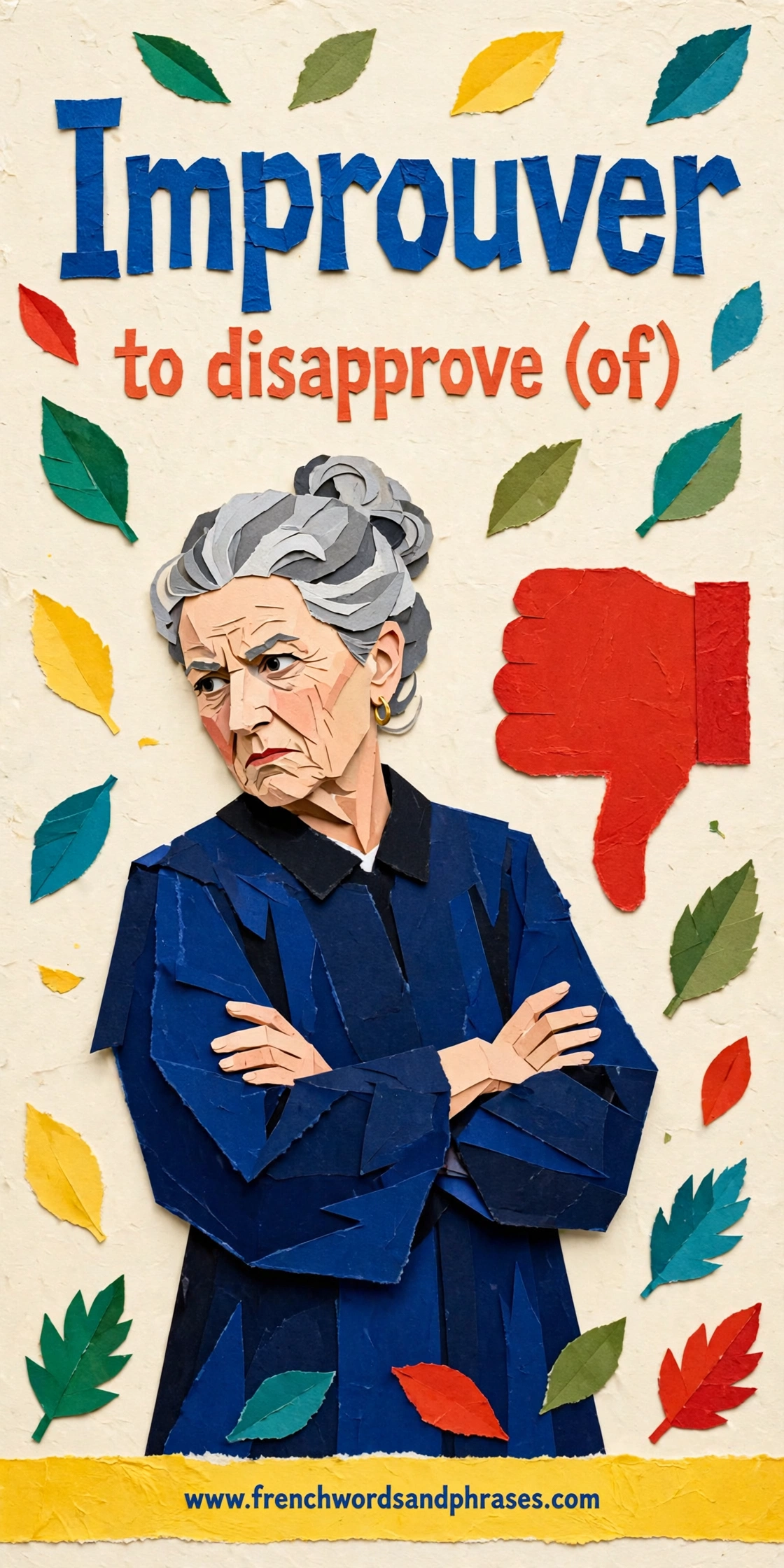
Improuver means to disapprove (of) — to judge something wrong and refuse it your approval, formally and from the height of a conscience or a court.
A father shaking his head over a marriage in a nineteenth-century novel, a council formally condemning a decision — improuver is the old, solemn verb of disapproval: rarer than désapprouver, and all the heavier for it.
In this guide, you’ll learn how to conjugate improuver in all the major French tenses and moods. Explore complete conjugation tables, French examples, English translations, and practice quizzes.
Understanding the French Verb Improuver
Improuver is a regular French verb belonging to the first group of verbs, those ending in-er.
It means to disapprove (of). Expect to meet improuver in novels, histories and formal judgements rather than in conversation: un père improuve un mariage, l’opinion improuve une décision, une assemblée improuve une conduite. For everyday disapproval — a friend frowning at your plan — French says désapprouver, and that is the verb to use in your own speech.
Verb classification: First group (-er)
Auxiliary verb: Avoir
Past participle: improuvé
Present participle: improuvant
English equivalents: To disapprove (of), to condemn, to frown upon; improuver une conduite — to disapprove of a piece of behaviour; improuver un mariage — to disapprove of a marriage; improuver hautement — to strongly disapprove; une conduite improuvée de tous — behaviour disapproved of by everyone.
One important detail: improuver is the learned, old-fashioned twin of désapprouver, the word modern French uses every day — improuver survives in literature, law and solemn prose, where its weight is the point. It is built like prouver with the negative prefix im-: to un-prove, to refuse proof of worth. It is perfectly regular: j’improuve, nous improuvons, ils improuvent, past participle improuvé. The construction is direct — improuver quelque chose — or with a clause: improuver que l’on mente.
Experience the Word
Improuver is disapproval in a frock coat — the judgement of a conscience that speaks rarely and is therefore heard.
Imagine a provincial family in 1880. The daughter announces she will marry a penniless painter; the room falls silent, the father folds his napkin slowly, and pronounces the sentence of the century: il improuve ce mariage. Nobody argues. The word has fallen like a courthouse door.
He has not merely disagreed. He has disapproved — improuvé — with all the solemn weight the old verb carries.
How to Conjugate Improuver: Complete French Conjugation Guide
Let’s explore every major conjugation of improuver, beginning with the indicative mood.
How to Conjugate Improuver in the Indicative Mood
The indicative mood is used to express facts, observations, actions, and events.
How to Conjugate Improuver in the Present Tense (Présent)
Used for actions happening now, habitual actions, and general truths.
| Subject | Conjugation |
|---|---|
| je | improuve |
| tu | improuves |
| il / elle | improuve |
| nous | improuvons |
| vous | improuvez |
| ils / elles | improuvent |
Example
Le conseil improuve fermement cette décision.
The council firmly disapproves of this decision.
Quick Quiz 1
Complete the sentence:
Nous ______ cette décision injuste.
Reveal the answer
improuvons
Nous improuvons cette décision injuste.
We disapprove of this unjust decision.
How to Conjugate Improuver in the Passé Composé
Used for completed actions in the past. Improuver takes the auxiliary verb avoir.
| Subject | Conjugation |
|---|---|
| j’ | ai improuvé |
| tu | as improuvé |
| il / elle | a improuvé |
| nous | avons improuvé |
| vous | avez improuvé |
| ils / elles | ont improuvé |
Example
Son père a improuvé le mariage dès le premier jour.
Her father disapproved of the marriage from the very first day.
How to Conjugate Improuver in the Imparfait (Imperfect Tense)
Used for habitual past actions, descriptions, and ongoing situations in the past.
| Subject | Conjugation |
|---|---|
| je | improuvais |
| tu | improuvais |
| il / elle | improuvait |
| nous | improuvions |
| vous | improuviez |
| ils / elles | improuvaient |
Example
Autrefois, la société improuvait ces unions sans pitié.
In the old days, society disapproved of such unions mercilessly.
Quick Quiz 2
Choose the correct form:
Her father disapproved of the marriage.
Son père ______ le mariage. (a improuvé / est improuvé)
Reveal the answer
a improuvé
Son père a improuvé le mariage.
Improuver takes avoir.
How to Conjugate Improuver in the Plus-que-parfait
Used to describe an action that had already been completed before another past event.
| Subject | Conjugation |
|---|---|
| j’ | avais improuvé |
| tu | avais improuvé |
| il / elle | avait improuvé |
| nous | avions improuvé |
| vous | aviez improuvé |
| ils / elles | avaient improuvé |
Example
Elle savait que sa famille avait improuvé son choix.
She knew her family had disapproved of her choice.
How to Conjugate Improuver in the Passé Simple
Primarily used in formal writing, literature, and historical narratives. It is rarely used in everyday conversation.
| Subject | Conjugation |
|---|---|
| je | improuvai |
| tu | improuvas |
| il / elle | improuva |
| nous | improuvâmes |
| vous | improuvâtes |
| ils / elles | improuvèrent |
Example
Le vieil homme improuva le projet d’un signe de tête.
The old man disapproved of the project with a shake of his head.
How to Conjugate Improuver in the Passé Antérieur
A literary tense used to express an action completed immediately before another past action, generally in the passé simple.
| Subject | Conjugation |
|---|---|
| j’ | eus improuvé |
| tu | eus improuvé |
| il / elle | eut improuvé |
| nous | eûmes improuvé |
| vous | eûtes improuvé |
| ils / elles | eurent improuvé |
Example
Quand l’assemblée eut improuvé la mesure, le ministre se retira.
When the assembly had disapproved of the measure, the minister withdrew.
How to Conjugate Improuver in the Future Tense (Futur Simple)
Used to describe actions that will take place in the future.
| Subject | Conjugation |
|---|---|
| je | improuverai |
| tu | improuveras |
| il / elle | improuvera |
| nous | improuverons |
| vous | improuverez |
| ils / elles | improuveront |
Example
L’opinion publique improuvera cette réforme injuste.
Public opinion will disapprove of this unjust reform.
How to Conjugate Improuver in the Futur Antérieur (Future Perfect)
Used for an action that will have been completed before a particular point in the future.
| Subject | Conjugation |
|---|---|
| j’ | aurai improuvé |
| tu | auras improuvé |
| il / elle | aura improuvé |
| nous | aurons improuvé |
| vous | aurez improuvé |
| ils / elles | auront improuvé |
Example
À la fin du débat, le conseil aura improuvé la proposition.
By the end of the debate, the council will have disapproved of the proposal.
How to Conjugate Improuver in the Near Future (Futur Proche)
Used to describe something that is going to happen soon. Formed with aller + infinitive.
| Subject | Conjugation |
|---|---|
| je | vais improuver |
| tu | vas improuver |
| il / elle | va improuver |
| nous | allons improuver |
| vous | allez improuver |
| ils / elles | vont improuver |
Example
Je sens que ton père va improuver notre plan.
I feel your father is going to disapprove of our plan.
How to Conjugate Improuver in the Conditional Mood
The conditional mood expresses what would happen under certain circumstances. It is also frequently used to make polite requests or express wishes.
How to Conjugate Improuver in the Present Conditional
| Subject | Conjugation |
|---|---|
| je | improuverais |
| tu | improuverais |
| il / elle | improuverait |
| nous | improuverions |
| vous | improuveriez |
| ils / elles | improuveraient |
Example
Un juge honnête improuverait une telle conduite.
An honest judge would disapprove of such behaviour.
How to Conjugate Improuver in the Past Conditional
| Subject | Conjugation |
|---|---|
| j’ | aurais improuvé |
| tu | aurais improuvé |
| il / elle | aurait improuvé |
| nous | aurions improuvé |
| vous | auriez improuvé |
| ils / elles | auraient improuvé |
Example
Elle aurait improuvé ce mariage si elle l’avait connu.
She would have disapproved of this marriage if she had known of it.
Improuver in the Literary Past Conditional Form
This less common literary form uses the imperfect subjunctive of avoir.
| Subject | Conjugation |
|---|---|
| j’ | eusse improuvé |
| tu | eusses improuvé |
| il / elle | eût improuvé |
| nous | eussions improuvé |
| vous | eussiez improuvé |
| ils / elles | eussent improuvé |
Example
Le conseil eût improuvé la mesure sans hésiter.
The council would have disapproved of the measure without hesitating.
How to Conjugate Improuver in the Subjunctive Mood
The subjunctive is used to express wishes, emotions, doubts, necessity, and uncertainty. It frequently follows expressions such as il faut que (it is necessary that) or bien que (although).
How to Conjugate Improuver in the Present Subjunctive
| Subject | Conjugation |
|---|---|
| que je | improuve |
| que tu | improuves |
| qu’il / qu’elle | improuve |
| que nous | improuvions |
| que vous | improuviez |
| qu’ils / qu’elles | improuvent |
Example
Je comprends que vous improuviez cette décision difficile.
I understand that you disapprove of this difficult decision.
Quick Quiz 3
Complete the sentence using the subjunctive:
Il est naturel que le conseil ______ la mesure.
Reveal the answer
improuve
Il est naturel que le conseil improuve la mesure.
It is natural that the council disapproves of the measure.
How to Conjugate Improuver in the Imperfect Subjunctive
A literary tense, rarely encountered in modern spoken French.
| Subject | Conjugation |
|---|---|
| que je | improuvasse |
| que tu | improuvasses |
| qu’il / qu’elle | improuvât |
| que nous | improuvassions |
| que vous | improuvassiez |
| qu’ils / qu’elles | improuvassent |
Example
Il était naturel que le père improuvât ce mariage.
It was natural that the father should disapprove of this marriage.
How to Conjugate Improuver in the Pluperfect Subjunctive
A literary construction used to express an action completed before another past action.
| Subject | Conjugation |
|---|---|
| que j’ | eusse improuvé |
| que tu | eusses improuvé |
| qu’il / qu’elle | eût improuvé |
| que nous | eussions improuvé |
| que vous | eussiez improuvé |
| qu’ils / qu’elles | eussent improuvé |
Example
On racontait que l’assemblée eût improuvé le projet en secret.
People said the assembly had disapproved of the project in secret.
How to Conjugate Improuver in the Past Subjunctive
| Subject | Conjugation |
|---|---|
| que j’ | aie improuvé |
| que tu | aies improuvé |
| qu’il / qu’elle | ait improuvé |
| que nous | ayons improuvé |
| que vous | ayez improuvé |
| qu’ils / qu’elles | aient improuvé |
Example
Je regrette que le conseil ait improuvé notre demande.
I regret that the council disapproved of our request.
How to Conjugate Improuver in the Imperative
The imperative is used to give commands, instructions, invitations, or suggestions. Subject pronouns are omitted.
How to Conjugate Improuver in the Present Imperative
| Person | Conjugation |
|---|---|
| (tu) | improuve |
| (nous) | improuvons |
| (vous) | improuvez |
Example
N’improuve pas ce que tu ne connais pas encore !
Do not disapprove of what you do not yet know!
Quick Quiz 4
How would you say Do not disapprove without listening (tu form)?
Reveal the answer
N’improuve pas sans écouter !
French Participles of Improuver
Participles are verb forms that can be used in compound tenses and other grammatical constructions.
Present Participle of Improuver
improuvant
En improuvant le plan, le directeur a surpris tout le monde.
By disapproving of the plan, the director surprised everyone.
Past Participle of Improuver
improuvé
Improuvé par sa famille, le jeune homme quitta la maison.
Disapproved of by his family, the young man left the house.
Improuver in Everyday French: Real-Life Examples
Now that you know the conjugations, let’s see how improuver appears in everyday French.
Example 1 — Present
Le conseil improuve cette décision.
The council disapproves of this decision.
Example 2 — Passé composé
Son père a improuvé le mariage.
Her father disapproved of the marriage.
Example 3 — Imparfait
La société improuvait ces unions.
Society disapproved of such unions.
Example 4 — Future
L’opinion improuvera cette réforme.
Public opinion will disapprove of this reform.
Example 5 — Conditional
Un juge honnête improuverait cette conduite.
An honest judge would disapprove of such behaviour.
Example 6 — Imperative
N’improuve pas sans écouter !
Do not disapprove without listening!
Beyond Translation: The Meaning of Improuver
English disapprove does the everyday work; French keeps two verbs — désapprouver for the street and improuver for the solemn occasion.
Improuver is the disapproval that gets minuted.
Its root is proof itself: prouver, to prove — to improuver is to refuse a thing its proof of worth, to strike it from the record. That is why novelists reach for it when a father’s no must end a chapter.
How to Remember the French Verb Improuver
Remember it this way: Improuver is about the father’s folded napkin — a no that ends the chapter.
- Improuver is the solemn, literary twin of désapprouver — learn désapprouver for your own speech, improuver for reading.
- Built on prouver (to prove) with negative im-: to refuse something its proof of worth.
- Regular -er: j’improuve, nous improuvons, past participle improuvé; direct construction: improuver un mariage, une conduite, une décision.
The key idea is the father’s folded napkin — a no that ends the chapter.
Test Your Knowledge of Improuver
Let’s see how much you’ve learned. Try answering these questions before revealing the answers.
Question 1
Which verb does everyday French use instead of improuver?
Reveal the answer
Désapprouver — improuver is the old-fashioned, literary form.
Question 2
How do you say Her father disapproved of the marriage in French?
Reveal the answer
Son père a improuvé le mariage.
Question 3
Translate: The council disapproves of this decision.
Reveal the answer
Le conseil improuve cette décision.
Question 4
What is the past participle of improuver?
Reveal the answer
Improuvé.
Question 5
Complete the sentence:
Je comprends que vous ______ cette décision difficile.
Reveal the answer
improuviez
Je comprends que vous improuviez cette décision difficile.
I understand that you disapprove of this difficult decision.
Your Final Challenge
Can You Use It?
How would you say this in French?
The old man disapproves of the marriage in silence, but his silence weighs more than all the speeches.
Reveal the answer
Le vieil homme improuve le mariage en silence, mais son silence pèse plus lourd que tous les discours.
The old man disapproves of the marriage in silence, but his silence weighs more than all the speeches.
A little French. A little curiosity. A richer everyday life.
LEARN FRENCH ONE WORD AT A TIME




