A French Word to Live By
How to Conjugate Importer in French
/ɛ̃.pɔʁ.te/
Importer means to import, to matter — one verb with two lives: bringing goods across a border, and, in the impersonal il importe, saying that something truly matters.
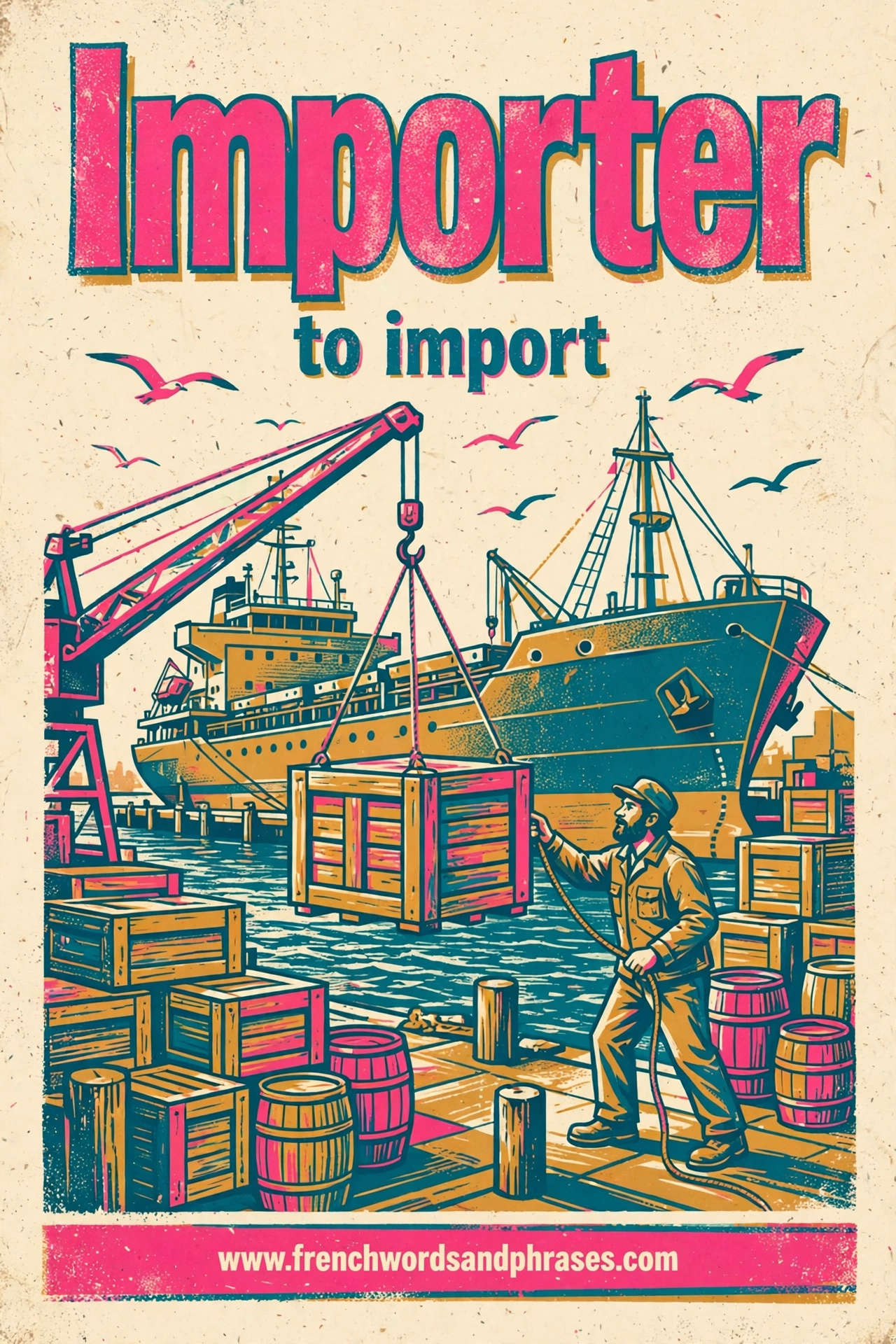
Containers of coffee arriving at Le Havre, and a grandmother shrugging peu importe at a broken plate — importer works at the customs post and in the philosophy of everyday life: trade on one side, importance on the other.
In this guide, you’ll learn how to conjugate importer in all the major French tenses and moods. Explore complete conjugation tables, French examples, English translations, and practice quizzes.
Understanding the French Verb Importer
Importer is a regular French verb belonging to the first group of verbs, those ending in-er.
It means to import, to matter. The trade sense takes ordinary subjects and objects: une entreprise qui importe des jouets. The mattering sense never takes a person as subject — nobody says je importe — it is always il importe, il importait, il importera, usually in careful or written French; everyday speech says c’est important or ça n’a pas d’importance.
Verb classification: First group (-er)
Auxiliary verb: Avoir
Past participle: importé
Present participle: important
English equivalents: To import; importer des marchandises — to import goods; importer du vin d’Italie — to import wine from Italy; and to matter (impersonal): il importe de partir tôt — it is important to leave early; il importe que tout soit prêt — it matters that everything is ready; peu importe ! — it does not matter!; n’importe quoi — anything whatever.
One important detail: importer lives two lives. As an ordinary verb it is trade: la France importe du pétrole. As an impersonal verb it only exists in the third person: il importe de + infinitive, or il importe que + subjunctive — il importe que vous soyez là. From that second life come the everyday treasures peu importe (it hardly matters), qu’importe ? (what does it matter?) and the whole n’importe family: n’importe qui, n’importe quoi, n’importe comment. The conjugation itself is perfectly regular: j’importe, nous importons.
Experience the Word
Importer is the verb of the border and of the shrug — cargo crossing frontiers, and cares dismissed with a wave of the hand.
Imagine the port of Marseille at dawn. Cranes swing containers of coffee, cloth and oranges onto the quay — la France importe, comme chaque matin. The same evening, in a kitchen above the port, a child breaks a plate and his grandmother smiles: peu importe, mon petit, on en achètera un autre.
Ships on one side, serenity on the other. Importer carries both — the goods that arrive, and the things that do not matter.
How to Conjugate Importer: Complete French Conjugation Guide
Let’s explore every major conjugation of importer, beginning with the indicative mood.
How to Conjugate Importer in the Indicative Mood
The indicative mood is used to express facts, observations, actions, and events.
How to Conjugate Importer in the Present Tense (Présent)
Used for actions happening now, habitual actions, and general truths.
| Subject | Conjugation |
|---|---|
| je | importe |
| tu | importes |
| il / elle | importe |
| nous | importons |
| vous | importez |
| ils / elles | importent |
Example
La France importe beaucoup de produits électroniques.
France imports a lot of electronic products.
Quick Quiz 1
Complete the sentence:
Nous ______ ces pièces du Japon.
Reveal the answer
importons
Nous importons ces pièces du Japon.
We import these parts from Japan.
How to Conjugate Importer in the Passé Composé
Used for completed actions in the past. Importer takes the auxiliary verb avoir.
| Subject | Conjugation |
|---|---|
| j’ | ai importé |
| tu | as importé |
| il / elle | a importé |
| nous | avons importé |
| vous | avez importé |
| ils / elles | ont importé |
Example
L’entreprise a importé mille tonnes de café.
The company imported a thousand tonnes of coffee.
How to Conjugate Importer in the Imparfait (Imperfect Tense)
Used for habitual past actions, descriptions, and ongoing situations in the past.
| Subject | Conjugation |
|---|---|
| je | importais |
| tu | importais |
| il / elle | importait |
| nous | importions |
| vous | importiez |
| ils / elles | importaient |
Example
Autrefois, on importait les épices par bateau.
In the old days, spices were imported by boat.
Quick Quiz 2
Choose the correct form:
The company imported a thousand tonnes of coffee.
L’entreprise ______ mille tonnes de café. (a importé / est importé)
Reveal the answer
a importé
L’entreprise a importé mille tonnes de café.
Importer takes avoir.
How to Conjugate Importer in the Plus-que-parfait
Used to describe an action that had already been completed before another past event.
| Subject | Conjugation |
|---|---|
| j’ | avais importé |
| tu | avais importé |
| il / elle | avait importé |
| nous | avions importé |
| vous | aviez importé |
| ils / elles | avaient importé |
Example
Il avait importé ces machines avant la crise.
He had imported these machines before the crisis.
How to Conjugate Importer in the Passé Simple
Primarily used in formal writing, literature, and historical narratives. It is rarely used in everyday conversation.
| Subject | Conjugation |
|---|---|
| je | importai |
| tu | importas |
| il / elle | importa |
| nous | importâmes |
| vous | importâtes |
| ils / elles | importèrent |
Example
Le négociant importa du vin de tout le pays.
The merchant imported wine from the whole country.
How to Conjugate Importer in the Passé Antérieur
A literary tense used to express an action completed immediately before another past action, generally in the passé simple.
| Subject | Conjugation |
|---|---|
| j’ | eus importé |
| tu | eus importé |
| il / elle | eut importé |
| nous | eûmes importé |
| vous | eûtes importé |
| ils / elles | eurent importé |
Example
Quand il eut importé la marchandise, il la vendit aussitôt.
When he had imported the goods, he sold them at once.
How to Conjugate Importer in the Future Tense (Futur Simple)
Used to describe actions that will take place in the future.
| Subject | Conjugation |
|---|---|
| je | importerai |
| tu | importeras |
| il / elle | importera |
| nous | importerons |
| vous | importerez |
| ils / elles | importeront |
Example
Demain, il importera de vérifier les passeports.
Tomorrow, it will be important to check the passports.
How to Conjugate Importer in the Futur Antérieur (Future Perfect)
Used for an action that will have been completed before a particular point in the future.
| Subject | Conjugation |
|---|---|
| j’ | aurai importé |
| tu | auras importé |
| il / elle | aura importé |
| nous | aurons importé |
| vous | aurez importé |
| ils / elles | auront importé |
Example
À la fin du mois, ils auront importé tout le stock.
By the end of the month, they will have imported all the stock.
How to Conjugate Importer in the Near Future (Futur Proche)
Used to describe something that is going to happen soon. Formed with aller + infinitive.
| Subject | Conjugation |
|---|---|
| je | vais importer |
| tu | vas importer |
| il / elle | va importer |
| nous | allons importer |
| vous | allez importer |
| ils / elles | vont importer |
Example
On va importer ces pièces du Japon.
We are going to import these parts from Japan.
How to Conjugate Importer in the Conditional Mood
The conditional mood expresses what would happen under certain circumstances. It is also frequently used to make polite requests or express wishes.
How to Conjugate Importer in the Present Conditional
| Subject | Conjugation |
|---|---|
| je | importerais |
| tu | importerais |
| il / elle | importerait |
| nous | importerions |
| vous | importeriez |
| ils / elles | importeraient |
Example
Peu importerait le prix si la qualité suivait.
The price would hardly matter if the quality followed.
How to Conjugate Importer in the Past Conditional
| Subject | Conjugation |
|---|---|
| j’ | aurais importé |
| tu | aurais importé |
| il / elle | aurait importé |
| nous | aurions importé |
| vous | auriez importé |
| ils / elles | auraient importé |
Example
Il aurait importé plus de thé sans les nouvelles taxes.
He would have imported more tea without the new taxes.
Importer in the Literary Past Conditional Form
This less common literary form uses the imperfect subjunctive of avoir.
| Subject | Conjugation |
|---|---|
| j’ | eusse importé |
| tu | eusses importé |
| il / elle | eût importé |
| nous | eussions importé |
| vous | eussiez importé |
| ils / elles | eussent importé |
Example
Il eût importé que le contrat fût signé avant midi.
It would have mattered that the contract be signed before noon.
How to Conjugate Importer in the Subjunctive Mood
The subjunctive is used to express wishes, emotions, doubts, necessity, and uncertainty. It frequently follows expressions such as il faut que (it is necessary that) or bien que (although).
How to Conjugate Importer in the Present Subjunctive
| Subject | Conjugation |
|---|---|
| que je | importe |
| que tu | importes |
| qu’il / qu’elle | importe |
| que nous | importions |
| que vous | importiez |
| qu’ils / qu’elles | importent |
Example
Il importe que tout soit prêt avant l’aube.
It matters that everything be ready before dawn.
Quick Quiz 3
Complete the sentence using the subjunctive:
Il importe que tout ______ prêt.
Reveal the answer
soit
Il importe que tout soit prêt.
It matters that everything be ready.
How to Conjugate Importer in the Imperfect Subjunctive
A literary tense, rarely encountered in modern spoken French.
| Subject | Conjugation |
|---|---|
| que je | importasse |
| que tu | importasses |
| qu’il / qu’elle | importât |
| que nous | importassions |
| que vous | importassiez |
| qu’ils / qu’elles | importassent |
Example
Il importait qu’elle arrivât à l’heure.
It was important that she arrive on time.
How to Conjugate Importer in the Pluperfect Subjunctive
A literary construction used to express an action completed before another past action.
| Subject | Conjugation |
|---|---|
| que j’ | eusse importé |
| que tu | eusses importé |
| qu’il / qu’elle | eût importé |
| que nous | eussions importé |
| que vous | eussiez importé |
| qu’ils / qu’elles | eussent importé |
Example
On savait qu’il eût importé de partir plus tôt.
People knew it would have mattered to leave earlier.
How to Conjugate Importer in the Past Subjunctive
| Subject | Conjugation |
|---|---|
| que j’ | aie importé |
| que tu | aies importé |
| qu’il / qu’elle | ait importé |
| que nous | ayons importé |
| que vous | ayez importé |
| qu’ils / qu’elles | aient importé |
Example
Je suis content qu’il ait importé les pièces à temps.
I am glad he imported the parts in time.
How to Conjugate Importer in the Imperative
The imperative is used to give commands, instructions, invitations, or suggestions. Subject pronouns are omitted.
How to Conjugate Importer in the Present Imperative
| Person | Conjugation |
|---|---|
| (tu) | importe |
| (nous) | importons |
| (vous) | importez |
Example
Importe seulement ce dont nous avons besoin !
Import only what we need!
Quick Quiz 4
How would you say It does not matter (the everyday shrug)?
Reveal the answer
Peu importe !
French Participles of Importer
Participles are verb forms that can be used in compound tenses and other grammatical constructions.
Present Participle of Importer
important
En important ces fruits, il soutient les producteurs locaux.
By importing these fruits, he supports local producers.
Past Participle of Importer
importé
Importé d’Italie, ce vin se vend très bien.
Imported from Italy, this wine sells very well.
Importer in Everyday French: Real-Life Examples
Now that you know the conjugations, let’s see how importer appears in everyday French.
Example 1 — Present
La France importe du café.
France imports coffee.
Example 2 — Passé composé
L’entreprise a importé mille tonnes de café.
The company imported a thousand tonnes of coffee.
Example 3 — Imparfait
On importait les épices par bateau.
Spices were imported by boat.
Example 4 — Future
Ils importeront les pièces du Japon.
They will import the parts from Japan.
Example 5 — Conditional
Peu importerait le prix.
The price would hardly matter.
Example 6 — Imperative
Importe seulement l’essentiel !
Import only the essentials!
Beyond Translation: The Meaning of Importer
English keeps import (goods) and matter in separate words; French importer keeps them in one — from Latin importare, to bring in, and then to carry weight.
What is brought in, counts.
And the impersonal branch has given everyday French its most useful shrug: peu importe, n’importe quoi — the little phrases with which a whole nation declines to worry.
How to Remember the French Verb Importer
Remember it this way: Importer is about cargo at the border — and the shrug that says it does not matter.
- Two lives: importer des marchandises (trade) and il importe de / il importe que (to matter).
- The impersonal life has no je or tu: only il importe, il importait, il importera.
- Its everyday family: peu importe !, qu’importe ?, n’importe qui, n’importe quoi.
The key idea is cargo at the border — and the shrug that says it does not matter.
Test Your Knowledge of Importer
Let’s see how much you’ve learned. Try answering these questions before revealing the answers.
Question 1
What are the two lives of importer?
Reveal the answer
To import goods, and impersonal il importe — to matter, to be important.
Question 2
How do you say France imports a lot of electronic products in French?
Reveal the answer
La France importe beaucoup de produits électroniques.
Question 3
Translate: It matters that everything be ready before dawn.
Reveal the answer
Il importe que tout soit prêt avant l’aube.
Question 4
What is the past participle of importer?
Reveal the answer
Importé.
Question 5
Complete the sentence:
Il importe que vous ______ là à huit heures.
Reveal the answer
soyez
Il importe que vous soyez là à huit heures.
It matters that you be there at eight o’clock — il importe que takes the subjunctive.
Your Final Challenge
Can You Use It?
How would you say this in French?
The train’s delay hardly matters: what counts is arriving together.
Reveal the answer
Peu importe le retard du train : l’important, c’est d’arriver ensemble.
The train’s delay hardly matters: what counts is arriving together.
A little French. A little curiosity. A richer everyday life.
LEARN FRENCH ONE WORD AT A TIME