A French Word to Live By
How to Conjugate Se enraciner in French
/sə ɑ̃.ʁa.si.ne/
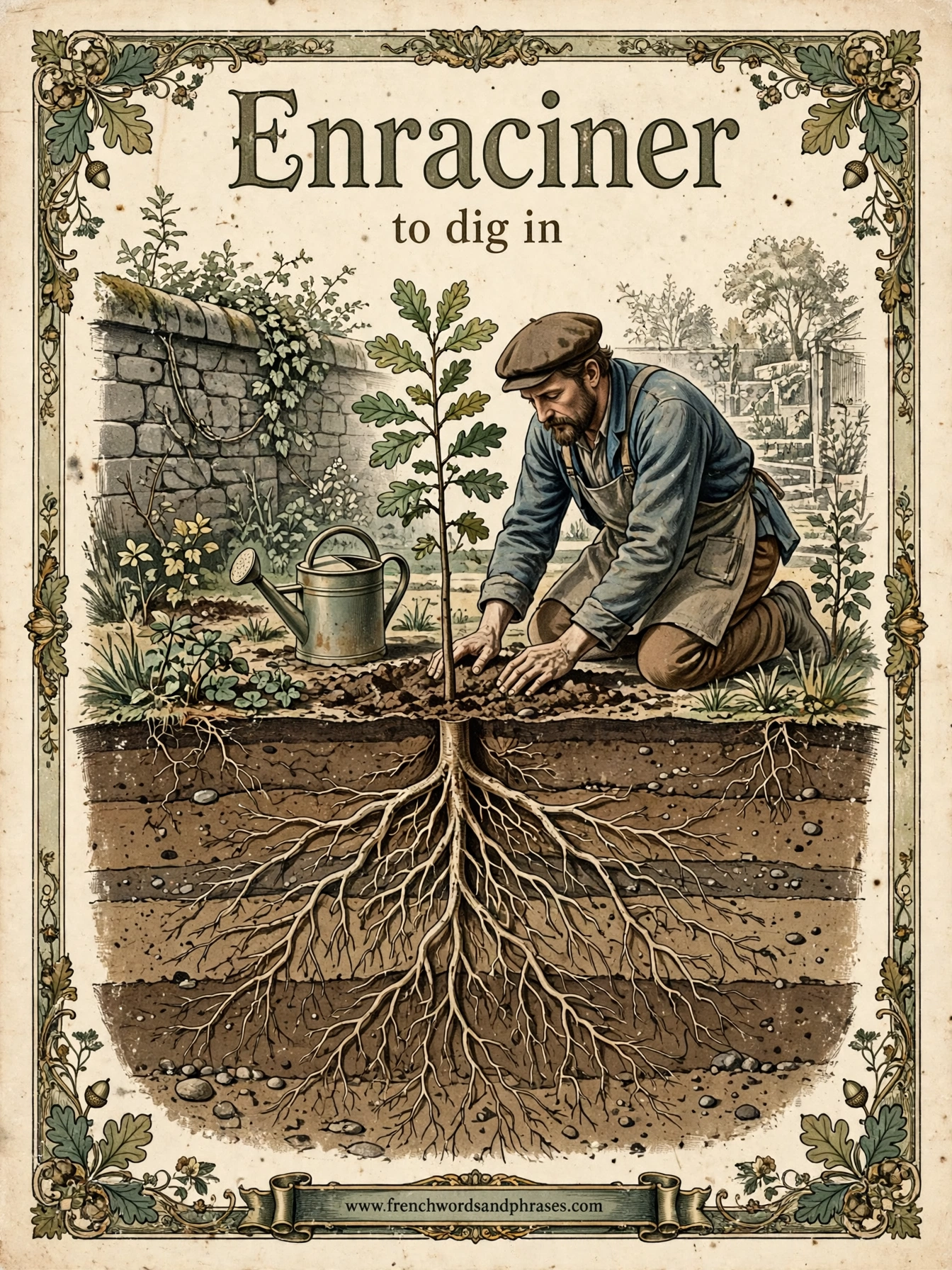
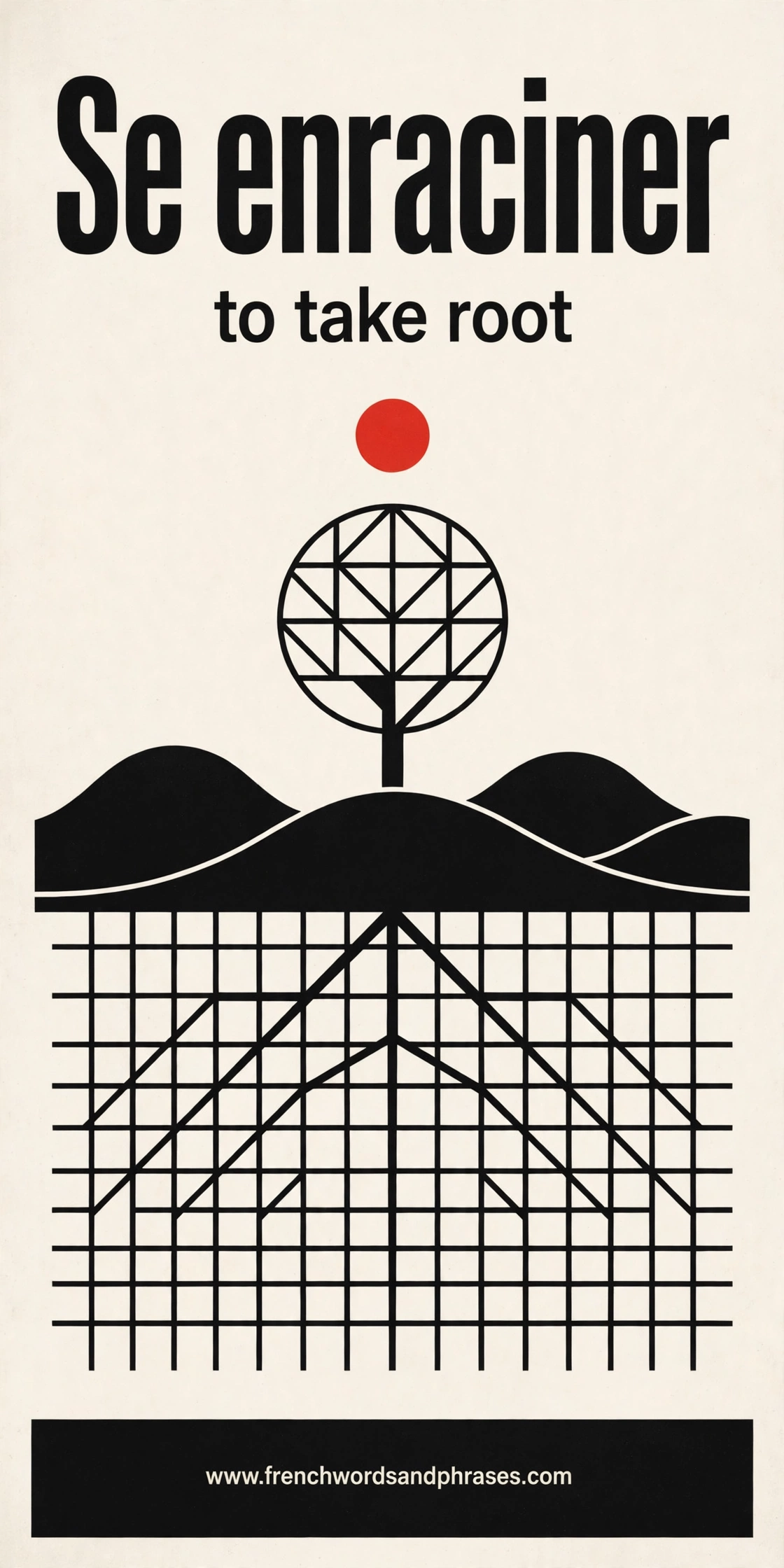
Se enraciner means to take root — to anchor yourself in a soil, a town or a life, the way a cutting anchors itself in the earth.
A cutting in a jar of water sending out its first white threads, an exile family whose grandchildren now speak of ‘home’ in a new country — s’enraciner is the verb of taking root: plants do it in soil, and people do it in places, slowly and for good.
In this guide, you’ll learn how to conjugate se enraciner in all the major French tenses and moods. Explore complete conjugation tables, French examples, English translations, and practice quizzes.
Understanding the French Verb Se enraciner
Se enraciner is a regular French verb belonging to the first group of verbs, those ending in-er.
It means to take root. Botanists use it for cuttings and seedlings anchoring themselves; everyone else uses it for people settling somewhere for good — immigrants, young families, new businesses: ils se sont enracinés dans la région. The figurative sense is warm, never negative: to s’enraciner is to belong at last.
Verb classification: First group (-er), reflexive
Auxiliary verb: Être
Past participle: enraciné
Present participle: enracinant
English equivalents: To take root, to become rooted; la bouture s’enracine — the cutting takes root; s’enraciner dans un pays — to put down roots in a country; s’enraciner dans une ville — to settle for good in a town; une famille bien enracinée — a well-established family.
One important detail: s’enraciner is what the plant — or the newcomer — does by itself, while plain enraciner is what the gardener does to it. Being reflexive, it takes être in every compound tense and the past participle agrees with the subject: la bouture s’est enracinée, les arbres se sont enracinés. Its favourite partner is dans: s’enraciner dans un pays, dans une région, dans le cœur des gens. The conjugation is a plain regular -er: je m’enracine, nous nous enracinons.
Experience the Word
Se enraciner is the quiet opposite of arriving — it is the moment a place stops being temporary.
Imagine a family arriving in a Breton village with two suitcases and a phrasebook. The first year they are ‘the new people’. By the fifth, the children are in the village school play; by the fifteenth, grandfather is buried in the village cemetery and nobody can imagine the street without them. Ils se sont enracinés — not by deciding once, but by a thousand small seasons of staying.
Nothing announced the change. They took root — ils se sont enracinés — the way cuttings do: silently, then completely.
How to Conjugate Se enraciner: Complete French Conjugation Guide
Let’s explore every major conjugation of se enraciner, beginning with the indicative mood.
How to Conjugate Se enraciner in the Indicative Mood
The indicative mood is used to express facts, observations, actions, and events.
How to Conjugate Se enraciner in the Present Tense (Présent)
Used for actions happening now, habitual actions, and general truths.
| Subject | Conjugation |
|---|---|
| je | m’enracine |
| tu | t’enracines |
| il / elle | s’enracine |
| nous | nous enracinons |
| vous | vous enracinez |
| ils / elles | s’enracinent |
Example
Les boutures s’enracinent dans l’eau en deux semaines.
The cuttings take root in water in two weeks.
Quick Quiz 1
Complete the sentence:
Nous nous ______ dans cette région pour de bon.
Reveal the answer
enracinons
Nous nous enracinons dans cette région pour de bon.
We are putting down roots in this region for good.
How to Conjugate Se enraciner in the Passé Composé
Used for completed actions in the past. Se enraciner takes the auxiliary verb être.
| Subject | Conjugation |
|---|---|
| je | me suis enraciné / me suis enracinée |
| tu | t’es enraciné / t’es enracinée |
| il / elle | s’est enraciné / s’est enracinée |
| nous | nous sommes enracinés / nous sommes enracinées |
| vous | vous êtes enracinés / vous êtes enracinées / vous êtes enraciné / vous êtes enracinée |
| ils / elles | se sont enracinés / se sont enracinées |
Example
Le rosier s’est enraciné profondément contre le mur.
The rose bush took deep root against the wall.
How to Conjugate Se enraciner in the Imparfait (Imperfect Tense)
Used for habitual past actions, descriptions, and ongoing situations in the past.
| Subject | Conjugation |
|---|---|
| je | m’enracinais |
| tu | t’enracinais |
| il / elle | s’enracinait |
| nous | nous enracinions |
| vous | vous enraciniez |
| ils / elles | s’enracinaient |
Example
La vigne s’enracinait lentement dans la caillasse.
The vine was slowly taking root in the stony soil.
Quick Quiz 2
Choose the correct form:
The fig tree has taken root.
Le figuier ______ . (s’est enraciné / a enraciné)
Reveal the answer
s’est enraciné
Le figuier s’est enraciné.
The tree roots itself, so the reflexive form with être is needed.
How to Conjugate Se enraciner in the Plus-que-parfait
Used to describe an action that had already been completed before another past event.
| Subject | Conjugation |
|---|---|
| je | m’étais enraciné / m’étais enracinée |
| tu | t’étais enraciné / t’étais enracinée |
| il / elle | s’était enraciné / s’était enracinée |
| nous | nous étions enracinés / nous étions enracinées |
| vous | vous étiez enracinés / vous étiez enracinées / vous étiez enraciné / vous étiez enracinée |
| ils / elles | s’étaient enracinés / s’étaient enracinées |
Example
Les arbres s’étaient enracinés avant la sécheresse.
The trees had taken root before the drought.
How to Conjugate Se enraciner in the Passé Simple
Primarily used in formal writing, literature, and historical narratives. It is rarely used in everyday conversation.
| Subject | Conjugation |
|---|---|
| je | m’enracinai |
| tu | t’enracinas |
| il / elle | s’enracina |
| nous | nous enracinâmes |
| vous | vous enracinâtes |
| ils / elles | s’enracinèrent |
Example
Le chêne s’enracina si bien qu’aucune tempête ne l’ébranla.
The oak took root so well that no storm could shake it.
How to Conjugate Se enraciner in the Passé Antérieur
A literary tense used to express an action completed immediately before another past action, generally in the passé simple.
| Subject | Conjugation |
|---|---|
| je | me fus enraciné / me fus enracinée |
| tu | te fus enraciné / te fus enracinée |
| il / elle | se fut enraciné / se fut enracinée |
| nous | nous fûmes enracinés / nous fûmes enracinées |
| vous | vous fûtes enracinés / vous fûtes enracinées / vous fûtes enraciné / vous fûtes enracinée |
| ils / elles | se furent enracinés / se furent enracinées |
Example
Dès que la bouture se fut enracinée, on la mit en terre.
As soon as the cutting had taken root, it was put into the soil.
How to Conjugate Se enraciner in the Future Tense (Futur Simple)
Used to describe actions that will take place in the future.
| Subject | Conjugation |
|---|---|
| je | m’enracinerai |
| tu | t’enracineras |
| il / elle | s’enracinera |
| nous | nous enracinerons |
| vous | vous enracinerez |
| ils / elles | s’enracineront |
Example
Ces plantes s’enracineront vite au printemps.
These plants will take root quickly in spring.
How to Conjugate Se enraciner in the Futur Antérieur (Future Perfect)
Used for an action that will have been completed before a particular point in the future.
| Subject | Conjugation |
|---|---|
| je | me serai enraciné / me serai enracinée |
| tu | te seras enraciné / te seras enracinée |
| il / elle | se sera enraciné / se sera enracinée |
| nous | nous serons enracinés / nous serons enracinées |
| vous | vous serez enracinés / vous serez enracinées / vous serez enraciné / vous serez enracinée |
| ils / elles | se seront enracinés / se seront enracinées |
Example
À l’automne, les arbustes se seront enracinés pour de bon.
By autumn, the shrubs will have taken root for good.
How to Conjugate Se enraciner in the Near Future (Futur Proche)
Used to describe something that is going to happen soon. Formed with aller + infinitive.
| Subject | Conjugation |
|---|---|
| je | vais m’enraciner |
| tu | vas t’enraciner |
| il / elle | va s’enraciner |
| nous | allons nous enraciner |
| vous | allez vous enraciner |
| ils / elles | vont s’enraciner |
Example
Ce plant va s’enraciner près de la haie.
This seedling is going to take root near the hedge.
How to Conjugate Se enraciner in the Conditional Mood
The conditional mood expresses what would happen under certain circumstances. It is also frequently used to make polite requests or express wishes.
How to Conjugate Se enraciner in the Present Conditional
| Subject | Conjugation |
|---|---|
| je | m’enracinerais |
| tu | t’enracinerais |
| il / elle | s’enracinerait |
| nous | nous enracinerions |
| vous | vous enracineriez |
| ils / elles | s’enracineraient |
Example
Sans eau, la bouture ne s’enracinerait jamais.
Without water, the cutting would never take root.
How to Conjugate Se enraciner in the Past Conditional
| Subject | Conjugation |
|---|---|
| je | me serais enraciné / me serais enracinée |
| tu | te serais enraciné / te serais enracinée |
| il / elle | se serait enraciné / se serait enracinée |
| nous | nous serions enracinés / nous serions enracinées |
| vous | vous seriez enracinés / vous seriez enracinées / vous seriez enraciné / vous seriez enracinée |
| ils / elles | se seraient enracinés / se seraient enracinées |
Example
Elle se serait enracinée plus tôt dans une meilleure terre.
It would have taken root sooner in better soil.
Se enraciner in the Literary Past Conditional Form
This less common literary form uses the imperfect subjunctive of être.
| Subject | Conjugation |
|---|---|
| je | me fusse enraciné / me fusse enracinée |
| tu | te fusses enraciné / te fusses enracinée |
| il / elle | se fût enraciné / se fût enracinée |
| nous | nous fussions enracinés / nous fussions enracinées |
| vous | vous fussiez enracinés / vous fussiez enracinées / vous fussiez enraciné / vous fussiez enracinée |
| ils / elles | se fussent enracinés / se fussent enracinées |
Example
Le rosier se fût enraciné sans le gel de mars.
The rose bush would have taken root, were it not for the March frost.
How to Conjugate Se enraciner in the Subjunctive Mood
The subjunctive is used to express wishes, emotions, doubts, necessity, and uncertainty. It frequently follows expressions such as il faut que (it is necessary that) or bien que (although).
How to Conjugate Se enraciner in the Present Subjunctive
| Subject | Conjugation |
|---|---|
| que je | m’enracine |
| que tu | t’enracines |
| qu’il / qu’elle | s’enracine |
| que nous | nous enracinions |
| que vous | vous enraciniez |
| qu’ils / qu’elles | s’enracinent |
Example
Il faut que les plants s’enracinent avant l’hiver.
The seedlings must take root before winter.
Quick Quiz 3
Complete the sentence using the subjunctive:
Il faut que tu ______ dans ce pays avant l’hiver.
Reveal the answer
t’enracines
Il faut que tu t’enracines dans ce pays avant l’hiver.
You must take root in this country before winter.
How to Conjugate Se enraciner in the Imperfect Subjunctive
A literary tense, rarely encountered in modern spoken French.
| Subject | Conjugation |
|---|---|
| que je | m’enracinasse |
| que tu | t’enracinasses |
| qu’il / qu’elle | s’enracinât |
| que nous | nous enracinassions |
| que vous | vous enracinassiez |
| qu’ils / qu’elles | s’enracinassent |
Example
Le jardinier attendait que la vigne s’enracinât.
The gardener was waiting for the vine to take root.
How to Conjugate Se enraciner in the Pluperfect Subjunctive
A literary construction used to express an action completed before another past action.
| Subject | Conjugation |
|---|---|
| que je | me fusse enraciné / me fusse enracinée |
| que tu | te fusses enraciné / te fusses enracinée |
| qu’il / qu’elle | se fût enraciné / se fût enracinée |
| que nous | nous fussions enracinés / nous fussions enracinées |
| que vous | vous fussiez enracinés / vous fussiez enracinées / vous fussiez enraciné / vous fussiez enracinée |
| qu’ils / qu’elles | se fussent enracinés / se fussent enracinées |
Example
On espérait que les boutures se fussent enracinées.
People hoped the cuttings had taken root.
How to Conjugate Se enraciner in the Past Subjunctive
| Subject | Conjugation |
|---|---|
| que je | me sois enraciné / me sois enracinée |
| que tu | te sois enraciné / te sois enracinée |
| qu’il / qu’elle | se soit enraciné / se soit enracinée |
| que nous | nous soyons enracinés / nous soyons enracinées |
| que vous | vous soyez enracinés / vous soyez enracinées / vous soyez enraciné / vous soyez enracinée |
| qu’ils / qu’elles | se soient enracinés / se soient enracinées |
Example
Je suis ravi que le figuier se soit enraciné.
I am delighted the fig tree has taken root.
How to Conjugate Se enraciner in the Imperative
The imperative is used to give commands, instructions, invitations, or suggestions. Subject pronouns are omitted.
How to Conjugate Se enraciner in the Present Imperative
| Person | Conjugation |
|---|---|
| (tu) | enracine-toi |
| (nous) | enracinons-nous |
| (vous) | enracinez-vous |
Example
Enracine-toi bien, petit arbre !
Take good root, little tree!
Quick Quiz 4
How would you say Take good root, little tree (tu form)?
Reveal the answer
Enracine-toi bien, petit arbre !
French Participles of Se enraciner
Participles are verb forms that can be used in compound tenses and other grammatical constructions.
Present Participle of Se enraciner
enracinant
En s’enracinant, la plante puise l’eau plus profond.
By taking root, the plant draws water from deeper down.
Past Participle of Se enraciner
enraciné
Bien enraciné, le chêne a résisté à toutes les tempêtes.
Well rooted, the oak withstood every storm.
Se enraciner in Everyday French: Real-Life Examples
Now that you know the conjugations, let’s see how se enraciner appears in everyday French.
Example 1 — Present
Les boutures s’enracinent dans l’eau.
The cuttings take root in water.
Example 2 — Passé composé
Le rosier s’est enraciné contre le mur.
The rose bush took root against the wall.
Example 3 — Imparfait
La vigne s’enracinait lentement.
The vine was slowly taking root.
Example 4 — Future
Ces plantes s’enracineront au printemps.
These plants will take root in spring.
Example 5 — Conditional
La bouture ne s’enracinerait jamais sans eau.
The cutting would never take root without water.
Example 6 — Imperative
Enracine-toi bien, petit arbre !
Take good root, little tree!
Beyond Translation: The Meaning of Se enraciner
Every language plants its settlers, but French gives them a whole verb of their own: s’enraciner, to root oneself.
It is the verb of the second generation.
The parents arrived; the children s’enracinent — in the school, the accent, the cemetery plot. Sociologists borrow the word constantly (l’enracinement, rootedness, is its noun), because no other French verb says so precisely the difference between living somewhere and belonging there.
How to Remember the French Verb Se enraciner
Remember it this way: Se enraciner is about the exile family’s grandchildren, rooted in the Breton village school play.
- The gardener enracine the plant; the plant s’enracine by itself — that is the pair to learn.
- Dans is its preposition: s’enraciner dans un pays, dans une ville, dans le cœur des gens.
- Être in compound tenses, with agreement: la bouture s’est enracinée, les arbres se sont enracinés.
The key idea is the exile family’s grandchildren, rooted in the Breton village school play.
Test Your Knowledge of Se enraciner
Let’s see how much you’ve learned. Try answering these questions before revealing the answers.
Question 1
Which auxiliary does s’enraciner use, and why?
Reveal the answer
Être — it is a reflexive verb: la bouture s’est enracinée, les arbres se sont enracinés.
Question 2
How do you say The cuttings take root in water in French?
Reveal the answer
Les boutures s’enracinent dans l’eau.
Question 3
Translate: The rose bush took root against the wall.
Reveal the answer
Le rosier s’est enraciné contre le mur.
Question 4
What is the past participle of enraciner?
Reveal the answer
Enraciné — agreeing: enracinée, enracinés, enracinées.
Question 5
Complete the sentence:
Il faut que les plants ______ avant l’hiver.
Reveal the answer
s’enracinent
Il faut que les plants s’enracinent avant l’hiver.
The seedlings must take root before winter.
Your Final Challenge
Can You Use It?
How would you say this in French?
The family took root in the village, and the village, gently, took root in them.
Reveal the answer
La famille s’est enracinée dans le village, et le village, doucement, s’est enraciné en elle.
The family took root in the village, and the village, gently, took root in them.
A little French. A little curiosity. A richer everyday life.
LEARN FRENCH ONE WORD AT A TIME