A French Word to Live By
How to Conjugate Enfler in French
/ɑ̃.fle/
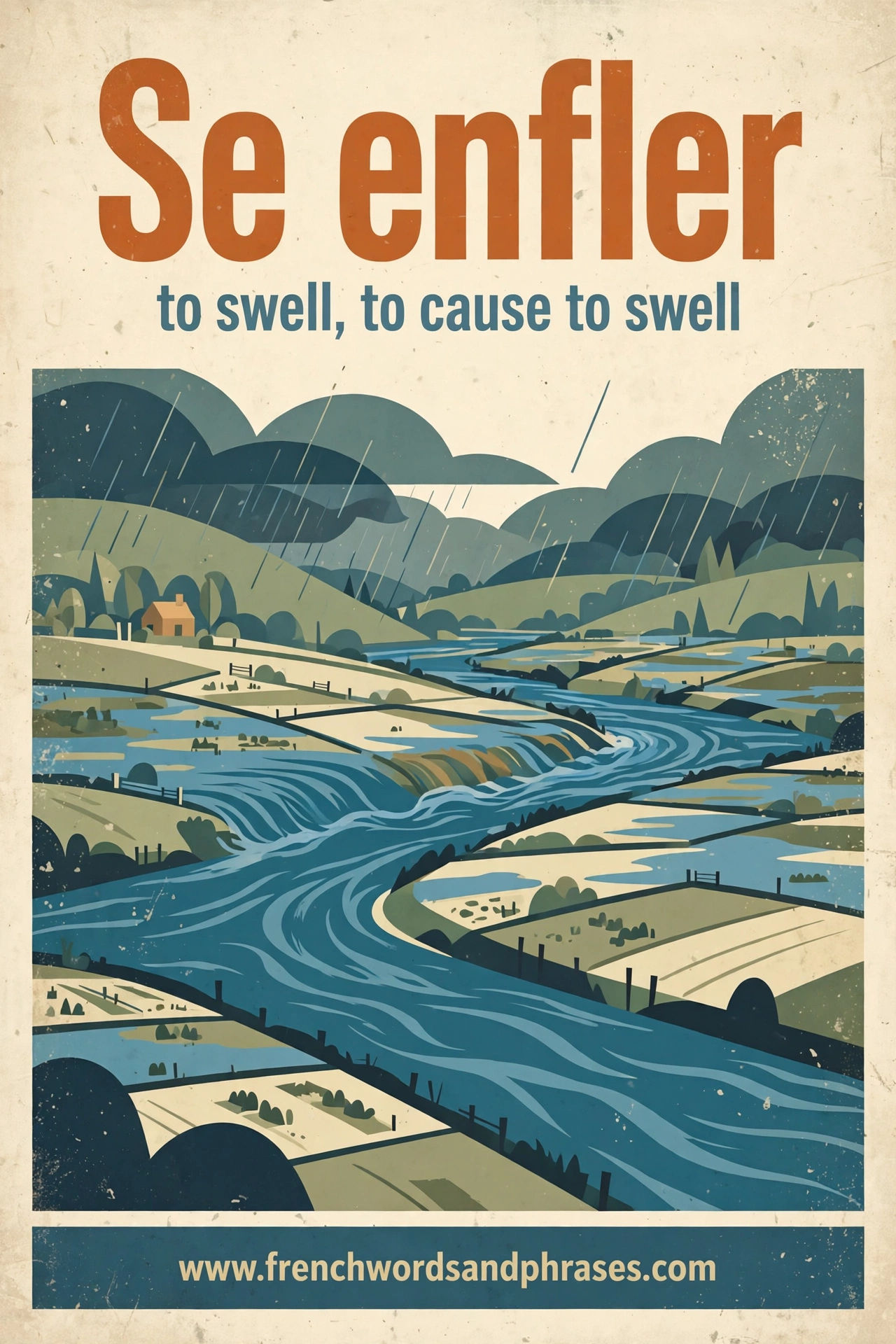
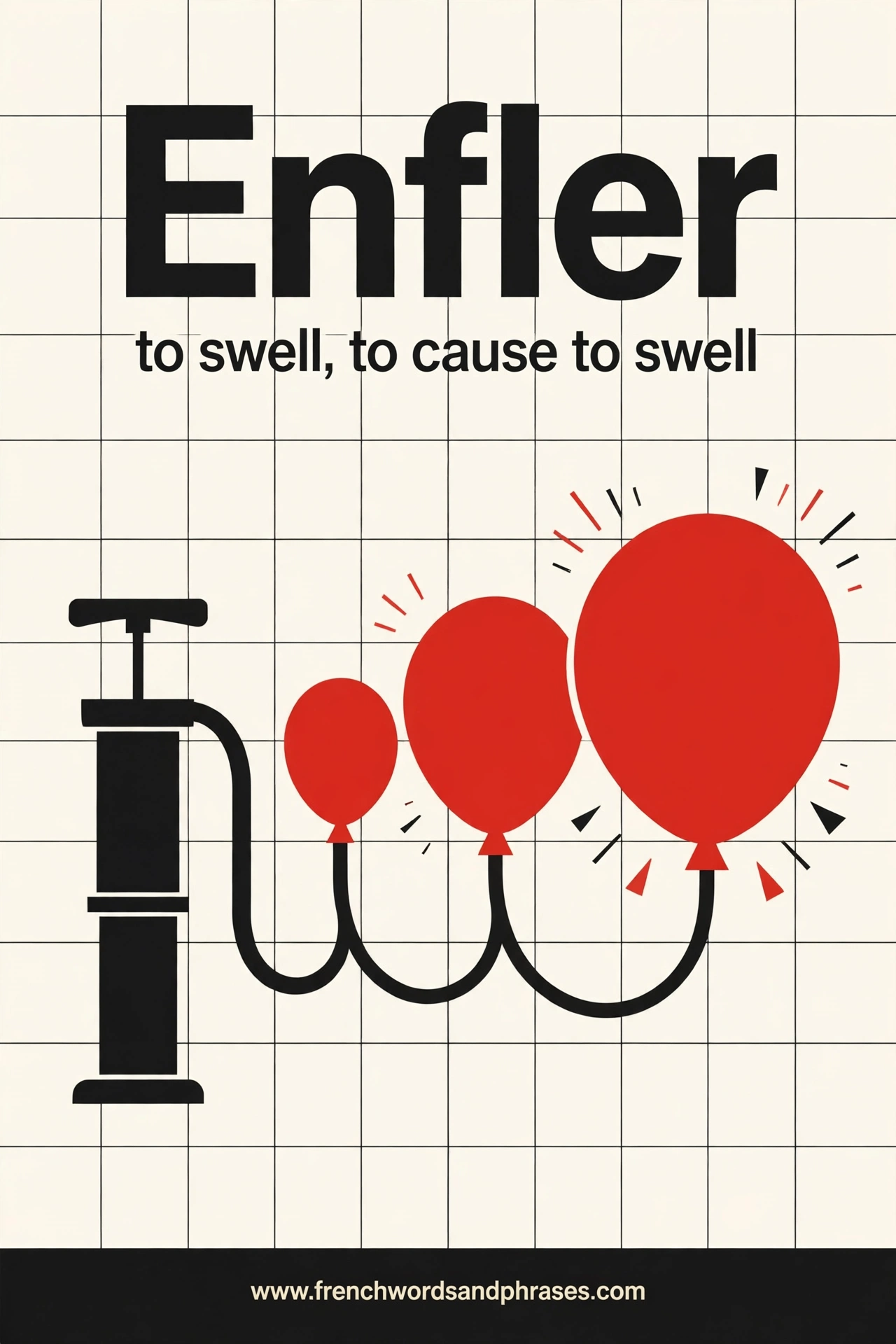
Enfler means to swell, to cause to swell — to make something grow bigger and rounder, like a sail in the wind or a river after the rain.
Sails filling with wind, a river rising after the storm, a bee sting raising the skin — enfler is the verb of swelling: volume growing under pressure, quietly and visibly.
In this guide, you’ll learn how to conjugate enfler in all the major French tenses and moods. Explore complete conjugation tables, French examples, English translations, and practice quizzes.
Understanding the French Verb Enfler
Enfler is a regular French verb belonging to the first group of verbs, those ending in-er.
It means to swell, to cause to swell. It is used for sails, rivers, sounds and prices that swell, and in cooking and the body for dough and flesh that puff up. The figurative range is wide: une enflure is pompous swelling in style, and les prix enflent is the journalist’s way of saying prices are ballooning.
Verb classification: First group (-er)
Auxiliary verb: Avoir
Past participle: enflé
Present participle: enflant
English equivalents: To swell, to swell up, to inflate; le vent enfle les voiles — the wind swells the sails; la rivière enfle — the river is swelling; enfler un ballon — to blow up a balloon; une voix que la colère enfle — a voice swollen with anger.
One important detail: enfler works both ways in French — transitively, something swells something else (le vent enfle les voiles), and intransitively, the thing itself swells (la rivière enfle après la pluie). In compound tenses both uses take avoir: le vent a enflé les voiles, la rivière a enflé. For a body part swelling on its own, French often prefers the reflexive twin se enfler or the participle: une cheville enflée, a swollen ankle. The verb itself is perfectly regular: j’enfle, nous enflons.
Experience the Word
Enfler is the verb of growing volume — whatever fills with wind, water or pride gets rounder before your eyes.
Imagine a sailing boat leaving the harbour at dawn. The sails hang flat and useless; then the first real gust arrives from the sea, le vent enfle les voiles, the ropes sing, and the boat leans forward and begins to fly.
Nothing has been added but air. The sails have swollen — enflées — and stillness has become speed.
How to Conjugate Enfler: Complete French Conjugation Guide
Let’s explore every major conjugation of enfler, beginning with the indicative mood.
How to Conjugate Enfler in the Indicative Mood
The indicative mood is used to express facts, observations, actions, and events.
How to Conjugate Enfler in the Present Tense (Présent)
Used for actions happening now, habitual actions, and general truths.
| Subject | Conjugation |
|---|---|
| je | enfle |
| tu | enfles |
| il / elle | enfle |
| nous | enflons |
| vous | enflez |
| ils / elles | enflent |
Example
Le vent enfle les voiles du bateau.
The wind swells the boat’s sails.
Quick Quiz 1
Complete the sentence:
Nous ______ les voiles en réglant les cordages.
Reveal the answer
enflons
Nous enflons les voiles en réglant les cordages.
We swell the sails by adjusting the ropes.
How to Conjugate Enfler in the Passé Composé
Used for completed actions in the past. Enfler takes the auxiliary verb avoir.
| Subject | Conjugation |
|---|---|
| j’ | ai enflé |
| tu | as enflé |
| il / elle | a enflé |
| nous | avons enflé |
| vous | avez enflé |
| ils / elles | ont enflé |
Example
La rivière a enflé après trois jours de pluie.
The river swelled after three days of rain.
How to Conjugate Enfler in the Imparfait (Imperfect Tense)
Used for habitual past actions, descriptions, and ongoing situations in the past.
| Subject | Conjugation |
|---|---|
| je | enflais |
| tu | enflais |
| il / elle | enflait |
| nous | enflions |
| vous | enfliez |
| ils / elles | enflaient |
Example
Chaque printemps, le fleuve enflait et inondait les prés.
Every spring, the river used to swell and flood the meadows.
Quick Quiz 2
Choose the correct form:
The river swelled after the rain.
La rivière ______ après la pluie. (a enflé / est enflé)
Reveal the answer
a enflé
La rivière a enflé après la pluie.
Enfler takes avoir, even used intransitively.
How to Conjugate Enfler in the Plus-que-parfait
Used to describe an action that had already been completed before another past event.
| Subject | Conjugation |
|---|---|
| j’ | avais enflé |
| tu | avais enflé |
| il / elle | avait enflé |
| nous | avions enflé |
| vous | aviez enflé |
| ils / elles | avaient enflé |
Example
La pâte avait enflé pendant la nuit.
The dough had risen and swollen during the night.
How to Conjugate Enfler in the Passé Simple
Primarily used in formal writing, literature, and historical narratives. It is rarely used in everyday conversation.
| Subject | Conjugation |
|---|---|
| je | enflai |
| tu | enflas |
| il / elle | enfla |
| nous | enflâmes |
| vous | enflâtes |
| ils / elles | enflèrent |
Example
Le vent enfla les voiles et le navire partit.
The wind swelled the sails and the ship set off.
How to Conjugate Enfler in the Passé Antérieur
A literary tense used to express an action completed immediately before another past action, generally in the passé simple.
| Subject | Conjugation |
|---|---|
| j’ | eus enflé |
| tu | eus enflé |
| il / elle | eut enflé |
| nous | eûmes enflé |
| vous | eûtes enflé |
| ils / elles | eurent enflé |
Example
Quand la mer eut enflé les vagues, les bateaux rentrèrent.
When the sea had swollen the waves, the boats came back in.
How to Conjugate Enfler in the Future Tense (Futur Simple)
Used to describe actions that will take place in the future.
| Subject | Conjugation |
|---|---|
| je | enflerai |
| tu | enfleras |
| il / elle | enflera |
| nous | enflerons |
| vous | enflerez |
| ils / elles | enfleront |
Example
La rivière enflera encore si la pluie continue.
The river will swell further if the rain continues.
How to Conjugate Enfler in the Futur Antérieur (Future Perfect)
Used for an action that will have been completed before a particular point in the future.
| Subject | Conjugation |
|---|---|
| j’ | aurai enflé |
| tu | auras enflé |
| il / elle | aura enflé |
| nous | aurons enflé |
| vous | aurez enflé |
| ils / elles | auront enflé |
Example
À minuit, la pâte aura enflé comme il faut.
By midnight, the dough will have swollen as it should.
How to Conjugate Enfler in the Near Future (Futur Proche)
Used to describe something that is going to happen soon. Formed with aller + infinitive.
| Subject | Conjugation |
|---|---|
| je | vais enfler |
| tu | vas enfler |
| il / elle | va enfler |
| nous | allons enfler |
| vous | allez enfler |
| ils / elles | vont enfler |
Example
Regarde, le ballon va enfler jusqu’à éclater !
Look, the balloon is going to swell until it bursts!
How to Conjugate Enfler in the Conditional Mood
The conditional mood expresses what would happen under certain circumstances. It is also frequently used to make polite requests or express wishes.
How to Conjugate Enfler in the Present Conditional
| Subject | Conjugation |
|---|---|
| je | enflerais |
| tu | enflerais |
| il / elle | enflerait |
| nous | enflerions |
| vous | enfleriez |
| ils / elles | enfleraient |
Example
Avec plus de vent, les voiles enfleraient davantage.
With more wind, the sails would swell further.
How to Conjugate Enfler in the Past Conditional
| Subject | Conjugation |
|---|---|
| j’ | aurais enflé |
| tu | aurais enflé |
| il / elle | aurait enflé |
| nous | aurions enflé |
| vous | auriez enflé |
| ils / elles | auraient enflé |
Example
La rivière aurait enflé davantage sans le barrage.
The river would have swollen more without the dam.
Enfler in the Literary Past Conditional Form
This less common literary form uses the imperfect subjunctive of avoir.
| Subject | Conjugation |
|---|---|
| j’ | eusse enflé |
| tu | eusses enflé |
| il / elle | eût enflé |
| nous | eussions enflé |
| vous | eussiez enflé |
| ils / elles | eussent enflé |
Example
Le fleuve eût enflé jusqu’aux quais sans les digues.
The river would have swollen up to the quays without the dykes.
How to Conjugate Enfler in the Subjunctive Mood
The subjunctive is used to express wishes, emotions, doubts, necessity, and uncertainty. It frequently follows expressions such as il faut que (it is necessary that) or bien que (although).
How to Conjugate Enfler in the Present Subjunctive
| Subject | Conjugation |
|---|---|
| que je | enfle |
| que tu | enfles |
| qu’il / qu’elle | enfle |
| que nous | enflions |
| que vous | enfliez |
| qu’ils / qu’elles | enflent |
Example
Il faut que la pâte enfle encore une heure.
The dough must swell for another hour.
Quick Quiz 3
Complete the sentence using the subjunctive:
On craint que le fleuve ______ pendant la nuit.
Reveal the answer
enfle
On craint que le fleuve enfle pendant la nuit.
People fear the river may swell during the night.
How to Conjugate Enfler in the Imperfect Subjunctive
A literary tense, rarely encountered in modern spoken French.
| Subject | Conjugation |
|---|---|
| que je | enflasse |
| que tu | enflasses |
| qu’il / qu’elle | enflât |
| que nous | enflassions |
| que vous | enflassiez |
| qu’ils / qu’elles | enflassent |
Example
On craignait que le fleuve enflât pendant la nuit.
People feared the river might swell during the night.
How to Conjugate Enfler in the Pluperfect Subjunctive
A literary construction used to express an action completed before another past action.
| Subject | Conjugation |
|---|---|
| que j’ | eusse enflé |
| que tu | eusses enflé |
| qu’il / qu’elle | eût enflé |
| que nous | eussions enflé |
| que vous | eussiez enflé |
| qu’ils / qu’elles | eussent enflé |
Example
On racontait que la mer eût enflé les vagues jusqu’au phare.
People said the sea had swollen the waves as far as the lighthouse.
How to Conjugate Enfler in the Past Subjunctive
| Subject | Conjugation |
|---|---|
| que j’ | aie enflé |
| que tu | aies enflé |
| qu’il / qu’elle | ait enflé |
| que nous | ayons enflé |
| que vous | ayez enflé |
| qu’ils / qu’elles | aient enflé |
Example
Je suis content que la pâte ait enflé si bien.
I am glad the dough has risen so well.
How to Conjugate Enfler in the Imperative
The imperative is used to give commands, instructions, invitations, or suggestions. Subject pronouns are omitted.
How to Conjugate Enfler in the Present Imperative
| Person | Conjugation |
|---|---|
| (tu) | enfle |
| (nous) | enflons |
| (vous) | enflez |
Example
Enfle ce ballon pour la fête !
Blow up that balloon for the party!
Quick Quiz 4
How would you say Blow up that balloon (tu form)?
Reveal the answer
Enfle ce ballon !
French Participles of Enfler
Participles are verb forms that can be used in compound tenses and other grammatical constructions.
Present Participle of Enfler
enflant
En enflant les voiles, le vent a fait gîter le bateau.
By swelling the sails, the wind made the boat heel over.
Past Participle of Enfler
enflé
Enflées par le vent, les voiles tiraient le bateau vers le large.
Swollen by the wind, the sails pulled the boat out to sea.
Enfler in Everyday French: Real-Life Examples
Now that you know the conjugations, let’s see how enfler appears in everyday French.
Example 1 — Present
Le vent enfle les voiles.
The wind swells the sails.
Example 2 — Passé composé
La rivière a enflé après la pluie.
The river swelled after the rain.
Example 3 — Imparfait
Le fleuve enflait chaque printemps.
The river used to swell every spring.
Example 4 — Future
La pâte enflera pendant la nuit.
The dough will swell during the night.
Example 5 — Conditional
Les voiles enfleraient avec plus de vent.
The sails would swell with more wind.
Example 6 — Imperative
Enfle ce ballon !
Blow up that balloon!
Beyond Translation: The Meaning of Enfler
English swell does the same work, and French enfler keeps the family visible — une enflure is a swelling, medical or moral.
Style can swell too.
French critics call pompous, overblown prose un style enflé, and a self-important man is enflé d’orgueil, swollen with pride — the verb never forgets that what swells is full of wind.
How to Remember the French Verb Enfler
Remember it this way: Enfler is about sails filling with wind — volume growing before your eyes.
- Two directions, one verb: le vent enfle les voiles, and la rivière enfle all by itself — both with avoir.
- Picture sails and rivers: whatever fills with wind or water enfle.
- Regular -er: j’enfle, nous enflons, past participle enflé.
The key idea is sails filling with wind — volume growing before your eyes.
Test Your Knowledge of Enfler
Let’s see how much you’ve learned. Try answering these questions before revealing the answers.
Question 1
Which auxiliary does enfler use in both its transitive and intransitive uses?
Reveal the answer
Avoir — le vent a enflé les voiles; la rivière a enflé.
Question 2
How do you say The wind swells the sails in French?
Reveal the answer
Le vent enfle les voiles.
Question 3
Translate: The river swelled after the rain.
Reveal the answer
La rivière a enflé après la pluie.
Question 4
What is the past participle of enfler?
Reveal the answer
Enflé.
Question 5
Complete the sentence:
Il faut que la pâte ______ encore une heure.
Reveal the answer
enfle
Il faut que la pâte enfle encore une heure.
The dough must swell for another hour.
Your Final Challenge
Can You Use It?
How would you say this in French?
The wind swells the sails at dawn, and the little boat greets the open sea like a bird.
Reveal the answer
Le vent enfle les voiles à l’aube, et le petit bateau salue le large comme un oiseau.
The wind swells the sails at dawn, and the little boat greets the open sea like a bird.
A little French. A little curiosity. A richer everyday life.
LEARN FRENCH ONE WORD AT A TIME