How to Conjugate Fédérer in French
/fe.de.ʁe/
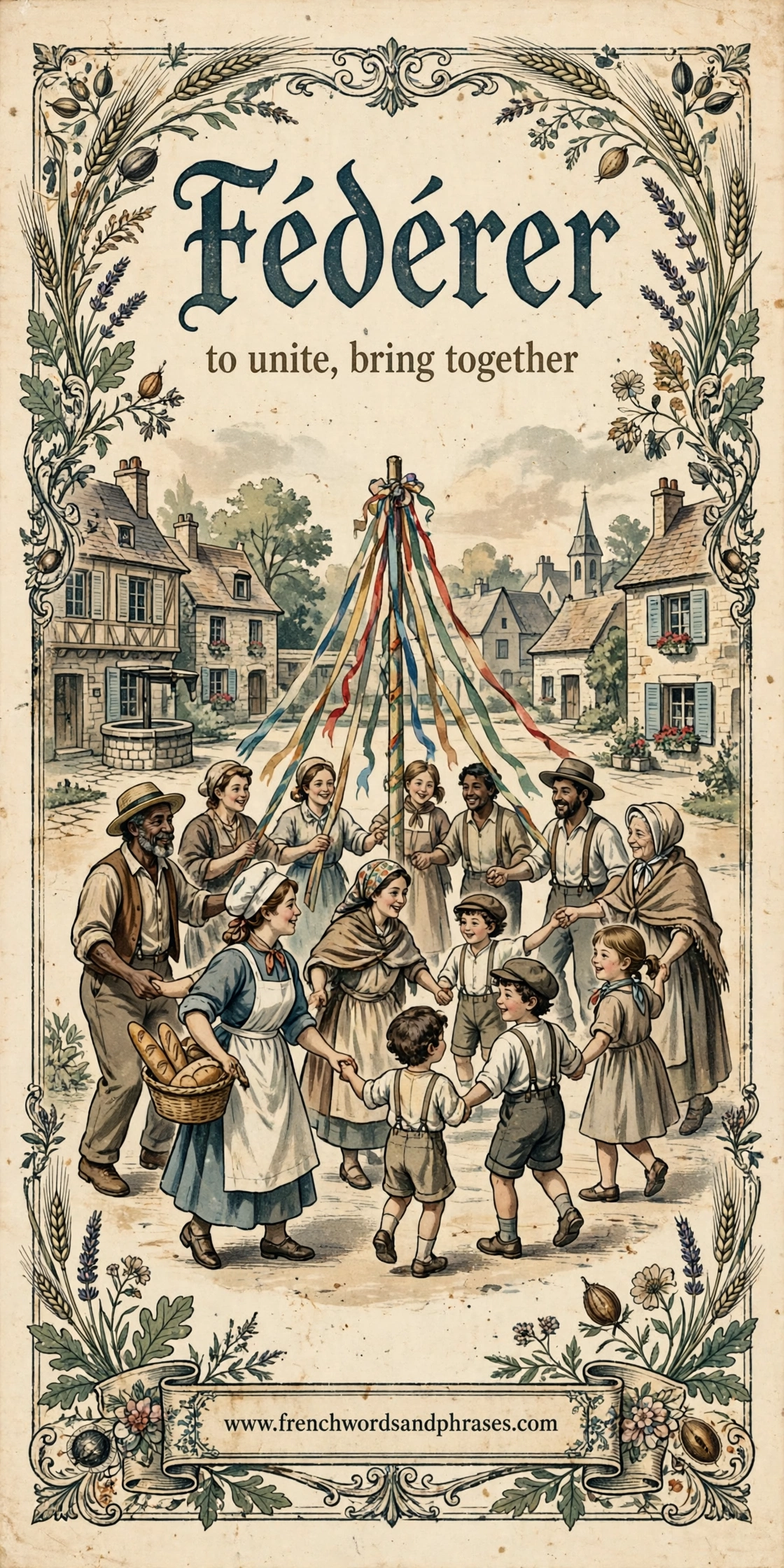
Fédérer means to unite, bring together — to gather separate people, clubs or regions into one body with a common purpose.
Village football clubs merging into one league, regions joining under one banner, a young leader drawing rival groups around a single table — fédérer is the verb of union: many separate flags, one shared roof.
In this guide, you’ll learn how to conjugate fédérer in all the major French tenses and moods. Explore complete conjugation tables, French examples, English translations, and practice quizzes.
Understanding the French Verb Fédérer
Fédérer is a regular French verb belonging to the first group of verbs, those ending in -er.
It means to unite, bring together. It is the verb of sports federations, unions and political movements: one fédère des clubs, des syndicats, des énergies, des bonnes volontés. Its adjective fédérateur is everywhere in speeches — un projet fédérateur, un discours fédérateur — a project or a speech that brings everyone together.
Verb classification: First group (-er)
Auxiliary verb: Avoir
Past participle: fédéré
Present participle: fédérant
English equivalents: To unite, to bring together, to rally; fédérer des associations — to bring associations together; fédérer autour d’un projet — to rally people around a project; un projet fédérateur — a unifying project; une fédération — a federation.
One important detail: fédérer follows the espérer pattern, not the acheter pattern. The é of the stem opens to è where the ending is mute — je fédère, tu fédères, il fédère, ils fédèrent, subjunctive que je fédère, tu imperative fédère ! — and it stays é before sounded endings: nous fédérons, vous fédérez, je fédérais. Above all, the future and conditional keep é: je fédérerai, je fédérerais — the accent never opens to è in those stems. That is the whole trap of this verb, and it is the opposite of déceler or parachever.
Experience the Word
Fédérer is the verb of the common roof — separate houses, one shelter, one name over the door.
Imagine twelve tiny football clubs, each too poor for a pitch of its own. A retired teacher spends a winter visiting them one by one, and by spring she has done the impossible: elle a fédéré les clubs, and the valley has a league, a badge and one shared bus.
The clubs have lost nothing. They have been united — fédérés — and together they are finally visible.
How to Conjugate Fédérer: Complete French Conjugation Guide
Let’s explore every major conjugation of fédérer, beginning with the indicative mood.
How to Conjugate Fédérer in the Indicative Mood
The indicative mood is used to express facts, observations, actions, and events.
How to Conjugate Fédérer in the Present Tense (Présent)
Used for actions happening now, habitual actions, and general truths.
| Subject | Conjugation |
|---|---|
| je | fédère |
| tu | fédères |
| il / elle | fédère |
| nous | fédérons |
| vous | fédérez |
| ils / elles | fédèrent |
Ce projet fédère toutes les associations du quartier.
This project brings together all the associations in the district.
Complete the sentence:
Nous ______ les clubs de la vallée depuis dix ans.
Reveal the answer
fédérons
Nous fédérons les clubs de la vallée depuis dix ans.
We have been bringing the valley’s clubs together for ten years.
How to Conjugate Fédérer in the Passé Composé
Used for completed actions in the past. Fédérer takes the auxiliary verb avoir.
| Subject | Conjugation |
|---|---|
| j’ | ai fédéré |
| tu | as fédéré |
| il / elle | a fédéré |
| nous | avons fédéré |
| vous | avez fédéré |
| ils / elles | ont fédéré |
Elle a fédéré les clubs de toute la région.
She united the clubs of the whole region.
How to Conjugate Fédérer in the Imparfait (Imperfect Tense)
Used for habitual past actions, descriptions, and ongoing situations in the past.
| Subject | Conjugation |
|---|---|
| je | fédérais |
| tu | fédérais |
| il / elle | fédérait |
| nous | fédérions |
| vous | fédériez |
| ils / elles | fédéraient |
Le maire fédérait les énergies autour du nouveau port.
The mayor was rallying everyone’s energies around the new harbour.
Choose the correct form:
This team will unite the whole country.
Cette équipe ______ tout le pays. (fédérera / fédèrera)
Reveal the answer
fédérera
Cette équipe fédérera tout le pays.
Fédérer follows espérer: the future keeps é.
How to Conjugate Fédérer in the Plus-que-parfait
Used to describe an action that had already been completed before another past event.
| Subject | Conjugation |
|---|---|
| j’ | avais fédéré |
| tu | avais fédéré |
| il / elle | avait fédéré |
| nous | avions fédéré |
| vous | aviez fédéré |
| ils / elles | avaient fédéré |
Ils avaient fédéré les syndicats avant la grande grève.
They had brought the unions together before the big strike.
How to Conjugate Fédérer in the Passé Simple
Primarily used in formal writing, literature, and historical narratives. It is rarely used in everyday conversation.
| Subject | Conjugation |
|---|---|
| je | fédérai |
| tu | fédéras |
| il / elle | fédéra |
| nous | fédérâmes |
| vous | fédérâtes |
| ils / elles | fédérèrent |
Le général fédéra les tribus de la vallée.
The general united the tribes of the valley.
How to Conjugate Fédérer in the Passé Antérieur
A literary tense used to express an action completed immediately before another past action, generally in the passé simple.
| Subject | Conjugation |
|---|---|
| j’ | eus fédéré |
| tu | eus fédéré |
| il / elle | eut fédéré |
| nous | eûmes fédéré |
| vous | eûtes fédéré |
| ils / elles | eurent fédéré |
Quand il eut fédéré les villages, la révolte commença.
When he had united the villages, the revolt began.
How to Conjugate Fédérer in the Future Tense (Futur Simple)
Used to describe actions that will take place in the future.
| Subject | Conjugation |
|---|---|
| je | fédérerai |
| tu | fédéreras |
| il / elle | fédérera |
| nous | fédérerons |
| vous | fédérerez |
| ils / elles | fédéreront |
Cette équipe fédérera les supporters de tout le pays.
This team will unite supporters from the whole country.
How to Conjugate Fédérer in the Futur Antérieur (Future Perfect)
Used for an action that will have been completed before a particular point in the future.
| Subject | Conjugation |
|---|---|
| j’ | aurai fédéré |
| tu | auras fédéré |
| il / elle | aura fédéré |
| nous | aurons fédéré |
| vous | aurez fédéré |
| ils / elles | auront fédéré |
À la fin de la saison, le club aura fédéré mille bénévoles.
By the end of the season, the club will have brought together a thousand volunteers.
How to Conjugate Fédérer in the Near Future (Futur Proche)
Used to describe something that is going to happen soon. Formed with aller + infinitive.
| Subject | Conjugation |
|---|---|
| je | vais fédérer |
| tu | vas fédérer |
| il / elle | va fédérer |
| nous | allons fédérer |
| vous | allez fédérer |
| ils / elles | vont fédérer |
Son discours va fédérer les indécis.
His speech is going to rally the undecided.
How to Conjugate Fédérer in the Conditional Mood
The conditional mood expresses what would happen under certain circumstances. It is also frequently used to make polite requests or express wishes.
How to Conjugate Fédérer in the Present Conditional
| Subject | Conjugation |
|---|---|
| je | fédérerais |
| tu | fédérerais |
| il / elle | fédérerait |
| nous | fédérerions |
| vous | fédéreriez |
| ils / elles | fédéreraient |
Un tel projet fédérerait les générations.
Such a project would unite the generations.
How to Conjugate Fédérer in the Past Conditional
| Subject | Conjugation |
|---|---|
| j’ | aurais fédéré |
| tu | aurais fédéré |
| il / elle | aurait fédéré |
| nous | aurions fédéré |
| vous | auriez fédéré |
| ils / elles | auraient fédéré |
Elle aurait fédéré le parti sans les rivalités internes.
She would have united the party without the internal rivalries.
Fédérer in the Literary Past Conditional Form
This less common literary form uses the imperfect subjunctive of avoir.
| Subject | Conjugation |
|---|---|
| j’ | eusse fédéré |
| tu | eusses fédéré |
| il / elle | eût fédéré |
| nous | eussions fédéré |
| vous | eussiez fédéré |
| ils / elles | eussent fédéré |
Il eût fédéré les provinces sans la guerre civile.
He would have united the provinces without the civil war.
How to Conjugate Fédérer in the Subjunctive Mood
The subjunctive is used to express wishes, emotions, doubts, necessity, and uncertainty. It frequently follows expressions such as il faut que (it is necessary that) or bien que (although).
How to Conjugate Fédérer in the Present Subjunctive
| Subject | Conjugation |
|---|---|
| que je | fédère |
| que tu | fédères |
| qu’il / qu’elle | fédère |
| que nous | fédérions |
| que vous | fédériez |
| qu’ils / qu’elles | fédèrent |
Il faut que ce festival fédère tout le village.
This festival must bring the whole village together.
Complete the sentence using the subjunctive:
Il faut que le projet ______ toutes les générations.
Reveal the answer
fédère
Il faut que le projet fédère toutes les générations.
The project must unite all the generations.
How to Conjugate Fédérer in the Imperfect Subjunctive
A literary tense, rarely encountered in modern spoken French.
| Subject | Conjugation |
|---|---|
| que je | fédérasse |
| que tu | fédérasses |
| qu’il / qu’elle | fédérât |
| que nous | fédérassions |
| que vous | fédérassiez |
| qu’ils / qu’elles | fédérassent |
On espérait qu’elle fédérât les opposants.
People hoped she would unite the opponents.
How to Conjugate Fédérer in the Pluperfect Subjunctive
A literary construction used to express an action completed before another past action.
| Subject | Conjugation |
|---|---|
| que j’ | eusse fédéré |
| que tu | eusses fédéré |
| qu’il / qu’elle | eût fédéré |
| que nous | eussions fédéré |
| que vous | eussiez fédéré |
| qu’ils / qu’elles | eussent fédéré |
On racontait qu’il eût fédéré les clans autrefois.
People said he had united the clans in the old days.
How to Conjugate Fédérer in the Past Subjunctive
| Subject | Conjugation |
|---|---|
| que j’ | aie fédéré |
| que tu | aies fédéré |
| qu’il / qu’elle | ait fédéré |
| que nous | ayons fédéré |
| que vous | ayez fédéré |
| qu’ils / qu’elles | aient fédéré |
Je suis content que le projet ait fédéré tant de monde.
I am glad the project brought so many people together.
How to Conjugate Fédérer in the Imperative
The imperative is used to give commands, instructions, invitations, or suggestions. Subject pronouns are omitted.
How to Conjugate Fédérer in the Present Imperative
| Person | Conjugation |
|---|---|
| (tu) | fédère |
| (nous) | fédérons |
| (vous) | fédérez |
Fédère ton équipe autour de cet objectif !
Rally your team around this goal!
How would you say Rally your team (tu form)?
Reveal the answer
Fédère ton équipe !
French Participles of Fédérer
Participles are verb forms that can be used in compound tenses and other grammatical constructions.
Present Participle of Fédérer
fédérant
En fédérant les associations, ils ont créé une vraie force.
By bringing the associations together, they created a real force.
Past Participle of Fédérer
fédéré
Fédérés par une même passion, les bénévoles ont tenu bon.
United by a shared passion, the volunteers held firm.
Fédérer in Everyday French: Real-Life Examples
Now that you know the conjugations, let’s see how fédérer appears in everyday French.
Ce projet fédère toutes les associations.
This project brings all the associations together.
Elle a fédéré les clubs de la région.
She united the clubs of the region.
Le maire fédérait les énergies du village.
The mayor was rallying the village’s energies.
Cette équipe fédérera tout le pays.
This team will unite the whole country.
Un tel projet fédérerait les générations.
Such a project would unite the generations.
Fédère ton équipe !
Rally your team!
Beyond Translation: The Meaning of Fédérer
English federation and federal are its close family — all descend from Latin foedus, a treaty or league.
Fédérer is treaty-making as a verb.
France is covered in fédérations — of football, of fishing, of folk dancing — because the French instinct, when something is too small alone, is not to merge it away but to fédérer it: keep every club, every flag, and add one roof above them all.
How to Remember the French Verb Fédérer
Remember it this way: Fédérer is about many flags, one roof — and a future that keeps its é: je fédérerai.
- Espérer pattern, not acheter: je fédère with è, but je fédérerai with é in the future.
- Nous and vous keep é: nous fédérons, vous fédérez — the accent opens only before mute endings.
- Think federations: one roof over many clubs — fédérer des associations, un projet fédérateur.
The key idea is many flags, one roof — and a future that keeps its é: je fédérerai.
Test Your Knowledge of Fédérer
Let’s see how much you’ve learned. Try answering these questions before revealing the answers.
What is the future tense, first person, of fédérer — and why?
Reveal the answer
Je fédérerai — fédérer follows espérer, so the future and conditional keep é, unlike acheter-type verbs.
How do you say This project brings everyone together in French?
Reveal the answer
Ce projet fédère tout le monde.
Translate: She united the clubs of the region.
Reveal the answer
Elle a fédéré les clubs de la région.
What is the past participle of fédérer?
Reveal the answer
Fédéré.
Complete the sentence:
Il faut que ce festival ______ tout le village.
Reveal the answer
fédère
Il faut que ce festival fédère tout le village.
This festival must bring the whole village together.
Can You Use It?
How would you say this in French?
To unite is to keep every voice and write only one song.
Reveal the answer
Fédérer, c’est garder toutes les voix et n’écrire qu’une seule chanson.
To unite is to keep every voice and write only one song.
LEARN FRENCH ONE WORD AT A TIME