How to Conjugate Passementer in French
/pas.mɑ̃.te/
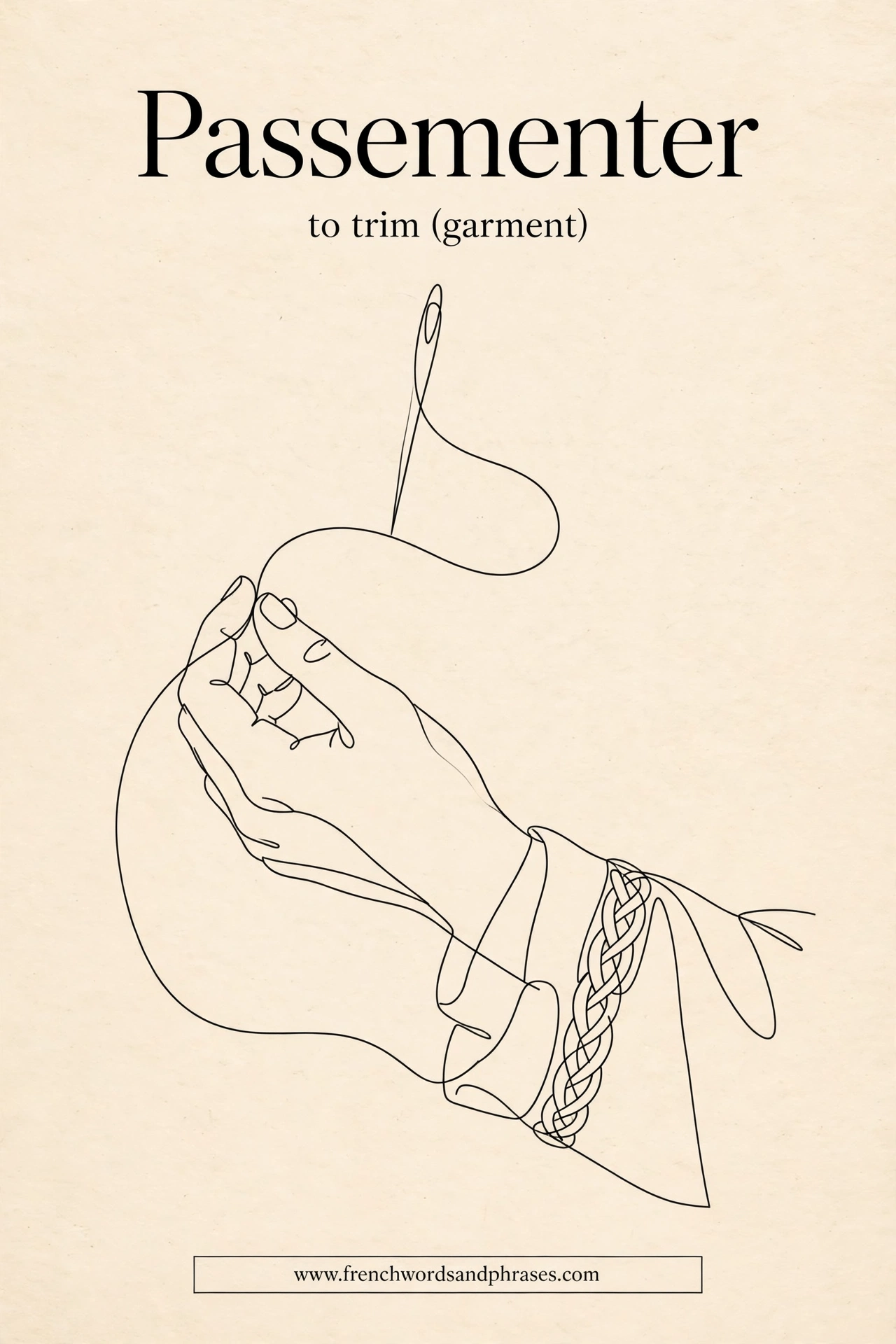
Passementer means to trim (garment) — to edge a dress, a curtain or a uniform with braid, cord or tassels.
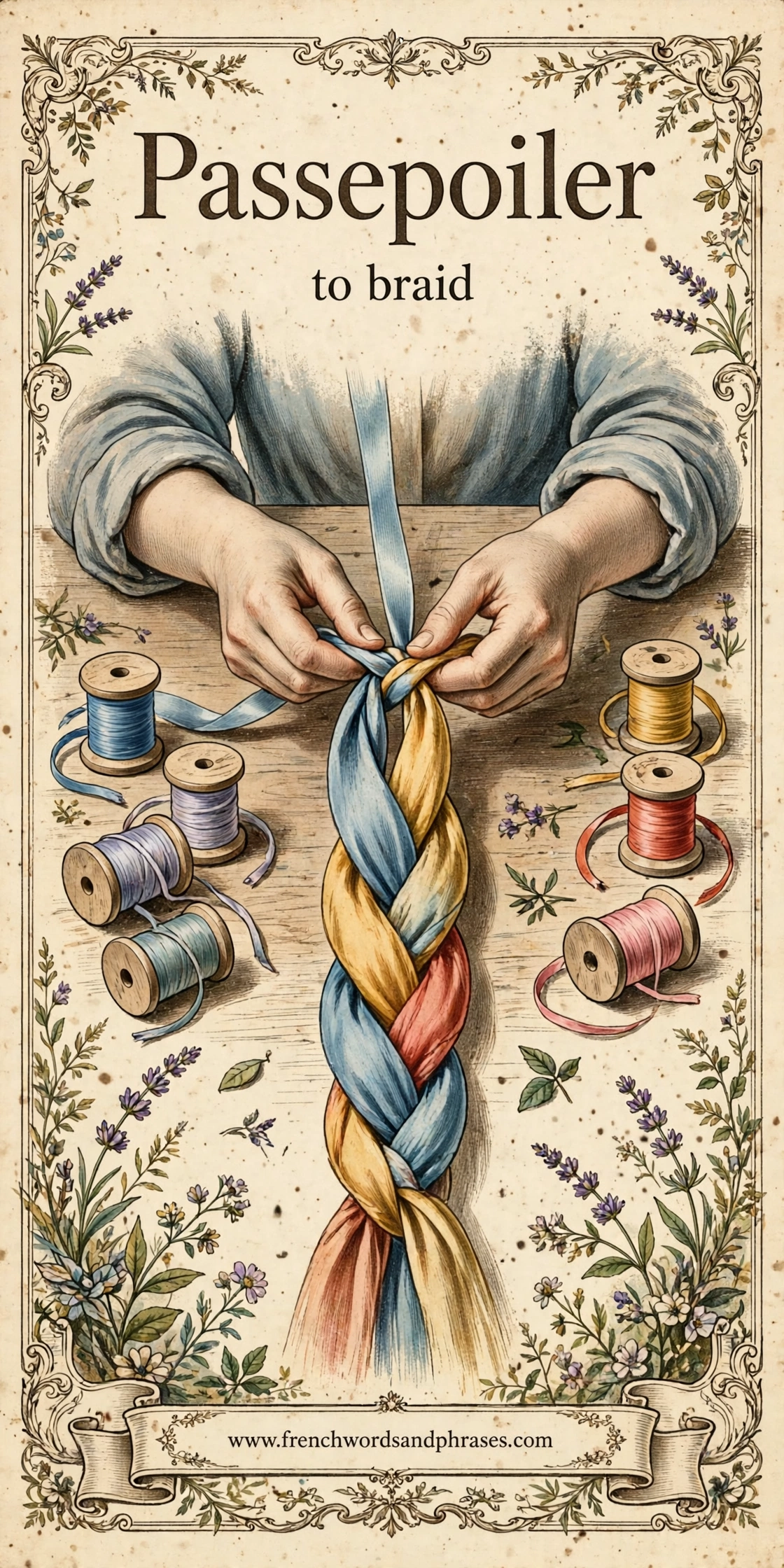
In a Paris atelier, a seamstress unrolls a spool of gold braid and pins it along the collar of a jacket, stitch by stitch. Passementer is the dressmaker’s verb: to finish a garment by trimming it with the decorative braiding that turns plain cloth into ceremony.
In this guide, you’ll learn how to conjugate passementer in all the major French tenses and moods. Explore complete conjugation tables, French examples, English translations, and practice quizzes.
Understanding the French Verb Passementer
Passementer is a regular French verb belonging to the first group of verbs, those ending in -er.
It means to trim (garment). It is a word of the sewing room and the upholsterer’s workshop: uniforms, theatre costumes, curtains, cushions and liturgical vestments are passementés, and the finished braid itself is un passement. You will meet it in descriptions of period clothing far more often than in conversation.
Verb classification: First group (-er)
Auxiliary verb: Avoir
Past participle: passementé
Present participle: passementant
English equivalents: To trim with braid, to edge with cord; passementer une robe — to trim a dress with braid; passementer un uniforme — to braid a uniform; un rideau passementé de franges — a curtain trimmed with fringes; la passementerie — braid, trimmings.
One important detail: passementer is built on la passementerie, the whole craft of braids, cords, fringes and tassels — the noun came first, and the verb simply means putting that craft to work. The verb itself is a perfectly regular -er: je passemente, nous passementons, ils passementent, past participle passementé. Watch the spelling of the base: passe- with a double s, then -menter — passementer, never passemanter.
Experience the Word
Passementer is the verb of the finishing touch in cloth — the braid that tells the eye the garment is complete.
Imagine a military tailor the week before the parade. The plain blue jackets hang in a row; one by one he passemente les cols et les manches — gold cord along every collar and cuff — until the whole row gleams and the regiment looks like a regiment.
The cloth has not changed at all. It has been trimmed — passementé — and the braid has done the talking.
How to Conjugate Passementer: Complete French Conjugation Guide
Let’s explore every major conjugation of passementer, beginning with the indicative mood.
How to Conjugate Passementer in the Indicative Mood
The indicative mood is used to express facts, observations, actions, and events.
How to Conjugate Passementer in the Present Tense (Présent)
Used for actions happening now, habitual actions, and general truths.
| Subject | Conjugation |
|---|---|
| je | passemente |
| tu | passementes |
| il / elle | passemente |
| nous | passementons |
| vous | passementez |
| ils / elles | passementent |
La couturière passemente la robe d’un galon doré.
The seamstress is trimming the dress with a gold braid.
Complete the sentence:
Nous ______ les rideaux de franges rouges.
Reveal the answer
passementons
Nous passementons les rideaux de franges rouges.
We are trimming the curtains with red fringes.
How to Conjugate Passementer in the Passé Composé
Used for completed actions in the past. Passementer takes the auxiliary verb avoir.
| Subject | Conjugation |
|---|---|
| j’ | ai passementé |
| tu | as passementé |
| il / elle | a passementé |
| nous | avons passementé |
| vous | avez passementé |
| ils / elles | ont passementé |
Elle a passementé les rideaux de franges rouges.
She trimmed the curtains with red fringes.
How to Conjugate Passementer in the Imparfait (Imperfect Tense)
Used for habitual past actions, descriptions, and ongoing situations in the past.
| Subject | Conjugation |
|---|---|
| je | passementais |
| tu | passementais |
| il / elle | passementait |
| nous | passementions |
| vous | passementiez |
| ils / elles | passementaient |
Autrefois, on passementait les uniformes à la main.
In the old days, uniforms were braided by hand.
Choose the correct form:
She trimmed the jacket.
Elle ______ la veste. (a passementé / est passementée)
Reveal the answer
a passementé
Elle a passementé la veste.
Passementer takes avoir.
How to Conjugate Passementer in the Plus-que-parfait
Used to describe an action that had already been completed before another past event.
| Subject | Conjugation |
|---|---|
| j’ | avais passementé |
| tu | avais passementé |
| il / elle | avait passementé |
| nous | avions passementé |
| vous | aviez passementé |
| ils / elles | avaient passementé |
Le tailleur avait passementé le manteau avant la cérémonie.
The tailor had trimmed the coat before the ceremony.
How to Conjugate Passementer in the Passé Simple
Primarily used in formal writing, literature, and historical narratives. It is rarely used in everyday conversation.
| Subject | Conjugation |
|---|---|
| je | passementai |
| tu | passementas |
| il / elle | passementa |
| nous | passementâmes |
| vous | passementâtes |
| ils / elles | passementèrent |
La modiste passementa la cape de cordons de soie.
The milliner trimmed the cape with silk cords.
How to Conjugate Passementer in the Passé Antérieur
A literary tense used to express an action completed immediately before another past action, generally in the passé simple.
| Subject | Conjugation |
|---|---|
| j’ | eus passementé |
| tu | eus passementé |
| il / elle | eut passementé |
| nous | eûmes passementé |
| vous | eûtes passementé |
| ils / elles | eurent passementé |
Quand elle eut passementé la veste, elle la repassa.
When she had trimmed the jacket, she ironed it.
How to Conjugate Passementer in the Future Tense (Futur Simple)
Used to describe actions that will take place in the future.
| Subject | Conjugation |
|---|---|
| je | passementerai |
| tu | passementeras |
| il / elle | passementera |
| nous | passementerons |
| vous | passementerez |
| ils / elles | passementeront |
Nous passementerons les coussins d’un liseré bleu.
We will trim the cushions with a blue piping.
How to Conjugate Passementer in the Futur Antérieur (Future Perfect)
Used for an action that will have been completed before a particular point in the future.
| Subject | Conjugation |
|---|---|
| j’ | aurai passementé |
| tu | auras passementé |
| il / elle | aura passementé |
| nous | aurons passementé |
| vous | aurez passementé |
| ils / elles | auront passementé |
À midi, elle aura passementé toutes les robes de la boutique.
By noon, she will have trimmed all the dresses in the shop.
How to Conjugate Passementer in the Near Future (Futur Proche)
Used to describe something that is going to happen soon. Formed with aller + infinitive.
| Subject | Conjugation |
|---|---|
| je | vais passementer |
| tu | vas passementer |
| il / elle | va passementer |
| nous | allons passementer |
| vous | allez passementer |
| ils / elles | vont passementer |
Je vais passementer ce rideau ce soir.
I am going to trim this curtain this evening.
How to Conjugate Passementer in the Conditional Mood
The conditional mood expresses what would happen under certain circumstances. It is also frequently used to make polite requests or express wishes.
How to Conjugate Passementer in the Present Conditional
| Subject | Conjugation |
|---|---|
| je | passementerais |
| tu | passementerais |
| il / elle | passementerait |
| nous | passementerions |
| vous | passementeriez |
| ils / elles | passementeraient |
Un galon noir passementerait mieux cette veste.
A black braid would trim this jacket better.
How to Conjugate Passementer in the Past Conditional
| Subject | Conjugation |
|---|---|
| j’ | aurais passementé |
| tu | aurais passementé |
| il / elle | aurait passementé |
| nous | aurions passementé |
| vous | auriez passementé |
| ils / elles | auraient passementé |
Elle aurait passementé la robe si le fil d’or n’avait pas manqué.
She would have trimmed the dress if the gold thread had not run out.
Passementer in the Literary Past Conditional Form
This less common literary form uses the imperfect subjunctive of avoir.
| Subject | Conjugation |
|---|---|
| j’ | eusse passementé |
| tu | eusses passementé |
| il / elle | eût passementé |
| nous | eussions passementé |
| vous | eussiez passementé |
| ils / elles | eussent passementé |
Le tailleur eût passementé l’uniforme pour le général lui-même.
The tailor would have braided the uniform for the general himself.
How to Conjugate Passementer in the Subjunctive Mood
The subjunctive is used to express wishes, emotions, doubts, necessity, and uncertainty. It frequently follows expressions such as il faut que (it is necessary that) or bien que (although).
How to Conjugate Passementer in the Present Subjunctive
| Subject | Conjugation |
|---|---|
| que je | passemente |
| que tu | passementes |
| qu’il / qu’elle | passemente |
| que nous | passementions |
| que vous | passementiez |
| qu’ils / qu’elles | passementent |
Il faut que tu passementes le col avant demain.
You must trim the collar before tomorrow.
Complete the sentence using the subjunctive:
Il faut que vous ______ les coussins ce soir.
Reveal the answer
passementiez
Il faut que vous passementiez les coussins ce soir.
You must trim the cushions this evening.
How to Conjugate Passementer in the Imperfect Subjunctive
A literary tense, rarely encountered in modern spoken French.
| Subject | Conjugation |
|---|---|
| que je | passementasse |
| que tu | passementasses |
| qu’il / qu’elle | passementât |
| que nous | passementassions |
| que vous | passementassiez |
| qu’ils / qu’elles | passementassent |
La duchesse exigeait que l’on passementât sa robe de perles.
The duchess demanded that her dress be trimmed with pearls.
How to Conjugate Passementer in the Pluperfect Subjunctive
A literary construction used to express an action completed before another past action.
| Subject | Conjugation |
|---|---|
| que j’ | eusse passementé |
| que tu | eusses passementé |
| qu’il / qu’elle | eût passementé |
| que nous | eussions passementé |
| que vous | eussiez passementé |
| qu’ils / qu’elles | eussent passementé |
On admirait qu’elle eût passementé la cape en une seule nuit.
People admired that she had trimmed the cape in a single night.
How to Conjugate Passementer in the Past Subjunctive
| Subject | Conjugation |
|---|---|
| que j’ | aie passementé |
| que tu | aies passementé |
| qu’il / qu’elle | ait passementé |
| que nous | ayons passementé |
| que vous | ayez passementé |
| qu’ils / qu’elles | aient passementé |
Je suis ravi qu’elle ait passementé les rideaux.
I am delighted that she trimmed the curtains.
How to Conjugate Passementer in the Imperative
The imperative is used to give commands, instructions, invitations, or suggestions. Subject pronouns are omitted.
How to Conjugate Passementer in the Present Imperative
| Person | Conjugation |
|---|---|
| (tu) | passemente |
| (nous) | passementons |
| (vous) | passementez |
Passemente le col, puis couse les boutons !
Trim the collar, then sew on the buttons!
How would you say Trim the collar (tu form)?
Reveal the answer
Passemente le col !
French Participles of Passementer
Participles are verb forms that can be used in compound tenses and other grammatical constructions.
Present Participle of Passementer
passementant
En passementant la veste, elle fredonnait un air ancien.
While trimming the jacket, she was humming an old tune.
Past Participle of Passementer
passementé
Passementée de galons d’or, la veste attendait le défilé.
Trimmed with gold braids, the jacket was waiting for the parade.
Passementer in Everyday French: Real-Life Examples
Now that you know the conjugations, let’s see how passementer appears in everyday French.
La couturière passemente la robe.
The seamstress is trimming the dress.
Elle a passementé les rideaux de franges.
She trimmed the curtains with fringes.
On passementait les uniformes à la main.
Uniforms were braided by hand.
Nous passementerons les coussins.
We will trim the cushions.
Un galon noir passementerait mieux cette veste.
A black braid would trim this jacket better.
Passemente le col avant demain !
Trim the collar before tomorrow!
Beyond Translation: The Meaning of Passementer
The word comes from passement, an old word for lace and braid, itself from passer — because the braid is passed, thread over thread, along the edge.
A whole trade hides inside this verb.
The passementier was once a guild craftsman of Paris, and his wares — galons, franges, glands, cordons — survive today mostly on uniforms, theatre costumes and grand curtains, exactly where the verb still works.
How to Remember the French Verb Passementer
Remember it this way: Passementer is about the seamstress pinning gold braid along a collar.
- Think of la passementerie — the braid-and-tassel craft; passementer is simply that craft in action.
- Double s, then -menter: passementer, like the passement it applies.
- Regular -er: je passemente, nous passementons, past participle passementé.
The key idea is the seamstress pinning gold braid along a collar.
Test Your Knowledge of Passementer
Let’s see how much you’ve learned. Try answering these questions before revealing the answers.
What is la passementerie?
Reveal the answer
The craft of braid, cord, fringe and tassel trimmings — passementer means applying it to a garment.
How do you say The seamstress is trimming the dress in French?
Reveal the answer
La couturière passemente la robe.
Translate: She trimmed the curtains with fringes.
Reveal the answer
Elle a passementé les rideaux de franges.
What is the past participle of passementer?
Reveal the answer
Passementé.
Complete the sentence:
Il faut que tu ______ le col avant demain.
Reveal the answer
passementes
Il faut que tu passementes le col avant demain.
You must trim the collar before tomorrow.
Can You Use It?
How would you say this in French?
She trims the old dress with a gold braid, and the dress becomes a celebration again.
Reveal the answer
Elle passemente la vieille robe d’un galon d’or, et la robe redevient une fête.
She trims the old dress with a gold braid, and the dress becomes a celebration again.
LEARN FRENCH ONE WORD AT A TIME