How to Conjugate Parer in French
/pa.ʁe/
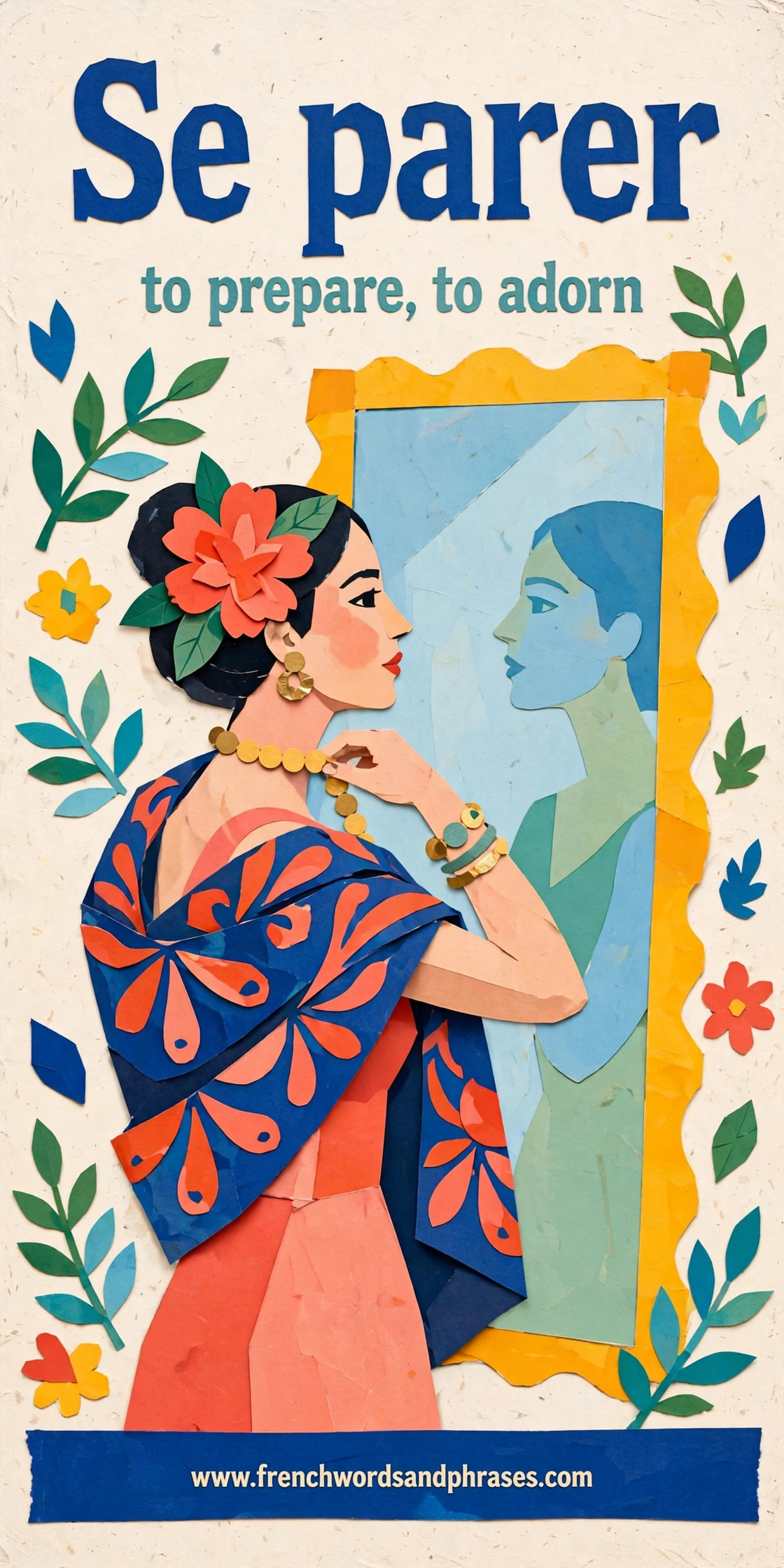
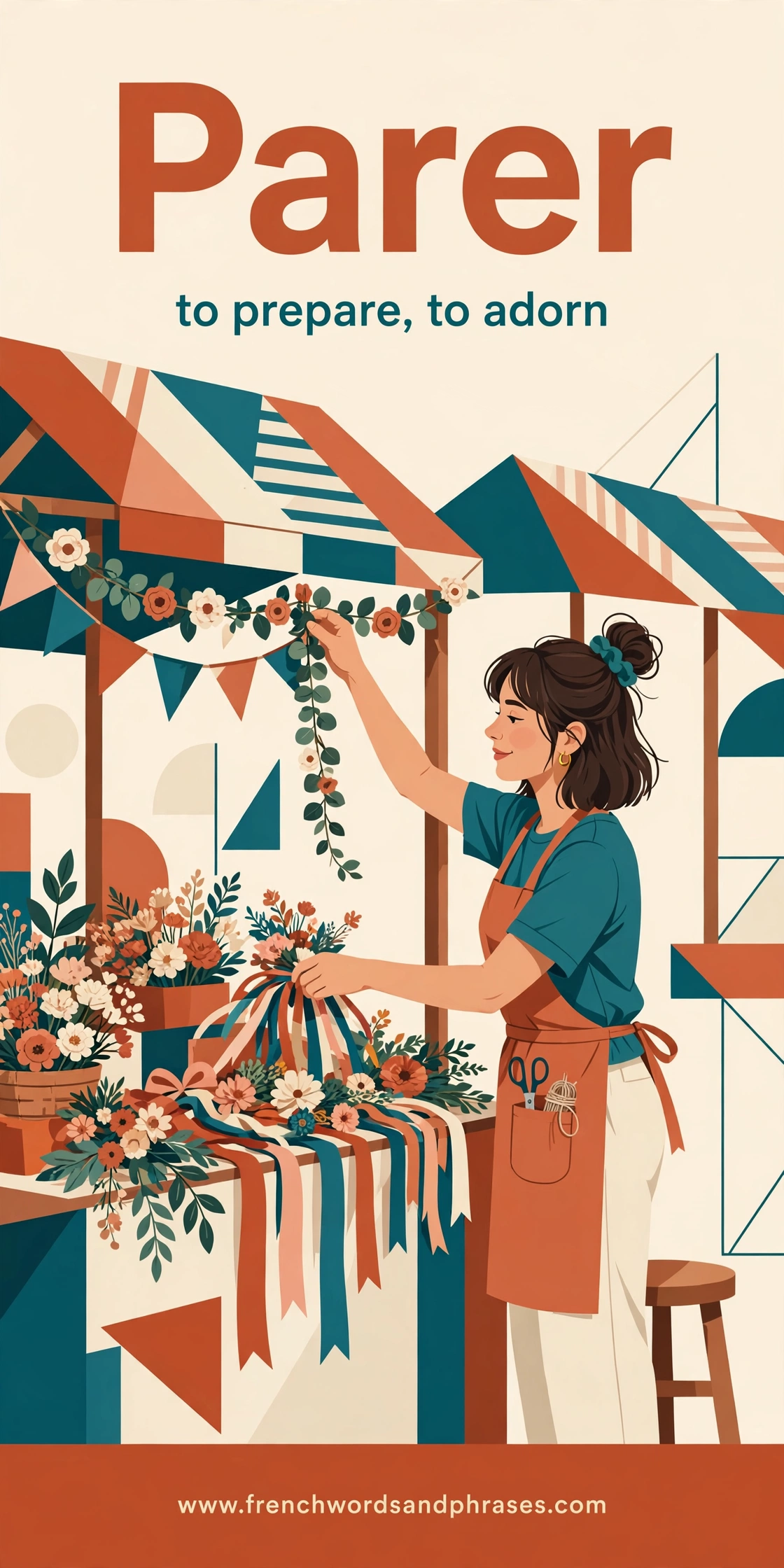
Parer means to prepare, to adorn — to dress a bride in lace, to trim a fish for the pan, and, with à, to ward off whatever is coming at you.
A bride being laced into her dress, a fishmonger trimming a sole with three flicks of the knife, a fencer’s blade turning aside a thrust — parer is the verb of readiness: adorning what will be shown, preparing what will be served, and standing ready to ward off a blow or a danger.
In this guide, you’ll learn how to conjugate parer in all the major French tenses and moods. Explore complete conjugation tables, French examples, English translations, and practice quizzes.
Understanding the French Verb Parer
Parer is a regular French verb belonging to the first group of verbs, those ending in -er.
It means to prepare, to adorn. Parer’s centre of gravity is readiness. The adorned bride, the trimmed fish and the parried blow are all things made ready — for a ceremony, for a pan, for an attack. The à-construction is the one learners miss: parer à does not mean preparing something, it means guarding against it, and parer au plus pressé is a set phrase every busy office understands.
Verb classification: First group (-er)
Auxiliary verb: Avoir
Past participle: paré
Present participle: parant
English equivalents: To prepare, to adorn, to ward off; parer une mariée — to dress up a bride; parer quelqu’un de bijoux — to adorn someone with jewels; parer un poisson — to prepare, to trim a fish; parer un coup — to parry a blow; parer à un danger — to ward off a danger; parer au plus pressé — to deal with the most urgent thing first.
One verb, two families of meaning. Directly, parer adorns and prepares: parer une mariée, to dress a bride; parer un poisson, parer la viande, to trim a fish, to trim meat. But with à it changes sides entirely: parer à un danger is to ward off a danger, and parer au plus pressé means to deal with the most urgent matter first. The famous cousin is parer un coup, to parry a blow in fencing. The conjugation is a plain, regular -er throughout: je pare, nous parons, past participle paré.
Experience the Word
Parer is the verb of the final touches — lace adjusted, knife flicked, guard raised — everything made ready for its moment.
Imagine the morning of a wedding in a small town. Upstairs, the dressmaker pares the bride — lace, pearls, one last pin. Downstairs, the cook pares the fish for the feast. And the bride’s grandfather, a fencing master in his day, smiles: today, tout est paré, everything is ready, and nothing can touch them.
Dressed, trimmed, guarded. One small verb — paré — holds the whole morning together.
How to Conjugate Parer: Complete French Conjugation Guide
Let’s explore every major conjugation of parer, beginning with the indicative mood.
How to Conjugate Parer in the Indicative Mood
The indicative mood is used to express facts, observations, actions, and events.
How to Conjugate Parer in the Present Tense (Présent)
Used for actions happening now, habitual actions, and general truths.
| Subject | Conjugation |
|---|---|
| je | pare |
| tu | pares |
| il / elle | pare |
| nous | parons |
| vous | parez |
| ils / elles | parent |
La couturière pare la mariée de dentelle et de perles.
The dressmaker adorns the bride with lace and pearls.
Complete the sentence:
Nous ______ la viande avant de la peser.
Reveal the answer
parons
Nous parons la viande avant de la peser.
We trim the meat before weighing it.
How to Conjugate Parer in the Passé Composé
Used for completed actions in the past. Parer takes the auxiliary verb avoir.
| Subject | Conjugation |
|---|---|
| j’ | ai paré |
| tu | as paré |
| il / elle | a paré |
| nous | avons paré |
| vous | avez paré |
| ils / elles | ont paré |
Le boucher a paré la viande avant de la peser.
The butcher trimmed the meat before weighing it.
How to Conjugate Parer in the Imparfait (Imperfect Tense)
Used for habitual past actions, descriptions, and ongoing situations in the past.
| Subject | Conjugation |
|---|---|
| je | parais |
| tu | parais |
| il / elle | parait |
| nous | parions |
| vous | pariez |
| ils / elles | paraient |
Elle parait ses filles de rubans le dimanche.
She used to adorn her daughters with ribbons on Sundays.
Choose the correct form:
To ward off a danger.
Parer ______ un danger. (à / de)
Reveal the answer
à
Parer à un danger.
With à, parer means to ward off; without it, it means to adorn or trim.
How to Conjugate Parer in the Plus-que-parfait
Used to describe an action that had already been completed before another past event.
| Subject | Conjugation |
|---|---|
| j’ | avais paré |
| tu | avais paré |
| il / elle | avait paré |
| nous | avions paré |
| vous | aviez paré |
| ils / elles | avaient paré |
Le cuisinier avait paré le poisson quand les invités sont arrivés.
The cook had prepared the fish when the guests arrived.
How to Conjugate Parer in the Passé Simple
Primarily used in formal writing, literature, and historical narratives. It is rarely used in everyday conversation.
| Subject | Conjugation |
|---|---|
| je | parai |
| tu | paras |
| il / elle | para |
| nous | parâmes |
| vous | parâtes |
| ils / elles | parèrent |
La reine para la princesse de ses plus beaux joyaux.
The queen adorned the princess with her finest jewels.
How to Conjugate Parer in the Passé Antérieur
A literary tense used to express an action completed immediately before another past action, generally in the passé simple.
| Subject | Conjugation |
|---|---|
| j’ | eus paré |
| tu | eus paré |
| il / elle | eut paré |
| nous | eûmes paré |
| vous | eûtes paré |
| ils / elles | eurent paré |
Quand il eut paré au plus pressé, le maire réunit le conseil.
When he had dealt with the most urgent matters, the mayor convened the council.
How to Conjugate Parer in the Future Tense (Futur Simple)
Used to describe actions that will take place in the future.
| Subject | Conjugation |
|---|---|
| je | parerai |
| tu | pareras |
| il / elle | parera |
| nous | parerons |
| vous | parerez |
| ils / elles | pareront |
Demain, le poissonnier parera les soles devant les clients.
Tomorrow, the fishmonger will prepare the soles in front of the customers.
How to Conjugate Parer in the Futur Antérieur (Future Perfect)
Used for an action that will have been completed before a particular point in the future.
| Subject | Conjugation |
|---|---|
| j’ | aurai paré |
| tu | auras paré |
| il / elle | aura paré |
| nous | aurons paré |
| vous | aurez paré |
| ils / elles | auront paré |
Quand tu auras paré la viande, nous la mettrons au four.
When you have trimmed the meat, we will put it in the oven.
How to Conjugate Parer in the Near Future (Futur Proche)
Used to describe something that is going to happen soon. Formed with aller + infinitive.
| Subject | Conjugation |
|---|---|
| je | vais parer |
| tu | vas parer |
| il / elle | va parer |
| nous | allons parer |
| vous | allez parer |
| ils / elles | vont parer |
Vite, elle va parer la mariée, la cérémonie commence !
Quick, she is going to dress the bride, the ceremony is starting!
How to Conjugate Parer in the Conditional Mood
The conditional mood expresses what would happen under certain circumstances. It is also frequently used to make polite requests or express wishes.
How to Conjugate Parer in the Present Conditional
| Subject | Conjugation |
|---|---|
| je | parerais |
| tu | parerais |
| il / elle | parerait |
| nous | parerions |
| vous | pareriez |
| ils / elles | pareraient |
Un bon escrimeur parerait ce coup sans effort.
A good fencer would parry this blow effortlessly.
How to Conjugate Parer in the Past Conditional
| Subject | Conjugation |
|---|---|
| j’ | aurais paré |
| tu | aurais paré |
| il / elle | aurait paré |
| nous | aurions paré |
| vous | auriez paré |
| ils / elles | auraient paré |
Il aurait paré le coup si son épée n’avait pas glissé.
He would have parried the blow if his sword had not slipped.
Parer in the Literary Past Conditional Form
This less common literary form uses the imperfect subjunctive of avoir.
| Subject | Conjugation |
|---|---|
| j’ | eusse paré |
| tu | eusses paré |
| il / elle | eût paré |
| nous | eussions paré |
| vous | eussiez paré |
| ils / elles | eussent paré |
Elle eût paré au danger, si on l’avait écoutée.
She would have warded off the danger, if she had been listened to.
How to Conjugate Parer in the Subjunctive Mood
The subjunctive is used to express wishes, emotions, doubts, necessity, and uncertainty. It frequently follows expressions such as il faut que (it is necessary that) or bien que (although).
How to Conjugate Parer in the Present Subjunctive
| Subject | Conjugation |
|---|---|
| que je | pare |
| que tu | pares |
| qu’il / qu’elle | pare |
| que nous | parions |
| que vous | pariez |
| qu’ils / qu’elles | parent |
Il faut que tu pares ce poisson avant midi.
You must prepare this fish before noon.
Complete the sentence using the subjunctive:
Il faut que tu ______ au plus pressé.
Reveal the answer
pares
Il faut que tu pares au plus pressé.
You must deal with the most urgent thing first.
How to Conjugate Parer in the Imperfect Subjunctive
A literary tense, rarely encountered in modern spoken French.
| Subject | Conjugation |
|---|---|
| que je | parasse |
| que tu | parasses |
| qu’il / qu’elle | parât |
| que nous | parassions |
| que vous | parassiez |
| qu’ils / qu’elles | parassent |
On craignait qu’il ne parât pas au danger à temps.
People feared he would not ward off the danger in time.
How to Conjugate Parer in the Pluperfect Subjunctive
A literary construction used to express an action completed before another past action.
| Subject | Conjugation |
|---|---|
| que j’ | eusse paré |
| que tu | eusses paré |
| qu’il / qu’elle | eût paré |
| que nous | eussions paré |
| que vous | eussiez paré |
| qu’ils / qu’elles | eussent paré |
On racontait qu’elle eût paré sa fille de tous ses bijoux.
People said she had adorned her daughter with all her jewels.
How to Conjugate Parer in the Past Subjunctive
| Subject | Conjugation |
|---|---|
| que j’ | aie paré |
| que tu | aies paré |
| qu’il / qu’elle | ait paré |
| que nous | ayons paré |
| que vous | ayez paré |
| qu’ils / qu’elles | aient paré |
Je suis content qu’il ait paré à l’urgence.
I am glad he dealt with the emergency.
How to Conjugate Parer in the Imperative
The imperative is used to give commands, instructions, invitations, or suggestions. Subject pronouns are omitted.
How to Conjugate Parer in the Present Imperative
| Person | Conjugation |
|---|---|
| (tu) | pare |
| (nous) | parons |
| (vous) | parez |
Pare ce coup, ou tu es touché !
Parry this blow, or you are hit!
How would you say Parry this blow (tu form)?
Reveal the answer
Pare ce coup !
French Participles of Parer
Participles are verb forms that can be used in compound tenses and other grammatical constructions.
Present Participle of Parer
parant
En parant le coup, il a reculé d’un pas.
By parrying the blow, he stepped back.
Past Participle of Parer
paré
Parée de blanc, la mariée avançait lentement.
Adorned in white, the bride walked slowly forward.
Parer in Everyday French: Real-Life Examples
Now that you know the conjugations, let’s see how parer appears in everyday French.
La couturière pare la mariée de dentelle.
The dressmaker adorns the bride with lace.
Le boucher a paré la viande.
The butcher trimmed the meat.
Elle parait ses filles de rubans.
She used to adorn her daughters with ribbons.
Le poissonnier parera les soles.
The fishmonger will prepare the soles.
Un escrimeur parerait ce coup facilement.
A fencer would parry this blow easily.
Pare ce coup !
Parry this blow!
Beyond Translation: The Meaning of Parer
Parer descends from Latin parare, to prepare — the same root that gives English prepare and parade, which was originally a show of readiness.
Adorning, trimming and parrying are one idea in French: making ready.
And the à-phrase has a life of its own: parer au plus pressé, literally to ward towards the most pressing thing, is the motto of every firefighter, nurse and mayor in France — deal with the most urgent thing first.
How to Remember the French Verb Parer
Remember it this way: Parer is about a bride in lace, a trimmed sole, a fencer’s turned blade — everything made ready.
- Two constructions: parer quelque chose (adorn, trim, parry) — but parer à quelque chose (ward off).
- Parer au plus pressé — to deal with the most urgent thing first; learn it as a block.
- Perfectly regular -er: je pare, nous parons, past participle paré.
The key idea is a bride in lace, a trimmed sole, a fencer’s turned blade — everything made ready.
Test Your Knowledge of Parer
Let’s see how much you’ve learned. Try answering these questions before revealing the answers.
What changes when parer is followed by à?
Reveal the answer
The meaning flips to defence — parer à un danger is to ward off a danger; parer au plus pressé is to deal with the most urgent thing first.
How do you say The butcher trimmed the meat in French?
Reveal the answer
Le boucher a paré la viande.
Translate: A good fencer would parry this blow effortlessly.
Reveal the answer
Un bon escrimeur parerait ce coup sans effort.
What is the past participle of parer?
Reveal the answer
Paré — regular: paré, parée, parés, parées.
Complete the sentence:
Il faut que tu ______ ce poisson avant midi.
Reveal the answer
pares
Il faut que tu pares ce poisson avant midi.
You must prepare this fish before noon.
Can You Use It?
How would you say this in French?
She adorns the bride with lace, the cook prepares the fish, and the old fencing master smiles: everything is ready.
Reveal the answer
Elle pare la mariée de dentelle, le cuisinier pare le poisson, et le vieux maître d’armes sourit : tout est prêt.
She adorns the bride with lace, the cook prepares the fish, and the old fencing master smiles: everything is ready.
LEARN FRENCH ONE WORD AT A TIME