How to Conjugate Se parcheminer in French
/sə paʁ.ʃə.mi.ne/
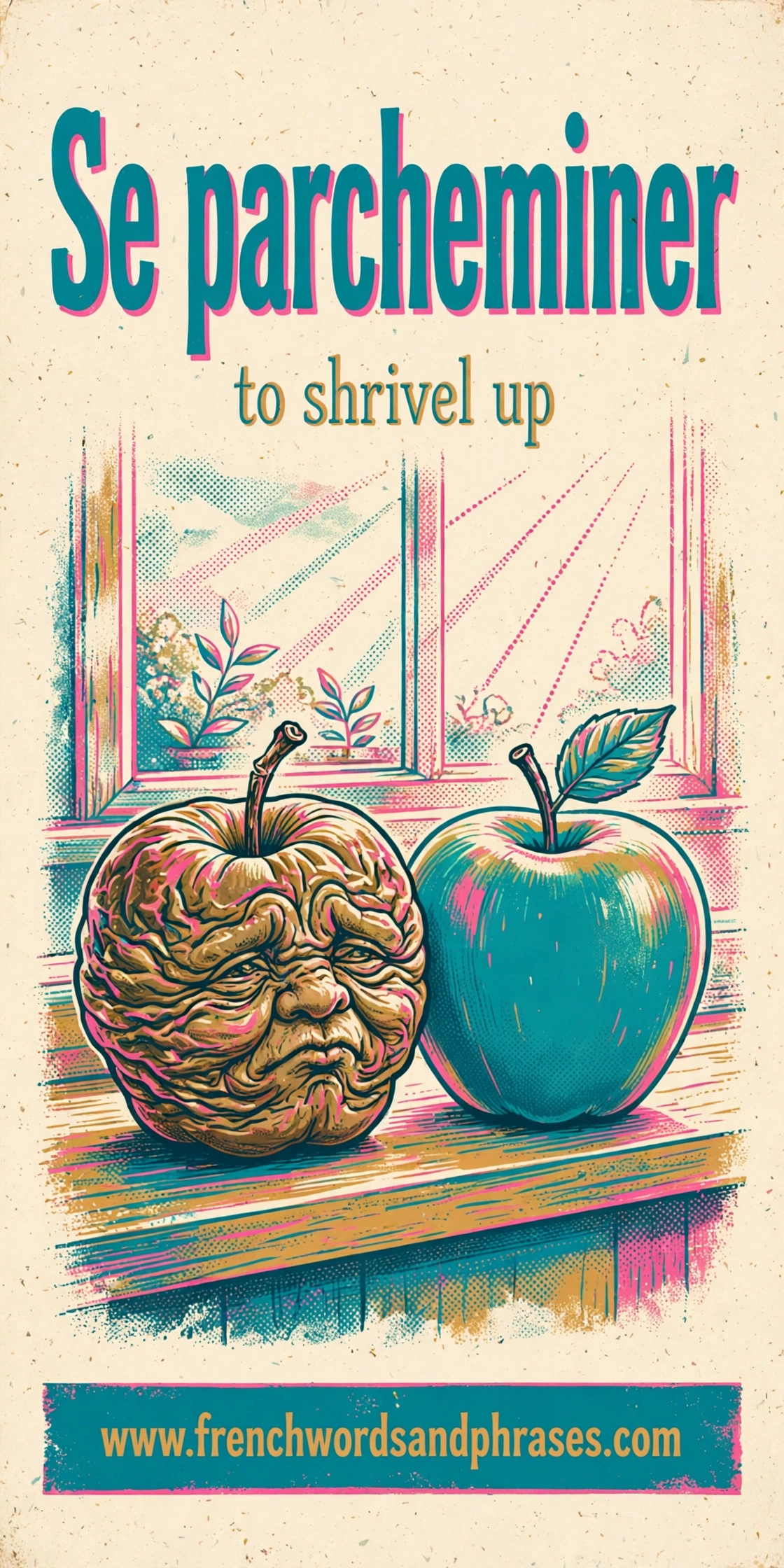
Se parcheminer means to shrivel up — to dry, wrinkle and stiffen until skin, leaves or fruit resemble old parchment.
Grapes forgotten on the vine, an apple wrinkling in a winter storeroom, the hands of a very old man — se parcheminer is the verb of slow drying: whatever loses its water and its softness until it looks like parchment, the skin the ancients wrote on.
In this guide, you’ll learn how to conjugate se parcheminer in all the major French tenses and moods. Explore complete conjugation tables, French examples, English translations, and practice quizzes.
Understanding the French Verb Se parcheminer
Se parcheminer is a regular French verb belonging to the first group of verbs, those ending in -er.
It means to shrivel up. It is a descriptive, slightly literary verb, used of skin aged by sun and years, of leaves and fruit drying on the plant, and of anything that wrinkles into a parchment-like state. Its adjective, parcheminé, is commoner than the verb: un visage parcheminé, des mains parcheminées.
Verb classification: First group (-er), reflexive
Auxiliary verb: Être
Past participle: parcheminé
Present participle: parcheminant
English equivalents: To shrivel up, to become parchment-like, to wither; la peau se parchemine avec les années — skin grows dry and wrinkled over the years; les feuilles se parcheminent au soleil — the leaves shrivel in the sun; un visage parcheminé — a wrinkled, parchment-like face; le parchemin — parchment.
One important detail: se parcheminer is reflexive, so it takes être and its participle agrees: elle s’est parcheminée au soleil, les feuilles se sont parcheminées. The picture inside the word is le parchemin, parchment — dried animal skin used for writing. Skin, leaves, grapes and old manuscripts all se parcheminent the same way: water leaves, wrinkles arrive, and what was soft becomes stiff, dry and yellowed. The tu imperative tucks the pronoun behind the verb: parchemine-toi — though you will mostly meet it in the negative, as a warning against the sun.
Experience the Word
Se parcheminer is the verb of drying into parchment — softness leaving, wrinkles staying, until a face or a leaf could almost be written on.
Imagine a bunch of grapes the harvesters missed, high on the vine in October. Week by week the sun takes the water, the skins tighten and wrinkle, and the grapes se parcheminent — until what hangs there is no longer fruit but little brown parchments, sweet as raisins and dry as paper.
Nothing has rotted or fallen. The grapes have shrivelled — parcheminés — into parchment on the vine.
How to Conjugate Se parcheminer: Complete French Conjugation Guide
Let’s explore every major conjugation of se parcheminer, beginning with the indicative mood.
How to Conjugate Se parcheminer in the Indicative Mood
The indicative mood is used to express facts, observations, actions, and events.
How to Conjugate Se parcheminer in the Present Tense (Présent)
Used for actions happening now, habitual actions, and general truths.
| Subject | Conjugation |
|---|---|
| je | me parchemine |
| tu | te parchemines |
| il / elle | se parchemine |
| nous | nous parcheminons |
| vous | vous parcheminez |
| ils / elles | se parcheminent |
Les feuilles se parcheminent au soleil d’août.
The leaves shrivel up in the August sun.
Complete the sentence:
Nous nous ______ au soleil de midi.
Reveal the answer
parcheminons
Nous nous parcheminons au soleil de midi.
We are shrivelling in the midday sun.
How to Conjugate Se parcheminer in the Passé Composé
Used for completed actions in the past. Se parcheminer takes the auxiliary verb être.
| Subject | Conjugation |
|---|---|
| je | me suis parcheminé / me suis parcheminée |
| tu | t’es parcheminé / t’es parcheminée |
| il / elle | s’est parcheminé / s’est parcheminée |
| nous | nous sommes parcheminés / nous sommes parcheminées |
| vous | vous êtes parcheminés / vous êtes parcheminées / vous êtes parcheminé / vous êtes parcheminée |
| ils / elles | se sont parcheminés / se sont parcheminées |
Sa peau s’est parcheminée à force de travailler dehors.
His skin has become dry and wrinkled from working outdoors.
How to Conjugate Se parcheminer in the Imparfait (Imperfect Tense)
Used for habitual past actions, descriptions, and ongoing situations in the past.
| Subject | Conjugation |
|---|---|
| je | me parcheminais |
| tu | te parcheminais |
| il / elle | se parcheminait |
| nous | nous parcheminions |
| vous | vous parcheminiez |
| ils / elles | se parcheminaient |
Les pommes se parcheminaient lentement dans le grenier.
The apples slowly shrivelled in the attic.
Choose the correct form:
The leaves shrivelled in the sun.
Les feuilles ______ au soleil. (se sont parcheminées / ont parcheminé)
Reveal the answer
se sont parcheminées
Les feuilles se sont parcheminées au soleil.
Se parcheminer is reflexive, takes être, and the participle agrees: parcheminées.
How to Conjugate Se parcheminer in the Plus-que-parfait
Used to describe an action that had already been completed before another past event.
| Subject | Conjugation |
|---|---|
| je | m’étais parcheminé / m’étais parcheminée |
| tu | t’étais parcheminé / t’étais parcheminée |
| il / elle | s’était parcheminé / s’était parcheminée |
| nous | nous étions parcheminés / nous étions parcheminées |
| vous | vous étiez parcheminés / vous étiez parcheminées / vous étiez parcheminé / vous étiez parcheminée |
| ils / elles | s’étaient parcheminés / s’étaient parcheminées |
Les raisins s’étaient parcheminés avant la récolte tardive.
The grapes had shrivelled before the late harvest.
How to Conjugate Se parcheminer in the Passé Simple
Primarily used in formal writing, literature, and historical narratives. It is rarely used in everyday conversation.
| Subject | Conjugation |
|---|---|
| je | me parcheminai |
| tu | te parcheminas |
| il / elle | se parchemina |
| nous | nous parcheminâmes |
| vous | vous parcheminâtes |
| ils / elles | se parcheminèrent |
Le vieux visage se parchemina au fil des étés.
The old face grew parchment-like over the summers.
How to Conjugate Se parcheminer in the Passé Antérieur
A literary tense used to express an action completed immediately before another past action, generally in the passé simple.
| Subject | Conjugation |
|---|---|
| je | me fus parcheminé / me fus parcheminée |
| tu | te fus parcheminé / te fus parcheminée |
| il / elle | se fut parcheminé / se fut parcheminée |
| nous | nous fûmes parcheminés / nous fûmes parcheminées |
| vous | vous fûtes parcheminés / vous fûtes parcheminées / vous fûtes parcheminé / vous fûtes parcheminée |
| ils / elles | se furent parcheminés / se furent parcheminées |
Dès que les feuilles se furent parcheminées, l’automne fut là.
As soon as the leaves had shrivelled, autumn was there.
How to Conjugate Se parcheminer in the Future Tense (Futur Simple)
Used to describe actions that will take place in the future.
| Subject | Conjugation |
|---|---|
| je | me parcheminerai |
| tu | te parchemineras |
| il / elle | se parcheminera |
| nous | nous parcheminerons |
| vous | vous parcheminerez |
| ils / elles | se parchemineront |
Sans eau, ces plantes se parchemineront en une semaine.
Without water, these plants will shrivel up within a week.
How to Conjugate Se parcheminer in the Futur Antérieur (Future Perfect)
Used for an action that will have been completed before a particular point in the future.
| Subject | Conjugation |
|---|---|
| je | me serai parcheminé / me serai parcheminée |
| tu | te seras parcheminé / te seras parcheminée |
| il / elle | se sera parcheminé / se sera parcheminée |
| nous | nous serons parcheminés / nous serons parcheminées |
| vous | vous serez parcheminés / vous serez parcheminées / vous serez parcheminé / vous serez parcheminée |
| ils / elles | se seront parcheminés / se seront parcheminées |
À la fin de l’été, les fruits se seront parcheminés sur l’arbre.
By the end of summer, the fruit will have shrivelled on the tree.
How to Conjugate Se parcheminer in the Near Future (Futur Proche)
Used to describe something that is going to happen soon. Formed with aller + infinitive.
| Subject | Conjugation |
|---|---|
| je | vais me parcheminer |
| tu | vas te parcheminer |
| il / elle | va se parcheminer |
| nous | allons nous parcheminer |
| vous | allez vous parcheminer |
| ils / elles | vont se parcheminer |
Regarde ces feuilles, elles vont se parcheminer.
Look at those leaves, they are going to shrivel up.
How to Conjugate Se parcheminer in the Conditional Mood
The conditional mood expresses what would happen under certain circumstances. It is also frequently used to make polite requests or express wishes.
How to Conjugate Se parcheminer in the Present Conditional
| Subject | Conjugation |
|---|---|
| je | me parcheminerais |
| tu | te parcheminerais |
| il / elle | se parcheminerait |
| nous | nous parcheminerions |
| vous | vous parchemineriez |
| ils / elles | se parchemineraient |
Avec plus d’ombre, la vigne se parcheminerait moins vite.
With more shade, the vine would shrivel less quickly.
How to Conjugate Se parcheminer in the Past Conditional
| Subject | Conjugation |
|---|---|
| je | me serais parcheminé / me serais parcheminée |
| tu | te serais parcheminé / te serais parcheminée |
| il / elle | se serait parcheminé / se serait parcheminée |
| nous | nous serions parcheminés / nous serions parcheminées |
| vous | vous seriez parcheminés / vous seriez parcheminées / vous seriez parcheminé / vous seriez parcheminée |
| ils / elles | se seraient parcheminés / se seraient parcheminées |
Elle se serait parcheminée au soleil sans son chapeau.
She would have shrivelled in the sun without her hat.
Se parcheminer in the Literary Past Conditional Form
This less common literary form uses the imperfect subjunctive of être.
| Subject | Conjugation |
|---|---|
| je | me fusse parcheminé / me fusse parcheminée |
| tu | te fusses parcheminé / te fusses parcheminée |
| il / elle | se fût parcheminé / se fût parcheminée |
| nous | nous fussions parcheminés / nous fussions parcheminées |
| vous | vous fussiez parcheminés / vous fussiez parcheminées / vous fussiez parcheminé / vous fussiez parcheminée |
| ils / elles | se fussent parcheminés / se fussent parcheminées |
Le parchemin lui-même se fût parcheminé dans ce grenier humide.
The parchment itself would have grown stiff and dry in that damp attic.
How to Conjugate Se parcheminer in the Subjunctive Mood
The subjunctive is used to express wishes, emotions, doubts, necessity, and uncertainty. It frequently follows expressions such as il faut que (it is necessary that) or bien que (although).
How to Conjugate Se parcheminer in the Present Subjunctive
| Subject | Conjugation |
|---|---|
| que je | me parchemine |
| que tu | te parchemines |
| qu’il / qu’elle | se parchemine |
| que nous | nous parcheminions |
| que vous | vous parcheminiez |
| qu’ils / qu’elles | se parcheminent |
Je ne veux pas que les plantes se parcheminent faute d’eau.
I do not want the plants to shrivel up for lack of water.
Complete the sentence using the subjunctive:
Je ne veux pas que tu te ______ au soleil.
Reveal the answer
parchemines
Je ne veux pas que tu te parchemines au soleil.
I do not want you to shrivel up in the sun.
How to Conjugate Se parcheminer in the Imperfect Subjunctive
A literary tense, rarely encountered in modern spoken French.
| Subject | Conjugation |
|---|---|
| que je | me parcheminasse |
| que tu | te parcheminasses |
| qu’il / qu’elle | se parcheminât |
| que nous | nous parcheminassions |
| que vous | vous parcheminassiez |
| qu’ils / qu’elles | se parcheminassent |
Il craignait que sa peau se parcheminât au vent du désert.
He feared his skin might grow parchment-like in the desert wind.
How to Conjugate Se parcheminer in the Pluperfect Subjunctive
A literary construction used to express an action completed before another past action.
| Subject | Conjugation |
|---|---|
| que je | me fusse parcheminé / me fusse parcheminée |
| que tu | te fusses parcheminé / te fusses parcheminée |
| qu’il / qu’elle | se fût parcheminé / se fût parcheminée |
| que nous | nous fussions parcheminés / nous fussions parcheminées |
| que vous | vous fussiez parcheminés / vous fussiez parcheminées / vous fussiez parcheminé / vous fussiez parcheminée |
| qu’ils / qu’elles | se fussent parcheminés / se fussent parcheminées |
On racontait que les fruits se fussent parcheminés dès le mois d’août.
People said the fruit had shrivelled as early as August.
How to Conjugate Se parcheminer in the Past Subjunctive
| Subject | Conjugation |
|---|---|
| que je | me sois parcheminé / me sois parcheminée |
| que tu | te sois parcheminé / te sois parcheminée |
| qu’il / qu’elle | se soit parcheminé / se soit parcheminée |
| que nous | nous soyons parcheminés / nous soyons parcheminées |
| que vous | vous soyez parcheminés / vous soyez parcheminées / vous soyez parcheminé / vous soyez parcheminée |
| qu’ils / qu’elles | se soient parcheminés / se soient parcheminées |
Je suis étonné que les feuilles se soient parcheminées si tôt.
I am amazed the leaves have shrivelled so early.
How to Conjugate Se parcheminer in the Imperative
The imperative is used to give commands, instructions, invitations, or suggestions. Subject pronouns are omitted.
How to Conjugate Se parcheminer in the Present Imperative
| Person | Conjugation |
|---|---|
| (tu) | parchemine-toi |
| (nous) | parcheminons-nous |
| (vous) | parcheminez-vous |
Ne te parchemine pas au soleil, mets de la crème !
Do not shrivel up in the sun, put on some cream!
How would you say Do not shrivel up in the sun (tu form)?
Reveal the answer
Ne te parchemine pas au soleil !
French Participles of Se parcheminer
Participles are verb forms that can be used in compound tenses and other grammatical constructions.
Present Participle of Se parcheminer
parcheminant
En se parcheminant, les raisins deviennent presque des raisins secs.
As they shrivel, the grapes become almost raisins.
Past Participle of Se parcheminer
parcheminé
Parcheminée par les années, sa peau gardait pourtant un doux sourire.
Made parchment-like by the years, her skin nevertheless kept a gentle smile.
Se parcheminer in Everyday French: Real-Life Examples
Now that you know the conjugations, let’s see how se parcheminer appears in everyday French.
Les feuilles se parcheminent au soleil.
The leaves shrivel up in the sun.
Sa peau s’est parcheminée avec les années.
His skin has grown dry and wrinkled over the years.
Les pommes se parcheminaient dans le grenier.
The apples used to shrivel in the attic.
Ces plantes se parchemineront sans eau.
These plants will shrivel up without water.
La vigne se parcheminerait moins avec de l’ombre.
The vine would shrivel less with some shade.
Ne te parchemine pas au soleil !
Do not shrivel up in the sun!
Beyond Translation: The Meaning of Se parcheminer
Parchemin is parchment — the city of Pergamum gave it its name — and for a thousand years Europe wrote its laws, prayers and love letters on dried skin.
To become like the page itself.
That is the poetry of se parcheminer: what dries and wrinkles — a leaf, a grape, a grandfather’s hands — turns into the very material on which grandfathers’ stories were once written down.
How to Remember the French Verb Se parcheminer
Remember it this way: Se parcheminer is about grapes turning to parchment on the vine.
- Reflexive, so être and agreement: elle s’est parcheminée, les feuilles se sont parcheminées.
- The picture is le parchemin, parchment: dried, wrinkled, yellowed — skin and leaves end up looking like it.
- Regular -er underneath: je me parchemine, nous nous parcheminons, past participle parcheminé.
The key idea is grapes turning to parchment on the vine.
Test Your Knowledge of Se parcheminer
Let’s see how much you’ve learned. Try answering these questions before revealing the answers.
Which auxiliary does se parcheminer use, and why?
Reveal the answer
Être — it is a reflexive verb: elle s’est parcheminée au soleil.
How do you say The leaves shrivel up in the sun in French?
Reveal the answer
Les feuilles se parcheminent au soleil.
Translate: His skin has grown dry and wrinkled over the years.
Reveal the answer
Sa peau s’est parcheminée avec les années.
What is the past participle of se parcheminer?
Reveal the answer
Parcheminé — agreeing: parcheminée, parcheminés, parcheminées.
Complete the sentence:
Je ne veux pas que les plantes se ______ faute d’eau.
Reveal the answer
parcheminent
Je ne veux pas que les plantes se parcheminent faute d’eau.
I do not want the plants to shrivel up for lack of water.
Can You Use It?
How would you say this in French?
The forgotten grapes shrivel on the vine, sweet as dried memories.
Reveal the answer
Les raisins oubliés se parcheminent sur la vigne, doux comme des souvenirs secs.
The forgotten grapes shrivel on the vine, sweet as dried memories.
LEARN FRENCH ONE WORD AT A TIME