How to Conjugate Parceller in French
/paʁ.se.le/
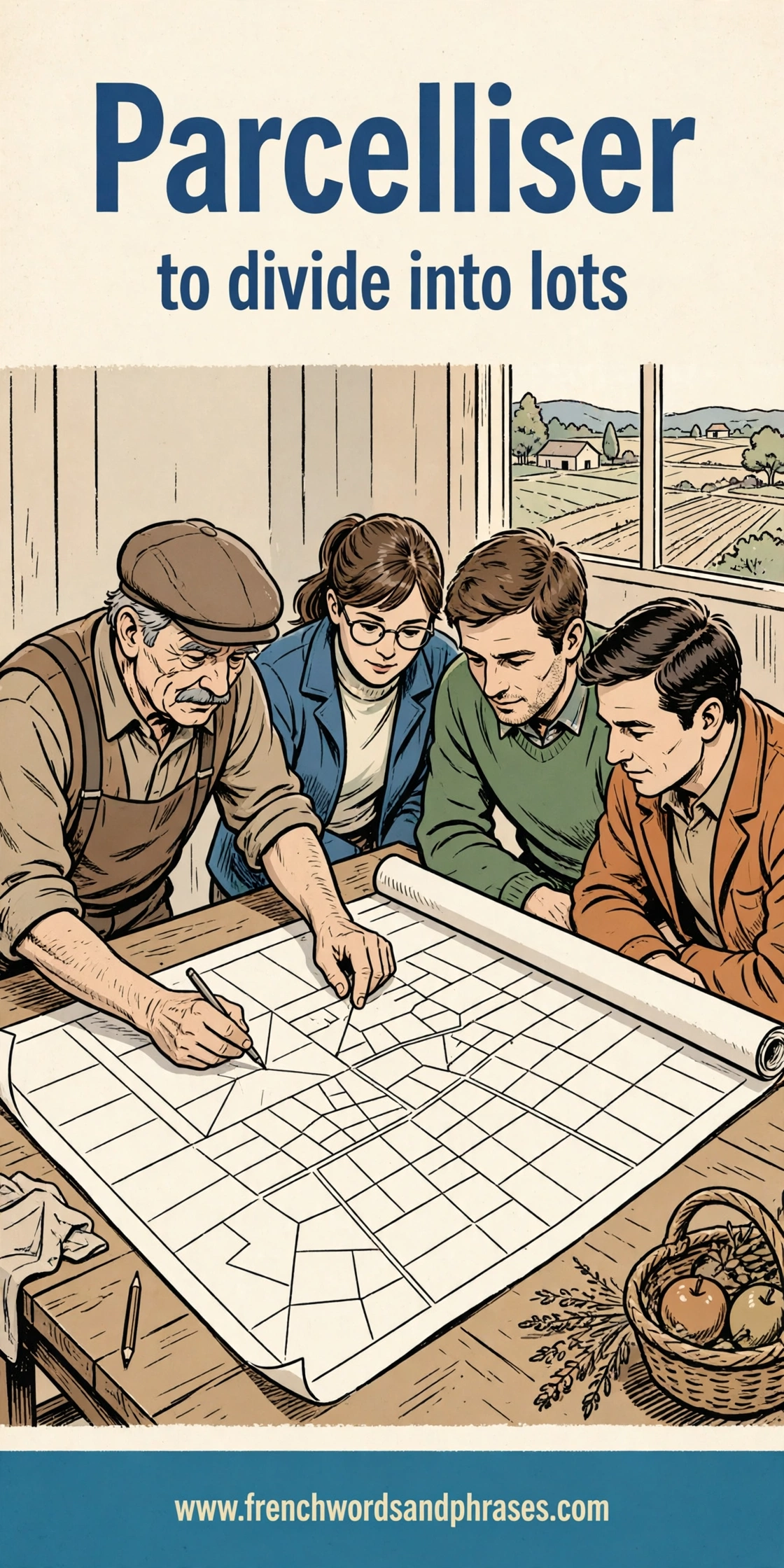
Parceller means to divide into lots — to cut a piece of land, or anything whole, into separate parcels.
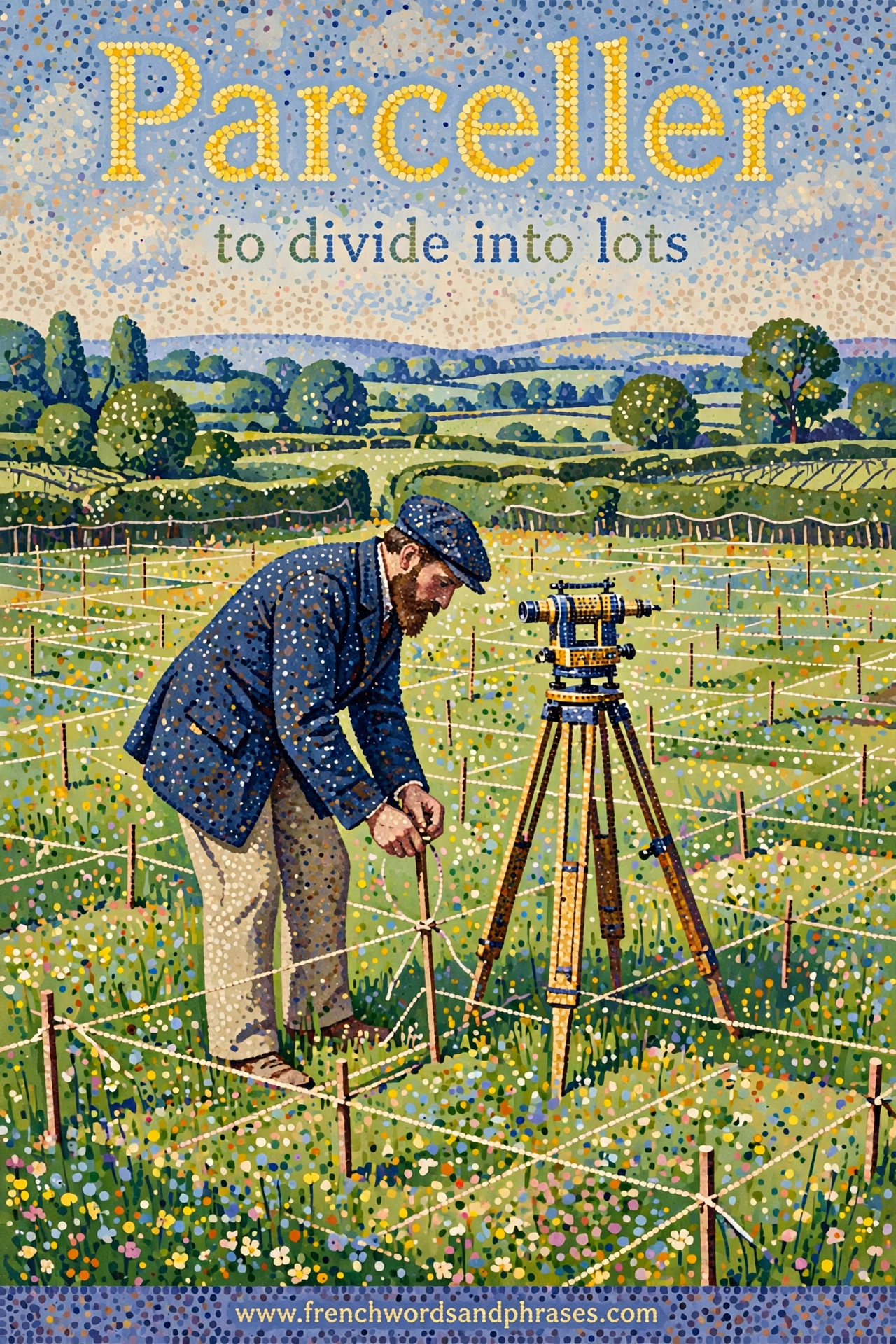
A surveyor with his tripod at the edge of a farmer’s field, white stakes appearing one by one along the grass — parceller is the verb of division into lots: the moment one big property becomes ten small ones, each with its own boundary and its own future.
In this guide, you’ll learn how to conjugate parceller in all the major French tenses and moods. Explore complete conjugation tables, French examples, English translations, and practice quizzes.
Understanding the French Verb Parceller
Parceller is a regular French verb belonging to the first group of verbs, those ending in -er.
It means to divide into lots. It belongs to land law, farming and inheritance: fields divided between heirs, estates split into building lots, vineyards cut into parcels. Figuratively it can describe anything broken into small separate pieces, though parcelliser is commoner in that role.
Verb classification: First group (-er)
Auxiliary verb: Avoir
Past participle: parcellé
Present participle: parcellant
English equivalents: To divide into lots, to parcel out; parceller un terrain — to divide a plot of land into lots; parceller un héritage — to split up an inheritance; une parcelle — a parcel, a plot; un terrain parcellaire — land divided into small plots.
One important detail: parceller is built on une parcelle, a small plot — and the double l of the noun runs right through the verb: je parcelle, nous parcellons, ils parcellent. It is the surveyor’s and the notary’s verb: before land can be sold lot by lot, someone must parceller le terrain, draw the lines and plant the stakes. Its close synonym parcelliser does the same work and is often preferred today, especially in figurative uses.
Experience the Word
Parceller is the verb of the dividing line — one field goes in, many lots come out, and nothing is ever quite whole again.
Imagine the last farm at the edge of a growing town. The old farmer has died, the heirs live in Paris, and the surveyor arrives with his instruments. By Friday the meadow is parcellé: white stakes, red string, ten neat lots where one green field used to run down to the river.
The field is still there, in a sense. But it has been divided into lots — parcellé — and each stake is a small goodbye.
How to Conjugate Parceller: Complete French Conjugation Guide
Let’s explore every major conjugation of parceller, beginning with the indicative mood.
How to Conjugate Parceller in the Indicative Mood
The indicative mood is used to express facts, observations, actions, and events.
How to Conjugate Parceller in the Present Tense (Présent)
Used for actions happening now, habitual actions, and general truths.
| Subject | Conjugation |
|---|---|
| je | parcelle |
| tu | parcelles |
| il / elle | parcelle |
| nous | parcellons |
| vous | parcellez |
| ils / elles | parcellent |
Le géomètre parcelle le terrain en dix lots.
The surveyor is dividing the land into ten lots.
Complete the sentence:
Nous ______ le domaine en parts égales.
Reveal the answer
parcellons
Nous parcellons le domaine en parts égales.
We are dividing the estate into equal shares.
How to Conjugate Parceller in the Passé Composé
Used for completed actions in the past. Parceller takes the auxiliary verb avoir.
| Subject | Conjugation |
|---|---|
| j’ | ai parcellé |
| tu | as parcellé |
| il / elle | a parcellé |
| nous | avons parcellé |
| vous | avez parcellé |
| ils / elles | ont parcellé |
Ils ont parcellé le champ avant de le vendre.
They divided the field into lots before selling it.
How to Conjugate Parceller in the Imparfait (Imperfect Tense)
Used for habitual past actions, descriptions, and ongoing situations in the past.
| Subject | Conjugation |
|---|---|
| je | parcellais |
| tu | parcellais |
| il / elle | parcellait |
| nous | parcellions |
| vous | parcelliez |
| ils / elles | parcellaient |
Autrefois, on parcellait les héritages entre tous les enfants.
In the old days, inheritances were divided into lots among all the children.
Choose the correct form:
They divided the field into lots.
Ils ______ le champ. (ont parcellé / sont parcellé)
Reveal the answer
ont parcellé
Ils ont parcellé le champ.
Parceller takes avoir.
How to Conjugate Parceller in the Plus-que-parfait
Used to describe an action that had already been completed before another past event.
| Subject | Conjugation |
|---|---|
| j’ | avais parcellé |
| tu | avais parcellé |
| il / elle | avait parcellé |
| nous | avions parcellé |
| vous | aviez parcellé |
| ils / elles | avaient parcellé |
Elle avait parcellé sa vigne entre ses trois fils.
She had divided her vineyard into parcels among her three sons.
How to Conjugate Parceller in the Passé Simple
Primarily used in formal writing, literature, and historical narratives. It is rarely used in everyday conversation.
| Subject | Conjugation |
|---|---|
| je | parcellai |
| tu | parcellas |
| il / elle | parcella |
| nous | parcellâmes |
| vous | parcellâtes |
| ils / elles | parcellèrent |
Le notaire parcella le domaine selon le testament.
The notary divided the estate into lots according to the will.
How to Conjugate Parceller in the Passé Antérieur
A literary tense used to express an action completed immediately before another past action, generally in the passé simple.
| Subject | Conjugation |
|---|---|
| j’ | eus parcellé |
| tu | eus parcellé |
| il / elle | eut parcellé |
| nous | eûmes parcellé |
| vous | eûtes parcellé |
| ils / elles | eurent parcellé |
Quand il eut parcellé la prairie, les acheteurs arrivèrent.
When he had divided the meadow into lots, the buyers arrived.
How to Conjugate Parceller in the Future Tense (Futur Simple)
Used to describe actions that will take place in the future.
| Subject | Conjugation |
|---|---|
| je | parcellerai |
| tu | parcelleras |
| il / elle | parcellera |
| nous | parcellerons |
| vous | parcellerez |
| ils / elles | parcelleront |
La commune parcellera ces terres l’an prochain.
The council will divide these lands into lots next year.
How to Conjugate Parceller in the Futur Antérieur (Future Perfect)
Used for an action that will have been completed before a particular point in the future.
| Subject | Conjugation |
|---|---|
| j’ | aurai parcellé |
| tu | auras parcellé |
| il / elle | aura parcellé |
| nous | aurons parcellé |
| vous | aurez parcellé |
| ils / elles | auront parcellé |
À la fin du mois, ils auront parcellé tout le domaine.
By the end of the month, they will have divided the whole estate into lots.
How to Conjugate Parceller in the Near Future (Futur Proche)
Used to describe something that is going to happen soon. Formed with aller + infinitive.
| Subject | Conjugation |
|---|---|
| je | vais parceller |
| tu | vas parceller |
| il / elle | va parceller |
| nous | allons parceller |
| vous | allez parceller |
| ils / elles | vont parceller |
Je vais parceller le jardin pour les enfants.
I am going to divide the garden into plots for the children.
How to Conjugate Parceller in the Conditional Mood
The conditional mood expresses what would happen under certain circumstances. It is also frequently used to make polite requests or express wishes.
How to Conjugate Parceller in the Present Conditional
| Subject | Conjugation |
|---|---|
| je | parcellerais |
| tu | parcellerais |
| il / elle | parcellerait |
| nous | parcellerions |
| vous | parcelleriez |
| ils / elles | parcelleraient |
Avec un autre plan, on parcellerait mieux ce terrain.
With a different plan, we would divide this land into lots better.
How to Conjugate Parceller in the Past Conditional
| Subject | Conjugation |
|---|---|
| j’ | aurais parcellé |
| tu | aurais parcellé |
| il / elle | aurait parcellé |
| nous | aurions parcellé |
| vous | auriez parcellé |
| ils / elles | auraient parcellé |
Il aurait parcellé le champ si les héritiers avaient été d’accord.
He would have divided the field into lots if the heirs had agreed.
Parceller in the Literary Past Conditional Form
This less common literary form uses the imperfect subjunctive of avoir.
| Subject | Conjugation |
|---|---|
| j’ | eusse parcellé |
| tu | eusses parcellé |
| il / elle | eût parcellé |
| nous | eussions parcellé |
| vous | eussiez parcellé |
| ils / elles | eussent parcellé |
Le seigneur eût parcellé ses terres entre ses vassaux.
The lord would have divided his lands into lots among his vassals.
How to Conjugate Parceller in the Subjunctive Mood
The subjunctive is used to express wishes, emotions, doubts, necessity, and uncertainty. It frequently follows expressions such as il faut que (it is necessary that) or bien que (although).
How to Conjugate Parceller in the Present Subjunctive
| Subject | Conjugation |
|---|---|
| que je | parcelle |
| que tu | parcelles |
| qu’il / qu’elle | parcelle |
| que nous | parcellions |
| que vous | parcelliez |
| qu’ils / qu’elles | parcellent |
Il faut que le géomètre parcelle le terrain avant la vente.
The surveyor must divide the land into lots before the sale.
Complete the sentence using the subjunctive:
Il faut que vous ______ le terrain avant la vente.
Reveal the answer
parcelliez
Il faut que vous parcelliez le terrain avant la vente.
You must divide the land into lots before the sale.
How to Conjugate Parceller in the Imperfect Subjunctive
A literary tense, rarely encountered in modern spoken French.
| Subject | Conjugation |
|---|---|
| que je | parcellasse |
| que tu | parcellasses |
| qu’il / qu’elle | parcellât |
| que nous | parcellassions |
| que vous | parcellassiez |
| qu’ils / qu’elles | parcellassent |
Le testament voulait qu’on parcellât le domaine en parts égales.
The will required the estate to be divided into equal lots.
How to Conjugate Parceller in the Pluperfect Subjunctive
A literary construction used to express an action completed before another past action.
| Subject | Conjugation |
|---|---|
| que j’ | eusse parcellé |
| que tu | eusses parcellé |
| qu’il / qu’elle | eût parcellé |
| que nous | eussions parcellé |
| que vous | eussiez parcellé |
| qu’ils / qu’elles | eussent parcellé |
On nota qu’ils eussent parcellé la vigne avec soin.
It was noted that they had divided the vineyard into parcels with care.
How to Conjugate Parceller in the Past Subjunctive
| Subject | Conjugation |
|---|---|
| que j’ | aie parcellé |
| que tu | aies parcellé |
| qu’il / qu’elle | ait parcellé |
| que nous | ayons parcellé |
| que vous | ayez parcellé |
| qu’ils / qu’elles | aient parcellé |
Je suis content qu’elle ait parcellé le jardin pour tout le monde.
I am glad she divided the garden into plots for everyone.
How to Conjugate Parceller in the Imperative
The imperative is used to give commands, instructions, invitations, or suggestions. Subject pronouns are omitted.
How to Conjugate Parceller in the Present Imperative
| Person | Conjugation |
|---|---|
| (tu) | parcelle |
| (nous) | parcellons |
| (vous) | parcellez |
Parcellez le terrain en lots égaux !
Divide the land into equal lots!
How would you say Divide the garden into plots (tu form)?
Reveal the answer
Parcelle le jardin !
French Participles of Parceller
Participles are verb forms that can be used in compound tenses and other grammatical constructions.
Present Participle of Parceller
parcellant
En parcellant la prairie, il a respecté les vieux chênes.
In dividing the meadow into lots, he spared the old oaks.
Past Participle of Parceller
parcellé
Parcellé en dix lots, le champ a disparu sous les maisons.
Divided into ten lots, the field disappeared under the houses.
Parceller in Everyday French: Real-Life Examples
Now that you know the conjugations, let’s see how parceller appears in everyday French.
Le géomètre parcelle le terrain.
The surveyor is dividing the land into lots.
Ils ont parcellé le champ.
They divided the field into lots.
On parcellait les héritages autrefois.
Inheritances used to be divided into lots.
La commune parcellera ces terres.
The council will divide these lands into lots.
On parcellerait mieux avec un autre plan.
We would divide it better with a different plan.
Parcelle le jardin pour les enfants !
Divide the garden into plots for the children!
Beyond Translation: The Meaning of Parceller
English parcel is this word’s own child — French parcelle, a little part, travelled into English and came home meaning a package.
A parcelle is a part that learned to stand alone.
That is the quiet drama of parceller: French farmland, split by inheritance law generation after generation, became the famous patchwork of small fields — each one a parcelle with its own owner, its own hedge and its own story.
How to Remember the French Verb Parceller
Remember it this way: Parceller is about the surveyor’s stakes turning one field into ten lots.
- Built on une parcelle, a plot — the double l runs through every form: je parcelle, nous parcellons.
- Picture the surveyor: white stakes, red string, one field becoming ten lots.
- Regular -er: past participle parcellé — and its synonym parcelliser does the same job.
The key idea is the surveyor’s stakes turning one field into ten lots.
Test Your Knowledge of Parceller
Let’s see how much you’ve learned. Try answering these questions before revealing the answers.
What is une parcelle?
Reveal the answer
A parcel, a small plot of land — the piece that parceller cuts a property into.
How do you say The surveyor is dividing the land into ten lots in French?
Reveal the answer
Le géomètre parcelle le terrain en dix lots.
Translate: They divided the field into lots before selling it.
Reveal the answer
Ils ont parcellé le champ avant de le vendre.
What is the past participle of parceller?
Reveal the answer
Parcellé.
Complete the sentence:
Il faut que le géomètre ______ le terrain avant la vente.
Reveal the answer
parcelle
Il faut que le géomètre parcelle le terrain avant la vente.
The surveyor must divide the land into lots before the sale.
Can You Use It?
How would you say this in French?
They divide grandfather’s field into lots, and each lot keeps a piece of its shade.
Reveal the answer
On parcelle le champ du grand-père, et chaque lot garde un bout de son ombre.
They divide grandfather’s field into lots, and each lot keeps a piece of its shade.
LEARN FRENCH ONE WORD AT A TIME